

Yukon gold · Mine status explainer
Victoria Gold Mine Yukon: Collapse, Receivership, Sale
The Victoria Gold mine is the Eagle mine in Yukon. It stopped after a heap leach pad failed on 24 June 2024 and is in receivership. This page covers output, costs, the review findings and the Boroo sale talks.
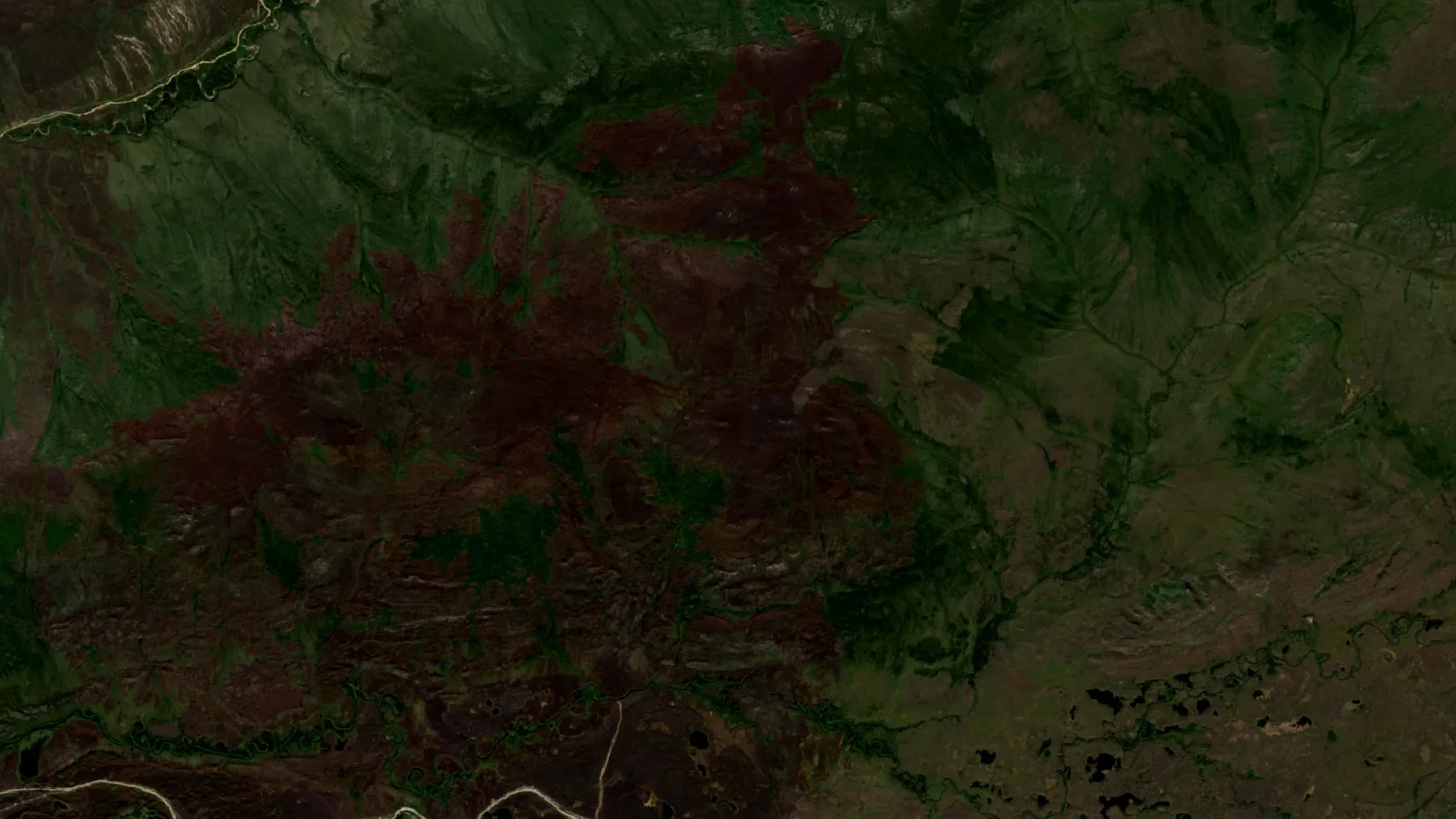
Key takeaways
- The Eagle Gold Mine in Yukon is not operating as a mine: its heap leach pad failed on 24 June 2024 and PwC has been receiver since 14 August 2024.
- Before the failure Eagle produced 150,182 ounces in 2022 and a record 166,730 ounces in 2023 from ore averaging 0.72 g/t (Victoria Gold, 2024).
- The Independent Review Board (July 2025) found an accumulation of adverse conditions, mainly poor drainage in an over-steepened pad, and made 50 recommendations (CBC, 2025).
- The receiver signed an exclusivity agreement with Boroo on 23 April 2026, extended on 3 July 2026 by 90 days; no completed sale had been announced as of the latest report (29 July 2026).
- A restart needs a signed sale, court approval, agreements and permits, and a deal with the First Nation of Na-Cho Nyäk Dun.
In this article
- Is the Victoria Gold mine still operating?
- Eagle mine at a glance: location, deposits and reserves
- How much gold did Eagle produce?
- What the mine earned and what each ounce cost
- What happened on 24 June
- What the independent review board found
- Who runs the mine now: the PwC receivership
- The sale process and the Boroo exclusivity
- What a restart would need
- Timeline of the Victoria Gold mine
- Lessons for people who study heap leach sites
- Heap leach gold calculator
- Frequently asked questions
Is the Victoria Gold mine still operating?
No. The mine people search for as “Victoria Gold” is the Eagle Gold Mine in central Yukon, Canada, and it is not operating as a mine. A heap leach pad failed on 24 June 2024, operations stopped, and on 14 August 2024 the Ontario Superior Court of Justice appointed PricewaterhouseCoopers (PwC) as receiver and manager of Victoria Gold Corp. A receiver is a court-appointed officer who takes control of a company’s assets to pay its creditors and, here, to manage the clean-up.
In April 2026 the receiver signed an exclusivity agreement with Boroo, a private Singapore company, and on 3 July 2026 that period was extended by a further 90 days. The latest report we found, dated 29 July 2026, announced no completed sale or restart date. The rest of this page covers where the mine is, what it produced, what failed, what investigators found, who controls it now and what a restart would need.
This page is about Victoria Gold Corp.’s Eagle mine in Yukon, not the goldfields of the Australian state of Victoria. Those are covered separately by the Geoscience Australia gold profile, which describes Ballarat and Bendigo as major gold sites in the 1850s.
Eagle mine at a glance: location, deposits and reserves
Victoria Gold described its Dublin Gulch property as lying in central Yukon about 375 km north of Whitehorse and about 85 km from the village of Mayo, covering roughly 555 square kilometres and hosting the Eagle and Olive gold deposits. Road access runs all year and the site connects to the Yukon Energy grid. An earlier version of this page placed the mine 85 km north of Dawson City. That was wrong: the 85 km distance is from Mayo, which sits about 85 km south of the mine according to CBC News reporting from June 2024.
Chart
Eagle gold estimates at the end of 2022, company-reported
Million ounces of gold; reserves and measured plus indicated resource, both at 31 Dec 2022
The mine was a conventional open pit with a three-stage crushing plant, an in-valley heap leach pad and an adsorption-desorption-recovery (ADR) plant that recovers gold from the leach solution. Heap leaching means crushed ore is stacked on a lined pad and sprayed with a weak cyanide solution that dissolves the gold; the solution drains to ponds and the ADR plant strips the gold out. It suits large volumes of low-grade ore. Grade is the amount of gold per tonne of rock, in grams per tonne (g/t). Eagle stacked ore averaging 0.72 g/t in 2023, so a tonne of ore held less than one gram of gold.
- Reserves, 2019 technical report: 3.3 million ounces of gold in 155 million tonnes at 0.65 g/t. A reserve is the part of a deposit shown by a technical report to be economic to mine.
- Reserves after mining to the end of 2022: 2.5 million ounces in 125 million tonnes at 0.63 g/t, from the same report adjusted for depletion, according to Victoria Gold’s 2022 results release.
- Resource, 2019 basis: 227 million tonnes at 0.67 g/t, including 4.7 million ounces in the measured and indicated categories (inclusive of reserves), per the company’s August 2023 update.
- Staff: about 500 people at full operation, CBC reported.
These figures are company-reported estimates from before the failure. They are not a current valuation of the site, and a new owner would need its own technical review.
How much gold did Eagle produce?
Eagle reached commercial production in 2020, after construction that the chief executive described as on budget and ahead of schedule, although COVID-19 restrictions and mechanical problems slowed the first year. The last two full years before the failure are well documented. Production was 150,182 ounces in 2022 and 166,730 ounces in 2023, an 11% rise and a record for the mine. The 2023 result met the company’s guidance of 160,000 to 180,000 ounces, and the company said it had shown that stacking ore on the pad through the whole year was feasible, which made quarterly output steadier.
Chart
What Eagle moved, 2022 versus 2023
Million tonnes per year
Chart
Eagle quarterly gold production
Ounces of gold poured per quarter, 2022 and 2023
To put 166,730 ounces in scale: it is about 5.2 tonnes of gold. The US Geological Survey estimates Canada’s total mine output at 200 tonnes in 2025, so Eagle’s 2023 output equals roughly 2.6% of that annual level.
The quarterly chart shows 2022 and 2023 side by side. Output was lower in the first half of 2021 and 2022 than in the second half, partly because planned maintenance was weighted to the first quarter. The crushing and conveying problems came later: on 4 October 2022 an overland conveyor belt failure stopped crushing and stacking for about 18 days, and the company said reduced availability of the crushing and conveying circuit cut 2022 output below its expectations. The operations chart then compares what the pit and pad handled in each year.
What the mine earned and what each ounce cost
Eagle’s last full year of published results is 2023: Victoria Gold sold 160,135 ounces at an average realized price of C$2,603 per ounce, cash cost was C$1,643 and AISC was C$2,008 per ounce, and net income was C$25.1 million. The chart below uses 2022, the year before. In 2022 Victoria Gold sold 139,596 ounces at an average realized price of C$2,306 per ounce (about US$1,772) and booked C$321.8 million of revenue and C$35.0 million of net income, according to its 2022 results release. Cash cost, the direct cost of mining, processing and site overhead per ounce sold, was C$1,191. All-in sustaining cost (AISC) adds sustaining capital, corporate costs and reclamation accruals, and was C$1,875 per ounce. The gap between price and AISC is the margin that pays debt, tax and growth spending.
Chart
Eagle price and cost per ounce sold, 2022 and 2023
Canadian dollars per ounce
These are Canadian dollars and a 2022 price. The release named the availability of the crushing and conveying circuit as the main reason output missed expectations, and said staffing and maintenance had been improved. The calculator at the end of this page lets you test ounces and value for any tonnage, grade, recovery and price you choose.
What happened on 24 June
Early on 24 June 2024 a “substantial failure” occurred on the south slope of the heap leach facility. The independent review later reported that nearly six million cubic metres, about 11.3 million dry tonnes of ore, moved down the slope, and that nearly 1.8 million dry tonnes left containment, with cyanide solution spilling into a valley and reaching groundwater and Haggart Creek. Northern Miner reported that at least 280,000 cubic metres of cyanide-containing solution escaped containment.
The Yukon government said in the first week that containment dams built after the slide appeared to be holding solution on site, that results of water tests were pending, and that the risk to Mayo’s drinking water was “extremely low” because the village is upstream. One worker injury was reported and two workers received first aid, with no serious injuries. The First Nation of Na-Cho Nyäk Dun, on whose traditional territory the mine sits, said its engineer saw clear evidence of a cyanide release and criticised the early response.
Geotechnical analysis in the review, summarised by the AGU landslide blogger Dave Petley, put the sequence this way. Ore had been stacked to an over-steepened section, locally about 36.5 degrees. The system that collects solution from the pad was deficient, so the water table rose inside the ore. The section had low permeability, which slowed drainage. From mid-April the operator raised irrigation, and the water table climbed until the factor of safety, the ratio of resisting to driving forces, fell to one. A rotational failure then turned into a flow slide through static liquefaction within seconds. The slide moved at an estimated 9 to 18 metres per second, so the whole event lasted a minute or two.
What the independent review board found
The Yukon government appointed a three-person Independent Review Board. Its report was released on 2 July 2025: 156 pages plus about 760 pages of appendices. It concluded that the failure came from an accumulation of adverse conditions and events. Yukon’s mines minister summarised it as a layer of ore in the heap that was not draining as it should, with the layer above it becoming saturated. The board made 50 recommendations, according to CBC, and put first the idea that major heap leach facilities should have a technical review board for the whole of the mine’s life.
A board member told reporters that tailings dams under review boards have a failure rate of zero and that heap leaches could come close with the same oversight. The Yukon Chamber of Mines welcomed the finding that heap leaching can be done safely. Other recommendations covered better drainage design, more careful placement of weak or fine material, tighter control of irrigation, and active monitoring of how the pad performs against its design assumptions. A separate engineering study by an outside engineering firm for the Yukon Workers’ Safety and Compensation Board looked at causes and repairs, and the board received it before finishing its own report.
Not everyone considers the review complete. Na-Cho Nyäk Dun said it still wants a full public inquiry and that the report left questions about how government oversight worked. Both views are part of the public record, and any buyer will face them.
▶ A plain-language claymation on the seven environmental impacts of mining. · 2:31
Who runs the mine now: the PwC receivership
The Yukon government applied for the receivership, and the Ontario court granted it on 14 August 2024. The company’s board resigned the next day, and PwC removed chief executive John McConnell the following Monday. PwC took over all of Victoria Gold’s property, including the mine, and named an environmental consultant as lead on the site.
Since then the receiver’s job has been containment and water treatment. A year after the slide, PwC had increased storage, sped up water treatment and secured new financing, and Yukon’s minister reported that cyanide and mercury levels were on a downward trend. In June 2025 PwC also restarted the ADR plant in a closed system to recover gold from solution and help pay for remediation, with no new cyanide added and with the work not counted as mining, Northern Miner reported. It was also reported that a PwC report had put the value of the assets at C$824.7 million.
The sale process and the Boroo exclusivity
PwC announced in mid-June 2025 that it would seek court approval to sell the mine, with BMO Nesbitt Burns as financial adviser, and the mine went on sale on 25 June 2025. The Yukon government said it wanted a buyer with the money and the patience to deal with the situation and to work with Na-Cho Nyäk Dun, and potential buyers must meet the government and the First Nation before any sale is finalised. The court must give final approval to any sale.
On 23 April 2026 the receiver signed the exclusivity agreement with Boroo Pte Ltd. The Canadian Press reported that no price was disclosed, that the 90-day window was for more due diligence and for negotiating terms, and that Boroo would also begin talks with the Yukon government and Na-Cho Nyäk Dun about the agreements needed before mining could restart. Boroo describes itself as a private company that operates, develops and acquires mines, and says it turned around the Lagunas Norte mine in Peru after buying it from Barrick in 2021, in its 27 July 2026 announcement. That announcement also confirms the 3 July extension of exclusivity by a further 90 days and does not give a sale price.
Exclusivity is not a sale. It stops the receiver negotiating with others for the period, but a buyer still needs a signed purchase agreement, court approval, and the agreements and permits described below.
What a restart would need
Four things would have to line up before ore is mined again at Eagle, and a reader tracking the site can watch for each.
- A signed sale and a court order. The receiver sells under court supervision, so look for a motion for an approval and vesting order on the receiver’s website.
- Agreements and permits. The Canadian Press reported that Boroo would open talks with the Yukon government and Na-Cho Nyäk Dun on the agreements that must be in place before mining restarts. The independent review’s 50 recommendations are the obvious yardstick for heap leach design and monitoring.
- An agreement with Na-Cho Nyäk Dun. The First Nation has said it is not opposed in principle to a restart by the right buyer: one with experience, a commitment to remediation, and respect for its treaty rights.
- A safe pad. A new operator would have to deal with the failed heap and the remaining ore and solution, and show that drainage, slope angle and irrigation are controlled.
Timeline of the Victoria Gold mine
| Date | Event | Source |
|---|---|---|
| 2020 | Eagle reaches commercial production | Crux Investor interview, Oct 2021 |
| Jan 2024 | Record 166,730 ounces for 2023 reported | Victoria Gold release |
| 24 Jun 2024 | Heap leach pad failure | CBC, 3 Jul 2025 |
| 14 Aug 2024 | Court appoints PwC as receiver | Mining Technology |
| 25 Jun 2025 | Mine put up for sale by the receiver | CBC, 9 Jul 2025 |
| 2 Jul 2025 | Independent Review Board report published | CBC, 9 Jul 2025 |
| 23 Apr 2026 | Exclusivity agreement with Boroo | Canadian Press |
| 3 Jul 2026 | Exclusivity extended by 90 days | Boroo release |
Lessons for people who study heap leach sites
The review points to design and monitoring problems that exist at any heap leach site: slope angle, drainage of weak layers, irrigation rates, and how closely a pad is watched against its design assumptions. For licence holders, consultants and investors the practical questions are the same at any project. Who reviews the design over the mine’s life? Which layers of ore drain slowly? How are pore pressure and movement measured? What happens to the schedule if a stage must stop?
Satellites cannot see inside a heap and do not replace ground instruments. They are useful earlier, at the stage of choosing where to look for gold at all. Farmonaut maps licence areas from satellite imagery to flag alteration zones and structures as exploration targets, ahead of any resource estimate and without replacing drilling.
If you are comparing sites in Canada, our pages on mineral exploration spending in Canada, where explorers stake mineral claims in Canada and diamond drilling in Canada, with permits, seasons and costs give the wider context.
▶ Explains what satellites can and cannot show when exploring for gold. · 4:25
Heap leach gold calculator
Use the calculator below to see how tonnage, grade and recovery set the ounces from a heap leach operation, and what they are worth at a gold price you choose. The default grade is the 2023 average stacked grade at Eagle; the other defaults are round examples, not Eagle’s figures.
Calculator
How much gold could a heap leach pad recover?
Enter your own tonnage, grade, recovery and gold price.
- Gross value at your price (US$): $52,084,171
- Gold recovered per tonne of ore: 0.54
Example values only, not Eagle’s figures and not a forecast. The default grade, 0.72 g/t, is the average ore stacked grade at Eagle in 2023 (Victoria Gold, 2024). Recovery is an example. Price is an input: example, use today’s price in US$ per troy ounce. Ounces use 31.1035 grams per troy ounce. The result is gross metal value, before costs, royalties and tax.
Frequently asked questions
Where is the Victoria Gold mine?
The Eagle Gold Mine is on the Dublin Gulch property in central Yukon, about 375 km north of Whitehorse and about 85 km from Mayo, according to the company’s own property description. It is on the traditional territory of the First Nation of Na-Cho Nyäk Dun.
Is the Victoria Gold mine open or closed?
It is closed as a mine. Operations stopped after the heap leach failure on 24 June 2024, and the receiver is managing water treatment and remediation while it negotiates a sale. The ADR plant was restarted in 2025 only to recover gold from solution.
What happened at the Eagle Gold Mine in Yukon?
A section of the heap leach pad failed. The independent review found that poor drainage, an over-steepened slope and rising irrigation raised the water level inside the ore until a rotational failure became a flow slide. About 11.3 million dry tonnes of ore moved and nearly 1.8 million dry tonnes left containment.
Who owns the Victoria Gold mine now?
PwC manages Victoria Gold Corp.’s assets, including the mine, as court-appointed receiver and manager. Boroo Pte Ltd, a private Singapore company, has an exclusivity agreement to negotiate a purchase. As of the latest report we found (29 July 2026), no completed sale had been announced.
Who is Boroo?
Boroo says it is a privately held investment company that operates, develops and acquires mines. It says it acquired the Lagunas Norte mine in Peru from Barrick in 2021, and that it holds a stake of about 57% in Steppe Gold, which has Mongolian gold operations.
How much gold did Eagle produce each year?
150,182 ounces in 2022 and a record 166,730 ounces in 2023, according to Victoria Gold’s results and production releases.
How much gold is left at Eagle?
Before the failure, the company reported reserves of 2.5 million ounces at the end of 2022 and a measured and indicated resource of 4.0 million ounces at the end of 2022 (4.7 million ounces on the 2019 basis). These are company estimates from before the failure and are not a current assessment.
Was cyanide released into the environment?
Yes. The independent review reported that cyanide solution left containment into a nearby valley and reached groundwater and Haggart Creek. Yukon officials later said contaminant levels were falling, and treatment of intercepted groundwater continues.
Could the mine restart?
Yukon’s government said in 2024 that the mine could return to production at some point. The mine would need a completed sale, court approval, government agreements and permits, and an agreement with Na-Cho Nyäk Dun first. The First Nation has said it is not opposed in principle if the buyer is experienced and committed to remediation.
Is Victoria Gold the same as gold mines in Victoria, Australia?
No. Victoria Gold Corp. was a Canadian company with its mine in Yukon. The Australian state of Victoria has its own historic goldfields, such as Ballarat and Bendigo.
What is heap leaching?
It is a way to recover gold from low-grade ore. The ore is crushed, stacked on a lined pad and sprayed with a weak cyanide solution that dissolves the gold. The solution drains to ponds, and a plant such as an ADR circuit pulls the gold from it.
This page is for information only. It is not investment or legal advice. It gives no share prices or targets. Mine status, the receivership and any sale can change; check the receiver’s website and court filings before you rely on them.
Farmonaut mining
Map your mining site from space
Consultants can have a licence area screened from satellite imagery for exploration targets in 5 to 20 business days, ahead of any resource estimate.

Mining Pro sample view, synthetic data
Keep reading
Sources
- Victoria Gold, Eagle Gold Mine annual and Q4 2023 production results (15 Jan 2024): finanznachrichten.de
- Victoria Gold, 2022 fourth quarter and full year results (Feb 2023): firmenpresse.de
- Victoria Gold, operational update on Eagle and the Dublin Gulch property (21 Aug 2023): boerse-online.de
- Crux Investor, interview with Victoria Gold CEO John McConnell (25 Oct 2021): cruxinvestor.com
- CBC News, 4 days after Eagle mine slide (28 Jun 2024): cbc.ca
- AGU Eos, The Landslide Blog: the official report of the 24 June 2024 landslide at Eagle Gold Mine: eos.org
- CBC News via Eye on the Arctic, Independent report details causes of the Eagle mine failure (3 Jul 2025): rcinet.ca
- CBC News, Responsible mining needed, says Yukon First Nation (9 Jul 2025): cbc.ca
- Northern Miner, PwC to sell disaster-hit Eagle gold mine in Yukon (25 Jun 2025): mining.com
- Northern Miner, Victoria Gold CEO McConnell axed (19 Aug 2024): mining.com
- Mining Technology, Victoria Gold under receivership order from Yukon Government (Aug 2024): mining-technology.com
- Canadian Press via BNN Bloomberg, Singapore-based company chosen as potential buyer for Yukon mine (28 Apr 2026): bnnbloomberg.ca
- Boroo Pte. Ltd., Boroo extends exclusivity for the potential acquisition of the Eagle Gold Mine (27 Jul 2026): boroomc.com.sg
- Workers’ Safety and Compensation Board (Yukon) via AWCBC, independent report examines heap leach facility failure: awcbc.org
- USGS, Mineral Commodity Summaries 2026: Gold: pubs.usgs.gov
- Geoscience Australia, Australian mineral facts: Gold: ga.gov.au
Discussion
Questions, corrections or field experience? Share them below. First-time comments are reviewed before they appear, and your email is never published.
No comments yet. Be the first to add a question or your experience.

 SMA Investments Ltd
 NTS Group (Pty) Ltd
 Mine4Africa
 Lithspo Minerals Limited
 Tintina Mining Group
 Dalgety Minerals Pty Ltd
 Vortex Minerals Pty Ltd
 Faith At Work (Pty) Ltd
 Geotech Mining Solutions plc
 Vulcan International Limited
 Kidepo Associates
 GKY Mining
 Alkimy SARL
 Double A Trading
 GemSprout Metals Limited
 Qader Group
 Ileys General Trading
 SG Gold Mining LLC
 VRV Global Pte Ltd
 Omsri International FZE
 G.I.T.T.
 Jaunita Erss Ltd
 Almosi SARL
 SRK Consulting
 Berks Gold Limited










