

Victoria gold · Mine profile
Stawell Gold Mine: History, Geology and Gold Output
Stawell Gold Mine is an underground mine in western Victoria that opened in 1981 and restarted in 2019. The Stawell Gold Field has produced about 5.3 million ounces (ASX filing, 2025). Dates, geology, output and a recovery calculator follow.
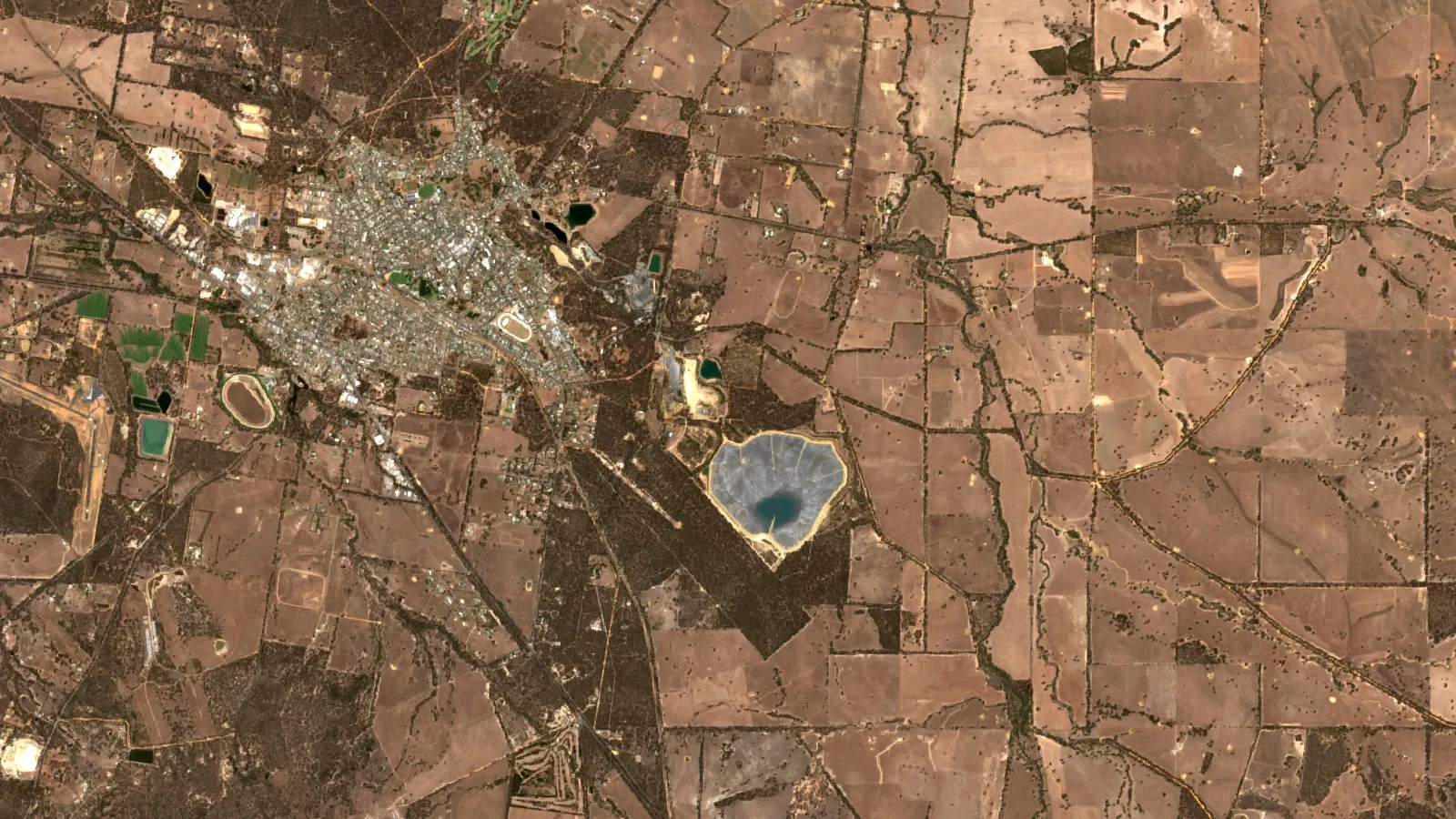
Key takeaways
- The Stawell Gold Field has produced about 5.3 million ounces and carries about 800,000 ounces in its current resource table (North Stawell Minerals, ASX annual report, June 2025).
- The mine went into care and maintenance in December 2016 and poured gold again on 31 January 2019 (Stawell Gold Mines history).
- Output was about 32,000 ounces in 2016, down from over 86,000 in 2009; the 2023 financial year gave 55,000 ounces (Australian Mining; Stockhead, December 2023).
- The mill has a stated capacity above 800,000 tonnes a year and 80-90% recovery (company), and a physics laboratory sits 1,024 m down (arXiv, 2022).
- Spot gold was US$4,154.60 per troy ounce on 15 October 2026 (Kitco, bid).
In this article
- Stawell Gold Mine at a glance
- Timeline: from the 1853 discovery to the restart
- Geology: the Stawell Zone and the Magdala basalt dome
- How gold is mined and processed at Stawell
- Stawell Gold Mine output: what the figures show
- Grade, resources and what lies under cover
- Gold recovery calculator for a Stawell-style ore
- Jobs, community and the laboratory a kilometre down
- North Stawell Minerals and the corridor around the mine
- Screening ground like the Stawell corridor from space
- What consultants should check before using Stawell figures
- Frequently asked questions
Stawell Gold Mine at a glance
The Stawell Gold Mine is an underground gold mine on the edge of the town of Stawell in western Victoria, Australia. Its modern workings began in 1981 and reached their first gold pour in August 1984, but gold has been taken from the district since the first discovery in 1853, according to the company’s own history. The wider Stawell Gold Field has produced about 5.3 million ounces and still carries about 800,000 ounces in its current resource table, says the North Stawell Minerals annual report to 30 June 2025 filed with the ASX.
An ounce here means a troy ounce, 31.1035 grams. Grade is the amount of gold in the rock, measured in grams per tonne (g/t). A mine such as this one is worth reading about for three reasons: it sits in one of Victoria’s best-known gold provinces, it works narrow, steep ore bodies at depth, and it has a long record of stopping and restarting as prices and costs changed. Spot gold was US$4,154.60 per troy ounce on 15 October 2026 (Kitco, bid, 10:01 p.m. ET), which is the backdrop for every restart decision described below.
| Item | What the sources show |
|---|---|
| Location | Stawell, Victoria, about 37.07 degrees south, 142.81 degrees east |
| Mine type | Underground, entered by declines (sloping tunnels); sub-level retreat bench stoping |
| Ore bodies | Magdala, Golden Gift and Wonga |
| Mill | Crushing, milling, gravity, flotation, ultra-fine grinding and carbon-in-leach; capacity above 800,000 tonnes a year; recovery 80-90% (company) |
| Modern start | Opened 1981; care and maintenance from December 2016; first gold pour after restart on 31 January 2019 |
| Operator | Stawell Gold Mines Pty Ltd (a private company, so it does not publish ASX resource statements) |
| Neighbour | North Stawell Minerals (ASX: NSM) explores to the north |
Timeline: from the 1853 discovery to the restart
The company timeline and press reports give a clear sequence. Alluvial gold and high-grade quartz reefs gave an estimated 2.57 million ounces between 1853 and 1926. The modern era began when Western Mining and Central Norseman Gold opened the Magdala workings, and the first gold pour came on 14 August 1984, per Wikipedia’s summary of the mine. By 1992 the mine had made about 336,000 ounces.
Chart
Gold produced at Stawell by period
Million ounces
- 1853: gold first found at Stawell.
- 1981-1992: modern mine developed (Magdala decline started 1981; first gold pour 14 August 1984); about 336,000 ounces made over 1984-1992.
- 1992-2007: a further 1.4 million ounces made, under a series of owners.
- 2016: output had fallen to about 32,000 ounces from more than 86,000 ounces in 2009, and Kirkland Lake Gold put the mine on care and maintenance in December (Australian Mining).
- December 2017: Arete Capital Partners, a Melbourne private equity firm, agreed to buy the operating company for US$6.25 million cash, with the seller keeping a 2.5% net smelter royalty (a royalty paid on revenue after smelting costs).
- 31 January 2019: first gold pour after the restart, following plant upgrades and new underground exploration.
- October 2024: first ore processed from the Wonga underground area.
Ownership has changed many times since 1981. As of the company’s own history (accessed October 2026), the latest change is December 2017, when Arete Capital Partners negotiated a controlling interest. A later Stockhead report describes the owners as a private group led by the Victor Smorgon Group.
Geology: the Stawell Zone and the Magdala basalt dome
The mine sits near the western edge of the Stawell Zone, part of the Lachlan Orogen (a belt of folded and faulted rock). The zone is bounded by the Moyston Fault to the west and the Coongee Fault to the east, and its rocks are Cambrian to Ordovician schists with granite intrusions and isolated domes of basalt, the company says. The Magdala dome is one of those basalt domes, and the Magdala ore body lies on its western margin.
Gold arrived with a hot-fluid event about 440 million years ago, at about the same time as the famous lodes of Bendigo and Ballarat. Three ore bodies are defined at Stawell:
- Magdala: the Central Lode is a quartz-rich shear lode 0.5 to 10 metres wide, dipping 55 to 65 degrees west, with about 4 km of strike and 1 km of dip. Its shoots (richer pods inside the lode) run above 4.0 g/t. Visible gold sits in quartz or with pyrite and arsenopyrite.
- Golden Gift: a stockwork (a dense net of small veins) typically 8 to 12 metres wide, and up to 30 metres in places.
- Wonga: reached by a decline off the Magdala decline, with first ore processed in October 2024.
Most Australian gold ore is far leaner than this. Geoscience Australia notes that most gold mined in the country has less than 5 grams in every tonne of rock mined, which is why even a mine grading around 3 g/t is seen as a high-grade underground operation.
How gold is mined and processed at Stawell
Miners use sub-level retreat bench stoping: ore is blasted from benches inside a stope (the mined-out void), then the void is filled with cemented rock fill or raw waste fill to hold the ground open for neighbouring stopes. Stopes usually hold 2,000 to 10,000 tonnes. The declines reached -1,646 metres relative level (RL) at Golden Gift and -1,227 metres RL at Magdala by December 2012, according to the company. Today’s workings are a little over 1 km below the surface.
Infographic
Ore to dissolved gold in 5 steps
- 1Crush and millTwo-stage crushing and milling break up the ore.
- 2GravityCentrifugal concentrators catch coarse gold.
- 3FlotationGold-bearing sulphides are concentrated.
- 4Ultra-fine grindConcentrate is ground to about 10 micrometres.
- 5Carbon-in-leachCyanide dissolves the gold onto carbon.
The mill then recovers the gold in stages, which suits an ore where the gold is partly coarse and partly locked inside sulphide minerals:
- Two-stage crushing and milling.
- Centrifugal gravity concentrators catch coarse gold, up to 30% of the gold in mill feed from underground ore.
- Two-stage flotation concentrates the gold-bearing sulphides (pyrite, arsenopyrite and some pyrrhotite).
- An ultra-fine mill grinds the concentrate to about 10 micrometres to release enclosed gold, up to 20% of mill feed.
- The ground sulphides and flotation tail are recombined and sent to a carbon-in-leach circuit, where sodium cyanide dissolves the gold.
- Extra chemical additions limit “preg-robbing”, where natural carbon in the ore soaks up dissolved gold.
The company states a capacity above 800,000 tonnes a year with 80-90% gold recovery. Capacity is not output, so treat it as a ceiling when you read the calculator below.
▶ How gold is mined and refined, from rock to ring. · 5:27
Stawell Gold Mine output: what the figures show
Three sets of numbers are easy to mix up. The first is the long record: 2.57 million ounces from 1853 to 1926, then the modern mine. The second is annual output. The mine made more than 86,000 ounces in 2009, about 32,000 ounces in 2016 (Australian Mining) and 55,000 ounces in its 2023 financial year, with a stated endowment of 890,000 ounces at an average of about 3 g/t in the core workings, per Stockhead, December 2023. The adjacent Wonga area was put at 94,000 ounces in the same report.
Chart
Annual gold output at Stawell, selected years
Thousand ounces; 2009 is ‘more than 86’, 2023 is the financial year
The third is the district total. Stawell was Victoria’s leading gold producer until 2008, before Fosterville took the title, according to Stockhead, September 2021. In 2019-20, Victoria’s gold output reached almost 800,000 ounces, its highest in over a century, the Victorian Government reported in November 2021.
The company is private, so there is no ASX quarterly report. Annual output figures come from owners’ announcements and press. Compare like with like: calendar years, financial years and cumulative totals are not the same thing.
If this topic matters to you, read Perth Mining Hub: Jobs, Ports and Output by Region next.
Related reading on this site: El Dorado Mine Nevada: Techatticup History and Output.
Grade, resources and what lies under cover
Grade is the second thing to check after ounces. The chart shows the spread of grades quoted for the Stawell system. The historic Mariners lodes, worked in the 1800s, gave 780,000 to 950,000 ounces at 28 to 30 g/t, per the North Stawell Minerals report. Modern resources are far leaner: the Wildwood resource north of the mine is 1,154,900 tonnes at 2.4 g/t for 87,300 ounces, of which 44,600 ounces are Indicated (the better-known category).
Chart
Gold grades quoted for the Stawell system
Grams per tonne (g/t); different kinds of figure, not one series
The Stawell Corridor is also a “gold under cover” story. Thin younger sediments hide the basalt domes, so explorers use geophysics to find them before drilling. North Stawell Minerals says its tenements cover a large part of that corridor, and a 2009 estimate by the Geological Survey of Victoria, quoted in Stockhead, put the gold endowment under cover in the northern Stawell Zone at about 38 million ounces. That is an estimate of what might exist, not a resource, and it is not a promise of ounces that can be mined.
Gold recovery calculator for a Stawell-style ore
The calculator below turns tonnes, grade, recovery and price into ounces and revenue. The defaults use public figures as examples: the mill capacity of 800,000 tonnes a year, a grade of 3 g/t and recovery near the middle of the 80-90% range. They are not a forecast for the mine, and actual throughput has been lower than capacity.
Calculator
How much gold could your ore recover?
Enter your own tonnes, grade, recovery and price.
- Contained gold (oz): 77,162
- Revenue at your price (US$): $262,349,896
Example values only, not a forecast or a benchmark. Defaults use the 800,000 t/yr capacity, about 3 g/t and a recovery inside the 80-90% range (Stawell Gold Mines; Stockhead, 2023). Uses 31.1035 g per troy ounce. Price is an example, use today’s price.
Jobs, community and the laboratory a kilometre down
When the Victorian Government visited in November 2021, the mine had about 300 local workers on its books and production was growing after its 2018 restart. The 2016 closure had laid off around 150 staff, so the restart was a large change for a town of about 8,500 people (2021 census, per the company’s history page). Ballarat-based Gekko Systems has worked with the mine since its 2018 upgrade.
The mine also hosts science. The Stawell Underground Physics Laboratory (SUPL) opened in August 2022, about 1,024 metres underground, where about 2,900 metres of water-equivalent rock shields the experiment from cosmic rays. It houses SABRE South, a dark matter detector that the authors describe as the first dark matter direct-detection experiment in the Southern Hemisphere, as set out in the SABRE South paper on arXiv.
North Stawell Minerals and the corridor around the mine
North Stawell Minerals (ASX: NSM) was spun out to explore near the mine. Its 2025 report says it holds 504 square kilometres of tenements, mostly under thin cover, aims to find shallow repeats of Stawell-type gold, and pays Stawell Gold Mines Pty Ltd for shared administration services. The Victor Smorgon Group held 16.89% and C&P Entities 19.17% of its voting rights on 16 September 2025. These are facts from a filing, not a recommendation. This page is not investment advice.
Victoria has several other gold areas, covered on our pages for Victoria’s gold fields, Australian gold deposits by state and gold exploration targets by state.
Screening ground like the Stawell corridor from space
Satellites do not see gold, and they cannot see through thick cover. They map clues on the surface: iron staining, clay and mica minerals, silica and fault lines. In a region like the Stawell Corridor, where younger sediments hide the basalt domes, a satellite screen is a first pass that helps rank where to spend ground-geophysics money, not a replacement for it. Farmonaut produces satellite mineral detection reports from an area boundary (KML, KMZ or polygon), and the results are exploration targets, not a resource estimate. You can read how it works on the satellite mineral detection page, send an area through the mining query form, or contact the team for a quote.

▶ How satellites help find gold by mapping the rock around it. · 4:25
What consultants should check before using Stawell figures
- Basis: production, resource and “endowment” are different measures. Endowment is a geological estimate of total gold, not minable ounces.
- Date: the figures above range from 2009 to 2025. Note the year beside each number.
- Source type: a private mine has no public JORC statement here. Treat press and third-party filings as secondary sources and ask for the operator’s own data.
- Units and money: ounces are troy ounces; prices on this page are US$ unless marked A$.
- Land access: exploration or prospecting in Victoria needs the right licence and landholder consent. Confirm the rules with the regulator.
Frequently asked questions
Where is the Stawell Gold Mine?
It is just outside the town of Stawell in western Victoria, Australia, about 37.07 degrees south and 142.81 degrees east.
Is the Stawell Gold Mine still operating?
It restarted in 2019 after care and maintenance from December 2016. First ore from the Wonga area was processed in October 2024, according to the company.
Who owns the Stawell Gold Mine?
Stawell Gold Mines Pty Ltd operates it. Arete Capital Partners negotiated a controlling interest in December 2017, the latest change in the company’s own history, and Stockhead has described the owners as a private group led by the Victor Smorgon Group. It is a private company, so it files no ASX resource statements.
How much gold has Stawell produced?
The Stawell Gold Field has produced about 5.3 million ounces in total, per the North Stawell Minerals 2025 report, including 2.57 million ounces of alluvial and reef gold from 1853 to 1926.
How deep is the mine?
The declines once reached -1,646 metres RL at Golden Gift and -1,227 metres RL at Magdala (December 2012). Current workings are a little over 1 km below the surface, per Wikipedia.
What is the ore grade?
A 2023 report put the core workings at about 3 g/t on an endowment of 890,000 ounces. Historic Mariners lodes reached 28-30 g/t.
What is the Stawell Corridor?
It is the belt of basalt domes and faults north of the mine, much of it hidden by thin cover. North Stawell Minerals is exploring it.
What is the Stawell Underground Physics Laboratory?
A dark matter research laboratory built about 1,024 metres underground inside the mine, opened in 2022.
How many people work at the mine?
About 300 local workers were on its books in November 2021, per the Victorian Government.
Can satellite data find a deposit like Stawell?
Satellites map surface clues and alteration, not gold itself. They can rank areas for follow-up work, but drilling is the only way to prove a deposit.
This page is for information only. It is not investment advice. Mining and exploration rules differ by state, so confirm licence and land-access requirements with the regulator.
Farmonaut mining
Map your own licence area from space
Request a quote for a satellite mineral detection report on your area.

Mining Pro sample view, synthetic data
Keep reading
Sources
- Stawell Gold Mines, Operations: history, metallurgy, geology: stawellgoldmines.com
- North Stawell Minerals, Financial Statements 30 June 2025 (ASX): announcements.asx.com.au
- Kitco, Gold spot price (15 October 2026): kitco.com
- Geoscience Australia, Gold: ga.gov.au
- Premier of Victoria, Gold growth brings new jobs (13 November 2021): premier.vic.gov.au
- arXiv, The SABRE South Experiment at the Stawell Underground Physics Laboratory (2022): arxiv.org
- Australian Mining, Kirkland Lake offloads Stawell gold mine (2017): australianmining.com.au
- Stockhead, At Stawell, gold is the gift that keeps on giving (9 December 2023): stockhead.com.au
- Stockhead, New discoveries, M&A set the Victorian gold fields on fire (14 September 2021): stockhead.com.au
- Wikipedia, Stawell Gold Mine: en.wikipedia.org
Discussion
Questions, corrections or field experience? Share them below. First-time comments are reviewed before they appear, and your email is never published.
No comments yet. Be the first to add a question or your experience.

 Sahara Mining
 Sean Mining Limited
 NTS Group (Pty) Ltd
 Mine4Africa
 Lithspo Minerals Limited
 Tintina Mining Group
 Dalgety Minerals Pty Ltd
 Vortex Minerals Pty Ltd
 Faith At Work (Pty) Ltd
 Geotech Mining Solutions plc
 Vulcan International Limited
 Kidepo Associates
 GKY Mining
 Alkimy SARL
 Double A Trading
 GemSprout Metals Limited
 Qader Group
 Ileys General Trading
 SG Gold Mining LLC
 VRV Global Pte Ltd
 Omsri International FZE
 G.I.T.T.
 Jaunita Erss Ltd
 SRK Consulting
 Berks Gold Limited











