

Central Victoria goldfields · Area guide
Golden Triangle Victoria: Map, Towns and Gold Finds
Victoria’s Golden Triangle is the nugget country of central Victoria around Dunolly, Moliagul, Wedderburn, Avoca, Maldon and Castlemaine, with Bendigo and Ballarat on its edges. It is where the Welcome Stranger nugget was found in 1869.
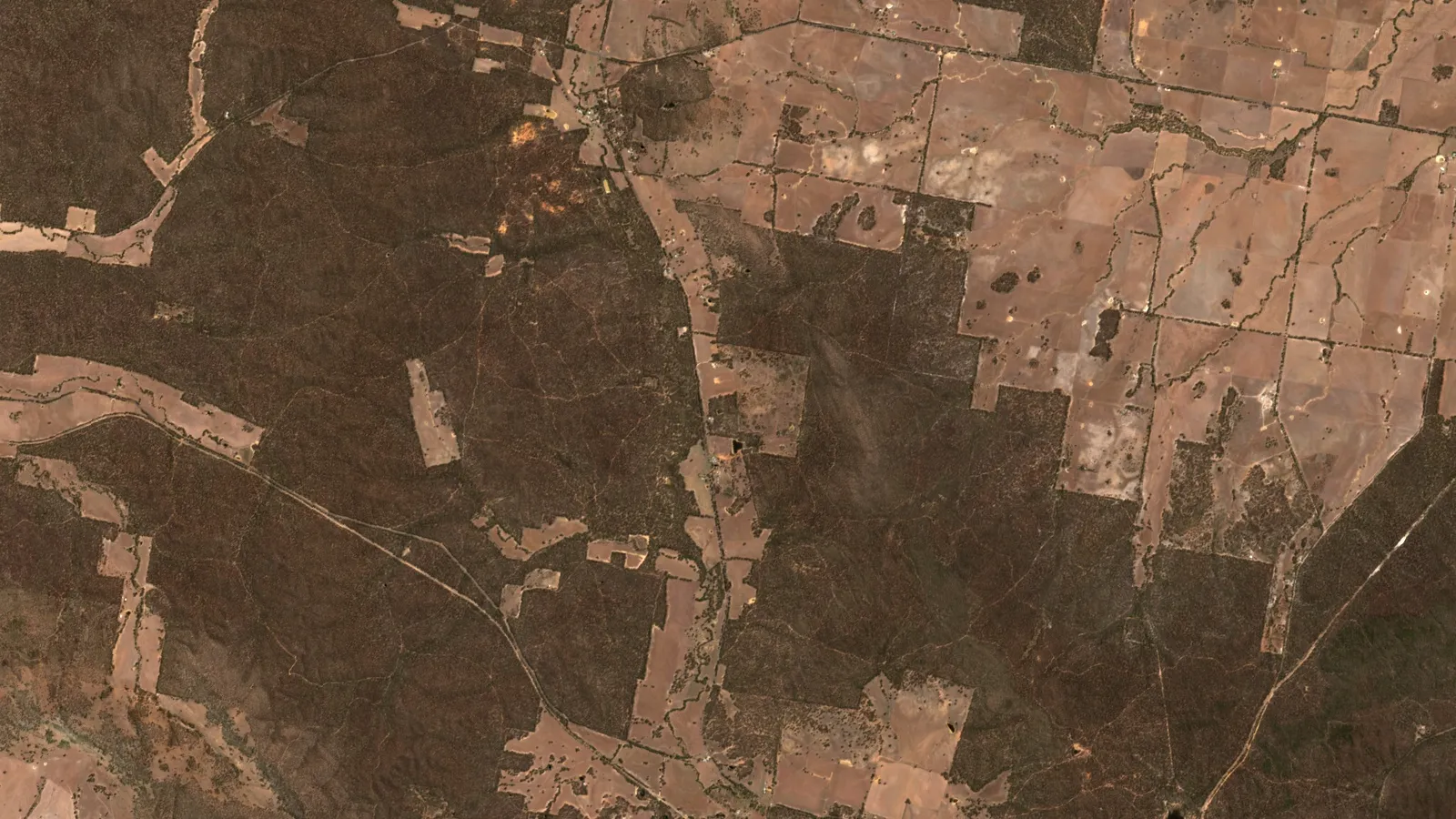
Key takeaways
- The State Library of Victoria places the Golden Triangle around Avoca, Castlemaine, Wedderburn, Moliagul, Dunolly and Maldon; it is not in north-east Victoria.
- The Welcome Stranger, found at Moliagul in 1869, had a net weight of 72.02 kg (2,315.5 troy oz).
- Gold here comes from quartz reefs in Ordovician turbidites (about 475 million years old) that weathered and shed nuggets into shallow gullies (AIG; James Cook University).
- Fosterville, 20 km north-east of Bendigo, produced 160,522 oz of gold in 2025 (Agnico Eagle annual report).
- Hobby prospectors need a miner’s right; it cost A$27.80 in May 2025 with more than 96,000 on issue (Victorian Hansard).
In this article
- Where is the Golden Triangle in Victoria?
- Golden Triangle Victoria map: how to read it
- Why the Victorian Golden Triangle is so rich in gold
- Famous gold nuggets found in the Golden Triangle
- Gold mines working near the Golden Triangle
- Prospecting in the Golden Triangle: the miner's right
- What consultants and licence holders should check
- Other places called the Golden Triangle
- Frequently asked questions
The Golden Triangle in Victoria is the nugget country of central Victoria, Australia, roughly the ground between Avoca, Castlemaine, Wedderburn, Moliagul, Dunolly and Maldon, with Bendigo and Ballarat on its edges. The State Library of Victoria says most Victorian prospectors today focus on this area. It is where the Welcome Stranger, the largest alluvial gold nugget on record, came out of the ground near Moliagul in 1869.
This guide shows where the triangle sits on a map, why its rocks shed so many nuggets, which modern mines work the same gold belt, what a prospector needs before swinging a detector, and what consultants and licence holders should check before taking on ground there. It replaces an older version of this page that placed the triangle in north-east Victoria; that was wrong, and the corrected location is below.
Where is the Golden Triangle in Victoria?
The Golden Triangle sits in north-central Victoria, about 150 to 200 km north-west of Melbourne. There is no legal boundary. The name is a prospectors’ term, so different guides draw the corners in slightly different places. The State Library of Victoria lists Avoca, Castlemaine, Wedderburn, Moliagul, Dunolly and Maldon inside it. Tourism and prospecting guides often stretch the corners to Ballarat in the south, Wedderburn in the north and Bendigo in the east, with St Arnaud and Ararat on the western side.
Wikipedia’s entry on the Goldfields region of Victoria treats “Victorian Golden Triangle” as another name for the Goldfields tourism region. That region covers Ballarat, Bendigo, Daylesford, Castlemaine and Maryborough and runs north as far as Inglewood and St Arnaud. The same source notes that some famous gold towns, such as Beechworth, Chiltern, Walhalla and Warrandyte, lie outside the region. North-east Victoria (Beechworth, Bright, Yackandandah) had its own gold rushes, but it is not the Golden Triangle.
Towns inside or on the edge of the triangle
| Town | Position in the triangle | What it is known for |
|---|---|---|
| Moliagul | Core, north-west of Dunolly | Welcome Stranger nugget, 1869 |
| Dunolly | Core | Alluvial and detector finds in the surrounding gullies |
| Tarnagulla | Core, east of Moliagul | Old alluvial and reef workings |
| Kingower | Northern core, near Inglewood | Hand of Faith nugget, 1980 |
| Wedderburn | Northern corner | Detector country on old shallow workings |
| Maryborough | South-west of Dunolly | 110 oz nugget found in 2006 |
| Avoca | South-western corner | Western edge of the goldfields |
| Maldon and Castlemaine | Eastern side | Mount Alexander diggings of the 1850s |
| Bendigo | Eastern edge | Largest goldfield of the Lachlan Fold Belt |
| Ballarat | Southern edge | Welcome nugget, 1858; working underground mine |
Golden Triangle Victoria map: how to read it
A simple map of the triangle draws three lines between the corner towns. That is a guide for where to start, not a licence map. For real decisions you need two other layers.
- Tenements: exploration licences, mining licences and retention licences held by companies. A miner’s right does not let a prospector search inside a current licence without the holder’s consent. The Victorian government publishes tenements on its online GeoVic map.
- Land status: Crown land, state forest, parks and private land have different rules. Many of the best-known detector areas are in state forests and regional parks around Dunolly, Wedderburn, Inglewood and Rheola. National parks and some reserves are closed to prospecting.
- Old workings: the shallow alluvial diggings, puddling sites and reef shafts of the 1850s and 1860s show where gold was once found. Detector operators often work the edges of these old diggings, because early miners could not see small or deep nuggets.
For a country-wide view of where gold, lithium, iron ore and other deposits sit, see our Australia mining map. For the state to the north, our guide to gold in NSW covers the Lachlan goldfields across the border.
Why the Victorian Golden Triangle is so rich in gold
Most of central Victoria sits on deep-sea sandstone and mudstone layers called turbidites. They were laid down on the ocean floor about 475 million years ago, in the Ordovician period, according to a Bendigo field guide from the Australian Institute of Geoscientists. Later the layers were squeezed east to west, folded into tight arches and cut by faults.
Hot fluids moved up those faults and left quartz veins with gold in them. Geologists call the arch-shaped veins “saddle reefs”. A James Cook University thesis on the Bendigo Goldfield describes it as the largest goldfield in the Lachlan Fold Belt of eastern Australia and a classic example of turbidite-hosted, structurally controlled gold. The same work divides western Victoria into the Stawell, Bendigo and Melbourne structural zones, separated by major faults. The Golden Triangle lies mostly in the Bendigo Zone, with its western side running toward the Stawell Zone.
Over millions of years, weathering broke down the reefs at the surface. Gold is heavy and does not rust, so pieces of it stayed near their source or washed a short way into gullies and creeks. That shed gold is “alluvial” gold. Where pieces stayed close to the reef, they could be large and lumpy rather than fine flakes. That is why this part of Victoria gives up nuggets rather than only fine gold, and why many big finds were shallow: the Welcome Stranger lay about 3 cm below the surface, and the Hand of Faith about 30 cm.
Some old rivers were later buried under basalt lava flows and younger sediment. Their gold-bearing gravels are called “deep leads”. Miners in the 19th century followed them underground near Ballarat and elsewhere. For a broader look at how reef, alluvial and other gold deposit styles differ, see our guide to types of gold rocks and deposits.

▶ How satellites help find gold: remote sensing explained. · 4:25
Famous gold nuggets found in the Golden Triangle
The triangle’s reputation rests on a few very large nuggets. Weights below are in troy ounces (oz t); one troy ounce is 31.1 grams.
Chart
Famous Victorian nuggets by weight
Troy ounces (net or recorded weight)
- Welcome Stranger (1869, Moliagul): found by John Deason and Richard Oates on 5 February 1869, 14 km north-west of Dunolly. It had a gross weight of 109.59 kg and a net weight of 72.02 kg (2,315.5 oz t), according to the Welcome Stranger record. It had to be broken up to be weighed.
- Welcome Nugget (1858, Ballarat): about 69 kg (2,217 oz t), found by a group of 22 miners at Bakery Hill. It was the largest known nugget until the Welcome Stranger.
- Hand of Faith (1980, Kingower): 875 oz t (27.21 kg), found with a metal detector by Kevin Hillier on 26 September 1980, about 30 cm below the surface, according to the Hand of Faith record. The State Library of Victoria says it was sold to a Las Vegas casino.
- Maryborough nugget (2006): 110 oz t (about 3 kg), found less than a metre below the surface, according to the State Library of Victoria.
The State Library also notes that most modern finds probably go unreported, because miners have kept rich patches quiet since the first rushes. Treat any “nugget hot spot” list with care.
Gold mines working near the Golden Triangle
The triangle itself is mostly small-scale detector and alluvial country, but the same gold belt hosts large underground mines. Production figures below come from company reports; check the latest quarterly report before using them.
Chart
Costerfield output, 2023 vs 2024
Thousand ounces
Chart
Fosterville gold output, 2024 vs 2025
Thousand ounces of gold produced per year
Fosterville (Agnico Eagle)
Fosterville is 100% owned by Agnico Eagle Mines and sits about 20 km north-east of Bendigo, according to the Agnico Eagle 2025 annual report. It produced 160,522 oz of gold in 2025 at a mill head grade of 7.20 g/t, down from 225,203 oz at 8.96 g/t in 2024. Grade, written g/t, means grams of gold per tonne of rock. Proven and probable reserves were about 1.7 million oz at 31 December 2025, and the current mine plan runs to 2037. Wikipedia describes Fosterville as the largest gold mine in Victoria as of 2025.
Costerfield (Alkane Resources)
Costerfield is an underground gold and antimony mine in central Victoria, east of Bendigo. It was run by Mandalay Resources, which completed a merger with Alkane Resources in August 2025. In 2024 Costerfield produced 43,346 oz of gold and 1,282 tonnes of antimony, or 54,805 gold-equivalent ounces, up from 47,661 in 2023, according to Mandalay’s 2024 results.
Ballarat Gold Mine (Victory Minerals)
The Ballarat Gold Mine at Mount Clear, on the southern edge of the triangle, has been owned and run by Victory Minerals since December 2023, after the previous operator went into voluntary administration. A May 2025 profile in the Australian Mining Review says the company aims to produce 30,000 to 40,000 oz of gold a year.
Consultants assessing ground in the triangle should read these operations as signs of the belt’s depth potential, not as proof that any one block of land carries gold. Most ground in the core triangle has been worked at the surface for 170 years, while the deep reef potential is tested by drilling.
▶ How gold is mined and refined, from rock to finished metal. · 5:27
Prospecting in the Golden Triangle: the miner’s right
To search for gold in Victoria as a hobby, you need a miner’s right. It is issued by the state, bought online, printed at home and valid for 10 years. In May 2025 the fee was A$27.80, and more than 96,000 miner’s rights were on issue, according to a member’s statement in the Victorian Parliament Hansard. The state consulted in 2025 on raising mineral fees, so check the current fee on the Resources Victoria website before you buy.
Infographic
From idea to a legal detecting trip in 5 steps
- 1Buy a miner’s rightOnline, valid 10 years.
- 2Check the landOpen Crown land, forest or permission.
- 3Check tenementsAvoid current licences without consent.
- 4Plan safetyOld shafts, water, tell someone.
- 5Detect and restoreHand tools only; fill every hole.
The main rules of a miner’s right are simple:
- Use hand tools only. No machinery or explosives.
- Carry the miner’s right while you prospect.
- Get the owner’s written permission before going onto private land.
- Do not prospect inside a current exploration or mining licence without the holder’s consent.
- Stay out of national parks and other closed reserves, and fill every hole you dig.
- Never use mercury to recover gold. It is highly toxic to people and waterways.
Old shafts are a real danger in the triangle. Many are hidden by scrub or covered with rotten timber. Stay on tracks you know, carry water and a map, and tell someone where you are going. A hobby find is usually weighed and sold to a dealer or refiner, and many nuggets sell above their metal value to collectors. The calculator below works out the metal value only.
Calculator
What is the gold in a nugget worth?
Enter your nugget’s weight, its gold purity and today’s gold price.
- Fine gold content (troy oz): 0.59
- Likely payout from a buyer (A$): $3,372
Example values only, not a benchmark. Victorian nuggets are often around 90-95% gold; a refiner’s assay gives the real figure. Price is an input: use today’s price. Refiners pay below spot, and collectors may pay above metal value.
What consultants and licence holders should check
Readers who advise on, buy or hold exploration ground in central Victoria face a different set of questions from hobby prospectors. Before taking on ground in or near the triangle, check these points:
- Tenement status: confirm on GeoVic whether the ground is open, under application or held, and who holds the neighbouring licences.
- Land use and access: Crown land, state forest and private farmland each need different consents, and parks may be closed to exploration.
- Cultural heritage: Aboriginal cultural heritage duties apply to ground disturbance in Victoria, and registered sites are common along creeks.
- Historic workings and rehabilitation: old shafts, mullock heaps and tailings affect safety, rehabilitation bonds and how a site can be sampled.
- Depth of the target: shallow alluvial gold is largely worked out in the best-known gullies; new value often sits in deeper reefs or buried deep leads that need drilling.
- Data already on file: past company reports, drilling and geophysics held by the state can save a season of field work.
Satellite imagery is a fast first screen for this kind of ground. It shows old diggings and spoil heaps, vegetation cover, clay and iron-oxide alteration where rock is exposed, and access tracks, before anyone books a field trip. Farmonaut’s satellite-based mineral detection maps such targets from a licence outline; results are exploration targets for follow-up sampling, not a resource estimate. If you need local help with fieldwork, our list of mining consultants in Australia covers the main firms.
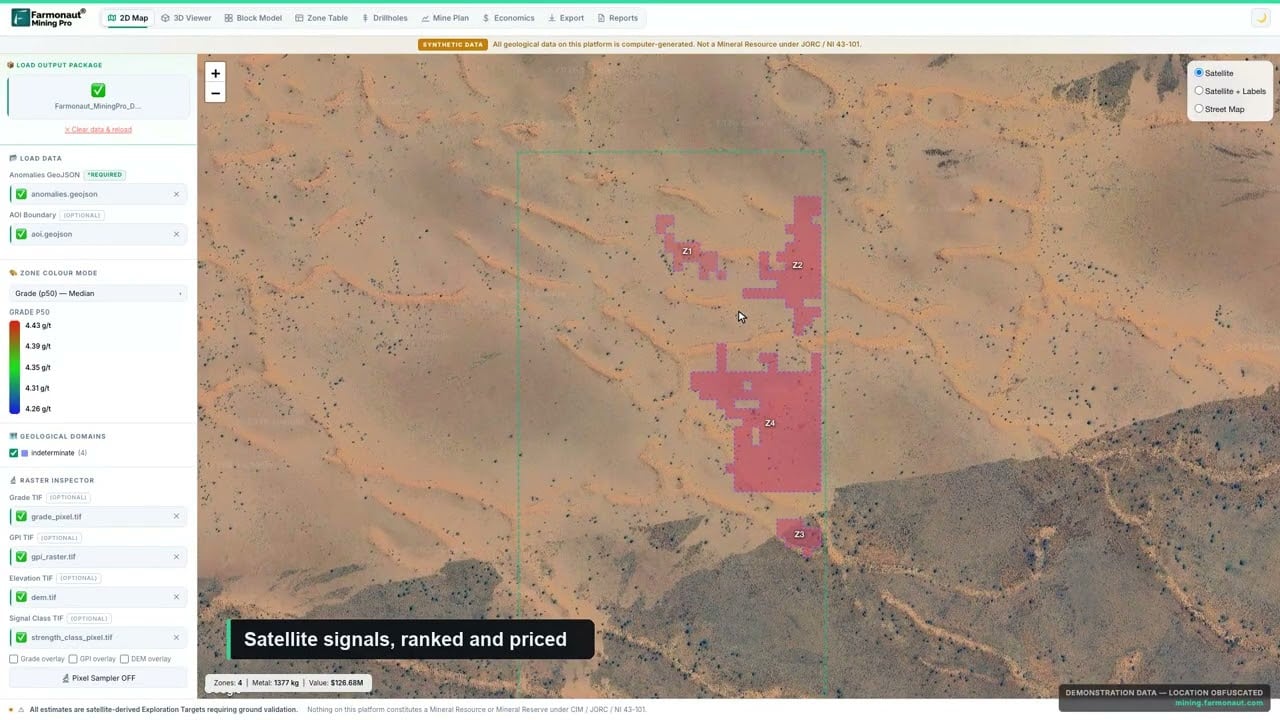
▶ What Farmonaut Mining Pro shows for a licence area. · 4:56
Other places called the Golden Triangle
Searches for “Golden Triangle” often mix up three different places. Victoria’s Golden Triangle is the central Victorian nugget country described here. The Golden Triangle of British Columbia, Canada, is a copper-gold district in the far north-west of that province, with large porphyry and vein deposits. The Golden Triangle of South-East Asia is a border area between Thailand, Laos and Myanmar and has nothing to do with gold mining. If you landed here looking for Canada, the geology and the rules are completely different.
Frequently asked questions
Where is the Golden Triangle in Victoria?
It is in north-central Victoria, about 150 to 200 km north-west of Melbourne, around Dunolly, Moliagul, Tarnagulla, Wedderburn, Avoca, Maldon and Castlemaine, with Bendigo and Ballarat on its edges.
Which towns form the corners of Victoria’s Golden Triangle?
There is no official boundary. Common versions use Ballarat, Bendigo and Wedderburn as corners, or Avoca, Wedderburn and Castlemaine. The core nugget ground is around Dunolly and Moliagul.
Is there still gold in the Golden Triangle?
Yes. Nuggets are still found with metal detectors, including a 110 oz piece near Maryborough in 2006, and large underground mines such as Fosterville still work the same gold belt.
Do I need a licence to look for gold in Victoria?
Yes. Hobby prospectors need a miner’s right, valid for 10 years. The fee was A$27.80 in May 2025; check the current fee with Resources Victoria.
Can I use a metal detector in the Golden Triangle?
Yes, with a miner’s right, on land open to prospecting and with permission on private land. You may dig only with hand tools, must fill your holes, and cannot work inside someone else’s licence without consent.
Where was the Welcome Stranger nugget found?
At Moliagul, about 14 km north-west of Dunolly, on 5 February 1869. Its net weight was 72.02 kg, or 2,315.5 troy ounces.
Is Beechworth in the Golden Triangle?
No. Beechworth is in north-east Victoria. It was an important gold town, but it lies outside the Goldfields region and the Golden Triangle.
What is the largest gold mine in Victoria?
Fosterville, about 20 km north-east of Bendigo, owned by Agnico Eagle. It produced 160,522 oz of gold in 2025.
Why are nuggets found so close to the surface?
Gold weathered out of quartz reefs and stayed close to its source because it is heavy. Many big finds were shallow: the Hand of Faith lay about 30 cm down.
Is the Victorian Golden Triangle the same as the one in British Columbia?
No. British Columbia’s Golden Triangle is a copper-gold district in north-western Canada. Victoria’s is an alluvial and reef gold area in Australia.
Questions about a specific licence area? Use our mining query form or contact us.
This page is for information only. It is not legal advice. Confirm miner’s right and land access rules with Resources Victoria. Always get permission, prospect safely and never use mercury.
Farmonaut mining
Map your mining site from space
Screen a central Victorian licence area for old workings, alteration and access before you plan field days.
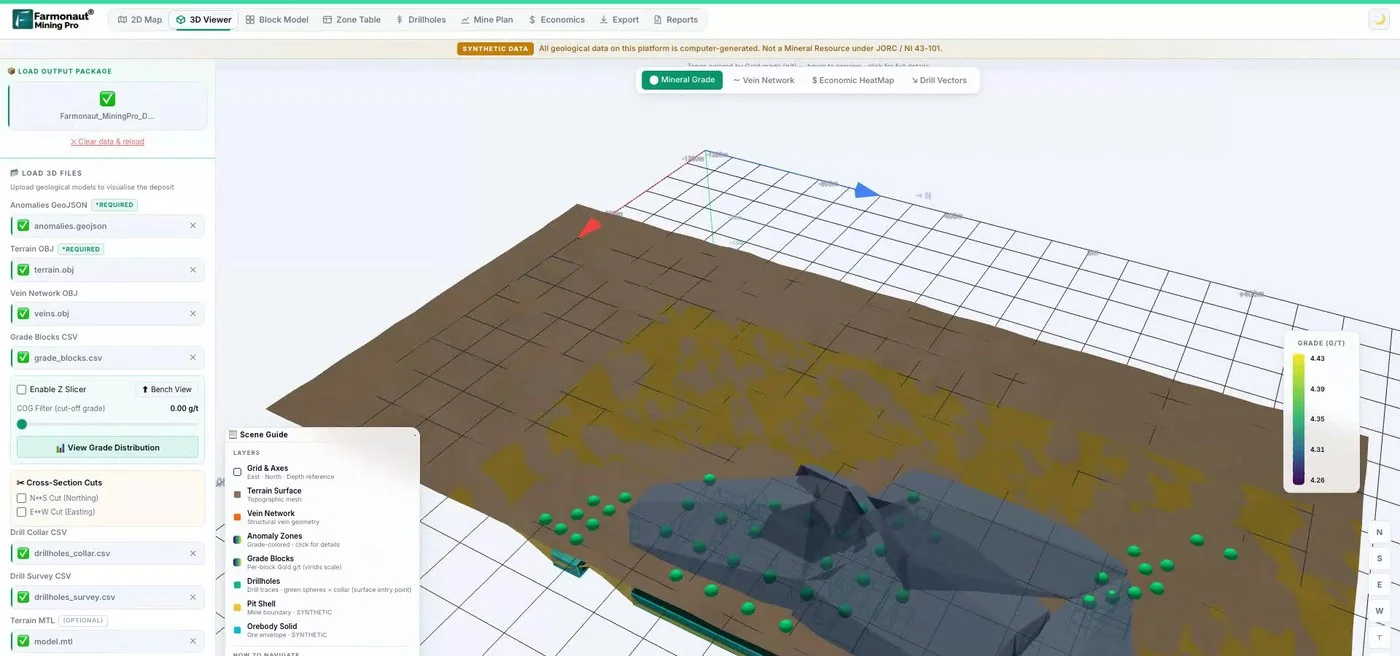
Mining Pro sample view, synthetic data
Keep reading
Sources
- State Library of Victoria (Ergo), Richest discoveries: ergo.slv.vic.gov.au
- Wikipedia, Goldfields (Victoria) / Golden Triangle: en.wikipedia.org
- Wikipedia, Welcome Stranger: en.wikipedia.org
- Wikipedia, Hand of Faith: en.wikipedia.org
- Wikipedia, Moliagul: en.wikipedia.org
- Australian Institute of Geoscientists, Victoria Hill Mining Reserve field guide (2019): aigjournal.aig.org.au
- James Cook University, Bendigo Goldfield thesis, sections A-B: researchonline.jcu.edu.au
- Agnico Eagle Mines, 2025 Annual Report: s205.q4cdn.com
- Wikipedia, Fosterville Gold Mine: en.wikipedia.org
- Mandalay Resources, record financial performance in 2024 (February 2025): nasdaq.com
- Australian Mining Review, Golden Victory (May 2025): australianminingreview.com.au
- Parliament of Victoria, Hansard, 28 May 2025: parliament.vic.gov.au
- Wikipedia, Victorian gold rush: en.wikipedia.org
Discussion
Questions, corrections or field experience? Share them below. First-time comments are reviewed before they appear, and your email is never published.
No comments yet. Be the first to add a question or your experience.

 Denkyira Nkoranza Concession
 Mwerezi Minerals Company Limited
 Congo Mining Solutions
 Mining SARL
 SenGold Invest SAS
 Sania Corporation
 Sean Mining Limited
 NTS Group (Pty) Ltd
 Mine4Africa
 Lithspo Minerals Limited
 Tintina Mining Group
 Dalgety Minerals Pty Ltd
 Vortex Minerals Pty Ltd
 Faith At Work (Pty) Ltd
 Geotech Mining Solutions plc
 Vulcan International Limited
 Kidepo Associates
 GKY Mining
 Alkimy SARL
 Double A Trading

 Licence holder · Nigeria · Gold + lithium
 Client · Somalia · Gold










