

Lithium · Fact check and company guide
Elon Musk Lithium Mine: What Tesla Owns and Buys
Tesla runs a lithium refinery in Texas (operating since January 2026) but no mine appears in its annual report. This page checks the Musk, Afghanistan, Albemarle, silver and uranium claims against filings and USGS data.
Key takeaways
- Tesla’s FY2025 annual report says its in-house lithium refinery in Texas began operations in January 2026; it names no lithium mine, silver mine or uranium mine (SEC filing, 2026).
- Argus reported in January 2026 that the refinery’s spodumene concentrate comes from North American Lithium in Canada and Liontown’s Kathleen Valley in Australia; Tesla’s 2022 Kathleen Valley offtake was 100,000 to 150,000 dry tonnes a year (Liontown, ASX).
- Afghan lithium figures are speculative Soviet-era estimates: 1,050,000 tonnes of Li2O at Pashgushta, to 100 m depth (USGS, 2011); USGS drilling at Dasht-e-Nawar did not suggest a viable brine (USGS, 2015).
- Albemarle holds 49% of Greenbushes and 50% of Wodgina, and sold 65 thousand tonnes LCE at US$19.53/kg in Q2 2026 (Albemarle, 5 August 2026).
- Battery-grade lithium carbonate averaged US$9,000 a tonne in 2025 (estimate) after US$63,700 in 2022 (USGS, 2026); Benchmark had it at US$19,025 ex-works China at the end of September 2026 (INN).
In this article
- Does Elon Musk own a lithium mine? What Tesla owns and buys
- How Tesla's Texas lithium refinery works
- What Musk has said about mining lithium
- Elon Musk silver mine and uranium: what the record shows
- Afghanistan lithium: what the USGS reports say
- Albemarle lithium mining: mines, plants and results
- Lithium price and reserves: why a carmaker moves into refining
- How much hydroxide does a spodumene contract make?
- How satellites help check a lithium project
- Water, waste and community checks for lithium projects
- Frequently asked questions
Elon Musk does not own a producing lithium mine, according to Tesla’s annual report and company announcements. What Tesla owns is a lithium refinery in Robstown, Texas, which Tesla’s annual report says began operations in January 2026. The ore it processes comes from other companies’ mines: Argus reported that Tesla sources spodumene concentrate from the North American Lithium mine in Canada and Liontown’s Kathleen Valley mine in Australia. Spodumene is a common lithium-bearing mineral in hard-rock deposits, and a concentrate is the ore after it has been crushed and the waste rock removed.
Tesla’s annual report also names no Afghan source, no silver mine and no uranium mine. This page sorts the claims that circulate about Musk, Afghanistan and Albemarle into what the documents show: what Tesla owns and buys, how the Texas refinery works, what the US Geological Survey (USGS) actually reports about Afghan lithium, what Albemarle operates, and a calculator that turns a tonnage of concentrate into lithium hydroxide and vehicles. Lithium is measured in several ways, so each number below says which one it uses. Prices are dated and sourced. This is information, not investment advice.
Does Elon Musk own a lithium mine? What Tesla owns and buys
Tesla, not Musk personally, is the company that deals in lithium. Its FY2025 annual report says its products use raw materials including aluminum, steel, lithium, nickel and copper, and it points to its in-house lithium refinery in Texas as an example of vertical integration (owning more steps of the supply chain). The same filing never uses the words silver, uranium, Afghanistan or Albemarle. The table lists the lithium links that are documented.
| Link | What it is | What the source says |
|---|---|---|
| Robstown refinery, Texas | Turns spodumene concentrate into lithium hydroxide, a battery chemical | Operations began in January 2026 (Tesla 10-K); Argus reports capacity to supply lithium for over 500,000 vehicles a year |
| Kathleen Valley, Western Australia | Hard-rock mine owned by Liontown Resources | Tesla signed an offtake (a purchase contract) in 2022 for 100,000 dry tonnes in year one and up to 150,000 a year after, over five years, priced off a lithium hydroxide formula (Liontown, ASX, 6 June 2022) |
| North American Lithium, Quebec | Hard-rock mine and concentrator | Named by Argus as a source of Tesla’s concentrate |
| Nevada clay claims | Rights to about 10,000 acres of lithium-bearing clay, announced in September 2020 | Musk did not say where in Nevada or whether development had started (Reuters, 24 September 2020) |
The Nevada claims show the difference between holding rights and running a mine. Reuters reported in 2020 that Musk told shareholders Tesla had secured rights to 10,000 acres of lithium clay and planned to leach it with table salt, and that permitting, water access and the unproven method were stark obstacles. Bloomberg added that Tesla had talked with Cypress Development about a deal that did not go ahead, and that BloombergNEF’s analyst said no other mine used the salt process. Tesla’s annual report describes the refinery but no lithium mine.
Offtake contracts are the usual route for carmakers. The buyer agrees to take a set tonnage from a mine at a formula price, which helps the miner finance the project and gives the buyer supply. In the Liontown deal, supply was conditional on commercial production starting by 1 December 2025. Liontown’s June 2026 quarterly report shows the mine produced 103,111 dry tonnes of concentrate and sold 108,489 tonnes at an average 5.0% Li2O grade and US$1,880 a tonne. Li2O is lithium oxide, the way spodumene grades are quoted; a standard concentrate is called SC6 because it carries about 6% Li2O.
How Tesla’s Texas lithium refinery works
Lithium hydroxide is a battery-grade chemical, and it is made from spodumene concentrate by a refinery, not by the mine. Tesla’s site manager described the Robstown plant in a video that Electrek covered in January 2026: the ore runs through a kiln and cooler, then an alkaline leach, then crystallization to battery-grade hydroxide. Tesla says the process uses no acid and its co-product, a sand-and-limestone-like material, is used in concrete mixes. The site manager called it the first spodumene-to-hydroxide refinery in North America, which is Tesla’s own claim.
Infographic
Spodumene to lithium hydroxide in 4 steps
- 1Concentrate arrivesSpodumene concentrate (about 5 to 6% Li2O) comes from a mine such as Kathleen Valley.
- 2Kiln and coolerThe ore is heated in a kiln and cooled, which changes the mineral so lithium can be leached.
- 3Alkaline leachLithium is dissolved without acid; the solid residue is the co-product Tesla says goes into concrete.
- 4CrystallizationLithium hydroxide is crystallized to battery grade and sent to cathode making.
Musk had pushed for this step for years. Electrek recalls that he urged entrepreneurs to enter lithium refining, arguing that the ore is plentiful but refining capacity was the bottleneck. The refinery broke ground in 2023, ran rock through the kiln in 2024 and was announced as operating on 14 January 2026. The process steps are in the graphic below.
The refinery has also drawn scrutiny. In April 2026 Electrek reported lab results from the refinery’s wastewater showing trace hexavalent chromium and arsenic and elevated lithium, and that a local drainage district asked Tesla to halt the discharge. The same report says the Texas environmental regulator had found Tesla in compliance with its permit, which covered conventional pollutants, and that Tesla said it routinely tests its discharge and was reviewing the district’s letter.
What Musk has said about mining lithium
Musk’s public comments explain why people search for a “Musk lithium mine”. In September 2020 he told shareholders that Tesla had secured lithium clay rights in Nevada. On 8 April 2022 he tweeted that the price of lithium had gone to “insane levels” and that Tesla might have to get into mining and refining directly at scale unless costs improved; he added that there is no shortage of the element itself, but that the pace of extraction and refinement is slow. No takeover of a miner shows up in Tesla’s annual report.
The record therefore shows a pattern: Tesla signs supply contracts, secured exploration rights once, and then built a refinery. It has not been reported as running its own mine. Readers who see “Musk lithium mine” headlines should check whether the story is about the Texas refinery, an offtake contract with a miner or an old rights announcement. See also our overview of lithium trends and the guide to lithium deposits: pegmatite, brine and clay.
Elon Musk silver mine and uranium: what the record shows
No filing or announcement shows that Musk or Tesla owns a silver mine or a uranium mine. Tesla’s FY2025 annual report says its products use raw materials including aluminum, steel, lithium, nickel and copper, and the words silver and uranium do not appear in it. Silver and uranium are mined by specialist companies and sold on their own markets, and claims that a celebrity owns such a mine should be checked against company filings, mining registries or a stock-exchange announcement.
Lithium, silver and uranium also behave differently as business lines. Lithium is sold into batteries, where the USGS puts the share of global use at 88% in batteries. A reader comparing the three should compare each metal’s own price, reserves and ownership, not a name.
Afghanistan lithium: what the USGS reports say
Afghanistan appears in the title of this page because its lithium is often described as enormous. The USGS record is more careful. In 2011 USGS summarised the Nuristan area in the north-east: earlier Soviet investigations suggested the world’s largest concentration of lithium-bearing pegmatites. A pegmatite is a coarse igneous rock that can hold spodumene. The USGS chapter gives average grades of around 1.4 to 2.1% Li2O in several deposits, and lists “speculative” Li2O reserves for six pegmatite deposits (2,123,000 tonnes in total); the chart shows the four largest. These figures come from the Soviet-era work, were calculated to a depth of 100 metres, and are not reserves under any modern reporting code.
Chart
Afghan pegmatite deposits: speculative Li2O reserves (six deposits)
Thousand tonnes Li2O, to 100 m depth; four largest of six deposits listed; Soviet-era estimates, not a modern reserve
The figure of about 1 million tons that circulates matches the speculative Li2O figure for the single Pashgushta deposit, 1,050,000 tonnes, so it should not be read as a national reserve. The USGS Mineral Commodity Summaries 2026 table does not give Afghanistan a lithium reserve or a mine production figure, and its list of countries with measured and indicated resources does not include it. Reserves and resources, in the USGS table, are different things: reserves are the part that can be mined economically today.
The other Afghan idea is lithium brine. A USGS team drilled six boreholes at the Dasht-e-Nawar basin in 2014, and the report found lithium in pore waters at less than 50 to 186 micrograms per litre, about three orders of magnitude below South American brines, and said this does not suggest a viable lithium brine resource there, with the caveat that the boreholes did not reach the basin floor. For Musk and Tesla, no Afghan source is named in the annual report, and Argus names Canada and Australia as the origin of the Texas feedstock.
Anyone judging an Afghan project would also need to check who holds the licence, whether the pegmatites are accessible in rugged terrain, and whether sanctions or payment rules apply. Those are legal questions for a lawyer and the regulator, not for a satellite map.
Albemarle lithium mining: mines, plants and results
Albemarle Corporation (NYSE: ALB) is a separate company from Tesla. It mines, converts and sells lithium, and its own pages list the main assets. In Australia it holds 49% of Talison Lithium, which owns the Greenbushes mine, and 50% of the Wodgina mine, which has a nameplate capacity of 750,000 dry tonnes of SC6 concentrate a year in three processing trains. In Nevada it operates Silver Peak, and in North Carolina it is permitting the Kings Mountain restart.
Chart
Lithium mine production by country, 2024 and 2025
Thousand tonnes of contained lithium; selected countries
| Asset | Type and place | Albemarle’s role | Source status |
|---|---|---|---|
| Greenbushes | Hard rock, Western Australia | 49% of Talison (partners hold the other 51%) | Albemarle mining interests page |
| Wodgina | Hard rock, Pilbara, Western Australia | 50% joint venture with Mineral Resources | Albemarle mining interests page |
| Silver Peak | Brine, Esmeralda County, Nevada | Operator; mine running since 1965 | BLM, 27 February 2026 |
| Kings Mountain | Hard rock, North Carolina | Project sponsor; federal permitting complete | Permitting Council, 30 March 2026 |
The Bureau of Land Management approved the Silver Peak expansion on 27 February 2026. It says the mine, which has operated since 1965, is the only producing lithium mine in the United States, and is now authorised on 8,058 acres. The BLM says new technology is expected to raise recovery by up to 100% from the same raw material. A USGS mapping report on Basin and Range playas adds that the Clayton Valley playa is the sole lithium brine-producing playa in the United States.
At Kings Mountain the Federal Permitting Council announced on 30 March 2026 that the project had completed federal permitting, with the Department of Energy leading the federal review. Albemarle describes it as one of the few known hard-rock lithium deposits in the US and said it continues to seek state and local approvals.
Albemarle’s second-quarter 2026 results, issued on 5 August 2026, show how the price cycle feeds through. Its Energy Storage segment sold 65 thousand tonnes of lithium carbonate equivalent at an average US$19.53 per kilogram, against 59 thousand tonnes at US$12.17 a year earlier. Net sales for the company were US$1.7 billion, up 31%. A fire at the Talison CGP3 processing plant on 9 June had a minimal expected impact on volumes, in part because Wodgina output was better than planned.
The comparison with Tesla is simple: Albemarle sits at the mine and chemical end and sells to cell and cathode makers, while Tesla builds the vehicles and has added a refinery in the middle. Tesla buys concentrate from mines such as Kathleen Valley and North American Lithium, while Albemarle owns stakes in its own mines. For related country guides see Lithium Australia: spodumene deposits and spodumene in James Bay.
Lithium price and reserves: why a carmaker moves into refining
Lithium price swings explain the interest in owning more of the chain. The USGS reports the annual average price of battery-grade lithium carbonate, in real dollars, at US$11,700 a tonne in 2021, US$63,700 in 2022, US$39,000 in 2023, US$11,800 in 2024 and an estimated US$9,000 in 2025. That is a more than fivefold rise and a drop of about 86% from the peak in three years. In 2026 prices rose again: S&P Global Energy data cited by INN show battery-grade carbonate in China (delivered, duty-paid basis) hit a two-year high of 201,000 yuan (about US$30,032) a tonne on 12 May 2026, then Benchmark Mineral Intelligence put the end-of-September price at US$19,025 a tonne ex-works China, down 20.8% on the quarter, with spodumene concentrate at US$1,780 a tonne FOB Australia.
Chart
Battery-grade lithium carbonate, annual average price
US$ per tonne, real dollars; 2025 is an estimate
Chart
World lithium reserves, selected countries
Million tonnes of contained lithium; USGS reserve estimates, eight largest shown
Reserves tell a different story from price. The USGS lists world lithium reserves at 37 million tonnes of contained lithium, with Chile, Australia, China, Argentina and the United States at the top of the list. Mine production moved more than reserves between 2024 and 2025: the USGS estimates world output rose from 222,000 to 290,000 tonnes of contained lithium, with China adding the most (20,600 tonnes), followed by Australia, Argentina, Mali and Zimbabwe at roughly 8,000 to 9,300 tonnes each. The two charts give the country detail. Reserves are only the part that can be mined profitably at today’s prices, so they move with the price chart above.
▶ What mining adds to an economy: exports, jobs, revenue and energy-transition minerals. · 5:03
How much hydroxide does a spodumene contract make?
A calculator makes the scale clear. Enter the tonnes of concentrate, its grade and the share of lithium that comes through the refinery, and the tool returns lithium carbonate equivalent (LCE), lithium hydroxide monohydrate and the number of vehicles that tonnage could cover for a battery size you choose. The two conversion factors are chemistry: lithium carbonate weighs 2.473 times its lithium oxide content, and lithium hydroxide monohydrate weighs about 1.136 times the same lithium as carbonate, from standard molar masses.
The default numbers are round examples, not Tesla’s or Liontown’s real figures. The first-year Liontown offtake volume of 100,000 dry tonnes is used only as a size reference. Refinery recovery, the kilograms of LCE in a vehicle and the hydroxide price are all inputs that you should replace with your own.
Calculator
How much lithium hydroxide does a tonnage of concentrate make?
Enter your own concentrate tonnes, grade and recovery. Results update as you type.
- Lithium hydroxide monohydrate: 11,940
- Vehicle batteries covered: 233,561
- Hydroxide value at your price (US$): $238,792,880
Example values only, not Tesla or Liontown figures. Fixed factors from molar masses: 2.473 t lithium carbonate equivalent (LCE) per t Li2O, and 1.136 t lithium hydroxide monohydrate per t LCE. Recovery, kg of LCE per vehicle and the hydroxide price are inputs: use today’s price and your own battery size. Prices in US$.
How satellites help check a lithium project
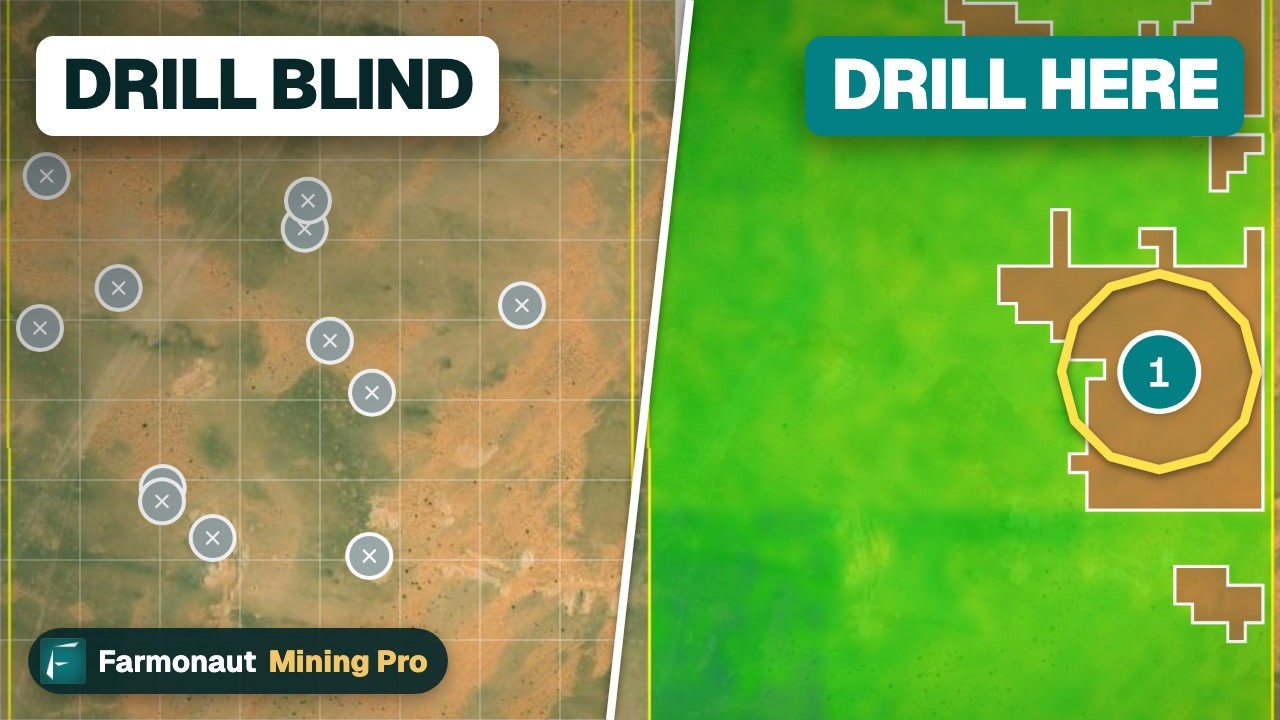
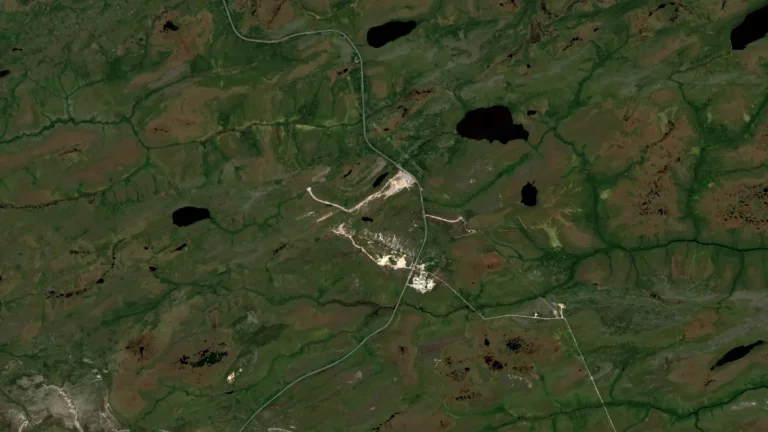
Satellites do not count lithium, but they help decide where to look. Hard-rock projects such as pegmatites show up as particular rock outcrops and alteration minerals; brine projects such as Clayton Valley show up as playas, dry lake beds. The USGS used data from the ASTER sensor, with a 60-kilometre swath, to rank Basin and Range playas for lithium brine prospectivity in the report cited above, and used Landsat imagery before field work at Dasht-e-Nawar. A map from space does not replace drilling, and it does not give an ore grade or a resource estimate.
Farmonaut’s satellite-based screening maps a licence area from a KML, KMZ or polygon boundary and reports exploration targets in 5 to 20 business days. The result is an exploration target, not a resource under JORC or NI 43-101, and it helps a consultant or licence owner decide which blocks deserve a field visit. The short video below shows how this works for a lithium case study in Nigeria.

▶ How satellites were used to look for lithium in Nigeria (Farmonaut case study). · 10:49
Water, waste and community checks for lithium projects
Lithium has a land and water footprint that investors and regulators check. A peer-reviewed study of two Argentine salt-flat mines, using their environmental impact reports, found total water footprints of 51.0 and 135.5 cubic metres per tonne of lithium carbonate at Olaroz and Fénix, and said the effects vary strongly with local water availability. The numbers cover two mines with different technologies, not all lithium production.
For a hard-rock or refining project, the checks are different: tailings and waste rock, process water, power source and the discharge permit, as the Texas case shows. A project of any type needs permits from the regulator, community consultation and independent monitoring. The video that follows explains the main environmental impacts of mining in plain language.

▶ The seven environmental impacts of mining, explained in plain words. · 2:31
We cover a connected topic in Where Does Tesla Get Its Lithium? 7 Key Sources.
For a closer look at a related question, see our guide: Gina Rinehart Mine Sites: What She Owns, and Wodgina.
Frequently asked questions
Does Elon Musk own a lithium mine?
No producing lithium mine owned by Musk or Tesla appears in Tesla’s annual report or company announcements. Tesla owns a lithium refinery in Robstown, Texas, which began operations in January 2026, and buys concentrate from mines such as Kathleen Valley in Australia and North American Lithium in Canada.
Where does Tesla get its lithium?
Argus reported in January 2026 that Tesla sources spodumene concentrate from the North American Lithium mine in Canada and from Liontown’s Kathleen Valley mine in Australia, and turns it into lithium hydroxide at its Texas refinery. Tesla also buys battery cells from suppliers, which bring their own lithium supply chains.
Does Elon Musk own a silver mine or a uranium mine?
There is no evidence of either. Tesla’s FY2025 annual report does not mention silver or uranium, and says its products use raw materials including aluminum, steel, lithium, nickel and copper.
What is the Tesla lithium refinery in Texas?
It is a plant near Corpus Christi that converts spodumene concentrate into battery-grade lithium hydroxide through a kiln, cooler, alkaline leach and crystallization. Tesla says the process avoids acid and that its co-product is used in concrete mixes. Argus reports capacity for over 500,000 vehicles a year.
How much lithium does Afghanistan have?
No modern, code-compliant figure is published in the USGS sources cited on this page. A USGS chapter lists speculative Soviet-era Li2O reserves of 1,050,000 tonnes at Pashgushta, 450,000 at Jamanak, 253,000 at Drumgal, 130,000 at Yorigal, 127,000 at Pashki and 124,000 at Pasgusta-under (2,123,000 tonnes across six deposits), calculated to a depth of 100 metres from surface exposures, with no drilling. The USGS Mineral Commodity Summaries 2026 give Afghanistan no lithium reserve figure.
Is there a lithium brine in Afghanistan?
A USGS drilling program at Dasht-e-Nawar in 2014 found very low lithium in pore waters, up to 186 micrograms per litre, and concluded the data do not suggest a viable brine resource, with the limit that the holes did not reach the basin floor.
What does Albemarle mine?
Albemarle holds 49% of Talison Lithium, which owns the Greenbushes mine, and 50% of the Wodgina mine, both in Western Australia, and runs the Silver Peak brine operation in Nevada. It is permitting a restart at Kings Mountain, North Carolina.
What is the only lithium mine in the United States?
The Bureau of Land Management describes Silver Peak, in Esmeralda County, Nevada, as the only producing lithium mine in the United States, operating since 1965. Its February 2026 approval authorised an expansion on 8,058 acres.
How much is lithium carbonate worth?
Benchmark Mineral Intelligence put ex-works China battery-grade carbonate at US$19,025 a tonne at the end of September 2026, after a May high of about US$30,000 on a delivered, duty-paid China basis (S&P Global data cited by INN), which is not the same basis as ex-works. The USGS annual average for 2025 was an estimated US$9,000 a tonne. Prices differ by grade, location and date, so use a current quote before any calculation.
What do lithium grade terms mean?
Li2O is lithium oxide; SC6 is a concentrate with about 6% Li2O; LCE is lithium carbonate equivalent, the common unit for comparing lithium compounds. One tonne of Li2O corresponds to about 2.473 tonnes of LCE by weight.
Farmonaut mining
Map your own lithium licence from space
A satellite screen of your licence boundary shows which blocks deserve a field visit before you plan drilling.

Mining Pro sample view, synthetic data
Keep reading
Sources
- USGS, Mineral Commodity Summaries 2026: Lithium: pubs.usgs.gov
- Tesla, Inc., Form 10-K for fiscal 2025 (SEC): sec.gov
- Argus Media, Tesla begins ops at Texas lithium refinery (15 January 2026): argusmedia.com
- Electrek, Tesla releases rare look at its lithium refinery (15 January 2026): electrek.co
- Electrek, Tesla lithium refinery discharge (21 April 2026): electrek.co
- Liontown Resources, ASX announcement: binding Tesla offtake agreement (6 June 2022): announcements.asx.com.au
- Liontown Resources, June 2026 quarterly activities report: investorpa.com
- Reuters via Mining.com, Tesla’s lithium plan faces stark obstacles (24 September 2020): mining.com
- Bloomberg via Mining.com, Tesla is trying to mine its own lithium (29 September 2020): mining.com
- CMC Aureon, Musk looks to mining to escape rocketing prices (21 April 2022): cmcmarkets.com
- USGS Open-File Report 2011-1204, chapter 24A: Nuristan rare-metal pegmatite area: pubs.usgs.gov
- USGS Open-File Report 2015-1059: data collected at Dasht-e-Nawar, Afghanistan: pubs.usgs.gov
- USGS Scientific Investigations Map 3554: lithium-rich playas in the Basin and Range: pubs.usgs.gov
- Albemarle, Second Quarter 2026 Results (5 August 2026): albemarle.com
- Albemarle, Mining Interests in Australia: albemarle.com
- Bureau of Land Management, BLM approves Silver Peak lithium mine expansion (27 February 2026): blm.gov
- Permitting Council, Kings Mountain Lithium project completes federal permitting (30 March 2026): permitting.gov
- Investing News Network, Lithium Market Trends: Q3 2026 Review and Forecast (14 October 2026): investingnews.com
- Arias-Alvarado et al., water footprint of lithium extraction in Argentina’s salt flats (2025): pmc.ncbi.nlm.nih.gov
Discussion
Questions, corrections or field experience? Share them below. First-time comments are reviewed before they appear, and your email is never published.
No comments yet. Be the first to add a question or your experience.

 Lithspo Minerals Limited
 Tintina Mining Group
 Dalgety Minerals Pty Ltd
 Vortex Minerals Pty Ltd
 Faith At Work (Pty) Ltd
 Geotech Mining Solutions plc
 Vulcan International Limited
 Kidepo Associates
 GKY Mining
 Alkimy SARL
 Double A Trading
 GemSprout Metals Limited
 Qader Group
 Ileys General Trading
 SG Gold Mining LLC
 VRV Global Pte Ltd
 Omsri International FZE
 G.I.T.T.
 Jaunita Erss Ltd
 Almosi SARL
 SRK Consulting
 Berks Gold Limited
 Mwerezi Minerals Company Limited

 Exploration consultancy · South Africa · Gold










