

Exploring Digital Twin Systems in Mining: 7 Key Benefits
Meta Description: Exploring digital twin systems in mining operations: a review of how virtual replicas and real-time data optimize efficiency, safety, and sustainability in 2026 and beyond.
“Digital twin systems in mining can increase operational efficiency by up to 25% through real-time data analysis.”
Table of Contents
- Introduction: The Future of Mining Operations
- Overview: Digital Twin Systems in Mining
- How Digital Twin Systems Work in Mining
- Comparison Table: Traditional Mining vs. Digital Twin Systems
- 7 Key Benefits of Exploring Digital Twin Systems in Mining Operations
- Farmonaut: Bringing Satellite Insights into Digital Twin Systems
- Implementation Challenges & Future Directions (2026 and Beyond)
- FAQ: Digital Twin Systems in Mining Operations
- Conclusion: Towards Resilient, Efficient, and Sustainable Mining



Introduction: The Future of Mining Operations
The mining industry continues to evolve rapidly, driven by technological advancements that reshape operational efficiency, safety, and sustainability. As we move into 2026 and beyond, digital transformation in mining is no longer a futuristic concept, but an immediate imperative. Digital twin systems have emerged as transformative tools, changing how mining companies interact with assets, monitor processes, and optimize outcomes in real time.
At the heart of this revolution lies the power of digital data, real-time monitoring, and the seamless integration of physical and virtual assets—enabling mining operations to become more efficient, safe, sustainable, and resilient. In this detailed review, we explore the architecture, applications, and seven key benefits of digital twin systems in mining, bolstered by the latest technology trends, industry use cases, and actionable strategies for 2026 and beyond.
Overview: Digital Twin Systems in Mining
A digital twin is a dynamic, virtual replica of physical assets or processes. In mining, these twins are built by integrating data from sensors, equipment, geological models, and operating protocols, and synced continually via IoT (Internet of Things) technology. Unlike traditional static models, digital twins are “living” virtual counterparts—constantly reflecting the real-time state of mines, plants, haul trucks, and infrastructure.
This integration enables operators to visualize, monitor, and simulate conditions and workflows—across drilling, blasting, excavation, mineral processing, logistics, and even environmental monitoring—without being physically present onsite. From machinery like excavators and haul trucks to entire processing plants, every operational layer can be represented, tracked, and optimized with unprecedented clarity.
Key technologies underpinning digital twins in mining include:
- IoT Sensors: Capture real-time data on equipment health, environmental conditions, ore quality, and more.
- AI & Advanced Analytics: Analyze patterns, enable predictive maintenance, and optimize processes.
- Geological & Mining Models: Provide spatial understanding for blasting, excavation, and resource planning.
- Blockchain: (as offered by Farmonaut) Ensures traceability and transparency in resources and supply chains.
- Remote Visualization Platforms: Allow experts to manage and train from anywhere, enhancing resilience.
The result? Mining companies gain informed decision-making, rapid issue response, and continuous improvement throughout operations—while significantly enhancing safety and sustainability.

How Digital Twin Systems Work in Mining Operations
Exploring digital twin systems in mining operations: a review starts with understanding the building blocks of a typical mining digital twin. Here’s how these systems function:
- Data Collection: Smart sensors, drones, and satellites collect operational, environmental, and geospatial data in real time—from asset temperatures to atmospheric gas levels and equipment vibration data.
- Integration & Modeling: Collected data feeds into centralized platforms, where advanced software and models generate a highly accurate virtual representation—mirroring the physical state of mining assets and activities down to fine details.
- Continuous Monitoring: The digital twin monitors performance, health, and condition of machines, plants, and site infrastructure, identifying abnormalities before they escalate into costly failures.
- Simulation & Optimization: Operators can run simulated operational scenarios—like adjusting drilling parameters or predicting haul truck breakdowns—to identify optimal strategies without risking real-world assets.
- Decision Support: Actionable insights are delivered to onsite teams and remote experts for informed, strategic interventions—enabling immediate and long-term improvements.
As mining grows more complex and geographically dispersed, digital twin systems act as the nerve center—bridging physical and digital operations for maximum efficiency and minimal risk.

Comparison Table of Traditional Mining vs. Digital Twin Systems
See how digital twin systems reshape mining operations, compared to legacy approaches. This comparison table below illustrates the seven key benefits and why embracing digital twins is crucial for companies in 2026 and beyond:
| Aspect | Traditional Mining | Digital Twin Systems | Benefit Description |
|---|---|---|---|
| Operational Efficiency | Moderate; manual inspection and delayed feedback | Up to 25% increase; real-time operational optimization | Instant adjustments to processes; reduces waste and downtime |
| Safety | Moderate; physical inspections expose personnel to risk | Significantly improved; scenario simulation & proactive alerts | Fewer accidents; hazardous scenarios predicted before occurring |
| Sustainability | Limited; reactive environmental remediation | Continuous tracking; automated environmental management | Reduced emissions, efficient waste handling, sustainability compliance |
| Predictive Maintenance | Reactive; unplanned downtime high (10–20%) | 20% reduction in downtime; predictive failure analysis | Lower maintenance cost, fewer equipment failures |
| Asset Utilization | Fragmented; incomplete usage data | Optimized; comprehensive asset health and performance tracking | Longer equipment lifespan; better resource planning |
| Remote Operations | Rare, difficult due to data silos | Standardized; secure, global real-time monitoring | Continuity during crises; experts oversee sites from anywhere |
| Training & Decision Support | Manual; theoretical and onsite only | Immersive; scenario-based, risk-free digital environments | Faster onboarding; increased workforce competence and safety |
“Over 60% of leading mining companies are investing in digital twins to enhance process automation and safety.”

7 Key Benefits of Exploring Digital Twin Systems in Mining Operations: A Review
Let’s break down the pivotal advantages that digital twin systems deliver to mining, using the focus keyword and targeted phrases for better relevancy and SEO:
1. Operational Efficiency and Predictive Maintenance
Minimizing downtime and maximizing machine performance are central to mining profitability. Digital twins enable continuous monitoring of equipment health via sensors—analyzing real-time data next to historical trends and usage.
- Predictive Maintenance: Digital twins allow mining companies to predict component wear in haul trucks and excavators, scheduling repairs before failures occur instead of reacting afterwards. This shifts from costly, reactive fixes to planned, efficient interventions.
- Reducing Downtime and Costs: For example, dense IoT sensors on trucks deliver vibration and temperature data to the digital twin. Anomaly detection alerts operators of deteriorating bearings or overheating before catastrophic breakdowns impact production.
- Workflows Optimization: Performance insights enable targeted improvements—like adjusting maintenance intervals, optimizing loading cycles, and reallocating underutilized assets across multiple layers of operations.
The impact in 2025 and beyond is clear: 20% or more reduction in unplanned downtime alongside significantly lower maintenance costs and greater operational efficiency across the board.
With robust fleet monitoring tools, companies can further optimize mining vehicle usage, ensure machinery safety, and improve maintenance planning. Explore Farmonaut’s Fleet Management Solution to see how advanced satellite and IoT tracking can empower predictive maintenance and asset health analytics.

2. Safety Enhancements for Hazardous Mining Environments
Mining sites often present hazardous scenarios—ranging from unstable ground to toxic gas buildup and machinery malfunctions. Digital twin systems introduce new standards in safety by enabling:
- Simulation of Risk Scenarios: Digital models can mirror real mine ventilation, equipment movement, and personnel routes—helping mining companies plan and test risk mitigation strategies virtually, without exposing workers to danger.
- Real-Time Safety Alerts: By tracking environmental data (like gas levels or seismic activity), digital twins instantly notify operators of emerging threats, prompting rapid evacuation, shutdowns, or remediation.
- Automated Safety Protocols: Integrated with operational protocols, digital twins can automatically trigger actions (ventilation adjustments, machine shutdowns) in hazardous conditions—reducing human error.
In 2026 and beyond, these capabilities not only protect lives but also ensure compliance with increasingly stringent mining safety regulations worldwide.
3. Resource and Process Optimization
Digital twin systems enable accurate modeling of extraction, blasting, and mineral processing—helping mining companies optimize resource use and improve yield.
- Optimal Blasting and Extraction: Virtual modeling supports best-in-class drilling and blasting patterns, reducing ore dilution and boosting resource recovery. Adjustments are tested digitally, ensuring only the best processes are implemented physically.
- Real-Time Process Control: In mineral processing plants, digital twins track feed composition, energy usage, and throughput. Operators instantly adjust parameters to align with changing ore characteristics and achieve consistent quality.
To further optimize ore extraction and recovery, satellite-driven insights can be pivotal. Explore Farmonaut’s Carbon Footprinting Platforms for monitoring site sustainability and environmental impact.

4. Sustainability and Environmental Management
As environmental sustainability becomes critical to stakeholders and regulators, digital twin systems help companies manage environmental impact proactively. How?
- Monitoring Tailings & Water Management: Virtual replicas allow for real-time monitoring of tailings facilities and water resources, ensuring any leaks, seepage, or contamination is detected and mitigated before escalation.
- Simulation of Environmental Impact: By modeling outcomes of operational activities (blasting, excavation, waste handling), digital twins help mining companies implement strategies to reduce emissions, minimize waste, and optimize land rehabilitation efforts.
- Sustainability Reporting: Continuous tracking enables reliable, auditable environmental reporting, supporting sustainability targets and compliance.
For those seeking robust traceability in mining supply chains and compliance with environmental standards, Farmonaut’s Blockchain Traceability Solutions empower secure, transparent tracking of resource movement from mine to market.
5. Remote Operations and Workforce Training
Unforeseen disruptions (global health events, extreme weather, geopolitical crises) have proven the need for resilient and remote mining operations.
- Remote Control & Oversight: Digital twins support centralized command centers where operators oversee global mining sites. Geologists, engineers, and managers coordinate activities, issue commands, and access actionable data no matter their location.
- Immersive Personnel Training: Thanks to virtual environments mirroring real mine conditions, new personnel, engineers, and safety professionals train via digital twins—acquiring experience in handling emergencies and operational anomalies, risk-free.
Remote access also keeps expertise flowing during crises and lowers the need for extensive travel or exposure—supporting cost savings, safety, and operational continuity.

For those managing distributed teams or large assets at scale, advanced management tools become essential. Discover Farmonaut’s Large Scale Management Solutions for seamless tracking, real-time incident response, and improved operational oversight.
6. Enhanced Asset Management and Integration with IoT
Digital twin systems provide a holistic, integrated view of asset health, operational status, and resource flows throughout the mine life cycle.
- Comprehensive Asset Tracking: All critical machines—like haul trucks, conveyors, crushers, and pumps—are monitored in real time, with performance indicators integrated into a single dashboard.
- IoT-Driven Insights: Asset sensors provide data on wear, fuel usage, load cycles, and temperature, allowing for granular integration and easier alignment of resources.
- Seamless Integration with Supply Chains: Digital twins can be linked with inventory and logistics systems, streamlining everything from ore transport to material deliveries.
Greater integration yields cost savings, improved asset utilization, and a proactive approach to capacity and resource management.
For robust asset integration and logistics, check out Farmonaut’s Fleet Management and Carbon Footprinting tools designed for mining operators needing efficient, reliable resource tracking.

7. Decision Support, Risk Identification, and Mitigation
In an industry where adverse events can halt operations or endanger lives, decision support is paramount.
- Scenario Simulation for Decision-Making: Digital twins simulate emergencies, operational changes, or market-driven demand spikes—helping leaders evaluate strategies before deploying resources or capital.
- Automated Risk Assessment: By blending historical, real-time, and predictive analytics, digital twin systems automatically flag high-risk assets, unstable zones, and emerging problems—providing prioritized alerts and recommended interventions.
This proactive, data-driven approach empowers mining companies to enhance resilience, reduce costly surprises, and allocate resources by actual need—improving profitability and reputation in the process.
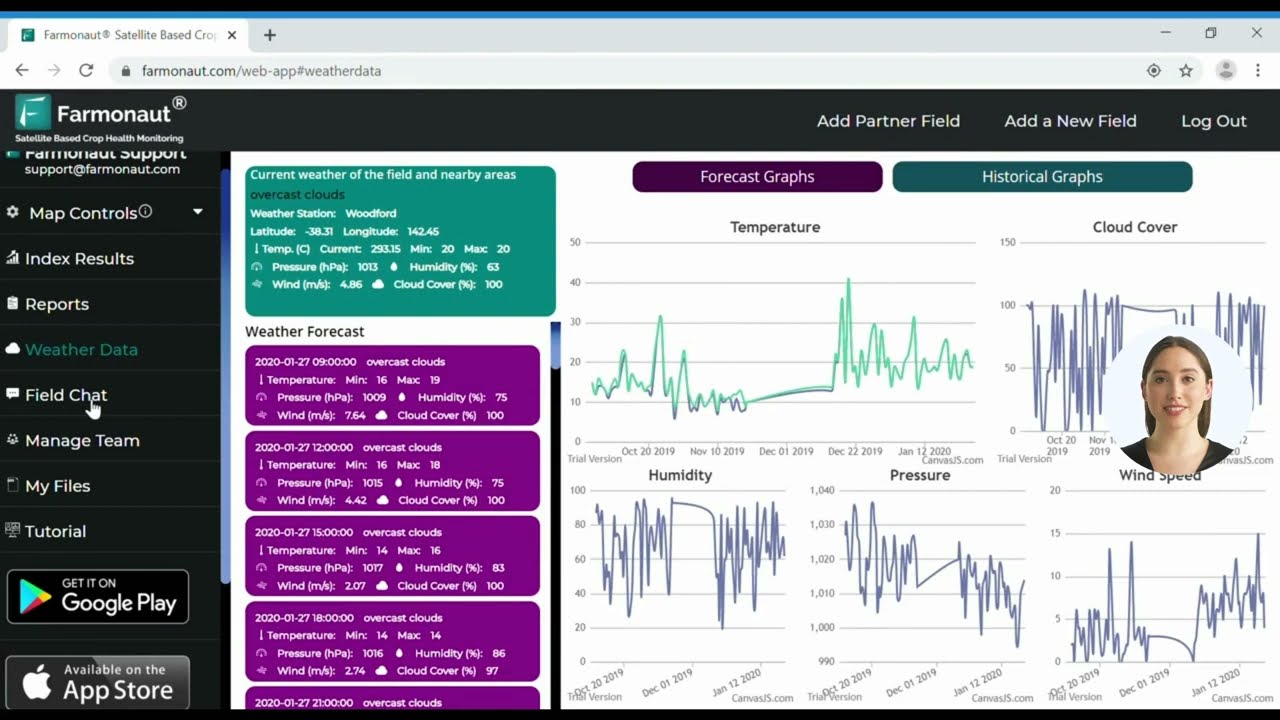
Farmonaut: Bringing Satellite Insights into Digital Twin Systems
With digital twin systems in mining operations: a review as our focus, it’s important to highlight how satellite-driven tools are fundamentally expanding what’s possible in mining management. Farmonaut’s mission is to make satellite insights affordable and accessible—helping industries of all sizes integrate these emerging tools directly into their operational strategies.
- Satellite-Based Monitoring: We provide multispectral imagery that covers everything from haul road health to ore stockpile tracking, empowering companies to enhance resource management and comply with operational protocols.
- AI & Blockchain Integration: Our platform delivers actionable, AI-driven advisory for real-time decision-making and secure blockchain-driven traceability for seamless, transparent resource movements.
- Remote Sensing & Environmental Compliance: Ours is among the few platforms able to continuously “see” mines, no matter the season or local weather—driven by satellite and IoT sensors, and built for sustainability goals.
- Flexible Access & Scaling: Our digital insights are available via Android/iOS apps, browser platforms, and developer-friendly APIs—ensuring that operational, environmental, and asset health data is never more than a few taps away.
Developers looking to integrate satellite-powered data insights into digital twin platforms for mining and infrastructure can use our API and find detailed documentation here.
Our satellite monitoring and blockchain traceability functions work hand-in-glove with digital twin systems to ensure mining activities are efficient, safe, and environmentally responsible—supporting companies on their journey to a more sustainable, data-driven industry.
Implementation Challenges and Future Directions for Digital Twin Systems in Mining (2026+)
While the benefits of exploring digital twin systems in mining operations are immense, there are key challenges and future trends to consider as we look towards 2026 and beyond:
Key Implementation Challenges
- Data Integration: Legacy mines often lack standardized, digital infrastructure, making initial integration of various data sources complex and costly.
- Cybersecurity: The explosion of connected devices and remote access heightens risks. Mining companies need robust protocols to secure sensitive operational data from cyber threats.
- Investment in Infrastructure: Creating accurate and detailed digital replicas demands substantial initial investments in sensors, IoT, networks, and skilled personnel.
- Skill Gaps: Training new personnel on data analytics, virtual operations, and AI-driven platforms requires ongoing effort and resources.
- System Scalability: As more assets and sites are digitized, ensuring systems scale efficiently without data bottlenecks is crucial for sustained success.
Emerging Trends and Future Outlook (2026+)
- AI and Machine Learning: Next-gen digital twins will use AI for autonomous process optimization, allowing mining operations to self-correct and evolve without direct human intervention.
- Edge Computing and 5G: Enhanced connectivity will bring data processing directly to the assets—reducing latency, enabling real-time analytics, and supporting more complex, distributed mines.
- Integration with AR/VR: Augmented and virtual reality platforms will allow personnel to “walk” through digital mines, interacting with live data and scenarios intuitively—revolutionizing training and incident response.
- Sustainability Regulations: Stricter global compliance standards will drive wider adoption for tools like continuous emissions monitoring, waste tracking, and blockchain-based traceability.
Ultimately, digital twin systems are set to become an industry standard, with Farmonaut supporting mining, infrastructure, and resource companies with affordable, scalable, and innovative satellite data solutions.
FAQ: Digital Twin Systems in Mining Operations
What is a digital twin system in mining?
A digital twin in mining is a dynamic virtual replica of physical assets, processes, or entire operations. Powered by IoT sensors, advanced analytics, and real-time data integration, it provides continuous monitoring, simulation, and operational optimization to enhance efficiency and safety.
How is a digital twin different from traditional mining models?
Traditional models are static, updated infrequently, and often separated from real-time operations. Digital twins respond to live sensor data and changes, providing current insights into conditions, equipment health, and workflows for better decision making and risk mitigation.
Which mining operations benefit most from digital twin systems?
All layers—drilling, blasting, excavation, transport, mineral processing, and tailings management—benefit significantly. Companies operating in hazardous, remote, or large-scale sites find digital twins especially valuable for operational continuity and safety.
Can digital twin systems support sustainability and regulatory compliance?
Yes. Digital twin systems enable continuous environmental monitoring, emissions tracking, waste and water management, and detailed reporting—streamlining compliance with evolving sustainability regulations and best practices.
How does satellite data enhance digital twin systems in mining?
Satellite imagery provides mining operators with a bird’s-eye view of physical mining sites, supporting remote mine health checks, infrastructure assessment, environmental monitoring, and advanced regularity traceability through integrative platforms like Farmonaut.
Conclusion: Towards Resilient, Efficient, and Sustainable Mining
As this review has explored, digital twin systems in mining operations are not simply the next step in digitization—they are the foundation for smarter, safer, and more sustainable mining worldwide. By integrating real-time data, IoT sensors, advanced analytics, and virtual simulations, mining companies gain unmatched insights, agility, and competitive edge.
In 2026 and beyond, we can expect:
- Increased use of digital twins to unify mining data streams, drive down costs, and reduce risk.
- Improved remote and autonomous operation platforms for business continuity, growth, and resilience during crises.
- Radically enhanced safety, compliance, and environmental stewardship—enabled by transparent, real-time digital monitoring.
With satellite-driven platforms like Farmonaut bringing real-time, actionable insights at scale, the mining industry stands poised to thrive in a data-driven, future-ready era.
Start your digital transformation now—experience the synergies of satellites, digital twin systems, and AI for mining operations.
Explore Farmonaut’s advanced solutions for mining, sustainability, and operational resilience:
Ready to harness next-generation digital twin insights for your site? Begin with Farmonaut’s digital monitoring – real results, less risk, and a more sustainable future.

 Mwerezi Minerals Company Limited
 Congo Mining Solutions
 Mining SARL
 SenGold Invest SAS
 Sania Corporation
 Sean Mining Limited
 NTS Group (Pty) Ltd
 Mine4Africa
 Lithspo Minerals Limited
 Tintina Mining Group
 Dalgety Minerals Pty Ltd
 Vortex Minerals Pty Ltd
 Faith At Work (Pty) Ltd
 Geotech Mining Solutions plc
 Vulcan International Limited
 Kidepo Associates
 GKY Mining
 Alkimy SARL
 Double A Trading
