

Nevada gold mine · Owner, output and reserves
Florida Canyon Mine, Nevada: Owner, Output, Reserves
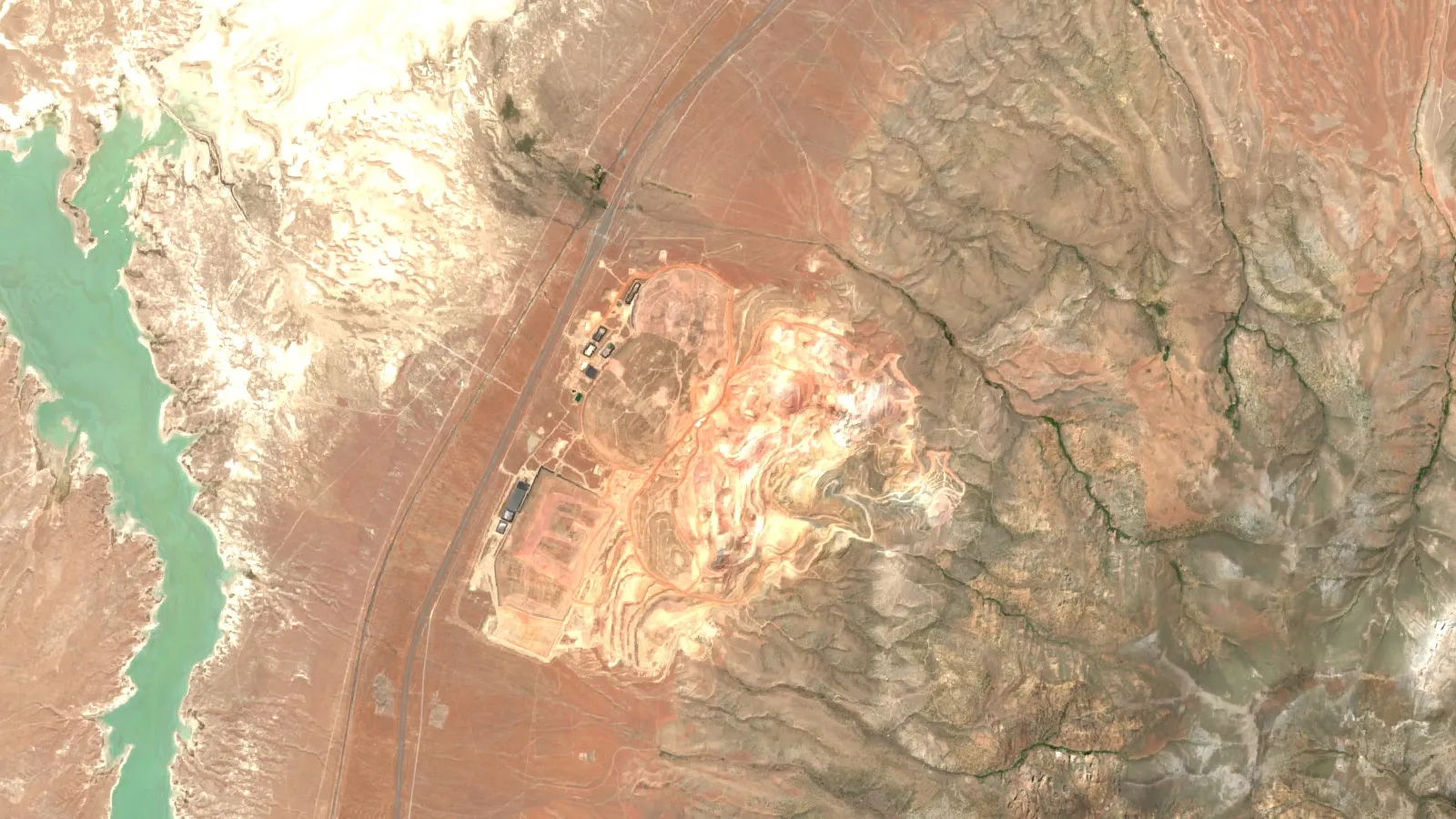
Florida Canyon, at Imlay in Nevada, poured 70,927 oz of gold in 2025 and is owned by Integra Resources. Its 2026 reserve is 1.19 million oz over an 8-year mine life. See output, costs, geology and permits, with a margin calculator.
Key takeaways
- Integra Resources (TSXV: ITR; NYSE American: ITRG) has owned the mine since 8 November 2024; it sits at Imlay in Pershing County, about 125 miles east of Reno (Integra, 2026).
- The mine poured 70,927 oz of gold in 2025. Guidance is 70,000 to 75,000 oz for 2026 and 80,000 to 90,000 oz a year for 2027 and 2028 (Integra, 2026).
- Proven and probable reserves are 1.19 million oz of gold, up 74%, with 8 active mining years to 2033 and two years of residual leaching (technical report, effective 31 May 2026).
- Mine-site AISC was US$2,693 per ounce sold in 2025 and US$3,371 in Q2 2026; 2026 guidance is US$3,300 to 3,500, against a life-of-mine plan of about US$2,331 (Integra, 2026).
- It is not near Carlin. The state permit puts it about 7 miles southwest of Imlay, and 2025 output was about 2% of Nevada’s gold (our calculation from USGS 2026).
In this article
- Key facts at a glance
- Where is Florida Canyon Mine and who owns it?
- Florida Canyon Mine production by year
- Reserves, resources and mine life
- What it costs to produce an ounce
- How the mine works: pits, crusher, heap leach and carbon columns
- The geology behind a low-grade oxide deposit
- How big is Florida Canyon next to other Nevada mines?
- Water, permits and environmental record
- Jobs, taxes and the local economy
- Exploration and what comes next
- Heap leach ounce and margin calculator
- Frequently asked questions
Florida Canyon is an open-pit, heap-leach gold mine at Imlay in Pershing County, Nevada, about 125 miles (201 km) east of Reno. Integra Resources Corp. (TSXV: ITR; NYSE American: ITRG) has owned it since 8 November 2024 (Integra, Q4 2024 results). The mine poured 70,927 troy ounces of gold in 2025 (Integra, 24 March 2026), and Integra guides 70,000 to 75,000 ounces for 2026. An updated technical report, announced on 25 June 2026, puts proven and probable reserves at 1.19 million ounces, an 8-year mine life and an average of 82,000 ounces a year (Integra, 25 June 2026).
Some older web pages place the mine near Carlin. It is not there: the mine’s state permit puts it about 7 miles southwest of Imlay, and the owner’s filings give the same Imlay location. This page takes the owner’s filings, the Nevada regulators and the USGS as its base, and works through the owner history, output by year, reserves, unit costs, the process, the geology, the environmental record, the drilling now under way and a calculator you can set to your own numbers. It is for information only and is not investment advice.
Key facts at a glance
| Item | What the filings show |
|---|---|
| Owner | Integra Resources Corp., which bought Florida Canyon Gold Inc. on 8 November 2024. Integra puts the price at US$68 million. |
| Location | South of Interstate 80, with the exit at Imlay. Winnemucca is 40 miles northeast and Lovelock 33 miles southwest. |
| Start of mining | First ore went onto the leach pad in November 1986. Mining was continuous to 2011, intermittent to 2015, and has run since a mid-2016 restart. |
| Method | Conventional truck-and-loader open pit, with cyanide heap leaching and a carbon-in-column circuit. |
| Gold poured in 2025 | 70,927 oz; 70,919 oz sold at an average US$3,411 per ounce. |
| Guidance | 70,000 to 75,000 oz in 2026, then 80,000 to 90,000 oz a year in 2027 and 2028. |
| Proven and probable reserve | 1.19 million oz of gold, effective 31 May 2026. |
| Mine plan | 116.9 million tonnes of ore at 0.31 g/t over 8 active years, then two years of residual leaching from 2033. |
Sources: Integra, 25 June 2026, the Q4 2025 results and the 2026 guidance release of 23 February 2026. Tonnes are metric. One tonne is 1.102 short tons, so 0.31 g/t is about 0.009 troy ounces per short ton.
Where is Florida Canyon Mine and who owns it?
The mine sits in the Basin and Range country of north-western Nevada. The nearest towns are Winnemucca (population 8,388 in 2022) and Lovelock (1,854), and Interstate 80 gives year-round access (Integra, 25 June 2026). The state water permit describes the site as public and private land in Pershing County, about 7 miles southwest of Imlay, and lets the operator process up to 18 million short tons of ore a year (Nevada Division of Environmental Protection, permit NEV0086001, 2023 renewal). Part of the site is public land managed by the Bureau of Land Management, so changes to the Plan of Operations need its approval (Integra annual information form, March 2025).
The ownership chain is long, because the mine has been through a bankruptcy and several sales:
| Period | Owner or event |
|---|---|
| 1982 to 1998 | Montoro Gold, a Pegasus Gold subsidiary, bought the property in 1982. Pegasus decided to build the mine in November 1985 and ran it until its Chapter 11 filing in January 1998. |
| 1999 to 2005 | Apollo Gold Inc. held the mine after Pegasus emerged from bankruptcy in February 1999. Nevoro Gold bought Apollo in 2002 and later took the Apollo Gold Corporation name. |
| 2005 to 2015 | Jipangu International bought Florida Canyon and the Standard Mine on 18 November 2005. After a debt default, Rye Patch Gold bought the mine for US$15.0 million plus shares; it shut down in the second quarter of 2015. |
| 2016 to 2020 | Rye Patch restarted the pit in mid-2016 and declared commercial production in December 2017. Alio Gold bought Rye Patch in May 2018, and Argonaut Gold merged with Alio in mid-2020. |
| 2024 | Alamos Gold agreed to buy Argonaut, and The March 2024 plan was to spin Argonaut’s US and Mexico assets, including Florida Canyon, out to its shareholders as a new company. Integra bought that company, Florida Canyon Gold Inc., on 8 November 2024. |
The pre-2020 history comes from the 2020 independent technical report prepared for Argonaut. The spin-out is described in the announcement of the Alamos deal.
Florida Canyon Mine production by year
Output has been close to 50,000 ounces a year in the early 2020s and about 70,000 ounces since. The Nevada Division of Minerals records 51,175 ounces of gold for 2021 and 49,440 ounces for 2022 (Nevada Division of Minerals, 2022 metallic production by mine). Integra then reported 72,229 ounces for 2024, the highest total from the mine in 21 years, though that figure also counts the months before Integra owned it. The fourth quarter of 2024 alone gave 21,278 ounces (Integra, 22 January 2025). In 2025 the mine poured 70,927 ounces, which Integra said met its 2025 guidance (70,000 to 75,000 ounces, set in January 2025).
Chart
Gold produced at Florida Canyon, by year
Troy ounces; years shown are those with a figure we could open
Quarterly output is lumpy because gold leaves a heap slowly, weeks or months after the rock is stacked. In 2025 it ran at 18,087 ounces in the second quarter, 20,653 in the third and 12,864 in the fourth. The fourth-quarter drop came from a liner tear in a solution pond. Integra says the liner was repaired by mid-November with no solution release and no environmental impact, and it expected to recover roughly 2,000 to 3,000 deferred ounces during 2026 (Integra, 24 March 2026).
The second quarter of 2026 produced 16,379 ounces, 30% more than the first quarter but below the 18,087 ounces of the second quarter of 2025. The mine sold 15,794 ounces at an average US$4,426 per ounce and set a record mining rate of 87,867 tonnes a day. About 4.2 million tonnes of ore went onto the pads, 45% more than in the first quarter (Integra, Q2 2026 results). The company kept its 2026 guidance, with about 45% of the gold due in the first half, and expects output to rise in the third and fourth quarters as stacked ore leaches. Its three-year outlook calls for 80,000 to 90,000 ounces a year in 2027 and 2028 (Integra, 23 February 2026). Guidance is a forecast, not a result.
Related reading on this site: Phosphorus Mining by Country: Output and Reserves.
We cover a connected topic in Pumpkin Hollow Mine: Owner, Status and Restart Facts.
Reserves, resources and mine life
A mineral resource is mineralised rock with reasonable prospects of being mined someday. A reserve is the part that a mine design and costs show can be mined at a profit. The cut-off grade is the lowest grade that still pays for mining and processing. All three are set by assumptions, mainly the gold price, so they move when the assumptions change.
The 2026 technical report was prepared by Global Resource Engineering and other independent consultants for Integra, with a report date of 25 June 2026 and reserve and resource estimates effective 31 May 2026. Its main changes against the 2024 statement:
- Reserves: proven and probable reserves rose 74%, from 685,000 ounces (the 2024 statement after depletion to the end of 2025) to 1.19 million ounces. The reserve cut-off grade is 0.14 to 0.15 g/t, using a US$2,400 gold price and oxide material only.
- Resources: oxide measured and indicated resources rose 128% and oxide inferred resources 57%. The estimate rests on 5,454 drill holes totalling 665,423 metres and uses a US$2,650 gold price in its pit shell, with recoveries of 43% to 67% for oxide and 80% for sulfide ore.
- Mine life: eight years of active mining, ending in 2033, followed by two years of residual leaching. The 2024 report had ended mining in 2030.
- Annual output: an average of 82,000 ounces, up from 70,000 ounces in the 2024 report.
The plan moves 211.2 million tonnes of material over the active years, including 116.9 million tonnes of ore at an average 0.31 g/t gold, and expects 656,000 recoverable ounces to be placed on the pads. Mining runs through the Central Pit from 2026 to 2028, the Radio Tower Pit from 2028 to 2030, and then the Jasperoid Pit and historic waste-rock stockpiles to 2033. Our own arithmetic: 116.9 million tonnes at 0.31 g/t holds about 1.17 million ounces, so the 656,000 recoverable ounces imply an average recovery near 56%. That fits the 60.1% recovery the mine achieved in 2025.
The report puts the after-tax net present value at a 5% discount rate at US$601 million on the company’s base-case gold prices, which start at US$4,344 per ounce for 2026 and fall to US$3,600 per ounce for 2030 to 2035. At a flat US$4,200 per ounce from mid-2026 it is about US$723 million. Cash left after tax and capital spending over the life is about US$0.8 billion, or roughly US$90 million a year. These are the company’s modelled values, built on its price decks. They are not a forecast we make.
What it costs to produce an ounce
Gold miners quote two cost figures. Cash cost covers site operating costs, refining and royalties. All-in sustaining cost (AISC) adds the capital needed to keep the mine running, such as waste stripping and pad expansions. Integra’s site-level AISC leaves out head-office overhead and exploration, so it is not the same as a company-wide figure.
Chart
Mine-site AISC: 2025 result against the plan
US$ per ounce sold; 2026 guidance shown at the midpoint of US$3,300 to 3,500
| Measure | Result or plan | Basis |
|---|---|---|
| Cash cost, 2025 | US$1,937 per ounce sold | Guidance had been US$1,800 to 1,900 |
| Mine-site AISC, 2025 | US$2,693 per ounce sold | Guidance had been US$2,450 to 2,550 |
| Cash cost, Q2 2026 | US$2,495 per ounce sold | Quarter result |
| Mine-site AISC, Q2 2026 | US$3,371 per ounce sold | Quarter result |
| Mine-site AISC, 2026 guidance | US$3,300 to 3,500 per ounce | Raised from US$2,750 to 2,950; assumes US$4,200 gold |
| Mine-site AISC, life of mine | About US$2,331 per ounce | 2026 technical report |
The company ties the 2025 overrun mainly to royalties and excise taxes that rise with the gold price: every US$100 per ounce change in gold moves both cash cost and AISC by about US$7 (Integra, 2026). For 2026 it also cites heavier waste stripping, more rock mined and stacked, and higher diesel and explosives prices. The technical report expects costs to fall back to about US$2,331 per ounce over the life of the mine once the Central Pit stripping and fleet replacement are done.
Using only the company’s own numbers, the 2025 average realised price of US$3,411 per ounce against a US$2,693 AISC leaves about US$718 per ounce. In the second quarter of 2026 the gap was US$4,426 less US$3,371, about US$1,055 per ounce. Integra reported 2025 mine operating earnings of US$94.5 million, a 39% operating margin on US$243.9 million of revenue. The plan also needs about US$92 million of growth spending, split between US$55 million for two leach-pad expansions inside the current permit footprint and US$37 million to replace the ageing haul trucks and loaders, plus about US$267 million of sustaining capital over the life, which includes roughly US$87 million of pre-stripping in the Central Pit.
How the mine works: pits, crusher, heap leach and carbon columns
The method is simple in outline and slow in practice. The deposit is low in grade, near the surface and oxidised, so the cheapest route is to dig it, stack it on a lined pad and let a dilute cyanide solution trickle through it for months.
Infographic
From pit to gold bar in 5 steps
- 1Drill, blast and haulTrucks move rock from the pits to the crusher or straight to the pad.
- 2Crush part of the oreAbout half goes through two crushing stages and is mixed with a binder.
- 3Stack on a lined padCrushed and run-of-mine rock is built into heaps on a lined pad.
- 4Leach with cyanideDilute solution drips through the heap and dissolves the gold.
- 5Capture on carbonGold sticks to carbon in columns and is later recovered and cast into bars.
- Drill, blast and haul. Trucks and loaders move 22.0 to 28.1 million tonnes of material a year in the plan. Four new machines arrived in the fourth quarter of 2025, a Hitachi EX3600 shovel, a Caterpillar 992HL loader and two Caterpillar 785 haul trucks, with six more 785 trucks expected in the first half of 2026.
- Crush part of the ore. About 7.1 million tonnes a year goes through two stages of open-circuit crushing to 80% passing 2.5 inches, at up to 21,000 tonnes a day. Crushed rock is mixed with a polymer binder so that solution flows through it evenly. Crushed ore is about 47% of what goes onto the pad.
- Stack the rest as run-of-mine. The remainder, 4.5 to 9.3 million tonnes a year, goes onto the pad as blasted, uncrushed rock. It is cheaper to handle but leaches more slowly and recovers less gold.
- Leach. Barren solution, which is cyanide solution very low in gold, is dripped onto the heap through irrigation tubing. The gold dissolves as the solution passes down through the rock.
- Capture and refine. Gold-bearing solution from the bottom of the pad runs through carbon columns, where the gold sticks to activated carbon. A 2020 independent report describes the loaded carbon being pressure-stripped, the gold electrowon and the product melted into doré bars. Integra added a new carbon-in-column circuit, which started up in the fourth quarter of 2024.
Average gold recovery was 60.1% in 2025, and the reserve model uses 43% to 67% for oxide ore depending on the deposit and ore type (Integra, 2026). Heap leaching never recovers everything, so a pad keeps yielding gold for a while after stacking stops. That is why the plan has two years of residual leaching at the end. The pad is also growing: Phase IIIb was built in late 2025 and four further phases are planned between 2026 and 2031, all inside the existing Mine Plan of Operations.
▶ Follows a gold nugget from rock to ring: found, drilled, crushed, dissolved, caught on carbon, melted and refined. · 5:27
The geology behind a low-grade oxide deposit
An independent report for Argonaut in 2020 describes Florida Canyon as a large-tonnage, low-grade, Neogene-age epithermal gold system beside an active geothermal system. The mineralogy points to a low-sulfidation setting, the type formed by hot, near-neutral fluids close to the surface. The minable ore is oxidised, which is what lets cyanide leaching work. USGS records list the host rocks as Late Triassic in age (USGS MRDS record via Western Mining History).
The 2026 resource model adds structural domains and shear controls to the geological interpretation. Integra says this improved grade continuity and cut dilution. Its newest drilling targets the Range Front Fault, which runs through the Central Pit and the North Dump, and a shear zone called Madre Shear that crosses it at a high angle. In plain terms, the gold follows faults and shears, so a map of faults is the first thing an explorer wants.
That is where remote sensing helps on ground like this. A satellite cannot see gold at 0.31 g/t. It can map surface clues that often travel with epithermal systems, such as iron-oxide staining, clay minerals, silica and fault lines. Consultants use those maps to rank where to sample, drill or ask for permission first, and then confirm with samples. Our guides on gold deposits in Nevada and Walker Lane gold show how that screening step fits the Nevada permit process, and satellite-based mineral detection explains the method itself. Satellite results are exploration targets that sit ahead of a resource estimate.
How big is Florida Canyon next to other Nevada mines?
It is a mid-sized heap-leach operation in a state dominated by much larger plants. The USGS estimates that US mines produced 160 tonnes of gold in 2025 and that Nevada supplied about 64% of it (USGS, Mineral Commodity Summaries 2026). The 70,927 ounces poured in 2025 equal about 2.2 tonnes. By our calculation that is roughly 1.4% of US output and about 2% of Nevada’s. The Nevada Division of Minerals reports state gold output of 3,479,748 ounces in 2024, 13.7% lower than the year before, valued at about US$8.3 billion (Nevada Division of Minerals, 2026 state of the state).
Chart
Gold output at selected Nevada operations, 2022
Troy ounces, as reported to the Nevada Division of Minerals
The chart compares 2022 output at six selected Nevada operations from the Division’s 2022 by-mine table. Nevada Gold Mines’ Carlin Trend operations alone produced about 18 times what Florida Canyon did that year, which is why a mine of this size is called mid-tier rather than major.
Water, permits and environmental record
Gold heap leaching is regulated in Nevada through a water pollution control permit. The permit for this site names Florida Canyon Mining, Inc. as the permittee. The permit is NEV0086001, valid 24 March 2023 to 12 August 2026. It lists leak-detection systems on the process ponds and leach pads, secondary containment for the cyanide tanks, and sampling for weak acid dissociable (WAD) cyanide, which is the cyanide that stays chemically active in solution (Nevada Division of Environmental Protection).
Water comes from wells on site. The mine holds 2,415 acre-feet of water rights, which Integra describes as enough for operations (annual information form, March 2025). In the third quarter of 2025 a problem with a historic well caused a temporary shortage of dust-suppression water, which forced a change in the mining sequence, and the company replaced the well. Integra also recorded six minor reportable environmental spills, incidents or non-compliances at its operations in 2025, one of them in the fourth quarter, and seven MSHA-reportable injuries at Florida Canyon, a total recordable injury frequency rate of 1.79 (Integra, 2026).
Closure is priced into the plan. The technical report includes reclamation costs, with about US$6 million for the Standard Mine, and assumes the cash collateral held for closure is released in the final year once reclamation is done. Integra says all the planned production growth and pad expansion can be supported within the existing Mine Plan of Operations. For a broader look at how mining changes land, the video below walks through seven impacts and what each one looks like from orbit.

▶ Explains seven ways mining changes the land, in claymation with satellite maps. · 2:31
Jobs, taxes and the local economy
Integra had 305 employees on 31 December 2024, of whom 277 were in Nevada (annual information form). The filing gives company-wide totals, not a count for this mine alone. Across the state, the Division reports that mining employs more than 14,000 people at an average yearly pay of US$121,000.
Mining taxes are set at state level and shared with counties. The Net Proceeds of Minerals tax raised US$191 million in 2024 on US$9.7 billion of gross proceeds, and roughly half goes to counties and half to the state. A separate gold and silver excise tax, 0.75% of taxable revenue between US$20 million and US$150 million and 1.1% above that, raised US$83.5 million in 2024. The Division totals the main taxes paid by Nevada mining in 2024 at US$488.3 million (all from the Division’s 2026 presentation linked above). Integra also names royalties and excise taxes as a growing share of this mine’s cash costs.
Exploration and what comes next
Integra started a 42,500 metre drill programme at the mine in April 2026. By 23 September it had completed 30,140 metres of reverse-circulation drilling, and it reported new results in three places (Integra, 23 September 2026):
- Between the Central and Radio Tower pits: 1.30 g/t gold over 62.5 m, including 14.74 g/t over 1.5 m, and 0.59 g/t over 167.6 m.
- Madre Shear North: 0.48 g/t over 54.9 m at a new target beneath the North Dump. A further 2,000 m is planned.
- North Dump: 0.38 to 0.40 g/t over 36.6 m in two holes, material that was modelled for the updated mine plan.
These are drilled intervals, not true widths and not recovered grades. Reserve recoveries run from 43% to 67%, so a 0.5 g/t intercept does not yield 0.5 g/t of gold. The company also plans 7,000 m at the Standard Mine area, 8 km south of the pit, before the end of 2026. The wider property covers about 84 square miles (135 km2), and the technical report notes that earlier operators did little exploration across it. Integra plans first-pass drilling on targets it generated from geology, geophysics, geochemistry and AI-assisted targeting. None of this is in the reserve. It would have to be drilled, modelled and permitted before it became ore.

▶ Explains how satellites map the rock and alteration around gold rather than the gold itself. · 4:25
Heap leach ounce and margin calculator
The calculator below turns tonnes, grade, recovery and price into recovered ounces and a before-tax margin. The default inputs are the mine plan’s yearly ore average and recovery, with example prices that are not forecasts.
Calculator
How many ounces does a heap leach pad return?
Enter your own tonnes, grade, recovery, price and cost.
- Contained gold in the ore: 145,514 oz
- Revenue at your price (US$ million): 326.0 US$m
- Margin before tax (US$ million): 48.9 US$m
- Margin per ounce: 600 US$/oz
Example values only. The ore, grade and recovery defaults follow the Florida Canyon mine plan averages (Integra, 2026), where recovery is our implied figure of 56%. Prices and cost are examples, not forecasts; use today’s price. The margin ignores tax, interest, hedging and growth capital.
Frequently asked questions
Where is Florida Canyon Mine located?
It is in Pershing County, Nevada, south of Interstate 80 at the Imlay exit, about 125 miles east of Reno. Winnemucca is 40 miles to the northeast and Lovelock 33 miles to the southwest.
Who owns Florida Canyon Mine?
Integra Resources Corp. (TSXV: ITR; NYSE American: ITRG) owns it. It completed the purchase of Florida Canyon Gold Inc. on 8 November 2024. The mine’s earlier owners include Pegasus Gold, Apollo Gold, Jipangu International, Rye Patch Gold, Alio Gold and Argonaut Gold.
Is Florida Canyon an open-pit or an underground mine?
It is an open pit. Trucks and loaders mine oxide rock from the Central Pit, and the plan adds the Radio Tower and Jasperoid pits. There is no underground mine in the reserve.
How much gold does Florida Canyon produce a year?
It produced 72,229 ounces in 2024 and 70,927 ounces in 2025. Guidance for 2026 is 70,000 to 75,000 ounces, and the company’s outlook is 80,000 to 90,000 ounces a year for 2027 and 2028.
How long will Florida Canyon Mine operate?
The 2026 technical report plans eight years of active mining, to 2033, followed by two years of residual leaching. Mine life depends on the gold price and on drilling, so it can change.
How much gold is left at Florida Canyon?
Proven and probable reserves are 1.19 million ounces as of 31 May 2026, according to the owner’s technical report. Resources are larger than reserves, and they include inferred material that has not been shown to be economic.
How is gold recovered at Florida Canyon?
Ore is stacked on lined pads and leached with dilute cyanide solution. The gold-bearing solution runs through carbon columns, and the gold is then recovered from the carbon and cast into doré bars. Average recovery was 60.1% in 2025.
What does it cost to produce an ounce of gold at Florida Canyon?
Mine-site AISC was US$2,693 per ounce sold in 2025 and US$3,371 in the second quarter of 2026. Guidance for 2026 is US$3,300 to 3,500 per ounce, and the long-term plan averages about US$2,331 per ounce.
Is Florida Canyon near Carlin, Nevada?
No. Carlin Trend operations are separate and run by Nevada Gold Mines. Florida Canyon is at Imlay in Pershing County, and the state permit puts it about 7 miles southwest of Imlay.
What type of gold deposit is Florida Canyon?
An independent report describes it as a low-sulfidation epithermal system of Neogene age beside an active geothermal system. Gold follows faults and shear zones, and the minable ore is oxidised.
How much of Nevada’s gold does Florida Canyon produce?
About 2%, by our calculation. The 70,927 ounces poured in 2025 equal about 2.2 tonnes, against roughly 102 tonnes for Nevada, taken as 64% of the USGS estimate of 160 tonnes for the United States.
Can satellite data help explore ground like this?
It helps at the screening stage. Satellite imagery maps alteration minerals and fault patterns that often accompany epithermal gold, so it can rank targets before drilling. It cannot measure gold grade, and it does not replace sampling. Teams that want a screen of their own licence area can request a quote.
This page is for information only. It is not investment advice. It gives no price targets and no view on any share, and company figures are the owner’s own statements as of the dates shown.
Farmonaut mining
Map your mining site from space
Consultants can screen a licence area for alteration and fault patterns with satellite data, as an exploration target ahead of a resource estimate.

Mining Pro sample view, synthetic data
Keep reading
Sources
- Integra Resources, near-mine growth targets at Florida Canyon (23 September 2026): prnewswire.com
- Integra Resources, Florida Canyon technical report news release (25 June 2026): integraresources.com
- Integra Resources, record 2024 gold production (22 January 2025): integraresources.com
- Integra Resources, Q4 and year-end 2025 results (24 March 2026): integraresources.com
- Nevada Division of Minerals, 2022 metallic mine production by mine: minerals.nv.gov
- USGS, Mineral Commodity Summaries 2026: Gold: pubs.usgs.gov
- Independent Mining Consultants, Florida Canyon technical report for Argonaut Gold (2020): s22.q4cdn.com
- USGS MRDS record for Florida Canyon, via Western Mining History: westernmininghistory.com
- Integra Resources, Annual Information Form (March 2025): wp-integraresources-2024.s3.ca-central-1.amazonaws.com
- Global Mining Review, Alamos Gold announces acquisition of Argonaut Gold (March 2024): globalminingreview.com
- Nevada Division of Minerals, Nevada Mining State of the State (May 2026): minerals.nv.gov
- Integra Resources, Q2 2026 results: morningstar.com
- Integra Resources, 2026 guidance and three-year outlook (23 February 2026): nasdaq.com
- Nevada Division of Environmental Protection, Water Pollution Control Permit NEV0086001 (effective 24 March 2023): ndep.nv.gov
- Integra Resources, Q4 and year-end 2024 results: prnewswire.com
- Integra Resources, Q2 2026 operational update (23 July 2026): integraresources.com
Discussion
Questions, corrections or field experience? Share them below. First-time comments are reviewed before they appear, and your email is never published.
No comments yet. Be the first to add a question or your experience.

 WSP Investment Company
 Dalgety Minerals Pty Ltd
 Vortex Minerals Pty Ltd
 Faith At Work (Pty) Ltd
 Geotech Mining Solutions plc
 Vulcan International Limited
 Kidepo Associates
 GKY Mining
 Alkimy SARL
 Double A Trading
 GemSprout Metals Limited
 Qader Group
 Ileys General Trading
 SG Gold Mining LLC
 VRV Global Pte Ltd
 Omsri International FZE
 G.I.T.T.
 Jaunita Erss Ltd
 Almosi SARL
 SRK Consulting
 Berks Gold Limited
 Mwerezi Minerals Company Limited
 Mining SARL

 Exploration consultancy · South Africa · Gold










