

Nevada copper · Project fact file
Pumpkin Hollow Mine: Owner, Status and Restart Facts
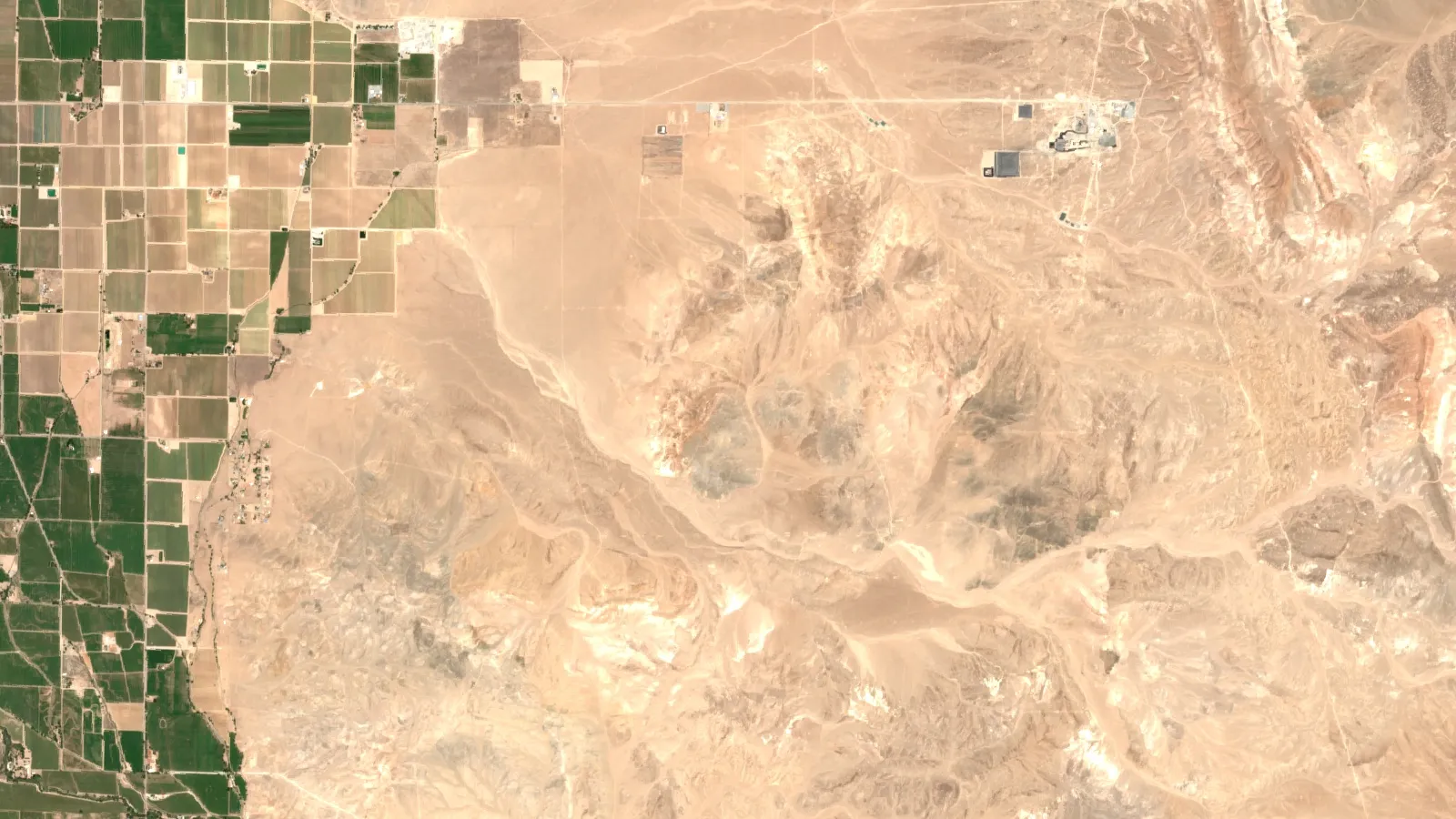
Pumpkin Hollow in Lyon County, Nevada, is a closed copper mine that Kinterra Capital’s Southwest Critical Materials bought out of Nevada Copper’s 2024 bankruptcy. Here are the owner, the status, the resource figures and what to watch.
Key takeaways
- Owner: Southwest Critical Materials LLC (Kinterra Capital, Fund I) bought the assets for about US$128 million in October 2024 (Nevada Appeal, June 2026).
- Status: closed since Nevada Copper’s June 2024 Chapter 11 filing; a 14 June 2026 report said the restart was still under way, and no restart production had been announced as of 16 October 2026.
- Size: Kinterra’s project page gives about 2.1 billion lb of copper resource underground and plans an average 54 million lb a year over about 15 years.
- Geology: a blind copper-magnetite skarn on the flank of the Jurassic Yerington batholith, found by US Steel with airborne magnetics in 1959 (PorterGeo).
- Financing: US$80 million equity (Lionhead-led) plus a non-binding EXIM letter of interest for up to US$200 million (Kinterra, 2025).
In this article
- Pumpkin Hollow mine at a glance
- Who owns Pumpkin Hollow now?
- Pumpkin Hollow timeline: from US Steel to Kinterra
- Is the Pumpkin Hollow mine operating?
- How much copper is at Pumpkin Hollow? Underground versus open pit
- Why the deposit stayed hidden: skarn geology in the Yerington district
- Why the first operator failed
- Pumpkin Hollow and Nevada's other copper mines
- Why U.S. copper restarts matter
- Copper output and revenue calculator for a restart
- What to check as the Pumpkin Hollow restart continues
- Screening a copper skarn target from space
- Frequently asked questions
Pumpkin Hollow is a shut copper mine in Lyon County, Nevada, that is being restarted. It sits about seven miles south-east of Yerington. Nevada Copper Corp. filed for Chapter 11 bankruptcy protection in June 2024, and Southwest Critical Materials LLC, a subsidiary of the Toronto firm Kinterra Capital, bought the assets for about US$128 million in October 2024 (Nevada Appeal, 14 June 2026). A newspaper report from 14 June 2026 still described the mine as closed. This page sets out who owns it, what the copper is, how big the two projects are, why the first operator failed, and what to check as the restart goes on.
We keep a separate, shorter write-up of the Pumpkin Hollow copper mine. This page is the fuller fact file for owners, consultants and anyone comparing U.S. copper restarts.
Pumpkin Hollow mine at a glance
The table gathers the facts that are easiest to confirm. Each row names its source and date, because several numbers differ between company documents.
| Item | What the sources say |
|---|---|
| Location | About 7 miles (11 km) south-east of Yerington, Lyon County, Nevada, in the Mason Valley between the Singatse and Wassuk ranges (Mining Technology) |
| Land package | About 22,800 acres (Nevada Appeal, June 2026) |
| Deposit type | Copper-magnetite skarn, also described as iron-oxide copper-gold, on the flank of the Jurassic Yerington batholith (PorterGeo database) |
| Owner | Southwest Critical Materials LLC, held through Kinterra’s Fund I (Kinterra Capital) |
| Underground project | About 2.1 billion lb of copper resource (1.5 billion measured and indicated plus 0.6 billion inferred) and a stated mine life of about 15 years at an average 54 million lb a year (Kinterra project page) |
| Southwest Open Pit | Adjacent, fully permitted; Kinterra cites about 3.6 billion lb with a 20-year life in its 2025 releases and a 5.2 billion lb resource on its project page |
| Status | Closed since the 2024 bankruptcy; restart in progress (Nevada Appeal, 14 June 2026) |
A lb is a pound of contained copper. “Resource” means mineralised rock that has been drilled and estimated but is not yet proven economic. “Measured and indicated” is the better-known part of a resource; “inferred” is the less certain part.
Who owns Pumpkin Hollow now?
Southwest Critical Materials LLC owns the underground mine, the mill and the adjacent open-pit project. It is a portfolio company of Kinterra Capital’s Fund I, a private equity fund based in Toronto (Kinterra Capital). Some bankruptcy-era releases and news reports spell the buyer “Southwest Critical Minerals”; Kinterra’s own pages use “Southwest Critical Materials”.
Kinterra bought the assets through a Chapter 11 sale. The seller, Nevada Copper Corp., had filed on 10 June 2024 and signed a “stalking horse” agreement with Kinterra’s affiliate: a first bid that sets the floor price. Under the bidding rules, other offers were due by 6 September 2024, and none qualified, so the board named Kinterra the successful bidder (Nevada Copper release, September 2024). The cash price was US$128 million plus cure costs for contracts the buyer took on. Nevada Copper’s shares had already been delisted from the Toronto Stock Exchange on 21 August 2024.
Kinterra then raised money for the restart. On 25 September 2025 it announced a US$80 million equity financing led by the investment firm Lionhead, completed in the second quarter of 2025 (Kinterra release, 25 September 2025). On 4 November 2025 it said the Export-Import Bank of the United States (EXIM) had issued a non-binding letter of interest for up to US$200 million of debt, of which US$180 million is for the underground restart and US$20 million for open-pit technical work (Kinterra release, 4 November 2025). A non-binding letter is an expression of interest, not a signed loan.
Pumpkin Hollow timeline: from US Steel to Kinterra
The mine’s history explains why it is a restart and not a new build. These are the dated steps we could confirm.
- 1959: US Steel finds the blind deposits with airborne magnetic surveys. Later work by Anaconda and others outlines copper-rich areas with local grades up to 20% copper, and by 2014 five deposits had been defined: North, South, Southeast, East and E2 (PorterGeo database).
- 16 December 2019: Nevada Copper says the underground mine has started production, the first new U.S. copper mine in about a decade. The plan was 65 million lb of copper-equivalent a year at an all-in sustaining cost of US$1.86 a lb and a 13.5-year life (Mining.com, 16 December 2019).
- October 2023: after a stope was backfilled and a paste plant commissioned, the mill restarts at 3,000 tons a day on lower-grade stockpiled ore, with a goal of 4,500 to 5,000 tons a day by the end of 2023 (North American Mining, 4 October 2023).
- 10 June 2024: Nevada Copper files for Chapter 11 and says it cannot continue operating (North American Mining, 10 June 2024). The company laid off 117 employees (Nevada Appeal).
- October 2024: the sale to Kinterra’s affiliate closes for about US$128 million.
- 2025: US$80 million equity raised, then the EXIM letter of interest; more than 60,000 metres of old drill core re-logged for a new resource model (Kinterra release, 4 November 2025).
- June 2026: a regional business paper reports the mine is still closed while the restart proceeds (Nevada Appeal).
Is the Pumpkin Hollow mine operating?
No. As of the latest report, from 14 June 2026, the underground mine was shut and being prepared to reopen (Nevada Appeal). Kinterra’s November 2025 release said it expected underground mining to restart in the second quarter of 2026, bringing about 60 million lb a year of domestic supply online. As of 16 October 2026, Kinterra has not announced first restart ore or a concentrate sale, and the Q2 2026 restart target in that release has passed without an announced start date.
The September 2025 release gave a wider window: a producing, cash-generating underground mine and a “shovel-ready” open pit within 24 months, which points to about September 2027. The restart work it listed is practical, not exotic: closing “pre-existing gaps”, collecting data, running trade-off studies, a full geological resource update with core scanning, and offtake financing talks with downstream partners (Kinterra release, 25 September 2025). Refurbishing the mill and hiring experienced operators are on the same list (Kinterra release, 4 November 2025).
The restart is led by Ian McMullan, who has more than 30 years of underground experience and worked on Newmont’s Leeville underground project and the Carlin Portal expansions in Nevada. Christopher Schauffele, formerly general manager at the Candelaria complex in Chile, leads the open-pit feasibility study.
How much copper is at Pumpkin Hollow? Underground versus open pit
Pumpkin Hollow has two separate projects on the same land package, and company documents quote different totals for each, partly because they use different dates and resource categories. The chart compares Kinterra’s own project pages for its U.S. copper assets.
Chart
Contained copper in Kinterra’s U.S. copper projects
billion lb of copper in resource or stated project total
For the underground mine, Kinterra’s September 2025 release gave 1.7 billion lb of copper resources, and its project page now gives 2.1 billion lb (1.5 billion measured and indicated plus 0.6 billion inferred). The page quotes a mine life of about 15 years and average output of 54 million lb a year, which is below the 65 million lb of copper-equivalent in the 2019 plan (a different measure, as it counts gold and silver), and is a fair reminder that restart plans are re-drawn after a failed operation.
For the open pit, the 2025 releases cite about 3.6 billion lb with a 20-year life, based on work by prior owners. The project page cites a 5.2 billion lb resource (5.0 billion measured and indicated plus 0.2 billion inferred) and a 2019 prefeasibility study that planned 37,000 tons a day, an average 163 million lb of copper a year over 19 years, and a post-tax net present value of US$1.5 billion. That study is the previous owner’s work and predates the bankruptcy, so costs and prices in it are out of date. Kinterra is completing a new feasibility study, the stage that tests whether a project can be financed.
Together, Kinterra says the two assets could supply about 228 million lb of copper a year, roughly 5 to 6% of U.S. copper demand (Kinterra release, 25 September 2025). That is a potential, not a forecast. The open pit still needs a feasibility study, a final investment decision and construction.
Why the deposit stayed hidden: skarn geology in the Yerington district
Pumpkin Hollow is a blind deposit: there is no mineralised outcrop to see. Its only surface sign is a halo of hornfels (baked rock) and barren skarn, and US Steel found it by flying magnetic surveys because the ore body carries a lot of magnetite, an iron oxide mineral (PorterGeo database). A skarn forms where hot fluids from an intrusion react with limestone or other reactive rock and leave new minerals behind. At Pumpkin Hollow those minerals are chalcopyrite, the main copper sulphide, and magnetite, with some gold and silver (Mining Technology).
The heat source was the Jurassic Yerington batholith, a large mass of granite-type rock that also produced the Yerington and Ann-Mason porphyry copper deposits, about 13 km (8 miles) to the north-west. PorterGeo puts the copper in porphyry, skarn and iron-oxide deposits across the district at more than 11 million tonnes. The U.S. Geological Survey’s assessment record for the Yerington porphyry gives about 928 million tonnes at 0.514% copper, or about 4.77 million tonnes of contained copper, aged 169 to 165 million years (USGS global copper assessment record).
The contrast matters. The Yerington porphyry is large and low-grade, so it needs huge tonnages. The Pumpkin Hollow skarn is smaller but richer, which is why underground mining was chosen. Mining Technology reports that transverse long-hole stoping, where ore is blasted from large vertical rooms called stopes, was selected for the three underground zones, EN, ES and E2.
This kind of target is also a good example of what satellite data can and cannot do. Optical and radar imagery can map structure, iron staining and rock alteration at the surface, but a blind magnetite skarn needs geophysics and drilling to confirm. Satellite screening narrows where to look first; it does not replace the magnetometer or the drill rig.
Why the first operator failed
The Nevada Appeal summarises the underground mine’s problems as a mix of geotechnical and financial trouble, including unexpected underground flooding that hampered ore production and weak copper prices that strained the company’s balance sheet. Before the bankruptcy, Nevada Copper had built a mill, a 400-ton headframe and a concrete-lined main shaft more than 2,000 feet deep.
The company’s own 2023 updates show how much work was still unfinished. In October 2023 it was recommissioning the mill on low-grade stockpiles, finishing a dewatering system and an underground crusher, and had just completed the first backfilled stope of its 2023 mining sequence (North American Mining, 4 October 2023). Eight months later it was in Chapter 11. For a reader sizing up a restart, the lesson is that infrastructure alone does not make a mine: water control, ground conditions and a steady ore feed decide whether the plant runs at full rate.
Kinterra says its restart plan is built around those gaps. Re-logging more than 60,000 metres of legacy core, a new geological model and a better hydrogeological understanding of the deposit are the stated fixes (Kinterra release, 4 November 2025). Whether they work will only be clear once ore flows again.
Pumpkin Hollow and Nevada’s other copper mines
Nevada is mainly a gold state, but copper is a growing line. The Nevada Division of Minerals reported 144.9 million lb of copper produced in 2024, up 31.9% on the year before, with a value of about US$673 million (Nevada Division of Minerals, May 2026 overview). Pumpkin Hollow added nothing to that total after June 2024 because it was shut.
The same overview lists the state’s copper projects to watch: KGHM’s Robinson mine, Nevada Gold Mines’ Phoenix, Hudbay’s Mason, Pathfinder’s Tonopah project, Lion Copper and Rio Tinto at Yerington, and Southwest Critical Materials at Pumpkin Hollow. Our older note on Nevada copper mines has been folded into this page, and for a state-wide company list see our guide to mining companies in Nevada.
Why U.S. copper restarts matter
The U.S. Geological Survey estimates that U.S. mine production of recoverable copper was about 1.0 million tonnes in 2025, down 5% from 2024, and that net import reliance reached 57% of apparent consumption in 2025, up from 45% in 2024 (USGS Mineral Commodity Summaries 2026, copper). Arizona accounts for roughly 70% of output. A restart of 54 million lb a year is about 24,500 tonnes, or around 2.4% of 2025 U.S. mine output on those figures; the combined 228 million lb a year potential would be about 103,000 tonnes, or around 10%.
Chart
Annual average U.S. copper prices
US cents per pound
Chart
U.S. recoverable copper from mines
thousand tonnes per year
Prices moved against the first operator in 2023 and for the new one since. The USGS series shows the COMEX average rising from 424.3 cents a lb in 2021 to an estimated 480 in 2025. On 15 October 2026 Comex December copper traded near US$6.58 a lb in late-morning New York trading, about 4.5% below the record settlement of US$6.89 set on 9 September 2026 (Mining.com, 15 October 2026). Prices change daily, so use a current quote in any calculation.
▶ A Farmonaut video on why electric cars need more copper than petrol cars and where much of it is mined. · 6:03
Copper output and revenue calculator for a restart
Use the calculator on this page to test the arithmetic behind a restart announcement. Enter ore mined per year, copper grade, mill recovery, the share the smelter pays for and a copper price, and it returns pounds of payable copper and gross revenue. The defaults are round examples whose copper in the ore equals 54 million lb a year, the figure in Kinterra’s plan (payable copper comes out lower, at 46.7 million lb); they are not Pumpkin Hollow’s grade or recovery.
Two checks make the numbers easier to judge. First, revenue is not profit: operating cost, royalties, power, sustaining capital and debt service come out of it. Second, grade matters more than most readers expect. At a fixed recovery, halving the grade halves the pounds, which is why a high-grade underground deposit like this one can compete with a much larger, lower-grade open pit.
Calculator
How much copper and revenue does a year of ore make?
Enter your own ore, grade, recovery and price. Results update as you type.
- Copper in the ore (million lb): 54.0
- Copper in concentrate (million lb): 48.6
- Gross revenue (US$): $303,264,000
Example values only, not Pumpkin Hollow’s grade or recovery and not benchmarks. Copper price is an input: use today’s price. Payable is the share of metal the smelter pays for. Output is in short tons and pounds; revenue is gross, in US$, before any costs.
What to check as the Pumpkin Hollow restart continues
- Ore and concentrate sales: the first month of underground ore processed and the first concentrate shipment are the test of the restart.
- EXIM financing: whether the non-binding letter of interest becomes a signed loan.
- Resource update: the new model from re-logged core and scanning, and whether it confirms about 2.1 billion lb.
- Dewatering and ground control: the issues that stalled the first operation.
- Open-pit feasibility study: the study and any final investment decision for the Southwest Open Pit.
- Offtake: who buys the concentrate, since Kinterra said it was in talks with downstream partners.
- Power and grid: Kinterra listed grid connection studies with NV Energy for the open pit.
Screening a copper skarn target from space
Farmonaut’s Mining Pro platform takes a licence boundary or polygon and returns a satellite-based screen of the ground as exploration targets, usually in 5 to 20 business days. It reads rock alteration, structure and iron-oxide signatures in multispectral imagery. For a hidden skarn such as this one, the output is a shortlist of places to put magnetics, induced polarisation or drill holes first, not a resource estimate. If you hold ground in the Basin and Range, you can read how it works on our satellite mineral detection page, or send a project for a quote.
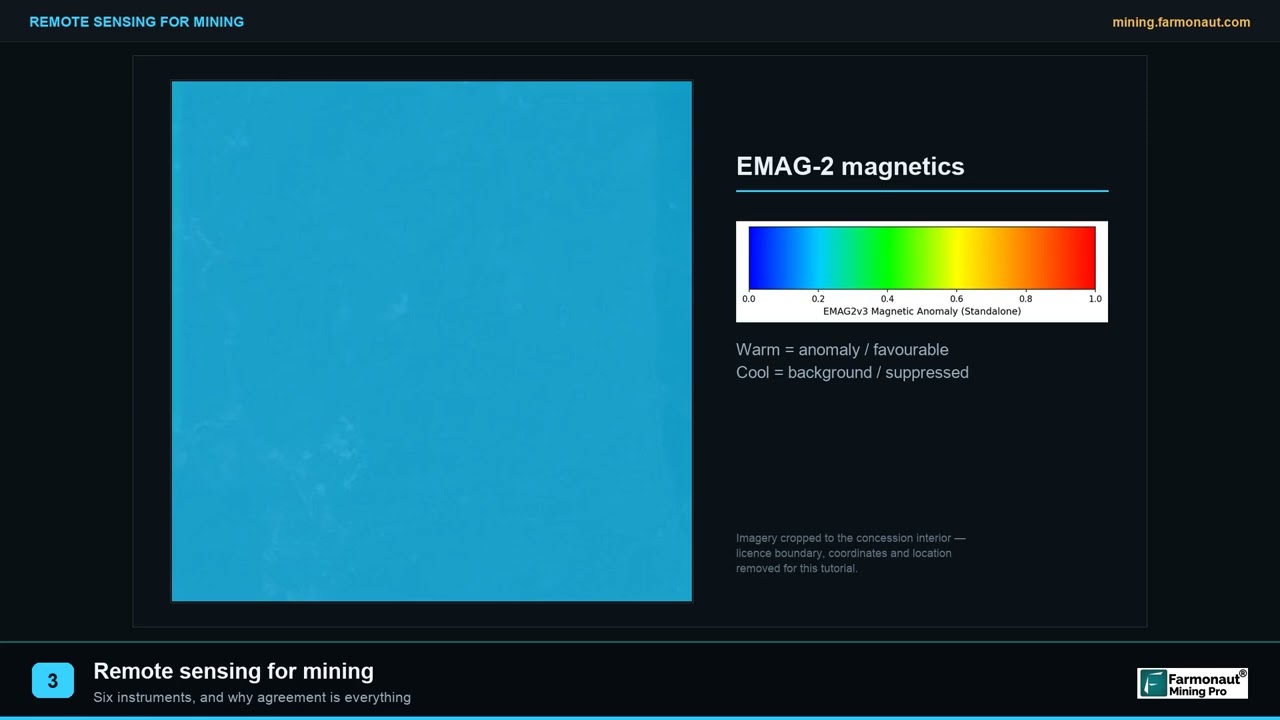
▶ A three-minute Farmonaut explainer on remote sensing for mining. · 2:01
Frequently asked questions
Where is the Pumpkin Hollow mine?
About seven miles south-east of Yerington in Lyon County, Nevada, in the Mason Valley between the Singatse and Wassuk ranges (Mining Technology).
Who owns the Pumpkin Hollow mine?
Southwest Critical Materials LLC, a portfolio company of Kinterra Capital’s Fund I, bought it from Nevada Copper Corp. in October 2024 for about US$128 million plus cure costs.
Is Pumpkin Hollow producing copper now?
No. As of 16 October 2026, Kinterra and Southwest Critical Materials have not announced restarted production. A 14 June 2026 report described the mine as closed with a restart under way.
What happened to Nevada Copper?
It filed for Chapter 11 on 10 June 2024 after talks on funding or a sale of control failed, sold substantially all assets to Kinterra’s affiliate, and was delisted from the Toronto Stock Exchange in August 2024.
What type of deposit is Pumpkin Hollow?
A copper-magnetite skarn, also called iron-oxide copper-gold, formed on the flank of the Jurassic Yerington batholith. It is a blind deposit found by airborne magnetics in 1959.
How much copper does Pumpkin Hollow hold?
Kinterra’s project page gives about 2.1 billion lb of copper resource for the underground project (September 2025 release: 1.7 billion lb). The adjacent Southwest Open Pit is quoted at about 3.6 billion lb in releases and 5.2 billion lb of resource on the project page.
How much copper will the restart produce?
Kinterra’s project page states an average of 54 million lb a year over about 15 years, and the November 2025 release cites about 60 million lb of domestic supply. These are company targets.
Is the Southwest Open Pit the same as Pumpkin Hollow?
No. It is a separate, fully permitted open-pit project next to the underground mine. It is at the feasibility-study stage and is not producing.
Why did the underground mine close?
The Nevada Appeal points to geotechnical problems, flooding underground and low copper prices that strained the company’s finances before the bankruptcy filing.
Can I buy shares in the Pumpkin Hollow mine?
Not directly. Nevada Copper’s shares were delisted from the Toronto Stock Exchange in August 2024, and the mine is now owned by a private fund. This page is not investment advice.
This page is for information only. It is not investment advice. Resource and output figures are company statements and targets, not proven reserves or forecasts.
Farmonaut mining
Map your mining site from space
Send a polygon, KML or KMZ boundary and get a satellite screen of your claim or licence block, delivered as exploration targets.
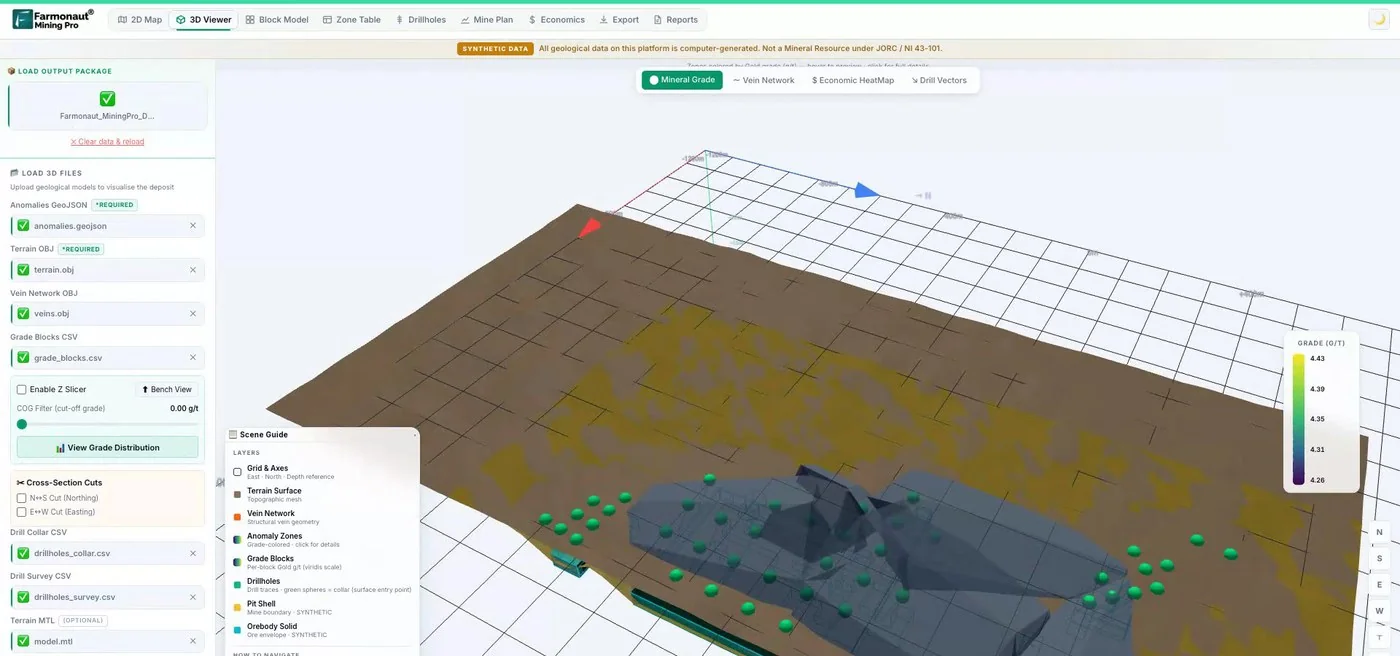
Mining Pro sample view, synthetic data
Keep reading
Sources
- Nevada Appeal / NNBW, Yerington copper mine to reopen (14 June 2026): nevadaappeal.com
- Kinterra Capital, Pumpkin Hollow Copper project page: kinterracapital.com
- Kinterra Capital, Southwest Critical Materials project page: kinterracapital.com
- Kinterra Capital, US$200 million EXIM letter of interest (4 November 2025): prnewswire.com
- Kinterra Capital and Lionhead, US$80 million equity investment (25 September 2025): newswire.ca
- Nevada Copper, update on sale process (September 2024): prnewswire.com
- North American Mining, Nevada Copper files for Chapter 11 (10 June 2024): northamericanmining.com
- North American Mining, Pumpkin Hollow ore processing goal achieved (4 October 2023): northamericanmining.com
- Mining.com, Nevada Copper begins production at Pumpkin Hollow (16 December 2019): mining.com
- Mining Technology, Pumpkin Hollow project profile: mining-technology.com
- PorterGeo database, Pumpkin Hollow ore deposit description: portergeo.com.au
- USGS, Yerington porphyry copper deposit record, global copper assessment: mrdata.usgs.gov
- USGS, Mineral Commodity Summaries 2026: Copper (February 2026): pubs.usgs.gov
- Nevada Division of Minerals, State of Nevada Mining overview (May 2026): minerals.nv.gov
- Mining.com, Copper price falls for third day (15 October 2026): mining.com
Discussion
Questions, corrections or field experience? Share them below. First-time comments are reviewed before they appear, and your email is never published.
No comments yet. Be the first to add a question or your experience.

 GKY Mining
 Alkimy SARL
 Double A Trading
 GemSprout Metals Limited
 Qader Group
 Ileys General Trading
 SG Gold Mining LLC
 VRV Global Pte Ltd
 Omsri International FZE
 G.I.T.T.
 Jaunita Erss Ltd
 Almosi SARL
 SRK Consulting
 Berks Gold Limited
 Mwerezi Minerals Company Limited
 Mining SARL
 SenGold Invest SAS
 Sean Mining Limited
 NTS Group (Pty) Ltd










