

Mineral identification · Field test guide
Fool's Gold in Quartz vs Real Gold and Silver Ore
Fool’s gold in quartz is almost always pyrite: hard, brittle, about a quarter of gold’s density, with a greenish black streak where gold’s is yellow. Silver in quartz usually hides in dark sulfide minerals.
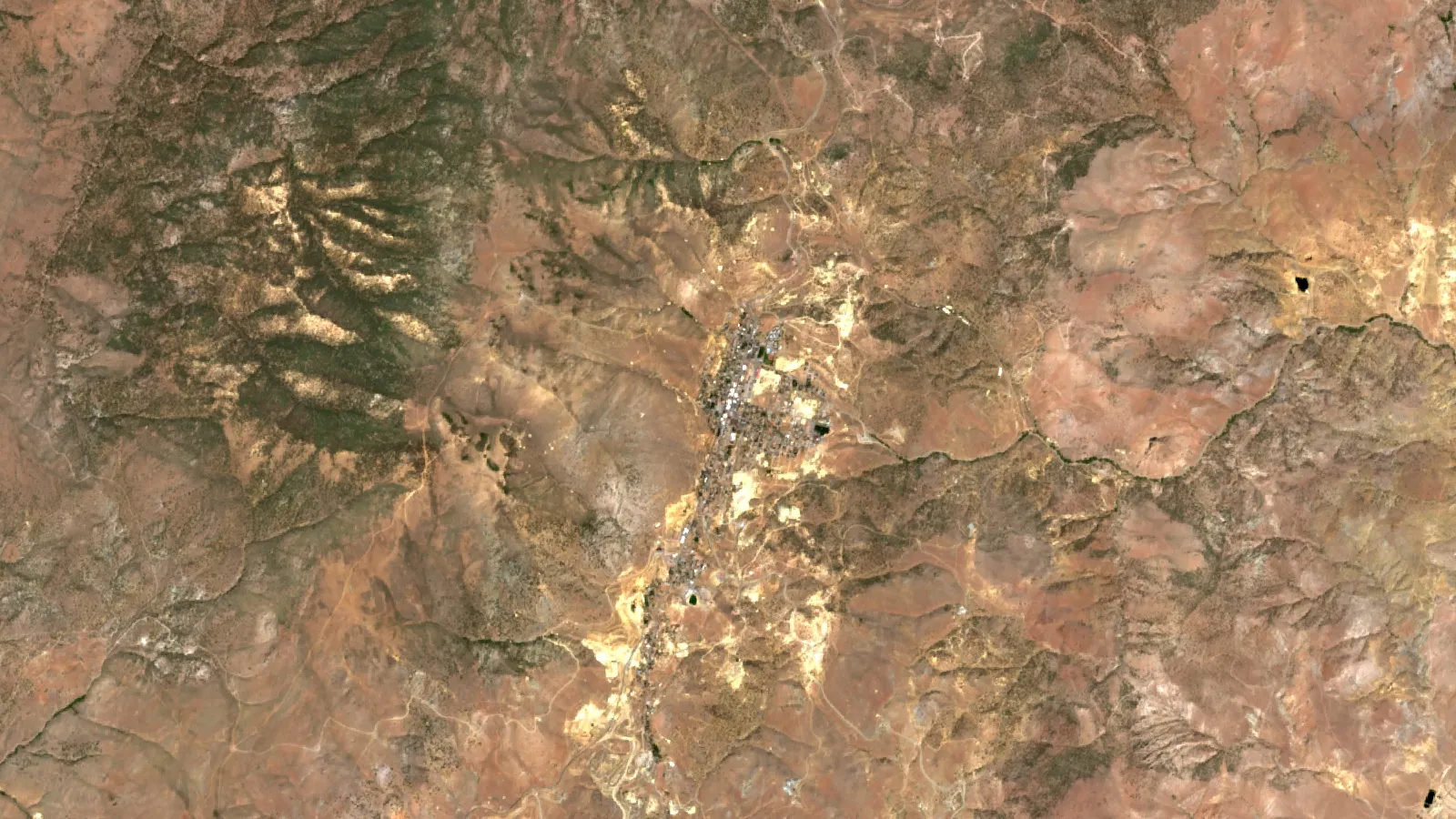
Key takeaways
- Real gold leaves a golden yellow streak; pyrite and chalcopyrite leave a dark green to black streak (USGS).
- Pure gold has a specific gravity of 19.3; pyrite is 4.9 to 5.2 and chalcopyrite 4.1 to 4.3 (Geology.com).
- Some pyrite holds invisible gold: a USGS study at Nevada’s Carlin and Cortez mines found gold inside arsenic-rich pyrite (1973).
- Silver in quartz veins sits mostly in acanthite, tetrahedrite, galena and electrum (USGS epithermal deposit models, 2010).
- Spot prices on 11 November 2026 were about US$3,987/oz for gold and US$51.88/oz for silver (Reuters).
In this article
- Fool's gold vs real gold: the quick comparison
- How to test fool's gold in quartz: six field steps
- Why fool's gold forms in quartz veins
- Can fool's gold contain real gold?
- Chalcopyrite and mica: the other kinds of fool's gold
- Is silver found in quartz?
- How to recognise silver ore in quartz
- Where the world's silver comes from
- What gold and silver in quartz are worth
- Checking a quartz vein before you buy, sample or drill
- Frequently asked questions
Fool’s gold in quartz is almost always pyrite, an iron sulfide (FeS2) that looks brassy but is hard, brittle and far lighter than gold. The fastest check is the streak: according to the US Geological Survey, real gold leaves a golden yellow streak on unglazed porcelain, while pyrite and chalcopyrite leave a dark green to black streak. Below you will find a side-by-side comparison of fool’s gold vs real gold, a six-step field test, what silver ore in quartz looks like, density and hardness charts, and a calculator for what an assayed quartz sample may hold.
This guide is written for claim and licence owners, consultants and investors who handle quartz vein samples and need to know which shiny grains matter before they spend money on assays, drilling or a purchase.
Fool’s gold vs real gold: the quick comparison
Pyrite, chalcopyrite and gold can all look yellow and metallic in a quartz vein. Their physical properties are very different, and those differences are what every field test uses. The table sums up the published values for each mineral.
Chart
How heavy each mineral is
Specific gravity (times the weight of water); midpoint where a range is given
| Property | Real gold | Pyrite (fool’s gold) | Chalcopyrite |
|---|---|---|---|
| Chemistry | Native element (Au), often alloyed with silver | Iron sulfide (FeS2) | Copper iron sulfide (CuFeS2) |
| Colour | Butter yellow, does not tarnish | Pale brass yellow, can tarnish | Brass yellow, tarnishes grey-green or iridescent |
| Streak | Golden yellow | Greenish black to brownish black | Greenish black |
| Mohs hardness | 2.5 to 3 | 6 to 6.5 | 3.5 to 4 |
| Specific gravity | 19.3 when pure | 4.9 to 5.2 | 4.1 to 4.3 |
| Under a needle point | Dents and gouges like soft lead | Flakes or powders | Flakes or powders |
| Typical shape in quartz | Irregular flakes, wires, specks | Cubes, pyritohedrons, granular masses | Massive grains, rarely crystals |
Property values come from the mineral pages of Geology.com for pyrite, gold and chalcopyrite. Specific gravity (SG) is how many times heavier a mineral is than the same volume of water. Pure gold, at 19.3, is nearly four times heavier than pyrite. Gold’s SG falls as it alloys with silver or copper, but natural gold is still much denser than any sulfide that mimics it.
How to test fool’s gold in quartz: six field steps
You can sort most samples in a few minutes with a hand lens, a steel needle or knife, and an unglazed porcelain tile (the back of a bathroom tile works). Work in this order, from least to most damaging.
Chart
Mohs hardness of gold and its look-alikes
Mohs scale; midpoint where a range is given
- Look at the shape. Pyrite often grows as sharp cubes or twelve-sided crystals with striated faces. Gold in quartz forms ragged flakes, wires or specks with no flat crystal faces.
- Turn the sample in the light. Gold keeps the same warm yellow from every angle. Pyrite and chalcopyrite flash bright on one side and go dark or brassy on another.
- Run a streak test. Rub a corner of the grain on the porcelain. A yellow streak points to gold; a green-black streak points to pyrite or chalcopyrite. If the grain is too small, scrape it with a needle and look at the powder.
- Try the needle or knife. Gold is soft (2.5 to 3 on the Mohs scale) and dents without breaking. Pyrite (6 to 6.5) resists a knife blade and, when forced, chips into powder.
- Feel the weight. A quartz piece carrying real gold feels heavier than its size suggests. Pyrite adds weight too, but far less. For loose grains, a gold pan separates them: gold stays behind while pyrite washes out more readily.
- Send doubtful samples to a lab. A fire assay or a laboratory XRF reading is the only way to put a number on gold or silver content, especially when the metal is too fine to see.
The needle test works because of hardness. On the Mohs hardness scale, a knife blade sits at about 5 to 6.5 and quartz at 7, so a knife scratches gold and chalcopyrite easily but barely marks pyrite. For more vein-checking methods, see our guide on how to tell if quartz has gold in it.
Why fool’s gold forms in quartz veins
A quartz vein is a crack in rock that hot, mineral-rich water (a hydrothermal fluid) filled with silica. As the fluid cooled, boiled or reacted with the wall rock, it dropped quartz along with sulfide minerals such as pyrite, chalcopyrite, galena (lead sulfide) and sphalerite (zinc sulfide). Where the fluid also carried gold and silver, those metals settled in the same veins. Iron is common in most rocks and fluids, so pyrite is the most widespread sulfide in these systems, with or without gold.
That shared origin is why prospectors pay attention to pyrite. On its own it says that a hydrothermal system was active. It does not say that gold is present. Many quartz-pyrite veins carry no gold worth mining, and some rich gold veins carry very little pyrite. Gold-bearing veins often run along faults and shear zones, which is why mapping structure matters as much as spotting sulfides; our article on shear zone gold explains that link.
What weathered pyrite looks like
Near the surface, pyrite oxidises. It turns into rusty brown iron oxides and leaves box-shaped holes (boxwork) in the quartz where cubes used to be. Rusty, cavity-rich quartz is a classic sign that sulfides were once there. Weathering can also release gold from inside the sulfides, so oxidised vein tops sometimes show visible gold even where the fresh rock below does not.
▶ Farmonaut explainer on the Arkansas gold rush that pyrite helped start, and what state geologists found. · 6:31
Can fool’s gold contain real gold?
Yes. Pyrite can hold gold too small to see, locked inside its crystal structure or as sub-microscopic grains. Geology.com notes that in some deposits pyrite carries enough gold to be mined as a gold ore. A classic study by the USGS of arsenic-rich pyrite at the Cortez and Carlin gold mines in Nevada found the gold sat in the pyrite, with a calculated tenor of about 0.10% at Cortez and 0.14% at Carlin if all the gold were in that mineral (Economic Geology, 1973).
Two lessons follow for anyone holding a pyrite-rich quartz sample:
- No visible gold does not mean no gold. Fine or “invisible” gold only shows up in an assay.
- Gold locked in sulfides is harder to recover. Ore where gold sits inside pyrite or arsenopyrite is often called refractory. It may need roasting, pressure oxidation or bio-oxidation before cyanide can reach the gold, which raises processing costs.
If a sample is heavy in pyrite and arsenopyrite (a silver-white arsenic sulfide), ask the lab for gold and arsenic together, and treat any crushed material with care.
Chalcopyrite and mica: the other kinds of fool’s gold
The USGS lists three minerals that people mistake for gold: pyrite, chalcopyrite and weathered mica. Chalcopyrite is the main ore of copper. It is deeper yellow than pyrite, softer (3.5 to 4) and often shows a purple-blue tarnish. In a quartz vein it can point to copper mineralisation, which is worth knowing in its own right.
Weathered mica (often biotite that has lost some iron) forms thin golden flakes that glitter in creek sand. It is the easiest to rule out: mica flakes are very light, float or drift in a pan, and leave a white streak. If the “gold” in your pan moves with the water, it is almost certainly mica.
Is silver found in quartz?
Yes. Silver minerals are common in quartz veins, especially in epithermal deposits, which form within about a kilometre of the surface above cooling volcanic or magmatic heat sources. The USGS descriptive models for epithermal gold-silver deposits list electrum (a natural gold-silver alloy), acanthite (silver sulfide, Ag2S), silver-bearing tetrahedrite and tennantite, and other silver sulfosalts hosted by quartz. The same report pictures bonanza ore from the Comstock Lode district in Nevada made of golden electrum and silvery acanthite in white quartz.
Native silver (the pure metal) is rarer. Geology.com’s silver page notes that it is often found with quartz, gold, copper and sulfides, and that it tarnishes black as acanthite forms on its surface. Unlike gold, silver rarely collects in placer gravels, so most silver comes from hard-rock veins and replacement bodies.
▶ How gold is mined and refined, from hard-rock vein to finished metal. · 5:27
How to recognise silver ore in quartz
Silver ore in quartz rarely looks like bright metal. Most of the silver sits in dark grey to black minerals that are easy to dismiss. These are the ones to know.
| Mineral | What it is | How it looks in quartz | Field clue |
|---|---|---|---|
| Native silver | Pure silver (Ag) | Wires, leaves or specks; tarnishes black | Silvery white streak; soft (2.5 to 3); SG 10 to 11 |
| Acanthite | Silver sulfide (Ag2S) | Dull lead-grey to black grains and smears | Very soft; cuts like wax with a knife |
| Galena | Lead sulfide (PbS), often silver-bearing | Bright grey cubes with perfect cubic cleavage | Very heavy (SG 7.4 to 7.6); grey-black streak |
| Tetrahedrite-tennantite | Copper antimony or arsenic sulfosalts that can carry silver | Steel-grey to black grains | Brittle; no cleavage; dark streak |
| Pyrargyrite and proustite | Silver antimony and arsenic sulfosalts (“ruby silver”) | Dark red to black, red on thin edges | Red streak |
| Electrum | Natural gold-silver alloy | Pale yellow to whitish-yellow specks | Soft and malleable like gold |
Galena values come from Geology.com’s galena page. Because silver often hides inside galena and sulfosalts rather than as visible metal, a grey sulfide band in quartz can be worth more than a shiny yellow one. Only an assay that reports silver in grams per tonne (g/t) tells you how much is there.
Where the world’s silver comes from
Most silver is not mined from pure silver veins. Geology.com notes that most silver produced is a byproduct of copper, lead and zinc mining, and that a significant share is refined out of gold. The Silver Institute’s World Silver Survey 2026 reports that lead-zinc mines remained the largest source of silver in 2025, that primary silver output fell for a third year in a row, and that total mine supply rose 3% to 846.6 million ounces (26,331 tonnes).
Chart
Largest silver mining countries
Estimated mine production, metric tons, 2025
By country, Mexico leads by a wide margin. The USGS Mineral Commodity Summaries 2026 estimate world mine output at about 26,000 tonnes in 2025, with Mexico at about 6,300 tonnes. In the United States, about 1,100 tonnes came from 4 silver mines and 31 base- and precious-metal operations in 12 States, led by Alaska and then Nevada (USGS, 2026).
What gold and silver in quartz are worth
The value of a vein depends on its grade (how many grams of metal sit in each tonne of rock, written g/t), its size, and how much metal a mill can recover. Spot prices on 11 November 2026 were about US$3,987 per troy ounce for gold and US$51.88 per ounce for silver, as reported by Reuters. One troy ounce is 31.1035 grams, so a gram of pure gold was worth about US$128 and a gram of silver about US$1.67 at those prices.
Chart
Average US silver bullion price
US$ per troy ounce, annual average (2025 estimated)
Silver prices have climbed fast. The USGS gives the average US bullion price as US$25.23 per ounce in 2021 and an estimated US$38 in 2025, and spot traded above US$50 in November 2026. Pyrite itself has very little value as an ore; its worth lies in the gold or copper it may carry and in what it tells you about the vein.
Three practical points for owners and buyers:
- Specimen price and ore value differ. A collector may pay for a showy crystal group, but a mill pays only for recoverable metal.
- A single rich sample is not a deposit. Vein grades change sharply over a few metres. Many samples across the vein’s width and length are needed before anyone can talk about tonnes and grade.
- Recovery matters. Coarse gold loose in quartz is easier to recover than gold locked in pyrite. Ask what recovery a lab test shows before valuing a sample.
The calculator below turns an assay result into contained metal and gross value at prices you choose. It is gross metal value, not profit: mining, processing and royalty costs come off before any return.
Calculator
What metal could your assayed quartz hold?
Enter your own tonnage, assay grades and prices.
- Contained gold (troy oz): 16.1
- Contained silver (troy oz): 160.8
- Gross value per tonne (US$): $723
Example values only, not a benchmark. Prices are inputs: use today’s price. One troy ounce is 31.1035 grams. Gross contained value before mining, processing, recovery losses and royalties. All money in US$.
Checking a quartz vein before you buy, sample or drill
A shiny sample from one outcrop says little about the ground around it. Before paying for a claim or a drill programme, most professionals build a picture in layers:
Infographic
From shiny sample to drill target in four steps
- 1Read the geologyMaps of rocks, faults and known occurrences.
- 2Map surface signsIron oxide, clay and silica from imagery.
- 3Sample the veinChannel samples assayed for Au, Ag, As, Sb.
- 4Drill if warrantedTest depth only when the surface case is strong.
- Read the regional geology. Government geological maps show the rock types, faults and known mineral occurrences. Veins near mapped faults and intrusions deserve more attention.
- Map the surface signs. Rusty iron oxides from weathered pyrite, clay alteration and silica around veins can be mapped from satellite and aerial imagery across a whole licence. Our explainer on exploration targeting covers how those layers are combined.
- Sample systematically. Take channel or chip samples across the vein at set intervals, record locations, and send them for gold, silver and pathfinder elements such as arsenic and antimony.
- Test depth only when the surface case is strong. Gold and silver grades can change with depth, as our guide to how deep gold is found explains.
Farmonaut’s satellite-based mineral detection maps alteration and structure from satellite data across a licence so that field teams know where to sample first; results are exploration targets, not a resource estimate. For the wider picture of how gold and silver are now mined and processed, read innovations in gold and silver ore mining. To discuss a specific project, use the mining quote form or contact us.
When you sample in the field, get the landowner’s or claim holder’s permission and any licence your jurisdiction requires, work with a partner, stay away from old shafts and unstable workings, and never use mercury to recover gold.
▶ Can a satellite detect gold? How imagery maps the alteration around a gold system. · 2:00
Frequently asked questions
What is the easiest way to tell fool’s gold from real gold?
Use a streak test on unglazed porcelain. Real gold leaves a golden yellow streak; pyrite and chalcopyrite leave a greenish black one (USGS). Gold also dents under a needle, while pyrite flakes or powders.
Does fool’s gold in quartz mean there is real gold nearby?
Not by itself. Pyrite shows that hot fluids once moved through the rock, and gold often forms in the same veins, but many pyrite-quartz veins carry no gold worth mining. An assay is the only way to know.
Can pyrite contain gold?
Yes. Some pyrite, especially arsenic-rich pyrite, holds gold too fine to see. A USGS study of the Carlin and Cortez mines in Nevada found the gold in pyrite, at a calculated tenor of about 0.10% to 0.14% of the pyrite.
Is fool’s gold worth anything?
As a mineral, pyrite has little ore value. Well-formed crystals sell to collectors, and pyrite that carries enough fine gold can be mined as gold ore.
Is silver found in quartz?
Yes. Quartz veins, especially epithermal ones, often carry acanthite, silver-bearing tetrahedrite, galena, ruby silver minerals, electrum and sometimes native silver (USGS epithermal deposit models).
What does silver ore in quartz look like?
Usually dark grey to black grains or bands rather than bright metal. Acanthite is lead-grey and very soft, galena forms bright grey cubes, and native silver tarnishes black.
How heavy is gold compared with pyrite?
Pure gold has a specific gravity of 19.3, while pyrite is about 4.9 to 5.2 (Geology.com). A grain of gold is close to four times heavier than a pyrite grain of the same size.
Can a knife scratch fool’s gold?
Barely. Pyrite has a Mohs hardness of 6 to 6.5, about the same as or harder than a knife blade. Gold (2.5 to 3) and chalcopyrite (3.5 to 4) scratch easily.
Is chalcopyrite also called fool’s gold?
Yes. The USGS lists chalcopyrite, the main copper ore mineral, as a common gold look-alike, along with pyrite and weathered mica.
How do I get a quartz sample tested for gold and silver?
Send it to an accredited assay laboratory and ask for fire assay for gold and a multi-element analysis that includes silver, arsenic and antimony. Labs report results in grams per tonne or parts per million.
This page is for information only. It is not investment advice. Prospect only with permission and the licences your jurisdiction requires, and never use mercury.
Farmonaut mining
Map the veins on your licence from space
Send us your licence boundary and we will quote a satellite alteration and structure map to guide your sampling.
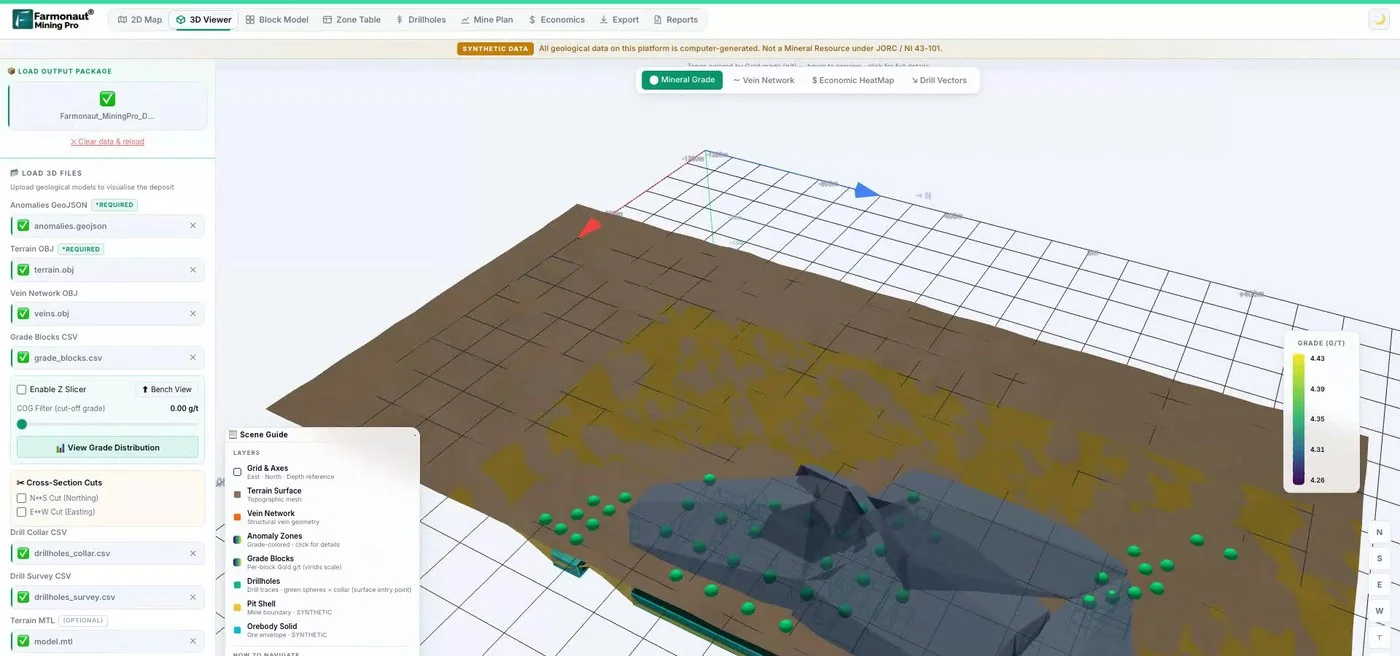
Mining Pro sample view, synthetic data
Keep reading
Sources
- USGS, What is fool’s gold? (FAQ): usgs.gov
- Geology.com, Pyrite: geology.com
- Geology.com, Gold: geology.com
- Geology.com, Chalcopyrite: geology.com
- Geology.com, Galena: geology.com
- Geology.com, Silver: geology.com
- Geology.com, Quartz: geology.com
- Geology.com, Mohs hardness scale: geology.com
- USGS, Gold-bearing arsenian pyrite at the Cortez and Carlin mines, Nevada (1973): pubs.usgs.gov
- USGS SIR 2010-5070-Q, Descriptive models for epithermal gold-silver deposits: pubs.usgs.gov
- USGS Mineral Commodity Summaries 2026, Silver: pubs.usgs.gov
- Silver Institute, World Silver Survey 2026: silverinstitute.org
- Reuters via New Straits Times, gold and silver spot prices (11 November 2026): nst.com.my
Discussion
Questions, corrections or field experience? Share them below. First-time comments are reviewed before they appear, and your email is never published.
No comments yet. Be the first to add a question or your experience.

 Mine4Africa
 Lithspo Minerals Limited
 Tintina Mining Group
 Dalgety Minerals Pty Ltd
 Faith At Work (Pty) Ltd
 Geotech Mining Solutions plc
 Vulcan International Limited
 Kidepo Associates
 GKY Mining
 Alkimy SARL
 Double A Trading
 GemSprout Metals Limited
 Qader Group
 Ileys General Trading
 SG Gold Mining LLC
 VRV Global Pte Ltd
 Omsri International FZE
 G.I.T.T.
 Jaunita Erss Ltd
 Almosi SARL
 SRK Consulting
 Berks Gold Limited
 Mwerezi Minerals Company Limited

 Exploration consultancy · South Africa · Gold










