

Denver, Colorado · Where to pan and the rules
Gold Panning Denver: Where to Pan and the Rules
Gold panning near Denver is allowed in posted stretches of Clear Creek in Jefferson County’s Clear Creek Canyon Park, west of Golden. For a guided first try, the Argo Mill in Idaho Springs adds a panning lesson to every tour.
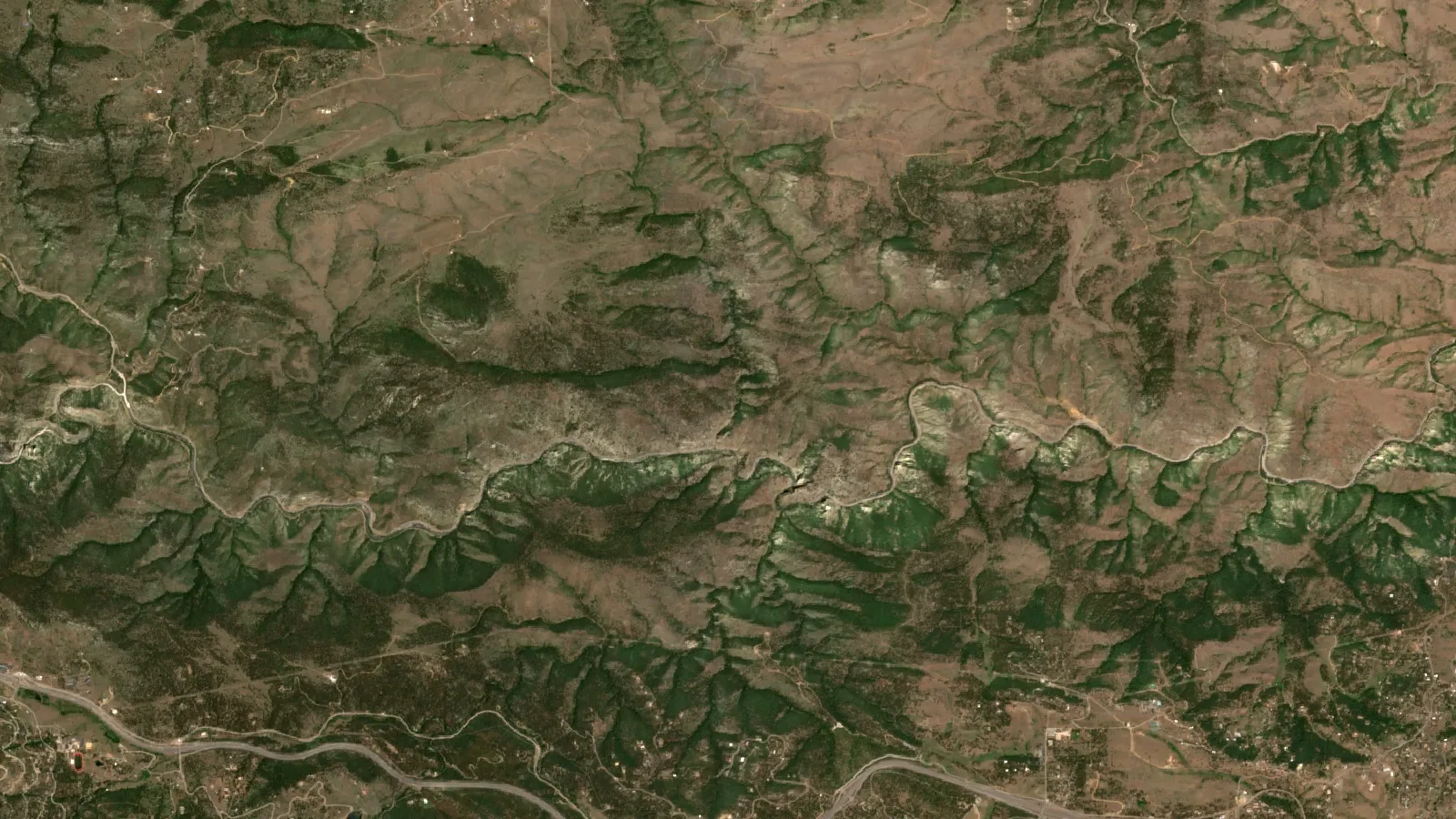
Key takeaways
- Jefferson County allows recreational gold prospecting only in posted stretches of Clear Creek in Clear Creek Canyon Park (Jeffco Parks and Open Space, 2026).
- County rules: stay in the stream channel, fill holes, keep 100 feet from bridges and structures, dredge nozzles four inches or less.
- The Argo Mill and Tunnel in Idaho Springs includes a 20-minute panning lesson with each tour; adults paid US$30 in November 2026.
- Green Russell’s July 1858 find of about 20 troy ounces at Little Dry Creek, Englewood, started the Pike’s Peak gold rush.
- At the Kitco bid of US$3,666.60 per ounce on 19 November 2026, one gram of pure gold is worth about US$118.
In this article
- Gold panning Denver: the short answer
- Where to pan for gold near Denver, and the rules at each spot
- How does gold panning work?
- Gold pan Denver: the gear you need
- Panning for gold in Colorado: why Denver has gold at all
- How much gold can you find panning near Denver?
- From panning to a claim or permit in Colorado
- Responsible gold panning near Denver
- Planning a Denver gold panning day
- Frequently asked questions
The one public place to pan for gold near Denver with written rules is Clear Creek inside Clear Creek Canyon Park, just west of Golden. Jefferson County allows recreational gold prospecting there, and only there, in the stretches marked by posted signs (Jeffco Parks and Open Space, recreation rules). For a guided first try, the Argo Mill and Tunnel in Idaho Springs, about 30 miles west on I-70, includes a 20-minute panning lesson with every tour. Below you will find the rules at each spot, how panning works step by step, what a day’s gold is really worth, and a short history of why Denver has gold at all.
Gold panning Denver: the short answer
Gold panning near Denver is legal in a few places and banned in many others. The rule that matters most is simple: the landowner decides. A county park, a city park, a state park, federal land and a private ranch can each have different rules on the same creek.
- Clear Creek Canyon Park (Jefferson County): prospecting allowed in Clear Creek, in posted areas only. Hand pans, sluices and small dredges are all named in the county rules, with limits.
- Other Jefferson County open space parks: prospecting is prohibited in all of them, according to the same county rules.
- Argo Mill and Tunnel, Idaho Springs: a paid tourist panning experience with real placer gold in each bag. This is the easiest choice for families.
- Gold Strike Park, Arvada: the site of the first recorded gold find in the Denver area, worth a visit for its history. Ask the City of Arvada about current rules before you bring a pan.
- South Platte River, Cherry Creek and Boulder Creek: the land along these streams belongs to many owners. Check with the city, county or landowner before you dig.
Placer gold, the gold you pan, is gold that has weathered out of rock veins and been carried and sorted by water into sand and gravel. Around Denver it is almost always fine flakes, often smaller than a grain of rice. That shapes everything in this guide: the gear you need, where to dig, and what to expect.
Where to pan for gold near Denver, and the rules at each spot
Clear Creek Canyon Park, west of Golden
Clear Creek drains the old mining districts around Idaho Springs, Central City and Black Hawk, which is why it still carries fine gold to the plains. The county park runs up the canyon along US Highway 6, with trailheads and creek access points such as Mayhem Gulch and Cannonball Flats (Clear Creek Canyon Park). The park page also warns that the creek is fast and the canyon walls steep, so take care at the water’s edge.
Jefferson County lists these prospecting rules for Clear Creek:
- Prospect only in Clear Creek, in the areas marked by posted signs.
- Work only in the normal, disturbed stream channel. Do not dig into stable banks, shoreline or vegetation.
- Fill every hole before you leave.
- Do not leave dredges or other equipment overnight.
- Stay at least 100 feet from structures such as bridges, steps and fish habitat improvements.
- Dredges are limited to a nozzle of four inches or less.
- Equipment must not drip or leak fuel or oil.
The county does not list a separate prospecting permit for this activity, but its general park rules apply, and anglers on the same creek need a Colorado fishing license with a habitat stamp. Read the posted signs on the day: the permitted stretches are marked on site, not described in detail online.
Argo Mill and Tunnel, Idaho Springs
The Argo is a historic mill at the mouth of a drainage tunnel that once connected mines between Idaho Springs and Central City. Each guided tour takes about 1 hour and 15 minutes and ends with a panning lesson of about 20 minutes using a bag of material that contains real gold; you keep what you find (Argo Mill and Tunnel, tours and prices). Listed prices in November 2026 were US$30 per adult and US$20 per child aged 5 to 16 for the tour, or US$21 for a panning-only bag of guaranteed placer gold. Prices change, so check before you go.
Gold Strike Park, Arvada
Gold Strike Park sits on Ralston Creek near where it joins Clear Creek. On 22 June 1850, Lewis Ralston, travelling with a party bound for California, panned about a quarter of a troy ounce of gold here (Lewis Ralston). His party moved on the next morning, and the find was nearly forgotten for eight years. The park is a city park, so city rules apply.
South Platte River, Cherry Creek and Little Dry Creek
These plains streams are where the Pike’s Peak gold rush began, but the gold there was thin and the early diggings played out within weeks. Most of the banks today are city parks, trails, golf courses or private land. Gold is still present in small amounts: the Colorado Geological Survey notes that some placer gold is recovered from sand and gravel pits along the South Platte, Arkansas and Colorado rivers (Colorado Geological Survey, metals). That does not make the banks open to the public. Ask the land manager first.
Boulder Creek and the foothills north of Denver
Boulder Creek flows through land owned by the City of Boulder, Boulder County and private owners, and their rules differ. Check the open space regulations of the owner for the exact stretch you want to work before you dig.
How does gold panning work?
Gold weighs about 19 times as much as the same volume of water and roughly seven times as much as quartz sand. Panning uses that difference. When you shake a pan of wet gravel, the heavy grains sink to the bottom and the light sand can be washed over the lip. Done well, you end with a small pile of dense black sand (mostly iron minerals such as magnetite) and, with luck, a few flakes of gold.
Step-by-step: how to pan for gold
- Pick the spot. Gold drops out where the water slows: on the inside of bends, behind large boulders, in cracks in the bedrock and at the downstream end of gravel bars.
- Classify. Shake the gravel through a classifier (a screen that sits on top of a bucket) to remove stones larger than about half an inch.
- Fill the pan. Fill the pan about two thirds full with screened material.
- Soak and break up clay. Hold the pan under water and work the material with your fingers so clay lumps release any gold.
- Shake. Shake the pan side to side under water so the heavy grains settle to the bottom.
- Tilt and wash. Tilt the pan away from you and swirl water across it so the top layer of light sand washes over the riffles. Shake again often.
- Finish slowly. When you are down to black sand, use less water and gentle swirls to spread the concentrate and look for gold.
- Recover. Pick up flakes with a snuffer bottle (a squeeze bottle with a thin tube) or tweezers and drop them into a vial of water.
Go slowly at first. Losing gold over the lip usually comes from rushing the last stage, and speed comes with practice.
▶ Farmonaut explainer on how gold is mined and refined, from rock to ring · 5:27
Gold pan Denver: the gear you need
A Denver gold pan kit is small and cheap compared with most hobbies. A plastic pan with molded riffles is the usual starting point; plastic does not rust and makes small gold easier to see than old steel pans. The rest of the kit:
- Classifier: a screen to remove stones, so you only pan the fine material where gold sits.
- Small shovel or trowel and a bucket.
- Snuffer bottle, tweezers and a glass or plastic vial for your finds.
- Magnet in a plastic bag: pulls magnetite out of the final concentrate at home.
- Waders or rubber boots and gloves: mountain creeks run cold, even in summer.
Sluice boxes and small dredges move more gravel per hour, but they come with more rules. In Clear Creek Canyon Park dredges must stay under the four-inch nozzle limit, and on other land a motorized setup may need a notice to the land manager or a state permit (see the section on claims and permits below).
Panning for gold in Colorado: why Denver has gold at all
The gold near Denver comes from veins in the mountains to the west. These veins sit at the northeast end of the Colorado Mineral Belt, a band of ore deposits that runs northeast to southwest across the state (Gold mining in Colorado). Over thousands of years, erosion broke down the vein rock and creeks such as Clear Creek and the South Platte carried the gold downstream, sorting it into gravel bars. These are placer deposits. Gold still in solid rock is called lode gold.
Chart
Selected Colorado gold output figures
Thousand troy ounces; a selection of years and operations
The discoveries that built Denver
In the summer of 1857, a party from Taos, New Mexico, worked a placer on the South Platte at a place later called Mexican Diggings, near today’s Overland Park Golf Course in Denver. In the first week of July 1858, William Green Russell’s party found placer gold at the mouth of Little Dry Creek, in what is now Englewood. The find yielded about 20 troy ounces and is described as the first significant gold discovery in the Rocky Mountain region (Pike’s Peak gold rush). News of it set off the Pike’s Peak gold rush, which drew an estimated 100,000 gold seekers between 1858 and 1861. The Colorado Geological Survey also places the first documented discovery in summer 1858, in stream gravel near the meeting of Cherry Creek and the South Platte in what is now downtown Denver.
The plains placers were small. The real gold lay in the mountains. On 5 January 1859, George Jackson found placer gold where Chicago Creek meets Clear Creek, at today’s Idaho Springs, the first substantial gold discovery in Colorado (Idaho Springs). In May 1859, John Gregory found the Gregory Lode between Black Hawk and Central City, and within two months many other veins were found nearby. Denver grew as the supply town for these camps.
The Colorado Geological Survey puts the peak of placer mining in the state at about 1860 to 1863, with a decline through 1875, after which lode mining took over. Its 83-page guide, Gold Panning and Placering in Colorado: How and Where (Information Series 33, by Ben H. Parker), is still the best map-based reference for where placer gold occurs in the state (CGS IS-33).
Colorado gold output, then and now
Colorado’s large production came later and from lode mines. The Cripple Creek district, southwest of Colorado Springs, produced half a million troy ounces in 1897 and 900,000 ounces in 1900. One modern mine continues the story: the Cripple Creek & Victor open-pit heap-leach mine, which the Colorado Geological Survey names as the state’s largest gold producer, made 360,000 ounces in 2018. By comparison, the Fairplay bucket dredge on the South Platte in South Park recovered about 120,000 ounces in its whole life from 1941 to 1951. A hobby panner near Denver is working the tail end of this system, where the gold is finest.

▶ Farmonaut explainer on how gold forms and ends up in veins and streams · 4:16
How much gold can you find panning near Denver?
Expect fine flakes, not nuggets: this far downstream the gold has been carried a long way and broken into small pieces. A single gram, about 0.03 troy ounces, is a useful yardstick, and a day of hobby panning often recovers less.
Chart
What small amounts of pure gold are worth
US$ at the Kitco bid of US$3,666.60 per troy ounce, 19 November 2026
To value small amounts, divide the price per troy ounce by 31.1035 to get a price per gram. At the Kitco spot bid of US$3,666.60 per troy ounce on 19 November 2026 (Kitco gold price), one gram of pure gold is worth about US$118. Placer gold is not pure; Colorado flakes are often alloyed with silver, and buyers pay below spot for small lots. So treat the value of a day’s flakes as an upper limit, and use the calculator on this page with today’s price.
The gold price has risen sharply. The US Geological Survey puts the average price at US$1,801 per ounce in 2021 and an estimated US$3,300 in 2025 (USGS Mineral Commodity Summaries, gold, 2026). Higher prices make a gram worth more, but they do not put more gold in the creek.
Calculator
What is a day of panning near Denver worth?
Enter your own grams, gold price and trip cost.
- Value of gold recovered (US$): $46
- Result after trip cost (US$): -$14
Example values only, not a benchmark or a forecast. Use today’s gold price from Kitco. One troy ounce is 31.1035 grams (fixed in the formula). Buyers pay below spot for small lots of placer gold, so set the share you expect.
From panning to a claim or permit in Colorado
Hobby panning in a county park is very different from working a mining claim. If you want to go further, three layers of rules apply:
Chart
Average gold price, United States
US$ per troy ounce, annual average (2025 estimated)
- The landowner. A county, city or private owner can allow, limit or ban prospecting. On federal land, a mining claim may already cover the ground you want to work; panning on someone else’s claim needs their permission.
- The State of Colorado. The Division of Reclamation, Mining and Safety (DRMS) handles prospecting under a Notice of Intent, decided case by case. Reclamation plans and bonding are required, and a state prospecting permit does not give you a legal right of entry onto the land (Colorado DRMS, permitting requirements).
- Federal land managers. BLM field offices in Colorado set local rules for placer work. The Royal Gorge Field Office, for example, has used a notification form for suction dredges and high bankers at the Point Bar placer area on the Arkansas River (BLM Royal Gorge Field Office notification).
Buying a claim is a bigger step again. A claim gives you a right to the minerals, not ownership of the land, and the price of a claim says nothing about how much gold is in it. Our guides to placer gold claims for sale in Oregon and gold panning laws in California show how other western states handle the same questions. For licence owners and consultants, satellite imagery can help screen ground before money is spent: our satellite based mineral detection service maps surface clues such as iron-oxide staining, clay alteration and fault lines over a claim or licence. It produces exploration targets, not a resource estimate, and it does not replace field sampling.

▶ Farmonaut explainer on how satellites help find gold by mapping the rock around it · 4:25
Responsible gold panning near Denver
Clear Creek is also a trout stream, a rafting run and a water source for towns downstream. The county rules exist to protect that. Good practice goes a little further:
- Stay in the active channel and leave banks, roots and plants alone.
- Fill holes and put large rocks back roughly where they were.
- Pack out all trash, including old lead and lines you find.
- Keep clear of anglers, rafters and fish habitat structures.
- Never use mercury to collect fine gold. It is toxic and illegal to release into streams.
- If you find old artifacts or mining relics, leave them in place and tell the land manager.
Safety matters as much. Spring snowmelt makes Clear Creek fast and dangerous, so the low, clear water of late summer and early autumn is the usual panning season. Cold water numbs hands quickly, and the canyon highway is busy, so park only in marked lots.
Planning a Denver gold panning day
A simple plan for a first trip:
- Choose the format. Families with young children usually enjoy the Argo first; adults who want to work real gravel can head to Clear Creek Canyon Park.
- Check conditions. Look at the Jefferson County park page for closures and creek status the day before.
- Pack the kit. Pan, classifier, bucket, trowel, snuffer bottle, vial, boots, gloves, water and sun protection.
- Read the signs. Start in a posted prospecting stretch, away from bridges and structures.
- Sample, then settle. Pan a few test spots quickly. Spend your time where you see the most black sand and any colour.
- Leave it as you found it. Fill holes and pack out everything.
If you are travelling and want more options, our list of places to find gold near you covers other US panning areas, and our Vancouver Island panning guide explains a very different set of rules across the border.
Frequently asked questions
Is gold panning legal in Denver?
It depends on who owns the land. Jefferson County allows recreational prospecting in posted stretches of Clear Creek in Clear Creek Canyon Park and bans it in its other open space parks. City parks, state land and private land each have their own rules, so ask the land manager first.
Where can I pan for gold near Denver?
The main public option is Clear Creek in Clear Creek Canyon Park, west of Golden. For a guided experience, the Argo Mill and Tunnel in Idaho Springs includes a panning lesson with every tour.
Do I need a permit to pan for gold in Clear Creek?
Jefferson County does not list a separate permit for recreational prospecting in Clear Creek Canyon Park, but you must follow its posted rules: stay in the stream channel, fill holes, keep 100 feet from structures and use dredges no larger than a four-inch nozzle.
Is there really gold in Clear Creek?
Yes, in small amounts. Clear Creek drains the Idaho Springs and Central City mining districts, where placer and lode gold were found in 1859. What remains near Golden is mostly fine flakes.
How much gold can you find panning near Denver?
Usually small flakes that weigh well under a gram in total. As a yardstick, at a gold price of about US$3,667 per ounce (Kitco, 19 November 2026) a gram of pure gold is worth about US$118, less after buyer discounts.
How does gold panning work?
Gold is much heavier than sand. Shaking a pan of wet gravel under water makes the gold sink, and tilting and swirling washes the lighter sand away until only heavy black sand and gold remain.
Where was gold first found near Denver?
Lewis Ralston panned gold on Ralston Creek in present-day Arvada on 22 June 1850. The find that started the rush was Green Russell’s in July 1858 at the mouth of Little Dry Creek, in present-day Englewood.
What is the best time of year to pan for gold in Colorado?
Late summer and early autumn, after spring snowmelt has passed. Water is lower, clearer and safer, and gravel bars are easier to reach.
Can I use a metal detector or sluice box in Clear Creek Canyon Park?
The county prospecting rules mention dredges and equipment, with a four-inch nozzle limit and no equipment left overnight. Check the posted signs and the park’s general rules for anything not listed, or ask Jeffco Parks and Open Space.
Can I pan for gold on a mining claim?
Only with the claim holder’s permission. A claim gives its holder the right to the minerals, so panning on it without permission takes their gold.
Can satellites find gold near Denver?
No satellite can see flakes in a creek. Satellite imagery maps rock alteration and structures linked to gold veins over large areas, which helps companies and claim owners choose where to sample. For questions about a project, use our contact page or the mining quote form.
This page is for information only. It is not legal advice. Rules change, so confirm them with the land manager before you pan. Always get permission, stay safe near fast water and never use mercury.
Farmonaut mining
Screen a claim or licence from space
Request a quote to map a Colorado claim or licence area with satellite data and get ranked exploration targets before you sample or drill.

Mining Pro sample view, synthetic data
Keep reading
Sources
- Jefferson County Parks and Open Space, Recreation (gold prospecting rules), accessed November 2026: jeffco.us
- Jefferson County, Clear Creek Canyon Park, accessed November 2026: jeffco.us
- Argo Mill and Tunnel, Gold mine tours and prices, accessed November 2026: argomilltour.com
- Wikipedia, Lewis Ralston: en.wikipedia.org
- Wikipedia, Pike’s Peak gold rush: en.wikipedia.org
- Wikipedia, Idaho Springs, Colorado: en.wikipedia.org
- Wikipedia, Gold mining in Colorado: en.wikipedia.org
- Colorado Geological Survey, Metals: coloradogeologicalsurvey.org
- Colorado Geological Survey, IS-33 Gold Panning and Placering in Colorado: How and Where (Parker, 2009 edition): coloradogeologicalsurvey.org
- Colorado DRMS, Minerals program information and mine permitting requirements: drms.colorado.gov
- BLM Royal Gorge Field Office, Arkansas River Point Bar placer area notification (2017): blm.gov
- USGS, Mineral Commodity Summaries 2026: Gold: pubs.usgs.gov
- Kitco, Gold price chart and spot bid (19 November 2026): kitco.com
Discussion
Questions, corrections or field experience? Share them below. First-time comments are reviewed before they appear, and your email is never published.
No comments yet. Be the first to add a question or your experience.

 Denkyira Nkoranza Concession
 Mwerezi Minerals Company Limited
 Congo Mining Solutions
 Mining SARL
 SenGold Invest SAS
 Sania Corporation
 Sean Mining Limited
 NTS Group (Pty) Ltd
 Mine4Africa
 Lithspo Minerals Limited
 Tintina Mining Group
 Dalgety Minerals Pty Ltd
 Faith At Work (Pty) Ltd
 Geotech Mining Solutions plc
 Vulcan International Limited
 Kidepo Associates
 GKY Mining
 Alkimy SARL
 Double A Trading

 Licence holder · Nigeria · Gold + lithium
 Client · Somalia · Gold










