

Oregon placer claims · Buyer guide
Gold Claims for Sale in Oregon: Costs, Rules, Checks
Most gold claims for sale in Oregon are federal placer claims: you buy a mineral right, not the land. The BLM charges US$200 a year per 20 acres, and water permits decide what you can do with it.
Key takeaways
- A federal placer claim is a right to the minerals, not ownership of the land (BLM mining claims guide).
- BLM fees for a new placer claim filed after 1 September 2024: US$25 processing, US$49 location and US$200 per 20 acres maintenance (BLM, fee page).
- Oregon wants a copy of the location notice recorded with the county clerk within 60 days (ORS 517.030); the BLM allows 90 days. A missed 1 September fee or waiver voids the claim.
- Suction dredging needs DEQ registration under general permit 700-PM, which runs to 30 April 2030; hand panning is exempt.
- Baker, Grant, Jackson and Josephine counties led 1940 production of gold, silver, copper and lead (DOGAMI, 1941).
In this article
- What a listing for gold claims in Oregon really sells
- What buying a claim costs in fees
- Which Oregon counties led historic mining output
- Southwest Oregon districts that paid in the dredge era
- Where claims for sale in Oregon turn up
- Eight checks before you pay for a claim
- Water rules that decide whether you can work the claim
- Permits for bigger work on a claim
- How to transfer a claim, step by step
- Screen the ground from space before you pay
- Frequently asked questions
Most gold claims for sale in Oregon are unpatented federal placer claims, which means the seller transfers a right to mine the minerals, not ownership of the land. One 40-acre Baker County placer listing was priced at US$12,480 on the MiningClaimSales list page on 15 October 2026. After you buy, the Bureau of Land Management (BLM) charges US$200 a year for each 20 acres of placer ground, so the real cost sits in the checks, the permits and the water rules, not the asking price.
This guide is written for people who hold, buy or advise on small mining properties. It covers what a listing really sells, what the fees are, which Oregon counties have produced placer gold, where listings turn up, eight checks to run before you pay, the water and land-use permits that decide whether you can work the ground, and a transfer checklist. Gold traded at US$4,002.70 per troy ounce (spot bid, Kitco, 26 October 2026, 9:35 a.m. New York time), but a claim is priced by its paperwork and access as much as by the metal.
What a listing for gold claims in Oregon really sells
A placer claim covers gold held in loose gravel, sand and clay, usually in or beside a stream. A lode claim covers gold in solid rock, such as a quartz vein. Placer ground is cheaper to test, because you can pan or sluice a sample, which is why it dominates the small-claim market.
On federal land the claim gives the holder an exclusive right to the minerals, as long as the claim stays valid. The land stays public. The BLM explains that a placer claim can be located only in a legal subdivision where possible, and that one person can hold at most 20 acres in a claim; an association of two locators can claim 40 acres, and the legal limit for an association is 160 acres for eight or more people (BLM mining claims guide). Under Oregon law, mining claims are treated as real estate and the owner of the possessory right holds a legal estate in it (ORS 517.080), which is why a sale needs a proper deed and not just a handshake.
In practice, a seller can only pass on what the claim legally is. That is why a listing should show a BLM serial number, a county recording reference and a current fee receipt before you talk about price. If you are still weighing up the basics, our explainer on what a gold claim is covers the legal background, and the seven-step guide to buying mine claims applies to any state. Comparing states? The same checks apply to gold claims in Washington State.
Types of placer ground you will see advertised
- Streambed (active channel) ground: gold in current river and creek gravels. It is the easiest to sample, and also the most tightly regulated for water quality and fish.
- Bench placers: old channel gravels sitting above the modern river. They can be worked on dry ground, so water permits matter less, but you move more material.
- Floodplain and terrace gravels: wide, low-grade areas that earlier miners often skipped.
- Dredge tailings: piles left by the dredges that worked Oregon streams; 56 dredges operated in the state in 1940 (DOGAMI, 1960). Grades vary, and the land use history needs checking.
What buying a claim costs in fees
The federal fees are small next to the price of a typical claim, but they recur every year and they are due on fixed dates. The BLM fee schedule for new claims filed on or after 1 September 2024 is a US$25 processing fee, a US$49 location fee and a US$200 maintenance fee. For placer claims the maintenance fee is charged for each 20 acres or part of 20 acres. After the first year, the annual fee is US$200 per 20-acre block, due on or before 1 September.
Chart
BLM fees for one new placer claim, by size
US$ per claim: US$25 processing + US$49 location + US$200 per 20 acres, then US$200 per 20 acres a year
Holders of 10 or fewer claims nationwide (counting related parties) can file a maintenance fee waiver instead of paying. Waiver holders then file an affidavit of assessment work or a notice of intent to hold by 30 December, at US$15 per claim. Missing the 1 September date, or missing the waiver paperwork, makes the claim forfeited and void by operation of law. The BLM does not sell a lapsed claim: the ground simply opens to new locators, and anyone selling a claim that missed a date is selling nothing.
Transfers have their own cost. BLM charges US$15 per claim, per person receiving the claim, to file a quit claim deed or another transfer document, and the deed must be recorded first with the county recorder (BLM, mining claim fees). Oregon adds a county step: the locator of a new claim has 60 days from posting the notice to record a copy with the county clerk, who is the custodian of mining records (ORS 517.030). When you buy, check that this recording was actually made. A claim that was posted but never recorded with the county is a title problem, even if the BLM filing looks clean.
A worked example
Suppose you buy one 40-acre placer claim for US$12,500. That is two 20-acre blocks, so the annual BLM fee is US$400 if you do not qualify for the waiver. Add the US$15 transfer filing, the county recording fee set under ORS 205.320, and any title or legal costs. Over five years the BLM fees alone come to about US$2,000. Use the calculator below to test your own numbers and see how many ounces of gold the total represents at today’s price.
Which Oregon counties led historic mining output
Placer mining in Oregon began about 1852 near Jacksonville, and southwest Oregon’s streams have been worked ever since (DOGAMI history and production article). Production figures from the state geology department show where the metal came from in 1940, a peak year. Baker County in northeast Oregon led, followed by Grant, Jackson and Josephine counties (DOGAMI, The Ore Bin, 1941). That year about 63 percent of Oregon’s gold came from placers and 37 percent from lode mines.
Chart
Share of Oregon’s 1940 metal output by county
Percent of the value of gold, silver, copper and lead mined in 1940 (gold was 96 percent of the total)
These are historic figures, and today’s output is far smaller. The state’s gold production fell to a low of 686 ounces in 1959, and only 29 small placers were worked in Douglas, Jackson and Josephine counties in the 1959 to 1960 season, down from more than 100 before World War II (DOGAMI, The Ore Bin, 1960). For a buyer, the history is useful in one way: it tells you which creeks and benches were already worked, and by what method. Ground that was dredged is mostly worked-over gravel; ground with no mining history may be barren or may be untested.
Southwest Oregon districts that paid in the dredge era
The same 1960 DOGAMI bulletin lists placer production by district for 1940, when southwest Oregon produced 23,174 fine ounces of placer gold valued at US$811,090. The Upper Applegate district in Jackson County led with 8,672 ounces from 22 properties, ahead of Gold Hill in Jackson County and Waldo in Josephine County. The districts below are the long-running names that still appear in claim listings, although a district name in an advertisement is no guarantee of grade.
Chart
Placer gold by district, 1940
Fine ounces, southwest Oregon districts with the highest output
The state’s own water-permit paperwork names the basins where small-scale placer mining still happens: Applegate, Chetco, Coquille, Illinois, Sixes, Rogue, Umpqua and the upper Willamette and Santiam basins in the west, and the Burnt, Powder and John Day basins in the east (Oregon DEQ, 700-PM fact sheet). If you are researching Oregon more widely, our guide to gold mining in Oregon: permits, claims and satellite targets covers the Grassy Mountain project and the state’s permit sequence, and the sustainable gold mining practices page covers site care.
Where claims for sale in Oregon turn up
There is no public price register for claims. Asking prices vary a great deal, and most are negotiated. These are the main routes.
- Online claim marketplaces. Listing sites carry a handful of Oregon claims at any time, mostly in Baker County and the southwest. A listing is an advertisement, not a title search.
- Prospecting clubs and associations. Members often sell or lease claims by word of mouth. You can ask to meet the seller and visit the ground.
- Classified ads and mining magazines. These carry larger properties, sometimes with equipment included.
- Brokers and attorneys. They cost more but handle the paperwork, and some run title checks as part of the sale.
- The BLM public record. The Mineral and Land Records System (MLRS) shows which claims are active, so you can look up a claim before you speak to the seller. Ground whose claim has lapsed can be located fresh by a new locator.
Be careful with listings that say a claim is a bargain because the owner “needs to sell fast”. The cheapest listings are often claims with access problems, no recent fee payments, no county recording, or a stretch of river where dredging is not allowed.
Eight checks before you pay for a claim
- BLM serial number and status. Look the claim up in MLRS. It must show as active and match the claim name, type, acreage and legal description in the advert.
- Fee history. Ask for proof of the last maintenance fee or waiver, due each 1 September. A missed date voids the claim.
- County recording. Ask for the recorded location notice and any amended notices from the Oregon county clerk.
- Boundaries. Ask for a map with corner coordinates and walk the corners. Overlapping claims are common in old districts.
- Land manager. Is it BLM land or National Forest? Forest Service rules require a notice of intent to operate for work that could cause significant disturbance of surface resources, and the District Ranger decides whether a plan of operations is needed (36 CFR 228.4).
- Water status. Is the stretch in a stream mapped as essential salmonid habitat? That changes what equipment you can use.
- Production and assay evidence. Ask for sample logs, gold weights and where each sample came from. A photo of a vial of gold proves nothing about the claim.
- Access. Check public roads, rights of way and whether a locked gate or private land sits between the road and the claim.
Owning a claim is not owning the land under it, and that difference catches many first-time buyers. The short video below explains it.
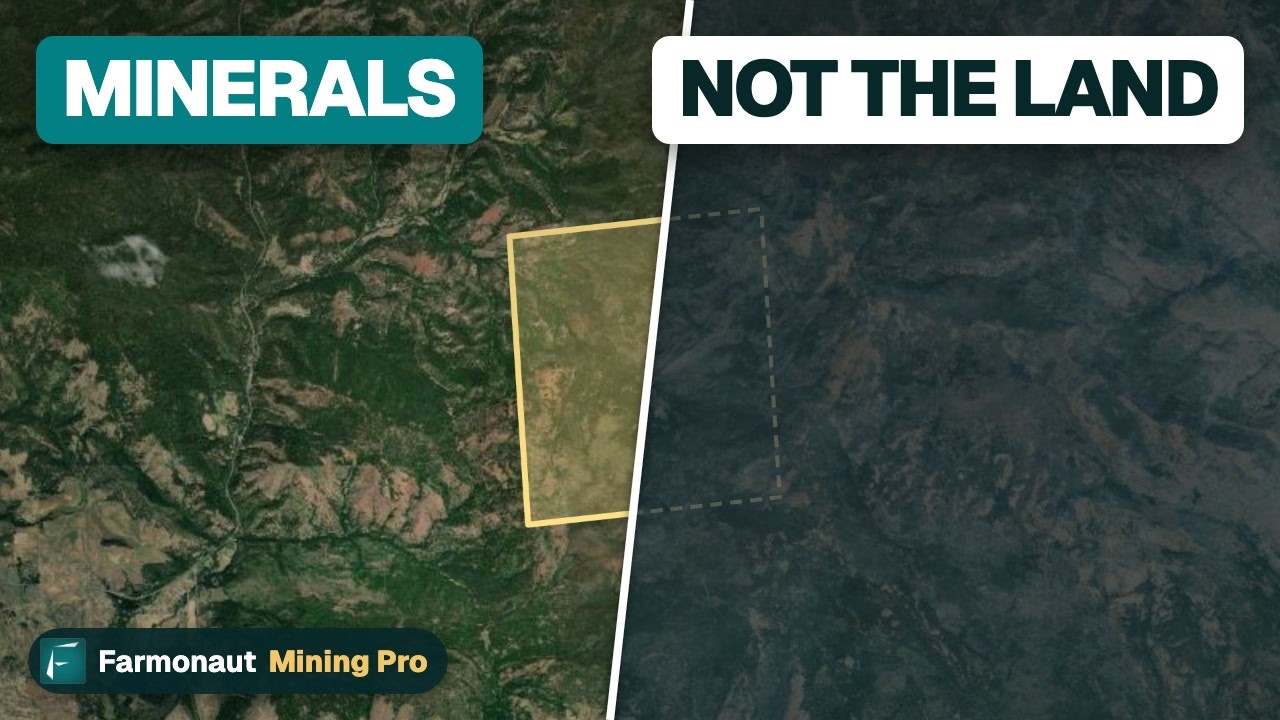
▶ A short explainer on why owning a gold claim is not the same as owning the land, and how to check the ground first. · 3:19
Water rules that decide whether you can work the claim
For most Oregon placer ground, the water rules matter more than the mining claim. Hand panning is exempt from Oregon’s water-quality permit. Almost everything else that puts muddy water back into a stream is covered by it.
Oregon DEQ’s 700-PM general permit covers four kinds of in-water placer discharge: small motorized suction dredges outside essential salmon habitat, gravity or siphon dredges with hoses up to six inches outside essential habitat, gravity or siphon dredges with hoses up to four inches inside essential habitat, and other non-motorized in-water equipment such as sluice boxes. The current permit runs to 30 April 2030. Motorized dredges are limited to 30 horsepower and a four-inch hose, and dredges must be registered with DEQ before use (DEQ permit 700-PM).
The conditions are specific. Work is allowed in daylight only and only inside the in-water work period set by the Oregon Department of Fish and Wildlife. A dredge must stay at least 500 feet upstream of any stream segment listed for sedimentation, turbidity or toxics. Operators must keep records and report to DEQ every year, and DEQ asks for registration at least 30 days before dredging starts (Oregon DEQ, metal mining activities).
Highbankers and power sluices are different. Operating below the ordinary high-water mark with a discharge needs an individual permit; operating above it with no discharge to surface water falls under a separate DEQ general permit for wastewater (the fact sheet cited above). The Department of State Lands (DSL) adds a removal-fill permit for any placer operation that moves more than 50 cubic yards a year in a waterway, and in some cases a general authorization for smaller operations in essential salmon habitat. DEQ reports that 31 general authorizations were issued for non-motorized mining in essential salmon habitat between 2020 and 2025.
DSL published an updated essential salmonid habitat map on 31 March 2026. It adds about 45 stream miles to the more than 22,000 mapped miles statewide, and removes about 4 (Oregon DSL, 2026 map update). Check the current map for the exact creek before you buy, since a claim on mapped habitat can be worth far less if you cannot use a dredge there.
Old mercury is a real hazard. DEQ notes that elemental mercury left from past mining can still be caught in sluice boxes and must be disposed of properly. Do not use mercury yourself.

▶ A claymation explainer on the seven environmental impacts of mining. · 2:31
Permits for bigger work on a claim
Pans and sluice boxes are one thing; machines and trenches are another. Oregon’s Department of Geology and Mineral Industries (DOGAMI) sets three thresholds (DOGAMI, mineral land regulation):
- An exclusion certificate covers small operations that remove less than 5,000 cubic yards and affect less than one acre in 12 months.
- An exploration permit is needed for work that disturbs more than one surface acre or drills deeper than 50 feet. DOGAMI recommends contacting it at least 180 days before work starts.
- An operating permit is needed above one acre of disturbance or 5,000 cubic yards in any 12-month period, with reclamation security posted first.
Add federal rules to these. On BLM land, surface management rules apply to work above casual use; on National Forest land the Forest Service notice of intent applies. For a fuller treatment of the state permit sequence, see our Oregon permits and claims guide.
Oregon also has other mining questions in the news. Our article on lithium mining in Oregon looks at land and water effects for a different mineral, which can matter if a claim sits near a lithium project.
How to transfer a claim, step by step
- Agree the terms in writing. Name the claim, serial number, price, what equipment or data is included and who pays recording fees.
- Run the eight checks. Do this before you pay any deposit.
- Hold the money until the paperwork is signed. Use an escrow or attorney for anything large.
- Sign a quit claim deed. Record it first with the Oregon county recorder, then file it with the BLM.
- File with the BLM. Pay US$15 per claim to the person receiving it, as in the fee schedule above.
- Calendar the next fee date. The next 1 September payment or waiver is yours, not the seller’s.
- Walk the corners and check the markers. Replace missing posts and keep photos with dates.
Calculator
What will a claim cost to hold, in ounces of gold?
Enter your own asking price, claim size and holding period.
- BLM maintenance per year (US$): $400
- BLM fees over your holding period (US$): $2,000
- Total outlay incl. transfer filing (US$): $14,515
Example values only, not a benchmark. Fees from the BLM fee page: US$200 maintenance per 20 acres a year and US$15 per claim for the transfer filing. The gold price is an input: example, use today’s price. It leaves out the county recording fee, legal and title costs, permits, equipment and the maintenance waiver for holders of 10 or fewer claims.
Screen the ground from space before you pay
Before you pay for a claim, it helps to see the ground. Farmonaut’s satellite mineral detection screens an area from imagery and returns exploration targets, which can narrow where to sample first. It does not replace a field sample or a resource estimate. You can send a boundary through the mining quote form.
Frequently asked questions
How much do gold claims cost in Oregon?
Asking prices vary widely. One 40-acre Baker County placer listing was priced at US$12,480 on the MiningClaimSales list page on 15 October 2026. Larger packages with equipment are advertised at much higher prices. After you buy, the BLM fee is US$200 a year for each 20 acres of placer ground, unless you qualify for the waiver.
Can I buy a gold claim in Oregon?
Yes. Anyone who holds a claim can transfer it by a recorded deed. Under Oregon law an individual must be a US citizen, or have declared an intention to become one, to locate a new placer claim on the public domain (US-organised companies can also locate under federal law) (ORS 517.044).
Do I own the land if I buy a gold claim?
No. A federal claim gives mineral rights, and the land stays public. Check the land manager and any surface rules before you plan work.
What happens if a claim owner does not pay the BLM fee?
The claim becomes forfeited and void by operation of law. The BLM does not sell it, and the ground opens to new locators.
How long do I have to record a new claim in Oregon?
Sixty days from posting the notice to record a copy with the county clerk, and 90 days to file with the BLM.
Is suction dredging legal in Oregon?
It is allowed only with a DEQ registration under the 700-PM general permit and inside the ODFW in-water work period. Rules differ inside and outside essential salmon habitat, and the hose and horsepower limits apply.
Do I need a permit to pan for gold in Oregon?
Hand panning is exempt from DEQ’s discharge permit. You still need permission to be on the land, and a claim you do not own belongs to someone else.
Which Oregon counties have the most placer gold history?
Baker, Grant, Jackson and Josephine counties led 1940 production, with placer districts in the southwest and John Day and Powder River basins in the east.
What is the difference between placer and lode claims?
Placer claims cover loose gold in gravels, and lode claims cover gold in hard rock veins. Placer fees are charged per 20 acres, and lode fees per claim.
How can I check a claim before buying it?
Look up the BLM serial number in MLRS, ask the county clerk for the recorded notice, request fee receipts and walk the corners. Satellite screening can add a view of the surrounding ground.
This page is for information only. It is not investment advice or legal advice. Confirm claim, permit and fee rules with the BLM, Oregon agencies and an attorney before you buy. Get permission before you enter or sample any ground, follow the rules for the stream, and do not use mercury.
Farmonaut mining
Get your claim screened from space
Send a boundary and get satellite-based exploration targets, ahead of any sampling or resource estimate.

Mining Pro sample view, synthetic data
Keep reading
Sources
- BLM, Mining Claim Fees: blm.gov
- BLM, Staking a Mining Claim on Federal Lands: blm.gov
- Kitco, gold spot price (26 Oct 2026): kitco.com
- Oregon Revised Statutes 517.030, recording of location notice: oregon.public.law
- Oregon Revised Statutes 517.044, placer claims: oregon.public.law
- Oregon Revised Statutes 517.080, mining claims as realty: oregon.public.law
- DOGAMI, History and Production, southwest Oregon gold: oregon.gov
- DOGAMI, The Ore Bin, vol. 3 no. 7 (1941): pubs.oregon.gov
- DOGAMI, The Ore Bin, vol. 22 no. 8 (1960): pubs.oregon.gov
- Oregon DEQ, 700-PM permit renewal fact sheet: oregon.gov
- Oregon DEQ, general permit 700-PM: oregon.gov
- Oregon DEQ, Metal mining activities: oregon.gov
- DOGAMI, Mineral land regulation and reclamation: oregon.gov
- 36 CFR 228.4, Forest Service notice of intent: law.cornell.edu
- Oregon DSL, essential salmonid habitat map update (31 Mar 2026): oregon.gov
- MiningClaimSales.com, claim listings (seen 15 Oct 2026): miningclaimsales.com
Discussion
Questions, corrections or field experience? Share them below. First-time comments are reviewed before they appear, and your email is never published.
No comments yet. Be the first to add a question or your experience.

 Viahara Mining
 Mining SARL
 SenGold Invest SAS
 Sania Corporation
 Sean Mining Limited
 NTS Group (Pty) Ltd
 Mine4Africa
 Lithspo Minerals Limited
 Tintina Mining Group
 Dalgety Minerals Pty Ltd
 Vortex Minerals Pty Ltd
 Faith At Work (Pty) Ltd
 Geotech Mining Solutions plc
 Vulcan International Limited
 Kidepo Associates
 GKY Mining
 Alkimy SARL
 Double A Trading
 GemSprout Metals Limited
 Qader Group
 Ileys General Trading
 SG Gold Mining LLC
 VRV Global Pte Ltd
 Omsri International FZE











