

Gold prospecting · Texas and NSW guide
Gold Prospecting in Texas: Where, Rules and Break-Even
Texas gold is mostly trace gold in Llano quartz and a by-product of silver at Shafter. Learn who owns the ground, which permits matter, what a field day returns, and how NSW fossicking limits compare.
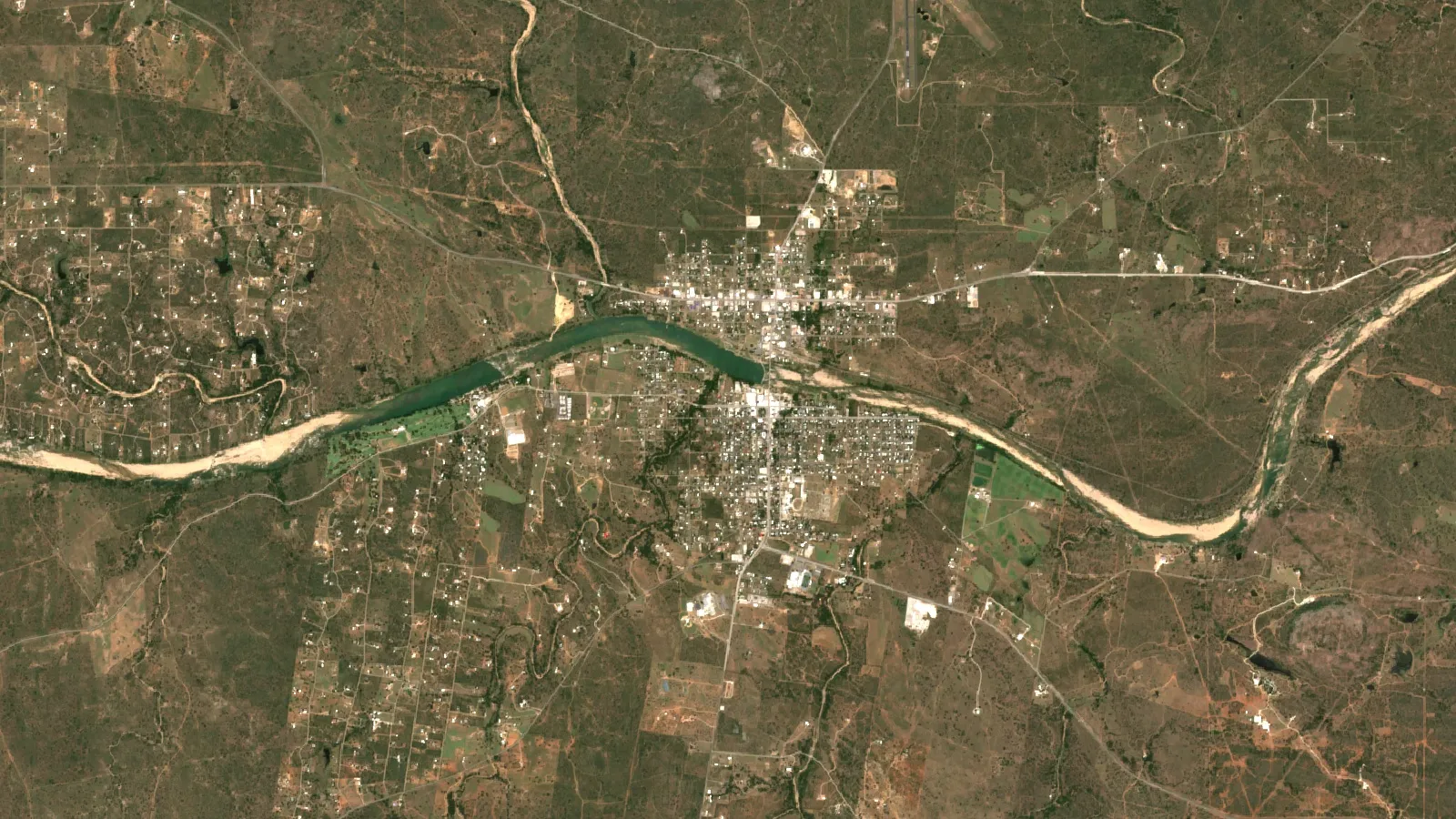
Key takeaways
- The Presidio silver mine at Shafter recorded 5,406 oz of gold against about 11.8 million oz of silver in the years in its USGS table, about 2,200 oz of silver per oz of gold (USGS Bulletin 928-B).
- A 1911 USGS survey of the Llano-Burnet region found gold in many places but judged the quantity too small to mine; the Heath prospect was the one site worth further work (USGS Bulletin 450).
- Private working lands make up 82% of the Texas land base (Texas A&M NRI, 2019), so written permission from the owner comes before any digging.
- In NSW, no power-operated digging or washing equipment, 1 cubic metre of ground per 48 hours and 50 g of gold per person (plus up to 5 nuggets of 10 g or more) are the limits in the Resources Regulator guide (2025).
- Gold’s spot price was $4,150.26 per troy ounce at 9:00 a.m. ET on 15 October 2026 (CNBC); the calculator turns your own gold per hour into a break-even.
In this article
- Is there gold in Texas? What the records show
- Llano Uplift: trace gold in quartz and soil
- Trans-Pecos and the Shafter district: gold as a by-product
- Can you prospect for gold in Texas legally? Rules, step by step
- What a day in the field can return: a break-even calculator
- Gold prospecting in NSW: fossicking rules and where the gold is
- Texas and NSW side by side
- Scouting from space before you go
- Safety and good practice in the field
- Frequently asked questions
Gold prospecting in Texas is a small-scale pursuit: the state is not among the leading US gold producers. The best-documented gold in the state came out of a silver mine in Presidio County as a by-product, and the Llano Uplift in Central Texas is known for trace gold in quartz and soil. A century-old USGS survey found gold in the Llano area “so small as to be valueless” for mining. That does not mean the state is closed to prospectors. It means you should go with realistic goals, know who owns the ground, and use records and maps before you use a pan. This guide covers where gold has been recorded in Texas, the rules for entering land, a break-even calculator for a field day, and how New South Wales (NSW) in Australia handles the same hobby, which is why it sits in the same article.
Is there gold in Texas? What the records show
Yes, but in small amounts. The USGS 2026 summary of US gold says domestic mines produced about 160 tonnes in 2025 at more than 40 lode mines in 12 states, with Nevada the leading producer at about 64% of the total and Alaska next at about 22% (USGS, Mineral Commodity Summaries 2026). Texas is not one of the two leading states it names, and its own gold history is small and mostly tied to silver.
Chart
Gold recovered at the Presidio mine, selected years
Troy ounces per year; Shafter district, Presidio County, Texas
The best-documented source is the Presidio mine at Shafter, a silver mine in the Trans-Pecos region of far West Texas. A USGS report on the district counts a recorded output of about 2.02 million tons of ore and 30.97 million ounces of silver from 1883 to 1940 (USGS Bulletin 928-B). Gold appears in the same report only as a small column in the production table: 5,406 ounces in the years listed (1927 to 1940, with gaps), against about 11.8 million ounces of silver in the same table. That is roughly 2,200 ounces of silver for each ounce of gold. In plain words, the mine was a silver mine, and the gold was a side product caught in the same ore.
The same report gives year-by-year gold recovery. In the years shown, it ranged from 176.5 ounces in 1930 to 1,278.7 ounces in 1929, which shows how uneven by-product gold can be.
Llano Uplift: trace gold in quartz and soil
The Llano Uplift is a dome of very old rock in Central Texas where granite, schist and gneiss are exposed. The most detailed government study of its minerals is still a USGS bulletin from 1911 on the Llano-Burnet region (USGS Bulletin 450). Its author wrote that small amounts of gold can be found at many places in the old rock, but that in general the quantity is so small as to be valueless from a mining point of view. Of twelve assays listed (an assay is a lab test of a rock sample for metal content), several showed only a trace or no gold, and the highest returned 31 cents of gold per ton at the prices of the time.
One place stood out. The Heath prospect, about 5 miles northeast of Llano, had gold linked to quartz stringers (thin veins) in graphitic schist, and the soil above the rock also carried gold because weathering had concentrated it. A shaft 615 feet deep was sunk there in 1900 to 1901. The author still warned that values were hard to rely on, because the quartz veins were not persistent or large enough to work one by one. For a modern prospector the lesson is plain: expect fine gold flecks in soil and veins, not nuggets, and treat anything you find as a lead to sample properly rather than a mine.
If you want a broader map-based view of the state, our guide to gold mining in Texas covers the record of mines and what to ask before you visit a site. For the national picture, see gold deposits in the United States by state.

▶ A nearby public dig site example from Arkansas: the history of an 1880s gold boom town and what state geologists said about it. · 6:31
Trans-Pecos and the Shafter district: gold as a by-product
The Trans-Pecos is the desert region of far West Texas, and the Shafter district is its standout. The USGS report describes the Presidio mine as the source of most of the silver and associated metals produced in Texas up to 1940, and notes that its ore grade fell over time as the tonnage mined rose. In 1940, the last year with records in the report, ore milled averaged only 10.7 ounces of silver per ton.
Chart
More ore milled, less gold per ton
Gold grade (grams per ton of ore milled) against ore milled (thousand tons), 8 selected years
The same fall shows up in the gold. Dividing the gold ounces in the USGS table by the tons milled gives about 0.26 grams of gold per ton of ore in 1927 and about 0.07 grams per ton in 1940. These are our own calculations from the published table, and they describe what a silver operation happened to recover, not what a gold mine would need. The chart below plots them against the tonnage milled.
| Area | Rock setting | What the records show | Source |
|---|---|---|---|
| Llano Uplift (Llano, Burnet counties) | Old granite, schist, quartz stringers | Trace gold in most assays; the Heath prospect had gold in quartz and soil; author judged values too low to mine | USGS Bulletin 450 |
| Shafter district (Presidio County) | Limestone-hosted silver and lead ore | Gold recovered as a small by-product of silver milling; 5,406 oz in the table years | USGS Bulletin 928-B |
Can you prospect for gold in Texas legally? Rules, step by step
Most of Texas is private. The Texas A&M Natural Resources Institute reports that privately owned farms, ranches and forests make up 82% of the state’s land base (Texas Land Trends, 2019 fact sheet). So the first question is almost never “where is the gold” but “who owns the ground”. Follow these steps in order.
- Identify the owner. Use the county appraisal district or clerk records to find the surface owner. Write down the parcel and the county.
- Get written permission. On private land, ask the owner for written permission that names the dates, the area and the tools you will use. Do not dig, trench or move creek gravel without it.
- Ask who owns the minerals. The Texas General Land Office (GLO) says it issues prospect permits and leases on state lands, and it treats minerals under state lands and “mineral classified” lands separately (Texas GLO, Hard Minerals). Ask the GLO whether the minerals under your tract are state-owned.
- Read the permit terms if the minerals are state-owned. A sample GLO prospect permit (form version 4/99) is issued for one year, bars removal of minerals in commercial quantities, requires an approved plan of operation before any ground-disturbing work, and requires annual reports (GLO sample prospect permit). Confirm the current terms with the GLO before you apply.
- Respect public parks. Texas Parks and Wildlife says federal and state laws prohibit collecting plants, animals and artifacts in state parks (TPWD, Park Rules). Ask the park office before you pan, dig or take any sample.
- Stop for artifacts. The GLO permit tells holders to stop work and report any archaeological or historic find. Treat old mine dumps and camps the same way.
- Keep records. Note the coordinates, date, sample number and weight of every sample. It helps if the owner or an agency asks what you took.
Old mine shafts and adits are dangerous. Do not enter them. Our overview of field methods for prospecting explains how pans, sluices and detectors differ, and how to find gold deposits covers deposit types and signs.
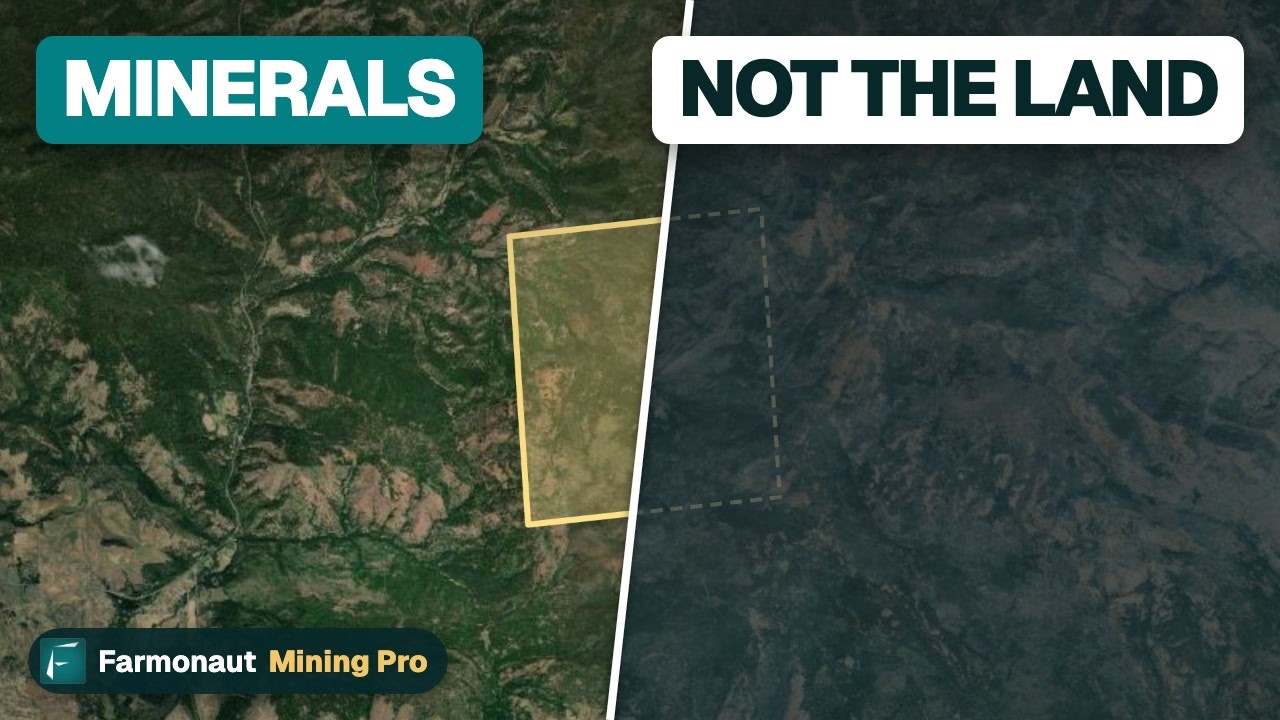
▶ Explains why owning a gold claim is not the same as owning the land, and how to check the ground first. The example is from Washington state; the idea applies in Texas too. · 3:19
What a day in the field can return: a break-even calculator
Hobby gold is a game of small numbers. Gold’s spot price was $4,150.26 per troy ounce at 9:00 a.m. ET on 15 October 2026 (CNBC), which is about US$133 per gram. A day that yields a few tenths of a gram is worth tens of dollars, so travel and equipment costs matter. The calculator below turns your own numbers into a break-even point. Enter your gold per hour from past trips, not a guess.
Calculator
Does a field day cover its costs?
Enter your own hours, gold per hour and trip costs.
- Net after trip cost: $20
- Gold needed to break even: 0.45 g
- Hours needed at your rate: 4.5 hours
Example values only, not a benchmark or a forecast; use your own recovery from past trips. The gold price is an input: use today’s price. 31.1035 grams per troy ounce is a fixed constant in the formulas (USGS conversion). Costs and values are in US$.
Gold prospecting in NSW: fossicking rules and where the gold is
Australians call recreational prospecting “fossicking”. NSW Resources defines it as the small-scale search for, and collection of, minerals, gemstones or mineral-bearing material, and says it is a lawful activity in NSW (NSW Resources, Fossicking in NSW). The rules sit mainly in the Mining Act 1992 and Mining Regulation 2016, and the Resources Regulator’s 2025 guide sets them out in plain terms (Fossicking: A guide to fossicking in NSW).
Equipment and limits
Power-operated equipment for digging, moving or washing material is banned, so you work with hand tools. Permitted items include pans, sieves, shovels, picks, hammers, metal detectors and non-powered river sluices. Not permitted are mobile plant such as backhoes and excavators, water pumps, mechanised dredges, power-operated trommels, concentrators, jack hammers, powered gold wheels, and “highbanker” sluices used with powered pumps. You may not disturb more than one cubic metre of soil, rock or other material in any 48-hour period, and you must replace what you move.
Per person in any 48 hours, the guide sets these limits: 10 kg of mineral-bearing material containing gold or gemstones, 5 kg of other minerals, 5 nuggets of 10 grams or more, and 50 grams of gold other than those nuggets. Publicly owned gold that you recover during lawful fossicking becomes your property, and no royalty is payable on minerals found while fossicking. Where the minerals are privately owned, you must agree ownership with the landholder or mineral owner.
Consents you need
You need the landholder’s consent on private land. You also need consent from holders of mining titles, with one exception: inside a declared Fossicking District you do not need the consent of an exploration licence holder, though the other consents still apply. District boundaries are shown in the MinView map layer (Data.NSW, NSW Fossicking Districts). Fossicking on Crown land may need authorisation under the Crown Land Management Act 2016, and land subject to native title needs the consent of the registered native title body corporate.
State forests require a permit, which is valid for 12 months and is for recreational, tourist or educational use only (Service NSW). National parks are different: fossicking is generally not permitted, and consent is not considered at all for nature reserves, historic sites, Aboriginal areas or places, karst conservation reserves (apart from one named area) or wilderness areas (NSW National Parks and Wildlife Service, Fossicking policy). Breaches can bring fines of $750 for an individual and $1,500 for a corporation, with a maximum court-imposed penalty of $5,500 (Resources Regulator guide). For permits, costs and local areas, see our page on fossicking permits in NSW.
Where NSW gold comes from
NSW has a far richer gold base than Texas. The state’s gold endowment, meaning past production plus identified resources, exceeds 3,347 tonnes (107.6 million ounces), and current resources exceed 2,188 tonnes (70.3 million ounces) (NSW Resources, Gold: Opportunities in New South Wales, December 2021). The Macquarie Arc, a set of volcanic belts in the Lachlan Orogen, holds about 59 million ounces including the Cadia deposits. The same document lists the Hill End Trough among the rift basins that are important for gold. Cadia, run by Newmont, produced 385,000 ounces of gold in 2025, down from 464,000 in 2024 (Newmont, Q4 2025 operating statistics). Those are industrial operations; a hobbyist works the creeks and old diggings under the rules above. Our page on gold deposits in Australia by state covers the other states.
Texas and NSW side by side
| Question | Texas | NSW |
|---|---|---|
| Main gold record | By-product at the Presidio silver mine; trace gold in the Llano Uplift | 3,347 tonnes of past production plus resources, with large operating mines such as Cadia |
| Hand panning on private land | Owner’s written permission; rules vary by land manager | Lawful with landholder consent; no power-operated digging or processing equipment |
| Power equipment | Depends on land owner or permit terms | Banned for fossicking (pumps, dredges, highbankers with pumps, trommels) |
| Public land | State parks prohibit collecting plants, animals and artifacts; GLO permits for state minerals | State forest permit for 12 months; national parks generally closed |
| Take limit | Set by the landowner or the permit terms | 50 g of gold (plus up to 5 nuggets of 10 g or more) per person per 48 hours |
Chart
US gold mine production, 2021 to 2025
Metric tons of gold; 2025 is an estimate
For scale, the line chart shows that US mine output was 187 tonnes in 2021 and an estimated 160 tonnes in 2025 (USGS), with Nevada alone making about 64% of the 2025 total.
Scouting from space before you go
Satellites do not see gold. They map the rock around it: iron-stained ground, clay minerals and faults that hot fluids left behind. That is useful when a prospector must decide which of several creeks or ridges to visit first. Farmonaut screens a licence area from satellite images before field crews go in; you send a KML, KMZ or polygon, and results arrive in 5 to 20 business days depending on size and mineral complexity. A result is an exploration target, not a resource estimate. To see how it works on a real boundary, read about satellite-based mineral detection, use the mining quote form, or contact the team. Lower-impact screening also fits the goals described in our piece on eco-friendly mining techniques.

▶ Why satellites cannot see gold itself but can map the rock, stains and cracks around it. · 4:25
Safety and good practice in the field
- Permission first. Get the landowner’s or land manager’s written consent, and check any licence or permit that applies before you start.
- Never use mercury. Do not use mercury to catch fine gold. It is toxic to you and to the creek. Use a pan or a non-powered sluice.
- Leave no trace. Refill holes, keep silt out of running water and take out your rubbish. In NSW you must also replace what you disturb.
- Stay out of old workings. Shafts, adits (horizontal tunnels) and tailings (waste left after processing) can collapse or hold bad air.
- Watch heat and water. West Texas summers are hard on people. Carry more water than you think you need and tell someone your route.
- Report finds. If you uncover artifacts or bones, stop and call the land manager.
If this topic matters to you, read Gold Prospecting in Arizona: Kit, Rules and Costs next.
Related reading on this site: Gold Prospecting Equipment List With US Prices.
Frequently asked questions
Is there gold in Texas?
Yes, in small amounts. The USGS recorded gold as a by-product of silver at the Presidio mine in Presidio County, and it describes trace gold in quartz and soil in the Llano area (USGS Bulletins 928-B and 450). Texas is not one of the two leading gold-producing states named in the USGS 2026 summary.
Is gold panning legal in Texas?
It depends on the land. On private land you need the owner’s permission. On state parks, Texas Parks and Wildlife says federal and state laws prohibit collecting plants, animals and artifacts, so ask the park before you dig or take samples. State-owned minerals fall under the General Land Office.
Where are the best places to look for gold in Texas?
The records point to two regions: the Llano Uplift in Central Texas, where gold is linked to quartz stringers and weathered soil, and the Trans-Pecos around Shafter, where gold came with silver. Neither is a proven placer field (a stream-gravel gold deposit), so use geology maps and sampling rather than expecting nuggets.
Do I need a permit to prospect for gold in Texas?
For state-owned minerals, the GLO issues prospect permits and leases. A sample permit runs one year and does not allow removal of minerals in commercial quantities. On private land, the landowner’s written permission is the key document.
How much gold can I find in Texas?
The records show low grades. The USGS table for the Presidio mine implies about 0.07 to 0.7 grams of gold per ton of ore milled in the years we calculated, and the 1911 Llano assays mostly showed trace amounts. Use the calculator above with your own results.
Is fossicking for gold legal in NSW without a licence?
The Resources Regulator calls fossicking a lawful activity in NSW. You need the consent of the landholder or land manager, no power-operated digging or processing equipment, and extra consents or permits in some places, such as a state forest permit.
How much gold can I keep when fossicking in NSW?
Per person in any 48 hours, the guide allows 50 grams of gold other than nuggets, plus up to 5 nuggets of 10 grams or more, within a 10 kg limit on mineral-bearing material. Publicly owned gold you recover during lawful fossicking is yours and no royalty is payable.
Can I use a highbanker, dredge or pump in NSW?
No. Water pumps, mechanised dredges, power-operated trommels and highbanker sluices used with powered pumps are on the list of prohibited fossicking equipment. Pans, sieves, shovels, picks and metal detectors are allowed.
Can I fossick in a NSW national park?
Generally not. The National Parks and Wildlife Service says fossicking is generally not permitted in parks, with a few named exceptions in plans of management. Consent is not considered at all for nature reserves, historic sites, Aboriginal areas, karst conservation reserves (apart from one named area) or wilderness areas.
Can satellite images show me where gold is?
No satellite sees gold itself. Images can map the iron stains, clay minerals and faults that often sit around a gold system, which helps you pick where to sample first. A result is an exploration target that still needs ground checks.
Which is the better place to start as a beginner, Texas or NSW?
NSW has a clear, published set of fossicking rules and designated Fossicking Districts, and a much larger gold endowment (107.6 million ounces of past production plus resources). Texas has much less recorded gold and mostly private land, so a beginner there should start with permission and a sampling plan.
This page is for information only. It is not legal advice or investment advice. Confirm access, permit and fossicking rules with the landowner and the regulator before you go. Prospecting safety: get permission, check any licence or permit that applies, never use mercury, and keep out of old workings.
Farmonaut mining
Map your mining site from space
Send a KML, KMZ or polygon and Farmonaut screens the area from satellite images before ground crews go in.

Mining Pro sample view, synthetic data
Keep reading
Sources
- USGS, Bulletin 928-B: Geology and ore deposits of the Shafter mining district, Presidio County, Texas: pubs.usgs.gov
- USGS, Bulletin 450: Mineral resources of the Llano-Burnet region, Texas (1911): pubs.usgs.gov
- USGS, Mineral Commodity Summaries 2026: Gold (February 2026): pubs.usgs.gov
- Texas General Land Office, Hard Minerals: glo.texas.gov
- Texas General Land Office, sample prospect permit (form 4/99): glo.texas.gov
- Texas Parks and Wildlife Department, Park Rules: tpwd.texas.gov
- Texas A&M Natural Resources Institute, Texas Land Trends 2019 fact sheet: nri.tamu.edu
- NSW Resources, Fossicking in NSW: resources.nsw.gov.au
- NSW Resources Regulator, Fossicking: A guide to fossicking in NSW (2025): resources.nsw.gov.au
- Service NSW, Apply for a permit to fossick in a NSW state forest: service.nsw.gov.au
- NSW National Parks and Wildlife Service, Fossicking policy: environment.nsw.gov.au
- Data.NSW, NSW Fossicking Districts: data.nsw.gov.au
- NSW Resources, Gold: Opportunities in New South Wales (December 2021): resources.nsw.gov.au
- Newmont, Q4 2025 operating statistics: s24.q4cdn.com
- CNBC, The Price of Gold Today, 15 October 2026: cnbc.com
Discussion
Questions, corrections or field experience? Share them below. First-time comments are reviewed before they appear, and your email is never published.
No comments yet. Be the first to add a question or your experience.

 Ramani Investments Ltd
 Congo Mining Solutions
 Mining SARL
 SenGold Invest SAS
 Sania Corporation
 Sean Mining Limited
 NTS Group (Pty) Ltd
 Mine4Africa
 Lithspo Minerals Limited
 Tintina Mining Group
 Dalgety Minerals Pty Ltd
 Vortex Minerals Pty Ltd
 Faith At Work (Pty) Ltd
 Geotech Mining Solutions plc
 Vulcan International Limited
 Kidepo Associates
 GKY Mining
 Alkimy SARL
 Double A Trading
 GemSprout Metals Limited











