

Gold trommels · Buyer guide
Gold Trommel for Sale: Price List by Maker and Size
Published list prices for gold trommels run from US$775 for a hand-fed mini unit to US$25,980 for a 24-inch wash plant rated at 30+ tons an hour. Compare prices, rated output, water needs, wear parts and permits, then test your own break-even grade.
Key takeaways
- Published US list prices run from US$775 (Mountain Goat mini) to US$25,980 (Heckler 2410 with sluice box); MSI’s 100 to 300 tons an hour plants have no published price (seller pages, checked 16 October 2026).
- Makers rate output at 0.25 to 2 cubic yards an hour for the Javelina units and at 10 to 300 tons an hour for the wash plants; these are maker ratings, and none of the makers publishes a recovery percentage.
- Heckler lists a minimum water supply of 380 US gallons a minute for the 159 and 530 for the 2410, so check your water supply before you choose a drum.
- At CNBC’s spot price of US$4,150.26 an ounce (15 October 2026), the example in this guide breaks even at about 0.21 g/yd3 of gravel; the calculator uses your own numbers.
- On BLM land, casual use lists hand tools, panning and non-motorized sluicing; a motorized trommel plant is not on that list, so ask the field office first (43 CFR 3809.5).
In this article
- Gold trommel prices by size and rated output
- How the models were chosen
- Best trommel for each job
- Trommel, wash plant or sluice: what you are buying
- Drum size, hole size and water supply
- Is it worth buying? Break-even grade
- Gold trommel liner replacement and maintenance
- What to ask the seller before you pay
- Permits, water rules and mercury
- Check the ground before you buy a trommel
- Frequently asked questions
A gold trommel for sale in the United States costs from about US$775 for a hand-fed mini unit to about US$26,000 for a 24-inch wash plant rated at 30 or more tons an hour, and the largest plants are quoted per project. The prices below come from seller pages and a price list that were open on 16 October 2026. They are list prices before freight, so ask each seller for a written quote.
A trommel is a rotating drum with holes in its wall. Wet gravel goes in one end, small pieces fall through the holes and the rocks leave from the far end. The undersize material then runs over a sluice box or a jig, which is the part that catches the gold. This page is written for people who run or plan a small or mid-size placer operation (a placer is gold that has been washed out of rock and lies in gravel). It covers prices, rated output, water needs, wear parts and permits, with a break-even grade calculator at the end.
Gold trommel prices by size and rated output
The table lists the gold trommels with a price on a seller’s own page or price list in the sources below, sorted from lowest to highest list price. “Rated output” is the maker’s figure. It is not a tested result, and the makers do not state the gravel type behind it. Sluice boxes, pumps and engines are priced differently by each maker, so the last column says what the page shows. A reverse helix trommel has a screening barrel nested inside a larger outer barrel. Tailings are the washed rock and sand left after the gold is caught.
Chart
List price of eight gold trommels
US$, before freight; sale prices where shown; selected models with a published price
| Model | Drum | Rated output (maker) | List price (US$) | What the page shows |
|---|---|---|---|---|
| Mountain Goat reverse helix mini | Not listed | Not listed | 775 | Sale price (regular 795); a transfer kit is sold separately at 35 |
| Gold Cube trommel | Not listed | Not listed | 795 | Sale price (regular 825); sold with a snuffer bottle, vial, magnetic separator and scoop |
| Javelina 8 in | 8 in outer, 6 in screening barrel | 0.25 cubic yard an hour | 1,600 | 12 V motor, sluice and pan; pump and power supply not included; freight extra |
| Keene 10 in, DC powered | 10 in | Not listed | 2,395 | Water-motor version 2,495 (price list dated 2 May 2025) |
| Javelina 10 in | 10 in outer, 7.5 in screening barrel | 1 cubic yard an hour | 2,600 | Same inclusions as the 8 in; in stock when checked |
| American Buffalo reverse helix | Not listed | Not listed | 2,795 | Price only on the collection page |
| Javelina 12 in | 12 in outer, 8.5 in screening barrel | Up to 2 cubic yards an hour | 3,400 | Listed as out of stock when checked |
| Heckler 159 wash plant | 15 in barrel | 10+ tons an hour | 13,879 gas; 14,978 electric; 16,870 diesel | Includes a 12 ft by 18 in sluice box |
| Gold Claimer reverse helix | Not listed | Not listed | 16,500 | Price only on the collection page |
| Heckler 2410 wash plant | 24 in barrel | 30+ tons an hour | 25,980 gas; 28,880 diesel or electric | Includes a 12 ft sluice box (24 in wide per the price table) |
| MSI T5, T5x, S5x, T8, S8 | Modular | 100 to 300 tons an hour | Not published | No price published on the maker’s page |
Sources for the table: the High Plains Prospectors trommel page (Mountain Goat, Gold Cube, American Buffalo, Gold Claimer), the Javelina price page, the Keene Engineering price list, the Heckler Fabrication pages for the 159 and the 2410, and the MSI trommel page. Sellers change prices without notice. For a wider view of placer equipment costs, see our placer equipment price guide.
How the models were chosen
We included a model when a US seller or maker shows a price, or a rated output, for a trommel built for gold. We left out marketplace listings with no named maker, used units with “quote” pricing, and trommels sold for compost, soil or aggregate screening, because their drums and wear parts are built for different material. Ranking is by upfront list price. It is not a quality ranking.
Two points before you compare. First, the makers and dealers listed here do not publish a gold recovery percentage for any model. Recovery depends on how fine the gold is, how well the gravel is washed and how the sluice or jig is set, so ask for results on gravel like yours. Second, a small unit and a wash plant are different machines, as the next section shows. Our guide to small gold trommels and the page on mini trommel uses cover the low end in more detail.
Best trommel for each job
The list is grouped by maker and runs from the lowest to the highest starting price. Each entry has a “best for” line and pros and cons taken from the seller’s own page.
Chart
Maker-rated output of trommel wash plants
Tons per hour; Heckler figures are stated minimums (10+ and 30+), MSI figures are ‘up to’ ratings
1. Mountain Goat and Gold Cube mini trommels: best for a first, hand-fed unit
Best for: testing a creek bar or a bulk sample on a small budget. Pros: the lowest prices we found, at US$775 for the Mountain Goat and US$795 for the Gold Cube (sale prices, 16 October 2026). Cons: the collection page shows price only, so check the maker’s own page for drum size, output and the pump it needs before you order.
2. Javelina 8, 10 and 12 inch: best for a one- or two-person 12 V setup
Best for: a small crew that wants a sized step up from a mini unit. Pros: a stated output for each size (0.25, 1 and up to 2 cubic yards an hour), weights of 60, 100 and 150 pounds, a 12 V motor with a V-belt drive the maker says needs no routine maintenance, spray bars, a sluice with miners moss and a gold pan in the package. Cons: the water pump and the 12 V power supply are not included, freight is extra, and the 12 inch model showed as out of stock when we checked. Prices are US$1,600, US$2,600 and US$3,400 ex freight.
3. Keene 10 inch: best for buyers who want a printed price list with add-ons
Best for: a small crew that wants a printed price list for the trommel and its add-ons. Pros: the list shows the DC-powered trommel at US$2,395, the water-motor version at US$2,495, a DC kit with hoses, pumps and drive motor at US$525 and a sluice adaptor at US$159.95. Cons: the list is dated 2 May 2025 and says prices can change without notice, and it does not state an output.
4. Heckler 159: best for a small commercial placer that wants a self-contained wash plant
Best for: moving a plant along an alluvial plain to the gravel. Pros: rated at 10 or more tons an hour, a 15 inch barrel, gas, diesel or electric drive, and a 12 foot by 18 inch sluice box included from US$13,879. Cons: it needs at least 380 US gallons a minute of water (about 86 cubic metres an hour), and the options add cost: an extended scrubber barrel is US$2,590 and a standard spare-parts kit is US$550.
5. Gold Claimer reverse helix: best for buyers who want a mid-size reverse helix unit
Best for: buyers pricing a unit between the Heckler 159 (US$13,879) and the Heckler 2410 (US$25,980). Pros: a listed price of US$16,500 at High Plains Prospectors, a US dealer. Cons: the collection page lists no drum size or output, so request a data sheet before you compare it with the Heckler 159. It is priced above the 159 and below the 2410.
6. Heckler 2410: best for higher tonnage on a single site
Best for: a crew that has a loader or excavator feeding the hopper. Pros: rated at 30 or more tons an hour, a 24 inch barrel, an 84 by 60 inch dump area with 5 inch grizzly (bar grid) spacing and a 12 foot sluice box (24 inches wide per the price table), from US$25,980 (gas). Cons: it needs at least 530 US gallons a minute of water (about 120 cubic metres an hour), a 7,000 watt generator if you buy the electric model, and it weighs about 4,500 pounds, depending on options.
7. MSI T5, T5x, S5x, T8 and S8: best for contract and commercial-scale washing
Best for: operations that move hundreds of cubic yards a day. Pros: ratings of up to 100 tons an hour (T5) and up to 300 tons an hour (T8 and S8; MSI equates the T8 to 200 cubic yards), a four-point variable-speed drive on most models, and bolt-in wear plates. Cons: no prices are published, so every purchase starts with a quote.
The chart shows the maker-rated output of the plants that publish a figure in tons per hour.
Trommel, wash plant or sluice: what you are buying
A trommel only sorts by size. The British Geological Survey, in a sluice-box handbook, lists what screening ahead of a sluice does: it removes coarse rock that carries no recoverable gold, reduces the volume the sluice must treat and raises the share of gold in the sluice feed. It also removes clay balls that would otherwise carry gold particles into the tailings, and the tumbling action breaks up clay lumps and, with wash water, rinses gold off larger pieces.
Infographic
How gravel moves through a trommel wash plant in 5 steps
- 1GrizzlyOversize rock is held back at the hopper; the Heckler 2410 uses 5 in bar spacing.
- 2WashSpray water and tumbling break up clay lumps and rinse gold off larger pieces.
- 3ScreenPieces smaller than the holes fall through; larger pieces travel to the end of the drum.
- 4Catch the goldThe undersize flows over a sluice box or a jig, where heavy gold settles.
- 5DischargeOversize leaves the drum; water and tailings must be managed under local permits.
That is why sellers of complete plants bundle the drum with a recovery step. Heckler’s gold models include a sluice box, and its gemstone models swap the sluice for a jig, a machine that stratifies material by density in pulsing water. A mini trommel is the drum and a small sluice in one frame. A wash plant adds a hopper, a scrubber section, spray water, a frame and an engine or motor, and it is sized in tons an hour.
The idea is old. The Klondike gold dredges carried a trommel, which Parks Canada describes as a rotating screen with a constant flow of water for separating placer gold from gravel. Dredge No. 4, built in 1912, had a perforated drum 15.3 metres long and 3 metres across. The flow chart shows the path of the gravel through a modern wash plant.
Drum size, hole size and water supply
Three choices decide how a trommel performs: the diameter and length of the drum, the size of the holes and the water you can supply.
Hole size is a trade-off. The BGS handbook explains that a small hole makes a fine feed that a sluice handles well, but gold coarser than the hole leaves with the oversize. A larger hole raises throughput and keeps coarse gold, but the sluice feed is coarser and recovery can fall. It also notes that a trommel gives finer undersize than a static screen with the same holes, and that faster rotation shrinks the effective hole. To make oversize coarser than 25 mm, the handbook suggests holes of about 35 mm. Pick the size from the gravel and the gold you expect, not from a brochure.
Water is the next limit. Heckler lists a minimum of 380 US gallons a minute for the 159 and 530 for the 2410, with 400 and 600 preferred. Javelina’s small units come with a quick-disconnect water hookup and spray bars but leave the pump to you. Check the stream flow, the pond size or the well before you check the drum.
Power comes last. The Heckler pages recommend a 4,000 watt generator for the electric 159 and a 7,000 watt generator for the electric 2410. The Javelina units run on 12 volts. If your site has no grid power, add the cost of a generator or battery bank to the price in the table.
Is it worth buying? Break-even grade
A trommel pays only if the gravel carries enough gold. The way to test that is the break-even grade: the grade at which the gold you recover just covers the cost of running the plant. Grade here means grams of gold per cubic yard of gravel (g/yd3). One troy ounce is 31.1035 grams.
Chart
Annual average gold price, 2021 to 2025
US$ per troy ounce; 2025 is a USGS estimate based on January to November data
Here is a worked example with round numbers. CNBC’s gold spot price was US$4,150.26 an ounce at 9:00 a.m. Eastern Time on 15 October 2026, which is about US$133 for each gram. At 70% recovery, gravel at 0.25 g/yd3 yields about 0.175 gram, worth about US$23 a cubic yard. If the plant moves 5 cubic yards an hour and costs US$100 an hour to run (fuel, labour, wear parts), the running cost is US$20 a cubic yard, and the margin is only about US$3. The break-even grade in that example is about 0.21 g/yd3. Your numbers will differ, so use the calculator below with your own.
The price of gold is the biggest swing factor. The US Geological Survey puts the 2025 average gold price at an estimated US$3,300 an ounce, up from US$2,388 in 2024 and US$1,801 in 2021, and says the 2025 rise was 38% and a new annual record in its Mineral Commodity Summaries. That helps a plant’s margin, but a falling price cuts it just as fast, so test the break-even grade at a lower price too.
Calculator
Does your trommel plan break even?
Enter your own plant cost, output, grade and running cost.
- Gold value per season: $33,758
- Running cost per season: $30,000
- Margin per season before the plant cost: $3,758
- Break-even grade (g/yd3): 0.22
- Seasons to repay the plant (99 = never): 4.0
Example values only, not benchmarks or forecasts. Grade is grams of gold per cubic yard of gravel (g/yd3). One troy ounce is 31.1035 grams. Prices are inputs: use today’s gold price from a market source (CNBC showed US$4,150.26 an ounce on 15 October 2026). Running cost covers fuel, labour and wear parts. Payback shows 99 when the margin is zero or negative. Amounts are in US dollars.
Gold trommel liner replacement and maintenance
The wear parts are the screen or liner plates in the drum, the bearings, the drive and the sluice matting. A trommel that runs on wet, abrasive gravel wears its screen first, so the question to ask a seller is what the wear parts cost and how fast they come.
Evidence on service life comes mostly from large mill trommels, not small gold plants, so treat it as a guide to what drives wear. In a 2015 interview with International Mining, a screen-panel maker said that doubling the speed on a polyurethane screen raises the wear rate by a factor of five, that large copper plants aim for 12 to 14 weeks between panel changes, and that it has trommel screens still running after more than ten years. It added that polyurethane suits sliding abrasion and rubber suits impact. It also said a worn rubber-lined trommel shell can be inspected, tested and re-lined.
On gold plants, the maker details look like this. MSI says its trommels have hardened bolt-in wear plates, polygon drums, oversized shafts and bearings and quick-change urethane screens. Heckler sells spare-parts kits: US$550 for the standard 159, US$750 for the extended 159, and US$690 and US$750 for the same two versions of the 2410. Replace the screen before the holes wear large enough to pass coarse gravel into the sluice.
- Keep a log of running hours at each screen or liner change, so you learn your own wear rate.
- Check screen holes for plugging and for wear at the start of every shift.
- Grease the bearings to the maker’s schedule and check belts and chains weekly.
- Inspect bolts, liners and welds on the drum after each move of the plant.
- Clean out the sluice and the oversize chute so the plant does not choke with clay.
What to ask the seller before you pay
- What gravel is the rated output based on (wet or dry, clay or clean)?
- What hole sizes are available, and how are screens changed?
- How much water, in gallons a minute, and how much power does it need at the rated output?
- Does the price include the sluice box or jig, the engine or motor and the hopper?
- What do the screen, bearings and drive parts cost, and how long is the lead time?
- What is the shipping weight and the freight to your site?
- Can you see a plant working on gravel like yours?
If you are looking at a used unit, our buying tips for used mining equipment add a checklist for wear and hours.
Permits, water rules and mercury
Whether you may run a powered trommel depends on the land and the state. On land managed by the Bureau of Land Management (BLM), the rules define “casual use” as activity with no or negligible disturbance and gives examples such as hand tools, hand panning, non-motorized sluicing, metal detectors and, in some cases, small portable suction dredges. It says casual use does not include mechanized earth-moving equipment, chemicals or explosives. A motorized trommel plant is not among the examples, so ask the BLM field office before you run one on a claim.
Beyond casual use, BLM requires a plan of operations and its approval, with limited exceptions. One exception is a notice for exploration that disturbs 5 acres or less, filed 15 days before work starts. BLM defines exploration as not including the removal of material for commercial use or sale.
States add water rules. Oregon’s environmental agency names the trommel with the highbanker and powered sluice box as off-stream mining equipment, and says stormwater that touches mining material must be managed on site or covered by an industrial stormwater permit. Its 700-PM fact sheet says processing with a discharge to surface water needs an individual permit. For processing with no discharge, DEQ’s mining page lists a 600 WPCF general permit, but says that permit expired on 31 January 2017, is only continued for existing holders and cannot be assigned to new applicants, and DEQ held meetings in June and July 2026 on a revised version. A new operator should ask DEQ which permit applies before buying equipment. Other states differ, so check your own. This page covers BLM land and Oregon only. For stream work with a dredge instead, see our gold dredge design guide.
Do not use mercury to catch fine gold. The US Environmental Protection Agency states that gold can be recovered safely and economically without mercury, and lists panning, sluicing, shaking tables, spirals, vortex concentrators and centrifuges among the methods that use no mercury. Always get the landowner’s permission, confirm the claim status and work to the safety rules for your site.
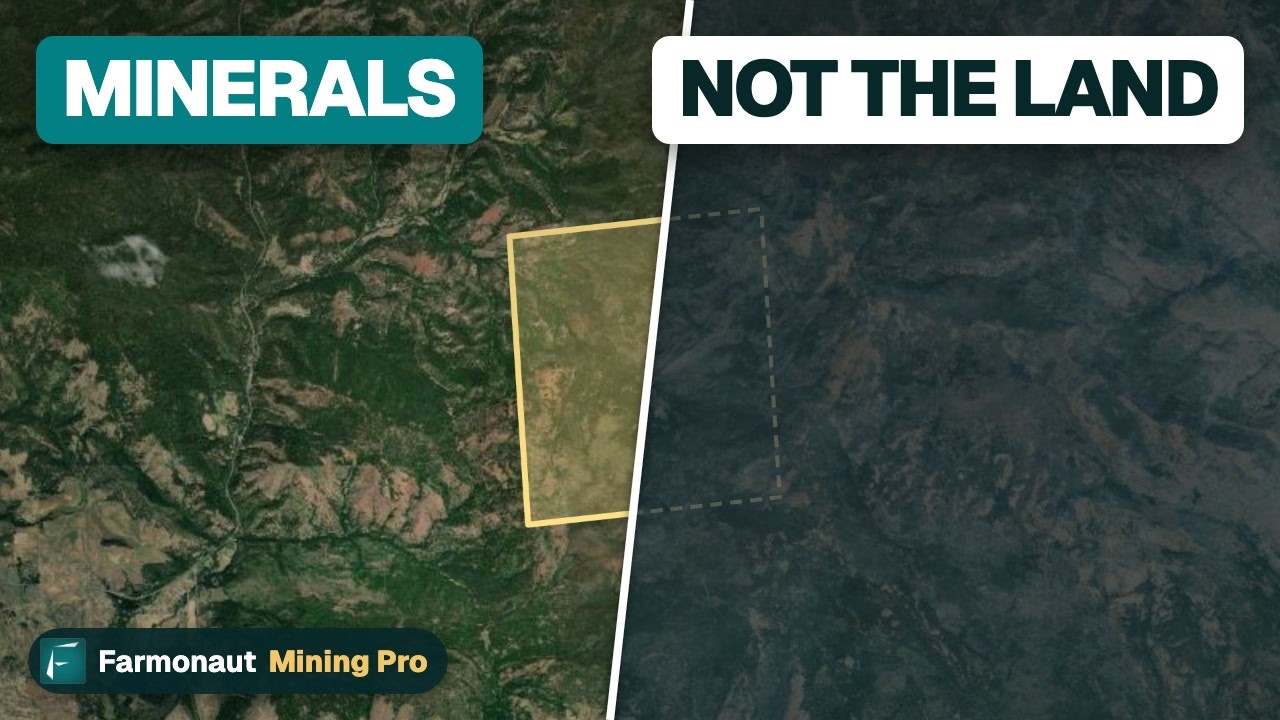
▶ Explains that owning a gold claim gives mineral rights, not title to the land, and where the 1872 mining law fits. · 3:19
Check the ground before you buy a trommel
A trommel adds nothing if the gravel is barren. Sample the ground first: dig test pits, pan or run a measured bulk sample, and compute the break-even grade above. Satellite imagery can narrow where to sample. Farmonaut’s satellite-based mineral detection takes a boundary as KML, KMZ or a polygon and screens it for alteration and structural targets in about 5 to 20 business days, ahead of any ground work. The result is an exploration target, not a guarantee of gold in the gravel, and it is not a resource estimate.
If you have a licence area and want it screened before you commit to equipment, request a quote or contact us. You can also read about our satellite-based mineral detection.

▶ Explains that satellites cannot see gold itself but map the rock and alteration clues around it. · 4:25
Frequently asked questions
How much does a gold trommel cost?
Published US list prices run from US$775 for a Mountain Goat mini trommel to US$25,980 for a Heckler 2410 wash plant with a sluice box, as of 16 October 2026. Larger plants, such as MSI’s 100 to 300 tons an hour models, have no published price.
How many tons an hour does a gold trommel process?
It depends on the model. Heckler rates its 159 at 10 or more tons an hour and its 2410 at 30 or more, and MSI rates its portable plants at 100 to 300 tons an hour. Javelina rates its small trommels from 0.25 to 2 cubic yards an hour. These are maker ratings, not independent tests.
What size gold trommel do I need?
Start from the volume you want to wash per hour and the water you have. A Javelina 12 inch is rated at up to 2 cubic yards an hour, while a Heckler 159 is rated at 10 or more tons an hour and needs at least 380 US gallons a minute. Test the ground and compute the break-even grade before you size up.
How much water does a gold trommel need?
Heckler lists a minimum of 380 US gallons a minute for the 159 and 530 for the 2410. Smaller units use spray bars fed by a pump you supply, so check the maker’s flow rating for the unit you choose.
What is the difference between a gold trommel and a wash plant?
A trommel is the rotating screen. A wash plant is the whole machine: hopper, wash and scrub section, trommel, sluice box or jig, frame and drive. Heckler sells its plants with a sluice box for gold and a jig for gemstones.
What is a reverse helix trommel?
It is a small trommel design with a screening barrel nested inside a larger outer barrel. Javelina describes its 12 inch model as having 45 feet of reverse helix in the outer barrel, an 8.5 inch screening barrel and a 12 inch outer barrel. Ask the maker how material travels through the barrels for the model you want.
How often should trommel liners or screens be replaced?
There is no single interval. A screen maker told International Mining that large copper plants aim for 12 to 14 weeks between panel changes, but that is a very different duty from a small placer plant. Log your own running hours between changes.
Can I run a gold trommel on a mining claim?
On BLM land a motorized trommel is not on the list of casual-use tools, so you need to contact the BLM field office, and most mining operations above casual use need an approved plan of operations. State water permits can apply as well. Confirm with the regulator.
Do gold trommels need mercury?
No. The trommel only sorts by size, and the gold is caught in a sluice box or jig by gravity. The EPA lists gravity and other methods that use no mercury and says gold can be recovered safely and economically without mercury.
Is a used gold trommel worth buying?
It can be, if you can see it work and get the wear-part prices. Check the drum and screen for wear, the bearings and drive for play and the frame for cracks. Our used-equipment buying tips cover the checklist.
What gold price should I use in my calculations?
Use the current spot price from a dealer or market site, and test a lower price as well. CNBC showed US$4,150.26 an ounce at 9:00 a.m. Eastern Time on 15 October 2026, and the USGS estimates the 2025 average at US$3,300 an ounce.
This page is for information only. It is not investment advice or legal advice. Prices are list prices that sellers can change; confirm them and the permit rules with the seller and the regulator. Get the landowner’s permission before you enter or sample, follow site safety rules and never use mercury.
Farmonaut mining
Screen your licence area before you buy equipment
Request a quote to have your boundary screened from space for exploration targets, ahead of any resource estimate.

Mining Pro sample view, synthetic data
Keep reading
Sources
- High Plains Prospectors, Gold Trommels (checked 16 October 2026): highplainsprospectors.com
- Javelina, reverse helix gold trommel price page (checked 16 October 2026): goldtrommels.com
- Keene Engineering, Master Price List (2 May 2025): keeneeng.com
- Heckler Fabrication, 159 Trommel Wash Plant: hecklerfabrication.com
- Heckler Fabrication, 2410 Trommel Wash Plant: hecklerfabrication.com
- MSI Mining Equipment, Gold Trommel Wash Plants: msi-mining.com
- British Geological Survey, Good practice in the design and use of large sluice boxes (Styles, Simpson and Steadman, 2002): nora.nerc.ac.uk
- Parks Canada, Dredge No. 4 National Historic Site: parks.canada.ca
- International Mining, Trommel screen longevity with preventative maintenance (2015): im-mining.com
- USGS, Mineral Commodity Summaries 2026: Gold: pubs.usgs.gov
- CNBC Select, The Price of Gold Today, 15 October 2026: cnbc.com
- eCFR, 43 CFR 3809.5 definitions (casual use, exploration): law.cornell.edu
- eCFR, 43 CFR 3809.11 plan of operations: law.cornell.edu
- eCFR, 43 CFR 3809.21 notice: law.cornell.edu
- Oregon DEQ, Metal Mining Activities: oregon.gov
- Oregon DEQ, 700-PM permit fact sheet: oregon.gov
- US EPA, Artisanal and Small-Scale Gold Mining Without Mercury: epa.gov
Discussion
Questions, corrections or field experience? Share them below. First-time comments are reviewed before they appear, and your email is never published.
No comments yet. Be the first to add a question or your experience.

 Denkyira Nkoranza Concession
 Mwerezi Minerals Company Limited
 Congo Mining Solutions
 Mining SARL
 SenGold Invest SAS
 Sania Corporation
 Sean Mining Limited
 NTS Group (Pty) Ltd
 Mine4Africa
 Lithspo Minerals Limited
 Tintina Mining Group
 Dalgety Minerals Pty Ltd
 Vortex Minerals Pty Ltd
 Faith At Work (Pty) Ltd
 Geotech Mining Solutions plc
 Vulcan International Limited
 Kidepo Associates
 GKY Mining
 Alkimy SARL
 Double A Trading

 Licence holder · Nigeria · Gold + lithium










