

South Australia iron ore · Mine status guide
Iron Knob Australia: Mine History and Current Status
The Iron Knob mine is not producing: GFG Alliance said in January 2025 it would go into care and maintenance as hematite ran out. This guide gives the dated history, the status of each Middleback mine, and a magnetite revenue calculator.
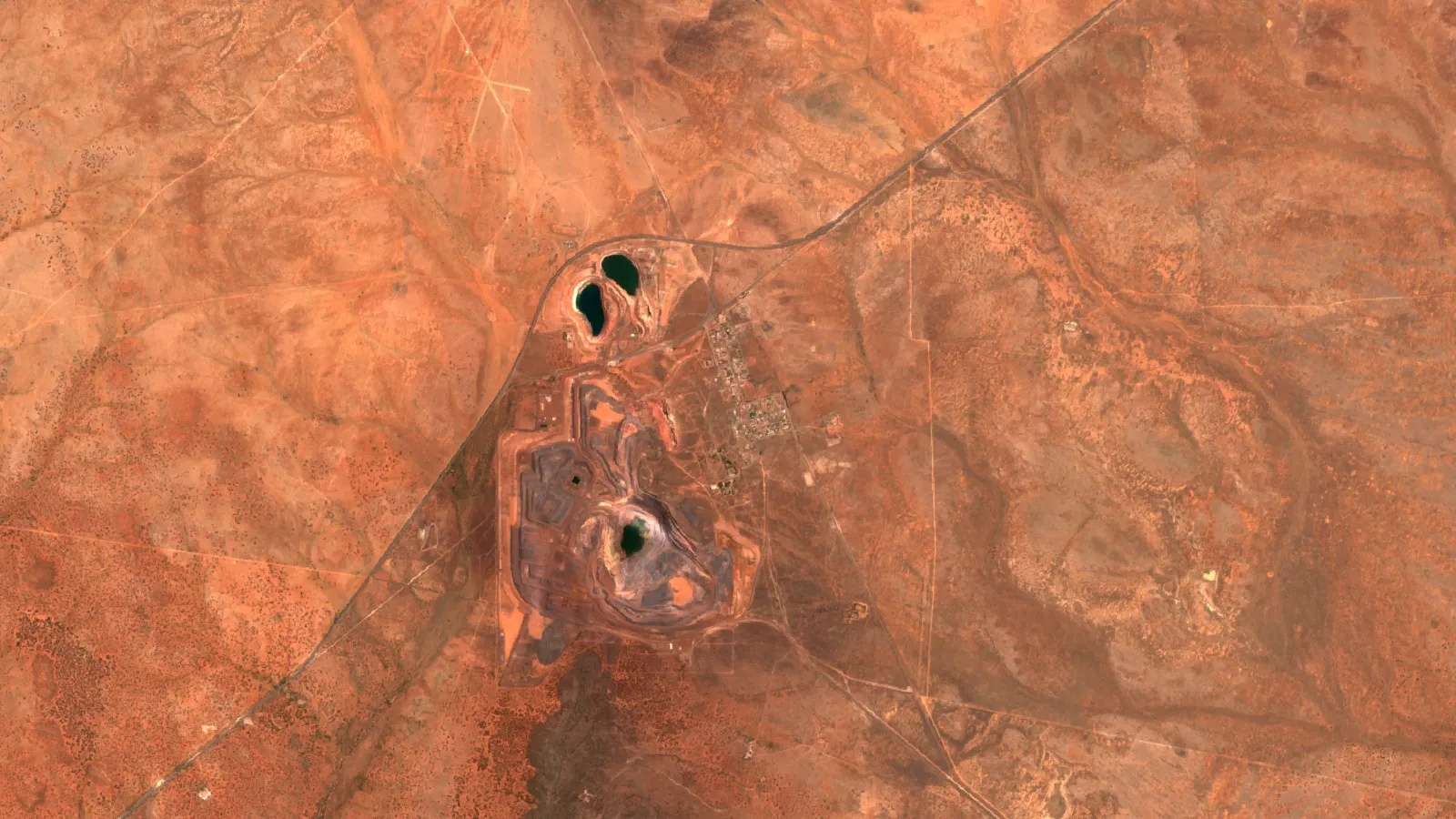
Key takeaways
- Mining and processing at Iron Knob were to go into care and maintenance, GFG Alliance said in January 2025, with the hematite reserve nearing depletion after 120 years (InDaily, 16 January 2025).
- Mining began in 1900; by 1949 Iron Knob and related South Australian mines met 99% of Australian iron ore demand (Wikipedia, citing historical sources).
- Stage 1 of the Magnetite Expansion Project at Iron Duke targets 2.5 million tonnes of magnetite a year, backed by a A$20 million loan (InDaily, 17 February 2026).
- Australia produced an estimated 980 million tonnes of iron ore in 2025 and Western Australia supplies nearly all of it (USGS, 2026; WATC, August 2026).
- The Whyalla blast furnace was switched off for good on 14 September 2026 (InDaily, 15 September 2026).
In this article
- Is the Iron Knob mine still operating?
- Where is Iron Knob in South Australia?
- Iron Knob history: from the first claim to the pit closures
- Why the Middleback hematite ran out
- Iron Knob, Iron Baron, Iron Duke: the Middleback mines compared
- How the Whyalla steelworks and the Iron Knob ore are linked
- Magnetite Expansion Project: what replaces the hematite
- How big is Iron Knob in Australian iron ore?
- What a consultant should check on an old iron pit
- Rehabilitation and the environment at old iron pits
- Jobs and the regional economy around Iron Knob
- Frequently asked questions
The Iron Knob mine in South Australia is not an active producer. In January 2025 the owner said it would place mining and processing at Iron Knob into care and maintenance, after hematite resources in the Middleback Ranges neared depletion. The ore body that once supplied almost all of Australia’s iron ore is now a history lesson, and the region’s future rests on magnetite from Iron Duke, about 56 km from Whyalla. This guide sets out the dated facts, the status of each Middleback mine, three charts and a calculator for readers who need to judge an old iron pit.
Is the Iron Knob mine still operating?
Short answer: no, not as a working pit. Iron Knob was the third mining area in the contract that mining contractor Golding held with the operator SIMEC Mines, next to the South Middleback Ranges and the Iron Baron area. In January 2025 a GFG Alliance spokesperson said mining and processing at Iron Knob would go into care and maintenance under the approved Program for Environmental Protection and Rehabilitation, while the company assessed whether the remaining ore in a “technically difficult” pit was worth extracting. The same statement said the reserve was nearing depletion after 120 years of mining (InDaily, 16 January 2025).
The state mining minister said the same week that hematite mining in the Middleback Ranges was coming to an end and that the next step was magnetite, of which he said there are billions of tonnes. Hematite (Fe2O3) is the red iron oxide that can be shipped almost as it comes out of the pit. Magnetite (Fe3O4) is a black, magnetic iron oxide that usually has to be concentrated (separated from waste with magnets) before it can be used. No restart of the Iron Knob pit has been announced as of 16 October 2026.
| Item | Fact | Source and date |
|---|---|---|
| Location | Eyre Peninsula, South Australia; about 55 km north-west of Whyalla and 375 km north-west of Adelaide | Wikipedia, Iron Knob |
| Population | 110 in the suburb and locality at the 2021 census | Wikipedia, citing the Australian Bureau of Statistics |
| First claim and first mining | Claim pegged by BHP in 1897; mining began in 1900 | Wikipedia, Iron Knob |
| Ore type | Hematite in banded iron formation, enriched by weathering | Mining Data Online, South Middleback Ranges |
| Latest announced status | Care and maintenance, announced January 2025 | InDaily, 16 January 2025 |
| Parent group | GFG Alliance, through SIMEC Mining; the steelworks and mines owner OneSteel Manufacturing has been in administration under KordaMentha since February 2025 | InDaily, 15 September 2026 |
Where is Iron Knob in South Australia?
Iron Knob is a small town on the Eyre Peninsula, just south of the Eyre Highway, at the northern end of the Middleback Range. It sits in the Pastoral Unincorporated Area, which means it has no local council. The name comes from a prominent iron outcrop, Iron Monarch, that stood out from the flat land around it. The town was proclaimed on 11 February 1915 and had 110 residents at the 2021 census, according to the Wikipedia entry that cites the state gazette and the Australian Bureau of Statistics.
For anyone planning work in the region, the practical hub is Whyalla, about 55 km away by road, where the steelworks, the port and most services sit. The ore that left Iron Knob for more than a century travelled this short route by tramway and later by rail.
Iron Knob history: from the first claim to the pit closures
Iron Knob’s story is the story of Australian steel. The dates below come from the Wikipedia article on the town, which cites historical records, and from Geoscience Australia for the 2010 reopening plan.
| Date | Event |
|---|---|
| 1897 | BHP pegs the first mineral claim in the area. |
| 1900 | Mining starts. Ore goes by bullock wagon to Port Augusta, then by barge. |
| 1901 to 1903 | A tramway reaches Hummock Hill (later renamed Whyalla). Ships carry ore across Spencer Gulf to Port Pirie, where it was used as a flux in the lead smelter. |
| 1915 | The town of Iron Knob is proclaimed. |
| 1935 to 1936 | 291,961 tonnes of Iron Knob ore are shipped to Japan, a trade that sparked strikes before the war. |
| 1937 | Output from the Middleback Range, mostly Iron Monarch, is put at about 2 million tonnes a year. |
| 1949 | Iron Knob and related South Australian mines meet 99% of Australian iron ore demand, up from 95% in 1943. |
| 1998 | Quarrying at Iron Knob and Iron Monarch ends. |
| 2010 | OneSteel proposes to reopen dormant mines around Iron Knob (Geoscience Australia, Australia’s Identified Mineral Resources 2010). |
| 2013 | Iron Monarch is prepared for reopening by the owner then called Arrium. Iron Knob later resumed mining: InDaily (January 2025) calls the third Golding area ‘recently recommenced’. |
| January 2025 | Iron Knob is to go into care and maintenance as the hematite nears depletion. |
The 1940s share is the number that made Iron Knob famous. In the late 1930s Australia’s known reserves were limited to Iron Knob and Yampi Sound in Western Australia. Ore from the Middleback Range averaged 64% iron in 1943, a very high grade (grade is the share of the wanted metal in the rock).
Why the Middleback hematite ran out
The hematite deposits of the Middleback Ranges sit in the Lower Middleback Iron Formation, a layered Palaeoproterozoic rock (formed between 2,500 and 1,600 million years ago), part of the Hutchison Group on the western edge of the Gawler Craton. Over millions of years, rain and groundwater removed waste minerals from the carbonate-rich layers and left iron oxide behind. Geologists call this supergene enrichment. It gave small, very rich bodies, which is why the hematite was easy to mine and also why it ran out. Deeper below the weathered zone, the same rocks hold magnetite, which is lower grade as mined (Mining Data Online).
In May 2024 the ABC reported leaked SIMEC Mines documents saying the hematite resources would be fully used within 18 to 24 months. In January 2025 the minister said hematite had run out and that the task was now to mine the magnetite (InDaily, 16 January 2025). A small hematite pit can be rich and short-lived. A magnetite district is the opposite: large, lower in grade as mined, and dependent on a concentrator and a market.
Iron Knob, Iron Baron, Iron Duke: the Middleback mines compared
People often mix up the Middleback mines. The table separates them by contract area and ore type. Best for: readers who need to know which pit is which before they read a tender, a news item or a tenement record.
| Mining area | What it is | Status |
|---|---|---|
| Iron Knob (with Iron Monarch) | The original 1900 pit area; Iron Monarch is the outcrop that gave the town its name | Third mining area in the 2022 Golding contract; to go into care and maintenance, January 2025 |
| Iron Baron mining area | Hematite area further south in the Middleback Range, listed in the same contract | Under contract to January 2025; hematite mining in the region reported winding down |
| South Middleback Ranges | Region that includes Iron Duke, Iron Magnet, Iron Duchess, Iron Knight, Iron Chieftain and Cooks North | Listed as an active open pit; moving from hematite towards mainly magnetite (Mining Data Online) |
The Golding contract, worth A$600 million over three years from 2022 and ending on 31 January 2025, covered mine planning, load and haul, and maintenance at all three areas (InDaily, 16 January 2025). When it ended, Golding was expected to cut about 350 jobs in the Upper Spencer Gulf.
How the Whyalla steelworks and the Iron Knob ore are linked
The Middleback mines were built to feed Whyalla, and the link still matters. In February 2025 the South Australian government put OneSteel Manufacturing, the owner of the steelworks and the Middleback mines, into administration. KordaMentha has run the site since. The Wikipedia entry for the steelworks records that the federal government then announced a A$2.4 billion joint state and federal support package.
On 14 September 2026 the administrators switched off the steelworks’ 60-year-old blast furnace for the last time, after five months of failed restart attempts. About 500 direct staff and 100 labour hire workers lose their jobs, and governments announced a A$10 million support package. Whyalla will receive semi-finished steel blooms to keep its rolling mill working. Any buyer must build a new furnace, which the reporting says could cost billions of dollars and take three to four years (InDaily, 15 September 2026). Steel industry press reported that the workforce across the steelworks, associated mine and port was expected to fall from about 1,700 to 1,200 (SteelOrbis).
InDaily named two potential buyers at that date, and one of them, M Resources, is owned by an Australian businessman. The sale was still aimed for completion in 2026. This page does not forecast the outcome.
Magnetite Expansion Project: what replaces the hematite
On 17 February 2026 the South Australian premier visited Iron Duke to announce early works on stage 1 of the Magnetite Expansion Project. Once built, stage 1 is expected to produce 2.5 million tonnes of magnetite a year. The A$20 million loan for it, funded jointly by the state and federal governments, is part of a A$275 million package announced in July 2025, and it is expected to support ongoing mining for another 20 years and more than 300 jobs (InDaily, 17 February 2026).
Chart
Planned Middleback magnetite against Pilbara shipments
Million tonnes a year (wet tonnes for the Western Australian sales); Middleback is the planned stage 1 rate
The scale gap matters. The chart below sets the planned stage 1 output against the 2025-26 shipments of the three big producers in Western Australia. The three Western Australian majors each move between about 80 and 130 times more ore than the Middleback expansion is designed to produce. South Australian magnetite is a regional supply for low-emission iron and steel, not a rival to the Pilbara export trade.
Calculator
What could a magnetite stream earn?
Enter your own tonnage, price, exchange rate and royalty rate.
- Gross revenue in A$ million: 346.2
- Royalty at your rate, A$ million: 17.3
- Revenue per tonne, A$: 138.46
Example values only, not a forecast and not any company’s figures. The 2.5 million tonnes a year is the stage 1 target at Iron Duke (InDaily, 17 February 2026). Prices are inputs: example, use today’s price; the 62% iron benchmark averaged US$96.30 a tonne in August 2026 (WATC), and magnetite concentrate sells on its own terms. The royalty rate is an example, so check the state rate. Gross revenue only: costs are left out.
How big is Iron Knob in Australian iron ore?
Very small today. Australia produced an estimated 980 million tonnes of usable iron ore in 2025, about 38% of the world’s 2,600 million tonnes, and its reserves are 59,000 million tonnes of crude ore holding 27,000 million tonnes of iron (USGS, Mineral Commodity Summaries 2026). Western Australia accounts for nearly all of that output and of Australia’s iron ore reserves, and for 99% of iron ore exploration spending in 2025-26 (Western Australian Treasury Corporation, WA Iron Ore Profile, August 2026).
Chart
Usable ore against the iron it contains, 2025 estimates
Million tonnes, selected producers (not a ranking)
Chart
Where Western Australia’s iron ore exports went
A$ billion, 2025-26, total A$117.7 billion; shows the size of the market the Middleback ore is small against
Two charts frame the position. The first shows where Western Australia’s ore went in 2025-26: China took A$100.9 billion of the A$117.7 billion total, or 85.7%. The second compares usable ore with the iron it contains for seven producers, using USGS estimates. Iron content ranges from about 58% of usable ore in Russia to 69% in Sweden, with Australia near 61%.
The benchmark price for 62% iron ore delivered to China averaged US$96.30 a tonne in August 2026, according to the same WATC profile. Magnetite concentrate is sold at its own prices, so the calculator below keeps the price as an input. For other Australian commodities, see our guides to gold exploration in Australia by state and lithium in Australia.
What a consultant should check on an old iron pit
Iron Knob is a typical brownfield case: an old pit, a known ore type, a changed market and an owner under pressure. If a client asks you to look at a site like it, this list keeps the work on facts.
- Tenure. Confirm who holds the mining lease and the exploration licence on the state register, and whether any administration, sale or change of control affects them.
- Rehabilitation duty. Care and maintenance does not end the obligation. In South Australia the operator works to an approved Program for Environmental Protection and Rehabilitation, so ask for the current version.
- Ore type. Hematite that can be shipped as mined is a different business from magnetite that needs concentrating. Ask which one the remaining resource is.
- Remaining resource. Use a reported figure from a JORC Code statement or a regulator, keep resources and reserves apart, and note the date. A pit described as technically difficult may hold ore that costs too much to reach.
- Route to market. Check the rail and port link and, for Whyalla ore, who will buy it after the blast furnace closure.
- Energy and water. Magnetite concentrating and any direct reduced iron plant need a lot of both.
Satellite data helps at the screening step. Sentinel-2 and similar sensors show iron-oxide staining, clay alteration and structure across a tenement before any ground work, and the Farmonaut platform can screen a licence area for iron among 20+ minerals as an exploration target, ahead of a resource estimate. Targets still need drilling and a compliant resource statement. Send a boundary through the mining quote form, or read how satellite-based mineral detection works.
▶ Shows how remote sensing measures ground from a distance, as used for screening a licence area. · 2:01
Rehabilitation and the environment at old iron pits
An iron pit leaves three things on the land: a hole, stockpiles of waste rock and, if there is a concentrator, a tailings store. Care and maintenance means the operator keeps these safe and monitored while it decides what to do. At Iron Knob the operator said it works to an approved Program for Environmental Protection and Rehabilitation. Satellite images taken every few days make it easy to watch vegetation, water in pits and any disturbance, without a site visit, using public imagery archives that consultants already use.
▶ Explains the main environmental impacts of mining and how they are tracked. · 2:31
Jobs and the regional economy around Iron Knob
The mines and the steelworks employed whole generations. The recent record is mixed. Golding was expected to cut about 350 jobs as the contract ended in January 2025 (InDaily, 16 January 2025). The magnetite expansion is expected to support more than 300 jobs for another 20 years, and 27 new apprentices started across the steelworks and mine in February 2026 (InDaily, 17 February 2026). Whyalla, South Australia’s fourth largest city at about 21,000 residents, now faces several years without a blast furnace (InDaily, 15 September 2026).
▶ Explains what mining contributes to jobs, exports and government revenue. · 5:03
Frequently asked questions
Is the Iron Knob mine still operating?
Not as a working pit. GFG Alliance said in January 2025 that mining and processing at Iron Knob would go into care and maintenance while it assessed the remaining ore in a difficult pit. No restart has been announced as of 16 October 2026.
Where is Iron Knob in Australia?
Iron Knob is in South Australia, on the Eyre Peninsula just south of the Eyre Highway, about 375 km north-west of Adelaide, 70 km south-west of Port Augusta and 55 km north-west of Whyalla.
How many people live in Iron Knob?
The suburb and locality had 110 residents at the 2021 census, down from 199 at the 2006 census for the town and surrounding area, according to the Wikipedia article that cites the Australian Bureau of Statistics. The two counts use different boundaries.
When did mining start at Iron Knob?
BHP pegged the first claim in 1897 and mining began in 1900. Ore went first by bullock wagon to Port Augusta and, by tramway to Whyalla from 1901, with wharves for direct ship loading to the lead smelter at Port Pirie from 1903.
Who owns the Iron Knob mine?
SIMEC Mining, part of the GFG Alliance, operated the Middleback mines. Since February 2025 their owner OneSteel Manufacturing has been in administration under KordaMentha, who run the steelworks and mines while a buyer is sought.
What is Iron Monarch?
Iron Monarch is the large iron outcrop next to Iron Knob that gave the town its name. Most Middleback output in 1937 came from it. Quarrying there ended in 1998, and the pit was prepared for reopening by Arrium in 2013.
Why did hematite mining end in the Middleback Ranges?
The rich, weathered hematite bodies were used up. Leaked SIMEC Mines documents reported by the ABC in May 2024 said the hematite would be exhausted within 18 to 24 months, and the state minister said in January 2025 that the hematite had run out.
What is magnetite and why does it matter for green steel?
Magnetite is a black, magnetic iron oxide. It is usually lower in grade as mined, so it is concentrated before use. The state minister said in February 2026 that magnetite is critical to the move to green iron and steel. South Australia’s energy and mining minister also said the state has one of the largest magnetite resources in the world.
What is happening to the Whyalla steelworks?
The blast furnace was switched off for good on 14 September 2026. The administrators are running a sale, two potential buyers were named in September 2026, and any buyer must build a new furnace. Steelmaking will not resume until new equipment is installed.
Did Iron Knob really supply almost all of Australia’s iron ore?
Yes, for a time. Wikipedia, citing historical sources, says Iron Knob and associated South Australian mines supplied 99% of Australian iron ore demand in 1949, up from 95% in 1943.
Can satellites help assess an old iron mine?
They can screen a licence area for iron-oxide staining, clay alteration and faults and track pit water and revegetation, which helps pick targets and plan field work. They do not replace drilling, and a satellite result is an exploration target, not a resource estimate.
This page is for information only. It is not investment advice. It gives no share prices or targets. Tenure, rehabilitation and royalty rules change, so confirm them with the South Australian regulator. Do not enter a mine site, pit or tenement without the holder’s written permission and the required licence; old pits have unstable walls and water.
Farmonaut mining
Map your mining site from space
Consultants can screen a licence area for iron and other minerals as an exploration target, ahead of a resource estimate.
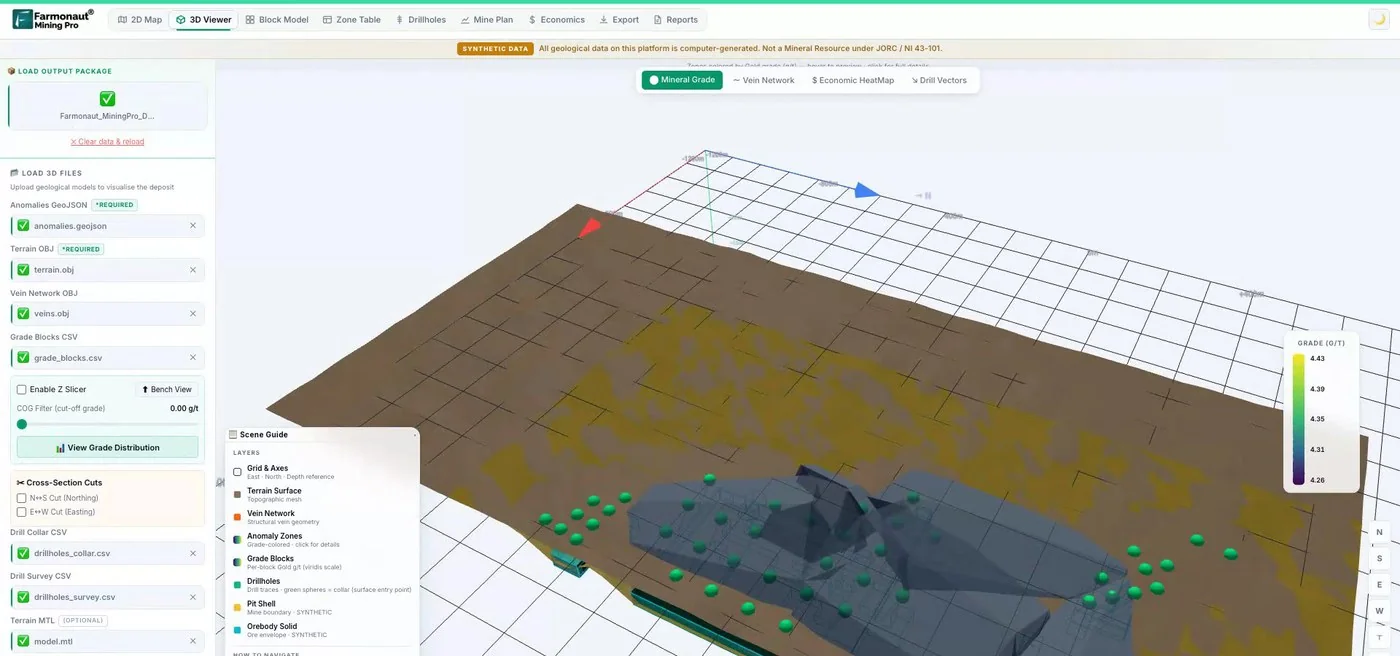
Mining Pro sample view, synthetic data
Keep reading
Sources
- USGS, Mineral Commodity Summaries 2026: Iron Ore: pubs.usgs.gov
- Western Australian Treasury Corporation, WA Iron Ore Profile (August 2026): watc.wa.gov.au
- Geoscience Australia, Australia’s Identified Mineral Resources 2010: ga.gov.au
- Wikipedia, Iron Knob (history, population, location): en.wikipedia.org
- Wikipedia, Whyalla Steelworks: en.wikipedia.org
- InDaily, Job losses at Iron Knob as hematite runs dry (16 January 2025): indailysa.com.au
- InDaily, Five in the running for Whyalla Steelworks as mine site expands (17 February 2026): indailysa.com.au
- InDaily, Relief and trepidation in Whyalla after blast furnace goes dark (15 September 2026): indailysa.com.au
- Mining Data Online, South Middleback Ranges (SMR) Mine: miningdataonline.com
- SteelOrbis, Whyalla Steelworks to permanently close blast furnace and cut 500 jobs: steelorbis.com
- Global Energy Monitor, SIMEC South Middleback (Middleback Hub) Mine: gem.wiki
Discussion
Questions, corrections or field experience? Share them below. First-time comments are reviewed before they appear, and your email is never published.
No comments yet. Be the first to add a question or your experience.

 Denkyira Nkoranza Concession
 Mwerezi Minerals Company Limited
 Congo Mining Solutions
 Mining SARL
 SenGold Invest SAS
 Sania Corporation
 Sean Mining Limited
 NTS Group (Pty) Ltd
 Mine4Africa
 Lithspo Minerals Limited
 Tintina Mining Group
 Dalgety Minerals Pty Ltd
 Vortex Minerals Pty Ltd
 Faith At Work (Pty) Ltd
 Geotech Mining Solutions plc
 Vulcan International Limited
 Kidepo Associates
 GKY Mining
 Alkimy SARL
 Double A Trading
 Licence holder · Nigeria · Gold + lithium










