

Gemstones and lithium · Price guide
Kunzite Stone Value: Price per Carat by Quality
Price lists put kunzite at US$10 to US$25 per carat for pink or purple stones in one dealer list and one collecting guide, and US$500 to US$1,500 or more for deep, flawless ones in a US retailer chart (2026). Colour sets the price; lithium adds almost nothing to a gem.
Key takeaways
- Dealer price lists for kunzite span roughly US$10 to US$1,500+ per carat; a US specialist chart gives five colour tiers from US$20-50 to US$1,500+ (Natural Gemstones Company, accessed October 2026).
- GIA names colour as the most important value factor; clarity matters less because kunzite is usually clean, and colour can fade with heat and intense light (GIA).
- Kunzite is the gem variety of spodumene (LiAlSi2O6); a Pala, California sample holds 7.79% Li2O (Handbook of Mineralogy).
- USGS puts the 2025 average US lithium carbonate price at US$9,000 per tonne; Benchmark data show US$19,025 per tonne in China at the end of Q3 2026.
- Australia produced 92,000 t of lithium content in 2025, the most of any country (USGS, 2026).
In this article
- Kunzite price per carat: what dealers list
- What sets kunzite stone value: colour, cut, size and treatment
- How to estimate what your kunzite is worth
- Where kunzite comes from and how it relates to lithium
- Lithium and spodumene prices: dated figures
- Who mines lithium
- What to check before putting money into a lithium project
- Frequently asked questions
Kunzite stone value depends mostly on colour. Specialist retail price charts list pale, included stones from about US$20 per carat and deep, eye-clean stones from US$500 to US$1,500 per carat or more, while one online dealer and one collecting guide list kunzite at US$10 to US$25 per carat. The sources here do not publish a coloured-stone price index, so every figure is a list or asking price, not a trade benchmark. This guide gives the ranges with their sources, the quality factors that GIA names, a stone-value calculator, and a second calculator that shows how little lithium metal sits inside a gem.
Terms used below. A carat is 0.2 grams. Kunzite is the pink-to-violet gem variety of the mineral spodumene (lithium aluminium silicate). A pegmatite is a coarse-grained igneous rock that can hold gems and lithium minerals. Li2O means lithium oxide, the way lithium grade in ore is reported. Lithium carbonate is the white chemical powder sold to battery makers. This page is for information only. It is not investment or valuation advice.
Kunzite price per carat: what dealers list
The most detailed public chart comes from a US coloured-stone retailer. It splits stones into five tiers by colour, clarity and size. The company says its prices are approximate and vary by seller and market, so treat them as retail asking ranges (The Natural Gemstones Company, accessed October 2026).
Chart
Kunzite dealer price ranges per carat
US$ per carat, dealer lists; selected sellers, accessed October 2026
| Tier | Colour and clarity | Size | US$ per carat |
|---|---|---|---|
| Low | Pale pink, included | 1-5 ct | 20-50 |
| Medium | Light pink or lilac, slightly included | 1-5 ct | 50-150 |
| High | Vivid pink or lilac, eye-clean | 1-5 ct | 150-500 |
| Premium | Deep pink or lilac, flawless | 1-5 ct | 500-1,500 |
| Exceptional | Intense pink or lilac, flawless | 5+ ct | 1,500 and up |
The same retailer gives whole-stone examples: a 2 ct high-tier stone at US$300 to US$1,000 and an exceptional 5 ct stone at US$7,500 or more.
Other sellers list far lower figures. GemSelect, an online dealer, says fine kunzite under 5 carats often sells for about US$10 per carat and stones over 10 carats for US$15 to US$20 (GemSelect, accessed October 2026). A rock-collecting guide gives US$15 to US$25 per carat for pink kunzite and US$10 to US$20 for purple (Rock Chasing, 2026).
Why do the lists differ by a factor of ten or more? The retailer chart prices stones by colour depth, clarity and size, while the two other sources give one figure for fine or pink stones with no colour grading. When you compare a quote, match the colour grade, size, treatment and whether the price is wholesale or retail.
What sets kunzite stone value: colour, cut, size and treatment
GIA lists four value factors. Colour comes first: the more vivid the colour, the higher the value, and the colour comes from trace manganese. Clarity matters less than in most gems because kunzite is usually clean, so only inclusions that cloud the stone cut value. Cut is hard: kunzite has two directions of cleavage and has been known to fall apart under faceting pressure, and its colour is strongest along the length of the crystal, so cutters orient the stone to show it. Carat weight is less of a driver than for other gems, because large crystals are common; GIA notes an 880-carat faceted example in the Smithsonian collection (GIA, kunzite quality factors).
That fourth point explains a size effect that surprises buyers. GemSelect says price per carat for kunzite stays fairly flat as stones get larger, unlike sapphire or ruby. The retailer chart above, in contrast, prices the exceptional tier from 5 carats up. Both can be true: the jump comes with colour depth, not size alone.
Treatment and fading
GIA states that kunzite colour can be enhanced by irradiation followed by heating, and that colour, natural or enhanced, can fade with heat and intense light. Its advice is to store kunzite jewellery in a closed box when it is not worn. Ask the seller in writing whether the stone is treated, and ask for a laboratory report on high-value stones (this advice is ours, not GIA’s) (GIA).
Origin
GIA says kunzite is found in Afghanistan, Brazil, Madagascar and California (GIA, kunzite description), with San Diego County an important source. The retailer chart above says origin counts for less than overall quality. Provenance premiums are therefore small compared with the colour tiers.
How to estimate what your kunzite is worth
- Weigh the stone in carats on a gem scale (1 carat is 0.2 g).
- Grade the colour against the tiers above: pale, light, vivid or deep. Photograph it in daylight, because colour is the main driver.
- Check for chips along cleavage planes and for visible inclusions.
- Find out whether it was irradiated or heated, and whether the colour has been shown to be stable.
- Take the per-carat range for the matching tier and multiply by the weight. Use the lower end if you expect to sell, since a list price is an asking price.
- For anything above a few hundred dollars, get a written appraisal or a laboratory report.
The calculator below does step 5 with your own numbers. The default figures are the Medium tier from the retailer chart, used as an example only.
Calculator
What is my kunzite stone worth?
Enter your stone’s weight and the low and high per-carat prices for its tier.
- Low estimate (US$): $150
- High estimate (US$): $450
Example values only, not a benchmark. Defaults use the Medium tier (US$50-150 per carat) of The Natural Gemstones Company chart, accessed October 2026. List prices are asking prices.
Where kunzite comes from and how it relates to lithium
Kunzite forms in lithium-rich pegmatites, often with tourmaline and beryl (GIA). The mineral is spodumene, LiAlSi2O6. The Handbook of Mineralogy lists a Pala, California sample at 7.79% Li2O (Handbook of Mineralogy, spodumene), close to the 8.03% that follows from the formula. The same mineral, in opaque ore-grade crystals, is the main hard-rock source of lithium.
So a gem kunzite and a lithium ore are the same mineral sold into two unrelated markets. Gem material is priced per carat by colour. Ore is priced per tonne of concentrate by its Li2O grade. Lithium producers such as Pilbara Minerals sell a crushed and processed concentrate, not cut stones.
How much lithium is in a kunzite?
Very little in money terms. One kilogram of kunzite rough holds roughly 78 g of Li2O, or about 190 g of lithium carbonate equivalent. At a battery-grade carbonate price near US$19,000 per tonne, that lithium is worth a few dollars. The same kilogram is 5,000 carats of gem material. The second calculator shows this with your own inputs, and it makes the point that gem value and lithium value cannot be added together.
Calculator
How much lithium is inside my kunzite?
Enter a weight of kunzite rough and compare gem value with lithium value.
- Lithium carbonate equivalent (g): 193
- Gem value at your price (US$): $100,000
- Gem value as multiple of lithium value: 27,284
Example values only. Li2O default 7.79% is the Pala, California analysis in the Handbook of Mineralogy. Li2O to lithium carbonate uses the molar-mass ratio 2.473 (calculated). Assumes 100% recovery and ignores processing cost, so real value is lower. 1 kg is 5,000 carats.
Lithium and spodumene prices: dated figures
If you reached this page by searching for lithium, these are the sourced reference points.
Chart
US lithium carbonate price, annual average
US$ per tonne, battery-grade, real dollars, 2021 to 2025 estimate
- The USGS puts the 2025 annual average US battery-grade lithium carbonate price (fixed contracts) at US$9,000 per tonne, down from US$11,800 in 2024 (USGS Mineral Commodity Summaries, 2026). That is about US$9 per kilogram.
- The same USGS report gives Australian spodumene (6% Li2O, f.o.b.) at about US$800 per tonne in January 2025 and about US$970 in November 2025.
- Pilbara Minerals reported a realised price of US$1,708 per tonne on a 6.0% Li2O basis for its financial year ended 30 June 2026, against US$769 a year earlier (Pilbara Minerals annual report, 2026).
- Benchmark Mineral Intelligence data, reported on 14 October 2026, put Chinese battery-grade lithium carbonate at US$19,025 per tonne at the end of the third quarter, down 20.8% on the quarter, and Australian spodumene concentrate at US$1,780 per tonne, down 23.5% (Investing News Network).
The two price series are not on the same basis: contract and spot, ex-works and delivered, and different grades. Compare a price only with a figure from the same series.
Who mines lithium
The USGS estimates world lithium mine production at 290,000 tonnes of lithium content in 2025, up from 222,000 tonnes in 2024. Australia, mostly from spodumene, is the largest producer at 92,000 tonnes. It is followed by China, Chile (brine) and Zimbabwe (USGS, 2026). For hard-rock operators, see our spodumene mines and companies guide, and for the gem side of the same mineral see spodumene gemstone price and meaning. For scale against other mines, our list of the top gold, copper and diamond mines shows how large these operations get.
Chart
Lithium mine production by country, 2025
tonnes of lithium content; USGS estimate (e), top eight
The USGS says lithium use is 88% batteries worldwide, with ceramics and glass at 4%.

▶ A satellite-based lithium exploration case study in Nigeria. · 10:49
What to check before putting money into a lithium project
These checks apply to any spodumene company statement. None is a recommendation.
- Resource category. Measured, indicated and inferred resources have different confidence. An exploration target is not a resource.
- Grade. Hard-rock spodumene resources are quoted as % Li2O. Compare with the 6% concentrate that prices are quoted on.
- Cut-off grade and recovery. The cut-off grade is the lowest grade mined at a profit. Recovery is the share of lithium that reaches the concentrate.
- Price basis. A study that assumes a price far above the series above deserves a question.
- Permits and offtake. Look for signed offtake contracts and granted mining licences.
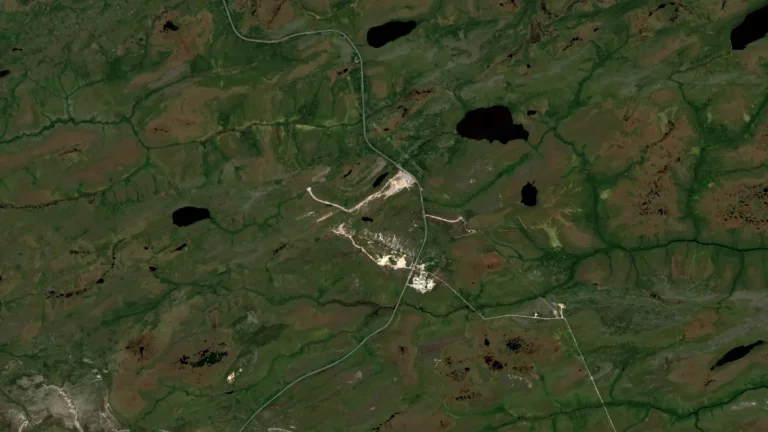
Farmonaut analyses multispectral and hyperspectral satellite data for alteration zones and other surface signatures around mineral targets, which helps rank ground before sampling. It does not measure lithium grade, so results are exploration targets that sit ahead of any resource estimate. Farmonaut offers satellite mineral detection for licence owners and explorers; the mining quote form and the satellite mineral detection page have details.
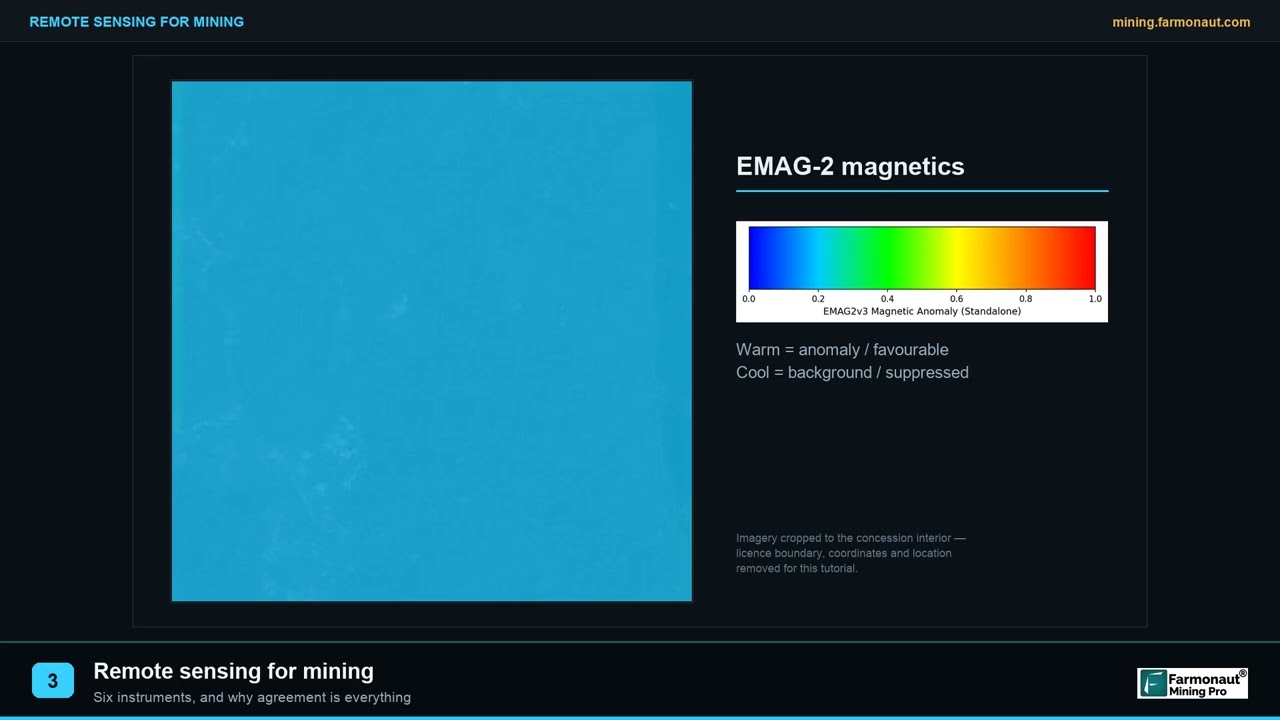
▶ Explains remote sensing for mining in three minutes, with the six instrument families used to map ground. · 2:01
If this topic matters to you, read Oregon Sunstone Price Per Carat: Chart and Dig Costs next.
Frequently asked questions
How much is a carat of kunzite worth?
Price lists run from about US$10 to US$25 per carat for pink or purple stones in one dealer list and one collecting guide, up to US$500 to US$1,500 or more for deep, flawless stones in a US retailer chart (2026). Colour is the main reason for the spread.
Is kunzite rare or expensive?
GIA calls kunzite quite affordable for a gem because it is relatively unknown, even though fine colour is uncommon. Large sizes are common, which keeps per-carat prices modest.
Is kunzite a lithium ore?
Kunzite is a gem variety of spodumene, which is a lithium mineral. Gem crystals are sold by the carat for jewellery, so the two markets stay separate.
Does kunzite fade?
GIA says kunzite colour, natural or enhanced, can fade with heat and intense light. Store it away from sunlight when not worn.
How can I tell if kunzite is treated?
GIA notes irradiation followed by heating is used to enhance colour. Only a gem laboratory can reliably tell, so ask for a report on valuable stones.
How hard is kunzite?
Hardness is 6.5 to 7 on the Mohs scale (GIA), but two cleavage directions make it fragile on a sharp knock.
Where is kunzite mined?
GIA names Afghanistan, Brazil, Madagascar and California, with San Diego County an important source.
Are kunzite and hiddenite the same?
Both are spodumene. Kunzite is pink to violet and hiddenite is green (GIA). Hiddenite is listed at US$100 to US$700 per carat by one rock-collecting guide (Rock Chasing, 2026).
What is lithium carbonate worth per kilogram?
The USGS gives an annual average of US$9,000 per tonne for 2025, about US$9 per kilogram. Benchmark data put the Chinese price at US$19,025 per tonne at the end of the third quarter of 2026.
What share of lithium comes from spodumene?
The USGS does not split production by source. It does show Australia, a spodumene producer, as the largest country at 92,000 tonnes of lithium content in 2025, with Chile, a brine producer, third.
This page is for information only. It is not investment advice or a valuation. Dealer prices are asking prices; get a written appraisal before buying or selling a stone.
Farmonaut mining
Screen pegmatite ground from space
Investors can see how satellite exploration works on licence areas, with results as exploration targets ahead of any resource estimate.

Mining Pro sample view, synthetic data
Keep reading
Sources
- GIA, Kunzite: gia.edu
- GIA, Kunzite quality factors: gia.edu
- GIA, Kunzite description: gia.edu
- The Natural Gemstones Company, Pricing chart of kunzite (accessed October 2026): naturalgemstones.com
- GemSelect, Kunzite gemstone value (accessed October 2026): gemselect.com
- Rock Chasing, How much is kunzite worth (January 2026): rockchasing.com
- Handbook of Mineralogy, Spodumene (2001): handbookofmineralogy.org
- USGS, Mineral Commodity Summaries 2026: Lithium (February 2026): pubs.usgs.gov
- Pilbara Minerals, Annual Report 2026 (24 August 2026): pls.com
- Investing News Network, Lithium market trends Q3 2026 (14 October 2026): investingnews.com
Discussion
Questions, corrections or field experience? Share them below. First-time comments are reviewed before they appear, and your email is never published.
No comments yet. Be the first to add a question or your experience.

 Almosi SARL
 SRK Consulting
 Berks Gold Limited
 Mwerezi Minerals Company Limited
 Mining SARL
 SenGold Invest SAS
 Sean Mining Limited
 NTS Group (Pty) Ltd
 Mine4Africa
 Lithspo Minerals Limited
 Tintina Mining Group
 Dalgety Minerals Pty Ltd
 Vortex Minerals Pty Ltd
 Faith At Work (Pty) Ltd
 Geotech Mining Solutions plc

 Licence holder · Nigeria · Gold + lithium










