

Mining Industry Trends: 2025 Innovations for Growth
“By 2025, over 60% of mining companies are expected to invest in digital transformation for increased efficiency.”
Introduction: The Mining Industry at the Crossroads of Change
The mining industry in 2025 stands at a defining intersection—where rapid digital transformation, sustainability imperatives, and the surging demand for critical minerals are working together to fundamentally reshape a key backbone sector supporting infrastructure, energy production, and manufacturing worldwide.
As the world transitions to a modern era shaped by technological advancement and environmental stewardship, mining companies find themselves navigating between new challenges and opportunities arising from global economic demands, stricter regulations, and evolving community expectations.
Mining Industry Trends in 2025 reveal a commitment to innovation, responsibility, and efficiency as mining continues its transformation. Let’s examine how key trends are re-shaping the landscape, setting new standards for development, resource management, and long-term sector resilience.
Behind each of these shifts are specific drivers, and our look at the forces reshaping mining examines them one by one.
2025 Mining Industry Trends Overview
Examining the most influential mining industry trends for 2025 uncovers several core movements:
- Digital transformation & automation: From advanced analytics to robotics, digital is now at the core of mining operations.
- Sustainability & environmental initiatives: Circular economy, waste recycling, and renewable energy adoption have become essential priorities.
- Critical minerals focus: The race for resources critical to the energy transition and geopolitics is intensifying.
- Social license to operate: Strong community engagement and ethical practices define modern project success.
- Workforce transformation: Upskilling, safety technology, and workforce diversity adapt to automated, digital-driven environments.
Mining companies in 2025 are not only responding to increased demand for critical minerals and societal expectations; they are also embracing innovation to enhance operational efficiency and reduce environmental impact— all while navigating evolving economic, regulatory, and geopolitical landscapes.
“Critical minerals demand is projected to rise by 30% globally in 2025, driving innovation and sustainable mining practices.”
Trend Comparison Table: Mining Industry 2025
| Trend | Description | Estimated 2025 Impact | Leading Technologies or Practices | Expected Global Influence |
|---|---|---|---|---|
| Digital Transformation & Automation | Mainstream adoption of automation, analytics, IoT, and AI for optimized operations and asset utilization. | 35% increase in automation adoption | AI-driven analytics, IoT sensors, autonomous trucks, drones, robotics, satellite monitoring | Global, with high adoption in North America, Australia, and Nordic regions |
| Sustainability Initiatives | Advanced water management, electrification, circular economy practices, and waste recycling | 40% increase in ESG-focused operations | Electric fleets, renewable energy, dry stacking, environmental impact monitoring | Africa, Australia, South America, India (resource-rich, high social impact areas) |
| Critical Minerals Development | Expansion in lithium, cobalt, nickel, and rare earth exploration and refining to support EVs and renewables. | 30% increase in critical minerals production projects | AI exploration, satellite mapping, blockchain traceability | Canada, Australia, China, Latin America, Africa |
| Social License & Community Engagement | Enhanced engagement, ethical agreements, transparency, and benefit-sharing with local communities | 25% increase in pre-development social consultations | Digital stakeholder engagement tools, social impact monitoring | Global, with priority in Latin America, Sub-Saharan Africa, Southeast Asia |
| Workforce & Safety Evolution | Upskilling for automation & AI, wearable safety tech, workforce diversity and inclusion | 20% increase in tech-enabled safety & skills programs | Wearables, AI hazard detection, remote training, gender diversity initiatives | Widely adopted in developed and emerging markets |
Digital Transformation & Automation in Mining: The New Backbone
Mining Industry Trends are being defined by a powerful digital transformation sweeping the industry. By 2025, the widespread adoption of advanced technologies such as Artificial Intelligence (AI), Internet of Things (IoT), machine learning, autonomous haul trucks, drilling rigs, and satellite-based monitoring are no longer pilot cases—they are fundamental to operations.
Key Features and Benefits of Digital Mining
-
Real-time monitoring & predictive maintenance: IoT sensors embedded across mining sites enable live data capture for machinery, environmental conditions, and resource extraction, allowing AI analytics to forecast problems and prevent unscheduled downtime.
Result: Significant reduction in breakdowns, lower maintenance costs, and increased productivity. -
Autonomous fleets & robotics: Autonomous trucks, drilling rigs, and inspection drones are at the forefront in reducing human exposure to hazardous environments, boosting efficiency, and lowering accident rates.
Example: Many leading mining companies now deploy fully autonomous vehicle fleets at large open-pit operations. - Data-driven exploration: AI-driven software analyzes geomorphological, soil, and geochemical data to identify mineral-rich zones with greater speed and accuracy, reducing both exploration costs and environmental disruption. Satellite and drone surveillance have become mainstream for early exploration.
- Optimization of asset utilization: Data from connected sensors ensures machinery is working at optimal load and schedule, minimizing waste and maximizing asset utilization.
- Blockchain traceability: Digital record-keeping using blockchain enables full transparency and ethically sourced minerals from pit-to-port, attracting ethical investors and supporting regulatory compliance. Learn more about blockchain-based traceability within mining’s supply chain here.

In summary:
By 2025, mining has transformed with mainstream digital systems that drive operational efficiency, productivity, and reduced risk. The sector continues to adapt rapidly, leveraging next-gen technology for a data-rich, resilient future.
Sustainability & Environmental Stewardship: Core Priorities for 2025
Sustainability is no longer a buzzword—it’s a fundamental priority for all mining industry players in 2025. Environmental responsibility is shaping all aspects of operations, from resource extraction and waste management to tailings disposal and community engagement.
Key Sustainability Imperatives Shaping Mining
- Reduction of greenhouse emissions: Companies are leveraging renewable energy (wind, solar) to power mining sites, electrifying vehicle fleets, and integrating low-carbon technologies.
- Water management innovation: Advanced recycling systems and water-efficient processes ensure projects minimize fresh water withdrawal, especially in water-stressed regions. Monitoring and reducing water pollution is core to environmental compliance.
- Circular economy & recycling: Mining operations increasingly incorporate circular economy models—emphasizing waste reprocessing, metal recovery, and resource efficiency to keep material in use and minimize environmental footprint.
- Responsible tailings management: Innovative solutions including dry stacking and chemical stabilization help mitigate the risk of environmental disasters associated with tailings dams. Advanced monitoring protects both workers and the surrounding ecosystem.
-
Carbon footprint tracking: Digital carbon accounting enables real-time monitoring and reporting of emissions performance for regulatory and investor requirements.
Explore Farmonaut’s carbon footprint monitoring tools for mining here.

Global regulatory frameworks are also driving strict sustainability initiatives, compelling companies to evolve beyond compliance by making environmental stewardship and social impact a core pillar.
The Role of Farmonaut in Sustainable Mining
Through our satellite-based environmental monitoring platforms, we at Farmonaut support mining companies in tracking real-time emissions, land use, water consumption, and vegetation health at and around mining sites. Our technologies provide affordable and scalable solutions for environmentally responsible mining—from incident detection to reporting and regulatory compliance.
Explore our satellite-driven tools for sustainable mining:
Carbon Footprint Monitoring |
Blockchain Traceability
Critical Minerals & Geopolitical Shifts: Securing the Future of Energy
2025 marks a new era of strategic competition for critical minerals such as lithium, cobalt, nickel, and rare earth elements. These minerals are essential for powering the electric vehicle revolution, renewable energy storage, and modern defense applications.
- Demand surge: Global demand for these minerals is expected to rise by more than 30% in 2025 alone, as shown by the acceleration of EV manufacturing, solar, and wind expansions.
- Geopolitical supply chain challenges: As countries and companies compete for resource security, supply chain vulnerabilities and bottlenecks have become major considerations for sector growth and global cooperation.
- Local beneficiation: Nations with abundant mineral resources are moving up the value chain by developing local refining and processing—enabling regions to generate more economic value and job opportunities beyond simple extraction.
- Ethical & transparent sourcing: Investors and end-users increasingly require assurances of ethical sourcing, child-labor-free operations, and environmentally responsible processing.
-
Blockchain for mineral traceability: Blockchain and digital tracking offer transparency and verification for critical minerals, from mine to final product.
Find out how blockchain-driven traceability ensures ethical supply chains here.

Farmonaut’s digital solutions, such as satellite monitoring and blockchain integrations, help enable transparent, rapid, and secure management of mineral assets. Our platforms make global supply more resilient and verifiable—addressing modern industry demands for trust, efficiency, and scalability.

Community Engagement & Social License to Operate
Earning and maintaining a social license to operate is a non-negotiable reality for mining companies in 2025. Strong, transparent engagement with communities—including indigenous peoples and local stakeholders—remains essential for success.
Modern Approaches to Community Engagement
- Digital interaction: Mining companies use digital platforms (apps, social media) for transparent communication, virtual town halls, and feedback channels—making information accessible and building trust.
- Fair benefit-sharing & agreements: Companies must negotiate equitable benefit-sharing, protect cultural heritage, and secure meaningful consent from host communities before moving forward with projects.
- Real-time social impact monitoring: Digital impact assessment tools track employment, environmental, and health outcomes, enabling agile response to community concerns.
Social license is no longer a formality but a core requirement, influenced by ethical practices, community participation, and reputational risk management. Failure to engage deeply can impose costly delays or derail projects entirely.
We at Farmonaut offer satellite monitoring solutions that enable mining operators to transparently share environmental, social, and operational data with local communities. These tools can build trust and expand social license—while creating shared understanding of project impacts and development.

Workforce, Health, & Safety: Evolving Talent for an Automated Era
While automation and AI are core features of 2025 mining, the industry remains labor-intensive in many regions and depends on a skilled, innovative workforce. Health, safety, and continuous training are strategic priorities.
- Wearable safety tech: Mine workers are increasingly equipped with wearable devices for real-time hazard detection, biometric health monitoring, and emergency alerts.
- Remote operations and support: Remote-control centers and virtual platforms allow skilled workers to oversee machinery from safe, off-site locations—reducing human exposure to hazardous environments.
- Upskilling and reskilling: Training in digital tools, automation, data analytics, and sustainability is now standard in mining workforce development programs globally.
- Diversity & inclusion initiatives: Targeted programs focus on creating a more gender-balanced, youth-engaged, and diverse mining workforce—critical to resilience and industry innovation.

Digital Tools Enhancing Workforce Safety
Mining operators are deploying digital training modules and real-time hazard monitoring via satellite- and IoT-based technologies like those available through Farmonaut, ensuring better safety and optimizing workforce scheduling.
Mining in 2025 depends as much on people as technology, and industry leaders are investing in the digital, social, and safety skills needed for sustainable growth.
Farmonaut’s Role in Mining Industry Trends & Digital Transformation
As the mining sector advances through the 2025 digital transformation, we at Farmonaut deliver vital solutions that empower mining operations to adapt rapidly, meet regulatory expectations, and leverage advanced technologies for future resilience.
- Satellite-based mining monitoring: Our platform provides high-resolution, multispectral satellite imagery to assess site conditions, resource distribution, environmental change, and tailings management—enabling accurate, affordable oversight from anywhere in the world.
- AI-powered advisory for mining management: The Jeevn AI system offers tailored recommendations, real-time incident alerts, and operational optimization to reduce downtime and disruption.
- Blockchain-based traceability: Ensures every mined resource is tracked and verifiable, supporting ethical, regulatory-compliant supply chains and giving customers and investors confidence. Read more about supply transparency with Farmonaut’s blockchain traceability here.
- Fleet management optimization: Our fleet management tools help mining firms optimize operational logistics, ensuring assets are safe, utilized effectively, and reducing overall production costs.
- Regulatory reporting & environmental compliance: Through our carbon footprint monitoring and environmental impact assessment tools, we provide mining companies with actionable, reportable data for regulators and stakeholders.
- API Integration: Mining firms and developers can directly connect their digital infrastructure to Farmonaut’s data streams via the Farmonaut API, and deep dive into developer customization using Farmonaut’s API Developer Docs.

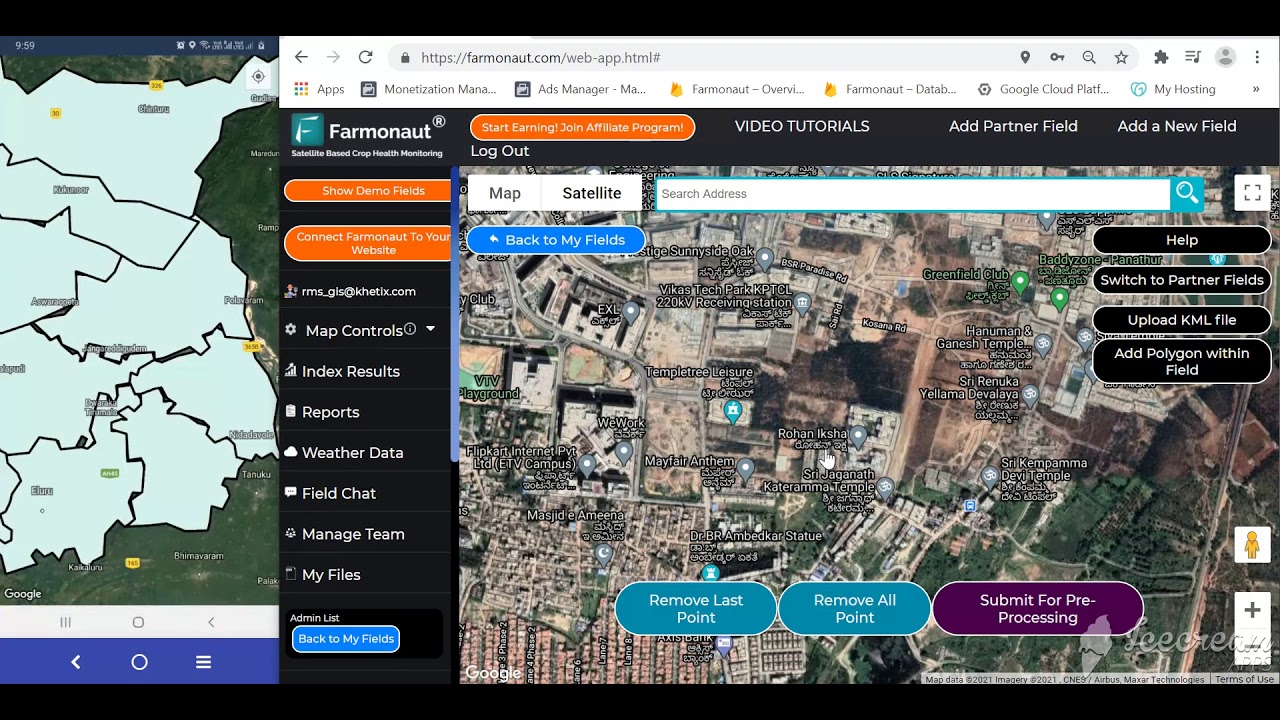
Access the Farmonaut Web App for Mining Industry Monitoring

Download Farmonaut Android App

Learn more about large-scale, integrated resource and project management for mining on the Agro Admin App platform—ideal for mining, infrastructure, and agriculture operations alike.
Explore satellite-based support for crop, plantation, and forest advisory—critical for mining operations seeking cross-sector sustainability and compliance—via the Crop Plantation & Forest Advisory service.

Frequently Asked Questions (FAQ) – Mining Industry Trends 2025
1. What are the core mining industry trends shaping 2025?
Key trends include accelerated digital transformation, mainstream adoption of automation and AI, a strong commitment to sustainability and environmental stewardship, critical minerals supply chain development, enhanced social license and community engagement, and strategic workforce evolution.
2. How does digital transformation impact mining efficiency and productivity?
Digital transformation enables real-time data analytics, predictive maintenance, autonomous vehicle operation, and AI-driven exploration. These innovations reduce costs, improve worker safety, optimize asset utilization, and minimize downtime—driving productivity.
3. How are mining companies ensuring environmental sustainability?
By adopting renewable energy, advanced waste and water management, circular economy principles, and robust carbon accounting. Many rely on satellite-based platforms, such as those from Farmonaut, for real-time environmental and emissions monitoring.
4. What are critical minerals, and why is their demand increasing?
Critical minerals comprise elements like lithium, cobalt, and rare earth metals vital for batteries, electric vehicles, renewables, and defense. Their demand is up by 30% in 2025, driven by the energy transition and new technology applications worldwide.
5. How can mining operations foster social license and community support?
By prioritizing transparent communication, equitable benefit-sharing, respecting cultural heritage, conducting real-time impact monitoring, and using digital engagement platforms to foster trust and address concerns proactively.
6. What solutions does Farmonaut offer for 2025 mining trends?
We provide subscription-based, satellite-powered monitoring; AI-driven advisory; blockchain traceability for ethical minerals; environmental impact monitoring; fleet management; and comprehensive APIs for integration with mining companies’ digital systems.
7. Where can developers find Farmonaut’s API documentation?
Visit the developer documentation here for technical details and integration guides.
Conclusion: Navigating the Future of Mining Industry Trends
In 2025, the mining industry stands as a backbone sector at a pivotal intersection of technological innovation, environmental stewardship, and evolving global economic demands. Industry players are redefining success by embracing digital transformation, operational resilience, and a deep commitment to sustainability and ethical business practices.
Companies that navigate these trends—leveraging advanced IoT, AI, robotics, and satellite-based platforms, while ensuring meaningful social engagement and environmental responsibility—will be best positioned to meet the challenges and opportunities arising in this modern era.
As digital innovation, critical minerals, and sustainable strategies become the core of mining operations, the entire industry landscape will continue to evolve rapidly. By investing in technology, people, and community, the mining sector guarantees its central place in global development and infrastructure for years to come.

 VRV Global Pte Ltd
 Omsri International FZE
 G.I.T.T.
 Jaunita Erss Ltd
 Almosi SARL
 SRK Consulting
 Berks Gold Limited
 Mwerezi Minerals Company Limited
 Mining SARL
 SenGold Invest SAS
 Sean Mining Limited
 NTS Group (Pty) Ltd
 Mine4Africa
 Lithspo Minerals Limited
 Tintina Mining Group
