

Mining KPIs 2025: Essential Metrics for Powerful Efficiency
“80% of mining companies plan to adopt data-driven KPIs by 2025 to boost operational efficiency”
Summary: Mining KPIs in 2025 — Driving Efficiency and Sustainability in Modern Mining Operations
In 2025, the mining industry stands at a transformative crossroads, shaped decisively by technological advancement, a renewed focus on environmental responsibility, and the relentless pursuit of operational excellence. Global demand for industrial minerals and metals — driven by fast-growing sectors like renewable energy, electric vehicles, and infrastructure — creates immense pressures and opportunities. For mining companies to remain competitive and sustainable, the optimization of operations is not optional; it is essential.
At the heart of this transformation are Key Performance Indicators (KPIs). Mining KPIs in 2025 are now indispensable tools, offering structured and data-driven metrics to monitor, analyze, and improve mining performance across financial, operational, and environmental dimensions. Enhanced by advanced analytics and real-time data from IoT devices, AI-powered systems, and satellite technology, mining KPIs empower companies to optimize output, minimize impact, and drive sustainability — all while ensuring safety and compliance in an increasingly regulated global environment.

The Role of KPIs in Modern Mining
What makes KPIs so valuable in mining operations today? Mining KPIs serve as critical indicators for tracking the most vital aspects of the entire extraction-to-delivery process. They help mining leaders and managers to:
- Identify bottlenecks: Pinpoint inefficiencies or delays in the supply chain, production cycle, or equipment usage.
- Reduce costs: Monitor expenses per tonne or per unit, improving cost management and financial performance.
- Minimize environmental impact: Track metrics such as emissions and water usage per tonne to nurture sustainability.
- Optimize output: Target areas to improve production efficiency, daily output, and recovery rate of valuable minerals.
- Maintain safety and compliance: Ensure the workforce is protected and adhere to regulatory standards.
In 2025, the picture broadens and deepens: modern KPIs now incorporate real-time data from advanced technologies like IoT monitoring devices, AI-based analytics platforms, and even satellite imagery for unprecedented accuracy and predictive power. They provide proactive recommendations and predictive maintenance insights, rather than mere lagging indicators.

Top Mining KPIs for 2025: The Metrics That Matter Most
Let us explore the essential mining KPIs for 2025 — the metrics every mining company must master to optimize efficiency, ensure environmental compliance, and achieve operational excellence in a fast-evolving global industry.
1. Production Efficiency KPIs
- Ore Tonnes Mined Per Day: This kpi measures the daily output of ore extracted from the mine.
Why it matters: Balances operational capacity with resource availability, providing a snapshot of how well production goals are being met. - Ore Grade: Tracks the concentration of valuable minerals within extracted ore.
Why it matters: Directly impacts yield and the efficiency of the processing and refining steps. - Recovery Rate: Indicates the percentage of valuable minerals successfully extracted during processing.
Why it matters: Essential for optimizing milling and refining operations, and for maximizing value from each tonne.
2. Cost Management KPIs
- Cost per Tonne of Ore Mined: Reflects total operational expenditure per tonne of extracted ore, including labor, equipment, and energy costs.
Why it matters: Key to controlling budgets and remaining globally competitive. - Energy Consumption per Tonne: Mining is energy-intensive; this KPI helps identify areas where energy use can be reduced.
Why it matters: Lowering energy use not only reduces costs but also decreases environmental impact. - Maintenance Cost Ratio: Monitors the proportion of the budget spent on equipment upkeep versus production value.
Why it matters: Highlights asset effectiveness and signals if investments in maintenance are paying off.
3. Safety and Compliance KPIs
- Lost Time Injury Frequency Rate (LTIFR): Measures workplace safety by calculating lost workdays due to injuries, per million hours worked.
Why it matters: A lower LTIFR signals improved safety conditions and reduced risk to human capital. - Environmental Incident Rate: Tracks environmental mishaps — spills, emissions, breaches.
Why it matters: Ensures compliance with regulatory mandates and maintains community trust. - Regulatory Compliance Score: Assesses adherence to all required laws, environmental permits, and social license conditions.
Why it matters: Reduces business risk and underpins the social license to operate.

4. Environmental Sustainability KPIs
- Water Usage per Tonne: Mining operations use large quantities of water; this KPI quantifies water efficiency.
Why it matters: Vital for sustainability, especially in water-scarce areas, and for compliance with environmental regulations. - Carbon Emissions per Tonne of Ore: Reflects the carbon footprint linked to production activities.
Why it matters: Tracks progress towards net-zero goals and supports sustainable branding. - Waste Rock and Tailings Management Efficiency: Assesses systems used for byproduct management.
Why it matters: Proper handling minimises land disturbance and contamination risks.
5. Equipment and Asset Management KPIs
- Equipment Availability: The proportion of time machinery is operational versus downtime.
Why it matters: Directly correlates to operational reliability and output consistency. - Overall Equipment Effectiveness (OEE): A composite KPI that combines availability, performance, and quality by using OEE monitoring platforms.
Why it matters: Offers a holistic assessment of machinery effectiveness. - Mean Time Between Failures (MTBF): Predicts machine reliability.
Why it matters: Supports predictive maintenance and unplanned downtime reduction.

“Over 60% of mines will track sustainability metrics through advanced analytics technologies by 2025.”
6. Operational Agility KPIs
- Cycle Time: The duration of a full mining operation cycle, from drilling to hauling.
Why it matters: Improvements indicate streamlined workflows and faster time-to-market for minerals. - Inventory Turnover: Measures the rate at which materials and supplies are used and replaced.
Why it matters: Critical to prevent overstocking or shortages, reducing tied-up capital. - Workforce Productivity: Output per labor hour.
Why it matters: Helps optimize human resources across the operation.
KPIs for the Next Era: Meeting the Demands of a Connected, Data-Driven Industry
For mining companies, embracing data-driven operational insight isn’t just best practice in 2025 — it’s how to remain resilient amid fluctuating commodity markets, complex regulatory regimes, and growing demands for sustainable production.
- Did You Know? By leveraging tech-enhanced mining KPIs, companies identify inefficiencies in real time and align with global sustainability pledges.

Leveraging Advanced Analytics & Data for KPI Management
In previous decades, mining KPIs often lagged behind events, unable to provide real-time decision support. In 2025, however, advanced analytics and modern data collection have revolutionized KPI management. Mining companies now access seamless flows of data from:
- IoT sensors placed on equipment, monitoring usage, wear, and performance in real time.
- Autonomous machinery and drones delivering reports on site conditions and progress.
- Multispectral satellite imagery assessing land use, ecosystem impact, and ore characteristics.
- AI engines analyzing trends, forecasting failures, and automating predictive maintenance.
- Cloud-based KPI dashboards for instant sharing and smart alerts across management teams.
By integrating these technologies, companies generate structured metrics that are actionable — not just numbers, but narratives that guide strategy and daily decision-making.
For instance, an AI system may alert operations managers to changes in ore grade in real time, prompting immediate process adjustments and maintaining optimal production efficiency.
Ultimately, mining KPIs that draw from advanced analytics help identify bottlenecks, minimize impact, and continuously improve productivity through predictive, data-rich insights.

KPI Comparison Table: Essential Mining KPIs at a Glance
| KPI Name | Definition | Importance for 2025 | Estimated Benchmark Value | Technology/Tool for Measurement | Sustainability Impact |
|---|---|---|---|---|---|
| Ore Tonnes Mined per Day | Daily volume of ore extracted | Tracks operational output & resource use | 10,000–80,000 tonnes/day (mine scale dependent) | IoT sensors, production reports, mining software | High output can increase impact without efficiency controls |
| Ore Grade | Concentration of valuable minerals in ore | Determines processing efficiency & profitability | Gold: 1–5 g/t, Copper: 0.5–1%+ | XRF analyzers, lab analysis, satellite imagery (multispectral) | Enables more resource-efficient extraction |
| Recovery Rate | % of valuable minerals extracted from processed ore | Optimizes revenue per tonne, reduces waste | 85–95% (commodity dependent) | Process analytics, lab reporting, AI software | Better recovery means less waste generation |
| Cost per Tonne of Ore Mined | Expenditure per tonne, including labor, energy, equipment | Key for budgeting, competitiveness | $10–$80/tonne (varies by resource/location) | Accounting software, ERP systems, IoT energy meters | Cost reductions support energy/material efficiency |
| Energy Consumption per Tonne | Amount of energy used per tonne mined | Helps lower costs & environmental footprint | 10–75 kWh/tonne (depending on method/metals) | IoT meters, SCADA systems, smart grids | Directly reduces carbon emissions |
| Maintenance Cost Ratio | % of budget spent on maintenance versus output value | Highlights asset health, lifecycle management | 5–12% | CMMS, asset management platforms, IoT diagnostics | Efficient maintenance maximizes equipment lifespan |
| Lost Time Injury Frequency Rate (LTIFR) | Number of lost-time injuries/million hours worked | Indicates workplace safety; regulatory necessity | <2 (best-in-class mines) | Incident reporting software, IoT personnel trackers | Safer mines are more resilient & sustainable |
| Environmental Incident Rate | Spills, emissions, or breaches recorded per reporting period | Critical for compliance & reputation | Zero tolerance goal (<0.5 per year) | Environmental monitoring, satellite tracking, compliance apps | Direct measure of environmental responsibility |
| Regulatory Compliance Score | Aggregate score of legal, environmental, workplace rule compliance | Reduces legal risk; maintains operating license | >98% | Compliance dashboards, audit reporting software | Ensures alignment with global standards |
| Water Usage per Tonne | Amount of water consumed per tonne processed | Critical for environmental impact mitigation | 0.5–1.5 m³/tonne | IoT sensors, flow meters, environmental software | Directly reduces water withdrawal and risks |
| Carbon Emissions per Tonne of Ore | CO₂ equivalent produced per tonne | Supports net-zero and ESG targets | 0.01–0.1 t CO₂e/tonne | Emissions software, satellite CO₂ tracking, analytics | Primary for reporting sustainability progress |
| Waste Rock/Tailings Management Efficiency | % of byproducts safely stored/treated vs. generated | Minimizes land and water risks | >95% secure management | Satellite monitoring, drone imaging, process tracking software | Reduces contamination, boosts public trust |
| Equipment Availability | % of time equipment is operational vs. downtime | Maximizes revenue, optimizes maintenance | >85% | IoT uptime trackers, CMMS, telemetry | Promotes resource efficiency, reduces waste |
| Overall Equipment Effectiveness (OEE) | Composite of availability, performance, quality | Holistic reflection of equipment productivity | 60–85% | Industrial analytics software, OEE calculators | Efficient processes lower environmental footprint |
| Mean Time Between Failures (MTBF) | Average operational hours between breakdowns | Fundamental for predictive maintenance | 200–1500 hours (machine-specific) | IoT diagnostics, maintenance logs, analytics | Reliable equipment reduces resource overuse |
| Cycle Time | Duration of full mining cycle from extraction to delivery | Indicates process speed and bottlenecks | Varies (2–20 hours per cycle) | Process analytics, workflow tracking, IoT | Shorter cycles reduce total impact per output |
| Inventory Turnover | How often inventory is renewed vs. held | Improves supply chain, reduces waste | 4–12 per year | ERP systems, inventory analytics | Prevents overstocking, lowers wastage |
| Workforce Productivity | Output per labor hour | Optimizes resource allocation | Benchmarked per region/operation | HR analytics, operational software | Higher productivity lowers environmental costs per unit |
This comprehensive comparison clarifies which mining KPIs are truly critical for 2025. Integrating advanced technologies makes accurate measurement — and sustainable optimization — possible.
Technology, Innovation & Satellite Solutions: The Future of KPI Tracking
The next leap for mining KPI management comes from the seamless integration of satellite technology, AI, IoT, and the cloud. These advanced technologies amplify both the availability and granularity of data across the whole operational lifecycle.
- Satellite Imagery: Draw on Farmonaut’s platform to obtain real-time monitoring of mining sites. Our multi-spectral images support assessment of vegetation cover, soil disturbance, water resources, and land rehabilitation progress — leading to actionable KPI insights.
- AI-Powered Analytics: Machine learning platforms can analyze complex data patterns, deliver predictive insights for equipment maintenance, and help identify emerging risks or optimization opportunities in time to act.
- Automated Fleet and Equipment Tracking: With tools such as Farmonaut’s fleet management, mining companies can monitor and optimize machinery deployment, reduce fuel waste, and ensure every asset delivers maximum value — improving equipment effectiveness and maintenance ratios.
- Environmental Impact Monitoring: Use APIs like Farmonaut’s carbon footprinting solution to track emissions per tonne or process, supporting ESG reporting and regulatory compliance in the mining sector.
- Blockchain-Based Traceability: Solutions such as Farmonaut traceability empower mining companies to secure the authenticity of minerals through their supply chain — building community trust and improving compliance scores.
- API Access for Custom KPIs: Developers and advanced users can automate mining KPI integration through the Farmonaut API (API Docs) — paving the way for in-house dashboards, AI-enabled predictive reporting, and supply chain transparency.
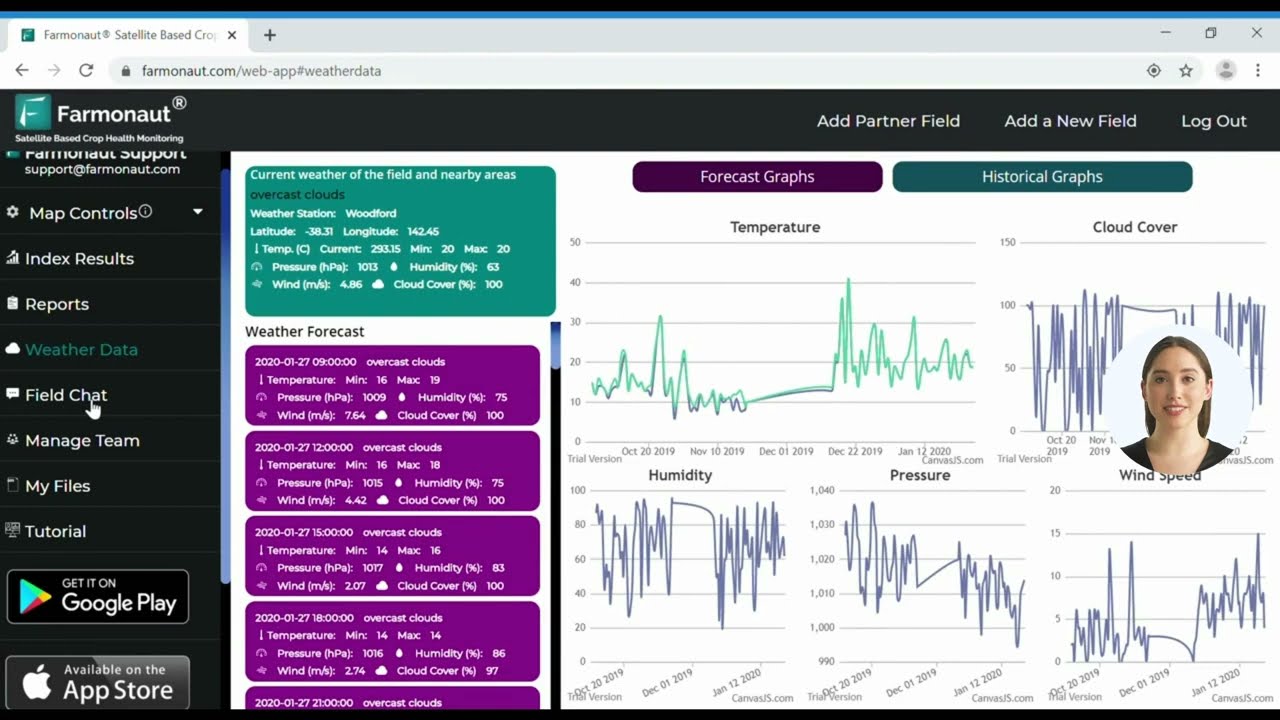
These technologies — when embedded in daily workflows — make mining KPIs not just targets but living metrics that drive transformation: keeping every function from exploration to closure aligned with both operational goals and environmental responsibilities.
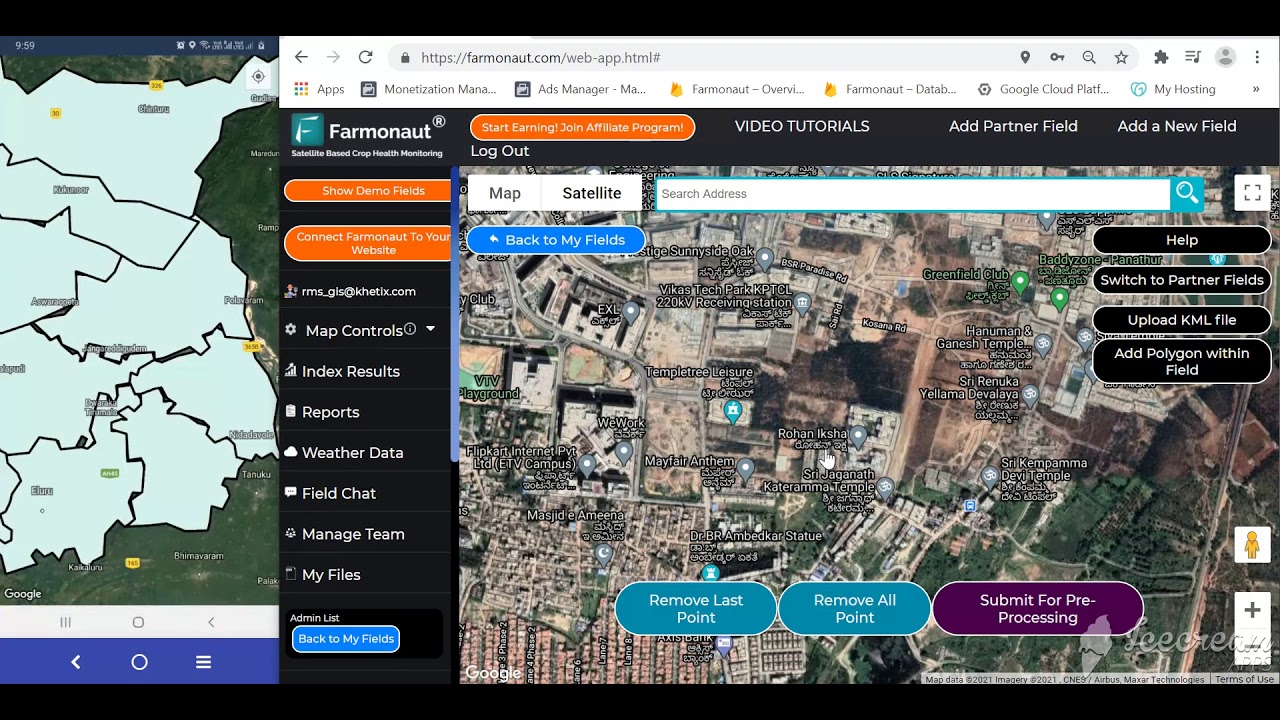
- Mobile & Web Apps:



Access Farmonaut’s apps for instant KPI dashboards, mining and environmental monitoring, and AI-driven advisory tools.
Driving Efficiency, Sustainability & Performance in Mining Operations
Let’s bring the discussion together. Mining KPIs 2025 drive three interconnected goals:
- Efficiency: Lower energy consumption per tonne, reduce costs per output, and maximize recovery rates through smart process analytics, IoT monitoring, and AI-based insights.
- Sustainability: Track carbon emissions per tonne, water usage per tonne, and waste management efficiency — aligning operations with global net-zero and ESG requirements.
- Performance: Rely on data-rich KPIs to predict bottlenecks, forecast maintenance needs, and respond proactively to market demand or regulatory change.
Why Embracing Data-Driven Mining KPIs is Critical in 2025
- Regulatory Pressure: With environmental laws strengthening worldwide, reporting accurate KPIs becomes essential to maintain operational licenses.
- Market Shifts: As renewables and electric vehicles accelerate, commodity companies that optimize KPIs for sustainability gain competitive advantage and investor interest.
- Technological Breakthroughs: Automated data collection, AI-driven advice, and transparent blockchain reporting sharply reduce error and manual workload.
- Community & Brand Trust: Mining operations with strong KPI performance on safety, compliance, and environment become the preferred partners for communities and downstream industries alike.
- Financial Health: Reducing cost per tonne through the ‘mining metrics trifecta’ — lower energy use, minimal downtime, and improved labor productivity.
Farmonaut: Satellite, AI & Blockchain Solutions for Mining
We at Farmonaut are proud to provide mining businesses, users, and government institutions with the tools required to excel in the data-driven mining world of 2025 and beyond. Here’s how our technology empowers mining KPI optimization:
- Satellite-Driven Monitoring: Our platform delivers multispectral imagery, helping teams track land, water, ore grades, and restoration efforts — key elements in KPI management.
- Jeevn AI Advisory: Real-time AI-based recommendations support improved production efficiency, environmental risk reduction, and optimized labor deployment.
- Blockchain-Based Traceability: Our traceability product is crucial for compliance reporting and supply chain transparency — see more at Farmonaut Traceability.
- Fleet Management Tools: Track vehicle and equipment usage to improve Overall Equipment Effectiveness and reduce downtime. Learn more at our Fleet Management page.
- Carbon Footprint Monitoring: Monitor and report environmental impact for compliance and ESG investments.
- APIs & Integration: Directly embed satellite, weather, and operational data analytics in your custom KPI dashboards. See our API and developer documentation.
Frequently Asked Questions: Mining KPIs 2025
Why are KPIs critical for mining operations in 2025?
KPIs offer structured metrics that enable mining companies to monitor, analyze, and improve every aspect of operations — from production efficiency and costs to safety, compliance, and environmental sustainability. They form the basis of data-driven decisions and competitive performance in a rapidly advancing global industry.
How are advanced technologies reshaping KPI measurement?
IoT devices, AI analytics platforms, and satellite monitoring now feed real-time data directly into KPI dashboards, enabling proactive management, predictive maintenance, and accuracy unheard of in traditional manual tracking.
Which mining KPIs best support environmental and sustainability goals?
The top KPIs for sustainability are carbon emissions per tonne, water usage per tonne, and waste rock/tailings management efficiency. Monitoring these — especially with digital and satellite tools — directly contributes to net-zero targets and regulatory compliance.
How does Farmonaut support mining businesses with KPIs?
We at Farmonaut equip the mining sector with real-time satellite monitoring, AI-powered advisory, environmental impact tracking, blockchain traceability, and equipment/fleet management tools. Our subscriptions and APIs make affordable, accessible KPI management a reality for businesses and government institutions worldwide.
Can I access or integrate KPI monitoring on mobile and web platforms?
Yes. Our Farmonaut apps can be accessed via web, Android, and iOS. This ensures that your KPI dashboards and operational insights are available anywhere, anytime, with easy integration via our API.
Conclusion: KPIs Powering Modern Mining for 2025 and Beyond
In today’s fast-evolving mining sector, KPIs are no longer simply performance numbers on a dashboard. In 2025, they form the backbone of intelligent, technology-driven mining operations — driving efficiency, enabling sustainability, and ensuring regulatory compliance in every global region. With advanced analytics platforms, real-time satellite imagery, and AI-powered insights, mining companies now have the opportunity to optimize production, maintain responsible resource management, and fulfill the expectations of environmental leadership.
Mining companies that master KPI management with advanced tools — like the ones we offer at Farmonaut — are best positioned to adapt rapidly, minimize environmental impact, and lead in a world where data is the new competitive advantage. The smart use of essential KPIs for 2025 is not only a necessity for operational resilience but a golden opportunity to chart a sustainable and profitable future for all stakeholders.
Ready to begin your journey with real-time, actionable mining KPIs? Get started with Farmonaut or explore our API documentation to seamlessly integrate satellite insights, AI analytics, and blockchain traceability into your mining operations.

 GKY Mining
 Alkimy SARL
 Double A Trading
 GemSprout Metals Limited
 Qader Group
 Ileys General Trading
 SG Gold Mining LLC
 VRV Global Pte Ltd
 Omsri International FZE
 G.I.T.T.
 Jaunita Erss Ltd
 Almosi SARL
 SRK Consulting
 Berks Gold Limited
 Mwerezi Minerals Company Limited
 Mining SARL
 SenGold Invest SAS
 Sean Mining Limited
 NTS Group (Pty) Ltd
