

Quartz mining · Land impacts
Mining Quartz Crystals: 7 Farm and Forest Impacts
How crystal pits work, what quartz sells for, and how a pit affects nearby farmland and forest, with the rules on forest land and a calculator for your own numbers.
Key takeaways
- Most Arkansas quartz crystal comes from open pits (Encyclopedia of Arkansas), and crystal pockets are usually finished by hand to limit breakage.
- USGS put US high-purity quartz at US$500 to US$12,000 per tonne in 2025.
- Virtually all electronic quartz crystal is cultured, so natural pits sell mainly to collectors.
- The main land effects are topsoil loss, clearing, sediment, dust, roads, habitat and reclamation lag.
- Forest Service rules call for reclamation within 1 year of the end of operations, unless longer is allowed.
In this article
- How mining quartz crystals works, step by step
- Four quartz products and what each one sells for
- US high-purity quartz output and prices
- Where quartz crystals are mined
- 7 impacts of quartz mining on agriculture and forestry
- Rules on forest land, private land and for dust
- Pay-to-dig crystal mine fees compared
- What to check before you buy or lease quartz ground
- Quartz sand is a different business
- Frequently asked questions
Mining quartz crystals is mostly small open-pit work: operators strip soil and weathered rock, then open crystal pockets by machine and hand. In Arkansas, most quartz comes from open pits, and explosives are sometimes used to expose pockets (Encyclopedia of Arkansas). The main effects on nearby farms and forests are lost topsoil, cleared trees, sediment in streams, dust, road damage, slow reclamation and competing land use.
This guide is for claim and licence owners, consultants and investors. It covers how the work is done, what the product sells for, the seven land impacts, the rules that apply on forest land, and a calculator to test a small pit against its reclamation bill.
How mining quartz crystals works, step by step
A crystal pit differs from a metal mine. The buyer pays for intact, clear points and clusters, so a broken crystal loses most of its value. That shapes every step.
- Confirm the right to dig. Establish who owns the surface and the minerals, and whether a lease, claim or permit is needed.
- Find the veins. Crystals form when hot silica-rich water fills open fissures, which creates quartz veins. In Arkansas, that happened about 280 to 245 million years ago, late in the building of the Ouachita Mountains.
- Save the topsoil. Strip it first and store it apart from waste rock, so it can go back on the land.
- Open the pit. An excavator removes clay and weathered rock until a vein or pocket shows.
- Extract by hand. Hand tools take over at the pocket. The Encyclopedia of Arkansas notes that a sudden temperature change can damage a crystal just out of the ground.
- Clean and grade. Crystals are washed and sorted by clarity, size and damage.
- Reclaim as you go. Reshape finished benches, return soil and replant before opening the next area.
Hard-rock vein systems like these are one of several settings described in our guide to types of ore deposits. High-purity quartz comes from a different host, which our article on pegmatite deposits explains.
Four quartz products and what each one sells for
“Quartz crystal” covers four products with very different economics, and one of them is not mined at all. Know which one you are in before you value a property.
| Product | What it is | Where it comes from | Dated price basis |
|---|---|---|---|
| Specimen crystal | Natural points and clusters for collectors | Arkansas pits and other vein districts | Priced piece by piece; one Arkansas miner listed clusters from US$150 to US$2,400 (November 2026 retail) |
| High-purity quartz (HPQ) | Ground quartz with under 100 ppm total impurities | Pegmatite around Spruce Pine, North Carolina | US$500 to US$12,000 per tonne (USGS, 2025 estimate) |
| Lascas | Non-electronic-grade feed for growing cultured crystal and for fused quartz | Mostly Brazil and Madagascar | Not published in the USGS chapter |
| Cultured crystal (made, not mined) | Electronic-grade crystal grown in a plant | Increasingly overseas, primarily Asia; two US producers in 2025 | US$200 per kg as grown; US$500 per kg lumbered (USGS, 2025 estimate) |
Two USGS points matter here. First, virtually all quartz crystal used for electronics is cultured, not natural, and lascas mining and processing in Arkansas ended in 1997. A natural crystal pit should not be valued on electronics demand. Second, in 2025 two companies produced HPQ around Spruce Pine, from pegmatite also mined for feldspar and mica (USGS, 2026).
US high-purity quartz output and prices
USGS rounds HPQ output to the nearest 100,000 tonnes to protect company data, so the chart below shows direction, not precise volume. The agency links recent demand to fused quartz crucibles used to make silicon wafers, and reports weaker demand from solar cells in 2024 and 2025.
Chart
High-purity quartz price range
US$ per tonne, low and high of the USGS range; 2025 is an estimate
Chart
US high-purity quartz sold or used
Thousand tonnes, rounded by USGS to the nearest 100,000 t; 2025 is an estimate
The price range is wide because value depends on purity, the type of impurity and the end use. On 10 April 2025, China announced over 35 million tons of HPQ reserves in Henan and Xinjiang; USGS reports initial tests at 99.995% to 99.998% purity, against over 99.999% from Spruce Pine. Supply can also stop suddenly: The Quartz Corp halted its Spruce Pine operations on 26 September 2024 ahead of Hurricane Helene.
Where quartz crystals are mined
USGS says most lascas is mined in Brazil and Madagascar and rates the United States as the leading HPQ producer; Australia, Brazil, Canada, China and Russia are among its other named sources. World production and reserve totals are not published for quartz.
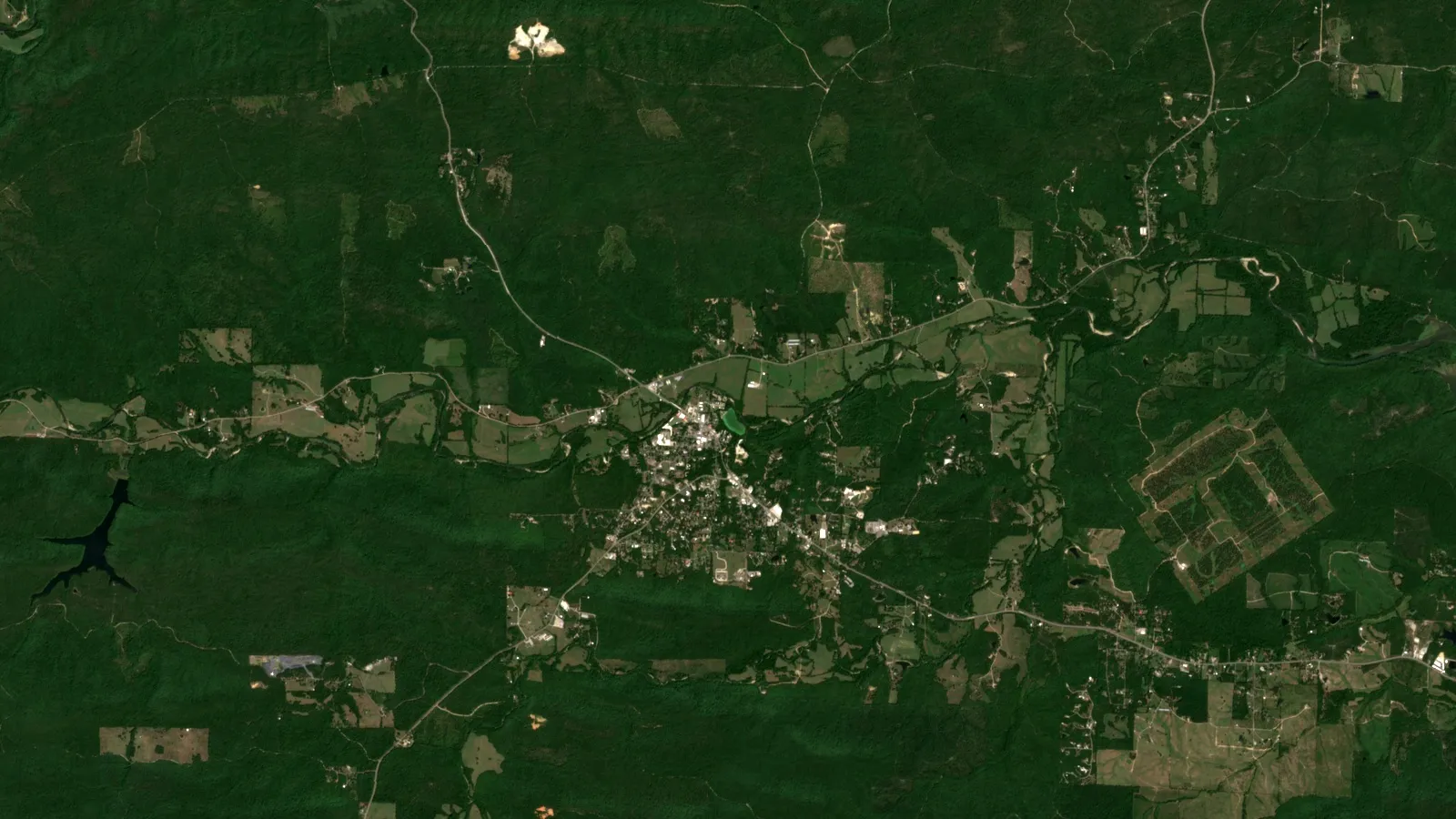
For specimen crystal, the best-documented US district is Arkansas. A “quartz belt” 30 to 40 miles wide runs through the core of the Ouachita Mountains into Oklahoma, with main deposits in Garland, Perry, Montgomery and Saline counties. Local authors have estimated 20 to 25 mines operating for specimens and tourist collectors. Arkansas is not among the six leading states in US natural gemstone value, which USGS lists as Arizona, Oregon, California, Nevada, Montana and Maine. National natural gemstone output was only about US$9.4 million in 2025 (USGS estimate), which gives rough context only, because USGS does not report specimen sales separately.
The belt is forested, and much of it lies in or near the Ouachita National Forest. That is why farm and forest effects are real planning questions here.
7 impacts of quartz mining on agriculture and forestry
Older articles on this subject claimed crop-yield gains from quartz mining. A pit does not raise yields. Quartz is silicon dioxide, so it adds bulk to soil, not nitrogen, phosphorus or potassium. The effects below are land-management issues, and each one can be reduced with planning.
1. Topsoil loss on farmland and pasture
Stripping removes the layer that grows crops and grass. Poorly stored soil can erode or be buried under waste rock. For a landowner leasing ground to a miner, this is the largest long-term cost, so the lease should say where soil goes and how deep it returns.
2. Tree clearing and forest fragmentation
Cutting trees can itself change the paperwork. Under US Forest Service rules, the notice exemption for small operations excludes those that cut trees or use mechanized earthmoving equipment, unless no significant disturbance is likely. Pits and access roads also break up continuous forest and leave edges open to wind and sun.
3. Sediment in streams, lakes and irrigation water
Bare clay on a slope washes off in heavy rain. Sediment is the concern that stands out in the Ouachitas: in early 2026 a federal proposal to lease 347 acres of national forest for quartz mining met opposition over sediment in Lake Ouachita and Lake Winona, a drinking-water source for the Little Rock area. Settling ponds, silt barriers and stream buffers are the usual controls, and federal and state water quality standards apply on forest land.
4. Silica dust for workers and neighbours
Drilling and crushing create respirable crystalline silica, particles at least 100 times smaller than ordinary sand. OSHA links it to silicosis, an incurable lung disease, and lung cancer. See the limits in the rules section below. Water sprays on haul roads and crushers also limit the dust that drifts onto pasture and nearby homes.
5. Haul roads and drainage
A small pit may do more harm through its road than through its hole. Forest Service rules require roads to be built and kept with adequate drainage. Roads no longer needed must, unless otherwise approved, be closed to normal traffic, have bridges and culverts removed, get water bars and be reshaped near natural contour. Farmers should agree on gate, culvert and fence repairs in writing too.
6. Wildlife and fish habitat
Operators on national forest land must take all practicable measures to maintain and protect fisheries and wildlife habitat. In practice this means uncut buffers along streams, timing work around sensitive periods and avoiding known rare-species sites. Operators must also, to the extent practicable, fit operations to scenic values through screening and careful siting.
7. Competing land use and reclamation lag
While a pit runs, its ground grows no crops or timber. The real question is how quickly it returns. On national forest land, reclamation is due at the earliest practicable time, or within 1 year of the conclusion of operations, unless longer is allowed. Tree-based reclamation has a tested model: the Forestry Reclamation Approach, promoted by a coalition of citizens, the coal industry and government, was built for coal land in the eastern US, so treat it as a guide rather than a quartz-specific result.

▶ The environmental impacts of mining explained in plain words · 2:31
Rules on forest land, private land and for dust
Permits depend on land ownership, and this section gives examples rather than a full list. The 36 CFR 228 surface rules quoted in this article cover operations under the US mining laws, so a leased site may have different terms.
- Ouachita National Forest: digging needs Forest Service permission. Commercial miners with permission work using hand tools, and rockhounds may pick up small amounts from the surface for personal use. The Encyclopedia of Arkansas puts visits to this federal quartz resource at about 5,000 people a year (undated).
- Other national forest operations under 36 CFR 228: A notice of intent goes to the District Ranger for work that might cause significant surface disturbance. The ranger has 15 days to say whether a plan of operations is required. An operator filing a plan may have to provide financial assurance for reclamation when the authorized officer requires it. Federal leases have their own terms, so ask the ranger which rules apply to your ground.
- Arkansas state and private land: The state Division of Environmental Quality runs the mining program, including the Open-Cut Land Reclamation Act and the Quarry Operation, Reclamation and Safe Closure Act. Ask its Fort Smith-based staff which one fits your site.
- Mine safety (US): MSHA’s rule sets a silica limit of 50 micrograms per cubic meter of air as a full-shift average. The action level is 25 micrograms, and the compliance date listed for metal and nonmetal mines is 8 April 2026. Check the MSHA silica page for the current enforcement position.
- Processing plants outside MSHA’s reach: OSHA’s general industry standard uses a 25 microgram action level too.
Before any machine arrives, a landowner or buyer should also read any existing lease, confirm that minerals have not been severed from the surface, and check county rules. A planned sale of ground has similar checks, and an early desk review can show whether a pit sits near streams or tree cover. Land-access problems can stop a good deposit, however strong its rock.
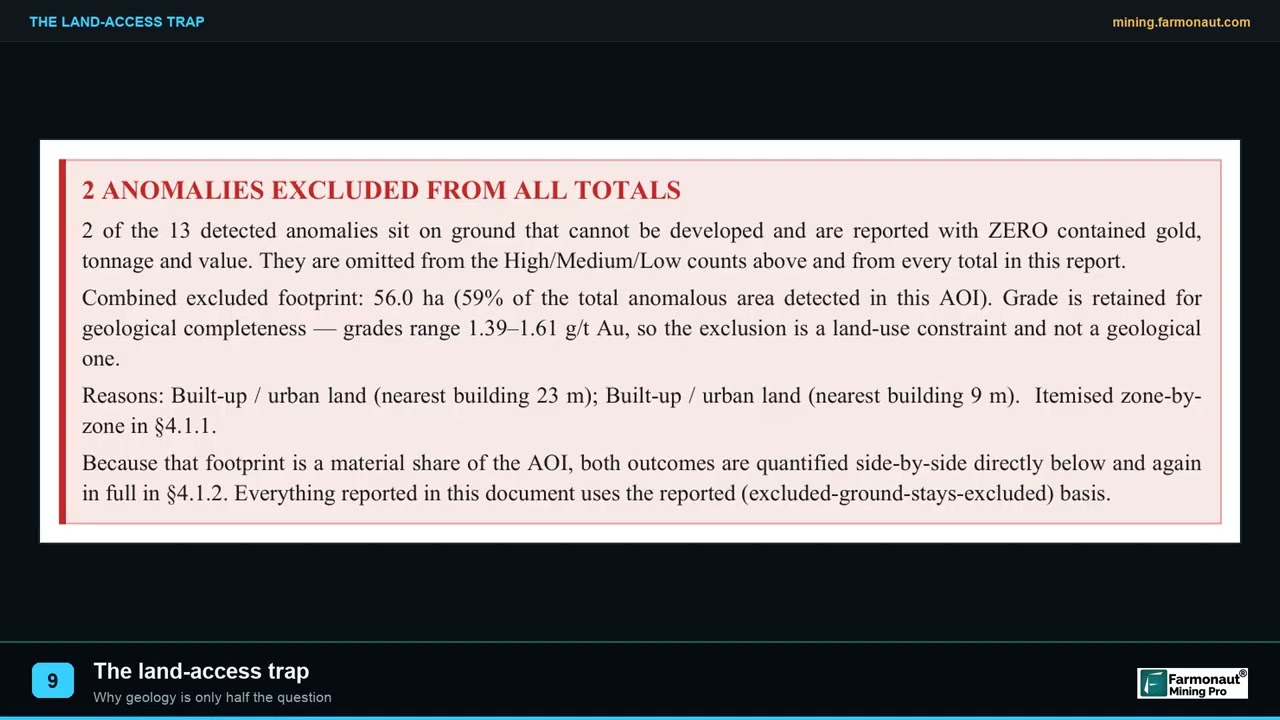
▶ How land access can block good ground · 2:05
Pay-to-dig crystal mine fees compared
For readers wondering what small-scale access costs, public dig sites give a clear price signal. These are fees at one Mount Ida operator, Wegner Crystal Mines, as listed in November 2026. A visitor fee is not a guide to the value of a property.
Chart
Listed crystal dig fees at one Arkansas operator
US$ per adult, November 2026
The Crystal Forest Mine is a 40-acre open pit charged at US$19 per person for two hours of collecting. The tailings area costs US$10.50 for adults, using truckloads of pit material spread over a field. A guided Phantom Mine dig costs US$60 for four hours. Tailings of this kind show one low-impact way to get more from already-dug material.
What to check before you buy or lease quartz ground
Quartz is common, but gem-clear crystal in intact pockets is not. No desk study proves a pocket exists, and past digging on a parcel does not promise future finds.
▶ Remote sensing for mining in about three minutes · 2:01
- Product: Is the plan specimens, HPQ feed or lascas? Each needs different tests and buyers. HPQ also requires chemical analysis against limits for specific trace elements, as USGS notes.
- Title: Who holds the surface and mineral rights, and what access does the deed allow?
- Water: How far is the nearest stream, reservoir or irrigation intake, and which way does the slope drain?
- Tree cover: Will the plan need cutting, and who owns the timber?
- Reclamation: Get a written cost per acre and a bond estimate from the regulator or a local contractor.
- Tax: USGS lists a 22% domestic depletion allowance in its chapter on high-purity quartz and cultured crystal. Ask a tax adviser how it applies to you.
Satellite imagery can help with the surface part of that list, showing old workings, clearing, drainage and regrowth over time. Farmonaut’s satellite-based mineral detection includes quartz among its mapped minerals and produces exploration targets ahead of any drilling or resource estimate. It does not locate individual crystal pockets or replace an environmental review. To scope an area, use the mining query form or contact the team. Our article on exploration targeting explains how targets are ranked.
Calculator
Does a small quartz pit cover its land costs?
Enter your own tonnage, yield, price and land costs.
- Saleable crystal (kg): 2,000
- Sales value (US$): $10,000
- Mining cost (US$): $15,000
- Reclamation cost (US$): $6,000
Example values only, not a benchmark or a forecast. All inputs are yours; the formula has no hidden constants. Price input: example, use today’s price. Specimen yield is highly uncertain before a pit is opened.
Quartz sand is a different business
Older farm-focused articles mixed crystal mining with industrial sand. They are separate industries. US industrial sand and gravel sold or used totalled an estimated 120 million tonnes in 2025, worth US$4.5 billion, from 207 operations in 38 states (USGS, 2026). The average value was about US$36 per tonne, far below HPQ.
Chart
Where US industrial sand and gravel went
Share of tonnage, 2025
About 81% of that tonnage went to frac sand and well packing and cementing, and 7% to glassmaking. Filtration sand is one of several uses inside a 7% combined group, so water filter sand is a real but small market. Farm filter sand does not usually come from a crystal pit.
Frequently asked questions
How are quartz crystals mined?
Mostly by open pit. An excavator removes soil and weathered rock, then miners open crystal pockets with hand tools to avoid breakage. Explosives are sometimes used to expose pockets in Arkansas.
Does quartz mining hurt farmland?
It can, through lost topsoil, sediment, dust and damaged roads. Storing soil, buffering streams, suppressing dust and reclaiming promptly reduce those effects. A written lease should set these duties.
Does quartz improve soil or crop yields?
Quartz is silicon dioxide, so it adds sand-sized bulk, not the main plant nutrients. Do not rely on yield claims unless a named field trial supports them for your soil and crop.
Is quartz dust dangerous?
Yes. Fine respirable silica can cause silicosis and lung cancer, according to OSHA. Whole crystals are not the hazard; the fine dust from cutting, drilling and crushing is.
Can you dig quartz crystals in the Ouachita National Forest?
Picking up small amounts from the surface for personal use is allowed, but digging needs Forest Service permission. Check with the local ranger district before you go, and take only what your permission covers.
Where are the best places to mine quartz crystals in the US?
Arkansas is the best-documented district, centred on the Ouachita quartz belt, including Mount Ida in Montgomery County and Jessieville in Garland County. Public fee-dig sites operate there.
How much does it cost to dig for crystals in Arkansas?
At Wegner Crystal Mines in November 2026, listed fees ran from US$10.50 per adult for the tailings area to US$60 for a guided four-hour dig. Confirm with the operator before you travel.
What is high-purity quartz used for?
Electronics, fiber-optic cable, fused quartz crucibles for silicon wafers, lamp tubing and specialty glass (USGS, 2026). USGS defines it as natural quartz with under 100 ppm of total impurities.
Is natural quartz used in electronics?
Rarely as crystal. USGS says virtually all electronic quartz crystal is cultured in plants, although natural lascas can be used as feed for growing it.
Can a quartz mine site become forest again?
Reforestation of mined land is well developed on eastern US coal sites through the Forestry Reclamation Approach. Results on a quartz site depend on soil handling, slope, species and aftercare, so plan them before the first cut.
Do I need a permit to mine quartz on my own land?
It depends on your state, the size of the disturbance and your mineral title. In Arkansas, start with the Division of Environmental Quality mining program, and take local legal advice.
This page is for information only. It is not legal or investment advice. Confirm the rules with the regulator. Prospect only with permission and the right licence, use dust protection, and never use mercury.
Farmonaut mining
Scope your quartz ground from space
For owners and buyers of a licence or claim: request a quote for satellite screening of your boundary, ahead of any fieldwork.

Mining Pro sample view, synthetic data
Keep reading
Sources
- USGS, Mineral Commodity Summaries 2026: Quartz: pubs.usgs.gov
- USGS, Mineral Commodity Summaries 2026: Industrial sand and gravel: pubs.usgs.gov
- USGS, Mineral Commodity Summaries 2026: Gemstones: pubs.usgs.gov
- Encyclopedia of Arkansas, Quartz Mining (accessed November 2026): encyclopediaofarkansas.net
- eCFR, 36 CFR Part 228, Minerals (National Forest System): ecfr.gov
- eCFR, 30 CFR Part 60, Respirable Crystalline Silica: ecfr.gov
- Federal Register, MSHA final silica rule (18 April 2024): federalregister.gov
- MSHA, Respirable Crystalline Silica: msha.gov
- OSHA, Silica, Crystalline overview: osha.gov
- eCFR, 29 CFR 1910.1053: ecfr.gov
- Arkansas DEQ, Mining Program: adeq.state.ar.us
- OSMRE, Appalachian Regional Reforestation Initiative: osmre.gov
- The Quartz Corp, Impact of Hurricane Helene (1 October 2024): thequartzcorp.com
- Wegner Crystal Mines, Crystal Forest Mine fees: wegnercrystalmines.com
- Wegner Crystal Mines, Tailings fees: wegnercrystalmines.com
- Wegner Crystal Mines, Phantom Mine fees: wegnercrystalmines.com
- Ron Coleman Mining, online crystal listings: colemanquartz.com
Discussion
Questions, corrections or field experience? Share them below. First-time comments are reviewed before they appear, and your email is never published.
No comments yet. Be the first to add a question or your experience.

 SG Gold Mining LLC
 VRV Global Pte Ltd
 Omsri International FZE
 G.I.T.T.
 Jaunita Erss Ltd
 Almosi SARL
 SRK Consulting
 Berks Gold Limited
 Mwerezi Minerals Company Limited
 Mining SARL
 SenGold Invest SAS
 Sean Mining Limited
 NTS Group (Pty) Ltd
 Mine4Africa
 Lithspo Minerals Limited
 Tintina Mining Group

 Licence holder · Nigeria · Gold + lithium










