

Optimize Copper Mining for Efficiency: 2025 Case Studies
Copper mining remains the cornerstone of the global economy, underpinning industries from electronics to critical infrastructure development. As demand for copper surges amid the green transition and rapid urbanization worldwide, the pressure to optimize copper mining operations for efficiency is at an all-time high. The year 2025 sees an era defined by a blend of advanced technology, sustainable practices, and digital transformation reshaping the entire sector. This article explores How to Optimize Copper Mining Operations for Efficiency: Case Studies—diving into operational, technological, and environmental approaches illustrated by the most compelling case studies across the globe.



Copper Mining: The 2025 Efficiency Imperative
Copper mining operations—from Chile’s Atacama Desert to the Kalahari Copper Belt, and the American Southwest—are at a crossroads. Declining ore grades, rising energy and water costs, stringent environmental regulations, and global supply chain risks demand operational optimization at every level.
- Copper remains critical due to its vital function in electric vehicles, renewable infrastructure, and the green energy transition.
- Even with automation, AI, and sustainable practices, companies must also manage human factors—from workforce training to community collaboration—for true efficiency gains.
- Modern technology enables both cost reduction and environmental stewardship, vital for investor and regulatory confidence in 2025 and beyond.
This comprehensive guide details the integrated strategies and case studies that set the blueprint for optimizing copper mining operations for efficiency in 2025.

Embracing Digital Transformation and Automation in Copper Mining
One of the most powerful levers for improving efficiency in copper mining is the embrace of digital transformation. Digital solutions increasingly automate systems such as drilling, haulage, and ore processing.
Why does this matter? Because higher automation and digital integration reduce human error, improve safety, and increase operational speed.
- Autonomous equipment (haul trucks, drilling rigs) are now standard in leading mines, enabling 24/7 continuous operations and reducing downtime.
- IoT sensor networks provide real-time data on equipment health, ore quality, and energy consumption.
- Data-driven predictive maintenance avoids costly breakdowns, keeping operational costs under control.
- Digital twins allow for process simulations—virtual replicas of mine operations—to optimize extraction sequences, reduce waste, and maximize output.
Case Study: Antofagasta Minerals, Chile
At several Antofagasta Minerals mining sites in Chile, a combination of autonomous haul trucks and real-time analytics has:
- Minimized downtime by 15%
- Improved fuel consumption efficiency by 10%
- Sharply reduced operational risks linked to human factors
Through IoT sensors monitoring equipment health, managers can schedule maintenance proactively and maintain consistent output.

Key Benefits of Mining Digital Transformation
- Consistent product quality via precise ore tracking.
- Energy costs reduced through process optimization.
- Real-time compliance with environmental and safety regulations.
- Workforce safety improved as automated systems handle hazardous tasks.
Want to integrate real-time satellite and AI data into your mining management software? Access our Farmonaut API (see comprehensive developer docs) for near-instantaneous analytics and monitoring.
Sustainable Practices Driving Copper Mining Efficiency
Sustainability is no longer a “nice-to-have”—it’s a key driver of operational efficiency and long-term competitiveness in 2025.
Mining companies now deploy resource management approaches that not only reduce their environmental footprint but also achieve cost reduction and improved productivity.
Declining ore grades heighten the importance of energy and water recycling and push the development of innovative processing technologies.
- Advanced water recycling and closed-loop processing slash water consumption and operating costs.
- Hybrid and renewable energy systems (solar, wind, hydro) cut diesel reliance and emissions, driving both sustainability and efficiency.
- Modern tailings storage technologies reduce environmental risk and future closure liabilities.
- AI-based resource management ensures optimal use of energy, water, and reagents.

Case Study: Grasberg Mine, Indonesia
The Grasberg mine introduced a combination of water recycling technologies and solar installations in its processing plants. As a result:
- Energy costs were reduced by 20%
- Water consumption was halved
- Environmental closure liabilities were minimized with safer tailings management
These sustainability-driven optimizations set a new benchmark for tropical mining environments in 2025.
Explore Farmonaut’s Carbon Footprinting solution—a tool for tracking environmental impact and emissions from mining operations using advanced satellite and AI insights.
Workforce Training, Human Factors, and Community Collaboration
Mining efficiency doesn’t stop at machinery. Human capital, safety protocols, and local community engagement are equally vital factors in mining optimization strategies.
- Virtual reality (VR) and augmented reality (AR) training improve operator skills and situational awareness, accelerating learning and reducing attrition rates.
- Automated and AI-powered safety monitoring helps detect and respond to risks quickly, reducing accidents and downtime.
- Ongoing collaboration with local communities ensures operational continuity, reducing costly delays from regulatory or social license issues.

Regulators and investors in 2025 expect mining companies to demonstrate clear, data-driven social and environmental stewardship—essential for securing project permits, compliance, and long-term profitability.
Discover Farmonaut’s Blockchain-Based Product Traceability—empowering mineral supply chain transparency and trust from mine to market.
Optimize Copper Mining Operations for Efficiency: Case Studies in 2025
Let’s analyze standout examples from 2025 that demonstrate remarkable efficiency gains through integrated digital and sustainable solutions.
- Chile’s Escondida Mine: Adoption of comprehensive digital infrastructure—sensor networks, AI analytics, automated machinery—delivered a 12% productivity increase and 15% reduction in energy usage.
- Morenci Mine, USA: Integration of renewable energy, water conservation, and advanced process control led to an 18% reduction in operational costs and regulatory compliance milestones.
- Kamoa-Kakula Project, DRC: Modular, adaptable mining equipment and AI-driven ore grade control achieved a 25% improvement in ore recovery rates, providing a proven template for challenging geological settings.

Comparative Case Study Summary Table
| Case Study Name/Location | Technology Used | Sustainable Practices | Estimated Efficiency Gain (%) | Estimated Cost Savings (USD/Year) | Key Insights/Lessons |
|---|---|---|---|---|---|
| Escondida Mine, Chile | AI monitoring, automation, real-time analytics, digital twins | Energy optimization, closed-loop water use, emissions tracking | 12 | $80 million | Digital integration delivers scalable productivity and sustainability. |
| Morenci Mine, USA | Hybrid energy grid, process automation, IoT integration | Water conservation, renewable energy, waste management | 18 | $90 million | Renewables and digital process control slash costs and aid compliance. |
| Kamoa-Kakula, DRC | Modular mining equipment, grade control AI, advanced sensors | Ore grade optimization, adaptive resource use | 25 | $78 million | Adaptability to geology via modular and data-driven approaches. |
| Grasberg, Indonesia | Automated haulage, predictive maintenance, satellite analytics | Solar power, water recycling, safe tailings storage | 20 | $100 million | Sustainability technologies can drive major energy and water reduction. |

Enabling Technologies Transforming Mining
Bold technological innovation is the force multiplier for efficiency in copper mining.
Key enabling platforms in 2025 include:
-
Industrial IoT & Advanced Sensor Grids:
- Deliver continuous data on equipment health, ore quality, energy consumption, and environmental factors.
- Empower predictive and prescriptive maintenance, dramatically reducing costly unplanned breakdowns.
-
Artificial Intelligence & Analytics:
- Real-time process optimization and ore-body modeling.
- Simulations for scenario planning: extraction sequences, fleet schedules, energy usage.
-
Satellite & Aerial Data:
- Guide exploration and environmental compliance with high-frequency, multispectral imagery.
- Monitor mine expansion, vegetation health, water use, and closure obligations remotely.
-
Blockchain Traceability:
- Ensures ore and product traceability through every stage—meeting rising regulatory and consumer demand for transparency.
-
Fleet & Resource Management Systems:
- Optimizes haulage, drilling, and processing systems for maximum fleet productivity and minimal fuel consumption.
- Improves workforce safety and reduces resource wastage.
For field and fleet managers, Farmonaut’s Fleet Management tools offer satellite-based logistics tracking and asset optimization to reduce costs, improve safety, and increase resource utilization across mining operations.

Satellite and AI Solutions: The Next Leap in Mining Efficiency
In 2025, satellite-based monitoring offers unmatched insights for resource management and risk reduction in copper mining.
- High-frequency multispectral imagery enables real-time monitoring of vegetation, soil, and mine site change without the need for costly field surveys.
- AI algorithms process these satellite datasets for ore body detection, operational analytics, and environmental compliance monitoring.
- Satellite data helps track carbon emissions, providing quantifiable evidence for sustainability certifications and financial disclosures.
Satellite mineral exploration is revolutionizing how new copper deposits are discovered and old ones are managed for maximum efficiency and sustainability.
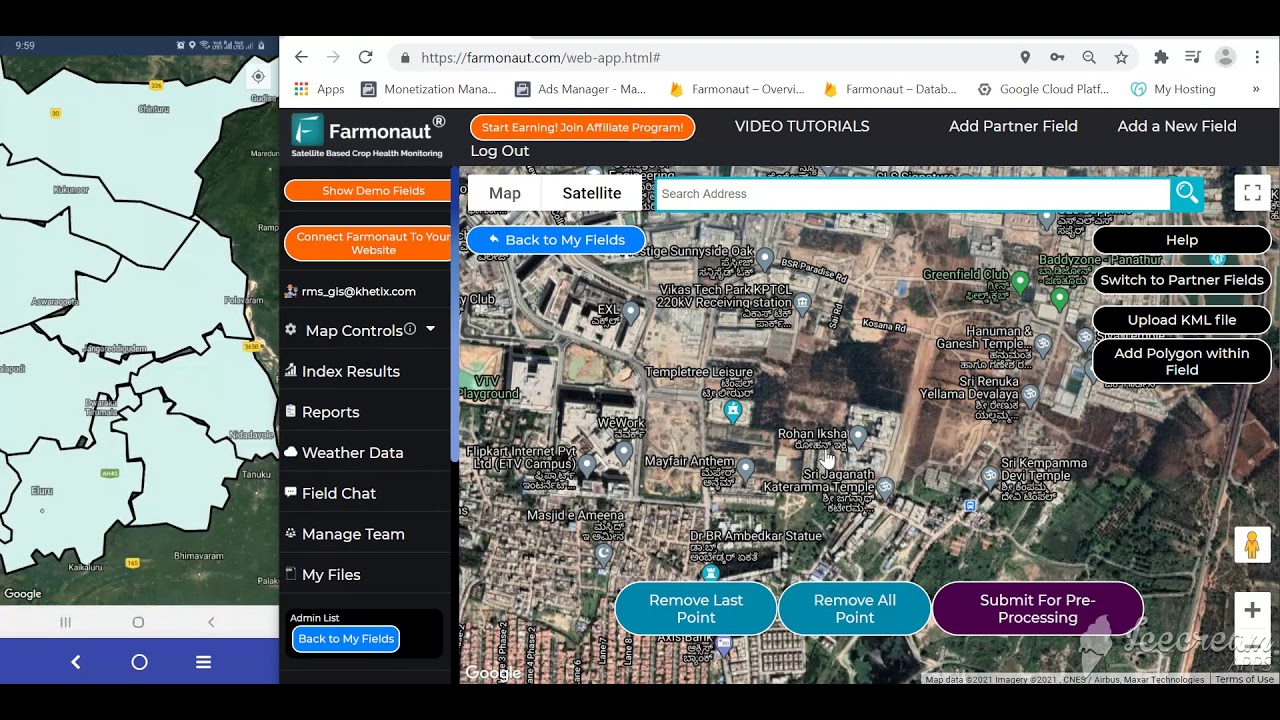
Farmonaut’s Role in Satellite-Driven Mining Transformation
As a pioneering satellite technology leader, Farmonaut empowers businesses and governments to redefine how they optimize and manage mining operations in 2025.
- Satellite-Based Monitoring: Our satellite imagery solutions provide real-time, multispectral monitoring of large mining fleets, ore stockpiles, environmental health, water resources, and tailings management.
- AI-Driven Advisory (Jeevn AI): We deliver customized, actionable insights for ore extraction, risk mitigation, and productivity improvement via AI-powered analytics—helping operators make data-backed decisions.
- Blockchain Traceability: Our blockchain integrations enable end-to-end supply chain transparency for copper, meeting modern regulatory and investor standards.
- Fleet & Resource Management: Our platform enables smarter allocation, usage, and maintenance of mining vehicles and equipment to reduce operational expenditure.
- Environmental Impact Monitoring: With satellite-derived carbon footprint analysis and emissions tracking, mining operations can meet or exceed compliance mandates and sustainability goals.
Farmonaut’s mission is to democratize access to advanced remote sensing and AI-driven analytics, making mining efficiency and sustainability attainable for businesses, governments, and financial institutions worldwide.
If you’re seeking to scale up operations while minimizing risk, cost, and environmental impact, Farmonaut’s Large-Scale Management tools offer cloud-based analytics tailored for both industrial and governmental mining oversight.
Farmonaut Mining Subscriptions
Our subscription-based model makes advanced satellite and AI technologies affordable for everyone from small operations to large mining enterprises and governments.
Choose a plan that scales with your needs:
Frequently Asked Questions (FAQ)
How do digital and automated technologies increase copper mining efficiency?
Digital and automated technologies such as IoT sensors, AI analytics, autonomous haul trucks, and automated drilling systems reduce human error, operational delays, and equipment downtime. They enable real-time monitoring and predictive maintenance, allowing copper mines to increase output, improve safety, and achieve cost reductions through process optimization and waste minimization.
What are the benefits of using satellite-based monitoring in mining?
Satellite-based monitoring provides continuous, high-resolution coverage of mining sites, supporting real-time decision-making on ore stockpiles, water usage, vegetation health, and environmental compliance. These insights enable early detection of problems, streamlined resource use, and verification for environmental and safety certifications.
How can mining companies reduce their environmental footprint while improving efficiency?
By adopting sustainable practices—such as advanced water recycling, renewable energy systems, smart tailings storage, and AI-powered environmental impact monitoring—companies can simultaneously reduce their energy consumption, minimize water waste, enhance compliance, and cut operational costs.
What role does workforce training play in mining optimization?
Modern workforce training leveraging virtual and augmented reality delivers faster, more effective upskilling for operators, leading to higher productivity, improved safety, and lower accident rates. Training programs tailored to digital and automation technologies prepare workers for new operational requirements, ensuring a successful digital transformation.
How does Farmonaut help optimize copper mining operations?
We provide satellite-based monitoring, AI advisory, blockchain traceability, fleet/resource management, and carbon footprint tracking. These tools deliver actionable insights, boost safety, cut operational expenses, and support data-driven sustainability for mining companies, governments, and finance providers globally.
How can I get started using Farmonaut in my mining operations?
Simply download our web or mobile apps (links above), or use our API for direct integration into your mining management systems. Explore subscription options suited to both small operators and major enterprises. For mining-specific dashboards and remote monitoring solutions, check our Large-Scale Management product page.
Conclusion: The Future of Mining in an Electrifying World
Given the unprecedented global demand for copper and relentless pressures to improve efficiency, the adoption of a multi-dimensional strategy is vital for all mining companies in 2025 and beyond.
As demonstrated in the case studies of Chile, the USA, the DRC, and Indonesia, integrated solutions—combining automated digital systems, sustainable resource management, cutting-edge analytics, and proactive human engagement—deliver exceptional outcomes in productivity, cost reduction, safety, and environmental performance.
- Advanced technology and satellite-enabled insights are the future of optimized mining operations.
- Those who embrace digital and sustainable approaches will maintain a competitive edge and meet the needs of a rapidly electrifying world.
- Farmonaut stands ready to help every mining company, government, and industry player transition to a smarter, greener, and more efficient future.
Ready to lead copper mining into the next era? Optimize your operations today with real-time, data-driven solutions—from exploration and extraction, to compliance and supply chain management.

 Berks Gold Limited
 Mwerezi Minerals Company Limited
 Congo Mining Solutions
 Mining SARL
 SenGold Invest SAS
 Sania Corporation
 Sean Mining Limited
 NTS Group (Pty) Ltd
 Mine4Africa
 Lithspo Minerals Limited
 Tintina Mining Group
 Dalgety Minerals Pty Ltd
 Vortex Minerals Pty Ltd
 Faith At Work (Pty) Ltd
 Geotech Mining Solutions plc
 Vulcan International Limited
 Kidepo Associates
 GKY Mining
 Alkimy SARL
 Double A Trading
 GemSprout Metals Limited
 Qader Group
 Ileys General Trading
 SG Gold Mining LLC
 VRV Global Pte Ltd
 Omsri International FZE
 G.I.T.T.
 Jaunita Erss Ltd
