

Palladium Prospecting: Ore, Deposits, and Where It’s Mined
Reviewed August 2026 against USGS Mineral Commodity Summaries, Johnson Matthey’s PGM Market Report, and the International Precious Metals Institute.
Try it: Run your own numbers →
Palladium prospecting means searching for nickel-copper sulfide deposits where palladium rides along as a byproduct — it is almost never the primary target of a drill program. Nearly all of the world’s supply comes from four places: Russia’s Norilsk-Talnakh district, South Africa’s Bushveld Complex, Canada’s Sudbury Basin, and Montana’s Stillwater Complex in the United States. As of August 7, 2026, palladium traded at $1,378.50 per troy ounce, up 23.30% year-over-year, but still less than half its March 2022 peak of $3,425 (Trading Economics) — which is exactly why prospecting economics for a palladium-bearing deposit hinge on grade, recovery, and byproduct credits, not the spot price alone.
Table of Contents
What Is Palladium Prospecting?
Prospecting palladium is the search phase before mining: geologists look for layered mafic-ultramafic intrusions and nickel-copper sulfide bodies that carry enough platinum-group-metal (PGM) content to be worth developing. Because palladium is a byproduct rather than a standalone ore target, a prospecting program is really nickel-copper exploration with PGM assay values layered on top. The work typically involves:
- Regional geological and geochemical surveys to identify mafic-ultramafic intrusions and sulfide-bearing horizons
- Geophysical surveys (magnetics, electromagnetics) to trace sulfide bodies at depth
- Drilling and assay to confirm grade, tonnage, and the Pd:Pt:Ni:Cu ratio, which determines whether palladium is a meaningful credit or an afterthought
- Remote sensing and satellite mapping to narrow target areas before committing to expensive ground programs
If you landed here after searching “palladium prospecting roblox,” that phrase belongs to a mining-simulator game achievement, not a mineral deposit — this guide covers the real-world geology, deposits, and economics instead.

Palladium Price: Why It Matters to Prospecting Economics
Palladium’s price swing over the past four years is the single biggest reason prospecting decisions on marginal PGM ground have gone from “drill it” to “wait” and back again. From a March 2022 peak of $3,425/oz, palladium fell 76.25% to an August 2024 low of $813.50/oz, closed 2024 at $905.00/oz (down 17.98% on the year), then recovered to $1,088.00/oz by January 31, 2025 and $1,378.50/oz by August 7, 2026 (International Precious Metals Institute; Trading Economics).
Palladium Ore and Palladium Minerals: What You’re Actually Looking For
There is no single “palladium ore” the way there’s an iron ore or a bauxite. Palladium ores are nickel-copper-sulfide rocks in which palladium sits partly as discrete PGM minerals and partly in solid solution inside common sulfides like pentlandite and pyrrhotite — which is why it is recovered as a co-product of nickel and copper mining rather than mined on its own. The palladium minerals that do form as discrete grains are rare and fine-grained, which is also why extraction requires multi-stage concentration rather than simple crushing and sorting.
| Mineral / Occurrence | Formula | Role | Where It’s Found |
|---|---|---|---|
| Sperrylite | PtAs₂ | Platinum-dominant arsenide; carries associated palladium | Sudbury Basin (Canada), Norilsk-Talnakh (Russia), Bushveld Complex (South Africa) |
| Cooperite | (Pt,Pd,Ni)S | Platinum-dominant sulfide, PGM-bearing | Bushveld Complex, South Africa |
| Vysotskite | PdS | Palladium-dominant end-member of the cooperite series | Bushveld Complex; Stillwater Complex, Montana |
| Braggite | (Pt,Pd,Ni)S | Intermediate Pt-Pd sulfide | Merensky Reef, Bushveld Complex |
| Pd in pentlandite / pyrrhotite | (Fe,Ni)₉S₈ host | Most mined palladium is locked in nickel-copper sulfides, not a discrete mineral | Norilsk-Talnakh, Sudbury Basin, Stillwater Complex |
For sperrylite specifically: it’s a tin-white, opaque arsenide with Mohs hardness 6–7 and specific gravity 10.58–10.78, first described in 1889 from ore at the Vermilion Mine in what is now Ontario (Wikipedia). It’s a useful marker mineral for PGM-bearing ground, but it is a minor contributor to total palladium recovered — the bulk comes from the sulfide solid solution above.
Where Is Palladium Mined? Major Deposits and Producing Countries
The short answer on palladium’s location: four districts account for essentially all primary supply. Russia and South Africa together supply the large majority of newly mined palladium; Canada and the United States round out the rest.
Norilsk-Talnakh, Russia
The world’s single largest palladium source, mined by Nornickel from massive nickel-copper-PGM sulfide bodies. Nornickel’s own guidance put 2024 palladium output at 2.624–2.728 million troy ounces, announced in October 2024 (Kitco). By 2024, Russia’s mined output was estimated at 75 metric tons, or about 39.5% of global supply (International Precious Metals Institute) — down from the 92-metric-ton, 2023 figure above, illustrating how quickly country-level output can shift.
Bushveld Complex, South Africa
South African mines have for many years produced more than 75% of the world’s platinum-group-metal output, and the Bushveld Complex itself hosts approximately 80% of the planet’s known PGM-bearing ore (Minerals Council South Africa). Palladium here comes from the Merensky Reef and UG2 chromitite layers, mined by companies including Anglo American Platinum, Impala Platinum, and Sibanye-Stillwater.
Sudbury Basin, Canada
Sudbury’s nickel-copper ore bodies are mined today by Vale Base Metals and Glencore Canada, whose adjacent underground operations share infrastructure at Glencore’s Nickel Rim South mine; the two companies are jointly assessing a further copper-nickel-PGM development with a final investment decision targeted for mid-2027. Palladium and platinum are recovered as by-products of this polymetallic ore.
Stillwater and East Boulder, Montana (United States)
The Stillwater Complex is the only primary PGM-mining district in the United States, operated by Sibanye-Stillwater. USGS’s 2026 Mineral Commodity Summary reports the Montana operation’s estimated 2025 output value at $290 million, down 31% from $420 million in 2024, with combined palladium-and-platinum production down 40% over the same period — a reminder that even a well-established district can swing sharply when prices and ore grades move against it.

How Is Palladium Mined? From Ore to Refined Metal
Once ore is broken and hoisted, turning it into refined palladium is a five-step process. This sequence is the durable part of this article — the steps don’t change even when prices and country rankings do:
- Crushing and grinding to liberate sulfide minerals from waste rock
- Froth flotation, which concentrates the sulfide minerals carrying palladium, platinum, and nickel into a small-mass concentrate
- Smelting of the concentrate at high temperature to produce a PGM-nickel-copper matte, separating most of the waste (slag)
- Hydrometallurgical refining — leaching (chlorine, ammonia, or cyanide-based systems) followed by solvent extraction or ion exchange to separate palladium from platinum, rhodium, and base metals
- Electrorefining or chemical reduction to reach the 99.95%+ purity required for electronics, dental alloys, and catalytic converters
Bioleaching — using microbes to dissolve palladium from low-grade or complex ore — is in active research and limited pilot use for difficult feedstocks, but flotation-smelting-hydrometallurgy remains the process that produces essentially all of the world’s primary palladium today.

Palladium Supply, Demand, and the Jiangxi Copper Question
Johnson Matthey’s 2026 PGM Market Report put the global palladium market at a deficit of 218,000 oz in 2024, widening to a deficit of 416,000 oz in 2025, before forecasting a swing to a 214,000 oz surplus in 2026 — driven largely by an expected double-digit percentage jump in autocatalyst-recycling volumes and continued output decline as Canada’s Lac des Iles mine nears the end of its life (Mining Weekly, reporting Johnson Matthey’s May 2026 report).
Recycling’s Growing Share
Catalytic-converter recycling is the main secondary source: when processed in appropriate facilities, PGM recovery rates can exceed 95%, and molecular-recognition-technology refining has demonstrated single-pass purities of 99.95%–99.99% for individual platinum-group metals (IBC Advanced Technologies). China’s extension of its vehicle trade-in incentive program through 2025 has been a specific driver of that recycling recovery, per Johnson Matthey’s 2026 report.
Where Jiangxi Copper Fits — and What “Investigating” It Means
Jiangxi Copper is China’s largest integrated copper producer, and its product list includes gold, silver, platinum, and palladium recovered as byproducts of copper smelting and refining — its Dexing Copper Mine alone produced an estimated 165,230 oz of byproduct gold in 2023 (Wikipedia). As of August 2026, there is no publicly reported regulatory investigation into Jiangxi Copper specific to palladium. If you’re researching — “investigating” in the due-diligence sense — the company’s palladium exposure, the right approach is to check its annual report’s precious- and rare-metals segment rather than treat it as a primary PGM producer: unlike Nornickel or Sibanye-Stillwater, Jiangxi Copper does not break out standalone palladium production figures, because palladium there is a minor byproduct of a copper business, not the business itself.

Satellite and AI Tools for Palladium Prospecting
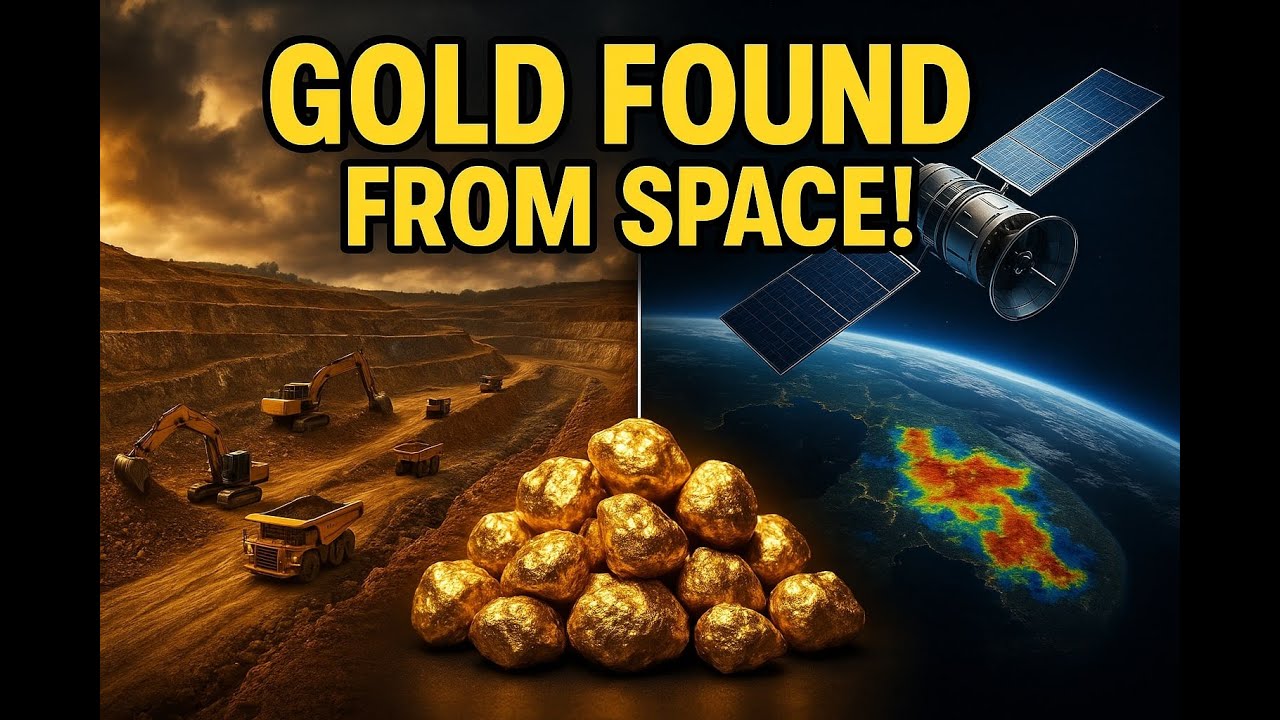
Ground-based palladium prospecting — geological mapping, geophysics, and drilling — remains essential to confirm a deposit, but satellite and AI-based screening now narrows target areas before a single hole is drilled. At Farmonaut, our satellite-based mineral detection platform analyzes multispectral and hyperspectral imagery to flag faults, alteration zones, and structural features associated with PGM-bearing intrusions — for palladium as well as gold, cobalt, lithium, and rare earths — without disturbing ground in the early screening phase.
For a worked example of how this maps to a real project, see our Satellite-Driven 3D Mineral Prospectivity Mapping visualization.

Gold-Palladium Alloy: Real Applications Beyond Jewelry
Adding palladium to gold does not improve electrical conductivity — alloying any pure metal reduces conductivity, because the added atoms scatter electrons. What palladium actually contributes is a higher melting point, greater modulus of elasticity, added strength, and increased hardness, along with a shift from yellow toward white (AZoM). Because of how phase chemistry works in this system, white gold using palladium as the whitening agent tops out at 21 carat purity — it cannot be made in higher-karat form.
Those properties, not conductivity, are why gold-palladium alloys show up across several industries:
- Jewelry: nickel-free “white gold,” avoiding the metal-allergy concerns tied to nickel-based alternatives
- Dentistry: crowns and restorations, where hardness and corrosion resistance matter more than raw conductivity
- Electrical contacts and connectors: corrosion and tarnish resistance under repeated switching, historically including spark-plug electrodes before platinum-based designs took over
- Catalysis: palladium itself (not the gold alloy) remains central to catalytic converters and hydrogen purification

Calculator: Estimate a Palladium Byproduct’s In-Situ Value
Because palladium is almost always a byproduct credit rather than the main target, grade alone doesn’t tell you much — what matters is grade times tonnage times recovery times price. Enter your own project’s numbers below (the defaults are illustrative starting points, not a real deposit).
Run your own numbers
Assumes uniform grade with no dilution, applies a single flat recovery rate, and uses gross value only — it excludes smelter/refining terms, treatment and refining charges, royalties, and payability deductions, all of which reduce what a byproduct credit is actually worth on a term sheet.
Environmental and Sourcing Considerations
Because palladium is a co-product of nickel-copper sulfide mining, its environmental footprint is inherited from that host operation: tailings management, water treatment, and smelter emissions controls apply to the whole ore body, not palladium in isolation. Practices increasingly required by regulators and buyers include closed-loop water recycling, mandatory mine-closure and land-rehabilitation planning, and traceability programs — including satellite monitoring — to support conflict-free and responsibly sourced supply chains. Screening tools like Farmonaut's satellite-based mineral detection also reduce the ground disturbance associated with early-stage exploration itself, before a mine plan even exists.

Frequently Asked Questions
- Q: What is palladium ore?
A: There's no single mineral called "palladium ore" — palladium is recovered from nickel-copper sulfide ores where it occurs partly in solid solution within pentlandite and pyrrhotite, and partly as discrete palladium and platinum minerals like vysotskite, cooperite, and sperrylite. - Q: What are palladium minerals?
A: The main discrete palladium-bearing minerals are vysotskite (PdS), cooperite and braggite ((Pt,Pd,Ni)S), and sperrylite (PtAs₂, platinum-dominant but PGM-associated). Most mined palladium, however, never forms its own mineral — it stays locked in nickel-copper sulfides. - Q: How is palladium mined?
A: It's mined as a byproduct of underground and open-pit nickel-copper sulfide mining, then separated through flotation, smelting into a matte, and hydrometallurgical refining (leaching plus solvent extraction or ion exchange) to reach 99.95%+ purity. - Q: Where is palladium mined?
A: Primarily four districts: Norilsk-Talnakh in Russia, the Bushveld Complex in South Africa, the Sudbury Basin in Canada, and the Stillwater Complex in Montana, USA. Russia and South Africa together account for the majority of global mine supply. - Q: Is Jiangxi Copper under investigation over palladium?
A: No publicly reported investigation specific to palladium exists as of August 2026. Jiangxi Copper is primarily a copper producer that recovers palladium as a minor byproduct and does not disclose standalone palladium production figures. - Q: What does "palladium prospecting" mean in Roblox?
A: It refers to an in-game mining-simulator mechanic or achievement, unrelated to real-world geology or mineral exploration — this article covers the actual mining industry. - Q: Can satellite data replace ground exploration for palladium?
A: No. Satellite-based prospecting, like Farmonaut's platform, narrows and prioritizes targets, but drilling and assay remain required to confirm grade and tonnage before any development decision.






Conclusion and Next Steps
Palladium prospecting is nickel-copper exploration with a PGM assay attached: the deposits worth chasing sit in a short list of districts — Norilsk-Talnakh, the Bushveld Complex, Sudbury, and Stillwater — and the metal that comes out of them is only as valuable as the price on the day it's sold, the recovery a metallurgical circuit can actually achieve, and the deductions in the offtake terms. With Johnson Matthey projecting the market's first meaningful surplus since 2023 for 2026 and price near $1,378.50/oz as of August 7, 2026, prospecting economics on marginal PGM ground look meaningfully different than they did at the 2024 low of $813.50/oz — worth re-running your own numbers rather than relying on a headline price.
Get a quote via our mining query form or contact us to discuss your project.
Discussion
Questions, corrections or field experience? Share them below. First-time comments are reviewed before they appear, and your email is never published.
No comments yet. Be the first to add a question or your experience.

 Vulcan International Limited
 Kidepo Associates
 GKY Mining
 Alkimy SARL
 Double A Trading
 GemSprout Metals Limited
 Qader Group
 Ileys General Trading
 SG Gold Mining LLC
 VRV Global Pte Ltd
 Omsri International FZE
 G.I.T.T.
 Jaunita Erss Ltd
 Almosi SARL
 SRK Consulting
 Berks Gold Limited
 Mwerezi Minerals Company Limited
 Mining SARL
 SenGold Invest SAS
 Sean Mining Limited
