

Montana and Arizona · Buyer guide
Patented Mining Claims for Sale: Montana & Arizona Checks
Patented mining claims for sale in Montana are private land, and no new patents have been accepted since 1994. Check title, severed minerals, access and state permit limits before you pay.
Key takeaways
- The BLM has been barred from accepting new patent applications since 1 October 1994, so supply is limited to existing patents.
- A patent gives title to locatable minerals and, in most cases, the surface; later deeds may have split them, so search the full title.
- Montana allows a small miner exclusion up to 5 acres disturbed at any one time, and Arizona needs an approved plan above 5 contiguous acres.
- USGS credits Montana with 17.75 million ounces of gold through 1965 and Arizona with 13.32 million; past output does not show what remains.
- Current owners can be Superfund liable parties, so get environmental advice on old mine ground before closing.
In this article
- What a patented mining claim gives you
- Patented mining claims for sale in Montana: where they sit
- Montana permits on patented ground
- Arizona patented mining claims for sale
- Montana vs Arizona patented claims compared
- Patented gold mine for sale: how to read the asking price
- How to buy a patented mining claim: 7 checks
- Holding costs of patented vs unpatented claims
- Who should and should not buy
- Frequently asked questions
Patented mining claims for sale in Montana are private land with a federal title behind them, usually sold by brokers, landowners and estates rather than through any state list. Congress has blocked new patents since 1994, so the supply is limited to claims already patented. Before you pay, confirm four things: the chain of title, which minerals came with it, legal access, and what the state will require before you dig.
This guide covers Montana first and Arizona second. It gives the checks to run on a listing, the permit limits in each state, the old gold districts where these parcels sit, and a calculator for your all-in cost. Listing history does not tell you what is in the ground, so nothing here predicts a find.
What a patented mining claim gives you
A patented claim is one where the federal government has passed title to the owner, making it private land. The BLM explains that a patent gives exclusive title to the locatable minerals and, in most cases, the surface. Locatable minerals are the ones claimed under the Mining Law of 1872, including most metals. Note the words “in most cases”: some patents, and many later deeds, split the surface from the minerals.
The owner pays no BLM maintenance fee on patented ground, because it is no longer federal land. County property tax takes the place of that fee. Our guide to patented and unpatented rights, fees and tax sets out the differences in more detail, and the general guide to buying patented claims covers pricing and comparable sales across the West.
Why the supply is fixed
The BLM has been barred by Congress from accepting new patent applications since 1 October 1994, and the bar has been renewed through yearly funding laws. The fiscal 2026 Interior funding law, section 404 repeats it, with an exception only for applications filed by the 1994 deadline. So you cannot buy an unpatented claim and plan to upgrade it. The Congressional Research Service counted about 3.4 million acres patented from 1867 through 2006 across the country.
Unpatented mining claims for sale are a different product
Many sites that list claims mix both types. An unpatented claim is a right to the minerals on federal land, and it needs yearly filing. The BLM fee schedule updated in February 2026 lists the charges, and it warns that fees may change. Missing the 1 September deadline can forfeit the claim. If a listing shows a BLM serial number, it is unpatented, and you are not buying land. Older patented claim market notes and our page on buying claims in seven steps cover other listing types.
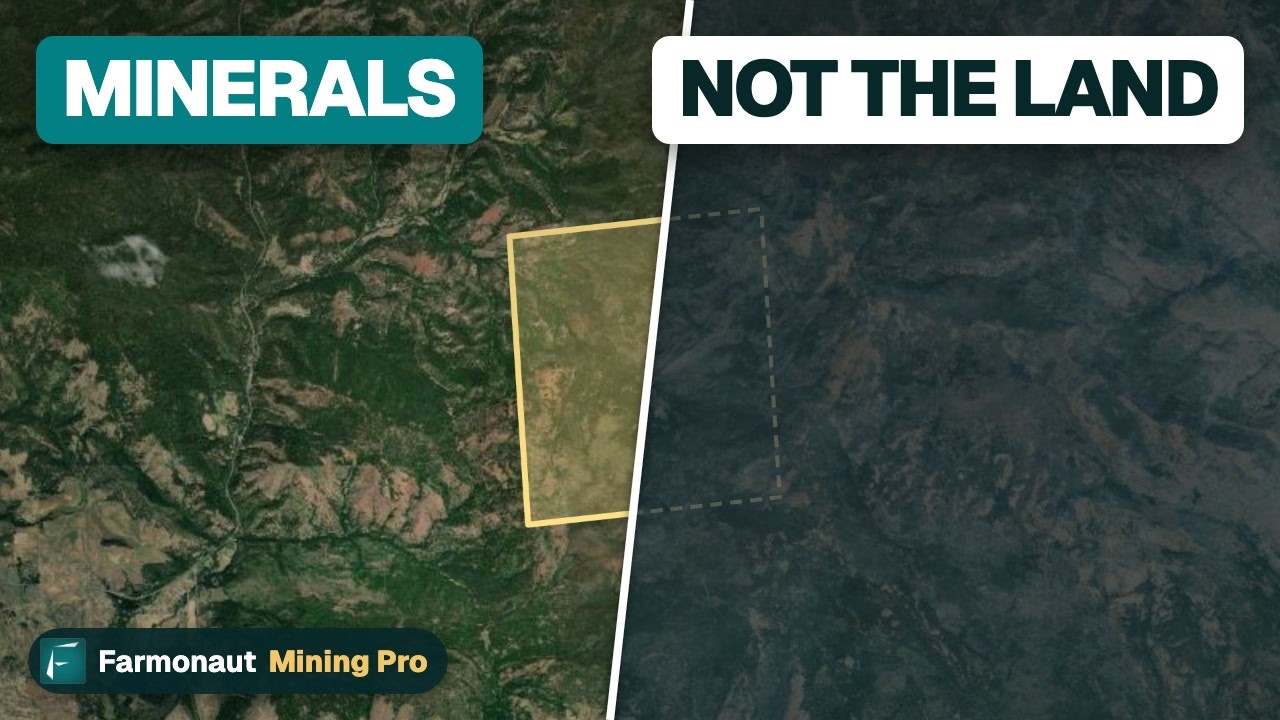
▶ Why an unpatented gold claim is not ownership of the land · 3:19
Patented mining claims for sale in Montana: where they sit
Montana’s patents cluster around its old gold and silver camps. USGS Professional Paper 610 credits the state with 17,752,000 ounces of lode and placer gold from 1862 through 1965, from 54 districts that each passed 10,000 ounces. It also warns that almost two-thirds came before 1900, when records were poor, so much of the total is estimated.
Chart
Recorded gold output in selected districts
ounces, cumulative through 1959; Confederate Gulch is an undated estimate; Mohave is a county total
- Butte, Silver Bow County. About 2,725,000 ounces through 1959. Much of the district is tied up in the active copper operation and past cleanup work, so check what a parcel adjoins.
- Virginia City and Alder Gulch, Madison County. At least 2,617,000 ounces through 1959, and Montana’s most productive placers. A placer is loose gravel holding gold, and these gravels were dredged from 1899 to 1922, then again in stages until 1948. Dredged ground may have little left.
- Helena and Marysville, Lewis and Clark County. Each passed 1 million ounces, and the county made between 4 and 5 million ounces through 1959.
- Confederate Gulch, Broadwater County. About 580,550 ounces, mostly from rich placers in the first five years of mining.
Exploration is still active around some of these camps. Montana DEQ’s hard rock mining page lists a pending exploration application about 6 miles south of Virginia City, with up to 16 drill holes, and a proposed 14-acre placer mine on private land in Washington Gulch, Powell County. Both show what the state expects from a real project. Neither says anything about a nearby parcel. The page on Montana mineral rights explains severed ownership and how to search it.
Montana gold claims for sale: lode or placer?
A lode claim covers a vein or other deposit in hard rock, and the classic full-size claim is 1,500 by 600 feet, about 20.66 acres. A placer claim covers loose deposits, usually in units of 20 acres. Patents are often long, narrow strips that overlap at angles, because they followed veins. A listing of “120 acres” may be several separated pieces, so ask for the mineral survey plat and map it before you visit.
Montana permits on patented ground
Private title does not remove state mining law. Montana DEQ runs three separate routes under the Metal Mine Reclamation Act:
| Activity | Montana route | Key limits |
|---|---|---|
| Drilling, trenching, sampling that disturbs ground | Exploration License | Cannot be used for mining |
| Small mine | Small Miner Exclusion Statement | Not more than 5 acres disturbed at any one time; US$100 yearly fee |
| Larger mine | Operating Permit | Required above 5 acres; includes environmental review |
Read the small miner statute, MCA 82-4-305, before you plan around the exclusion. Four points matter to a buyer:
- Placer and dredge operators must post a reclamation bond of up to US$10,000 per operation.
- Cyanide or other leaching reagents need an Operating Permit for that part of the work.
- The exclusion does not apply to an area that was reclaimed or cleaned up by a public agency or with public funds. On old mine ground, this can decide the whole plan.
- Mercury may be used only in a contained facility that stops it escaping. Our advice is to avoid it entirely.
Production tax is separate. Montana’s metal mines license tax, MCA 15-37-103, exempts the first US$250,000 of gross value in a calendar year. Above that it charges 1.81% on concentrate shipped to a smelter, and 1.6% on gold, silver or platinum-group doré or bullion from your own plant.
Water needs its own check. Montana DNRC says the state owns its waters and a recorded right is needed for most uses, and some basins are closed to certain new appropriations. A creek through the parcel gives you no right to use it. Ask whether a recorded right transfers with the deed, then look it up in the DNRC query system.
Arizona patented mining claims for sale
Arizona has a similar legal base and very different ground. USGS records about 13,321,000 ounces of gold from 1860 through 1965, from 42 districts in 10 counties that each passed 10,000 ounces. Some of that came from copper districts such as Bisbee, at about 2,193,000 ounces, so the state total says little about a small gold parcel.
- Yavapai County, around Prescott. The state’s top gold county through 1959, including the Bradshaw Mountains and the Weaver-Rich Hill and Lynx Creek placers.
- Mohave County, around Kingman. About 2,461,000 ounces through 1959, more than half from lode mines in the San Francisco district, which includes Oatman.
- Vulture district, Maricopa County. About 366,000 ounces through 1959, almost all from lodes.
Arizona rules that affect a buyer
Under A.R.S. 27-921, a new exploration operation or mining unit may not create a surface disturbance of more than five contiguous acres until the State Mine Inspector approves a reclamation plan and financial assurance, unless the chapter otherwise authorizes it. The BLM’s Arizona Mining Permitting Guide directly rejects the idea that private land needs no permits; only surface-use rules for federal land fall away. Air, water quality and other permits can still apply, and the guide lists them by agency.
Arizona also levies a severance tax of 2.5% of the net severance base on mining. Water is often the limit on a desert parcel. Ask the Arizona Department of Water Resources about wells on the property and any local groundwater rules before you assume you can process ore on site.

▶ The environmental impacts of mining, and why reclamation rules exist · 2:31
Montana vs Arizona patented claims compared
| Check | Montana | Arizona |
|---|---|---|
| Recorded gold output | 17.75 million oz, 1862-1965 (USGS) | 13.32 million oz, 1860-1965 (USGS) |
| Districts above 10,000 oz | 54 | 42 |
| Small-scale threshold | 5 acres disturbed at any one time | 5 contiguous acres before plan and assurance |
| State production tax | 0% to US$250,000 gross, then 1.6% or 1.81% | 2.5% of net severance base |
| Field season | Snow can limit high-elevation access and work | Longer season; summer heat and scarce water |
| Best for | Buyers who want placer or vein ground with surface water nearby, and who can secure a water right | Buyers who want year-round access and accept water limits |
Chart
Gold output by selected state
million ounces, through 1965
Patented gold mine for sale: how to read the asking price
Asking prices are not sale prices, and they often bundle land value, cabins, timber, old equipment and hope. Price a parcel in three layers. Start with what similar non-mining land in that county sells for. Add a sum for proven extras, such as a road, power, a well or a recorded water right. Pay for minerals only where there is evidence: assays from a named lab, drill logs, old production records or a qualified geologist’s report. Old production proves a past mine. It does not prove what remains. Gold was US$4,103.20 per troy ounce at 12:42 p.m. ET on 5 November 2026 (Kitco), and a high price is often used to justify a high asking price, but it adds nothing to the ounces in the ground.
For comparable sales, ask a local title company or land broker for recorded sales of patented ground in the same district, and compare like with like. Remember that a mine with a working permit and a plant is a different asset to raw claims. Our notes on how mines are valued and sold show how sellers build their numbers.
Red flags in a listing
- A reserve or ounce figure with no named geologist, report date or resource code.
- Unnamed “historic assays”, or samples taken only by the seller.
- “Patented” with no mineral survey number or patent number.
- A quitclaim deed only, with no offer of title insurance.
- Access described as “traditional” across a neighbor’s land or a forest road.
- Pressure to wire a deposit before you have seen the title work.
Calculator
What is the all-in cost of this patented parcel?
Enter the listing’s numbers and your own quotes.
- Purchase price (US$): $80,000
- All-in cost per acre (US$): $2,750
- Gold sales needed to equal the cost, before mining costs: 28 oz
Example values only, not a benchmark or a valuation of any parcel. All money in US$. Gold price is an input: example, use today’s price. The gold line is a cost comparison, not an estimate of metal on the property.
How to buy a patented mining claim: 7 checks
- Find the patent. Get the mineral survey and patent number from the seller, then look them up in the BLM General Land Office records.
- Run the title forward. Have a title company trace every deed from the patent to the seller at the county clerk’s office. Look for mineral reservations, royalties, liens, leases and tax sales.
- Map the boundary. In Montana, the state cadastral map shows parcels and owners. Commission a survey if corners are unclear.
- Prove legal access. Ask for a recorded easement or a public road. Inholdings inside national forest may need agency authorization for motorized access or heavy equipment.
- Screen for contamination and hazards. Under Superfund, current owners and operators are among the classes of liable parties. Ask an environmental attorney about buyer protections and a Phase I assessment before you close. Old shafts, adits and tailings can also create safety and liability costs.
- Test the geology. Hire a qualified geologist to visit, map and sample, with samples sent to an independent lab. Satellite screening can be a low-disturbance first step, and Farmonaut’s satellite mineral detection reports show exploration targets, which come ahead of any resource estimate and do not guarantee a find.
- Talk to regulators, then write the contract. Call Montana DEQ or the Arizona State Mine Inspector with your plan. Make the purchase conditional on title, access and sampling results, and have a mining attorney draft or review it.
Infographic
Order of checks before closing
- 1TitleTrace the patent and every deed.
- 2AccessConfirm a recorded route.
- 3HazardsAssess old workings and waste.
- 4GeologySample with an independent lab.
- 5PermitsTalk to the state regulator.
Holding costs of patented vs unpatented claims
Patented ground swaps a per-claim federal fee for county property tax, insurance and any upkeep of old workings. The chart in this section shows how the federal fee adds up on unpatented claims at the US$200 per claim annual maintenance fee, held flat for illustration. The BLM can adjust it, and small claimants may qualify for a waiver with assessment work instead. Ask the county treasurer for the actual tax bill on a patented parcel, and check it for arrears, because unpaid tax can lead to a tax sale.
Chart
BLM maintenance fees on unpatented claims
cumulative US$ at US$200 per claim per year, flat for illustration
Who should and should not buy
A patented claim can suit a buyer who values owning the land itself, such as a small operator planning a site under the 5-acre limits, a company consolidating a district, or a recreational owner who would be content with the land if the minerals disappoint. It suits a buyer poorly if the plan depends on a quick gold payback. Early-stage ground carries a high chance of no economic deposit. If you want to compare legal questions about using the land, see whether you can live or build on a patented claim. You can also contact our team or ask for a quote on mapping a specific parcel.
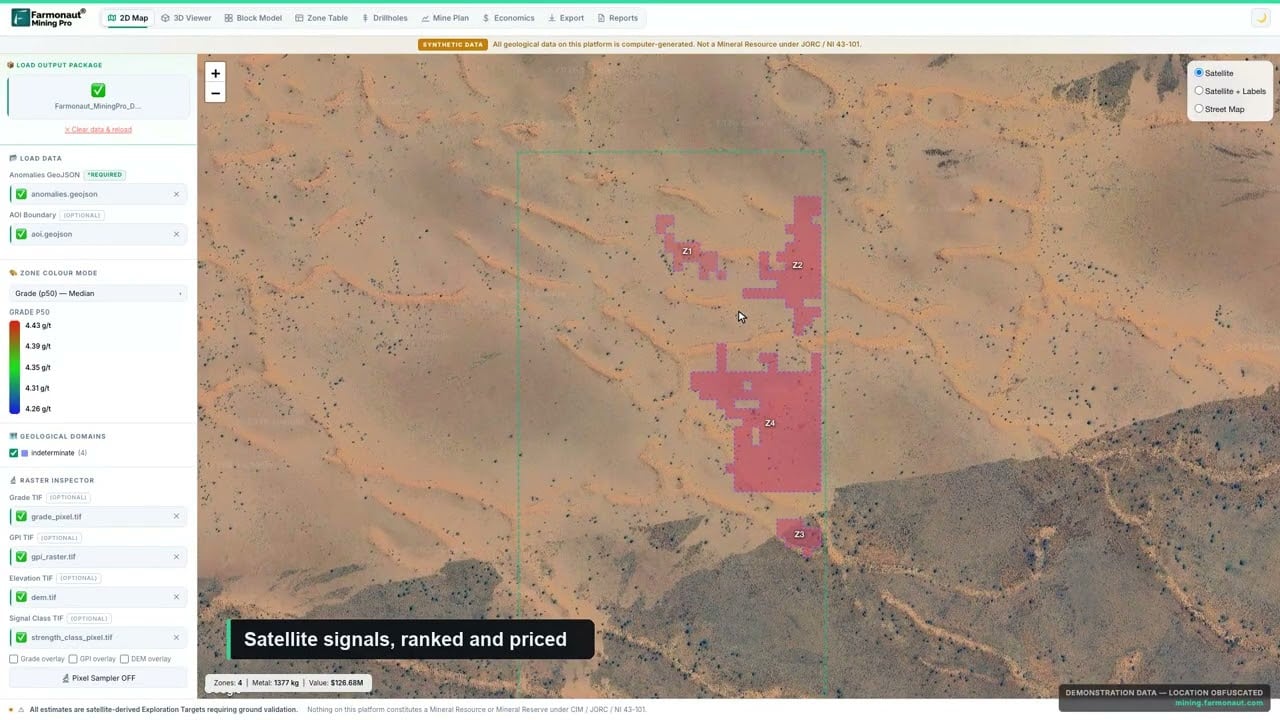
▶ What a satellite mining platform shows for a licence boundary · 4:56
Frequently asked questions
Where can I find patented mining claims for sale in Montana?
Look at rural land brokers, mining classifieds, county tax-sale notices and estate sales around districts such as Butte, Helena, Marysville and Virginia City. Treat every listing as a lead and check its patent number yourself.
Are there patented mining claims for sale in Arizona?
Yes, parcels do come up, often in Yavapai and Mohave Counties. Check for severed minerals, water and legal access, then read the 5-acre reclamation rule in A.R.S. 27-921 before you plan any work.
Can the government take back a patented claim?
A patent makes the land private, so it no longer depends on federal claim filings. It remains subject to normal property law, including county taxes, liens and state regulation.
Can you still patent a mining claim?
Not in practice. New applications have been barred since 1 October 1994, apart from those filed by that deadline that meet the exception in the funding laws.
Do patented claims need annual BLM fees or assessment work?
No. Those duties apply to unpatented claims on federal land. A patented claim is taxed locally like other private land.
Does buying a patented gold mine include all the minerals?
Not always. An earlier owner may have sold or reserved minerals or a royalty. Only a full title search from the patent to today will show it.
Do I need a permit to mine my own patented claim in Montana?
Usually, yes. Exploration that disturbs ground needs a license, and mining needs a Small Miner Exclusion Statement or an Operating Permit, even on private land.
Can I lease or subdivide a patented claim?
Leasing is a private contract and is common, often with a royalty. A royalty is a share of production or revenue paid to the owner. Subdivision depends on county rules, so ask the county planning office.
Am I liable for old mine waste on land I buy?
You may be. EPA lists current owners and operators among Superfund liable parties. Get legal advice and an environmental assessment before closing.
How can I check a claim’s mineral potential before buying?
Review old reports, sample with a geologist and use an independent lab. Satellite mapping can show alteration and structures across a parcel without ground disturbance, but only sampling and drilling can test for a deposit.
This page is for information only. It is not legal or investment advice. Confirm the rules with the regulator. Prospect only with permission and the right license, and never use mercury.
Farmonaut mining
Screen a parcel before you commit
Get a quote for satellite mapping of a patented parcel or claim block, as one input alongside title work and sampling.

Mining Pro sample view, synthetic data
Keep reading
Sources
- BLM, Mining Claims and Sites on Federal Lands: blm.gov
- Public Law 119-74, section 404 (fiscal 2026): congress.gov
- Congressional Research Service, Mining on Federal Lands (RL33908): everycrsreport.com
- BLM, mining claim fees, updated 9 February 2026: blm.gov
- USGS, Professional Paper 610, Principal Gold-Producing Districts of the United States (1968): pubs.usgs.gov
- Montana DEQ, Hard Rock Mining, accessed 5 November 2026: deq.mt.gov
- Montana Code Annotated 2025, 82-4-305: archive.legmt.gov
- Montana Code Annotated 2025, 15-37-103: archive.legmt.gov
- Montana DNRC, Water Rights: dnrc.mt.gov
- Arizona Revised Statutes 27-921: azleg.gov
- Arizona Revised Statutes 42-5202: azleg.gov
- BLM, Arizona Mining Permitting Guide: blm.gov
- BLM, General Land Office Records: glorecords.blm.gov
- Montana State Library, Montana Cadastral: svc.mt.gov
- US EPA, Superfund Liability: epa.gov
- Kitco, gold price chart, 5 November 2026: kitco.com
Discussion
Questions, corrections or field experience? Share them below. First-time comments are reviewed before they appear, and your email is never published.
No comments yet. Be the first to add a question or your experience.

 Sania Corporation
 Sean Mining Limited
 NTS Group (Pty) Ltd
 Mine4Africa
 Lithspo Minerals Limited
 Tintina Mining Group
 Dalgety Minerals Pty Ltd
 Vortex Minerals Pty Ltd
 Faith At Work (Pty) Ltd
 Geotech Mining Solutions plc
 Vulcan International Limited
 Kidepo Associates
 GKY Mining
 Alkimy SARL
 Double A Trading
 GemSprout Metals Limited
 Qader Group
 Ileys General Trading
 SG Gold Mining LLC
 VRV Global Pte Ltd
 Omsri International FZE
 G.I.T.T.
 Jaunita Erss Ltd
 SRK Consulting

 Client · Tanzania · Gold










