

Colorado mine tours · Visitor guide
Phoenix Gold Mine Colorado: Tours, Prices and Real Gold
The Phoenix Gold Mine near Idaho Springs sells a level underground tour with gold panning from US$28 per adult (operator, read 16 Oct 2026). US Bureau of Mines records, reported by the USGS, show 5,558 oz of gold shipped from its vein.
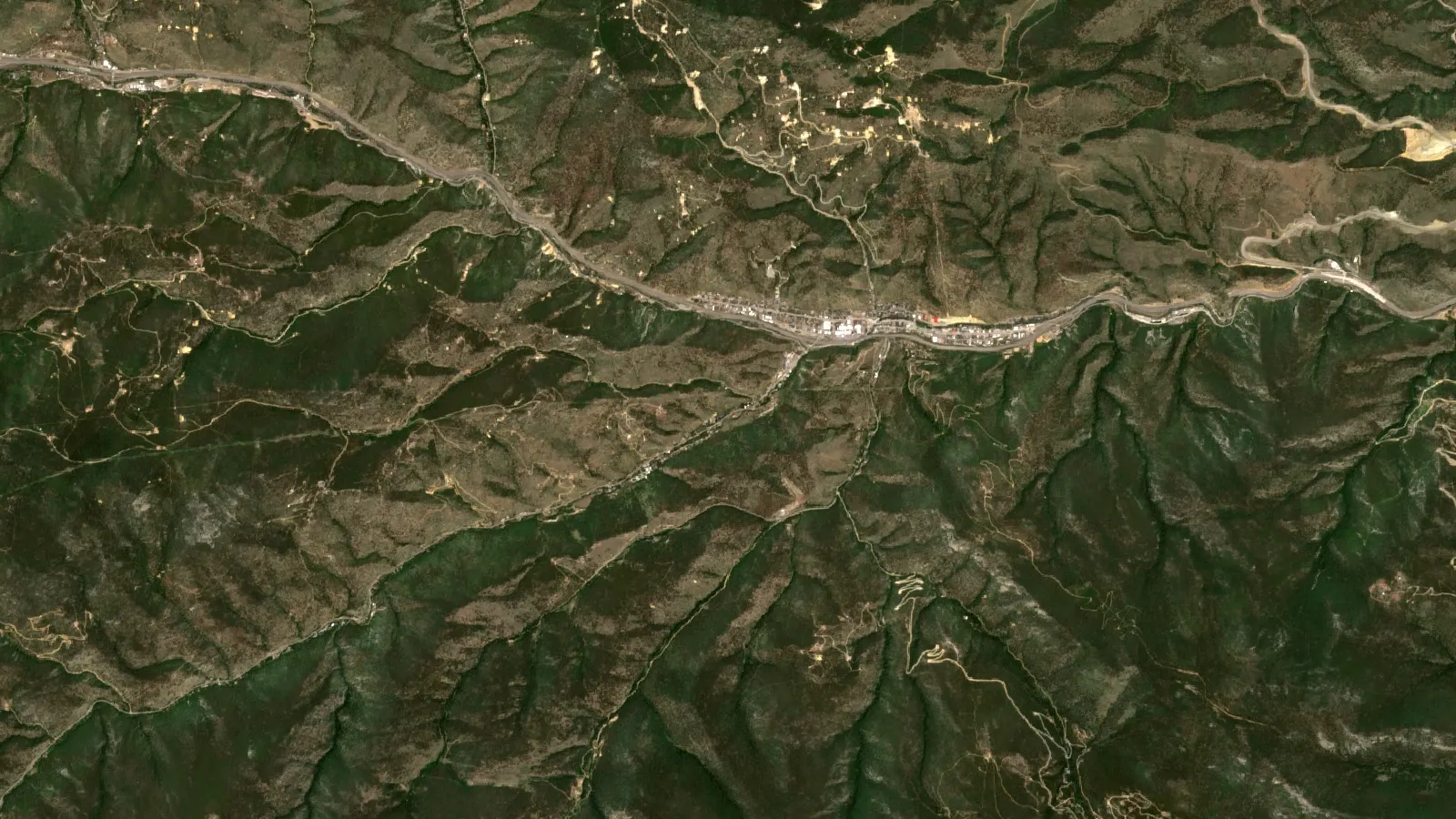
Key takeaways
- Tour prices read on the operator’s page: US$28 adult and US$22 child for the underground tour with panning; open daily 10:00 AM to 4:30 PM.
- The USGS reports 30,623 tons of ore shipped in 1911, 1930 and 1934-42, yielding 5,558.4 oz of gold, about 0.18 oz per ton (roughly 6.2 g/t).
- Colorado’s big producer is Cripple Creek and Victor: SSR Mining reports 152,557 oz of gold in full-year 2025 against a 2026 guide of 125,000-150,000 oz.
- Panning with only a hand pan is allowed on Clear Creek County open space and U.S. Forest Service land; private land needs the owner’s consent.
In this article
- Phoenix Gold Mine tour options and ticket prices
- What the Phoenix tour is like
- What gold did the Phoenix vein produce?
- History of the Phoenix mine and the Idaho Springs district
- Is the Phoenix a working gold mine?
- Where Colorado sits in United States gold output
- Gold mines you can visit in Colorado compared
- Can you pan for gold near Idaho Springs?
- What is a small vein worth? A quick calculator
- Reading a gold vein from space
- Frequently asked questions
The Phoenix Gold Mine is a family-run tourist mine on Trail Creek Road near Idaho Springs in Clear Creek County, Colorado. On the operator’s price page (read 16 October 2026) the underground tour with gold panning costs US$28 for an adult and US$22 for a child aged 3 to 16, and the mine is open seven days a week from 10:00 AM to 4:30 PM. It is not where Colorado’s gold comes from today. This guide gives the ticket prices, what you walk through, what the U.S. Geological Survey recorded in the mine’s own vein, and how it compares with other Colorado gold mines you can visit.
Phoenix Gold Mine tour options and ticket prices
The operator sells three activities. Each ticket includes gold panning, and children under 3 go in at no charge. These are the prices on the operator’s page when we read it, so check the page again before you drive up, because prices and seasonal tours change.
Chart
Phoenix ticket prices: child vs adult
US$ per person, all tours include panning
| Activity | Adult (17+) | Child (3-16) | Season and notes |
|---|---|---|---|
| Phoenix underground gold mine tour | US$28 | US$22 | Open all year; one level, no steps |
| Centurion train ride and dark mine tour | US$32 | US$28 | Seasonal; short hike plus a 400-foot walk underground |
| Creek side gold panning in Trail Creek | US$18 | US$16 | Call ahead about creek conditions in spring and fall |
The operator lists the address as 800 Trail Creek Rd., Idaho Springs, CO 80452, takes walk-ins, and offers group rates for parties of 15 or more. It also states that activities depend on the weather and that the family has run tours since 1988 (phoenixgoldmine.com). The Colorado Division of Reclamation, Mining and Safety lists the Phoenix Mine among the state’s tourist mines, with a phone number for the operator (DRMS tourist mines list).
What the Phoenix tour is like
Clear Creek County’s visitor guide describes a guided underground tour of a family-owned mine that shows how miners followed gold veins, with historic equipment and geology on display and gold panning included. It puts the visit at about 45 minutes to an hour, with roughly 300 feet of passage on one level, an underground temperature near 45 degrees Fahrenheit, and mine-cart rails crossing the walking surface (Visit Clear Creek, mine tours). The county page tells visitors to contact the operator about mobility aids or strollers before they book.
Practical points that follow from those facts:
- Bring a warm layer even in summer. A mine stays cool all year.
- Wear closed shoes. The rails and wet floors are uneven.
- Expect to be outside for the panning part, so the weather matters.
- The Phoenix tour has no steps, which the operator states on its price page. The Centurion tour adds a hike of about 5 to 10 minutes.
- If you want the longer train-and-dark-mine experience, check that it is running, because the operator marks it seasonal.

▶ Follows gold from rock to ring: finding, drilling, crushing, dissolving and refining. · 5:27
What gold did the Phoenix vein produce?
This is the part most visitor pages skip. The U.S. Geological Survey mapped the Idaho Springs district in the 1960s and described the Phoenix mine in a report on its mines and prospects. A few terms first. An adit is a horizontal tunnel from the surface. A winze is a shaft sunk downward from inside a mine. A vein is a crack in the rock filled with minerals. Stoping is the removal of ore from the vein, leaving open chambers.
Chart
Gold grade in the Phoenix vein
g/t, converted from oz per short ton (x 34.286)
The USGS report says the portal sits just above the Trail Creek road, about three-quarters of a mile southwest of where Trail Creek meets Clear Creek. The mine had a 350-foot adit and a winze connecting two lower levels, with extensive stoping between the second level and the surface. The Phoenix vein is made of two or more roughly parallel veins, traced about 2,500 feet to the east, and ranges from 8 to 80 inches thick (USGS Open-File Report 66-87, Idaho Springs district). The main ore minerals are pyrite (iron sulfide), chalcopyrite (copper iron sulfide) and tennantite (copper arsenic sulfide), with quartz as the dominant waste mineral. Gold occurs in both the early pyrite ore and the later base-metal sulfide ore.
The production record
The U.S. Bureau of Mines recorded shipments from the mine in 1911, 1930 and 1934 to 1942. In total, 30,623 tons of ore were shipped, which yielded 5,558.4 ounces of gold, 10,037 ounces of silver, 9,401 pounds of copper, 1,856 pounds of lead and 1,655 pounds of zinc (USGS, same report). Dividing gold by ore gives about 0.18 troy ounce per ton, or roughly 6.2 grams per tonne. Grade in grams per tonne (g/t) is the metal weight per tonne of rock, the unit used for most gold deposits. At the 2025 average price estimated by the USGS, about US$3,300 per troy ounce, 5,558 ounces would be worth around US$18 million. That is a simple multiplication, not what the owners received at the time.
The same report lists assays of three selected ore samples: copper-rich sulfide ore at 1.34 ounces of gold per ton, sheared quartz and pyrite at 1.36, and unsheared quartz and pyrite at 0.46. Selected samples are the best-looking material, so they run far above the 0.18 shipped average. The gap is a good reminder that a high-grade assay from a hand sample says little about what a whole mine yields.
History of the Phoenix mine and the Idaho Springs district
Colorado’s first documented gold discovery came in the summer of 1858, when prospectors found placer gold (gold carried in stream gravel) near the confluence of Cherry Creek and the South Platte River in what is now Denver, which set off the first Colorado gold rush (Colorado Geological Survey, Metals). Gold was found in Idaho Springs in 1859, and the Idaho Springs and neighboring districts shipped ores worth about US$200 million through 1959, with the Idaho Springs district alone at about US$65 million from 1860 to 1959. Gold made up about 60 percent of the value of that ore (USGS report above). Those are historic dollar values at the prices of the day, not today’s money.
For the Phoenix itself, the sources we opened give only parts of the story:
- A mine-tour guide dates the first gold discovery on the Phoenix site to 1871, but that page is undated and carries fees marked 2007, so treat it as a secondary account (showcaves.com).
- The Bureau of Mines shipment record covers 1911, 1930 and 1934 to 1942.
- The operator says the family has offered tours since 1988.
The Phoenix has offered tours since 1988, according to the operator.
Is the Phoenix a working gold mine?
The operator calls it a real gold mine and sells underground tours. It does not publish production figures. Visit Clear Creek calls another Clear Creek County tour mine, the Capital Prize Gold Mine in Georgetown, “still an active gold mine”, but gives no production data for that either. The honest answer is that these small mines now earn their living from visitors rather than from a mill.
Colorado’s large-scale gold output comes from one place. The Colorado Geological Survey names the Cripple Creek and Victor open pit in Teller County as the state’s largest gold producer. SSR Mining bought it from Newmont on 28 February 2025. SSR reports that the mine produced 152,557 ounces of gold in full-year 2025, counting 28,000 ounces produced under the previous owner in the first two months, and it guides to 125,000 to 150,000 ounces for 2026, with 50 to 55 percent of that in the second half (SSR Mining results release, 17 February 2026). Its reserves are 2.7 million ounces of gold at an average 0.38 g/t as of 31 December 2025 (SSR Mining, CC&V page).
That grade is the real contrast. Cripple Creek and Victor mines huge volumes of low-grade rock with heap leaching, where crushed ore is stacked and a weak chemical solution dissolves the gold. The Phoenix shipped small tonnages of high-grade vein ore. For how modern pits manage land and waste, see our guides to backfill mining and lower-impact mining techniques.

▶ A plain claymation on the seven environmental impacts of mining. · 2:31
Where Colorado sits in United States gold output
For context, the USGS estimates United States mine production at 160 tonnes of gold in 2025, down from 187 tonnes in 2021. Nevada made about 64 percent of the total and Alaska about 22 percent, and about 7 percent came as a byproduct of base-metal ores, chiefly copper. Gold was produced at more than 40 lode mines in 12 states (USGS Mineral Commodity Summaries, gold). Colorado is not one of the two leading states. The Colorado Geological Survey reports that the state was third in the nation in 2018, with 360,000 ounces from Cripple Creek and Victor alone, so its rank has moved with that one mine.
Chart
US gold mine production, 2021 to 2025
Tonnes of gold per year (2025 is an estimate)
Chart
Where US mined gold comes from
Share of 2025 estimated US mine output, %
Gold mines you can visit in Colorado compared
If you are planning a trip, the Phoenix is one of many tour mines. The state lists its tourist mines and museums by region. We compared the gold mines whose details we could read on an operator, county or state page. Prices are given only where the operator publishes one we could read.
| Mine | Where | What the sources say | Best for |
|---|---|---|---|
| Phoenix Gold Mine | Idaho Springs | One level, no steps; US$28 adult with panning; open all year | Easy access and a short tour |
| Argo Gold Mine and Mill | Idaho Springs | Mill about 110 feet tall on the National Register of Historic Places; about one hour; the county page notes multiple staircases; panning included | Seeing how ore was processed |
| Capital Prize Gold Mine | Georgetown | More than 1,000 feet into the mountain; described as still active; reservations required; no wheelchairs or strollers | A longer walk underground |
| Lebanon Mine and Georgetown Loop Railroad | Georgetown | A silver mine, not gold; seasonal; children must be at least five | A train ride with a mine visit |
| Country Boy Mine | Breckenridge | From US$39.95 for a one-hour tour; workings since 1887; gold panning alone from US$15 | Families who want more than one activity |
Sources: the Clear Creek County tourism page, the Argo Mill and Tunnel site, the Country Boy Mine site and the Phoenix operator pages above. The state list also names the Mollie Kathleen Gold Mine in Cripple Creek, the Bachelor Syracuse Mine in Ouray and the Old Hundred Gold Mine in Silverton, which we did not compare because their current prices were not readable.
How we chose
We included a mine only if it is on the Colorado Division of Reclamation, Mining and Safety tourist mine list and we could read its operator or county description in October 2026. That leaves out some well-known names, so this is not a ranking. If you want one place, choose by access: the Phoenix suits a short, level visit, and the Argo suits a longer look at the mill.
Can you pan for gold near Idaho Springs?
Yes, with limits. Clear Creek County says gold panning means a person with a pan, with no sluice box and no suction dredge. It is allowed on county open space and on U.S. Forest Service land, and on private property only with the owner’s consent. If prospecting goes beyond a pan, the Colorado Division of Reclamation, Mining and Safety and the Forest Service may require a Notice of Intent to Prospect, and you should check whether someone already holds an unpatented claim in the area (Clear Creek County, Mining). Never use mercury to collect gold, and get permission before you step onto any land that is not clearly public.
A paid panning session at the Phoenix is the simplest legal option, because the operator manages the creek access. The operator asks you to call about creek conditions in spring and fall. The operator says you keep anything you find in the creek side session.
What is a small vein worth? A quick calculator
The Phoenix record shows the idea: tons of ore times grade equals ounces of gold. The calculator below lets you test any small vein using your own numbers. If you are comparing a claim or a small lease, the same sum shows quickly whether a high-grade vein can matter.
Calculator
What is the gold in a small vein worth?
Enter your own tons of ore, grade, recovery and gold price.
- Grade in grams per tonne: 6.2 g/t
- Contained gold before recovery: 180 oz
- Gross value at your price: $648,000
Example values only, not a forecast. The default grade (0.18 oz per short ton) is the Phoenix shipped average from USGS Open-File Report 66-87; 1 troy ounce per short ton equals 34.286 g/t. Price is an input: example, use today’s price. Costs, royalties and processing charges are left out, so the result is gross metal value, not profit.
Reading a gold vein from space
Satellites cannot see gold. Farmonaut’s mineral detection work maps the rock around it, such as iron-stained surfaces, clay minerals and long straight fractures, and reports the result as exploration targets ahead of any resource estimate. For a district like Idaho Springs, where veins follow known fault and fracture trends, that kind of map helps decide where to send a geologist first. It does not replace sampling or drilling. Our Colorado gold mining guide covers claim rules and permits in more detail.
▶ Explains why satellites map the rock around gold rather than the gold itself. · 2:00
Frequently asked questions
Where is the Phoenix Gold Mine located?
It is at 800 Trail Creek Rd., Idaho Springs, Colorado 80452, in Clear Creek County. The USGS places the portal on the northwest side of the Trail Creek road, about three-quarters of a mile southwest of the Trail Creek and Clear Creek junction.
How much does the Phoenix Gold Mine tour cost?
The operator’s price page lists the underground tour at US$28 for adults (17 and over) and US$22 for children aged 3 to 16, with babies at no charge. Creek side panning is US$18 and US$16, and the train and dark mine tour is US$32 and US$28. We read these on 16 October 2026.
What are the opening hours?
The operator states it is open seven days a week from 10:00 AM to 4:30 PM, and walk-ins are accepted.
Is gold panning included in the Phoenix tour?
Yes. The operator’s price page states that all its tours include gold panning, and it sells creek side panning as a separate activity.
Is the Phoenix Gold Mine wheelchair accessible?
The operator says the Phoenix tour is all on one level with no steps. Clear Creek County adds that mine-cart rails cross the floor and tells visitors to contact the operator about mobility aids or strollers before arriving.
How long does the tour take?
Clear Creek County gives about 45 minutes to an hour for the Phoenix tour, over about 300 feet of passage.
How much gold has the Phoenix mine produced?
The U.S. Bureau of Mines recorded 5,558.4 ounces of gold from 30,623 tons of ore shipped in 1911, 1930 and 1934 to 1942, as reported by the USGS.
What is the biggest gold mine in Colorado?
The Colorado Geological Survey names the Cripple Creek and Victor open pit in Teller County as the state’s largest gold producer. SSR Mining reported 152,557 ounces from it in full-year 2025.
Can I keep the gold I find?
For the creek side panning session in Trail Creek, the operator’s price page says you keep anything you find. Ask the staff how this works for the panning that comes with a mine tour. On public land, the county rules above limit you to a hand pan.
Can I pan for gold in Clear Creek without a tour?
Clear Creek County says panning with a pan alone is allowed on county open space and U.S. Forest Service land, and on private land with the owner’s consent. Sluice boxes and suction dredges are outside that definition.
What are other gold mine tours near Idaho Springs?
The state tourist mine list names the Argo Gold Mine and Mill and the Edgar Mine in Idaho Springs, and the Capital Prize Gold Mine in Georgetown, among others.
This page is for information only. It is not investment advice or legal advice. Prices and hours change, so confirm them with the operator. Get permission before prospecting, follow the rules of the land manager, and never use mercury.
Farmonaut mining
Map your own mining site from space
Mining consultants can request a satellite map of a site as an exploration target ahead of any resource estimate.

Mining Pro sample view, synthetic data
Keep reading
Sources
- Phoenix Gold Mine, tours and prices: phoenixgoldmine.com
- Phoenix Gold Mine, home page: phoenixgoldmine.com
- Colorado DRMS, tourist mines and museums: drms.colorado.gov
- Visit Clear Creek, mine tours: visitclearcreek.com
- USGS Open-File Report 66-87, Idaho Springs district: pubs.usgs.gov
- Colorado Geological Survey, Metals: coloradogeologicalsurvey.org
- SSR Mining, full-year 2025 results (17 Feb 2026): ssrmining.com
- SSR Mining, Cripple Creek and Victor: ssrmining.com
- USGS, Mineral Commodity Summaries 2026, gold: pubs.usgs.gov
- Clear Creek County, Mining: clearcreekcounty.us
- Argo Mill and Tunnel: argomilltour.com
- Country Boy Mine: countryboymine.com
- showcaves.com, Phoenix Mine: showcaves.com
Discussion
Questions, corrections or field experience? Share them below. First-time comments are reviewed before they appear, and your email is never published.
No comments yet. Be the first to add a question or your experience.

 G.I.T.T.
 Jaunita Erss Ltd
 Almosi SARL
 SRK Consulting
 Berks Gold Limited
 Mwerezi Minerals Company Limited
 Mining SARL
 SenGold Invest SAS
 Sean Mining Limited
 NTS Group (Pty) Ltd
 Mine4Africa
 Lithspo Minerals Limited
 Tintina Mining Group
 Dalgety Minerals Pty Ltd
 Vortex Minerals Pty Ltd

 Licence holder · Nigeria · Gold + lithium










