

Mining company · Operations guide
Sibanye-Stillwater Mines by Country: Full List
Sibanye-Stillwater runs PGM mines in South Africa, Zimbabwe and Montana, gold mines in South Africa, the Keliber lithium project in Finland and zinc, copper and recycling assets elsewhere. Stakes and status below come from its filings.
Key takeaways
- Marikana (80.64%) and Rustenburg (74%) are the managed South African PGM mines; the group also holds 50% of Mimosa in Zimbabwe (Form 20-F, 2025).
- First-half 2026 output: 831,307 4E PGM ounces from the South African PGM operations (including 50% of Mimosa in Zimbabwe and purchased concentrate), 137,930 2E ounces in Montana and 293,665 ounces of gold (Form 6-K, six months to 30 June 2026).
- Keliber lithium (79.82% owned) began mining in February 2026; the refinery is being staged with timing tied to the lithium market.
- There is no uranium mine: the Beisa project at Beatrix was agreed for sale to Neo Energy Metals in December 2024; the sale had not closed by 30 June 2026 and its approvals deadline is now 6 June 2027 (Miningmx; Form 6-K).
- South Africa mined about 71% of world platinum in 2025, an estimated 120,000 of 170,000 kilograms (USGS, 2026).
In this article
- Sibanye-Stillwater mines by country: summary table
- South African PGM mines: Marikana, Rustenburg and the tailings plants
- Mimosa: the Zimbabwe platinum mine
- South African gold mines: Kloof, Driefontein, Cooke and Beatrix
- Is there a Sibanye-Stillwater uranium mine?
- Stillwater and East Boulder: the Montana PGM mines
- Keliber: the lithium project in Finland
- Other sites: Century, Mt Lyell, Sandouville, Altar and Marathon
- Production and financial results by division
- How to read AISC margin: PGM margin calculator
- How we built this list
- Watching large mine sites from satellites
- Frequently asked questions
Sibanye-Stillwater runs PGM mines in South Africa, Zimbabwe and Montana, gold mines in South Africa, a lithium project in Finland, a zinc tailings operation in Australia and recycling plants in the United States. Its annual report on Form 20-F for 2025 describes the group as one of the world’s largest primary producers of platinum, palladium and rhodium and a top-tier gold producer. This page lists every operation by country, with the ownership stake, the metal and the status in the company’s own filings, then shows what the mines produced in the first half of 2026.
Platinum group metals (PGMs) are platinum, palladium, rhodium, iridium, ruthenium and osmium. The group reports its South African and Zimbabwean output as “4E” ounces, meaning platinum, palladium, rhodium and gold counted together. Its Montana mines are reported as “2E” ounces, platinum plus palladium. Rand amounts are written R, with R1 billion shown as Rbn. “Attributable” means the share of the mine that Sibanye-Stillwater owns.
Sibanye-Stillwater mines by country: summary table
The table follows the operations list in the group’s 20-F for the year ended 31 December 2025 and the interim results for the six months to 30 June 2026 (filed on Form 6-K). Stakes are the attributable interests stated in those documents.
| Country | Operation | Metal | Stake and status |
|---|---|---|---|
| South Africa | Marikana | PGMs | 80.64% attributable; managed underground mine with its own smelter and base metals refinery |
| South Africa | Rustenburg (includes Kroondal) | PGMs | 74% attributable; managed underground; concentrate is toll-treated by Valterra Platinum |
| South Africa | Platinum Mile and other tailings plants | PGMs, chrome | Platinum Mile 100%; tailings retreatment (secondary mining) |
| Zimbabwe | Mimosa | PGMs | 50% attributable; not managed by Sibanye-Stillwater |
| South Africa | Kloof and Driefontein (West Wits) | Gold | 100% each; underground and surface |
| South Africa | Cooke (West Wits) | Gold | 76% attributable |
| South Africa | Beatrix | Gold, uranium project | 100%; Beatrix 4 shaft on care and maintenance since 2023 |
| South Africa | Burnstone (Mpumalanga) | Gold | 100%; development project, plant start expected in 2029 |
| South Africa | DRDGOLD (Ergo, Far West Gold Recoveries) | Gold from tailings | 50.10% equity interest |
| United States | Stillwater and East Boulder, Montana | Palladium, platinum | 100%; two mines, two concentrators, smelter and refinery at Columbus |
| United States | Reldan (Pennsylvania) and Metallix (North Carolina) | Recycled precious metals | 100%; bought in March 2024 and September 2025 |
| Finland | Keliber | Lithium | 79.82%; mine and concentrator being commissioned, refinery staged |
| Australia | Century (Queensland) | Zinc | 100%; tailings retreatment, nearing end of life |
| Australia | Mt Lyell (Tasmania) | Copper, gold | 100%; restart approved, first production targeted for early 2029 |
| France | Sandouville | Nickel refinery | 100%; on care and maintenance |
| Argentina | Altar | Copper, gold | 31.47% non-managed interest; exploration project |
South African PGM mines: Marikana, Rustenburg and the tailings plants
The South African PGM business has two managed underground operations, Marikana and Rustenburg, according to the 2025 Form 20-F. Marikana (80.64% attributable) smelts its own and third-party concentrate on site and sends the matte to a precious metals refinery at Brakpan, east of Johannesburg. Rustenburg (74% attributable) sends its concentrate to Valterra Platinum, formerly Anglo American Platinum, under a toll-treatment agreement, and Sibanye-Stillwater keeps ownership of the refined metal. The interim report groups Kroondal with Rustenburg, so Kroondal no longer appears as a separate line.
Chart
World platinum mine production by country
Kilograms of platinum, 2025 estimate
Both mines work the Bushveld Complex, a layered igneous intrusion in northern South Africa that holds the world’s largest PGM resources. The USGS Mineral Commodity Summaries 2026 put South Africa’s platinum mine output at 120,000 kilograms in 2025 (estimate), about 71% of the 170,000 kilograms mined worldwide, and its reserves at 63,000,000 kilograms of PGMs.
Alongside the shafts, the group runs secondary mining plants that treat old tailings: Platinum Mile, the Western Limb tailings retreatment plant, a bulk tailings plant and an eastern tailings plant. In the first half of 2026 surface production, mostly from these plants, fell 26% to 40,034 4E ounces, while underground output excluding Mimosa rose 1%. Total South African PGM production was 789,647 4E ounces excluding purchased concentrate and 831,307 4E ounces including it (interim results, Form 6-K).
The same report records three deaths in the second quarter, one at Marikana K3 on 16 April and two at the Kloof Masimthembe shaft on 3 May. The group reported its best first-half injury rates on record, but its PGM injury rates were worse than a year earlier. For a closer look at the shafts and their effect on neighbours, read our guide to Sibanye-Stillwater mining operations in South Africa and the list of the largest platinum mining companies.
Mimosa: the Zimbabwe platinum mine
Mimosa is an underground PGM mine in Zimbabwe. Sibanye-Stillwater holds 50% and does not manage it, so the group reports its half of the output. Attributable production fell 7% to 55,002 4E ounces in the first half of 2026, and the all-in sustaining cost rose 23% to US$1,465 per 4E ounce (Form 6-K). The group’s guidance for South African PGM output of 1.65 to 1.75 million 4E ounces for 2026 includes 50% of Mimosa.
South African gold mines: Kloof, Driefontein, Cooke and Beatrix
The gold division has four managed producing operations: Kloof, Driefontein and Cooke in the West Wits region near Johannesburg, and Beatrix elsewhere in South Africa. Kloof and Driefontein are 100% owned and Cooke is 76% attributable. Burnstone in Mpumalanga is a development project. The group also owns 50.10% of DRDGOLD, which runs the Far West Gold Recoveries and Ergo tailings operations (Form 20-F). Our guide to West Wits gold projects covers the shafts in more detail.
Chart
Sibanye-Stillwater production guidance, midpoint
Thousand ounces, full-year guidance; midpoint of each range is our calculation
First-half 2026 gold production was 293,665 ounces (9,134 kilograms), down 2%. Kloof fell 19% and Driefontein was broadly stable. For the full year the group guides 614,000 to 635,000 ounces including DRDGOLD, and 440,000 to 473,000 ounces without it. The all-in sustaining cost (AISC, the cost per ounce that includes sustaining capital and overheads) rose 14% to R1,638,089 per kilogram, or US$3,105 per ounce. The 20-F says seismic events disrupted work areas at Driefontein and Kloof in 2025, and the interim report says seismic damage and plant recoveries limited output at Beatrix.
Burnstone is the growth project. The board approved it after a restated feasibility study, with steady-state output of about 130,000 ounces a year, a plant start expected in 2029, a net present value of about R19.2bn at a 10% discount rate and an internal rate of return of about 36.1% (company figures from the same Form 6-K). Those are company estimates, not guarantees.
Is there a Sibanye-Stillwater uranium mine?
No. The group does not run a uranium mine. Its 20-F says significant uranium is present in the old tailings dumps at Cooke and in the Beisa project at Beatrix, a combined gold and uranium deposit, and treats them as development and exploration projects. In December 2024 it agreed to sell the Beatrix 4 shaft, including Beisa, to Neo Energy Metals for R500 million, half in cash and half in new Neo shares, and to keep a royalty on uranium sold, capped at US$5 per pound (Miningmx, December 2024). The sale had not closed by the interim report for the six months to 30 June 2026 (Form 6-K): it still needs regulatory approvals, and the two companies extended the deadline for them to 6 June 2027. Beatrix 4 has been on care and maintenance since 2023, and Miningmx reports its resources at 1.2 million ounces of gold and 26.9 million pounds of uranium. Older web pages that quote a uranium output figure for the group are not supported by its current reports.
Stillwater and East Boulder: the Montana PGM mines
In the United States the group owns the Stillwater mine (west and east sections; Stillwater West has been on care and maintenance since the end of 2024), the East Boulder mine, two concentrators near Nye, and a smelter and base metals refinery at Columbus, Montana. The Columbus complex also recycles PGMs from used catalytic converters. The USGS reports that one company mined and processed PGMs in Montana in 2025, with palladium output falling from 10,200 kilograms in 2024 to 6,200 kilograms (estimate) as one operation stayed on care and maintenance. The same USGS summary estimates that the United States relied on imports for 89% of the platinum it used in 2025.
Chart
United States PGM mine production
Kilograms, 2021 to 2025 (2025 estimate)
In the first half of 2026 the Montana mines produced 137,930 2E ounces, down 2%. East Boulder fell 6% to 61,595 ounces on lower grade and labour shortages in sublevel extraction, and Stillwater East held steady at 76,334 ounces. AISC rose 12% to US$1,347 per 2E ounce, and the group targets about US$1,000 by the end of 2028 through mechanisation. Labour contract talks with the United Steelworkers were still under way. Read more on the local effects in our post on Montana land and water impacts, and on the Stillwater name in Sibanye-Stillwater Limited in the USA.
East Boulder, in Sweet Grass County, has produced PGMs since 2002. In August 2024 the Montana Department of Environmental Quality published a final environmental impact statement for a new tailings storage facility and waste rock area there, which it said would give the storage needed to keep mining for about 11 to 14 years at current rates (Montana DEQ).
Recycling is now a major earner. Pennsylvania (Reldan, bought in March 2024) and North Carolina (Metallix, bought on 4 September 2025 for US$129 million) process scrap jewellery, electronic scrap and industrial waste. The group recycled and sold 244,000 gold-equivalent ounces in the first half of 2026 against 165,000 a year earlier, and its guidance for the full year is 400,000 to 420,000 gold-equivalent ounces.
Keliber: the lithium project in Finland
Keliber is the group’s battery metals project in the Kaustinen, Kokkola and Kruunupyy area of western Finland. Sibanye-Stillwater owns 79.82%, the Finnish Minerals Group holds 20% and other minority holders share the rest. The plan has two open pits (Syväjärvi and Rapasaari), a concentrator at Päiväneva near Kaustinen and a lithium hydroxide refinery at the port of Kokkola, on a mine life of 18 years (Form 20-F). Lithium hydroxide is a battery chemical; the USGS says batteries accounts for about 88% of world lithium end use.
Mining at Syväjärvi began in February 2026 and hot commissioning of the concentrator started in April. By 30 June 2026 the ore mined reached 217,500 tonnes with a 185,500-tonne stockpile, and construction spending had reached EUR719 million against an approved EUR783 million. The group chose a staged start: the mine and concentrator first, then the refinery once the lithium market and operating readiness justify it, and guidance for 2026 is 15,000 to 20,000 tonnes of spodumene concentrate (Form 6-K). The cost estimate had been raised 17% from EUR667 million to EUR783 million in 2025, which Mining Technology traced to regulatory changes, a larger scope and lower lithium prices.
Earlier web claims that Keliber would supply lithium for a fixed number of electric vehicles by a set year are not in the company’s filings, so this page leaves them out. For scale, the USGS lists Finland at 55,000 tonnes of measured and indicated lithium resources, against 28 million tonnes for Argentina.
▶ Follows the money from the ground up: what mining adds through exports, jobs and revenue, and why energy-transition minerals are in demand. · 5:03
Other sites: Century, Mt Lyell, Sandouville, Altar and Marathon
Century, in Queensland, is a zinc tailings retreatment operation that the group describes as the largest of its kind in Australia. Payable zinc fell 13% to 45,000 tonnes in the first half of 2026 as the tailings run out, and the group is studying phosphate deposits nearby to reuse the plant. Mt Lyell in Tasmania, bought in 2023 for US$10 million under an option, has a maiden mineral reserve and a positive investment decision from the board, subject to settling an agreement with the previous owner. At steady state, expected by 2032, it should produce about 26,000 tonnes of copper, 16,000 ounces of gold and 116,000 ounces of silver a year. Sandouville, the nickel refinery in France, stopped producing during 2025 and stays on care and maintenance while staff consultations proceed.
The group also holds 31.47% of the Altar copper-gold porphyry project in San Juan Province, Argentina, which had a preliminary economic assessment in 2025, and 12.14% of Generation Mining, owner of the Marathon PGM project in Canada. Neither is a producing mine.
Production and financial results by division
The charts below set the group’s size against the world market and show how prices lifted the first-half results. Revenue rose 64% to R90bn for the six months to 30 June 2026 and profit for the period was R18.8bn against a loss of R3.9bn a year earlier, according to the interim results, Form 6-K. The South African PGM division earned R19.2bn of adjusted EBITDA (earnings before interest, tax, depreciation and amortisation) on a 67% higher PGM basket price, and the gold division earned a record R9bn. The company declared an interim dividend of 201 cents a share. The earlier full-year release, covered by Business Report, put 2025 adjusted EBITDA at R37.8bn, up 189%.
Chart
First-half results, 2025 versus 2026
Rand billions, six months to 30 June
Not every mine gains from price: the group’s costs also rose. The calculator below turns an all-in sustaining cost and a price into a margin, which is how the group states profitability for each division.
How to read AISC margin: PGM margin calculator
All-in sustaining cost is the cost of producing one ounce, including mining, processing, royalties, sustaining capital and overhead. The AISC margin is the price received minus AISC, divided by the price. In the first half of 2026 the South African PGM operations had an AISC of R26,252 (US$1,600) per 4E ounce and an AISC margin of 44%. Enter your own ounces, price and cost to see how the margin moves.
Calculator
What is the AISC margin on a PGM ounce?
Enter your own ounces, price and all-in sustaining cost.
- Revenue at your price: $268,100,000
- Sustaining cost: $160,000,000
- Margin after AISC: $108,100,000
Example values only, not a forecast. Default cost: South African PGM AISC of US$1,600 per 4E ounce, and default price: average basket price of US$2,681 per 4E ounce, both for the six months to 30 June 2026 (Sibanye-Stillwater Form 6-K). The price is an example, use today’s price. Margin here is price minus AISC, divided by price; the company states its own AISC margin on its own basis.
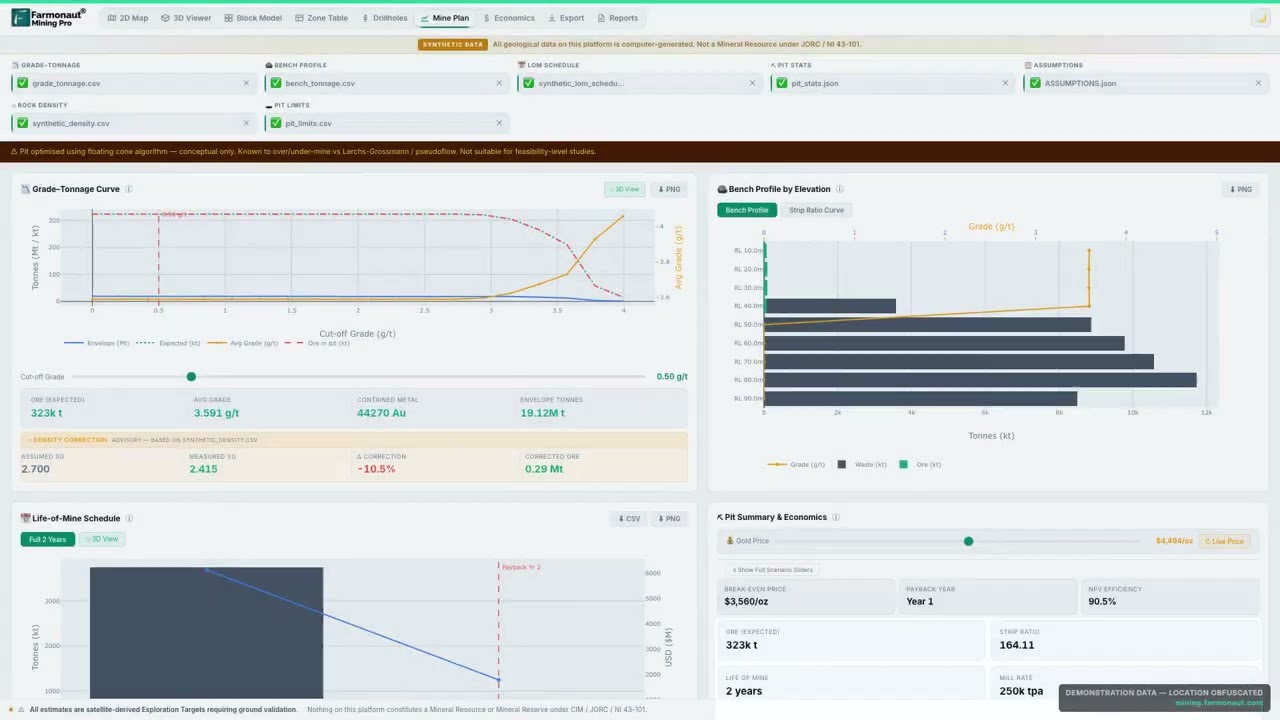
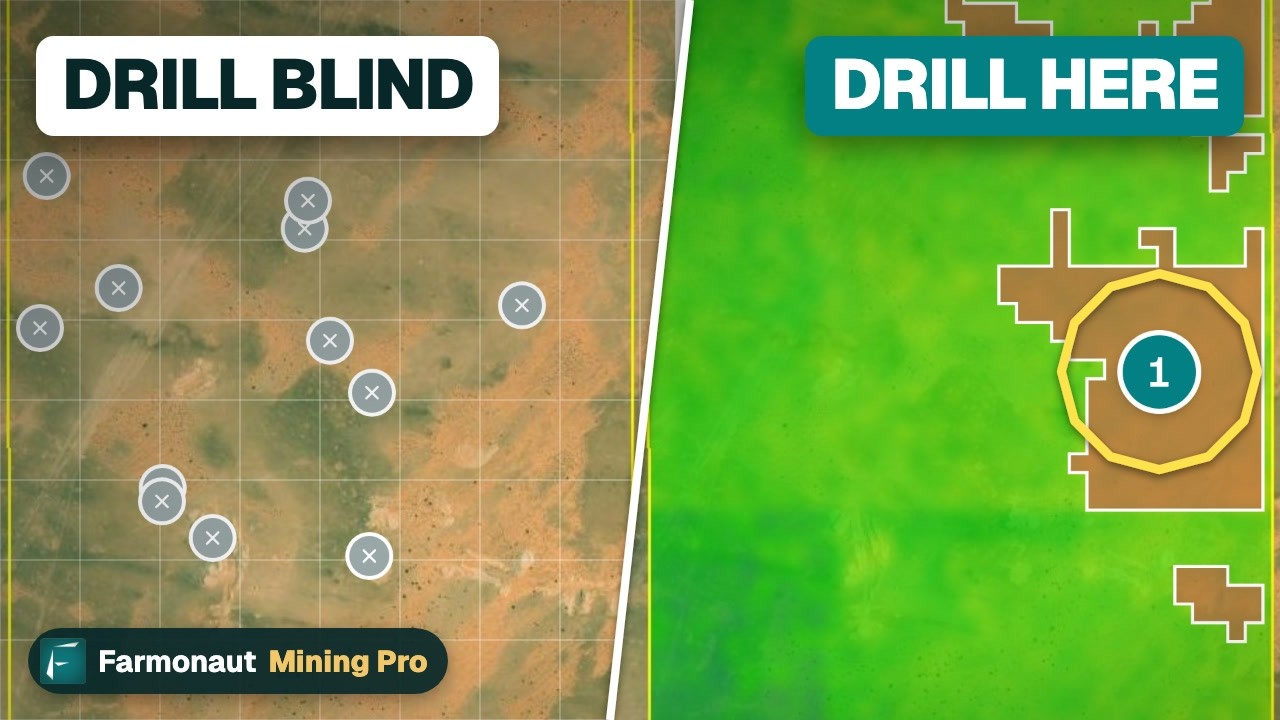
▶ Builds a cost picture per ounce: all-in sustaining cost, break-even price, NPV and payback, plus pit wall angle and bench height. · 14:58
How we built this list
We took the operations, stakes and status from the group’s 20-F for 2025 and its interim results for the six months to 30 June 2026, both filed with the US Securities and Exchange Commission. We used the USGS Mineral Commodity Summaries 2026 for world production and reserves, and news reports only for deal terms and for results coverage. Where a figure came from a report on the results rather than the filing, the text says so. Tables, ranks and stake percentages change when the group buys, sells or restructures an asset, so check the latest filing before you rely on one.
Watching large mine sites from satellites
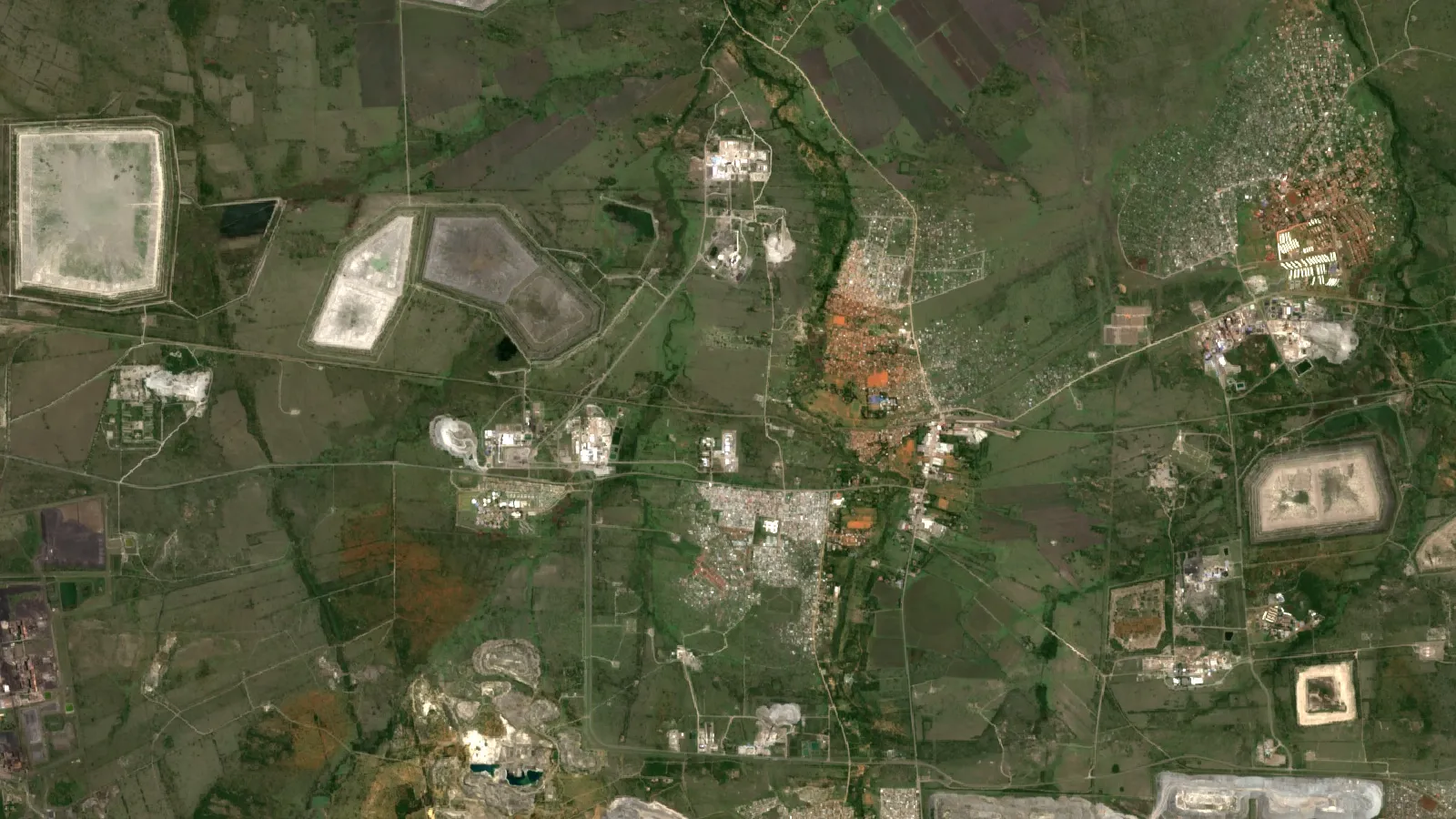
Open-pit and tailings sites change visibly from one season to the next: dam walls, stockpiles, haul roads and cleared ground all show up in public imagery such as Sentinel-2. The image at the top of this page is a Sentinel-2 composite of the Marikana area. Farmonaut’s satellite mineral detection screens a licence area for exploration targets from the same kind of imagery, ahead of any drilling or resource estimate. Licence owners and consultants can send a boundary through the mining query form, or contact the team to ask about a quote.
Investors who compare miners can also see our guide to gold mining ETFs and stocks, which gives facts only and no advice.
▶ Explains the six families of remote-sensing instruments used in mining and why agreement between them is the argument. · 2:01
If this topic matters to you, read Hunter Valley Coal Mines Map and Mine List next.
Frequently asked questions
What mines does Sibanye-Stillwater own?
It owns or holds stakes in PGM mines at Marikana, Rustenburg and Mimosa, gold mines at Kloof, Driefontein, Cooke and Beatrix, the Stillwater and East Boulder mines in Montana, the Keliber lithium project in Finland, the Century zinc operation and the Mt Lyell copper project in Australia. The summary table above gives stakes and status.
Where are the Sibanye-Stillwater PGM mines?
Marikana and Rustenburg are in South Africa, Mimosa is in Zimbabwe, and Stillwater and East Boulder are in Montana, United States.
Does Sibanye-Stillwater still mine gold?
Yes. Its South African gold operations produced 293,665 ounces in the first half of 2026, and it guides 614,000 to 635,000 ounces for the full year including DRDGOLD, or 440,000 to 473,000 ounces without it.
How many platinum ounces does Sibanye-Stillwater produce?
The group reports 4E ounces, which include palladium, rhodium and gold. South African operations produced 831,307 4E ounces in the first half of 2026 including purchased concentrate, and it guides 1.65 to 1.75 million for the year.
What is the Sibanye-Stillwater Montana mine?
It is two mines, Stillwater and East Boulder in Montana, which produced 137,930 2E ounces of platinum and palladium in the first half of 2026.
Is Keliber producing lithium yet?
Not at the refinery. Mining began in February 2026 and the concentrator started hot commissioning in April 2026, but the lithium hydroxide refinery at Kokkola is being staged with its timing tied to market conditions.
Does Sibanye-Stillwater mine uranium?
No. It holds uranium in old Cooke tailings and at the Beisa project, which it agreed to sell to Neo Energy Metals in December 2024 while keeping a royalty; the sale had not closed as of the H1 2026 6-K, and the approvals deadline is 6 June 2027. The sale was still waiting for regulatory approvals in the interim report to 30 June 2026.
Who owns Sibanye-Stillwater’s mines in Zimbabwe?
Sibanye-Stillwater holds 50% of Mimosa and does not manage it. The group counts only its share of the output.
Which Sibanye-Stillwater mine is closing?
The filings show Century nearing end of life, Beatrix 4 on care and maintenance since 2023, Sandouville on care and maintenance and Mt Lyell in care and maintenance until its restart.
What are the biggest risks at Sibanye-Stillwater mines?
The filings list fatal accidents, seismic events at the deep gold mines, metal price swings, labour talks and the cost of mining at depth. The 20-F carries the full risk list.
This page is for information only. It is not investment advice. It gives no share prices or targets. Check each figure against the company’s latest filing.
Farmonaut mining
Map your mining site from space
Consultants can have a licence boundary screened with satellite data for exploration targets, ahead of any resource estimate.
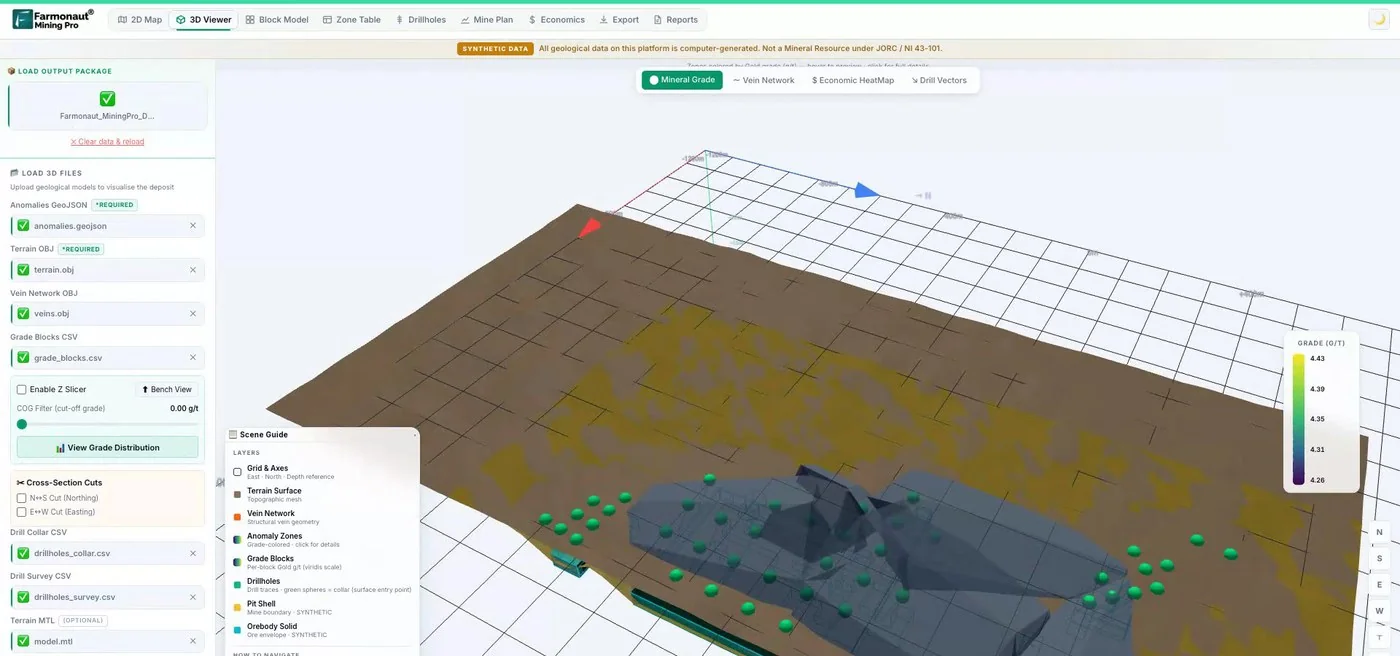
Mining Pro sample view, synthetic data
Keep reading
Sources
- Sibanye-Stillwater, Annual Report on Form 20-F for 2025 (SEC): sec.gov
- Sibanye-Stillwater, Operating and financial results for the six months ended 30 June 2026, Form 6-K (SEC): sec.gov
- Sibanye-Stillwater, Operating and financial results for the six months ended 30 June 2025, Form 6-K (SEC): sec.gov
- USGS, Mineral Commodity Summaries 2026: Platinum-Group Metals: pubs.usgs.gov
- USGS, Mineral Commodity Summaries 2026: Gold: pubs.usgs.gov
- USGS, Mineral Commodity Summaries 2026: Lithium: pubs.usgs.gov
- Sunday World, Sibanye-Stillwater returns to profit as revenue hits record R90bn: sundayworld.co.za
- Business Report, Sibanye-Stillwater’s earnings rise sharply in 2025, resumes dividend payout: businessreport.co.za
- Miningmx, Sibanye-Stillwater sells Beatrix 4 and Beisa project but retains uranium exposure (10 December 2024): miningmx.com
- Mining Technology, Keliber lithium project in Finland sees 17% cost increase (12 May 2025): mining-technology.com
- Montana DEQ, East Boulder Mine final environmental impact statement press release (August 2024): deq.mt.gov
Discussion
Questions, corrections or field experience? Share them below. First-time comments are reviewed before they appear, and your email is never published.
No comments yet. Be the first to add a question or your experience.

 G.I.T.T.
 Jaunita Erss Ltd
 Almosi SARL
 SRK Consulting
 Berks Gold Limited
 Mwerezi Minerals Company Limited
 Mining SARL
 SenGold Invest SAS
 Sean Mining Limited
 NTS Group (Pty) Ltd
 Mine4Africa
 Lithspo Minerals Limited
 Tintina Mining Group
 Dalgety Minerals Pty Ltd
 Vortex Minerals Pty Ltd
 Licence holder · Nigeria · Gold + lithium










