

Wet Rice Agriculture: 7 Ways to Boost Yield & Sustainability
Table of Contents
- Introduction: The Role of Wet Rice Agriculture
- Trivia & Fast Facts
- Wet Rice Agriculture — Key Benefits and Challenges
- Understanding the Mechanisms of Wetland Agriculture
- 7 Sustainable Practices to Boost Wet Rice Yield
- Comparative Strategies Table
- Farmonaut Satellite and AI Solutions
- Ecosystem Services: Beyond the Paddies
- Landscape Restoration & Buffering
- Post-Harvest Handling, Value Addition & Markets
- Highlight Boxes
- Visual Lists for Quick Insights
- Frequently Asked Questions
- Explore Farmonaut Subscriptions
Wet Rice Agriculture: The Cornerstone of Rural Livelihoods
Wet rice agriculture—sometimes referred to as wet farming or wetland agriculture—is foundational across many rural communities. These farming systems, centered around flooded paddies and intricate irrigation networks, produce the grain that feeds over half the world’s population. But wether agriculture is more than food: it shapes landscapes, sustains rural livelihoods, influences biodiversity, and is a major investment in the broader context of global land management, forestry, and restoration.
Flooded soils promote unique soil-water interactions central to crop performance. These waterlogged conditions alter nutrient chemistry, suppress pests and weeds, and create environments where both crop yields and ecosystem health are balanced. Our discussion here centers on how sustainable management can boost productivity while preserving the environment for generations to come.
“Wet rice agriculture can increase yields by up to 30% with improved water and nutrient management practices.”
Key Benefits and Challenges of Wet Rice Agriculture
Wet rice agriculture is not just about growing a crop — it is a system that cycles water, nutrients, and energy within the landscape. When managed well, wetland agriculture supports high yields, minimizes input costs, and provides habitats for aquatic and terrestrial biodiversity, all while reducing the risk of crop failure in variable climates.
- ✔ High Yields: Flooded fields can suppress weeds and increase nutrient efficiency for rice.
- 📊 Rural Livelihoods: Supports income, food security, and employment across millions of households worldwide.
- ⚠ Challenges: Unmanaged water can lead to greenhouse gas emissions, water wastage, nutrient runoff, or salinity.
- ✔ Biodiversity: Wetland paddies support a range of aquatic life and pollinator corridors within agricultural landscapes.
- ✔ Resilience: Systems can buffer against drought, variable rainfall, and extreme weather if well planned.
Flooded rice fields, when managed using precision irrigation and controlled drainage, offer an energy- and water-efficient means of producing grain while reducing pest pressure and supporting broader ecosystem services.




Understanding the Mechanisms of Wetland Agriculture
At the heart of wetland agriculture is the interaction between soil, water, and crop management. The repeated cycles of flooding and drainage in rice paddies create anaerobic soil conditions, which:
- ✔ Slow weed growth and reduce certain pests (weed seeds and many soil-dwelling pests struggle in low-oxygen soils)
- ✔ Promote the release of plant-available forms of crucial nutrients — such as nitrogen and phosphorus — supporting robust rice growth
- ✔ Immobilize some toxic soil elements, making paddies safer for rice and sometimes improving grain quality
- ✔ Influence greenhouse gas emissions (methane is produced in flooded, organic-rich soils unless managed properly)
This central interaction of soil chemistry, crop physiology, and water regimes underpins every aspect of wet rice productivity and sustainability.
7 Sustainable Wet Rice Agriculture Practices to Boost Yields
Adopting best-in-class, site-specific sustainable practices can dramatically raise yields and environment benefits in wet rice systems. Here are seven evidence-based methods proven to make a difference:
-
Alternate Wetting and Drying (AWD)
Rather than keeping paddies flooded at all times, AWD periodically drains fields to let the soil dry. This modern irrigation management strategy can:
- Reduce water use by up to 30%, conserving a precious resource
- Minimize methane gas emissions, a key climate goal
- Maintain or even increase yields when done correctly
Pro Tip: Monitor soil moisture closely. Practical tools, such as satellite-based NDWI indexes, can help us decide when it’s time to re-flood.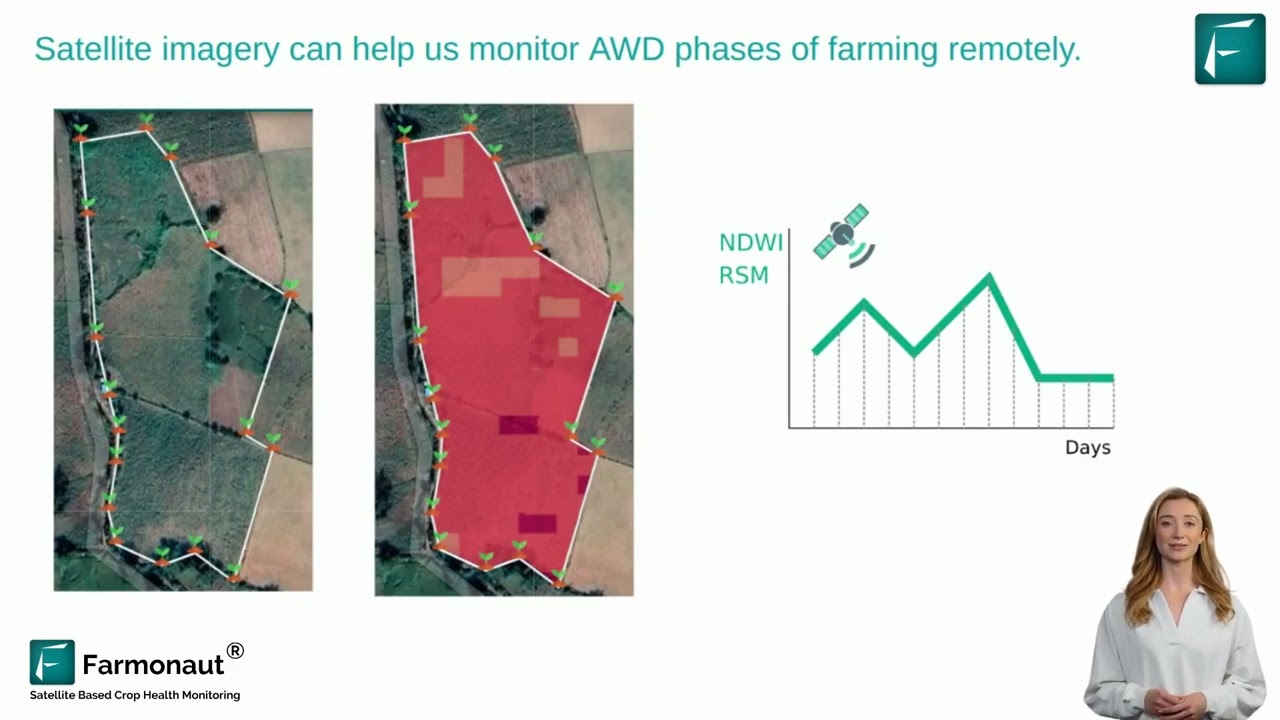
-
Integrated Pest Management (IPM)
IPM in wetland rice agriculture blends biological controls—such as introducing aquatic predators or fish—with targeted chemical use and cultural measures like crop rotation, seedbed sanitation, and straw management. It aims to:
- ✔ Reduce pest outbreaks and pesticide costs
- ✔ Support biodiversity by sustaining beneficial aquatic organisms
- ✔ Protect grain quality and worker safety
Common Mistake: Over-reliance on a single control tactic. Rotate strategies for resilient, long-term control!
-
Use of Biofertilizers and Green Manures
Organic sources of nutrients—like compost, livestock manure, or nitrogen-fixing green manures (e.g., azolla, clover)—improve soil fertility, boost yield, and reduce reliance on costly chemical inputs.
Key Insight: Consistent use of biofertilizers enhances soil structure and long-term productivity while reducing environmental risks of nutrient runoff.
-
Precision Water and Nutrient Management
Combining satellite, AI, and IoT solutions (like those available on Farmonaut’s platform) enables farmers to fine-tune irrigation, detect leaks, monitor soil moisture, and synchronize fertilizer applications with crop need and weather. These integrated technologies can:
- ✔ Reduce costs for water and fertilizer by up to 20%
- ✔ Maintain yield stability across variable rainfall and drought periods
- ✔ Meet quality standards for grain, supporting access to premium markets

-
Climate-Smart Cultivar Selection & Planting Methods
Choosing the right rice variety (cultivar) for each field—considering flood tolerance, grain traits, and disease resistance—is crucial, especially as rainfall and weather patterns grow more variable. Modern cultivars may offer higher yields and better resistance, while traditional varieties excel under specific local regimes.
- ✔ Optimize spacing, row orientation, and transplant timing for canopy cover and airflow.
- ✔ Use short-duration modern cultivars for zones with unpredictable rainfall.
- ✔ Favor deep-rooted, resilient types in seasonal floodplains.
Investor Note: Markets increasingly reward grain quality, disease tolerance, and traceability. Learn more about Farmonaut’s Traceability Platform for securing premium pricing.
-
Water Reuse, Drainage Management, and Buffering
Smart water management goes beyond the single field. Reusing treated drainage water, designing buffers of wetland or agroforestry strips, and synchronizing field operations across networks:
- ✔ Reduce total irrigation demand and waterlogging risks
- ✔ Activate ecosystem services—e.g., pollinator corridors, wildlife habitat
- ✔ Decrease run-off, salinization, and greenhouse gas emissions
 Pro Tip: Integrate land restoration and agroforestry with wet rice farming to further boost benefits across the landscape.
 -
Landscape-Level Planning & Integrated Agroforestry
Connecting rice paddies with forest edges, diversified crop strips, and restored wetland buffers anchors resilience against climate extremes. Well-designed landscapes:
- ✔ Lower erosion and flooding risk
- ✔ Improve microclimate and grain quality
- ✔ Diversify farmer incomes via timber, non-timber products, or rotation crops
Comparative Strategies Table: 7 Sustainable Practices in Wet Rice Agriculture
| Sustainable Practice | Estimated Yield Increase (%) | Environmental Benefits | Implementation Considerations |
|---|---|---|---|
| Alternate Wetting and Drying (AWD) | 10-15% | ✔ Water savings ✔ Methane reduction |
Requires reliable field water monitoring; train farmers on safe dry intervals |
| Integrated Pest Management (IPM) | 5-10% | ✔ Reduced pesticide use ✔ Biodiversity support |
Combine biological and cultural controls with minimal targeted chemical use |
| Use of Biofertilizers & Green Manures | 7-12% | ✔ Improved soil health ✔ Long-term fertility |
Requires planning of crop cycles; source quality organic inputs |
| Precision Water & Nutrient Management | 8-20% | ✔ Water savings ✔ Reduced nutrient loss ✔ Higher grain quality |
Adopt digital tools (satellite, sensors); coordinate fertilizer timing |
| Climate-Smart Cultivar Selection | 6-14% | ✔ Yield stability ✔ Disease/lodging reduction |
Select cultivars for specific regimes; monitor pest/disease cycles |
| Water Reuse & Buffering | 5-9% | ✔ Reduced runoff ✔ Aquatic habitat support |
Invest in drainage infrastructure; coordinate across farm networks |
| Landscape-Level Planning & Integrated Agroforestry | 5-11% | ✔ Biodiversity corridors ✔ Climate resilience |
Incorporate multiple land uses; engage with local planners and extension agents |
Technology for Wetland Agriculture: Farmonaut’s Satellite and AI Solutions
To maximize the impact of these sustainable strategies, leveraging technology is essential. At Farmonaut, we provide affordable and scalable solutions for crop health monitoring, water management, and environmental tracking based on the latest in satellite and AI.
- 📡 Satellite-Based Monitoring: Detects crop health, soil moisture, and pest outbreaks in real-time across vast paddies and multiple fields.
- 🤖 AI Advisory System (Jeevn AI): Offers recommendations on fertilization timing, irrigation scheduling, and pest management tailored to site-specific needs.
- 🔗 Blockchain Traceability: Ensures the quality, sustainability, and origin of wet rice through secure supply chain tracking, crucial for export markets.
- 🚜 Fleet & Resource Management: Tracks field vehicles and equipment remotely, optimizing labor and energy costs for rice production.
- 🌱 Environmental Impact Monitoring: Tracks methane and greenhouse gas emissions, providing data to reduce environmental footprint and comply with sustainability standards.
Our platform is designed for individual farmers, agricultural businesses, and government planners alike, empowering sustainable wetland farming worldwide.
“Sustainable wetland farming supports over 50% of global rice production while preserving vital biodiversity habitats.”
The Ecosystem Services of Wetland Rice Agriculture
Wetland agriculture does not function in isolation from the broader ecosystem. Properly managed paddies:
- ✔ Support amphibians, fish, insects, and birds, making them hotspots for biodiversity
- ✔ Provide “ecosystem services” such as pollination support, sediment retention, and flood mitigation
- ✔ Serve as corridors linking agricultural, forest, and wetland habitats across the landscape
In contrast, neglecting drainage or overusing agrochemicals can lead to waterlogging, salinization, and escape of greenhouse gases like methane. Modern best practices, particularly Alternate Wetting and Drying, can cut methane emissions by over 40% while supporting grain yield and ecosystem health.
The future value of rice is not limited to yield—buyers and investors now reward environmentally verified, traceable, and low-carbon rice. Adopting Farmonaut’s satellite monitoring and traceability tools (see platform) can open access to premium international markets.
Landscape Restoration, Buffer Zones & Integrated Planning
For sustainable rice agriculture to thrive, it must be integrated with other land uses — especially forestry, restoration, and agroforestry. By connecting rice fields with buffer zones of native vegetation, riparian strips, and intercropped tree lines, we can:
- ✔ Reduce erosion and nutrient run-off into water bodies
- ✔ Create wildlife corridors and bolster pest control via natural predators
- ✔ Diversify rural incomes via timber, fodder, non-timber forest products, and rotation cropping
Post-harvest Handling, Value Addition, and Rice Markets
Unlocking the full economic value of wet rice farming means going beyond harvest. High grain quality is sustained through careful drying, parboiling, and storage to minimize post-harvest losses. Processing—like parboiling, branded milling, organic certification, or specialty rice (aromatic, black, red)—can secure premium prices and access new markets.
- ✔ Traceable rice attracts environmentally conscious buyers
- ✔ Enhanced post-harvest practices reduce spoilage by over 20%
- ✔ Farmonaut’s Traceability Solution verifies origin and production practices, streamlining both export and domestic supply chains
Knowledge Highlights: Best Practices and Lessons
Soils in wet paddies act as both a filter and a reservoir — their health and chemistry will determine whether you grow high-quality, resilient rice or face persistent yield and disease problems. Invest in regular soil testing and use the results to guide fertilization and irrigation timing.
Don’t wait for symptoms of nutrient deficiency or excess water stress. With real-time satellite data and advisory systems (see Farmonaut’s Jeevn AI), you can respond before losses occur.
Failing to coordinate irrigation across neighboring farms can undermine water savings and efficiency. Integrated systems and collaborative planning are key in wetland agriculture.
Climate-smart rice, with verified sustainability and traceability, is a high-growth opportunity for both local and international markets. Platform data make it easier for lenders and insurers (see Crop Loan & Insurance Verification) to support smallholders.
Integrating water-saving irrigation, organic nutrient sources, and digital farm management (explore Farmonaut fleet management) results in optimized operations and lower costs for wet rice farming of all sizes.
Quick Visual Insight Lists: Sustainability at a Glance
- 🌿 Key Benefit: Higher yields and reduced pest pressure due to tailored water regimes
- 💧 Water Insight: Up to 30% savings by shifting from continuous flooding to AWD
- ⚖️ Nutrient Strategy: Combine green manures and precision fertilizer for balanced soil chemistry
- 🐦 Biodiversity: Buffer zones and intelligent drainage networks support wildlife and pollinators
- 📈 Value Addition: Post-harvest and traceability measures open access to premium rice markets
- 🔄 Rotation: Alternate rice with legumes or green manure crops to build soil health
- 🗺️ Monitoring: Use satellite and IoT data to monitor for leaks, pests, and growing anomalies
- 🌱 Organic Focus: Biofertilizers and compost keep systems productive and sustainable
- 🔒 Security: Blockchain traceability ensures grain quality and secures export readiness
- 🔄 Adaptability: Integrated water and land planning boosts resilience to climate shocks
Explore Farmonaut Subscriptions for Wetland Agriculture Monitoring
Whether you manage a single paddy or coordinate a large cooperative, our subscription model ensures you only pay for what you need—scaling with farm size and monitoring frequency.
Ready to take the next step? Download the Farmonaut Apps below to get started:
Frequently Asked Questions: Wet Rice Agriculture & Sustainable Practices
Wet rice agriculture involves cultivating rice in flooded fields (paddies) using controlled irrigation and drainage networks. This method creates anaerobic soil conditions that influence weed growth, pest populations, and nutrient dynamics.
Effective water management—such as Alternate Wetting and Drying—ensures the optimum depth and timing of flooding, which increases nutrient availability, reduces weed/pest pressure, conserves water, and maintains field vigor for higher yields.
IPM combines biological, cultural, and chemical controls to reduce pest outbreaks, strengthen ecosystem services, protect grain quality, and minimize risks to workers and the environment.
Sustainable wet farming reduces input costs (water, fertilizer, pesticide), improves yield stability, allows access to premium and export markets (with traceability), and supports diversified rural livelihoods through ecosystem services.
Satellite-based monitoring, AI-powered advisories, mobile/web apps for resource tracking, blockchain traceability, and automated irrigation sensors all improve efficiency, reduce environmental footprint, and boost yield sustainably.
Buffer strips, restored wetlands, and connected forest edges reduce erosion, retain nutrients, absorb floods, enhance biodiversity, and stabilize microclimates—directly contributing to both rice productivity and ecosystem health.
We provide satellite-driven crop and soil monitoring; real-time, AI-based agronomy advisories; blockchain traceability; environmental impact tracking; and scalable field management apps accessible from web and mobile devices.
Conclusion: The Future of Wet Rice Agriculture Is Sustainable and Connected
Wet rice agriculture stands as a cornerstone of food security, rural economies, and landscape investment globally. By embracing site-specific, sustainable practices—rooted in advanced water and nutrient management, ecosystem-based planning, and the power of digital technologies—we can ensure resilient harvests and thriving rural livelihoods within broader fields of forestry, restoration, and land management. The synergy between traditional wisdom and modern innovations, like those our team at Farmonaut makes accessible, paves the way for not just profitable but truly sustainable rice agriculture.
Let’s create vibrant, productive, and climate-resilient wetland landscapes—one sustainable rice field at a time.
Discussion
Questions, corrections or field experience? Share them below. First-time comments are reviewed before they appear, and your email is never published.
No comments yet. Be the first to add a question or your experience.

 Global Agrifood
 Cazlv
Cazlv HIPSAC
 ZOL Zimbabwe
 Juligerm
 AdBio
AdBio MISE Maroc
 Drift-Sense
 NWNS
NWNS Red August Group
 Farm Inc
 WeMe Global
 Agrotoken
 Blue BearX
 Insignito
 Croptimum
 DnCubed
 Field Capacity
 Indosistim Teknologi
 Licence holder · Niger · Gold
 Licence holder · Nigeria · Gold + lithium










