

Silver investing · Comparison guide
Silver ETFs vs Silver Miners: Fees, Holdings, Risk
A physical silver ETF follows the metal minus a 0.30% to 0.50% fee; a miners ETF holds companies and moved further in both directions. SLV gained about 165% over 2021 to 2025 against about 112% for the SLVP miners ETF (our compounding of iShares NAV returns).
Key takeaways
- SLV (physical silver, 0.50% fee) gained 147.86% in 2025 and SLVP (miners, 0.39%) gained 200.80%, but in 2022 silver rose 3.19% while SLVP fell 18.24% (iShares; BlackRock).
- Compounded 2021 to 2025, SLV gained about 165% and SLVP about 112%: the miners won the best year and lost the five-year comparison (our arithmetic on fund NAV returns).
- SIL’s largest holding is Wheaton Precious Metals (24.65%), a streaming company, and Coeur sold about US$695 million of gold against US$320 million of silver in Q2 2026 (Global X, 14 October 2026; Coeur release).
- Cost figures are not comparable: Hecla reported AISC of US$6.07 per silver ounce after by-product credits, First Majestic US$25.68 per silver-equivalent ounce (company releases, Q2 2026).
- Silver was US$56.98 per ounce on 15 October 2026 (Kitco) after an all-time high above US$121 on 29 January 2026 (Silver Institute); US individuals face up to 28% tax on physical silver ETF gains.
In this article
- Silver ETFs vs silver miners at a glance
- How silver ETFs and silver miners performed year by year
- Physical silver ETFs compared: SLV and SIVR
- Silver mining ETFs compared: SIL, SILJ and SLVP
- Low-cost silver miners compared
- Why miners move more than silver
- Where silver comes from, and what that means for miners
- What to check before choosing between silver ETFs and silver miners
- Which route fits which goal
- Frequently asked questions
A silver ETF and a silver miner are different bets. A physical silver ETF such as the iShares Silver Trust (SLV) holds bars of metal and follows the silver price, minus a 0.50% yearly fee. A miner or a miners ETF holds companies, so it also carries costs, mine problems, taxes and management decisions. Over the five calendar years 2021 to 2025 the two routes finished far apart, and in a falling market the miners fell harder. This guide compares both routes with fund fees, holdings and company results dated to October 2026, and includes a fee calculator and a price-move calculator.
Terms used below. An ETF (exchange-traded fund) is a fund whose shares trade on a stock exchange all day. NAV (net asset value) is the value of what the fund holds, per share. All-in sustaining cost (AISC) is the company’s measure of what it costs to produce and sell one ounce, including mine upkeep and overheads. By-product credits subtract the money earned from other metals, such as gold and zinc, from the silver cost. A stream is a contract in which a company pays up front for the right to buy a share of a mine’s metal at a low fixed price. This page gives facts from filings and issuer pages. It is not investment advice.
Silver ETFs vs silver miners at a glance
The table sets the three routes side by side. The facts in it come from the fund and company pages cited in the sections below.
| Feature | Physical silver ETF (SLV, SIVR) | Silver miners ETF (SIL, SILJ, SLVP) | One miner’s shares |
|---|---|---|---|
| What you own | A share of silver bars held in vaults | A basket of 36 to 68 mining and streaming companies | One company and its mines |
| Fee | 0.30% to 0.50% a year | 0.39% to 0.69% a year | No fund fee; broker costs apply |
| Main risk | The silver price | The silver price, costs, gold prices, jurisdictions and the stock market | All of those, plus one mine or one management team |
| Moves with silver | Close to one for one | Often by more, in both directions | Depends on costs, by-product metals and debt |
| Income | None; the fund pays no dividend | Small distributions (semi-annual for SIL and SLVP) | Some companies pay dividends |
| US tax on gains held over a year | Up to 28% (collectibles rate) | Usual capital gains rates | Usual capital gains rates |
How silver ETFs and silver miners performed year by year
Fund fact sheets show what happened in each calendar year. The comparison below uses the iShares Silver Trust (SLV, physical silver) and the iShares MSCI Global Silver and Metals Miners ETF (SLVP, a basket of miners), both on a NAV basis.
Chart
Calendar-year NAV return: silver ETF vs miners ETF
Percent, total return at NAV after fees
In 2021 SLV lost 13.25% and SLVP lost 23.05%. In 2022 silver gained 3.19% while the miners ETF lost 18.24%, which shows that miners can fall even when the metal holds steady. In 2025 SLV returned 147.86% and SLVP returned 200.80% (iShares SLV page; BlackRock SLVP fact sheet, 30 June 2026).
Our own arithmetic compounds the five yearly returns. A hold of SLV from the start of 2021 to the end of 2025 gained about 165%, and the same hold of SLVP gained about 112%, even though SLVP had the better 2025. The miners won the best year and lost the five-year comparison because two bad years were deeper. Fund returns include fees, and past results do not predict the next five years.
Physical silver ETFs compared: SLV and SIVR
This section covers two US-listed trusts that hold metal and issue shares against it.
| Fund | Fee | Net assets | Silver held | Source and date |
|---|---|---|---|---|
| SLV, iShares Silver Trust (NYSE Arca) | 0.50% sponsor fee | US$28.9 billion | 494.2 million oz (15,372 tonnes) | iShares, 14 October 2026 |
| SIVR, abrdn Silver ETF Trust (NYSE Arca) | 0.30% after a voluntary waiver from 0.45% | US$3.95 billion | 67.2 million oz | SEC filing, 30 June 2026 |
The SIVR figures come from the trust’s quarterly report for 30 June 2026, the latest filing we opened. The SLV row is dated 14 October 2026, so the two rows are not on the same date. The filing calls the 0.30% rate a voluntary waiver, so the sponsor could change it. The fee gap of 0.20 percentage points costs US$20 a year on a US$10,000 holding.
Each SLV share is backed by about 0.90 ounces of silver. That is the trust’s 494.2 million ounces divided by its 547.25 million shares on 14 October 2026 (our division of iShares data). The figure is below one ounce because the trust pays its fee out of its assets.
Premium and discount to NAV
An ETF’s price on the exchange can differ from its NAV. On 14 October 2026 SLV closed at US$50.22 against a NAV of US$52.81, a discount of 4.93% on the iShares page. iShares uses the LBMA Silver Price as its benchmark. Dividing net assets by ounces held implies a silver value of about US$58.48 per ounce in the NAV, while Kitco’s quote on 15 October (US$56.98 after a US$1.46 rise) implies a close near US$55.52 the day before, so the two figures were set at different times: iShares values the trust with the LBMA Silver Price, which is fixed at midday in London, while the share price is the New York close hours later, after silver had most likely fallen from about US$58 to about US$55.5. The SEC’s Investor.gov bulletin on ETFs explains that market prices and NAV can differ because ETF shares trade through the day. Check the premium or discount, and the bid-ask spread (SLV’s 30-day median was 0.02%), before placing an order.
SLV is not registered under the Investment Company Act of 1940, and iShares says so on its page. That is normal for a trust that holds only metal, but it means the trust follows different rules from a stock or bond fund. Read the prospectus.
Tax on physical silver ETFs in the United States
For a US individual, the trust’s own filing says shareholders are treated as if they own a share of the silver, and that gains on collectibles, including silver, are taxed at a maximum rate of 28% (annual report for 2020, so check the current prospectus). The IRS says net capital gains on collectibles such as coins or art are taxed at a maximum 28%, against 20% for most other long-term gains. Miners’ shares are ordinary stocks. Tax rules differ by country, so ask a tax adviser.
Calculator
How much do two funds’ fees differ over your holding period?
Enter your own amount, years and the two fees.
- Fund A fees over the period: $300
- Fund B fees over the period: $500
- Difference per year: $20
Example values only. Defaults are the SIVR fee (0.30%, after a voluntary waiver) and the SLV fee (0.50%) from the sources above. The calculator applies each fee to your starting amount for every year and ignores price changes, compounding and trading costs, so it understates the effect in a rising market. Fees change, so check the issuer page.
Silver mining ETFs compared: SIL, SILJ and SLVP
Three US-listed funds hold most of the silver-miner exposure that investors search for as silver mining ETFs. They follow different indexes, so their top holdings differ. Data dates are mixed: SIL and SILJ are mid-October 2026, while SLVP’s figures come from its 30 June 2026 fact sheet, a quarter older, so compare its weights with care.
Chart
Yearly fee of five silver funds
Basis points a year (100 bp = 1%); SIVR after a voluntary waiver
| Fund | Fee | Net assets | Holdings | Largest positions | Source and date |
|---|---|---|---|---|---|
| SIL, Global X Silver Miners ETF | 0.65% | US$4.01 billion | 39 | Wheaton Precious Metals 24.65%, Pan American Silver 11.41%, Coeur Mining 9.86% | Global X, 14 October 2026 |
| SILJ, Amplify Junior Silver Miners ETF | 0.69% | US$3.19 billion | 68 | Hecla 10.08%, First Majestic 9.69%, Coeur 9.60% | Amplify, net assets 14 October, holdings 15 October 2026 |
| SLVP, iShares MSCI Global Silver and Metals Miners ETF | 0.39% | US$823 million | 36 | Hecla 13.64%, Peñoles 10.81%, First Majestic 10.41% | BlackRock fact sheet, 30 June 2026 |
Three details change what you actually own. First, SIL’s largest position is Wheaton Precious Metals, a streaming company that does not run mines, and its ten largest holdings add up to 76.15% of the fund. Second, SILJ describes itself as the first and only ETF aimed at small-cap silver miners, a claim on Amplify’s own page, yet mid-cap and large-cap companies together make up about 84% of the fund (30 September 2026), so the label describes the index, not only small companies. Third, SLVP’s fact sheet shows 55.44% of the fund in Canada, 20.91% in the United States, 10.81% in Mexico and 9.52% in the United Kingdom.
The funds also hold gold. SLVP lists Agnico Eagle and Newmont among its top holdings, and Coeur, which SIL and SILJ both hold near 10%, sold 167,877 ounces of gold at US$4,140 and 4.5 million ounces of silver at US$71.18 in the second quarter of 2026, after its purchase of New Gold closed on 20 March 2026. That is about US$695 million from gold against US$320 million from silver (our multiplication of ounces sold by realized prices) (Coeur release, 5 August 2026). A silver miners ETF is therefore a bet on silver, gold, copper and costs at once.
Low-cost silver miners compared
Investors who ask for low-cost silver miners are asking for companies with room to keep a profit when silver falls. The table gathers second-quarter 2026 results for seven companies held by the three funds above. It is a side-by-side list, not a ranking, because the companies do not measure cost in the same way.
Chart
Silver output in the second quarter of 2026
Million ounces; attributable for Pan American Silver and Wheaton (stream); Fresnillo reports half-years and is left out
| Company | Silver output, Q2 2026 | Cost figure reported | What the cost figure means |
|---|---|---|---|
| Hecla Mining (NYSE: HL) | 4.2 million oz | AISC US$6.07 per silver oz | After by-product credits; excludes Keno Hill, which had not reached commercial production |
| Pan American Silver (NYSE, TSX: PAAS) | 6.47 million oz attributable | Silver segment AISC US$17.80 per silver oz | Net of by-product metals, attributable basis |
| First Majestic (NYSE, TSX: AG) | 3.80 million oz | AISC US$25.68 per silver-equivalent oz | Counts gold and base metals as silver equivalent; realized silver price was US$63.98 |
| Coeur Mining (NYSE, TSX: CDE) | 4.4 million oz | Adjusted costs applicable to sales US$22.99 per silver oz | A cost-of-sales measure, not AISC |
| Endeavour Silver (NYSE: EXK; TSX: EDR) | 1.94 million oz | Not in the production release | Mexico and Peru; Terronera reached commercial production on 1 October 2025 |
| Fresnillo (LSE: FRES) | 22.0 million oz attributable in the first half | Among four silver mines, AISC from US$15.82 (Juanicipio) to US$32.87 (Fresnillo mine) per silver-equivalent oz | First-half 2026, by mine; no group figure in the release we read |
| Wheaton Precious Metals (WPM) | 6.4 million oz | Cash cost US$568 per gold-equivalent oz | A streaming company: it buys metal from other miners’ mines under contract |
Sources: Hecla, 4 August 2026; Pan American Silver, 12 August 2026; First Majestic, 30 July 2026; Coeur, 5 August 2026; Endeavour Silver, 8 July 2026; Fresnillo interim results, six months to 30 June 2026; Wheaton Precious Metals, Q2 2026.
Why the cost numbers cannot be lined up
Hecla’s US$6.07 looks far lower than First Majestic’s US$25.68, but the two are not the same measure. Hecla subtracts the value of its gold, lead and zinc from the silver cost, so a high gold price lowers the number. Greens Creek, which produces about 2.1 million ounces of silver and 14 thousand ounces of gold a quarter, even reported a negative AISC of US$10.71 per silver ounce. First Majestic counts its gold and base metals as silver-equivalent ounces instead of subtracting their value. A fair comparison needs one definition applied to every company, and none of the releases supplies it.
Three smaller points matter more than the headline numbers. Pan American Silver completed its US$500 million cash and 60.2 million share purchase of MAG Silver in September 2025, which gave it a 44% joint venture interest in the Juanicipio mine operated by Fresnillo. Fresnillo’s silver output fell 11.4% in the first half of 2026 as a silver stream contract ended in 2025 and ore grades fell. Wheaton lifted its share of silver from the Antamina mine from 33.75% to 67.5% on 1 April 2026 under a deal with BHP, and its silver output rose 27% in the first half of 2026.
The second-quarter Hecla result also shows what a strong balance sheet looks like in a release: no debt apart from finance leases after the company redeemed US$263 million of 7.25% senior notes, and an undrawn US$225 million credit line. Debt matters because interest is owed whatever silver does.
If you want the cost model behind figures like AISC and break-even price, this chapter of the Farmonaut Mining Pro course walks through them.
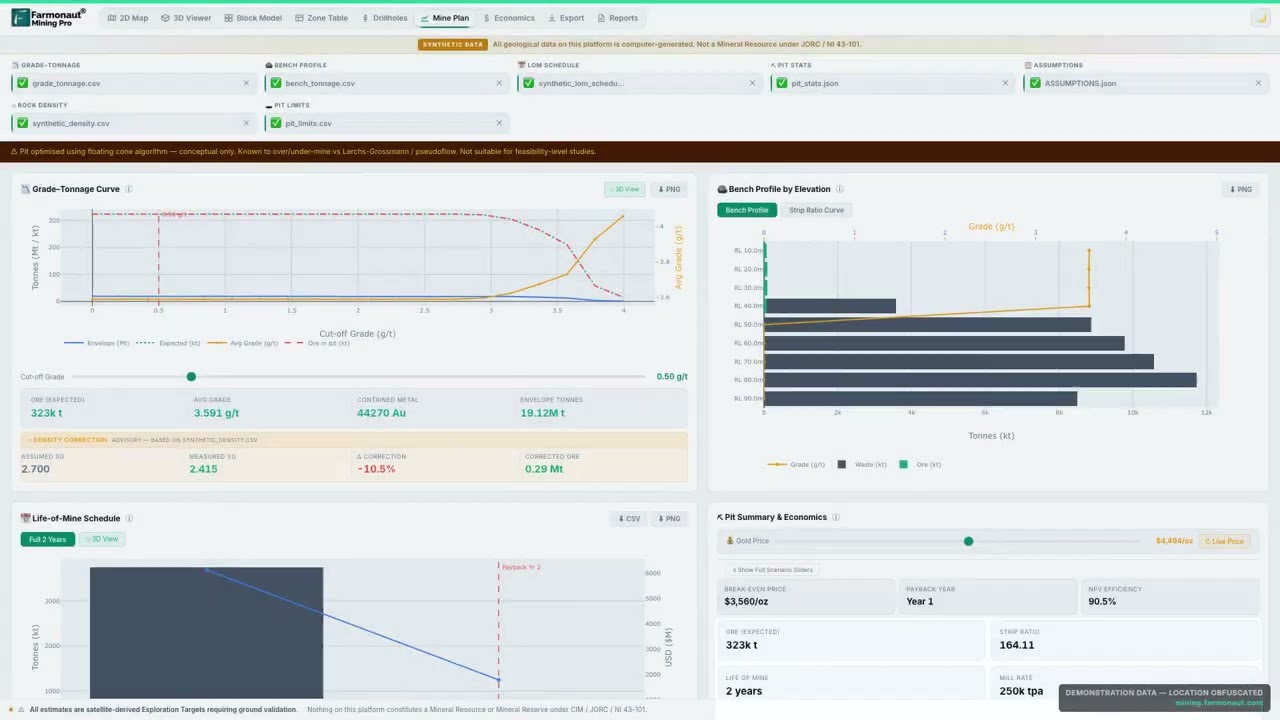
▶ Farmonaut Mining Pro course chapter on all-in sustaining cost per ounce, break-even price, NPV and payback for a mine plan. · 14:58
Why miners move more than silver
A miner’s profit is the gap between the price it gets and the cost it pays. When silver rises and costs stay put, the gap widens by more than the price move in percentage terms. When silver falls the gap shrinks faster. Finance writers call this operating gearing.
First Majestic’s second-quarter 2026 results show it clearly. Its realized silver price was 90% higher than a year earlier, yet revenue rose 57% (60% of it from silver), and mine operating earnings rose from US$49.4 million to US$223.6 million, about 4.5 times. The company’s own AISC margin, the gap between its silver-equivalent price and AISC, was US$40.27 per ounce against US$13.60 a year before.
The same effect showed up in one day of trading. On 14 October 2026 the NAV of SIL fell 5.42% (Global X page) and the NAV of SLV fell 2.86% (iShares page). The two are not measured at the same hour, because SLV’s NAV uses the midday London silver price and SIL’s uses New York closing prices, so the gap overstates the difference. Risk statistics from the funds point the same way. Global X lists SIL’s beta against the S&P 500 at 2.16 (30 September 2026), meaning it has tended to move about twice as far as the index. iShares lists SLV’s three-year equity beta at 0.66 and standard deviation at 45.13%, and SLVP’s at 0.75 and 44.10%. Beta and standard deviation look backward over three years, so they do not forecast the next move.
The calculator below applies the gearing arithmetic to your own numbers. It uses a constant cost per ounce, which is a simplification: in real life costs also rise when prices rise.
Calculator
What does a silver price move do to a miner’s margin?
Enter your own output, price, cost and price change.
- Margin before the move: $350,000,000
- Margin after the move: $290,000,000
- Margin per ounce after the move: $29
Example values only, not a forecast. The price (US$60) and AISC (US$25) are round numbers near the second-quarter 2026 figures in the text; use today’s silver price and the company’s own cost measure. Cost per ounce is held constant, which overstates the effect because real costs also move with prices. Margin here is before tax, interest and by-products.
Where silver comes from, and what that means for miners
Most silver is a by-product. The USGS says silver was mainly obtained from lead-zinc, copper and gold mines, in that order of output, and that polymetallic deposits hold more than two-thirds of US and world silver resources. The Silver Institute adds that lead and zinc mines remained the largest source of silver in 2025, while world mine output rose 3% to 846.6 million ounces. For a miners ETF this means the silver price is only one of several prices that decide earnings. For a physical silver ETF it means supply can respond slowly to a higher price, because most silver is not mined for itself.
Chart
Average US bullion silver price, 2021 to 2025
US dollars per troy ounce; 2025 is a USGS estimate
Chart
Silver mine production, eight largest countries
Tonnes of silver, 2025 estimate
The USGS puts world silver mine production at 26,000 tonnes in 2025 (estimate), with 610,000 tonnes of reserves. Mexico mined 6,300 tonnes, the most, followed by Peru and China. The chart shows the eight largest producers.
Silver’s price is not smooth. The USGS lists US bullion averages of US$25.23 per troy ounce in 2021, US$21.88 in 2022, US$23.54 in 2023, US$28.37 in 2024 and an estimated US$38 in 2025. The Silver Institute reports that the price reached an all-time high above US$121 on 29 January 2026 and traded in the mid-US$70s by early April. Kitco showed a spot bid of US$56.98 per ounce on 15 October 2026. SLV’s NAV had a 52-week range of US$42.13 to US$107.35 and was down 19.08% for the year to 14 October 2026.
Demand adds its own swings. Silver is used in electronics (25% of US end use in 2025, USGS), photovoltaics (15%), coins and bars. The Silver Institute’s February 2026 outlook expects industrial fabrication to fall 2% in 2026 to about 650 million ounces, with physical investment up 20% to 227 million ounces. In November 2025 silver was added to the US critical minerals list (USGS). These are forecasts and listings, not predictions of price.
What to check before choosing between silver ETFs and silver miners
- Fee and what it buys. A 0.30% to 0.50% fee for bars in a vault, against 0.39% to 0.69% for a basket that is rebalanced on a schedule (twice a year for SIL, every quarter for SILJ). Compare the all-in fee, not the headline.
- Holdings, not the name. Open the fund’s holdings page. Check how much is streaming, gold or copper, and how much sits in the top ten.
- Premium or discount and spread. Look at the closing premium or discount and the median bid-ask spread on the issuer page before you trade.
- Tax wrapper. Physical trusts can face the 28% collectibles rate in the US. Miners’ shares usually do not.
- By-product share. Ask how much of a company’s revenue is silver. Coeur and First Majestic earn a large share from gold.
- Debt and cash. Check net debt, because borrowing makes the same silver move bite harder in both directions.
- Country and mine concentration. Mexico supplies the most silver (USGS), and Fresnillo, First Majestic and Endeavour all mine there. One strike, one permit decision or one tax change at a single mine can move a company’s results.
- Mine life and ground. The rock can be good and still be out of reach if the land is built over or the permits fail, as the short video below shows.
Project-level checks are where satellite data helps explorers and financiers. A satellite mineral detection report screens a licence area for alteration and structure before drilling, and is delivered in 5 to 20 business days from a KML, KMZ or polygon. Results are exploration targets, not a resource estimate. Licence owners can request a quote or contact the team.
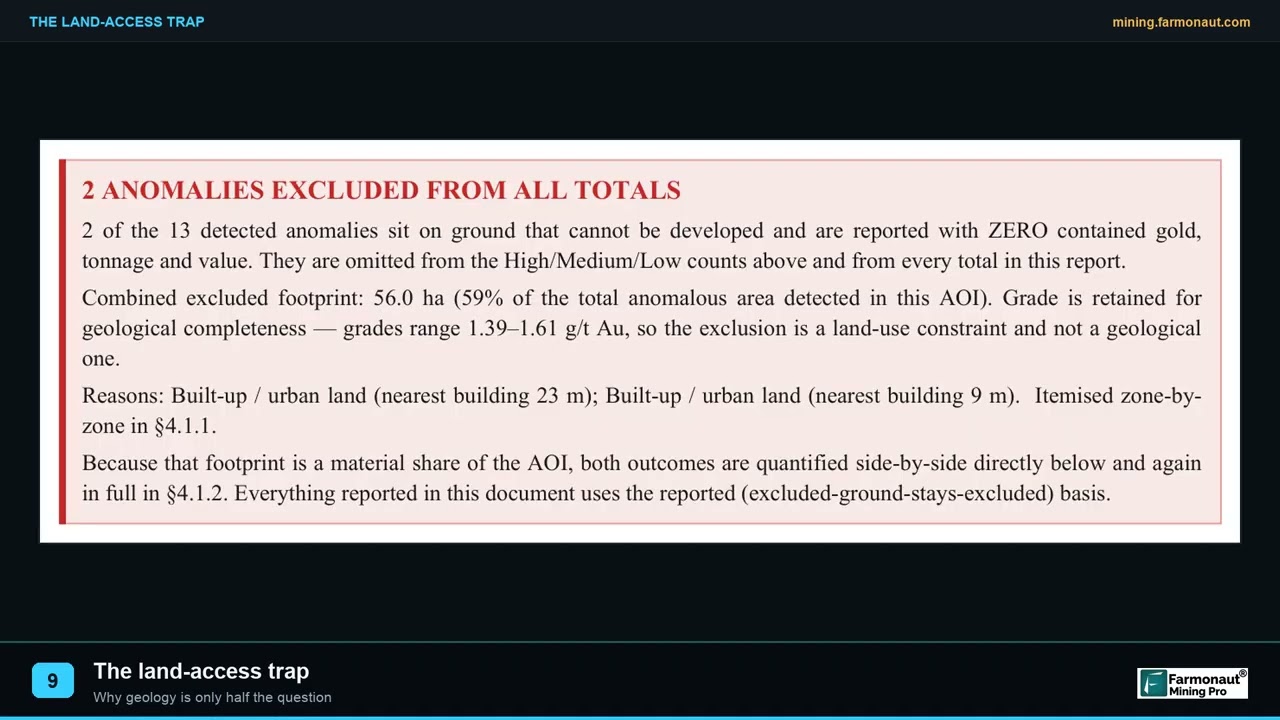
▶ Short video showing a survey where 59% of the anomalous ground sat under a town, so good rock was blocked by land access. · 2:05
Which route fits which goal
These are common reasons people give for each route. They are not recommendations.
- Following the metal. People who want the silver price without bars at home often use a physical ETF. Lower fee and a smaller discount history are the usual tie-breakers.
- Taking company risk. People who want the extra move that comes with operating gearing use a miners ETF or single stocks, knowing losses can also be larger, as 2021 and 2022 showed.
- Avoiding one mine. A fund spreads the risk of a shaft collapse or a permit refusal across 36 to 68 companies. A single stock does not.
- Income. Physical ETFs pay none. SIL pays a semi-annual distribution (US$0.11 per share on 7 July 2026), and some miners pay dividends.
- Mixing both. Some people hold a physical ETF and a miners fund together. The two have moved together in rallies and apart in 2022.
Royalty and streaming companies sit between the two routes. They earn from mines they do not operate, so they carry less cost risk but still follow metal prices. Our guides to mining royalties and silver miners in Canada cover the company side in more detail, our list of silver stocks and a guide to how much silver exposure to hold look at single names, and flow-through shares explain a Canadian tax tool for exploration investors.
If this topic matters to you, read George Soros Uranium Holdings: What His 13F Shows next.
Related reading on this site: Contract Mining vs Owner Mining for Gold: Costs and Risks.
Frequently asked questions
What is the difference between a silver ETF and a silver mining stock?
A physical silver ETF holds silver bars and follows the metal price after a fee of 0.30% to 0.50%. A mining stock is a share in a company whose results depend on the silver price, costs, by-product metals, debt and the mines it runs.
Which is riskier, silver ETFs or silver miners?
Miners have been riskier. SIL’s beta against the S&P 500 was 2.16, and in 2022 the SLVP miners ETF lost 18.24% while SLV gained 3.19%. Physical ETFs carry the full silver price risk, which was large: SLV’s NAV ranged from US$42.13 to US$107.35 in 52 weeks.
What are the main silver mining ETFs?
The three covered here are SIL (Global X, 0.65% fee), SILJ (Amplify, 0.69%) and SLVP (iShares, 0.39%). Their holdings differ, so check each fund’s holdings page before comparing returns.
Which silver ETFs hold physical silver?
SLV (iShares Silver Trust) and SIVR (abrdn Silver ETF Trust) hold metal. Their fees were 0.50% and 0.30% in the sources above. Miners ETFs such as SIL, SILJ and SLVP hold shares of companies, not metal.
Are silver mining stocks a good investment?
This page cannot say. It can show what to check: cost definitions, by-product share, debt, country and mine concentration. Hecla reported no debt after redeeming its notes, and Coeur earned more from gold than from silver in the second quarter of 2026, so companies in the same group differ widely.
Why is SLV trading at a discount to its NAV?
On 14 October 2026 the iShares page showed a 4.93% discount. iShares values the trust with the LBMA Silver Price, which is set at midday in London, while the closing share price is set in New York hours later, so the gap most likely reflects timing, not a lasting discount. The SEC says ETF market prices can differ from NAV because shares trade all day.
How are physical silver ETFs taxed in the US?
The iShares Silver Trust’s filing says gains are taxed at up to 28% as a collectible. The IRS lists a 28% maximum for net gains on collectibles such as coins. Miners’ shares use regular capital gains rates. A tax adviser should confirm what applies to you.
Do silver miners pay dividends?
Some do. First Majestic’s release refers to its quarterly dividend. SIL paid US$0.11 per share on 7 July 2026, and SLV pays nothing. Check each company’s current dividend policy.
Is Wheaton Precious Metals a silver miner?
No. Wheaton is a streaming company: it pays up front to buy a share of metal from other companies’ mines. It produced 6.4 million ounces of silver in the second quarter of 2026, mostly from Antamina, Peñasquito and Constancia, and it is SIL’s largest holding at 24.65%.
What is AISC and why does it differ between companies?
AISC is all-in sustaining cost per ounce. Companies choose which by-product credits to subtract and whether to count gold as silver equivalent, so Hecla’s US$6.07 and First Majestic’s US$25.68 are not comparable without adjusting.
Which silver ETF has the lowest fee?
Among the funds covered, SIVR has the lowest physical fee at 0.30% after a waiver, and SLVP has the lowest miners fee at 0.39%. Fees change, so check the issuer page.
Not investment advice. Check issuer pages and filings before you act.
This page is for information only. It is not investment advice or tax advice. Fund fees, holdings and company results change; check issuer pages and filings before you act.
Farmonaut mining
Screen a licence area from space before the drill
Investors and financiers can ask for a satellite mineral detection report on a licence area, delivered as exploration targets ahead of any resource estimate.
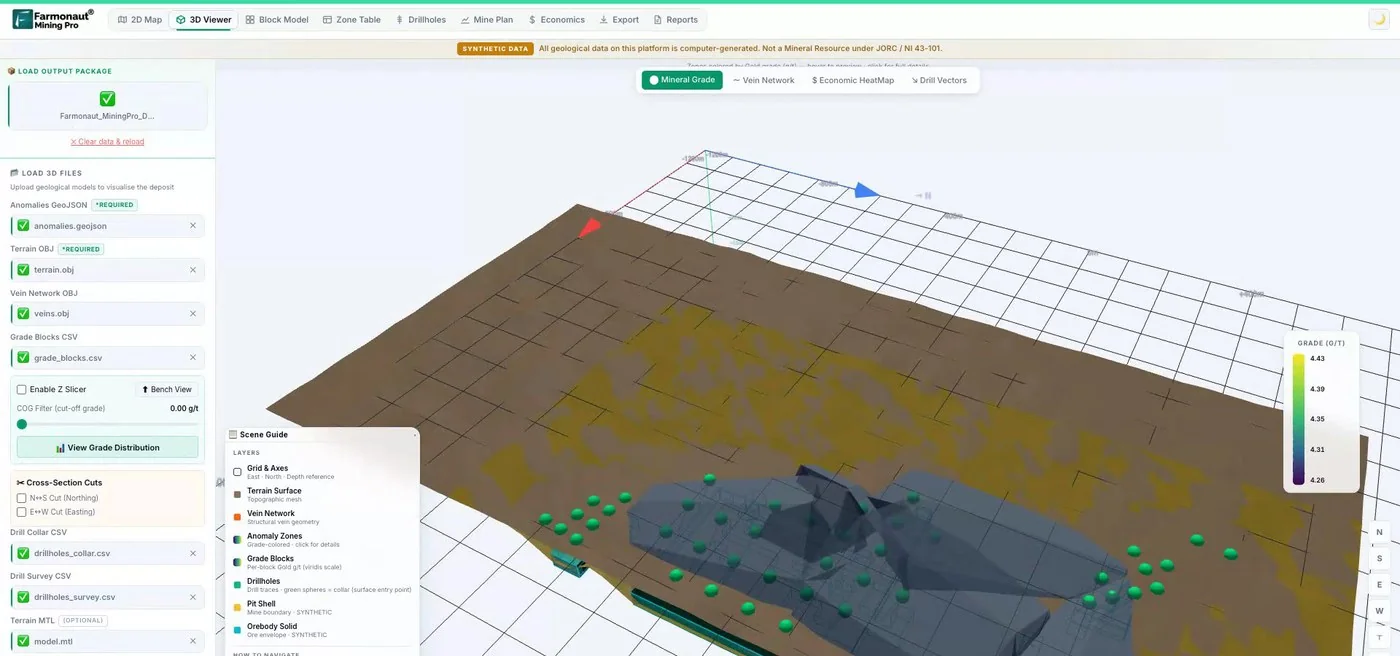
Mining Pro sample view, synthetic data
Keep reading
Sources
- iShares Silver Trust (SLV) fund page: fee, NAV, net assets, ounces, premium/discount (14 October 2026): ishares.com
- Global X Silver Miners ETF (SIL) fund page (14 October 2026): globalxetfs.com
- Amplify Junior Silver Miners ETF (SILJ) fund page (14 and 15 October 2026): amplifyetfs.com
- BlackRock, iShares MSCI Global Silver and Metals Miners ETF (SLVP) fact sheet, 30 June 2026: blackrock.com
- SEC, abrdn Silver ETF Trust Form 10-Q, 30 June 2026: sec.gov
- SEC, iShares Silver Trust Form 10-K, 2020 (tax treatment): sec.gov
- IRS, Topic no. 409, Capital gains and losses: irs.gov
- SEC Investor.gov, Updated Investor Bulletin: Exchange-Traded Funds: investor.gov
- USGS, Mineral Commodity Summaries 2026: Silver (February 2026): pubs.usgs.gov
- Silver Institute, silver prices in 2025 and mine production (15 April 2026): silverinstitute.org
- Silver Institute, 2026 outlook (10 February 2026): silverinstitute.org
- Kitco, silver spot price (15 October 2026): kitco.com
- Hecla Mining, second quarter 2026 results (4 August 2026): sec.gov
- Pan American Silver, second quarter 2026 news release (12 August 2026): sec.gov
- First Majestic Silver, second quarter 2026 results (30 July 2026): newsfilecorp.com
- Coeur Mining, second quarter 2026 results (5 August 2026): nasdaq.com
- Endeavour Silver, second quarter 2026 production (8 July 2026): finviz.com
- Fresnillo plc, interim results for the six months to 30 June 2026: investegate.co.uk
- Wheaton Precious Metals, second quarter 2026 results: s203.q4cdn.com
- Mining Technology, Pan American Silver completes acquisition of MAG Silver (September 2025): mining-technology.com
Discussion
Questions, corrections or field experience? Share them below. First-time comments are reviewed before they appear, and your email is never published.
No comments yet. Be the first to add a question or your experience.

 Energy and Resources Ltd
 Mwerezi Minerals Company Limited
 Congo Mining Solutions
 Mining SARL
 SenGold Invest SAS
 Sania Corporation
 Sean Mining Limited
 NTS Group (Pty) Ltd
 Mine4Africa
 Lithspo Minerals Limited
 Tintina Mining Group
 Dalgety Minerals Pty Ltd
 Vortex Minerals Pty Ltd
 Faith At Work (Pty) Ltd
 Geotech Mining Solutions plc
 Vulcan International Limited
 Kidepo Associates
 GKY Mining
 Alkimy SARL
 Licence holder · Nigeria · Gold + lithium










