

Gem and gold claims · Buyer guide
Gem Mines for Sale: Claims, Costs and What to Check
Gem mines and gemstone claims for sale are mostly unpatented federal claims, not land. A buyer pays the asking price, US$15 per claim to record the transfer at BLM and US$200 a year per lode claim to keep it. This guide covers Montana sapphire and gold, Mount Antero and turquoise ground.
Key takeaways
- A new lode claim costs US$274 in BLM fees in year one, then US$200 a year; holders of 10 or fewer claims can file a waiver (BLM, fees for claims filed from 1 September 2024).
- BLM lists sapphires and gemstones as locatable minerals, but the surface of an unpatented claim is not private property (BLM Montana-Dakotas packet).
- US natural gemstone output was about US$9.4 million in 2025 and net import reliance was 99% (USGS Mineral Commodity Summaries, 2026).
- Montana DEQ’s small miner exclusion caps disturbance at 5 acres, and placer miners post a US$10,000 bond first (Montana DEQ).
- The Colorado Geological Survey says much of the aquamarine ground on Mount Antero is claimed by private entities and needs permission.
In this article
- What gem claims and gem mines for sale really are
- Gemstone mining claims: what you buy and what you do not
- Where gem ground is found: Montana sapphire first
- Mount Antero claims for sale: aquamarine ground in Colorado
- Turquoise mines and claims for sale: Nevada and Arizona
- Montana gold claims for sale: what the ground can hold
- The US gem market in numbers
- What a gem or gold claim costs to buy and hold
- Claim holding cost and break-even calculator
- Montana rules before you dig
- An eight-step check before you pay
- Screen the ground with satellite data
- Frequently asked questions
Gem mines for sale and gemstone mining claims for sale are almost never the same thing. In the United States a “claim” is usually an unpatented federal mining claim: a right to dig minerals on public land, not a deed to the ground. Montana gold claims for sale follow the same federal rules, with extra Montana filing and permit steps. A buyer pays the asking price, a US$15 BLM processing fee per claim to record the transfer, and then US$200 per lode claim each year to keep it (BLM, fees for claims filed on or after 1 September 2024). This guide shows what a listing really sells, where the gem ground is, what Montana, Colorado and Nevada rules add, and how to check a seller’s story before you pay.
What gem claims and gem mines for sale really are
Most listings fall into four types, and the price means something different in each:
- Unpatented claims. The seller holds a right to mine under the General Mining Law of 1872. The United States still owns the land and manages the surface. BLM states plainly that the surface of an unpatented claim is not your private property (BLM Montana-Dakotas mining claims packet).
- Patented claims or fee land. The owner has title to the ground and the minerals. These sell like real estate and need a title search, not just a claim check.
- Leases and lease options. You buy a contract with its own term, royalty and work commitment. Read what happens if the owner dies, sells or lets the underlying claims lapse.
- Working or fee-dig operations. Here the business is the asset: equipment, permits, customers and a washing plant. A claim is only one part of it.
A lode claim covers a vein or hard-rock body in place. A placer claim covers material that water has moved, such as sapphire-bearing gravel. A quitclaim deed passes whatever interest the seller has, with no promise that the interest is valid. That last point matters most when a seller says a claim is “registered”: a deed cannot make a lapsed claim valid again.
Gemstone mining claims: what you buy and what you do not
Gemstones are locatable minerals. BLM’s Montana guidance lists sapphires and gemstones among the examples that can be claimed on federal land that is open to mineral entry, alongside gold, silver and copper (BLM Montana-Dakotas mining claims packet). That means a claim holder can legally work the gem ground, but only if the claim is valid, the land is open and the work follows the surface rules.
A claim does not guarantee a deposit. It records a right. Three limits catch new buyers:
- The surface is public. The public may cross claim ground, and BLM or the Forest Service manages recreation and access on it. Occupying a claim for more than 14 calendar days in any 90-day period needs regular on-the-ground mining work, per the same BLM packet.
- Work is limited by size. BLM requires a notice for exploration that disturbs 5 acres or less and a plan of operations above 5 acres, and Forest Service land has its own rules.
- Common rock is not the same as a gem claim. BLM allows casual rock hounds to collect reasonable amounts of rocks, mineral specimens and gemstones for personal use only, “not for sale or barter”, and not on an existing claim without the claim holder’s permission (BLM, Can I keep this?). Petrified wood has its own cap of 25 pounds plus one piece per day and 250 pounds a year.
If you only want to dig a few stones, a fee-dig site or a casual BLM visit is cheaper than a claim. If you want to sell what you find, you need a valid claim or private mineral rights, plus the permits for your state.
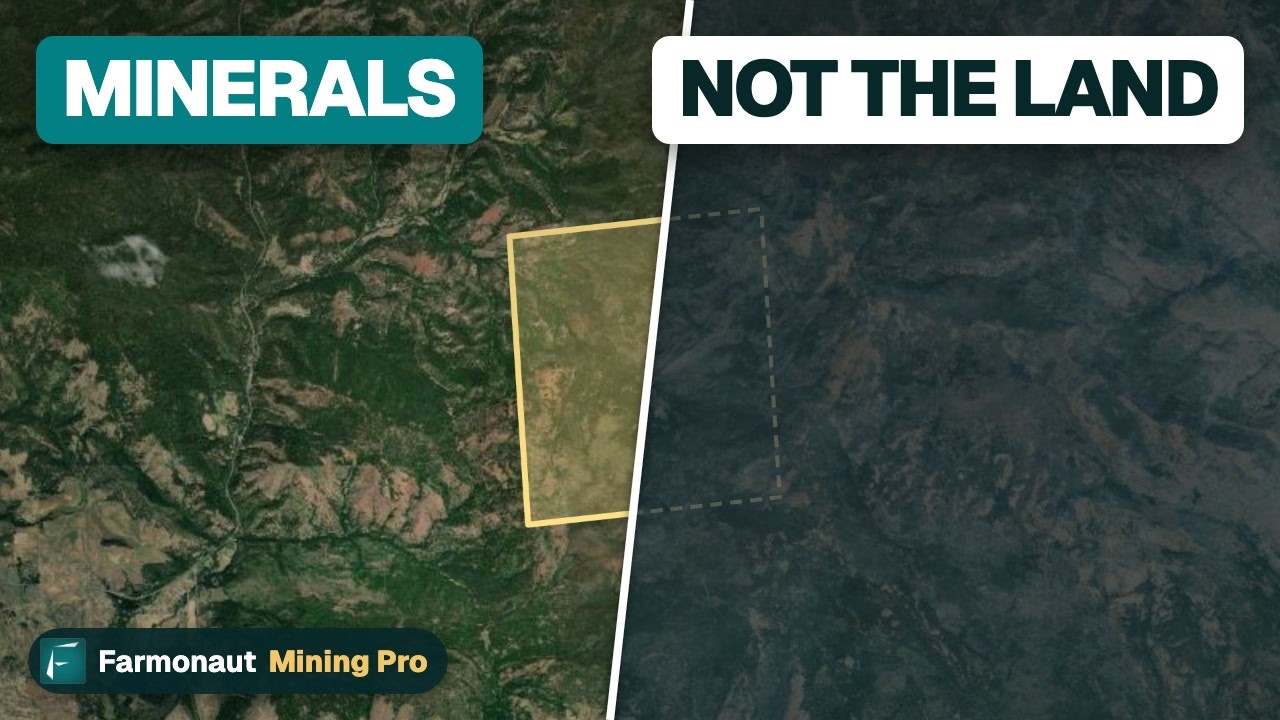
▶ Explains why owning a gold claim is not owning the land and how to buy a claim safely. · 3:19
Where gem ground is found: Montana sapphire first
Montana’s sapphire districts are a well-documented case, and they show how different two “gem mines” can be. A 2017 field report in Gems & Gemology found that the Missouri River bars and Rock Creek hold sapphires in gravel, while the Yogo and Dry Cottonwood Creek mines had been suspended for many years (GIA, Gems & Gemology, Summer 2017). The same report gives the working figures a buyer should know:
- Eldorado Bar, about 15 miles northeast of Helena, has six independently owned mines. One mine run of about 100 cubic yards produced 1,045 carats of sapphire, roughly 10 carats per cubic yard. A carat is 0.2 gram, the unit gem rough and cut stones are sold by.
- Rock Creek, known locally as Gem Mountain, had two active operations. Earlier work cited in the report found only about 8% of the sapphires marketable as gems, and most stones are pale blue or green.
- Heat treatment is normal. At Gem Mountain, the owner estimated 30 to 40% of stones gain a marketable blue colour after a reducing “blue burn”.
- Overburden decides cost. Where gravel lies under more than 100 feet of cover, the authors call it uneconomic to mine.
Read those four points as a seller would not: most of the rough is not gem quality, much of the gem rough needs heat, and the ground is only worth mining where the gravel is shallow. Ask the seller for sample weights and gem-grade results from the exact ground, not a district average.
Mount Antero claims for sale: aquamarine ground in Colorado
Searches for Mount Antero claims for sale, or Mt Antero mining claims, point to one of Colorado’s best-known gem areas. The Colorado Geological Survey says aquamarine, the state gemstone, is found on the upper slopes of Mount Antero in Chaffee County, mostly around the 13,000-foot (4,000 m) level, in pegmatites and cavities in the Mount Antero Granite (Colorado Geological Survey, Gemstones). A pegmatite is a coarse-grained igneous rock that can hold large crystals; our pegmatite deposits guide explains the types.
The survey also states that much of the aquamarine-bearing outcrop is claimed by private entities and cannot be accessed without permission. The same applies to the Crystal Peak amazonite area near Lake George. For a buyer, that points to four checks before any offer on a high-altitude gem claim:
- Confirm the claim serial number and status in BLM’s MLRS, not just on the listing.
- Ask who manages the surface and which office handles notices of operations.
- Walk the route: at 13,000 feet the season, road and snow decide whether anyone can work the ground.
- Ask for the claim’s work history. Records of digging, sampling or sales are worth more than a photo of a crystal.
Plot the claim corners against the recorded map before you pay, so you know exactly which ground is on offer.
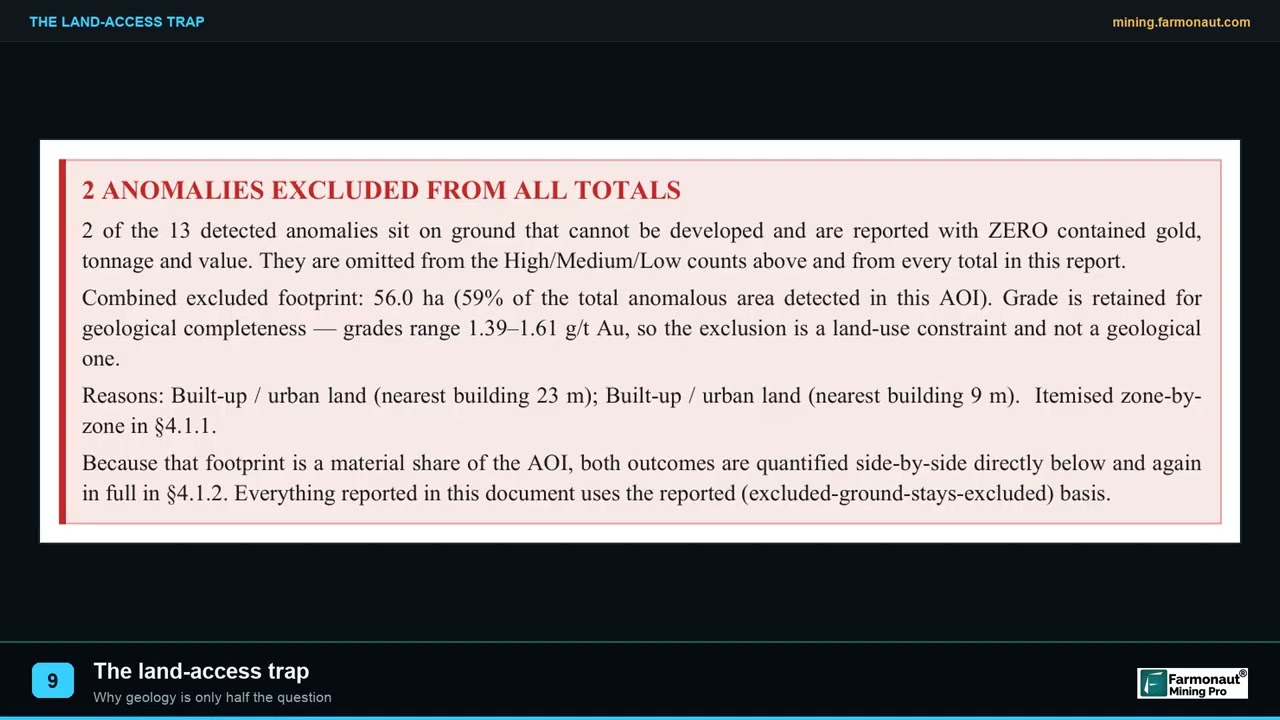
▶ Shows a survey where 59% of anomalous ground sat under a town, blocked by land access. · 2:05
Turquoise mines and claims for sale: Nevada and Arizona
Turquoise is a copper-aluminium phosphate that forms near copper deposits. USGS lists turquoise among the natural gem materials produced in the United States and ranks Arizona first in natural gemstone value, followed by Oregon, California, Nevada, Montana and Maine (USGS Mineral Commodity Summaries, gemstones). That makes Arizona and Nevada the usual places to look for a turquoise mine or turquoise claims for sale.
Three buyer points are specific to turquoise:
- Treatment changes value. The International Gem Society notes that some turquoise is dyed, rebuilt from dust and polymer, or coated with polymer or epoxy to improve hardness (IGS treatment cheat sheet). Ask what share of the old output was natural, hard material and what share needed stabilising.
- Check every claim in the block. A named mine can cover several claims with different holders, so confirm each serial number and its status.
- Nevada deadlines are strict. A Nevada locator must file with the county recorder and BLM within 90 days of posting the notice, and failing to do so voids the claim (Nevada Division of Minerals, Mining Claim Procedures).
Where a seller names a famous mine, ask for the claim map and the production record. Claims near a famous name can be on different ground, with different owners and different geology.
Montana gold claims for sale: what the ground can hold
Montana gold claims for sale are an older market than gem claims, and the state has the records to judge them. A USGS Open-File report counts 446 Montana deposits in 22 counties that produced, or may be able to produce, more than 500 ounces of gold. Twelve have produced or hold more than 500,000 ounces each, and 60 others sit between 50,000 and 500,000 ounces (USGS Open-File Report 90-241). The same report puts Montana’s gold output at about 19.3 million ounces of lode and placer gold from 1852 through 1988, about half of it mined before 1900 when records were poor.
Chart
Montana gold deposits by size
Number of deposits with more than 500 oz of gold, by contained and produced gold
The chart above shows the split. It is why the average gold claim for sale is a small, unproven piece of ground: most of the state’s known deposits are small, and the great districts have been worked for a century.
Before you buy a Montana gold mining claim, three questions matter more than the grade the seller states:
- Is it placer or lode? Placer claims are charged BLM maintenance fees per 20 acres, lode claims per claim.
- What is in the neighbouring ground? Many Montana districts are made up of patented parcels, old unpatented claims and private ranches. Our guide to gold mining in Montana covers districts, permits and fees, and Montana mineral rights explains who owns what under the surface.
- What does the permit file say? Ask for the DEQ file number of any past work. Past DEQ work on the ground can restrict what a buyer may start (see the Montana rules below).
The US gem market in numbers
Gem mining in the United States is small. USGS estimates the combined value of US natural and synthetic gemstone output at US$47 million in 2025, down 30% from 2024. Natural stones were about US$9.4 million of that, and the country relied on imports for 99% of its apparent consumption (USGS Mineral Commodity Summaries, gemstones, 2026). USGS lists carvings, gem and mineral collections and jewelry as the major end uses.
Chart
US gemstone production, 2021 and 2025 estimate
US$ million
Chart
US gemstone imports for consumption
US$ million a year, all gemstones (mostly diamonds)
The practical reading is that US gem mining is a niche business: USGS counts about 1,100 people employed at gem mines nationwide. Your return depends on a retail route, such as a fee-dig, a shop, a cutting business or a direct buyer, more than on a mine’s headline grade. That is the number to test in any business plan a seller gives you. The two charts here use the USGS figures.
What a gem or gold claim costs to buy and hold
The asking price is only the first bill. BLM sets these federal fees for claims filed on or after 1 September 2024 (BLM, Mining Claim Fees):
Chart
Yearly BLM maintenance fee by number of lode claims
US$ per year at US$200 per claim, before any waiver
- A new lode claim, mill site or tunnel site costs US$274 in the first year: US$25 processing, US$49 location and US$200 maintenance.
- Each existing claim has a US$200 maintenance fee due on or before 1 September. Placer claims pay US$200 per 20 acres or part of 20 acres.
- A holder of 10 or fewer claims nationwide can file a maintenance fee waiver. The waiver itself has no fee, but the holder must file an affidavit of assessment work, and a US$15 per claim processing fee applies, on or before 30 December.
- Transferring a claim needs a signed, notarised deed and a US$15 per claim, per grantee BLM processing fee (BLM Montana-Dakotas packet).
County recording fees, a land survey and any lawyer or title costs come on top and vary by county. Treat them as inputs, not facts. The calculator below turns an asking price into a total cost and a break-even carat count.
Claim holding cost and break-even calculator
Use the tool to compare a seller’s price with the cost of holding the claims. It uses BLM’s US$200 yearly lode maintenance fee and US$15 per claim transfer fee and treats the carat price as your own estimate. It does not tell you how many carats the ground holds.
Calculator
What will this claim package really cost me?
Enter the asking price, claim count and years you plan to hold.
- Average cost per year: $4,832
- Carats of sold rough to break even: 1,208
Example values only, not a benchmark. Uses BLM’s US$200 per lode claim per year and US$15 per claim transfer fee (BLM, fees for claims filed from 1 September 2024). County fees and the rough price per carat are your own inputs; it does not estimate how many carats the ground holds. Placer claims are charged per 20 acres.
Montana rules before you dig
Montana adds three layers to the federal claim: staking, county recording and an environmental permit. BLM’s Montana guidance sets the clock after a claim is located: stake within 30 days, record the certificate of location and map with the county clerk and recorder within 60 days, and file with BLM within 90 days of location (BLM Montana-Dakotas packet). Only a claim filed with BLM gets a serial number.
Infographic
Montana claim and permit clock in 5 steps
- 1Stake the claimPlace a stake at each corner within 30 days of the location date.
- 2Record with the countyFile the certificate of location and map with the county clerk and recorder within 60 days.
- 3File with BLMFile within 90 days of location to get a serial number.
- 4File with DEQSubmit a small miner exclusion or operating permit and post any placer bond.
- 5Pay each yearPay US$200 per lode claim by 1 September, or file the waiver by 1 September and the assessment affidavit by 30 December.
Digging is regulated separately by the Montana Department of Environmental Quality (DEQ) under the Metal Mine Reclamation Act. DEQ’s small miner exclusion lets a small operation work without a full operating permit, with these limits (Montana DEQ, Small Miner Exclusion Statement):
- Total surface disturbance cannot exceed 5 acres, and one miner can hold up to two exclusion statements at a time.
- Two statements held by the same miner must be at least 1 mile apart.
- Placer and dredge miners must post a US$10,000 reclamation bond first, unless DEQ calculates a lower amount from an addendum, and must reclaim within 6 months after mining stops.
- The statement is renewed each year and cannot be used for exploration.
“Recreational mining” needs no statement only if all of these are true: no motorised equipment, no blasting, no more than 100 square feet of disturbance, no more than 50 cubic yards of material, no mercury and no cyanide. DEQ also says it does not administer mining claims, and that a Forest Service or BLM approval does not replace a DEQ filing. Ask any seller for the DEQ history of the site: a small miner exclusion cannot be placed on ground previously operated under an operating permit or reclaimed by a public agency.
An eight-step check before you pay
This sequence works for gem claims, turquoise claims and gold claims alike. Do it in order, because each step can end the deal at no cost to you.
- Get the serial numbers. Every valid claim recorded with BLM has one.
- Look each claim up in MLRS, BLM’s Mineral and Land Records System, and confirm owner, status and the date of the last maintenance fee or waiver (BLM, MLRS).
- Check the land is open. Use BLM surface management maps and the master title plat for withdrawals, wilderness study areas and private inholdings.
- Plot the corners on a map and walk the monuments. Compare them with the recorded description.
- Ask for the work record: assays, sample logs, receipts for sapphire, aquamarine or turquoise sales.
- Request the permit file from DEQ or the state agency, and the notice or plan of operations from BLM or the Forest Service.
- Get a title opinion if the ground includes patented parcels or leases.
- Close with a recorded quitclaim deed filed with the county and with BLM, and keep a dated copy of both.
Our guide to how to sell a mine covers the seller’s side of the same checklist, which is useful if you want to know what documents a serious seller should be able to produce.
Screen the ground with satellite data
Satellites cannot see a sapphire, an aquamarine crystal or a turquoise vein. What they can do is map the context around a claim: bare rock and outcrop, drainage lines, iron stains and clay-altered ground, old workings, roads and the disturbance already on the land. For a buyer this is a quick screen of a listing before a field trip, with a map you can compare to the seller’s claims. Our satellite mineral detection page describes what is covered, and a quote request starts a screen of your claim boundary. The output is an exploration target, not a resource estimate.

▶ Explains that satellites cannot see gold but map the rock, iron stains and faults around it. · 4:25
Frequently asked questions
How do I find gem mines for sale in the United States?
Listings appear on land and mining brokers’ sites, with claim holders and local rock shops. Treat each as an advertisement, then verify the owner and serial numbers in BLM’s MLRS. Mines on private land are sold as real estate, so a county title search applies.
Are gem claims for sale real mining claims?
Many are. Gemstones, including sapphires, are listed as locatable minerals under BLM’s guidance, so a valid unpatented claim on open federal land can cover them. The claim still has to be recorded with BLM and kept current with annual fees or a waiver.
What is the difference between a gemstone claim and a gem mine?
A gemstone claim is a legal right to a parcel. A gem mine is a working or formerly working operation with equipment, permits and production records. A buyer of a claim usually gets no equipment and no proof of production.
How much do gem mining claims cost to keep?
BLM charges US$200 per lode claim per year, and US$200 per 20 acres on a placer claim, due on or before 1 September. Holders of 10 or fewer claims can file a waiver instead and pay US$15 per claim to file an affidavit of assessment work by 30 December (BLM, 2026 fee page).
Can I buy Mount Antero claims for sale and dig aquamarine?
You can buy an interest in a valid claim, but the Colorado Geological Survey says much of the aquamarine ground is claimed by private entities and not open without permission. Confirm the claim in MLRS, check the land manager’s rules and look at access at high altitude before you buy.
Are Mount Antero mining claims on public land?
Mount Antero is in Chaffee County. Land status varies across the mountain, so check the surface owner in BLM’s records. On federal land, a claim gives rights to the minerals, not to the surface.
Can I buy a turquoise mine or turquoise mining claims?
Yes, but check whether the claim is on open federal land, whether it is current in BLM records and whether the seller’s turquoise was natural or treated. Many turquoise mines are inactive, so ask for recent sales records, not a name.
Do I need a permit to mine sapphires in Montana?
Mining beyond casual collection needs a DEQ filing. Montana DEQ’s small miner exclusion covers up to 5 acres of disturbance, and placer miners need a US$10,000 reclamation bond unless DEQ sets a lower amount. The exclusion cannot be used for exploration, so ask DEQ which filing applies.
What do Montana gold claims for sale usually include?
A recorded claim or group of claims, often with old workings and no current permit. A seller may offer maps and sample records. Montana has many districts with a long production history, so ask which district file and which USGS or state report support the claim.
Is gem mining profitable for a small owner?
It depends on the route to market. USGS puts US natural gemstone output at about US$9.4 million in 2025 across all producers, and Montana’s sapphire reports show that only part of the rough is gem quality. GIA’s 2017 report calls gem tourism an essential part of sapphire businesses in Montana, and in some cases the only part.
Can a satellite show if a claim has gems?
No. It can show outcrop, access, drainage, alteration and disturbance, which help rank claims for a field visit. A sample and a lab or gem cutter’s opinion are still needed to confirm gem material.
This page is for information only. It is not legal advice or investment advice. Confirm the rules and fees with BLM, the county recorder, the state mining agency and a mining lawyer. Get permission before you prospect, follow safety rules and never use mercury.
Farmonaut mining
Screen a claim from space before you buy it
Licence owners and consultants can request a satellite screen of a claim boundary to rank ground before sampling.

Mining Pro sample view, synthetic data
Keep reading
Sources
- BLM, Mining Claim Fees: blm.gov
- BLM Montana-Dakotas, Mining Claims Packet (February 2026): blm.gov
- BLM, Can I keep this?: blm.gov
- BLM, Mineral and Land Records System (MLRS): blm.gov
- USGS, Mineral Commodity Summaries 2026: Gemstones: pubs.usgs.gov
- USGS, Open-File Report 90-241, productive gold mines in Montana: pubs.usgs.gov
- GIA, Gems & Gemology Summer 2017, Montana alluvial sapphire deposits: gia.edu
- Colorado Geological Survey, Gemstones: coloradogeologicalsurvey.org
- Montana DEQ, Small Miner Exclusion Statement and FAQ: deq.mt.gov
- Nevada Division of Minerals, Mining Claim Procedures: minerals.nv.gov
- International Gem Society, Common gemstone treatments cheat sheet: gemsociety.org
Discussion
Questions, corrections or field experience? Share them below. First-time comments are reviewed before they appear, and your email is never published.
No comments yet. Be the first to add a question or your experience.

 WSP Investment Company
 Dalgety Minerals Pty Ltd
 Vortex Minerals Pty Ltd
 Faith At Work (Pty) Ltd
 Geotech Mining Solutions plc
 Vulcan International Limited
 Kidepo Associates
 GKY Mining
 Alkimy SARL
 Double A Trading
 GemSprout Metals Limited
 Qader Group
 Ileys General Trading
 SG Gold Mining LLC
 VRV Global Pte Ltd
 Omsri International FZE
 G.I.T.T.
 Jaunita Erss Ltd
 Almosi SARL
 SRK Consulting
 Berks Gold Limited
 Mwerezi Minerals Company Limited
 Mining SARL

 Exploration consultancy · South Africa · Gold










