

Mine reclamation · Cost and bond guide
Mine Reclamation Cost per Acre: Bonds, Timelines, Methods
Mine reclamation cost per acre starts from a 1975 benchmark of $8,168, roughly US$50,000 at 2026 consumer prices. The bond your regulator sets is what binds you, and part of it can stay held for five to ten years.
Key takeaways
- A 1975 study of 20 US coal surface mines averaged $8,168 per acre and $2.77 per ton (OSTI).
- Scaled by consumer prices, that is roughly US$50,000 per acre for 2026. It is a rough guide and not a quote (Minneapolis Fed CPI table).
- Federal law allows 60% of a coal bond back after regrading; the rest waits for plants and the liability period (SMCRA).
- Liability for plant growth runs five years, or ten where precipitation is 26 inches or less (SMCRA).
- Only $2.931 billion of the $14.233 billion collected by the AML fund remained unappropriated at 30 September 2025 (OSMRE).
In this article
- How much mine reclamation costs per acre
- How a reclamation bond is sized
- Restoration costs by who pays
- How long mine reclamation takes: the three bond phases
- Soil, water and forest: the three restoration pillars
- Land terracing: where it fits and where it does not
- Arid vs. arable land: why the distinction matters
- Restoration approach by land type
- Returning restored land to agricultural use
- Westmoreland Mining LLC: seven land restoration impacts to track
- Tracking restoration with satellite monitoring
- Estimate your reclamation cost
- Frequently asked questions
One published benchmark for mine reclamation cost per acre is $8,168 per acre, from a study of 20 US coal surface mines dated 1975. Scaled by the consumer price index (53.8 in 1975, 333.2 estimated for 2026), that is roughly US$50,000 per acre at current prices. Treat this as a rough order of magnitude and not a quote. The number that binds an operator is the bond set by the regulator for that permit.
Mine reclamation means returning mined ground to a stable, usable state: filling and shaping the pit, replacing soil, controlling water and growing plants that meet a set standard. This guide covers what drives the cost, how a bond is sized and released, how long the work runs under US law, and how to test your own acreage in the calculator further down.
How much mine reclamation costs per acre
The study behind the $8,168 figure, by Evans and Bitler, estimated costs from site visits, interviews and the authors’ own cost methods at 20 operations in the Appalachian and Midwestern coal districts. It split cost into three parts: pre-mining planning, backfilling and revegetation. It also reported the average as $2.77 per ton of coal produced. The OSTI record dates the report to 1975, before the federal surface mining law of 1977 existed.
Chart
Reclamation cost per ton of coal, by mining method
US$ per ton in the study’s 1975-era dollars; 20 Appalachian and Midwestern operations
That date matters in two ways. First, prices have moved about sixfold since then on the consumer price index. Second, the study pre-dates federal rules on restoring slope, handling topsoil and proving plant growth, so it may not reflect the work a modern permit requires. A general price index also says little about diesel, earthmoving or seed prices. Use the scaled figure to size a conversation and not a budget.
What moves the cost per acre
- Mining method. The same study found the widest gap between area mining at $1.73 per ton and contour mining at $3.81 per ton. Area mining works flatter ground in long strips. Contour mining follows a seam around a hillside.
- Earth to move. Backfilling was one of the three cost categories in the study, and it was measured per cubic yard of overburden, the rock and soil above the seam.
- Slope and geology. The federal bond rule names topography, geology, hydrology and revegetation potential as the factors that show how hard a site is to reclaim.
- Water treatment. On federal hardrock ground, the guarantee must also include building and running any treatment plant needed to meet environmental standards.
- Who does the work. A bond is priced as if the regulator or a contractor had to finish the job, so it can differ from the operator’s own cost.
How a reclamation bond is sized
Under the Surface Mining Control and Reclamation Act (SMCRA), the US law for coal, an operator must file a performance bond before the permit is issued. The bond is a financial promise that backs the reclamation work. The amount must be enough for the regulator to complete the reclamation plan after a forfeiture, and it can never be less than $10,000 for the entire area under one permit.
The federal rule says the amount is set by the regulatory authority, based on but not limited to the applicant’s cost estimate. It also lets a permittee ask for a reduction with evidence that its methods lower the estimated cost. In practice, that makes a detailed earthwork and revegetation estimate worth paying for before you apply. The law also allows surety bonds, cash, government bonds and certificates of deposit, and self-bonding for applicants who can show solvency and a record of continuous operation.
Hardrock mines use a different rule
SMCRA covers coal. Gold, copper and other hardrock operations on federal public land fall under 43 CFR 3809, where the financial guarantee must cover the estimated cost as if BLM hired a third party to reclaim the site. The Bureau of Land Management (BLM) can review that estimate and require more cover. BLM’s Arizona permit guide adds that interim stabilization and upkeep while contracts are arranged must be covered too, and that casual use with negligible disturbance needs no guarantee. State rules apply as well. Outside the US, ask the licensing authority what closure plan and financial security it requires.
Restoration costs by who pays
Three separate pots pay for reclamation. A working operator pays for its own site. A bond pays if that operator defaults. For coal sites abandoned before 1977, the federal Abandoned Mine Land (AML) fund pays, through a fee on each ton of coal mined.
Chart
Federal reclamation fee: original rate vs current rate
Cents per ton of coal
Chart
Where the AML fund’s $14.233 billion went
US$ billion, lifetime collections to 30 September 2025
The AML fund has collected $14.233 billion as of 30 September 2025, including interest, but that is the lifetime total and not a balance. OSMRE, the federal Office of Surface Mining Reclamation and Enforcement, reports that $2.931 billion remains unappropriated. The rest went to state and tribal grants, miners’ health and retirement funds, and operating costs and emergencies.
Hardrock has no equal fee. BLM says as many as half a million abandoned mines are believed to exist and that removing hazards will take decades. The coal fee itself has been cut. The 2021 law lowered it to 22.4 cents per ton for surface coal and extended collection through 30 September 2034.
How long mine reclamation takes: the three bond phases
There is no national average timeline, because each permit differs. The law does set the steps and a minimum liability period, and these give you a planning frame.
Infographic
From last cut to full bond release in 4 steps
- 1Backfill and regradeShape the land and set up drainage, then apply for Phase I.
- 2Replace soil and seedSpread topsoil and plant the approved mix.
- 3Establish vegetationShow plant growth and sediment control for Phase II.
- 4Finish the liability periodWait five or ten years, then apply for Phase III.
| Phase | Work finished | Bond released | Timing rule |
|---|---|---|---|
| Phase I | Backfilling, regrading, drainage control | 60% of the bond for the area | After inspection and approval |
| Phase II | Revegetation established | A further amount; enough is held back to redo the planting | Not while the land sends excess sediment off the permit area |
| Phase III | All reclamation complete | The remainder | Not before the liability period ends |
The 60% Phase I release and the later phases come from SMCRA and the matching federal bond release rule. The regulator must inspect within 30 days of an application, or as soon as weather allows.
The liability period is the part many budgets miss. The operator stays responsible for revegetation for five full years after the last seeding, fertilizing or irrigation. Where average annual precipitation is 26 inches or less, the period is ten years. Land eligible for remining has shorter periods of two and five years. Land eligible for remining has shorter periods of two and five years. Any re-seeding or irrigation can restart that clock, so cutting corners early can add years of bond cost later. Bonded money tied up for a decade has a real carrying cost, even after the earthwork is done.
Soil, water and forest: the three restoration pillars
Soil. The law requires operators to remove topsoil as a separate layer and replace it, or store it separately, keeping stored piles under a cover of plants so wind and water do not strip them. The land must also be graded back to its approximate original contour, with highwalls and spoil piles removed, unless a variance applies.
Water. Sediment ponds and channels catch runoff during the work. Water also decides bond release: no Phase II money comes back while the land sends excess suspended solids off the permit area. The inspection also looks at whether surface or groundwater pollution is occurring.
Plants and trees. Federal rules test success against unmined reference land or another approved standard, and count a site as passing at 90% of that standard, at 90% statistical confidence. Trees and shrubs only count once they are healthy and have been in place for at least two growing seasons. For forest or wildlife end uses, the state sets stocking levels after consulting its forestry and wildlife agencies.
▶ The environmental impacts of mining, explained in clay · 2:31
Land terracing: where it fits and where it does not
Terracing cuts a slope into level or gently graded steps so water slows down and drops its sediment. It is best known as a farm practice, and it is not a general requirement of mine reclamation. Since the federal default is to restore approximate original contour, benches on a final slope normally need to be part of the approved plan. A temporary terrace-style bench can help control erosion while plants take hold. For farm terracing, the state office of the USDA Natural Resources Conservation Service is the place to ask about current design standards and cost.
▶ Strip mining explained: pros, cons and the fix · 4:37
Arid vs. arable land: why the distinction matters
Two rainfall numbers are often confused. The USDA thesaurus describes arid lands as typically getting less than 10 inches of precipitation a year. That is a description of land. The legal line for coal reclamation is different: 26 inches or less means a ten-year liability period and not five. A site with 20 inches of rain is not arid in the USDA sense, yet it still carries the longer period.
Arable land simply means land that can be plowed for crops. It is a use class and not a rainfall class. What matters for a permit is the approved post-mining use and the reference land it is compared with. Drier sites grow slowly, and plants may not establish on the first try, so the western US coal fields need a longer budget horizon than the wetter eastern ones.
Restoration approach by land type
| Post-mining use | Main challenge | Common methods | Federal success test |
|---|---|---|---|
| Cropland | Topsoil loss, compaction, altered drainage | Topsoil replacement, deep ripping, soil amendments, crop trials | Crop production at least equal to a reference area or approved standard |
| Grazing land or pasture | Slow plant growth, limited soil moisture | Adapted seed mix, contour grading | Ground cover and production at least equal to a reference area or approved standard |
| Forest products or wildlife habitat | Loss of canopy and understory | Native tree and shrub planting | Tree and shrub stocking set by the state, plus ground cover |
| Steep regraded slopes (any use) | Erosion before plants take hold | Approved benches, channels, sediment ponds | Sediment limits and the test for the approved use |
| Abandoned coal land from before 1977 | No operator left to pay | State or tribal AML projects | Set by the AML project |
Returning restored land to agricultural use
Prime farmland has its own test in the statute. On prime farmland, the bond is not released until soil productivity matches the yield of nearby unmined land of the same soil type under equal management. Elsewhere, cropland must produce at least as much as a reference area or meet another approved standard. For scale, the USDA counted 377 million acres of US cropland in 2022, counting idled and pastured cropland. That was the lowest level since the series began in 1945.
The usual order is to regrade, replace soil, relieve compaction, grow a cover crop, test the soil, then bring in the target crop in stages. If the topsoil pile sat too long, expect slower recovery, and plan the mine sequence so that soil moves straight from a new cut onto a finished area wherever possible.
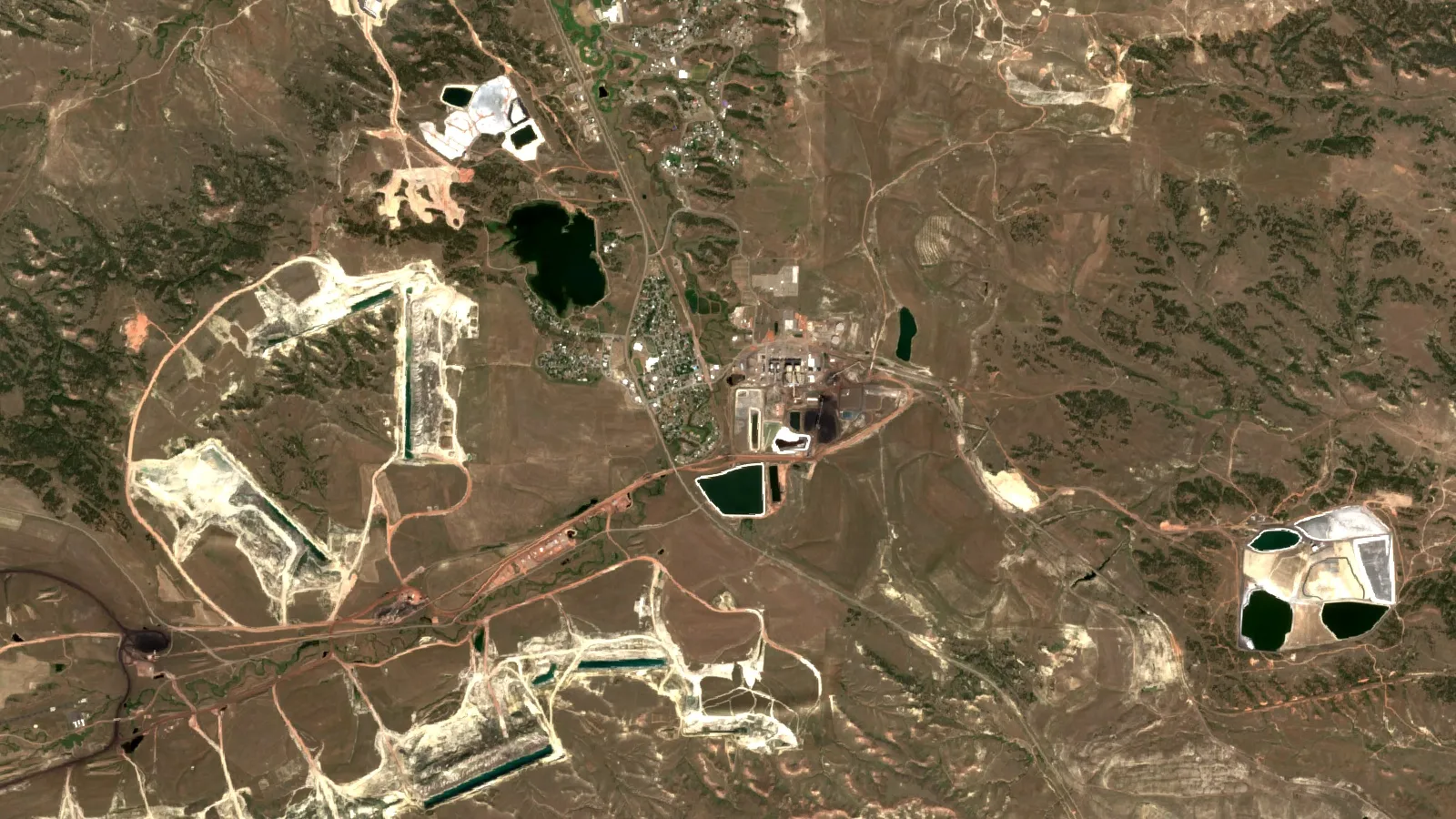
Westmoreland Mining LLC: seven land restoration impacts to track
Westmoreland is a useful real example. EIA data lists Westmoreland Mining Holdings LLC at 6.862 million short tons of US coal in 2024, with the Rosebud surface mine in Montana producing about 5.98 million short tons. Montana’s Department of Environmental Quality posts bond release files for Westmoreland Rosebud Mining and Westmoreland Savage Mining, so anyone can read this kind of paperwork. The company’s website says it aims to restore land to an equal or better condition.
Whichever operator you are looking at, a license owner, neighbor or investor can track seven things in the permit and release files:
- Landform: is the regraded land back to approximate original contour, or is a variance in place?
- Topsoil: where was it stored, for how long, and was the pile kept covered?
- Sediment: does runoff leaving the permit area meet its limits?
- Water quality: do surface and groundwater reports show pollution?
- Vegetation: how do cover, production or stocking compare with the reference land?
- Land use: has the approved post-mining use changed since the permit was issued?
- Money: how much bond is still held, and how long does the liability period have to run?
Tracking restoration with satellite monitoring
Satellite imagery gives a dated, repeatable record of bare ground, plant cover and new disturbance across a whole site. A vegetation index such as NDVI, which compares red and near-infrared light, can show whether reclaimed ground is greening up across seasons and how it compares with nearby unmined land. This helps an owner or consultant spot weak patches before a formal sampling round. It does not replace that sampling, since regulators set their own methods for bond release.
At the other end of a mine’s life, Farmonaut offers satellite-based mineral detection to screen a license area for exploration targets before fieldwork. Results are targets that sit ahead of a resource estimate, and they are not an environmental clearance. For a project price, use the mining quote form, or contact the team with questions.
For nearby topics, see our guides to Montana mineral rights, gold mining in Wisconsin and choosing a mine development company.
▶ Remote sensing for mining in plain language · 2:01
Estimate your reclamation cost
The calculator scales the 1975 study figure, adds your own multipliers and shows how much bond would stay tied up after a Phase I release. Replace the defaults with your engineer’s numbers as soon as you have them.
Calculator
What might reclaiming your acreage cost?
Enter your own acreage and multipliers.
- Per acre (US$): $60,770
- Held after a 60% Phase I release (US$): $2,430,797
Example values only, not a benchmark or a bond quote. The base cost is the 1975 average of $8,168 per acre (OSTI 7338544). The default price multiplier of 6.2 is CPI 333.2 (2026 estimate) divided by 53.8 (1975), from the Minneapolis Fed table. The difficulty multiplier and overhead are examples for you to replace. The defaults give about US$60,800 per acre, because the 20% overhead is added to the scaled figure of about US$50,000. The defaults give about US$60,800 per acre, because the 20% overhead is added to the scaled figure of about US$50,000. The 40% held after Phase I follows the 60% federal release and is fixed in the formula. The $10,000 federal coal permit minimum is applied.
Frequently asked questions
How much does land reclamation cost per acre?
One published figure for US coal surface mines is $8,168 per acre in a 1975 study, or roughly US$50,000 scaled by consumer prices to 2026. Real sites vary widely, so get a site estimate.
Is the additional expense of mine reclamation necessary?
In the US, yes, for permitted coal mines and for operations on federal land beyond casual use. The law requires it and a bond backs it. There is also a practical reason: the AML fund and BLM’s estimate of as many as half a million abandoned mines show what happens when no one pays at the time of mining.
Who pays for mine reclamation?
The operator pays on an active site. If it defaults, the bond pays. For coal land abandoned before 1977, the AML fund pays through grants to states and tribes.
How long does mine reclamation take?
Earthwork can come first, but federal coal rules keep the operator responsible for plants for five full years after the last seeding or irrigation, or ten where precipitation is 26 inches or less.
What is a reclamation bond?
It is a financial guarantee filed before a permit is issued. It is sized so that the regulator could finish the reclamation plan if the operator did not. The federal minimum for a coal permit is $10,000.
How much of the bond comes back after regrading?
Federal rules allow 60% of the bond for the area after backfilling, regrading and drainage control. The rest comes back after revegetation and after the liability period ends.
What is a land reclamation drill?
In this work, a drill usually means a seed drill: a machine that places seed into the soil in rows instead of scattering it on the surface. A rough, stony reclaimed surface may need a heavy-duty model, so ask the seed plan designer which one suits your mix.
Is terracing part of mine reclamation?
Not as a general rule. Benches can be used on steep regraded slopes to control erosion when they are part of the approved plan, but the federal default is to restore approximate original contour.
What rainfall makes a site fall under the longer liability period?
Average annual precipitation of 26 inches or less means ten years under SMCRA. It is a different line from the 10-inch figure often used to describe arid land.
Do these rules apply to gold or copper mines?
SMCRA applies to coal. Hardrock operations on federal land follow 43 CFR 3809, while state law and, outside the US, the national regulator set further requirements.
Can satellite images prove reclamation has succeeded?
They can show trends in plant cover across a whole site and over time. Bond release still depends on the sampling methods and standards chosen by the regulator.
This page is for information only. It is not legal or investment advice. Confirm the rules and bond amounts with your regulator.
Farmonaut mining
Get a quote for your project area
Send your license boundary as KML, KMZ or a polygon and ask for a quote on a satellite screen of the ground.

Mining Pro sample view, synthetic data
Keep reading
Sources
- OSTI, Evans and Bitler, Coal surface mining reclamation costs (1975): osti.gov
- Federal Reserve Bank of Minneapolis, Consumer Price Index 1913-: minneapolisfed.org
- OSMRE, Reclaiming Abandoned Mine Lands (fund status at 30 Sept 2025): osmre.gov
- 30 U.S.C. 1259, Bonds: law.cornell.edu
- 30 U.S.C. 1265, Performance standards: law.cornell.edu
- 30 U.S.C. 1269, Release of bonds: law.cornell.edu
- 30 U.S.C. 1232, Reclamation fee: law.cornell.edu
- eCFR, 30 CFR Part 800, Bond requirements: ecfr.gov
- eCFR, 30 CFR Part 816, Performance standards: ecfr.gov
- 43 CFR 3809.552, Individual financial guarantee: law.cornell.edu
- BLM, Abandoned Mine Lands: blm.gov
- BLM, Arizona mine permit guide: blm.gov
- USDA NAL Thesaurus, arid lands: lod.nal.usda.gov
- USDA ERS, Major Land Uses: ers.usda.gov
- Montana DEQ, Coal program and bond release files: deq.mt.gov
- EIA, Annual Coal Report 2024 (November 2025): eia.gov
- Westmoreland Mining, company website: westmoreland.com
Discussion
Questions, corrections or field experience? Share them below. First-time comments are reviewed before they appear, and your email is never published.
No comments yet. Be the first to add a question or your experience.

 GemSprout Metals Limited
 Qader Group
 Ileys General Trading
 SG Gold Mining LLC
 VRV Global Pte Ltd
 Omsri International FZE
 G.I.T.T.
 Jaunita Erss Ltd
 Almosi SARL
 SRK Consulting
 Berks Gold Limited
 Mwerezi Minerals Company Limited
 Mining SARL
 SenGold Invest SAS
 Sean Mining Limited
 NTS Group (Pty) Ltd
 Mine4Africa
 Lithspo Minerals Limited

 Client · Oregon, USA · Gold










