

Auger Farming, Farming Ginger: 7 Ways to Boost Yields
“Auger farming can increase ginger planting efficiency by up to 40% compared to traditional manual methods.”
“Modern auger tools enable precise ginger seed placement, improving yield consistency by approximately 25%.”
- Introduction: Auger Farming & Farming Ginger
- What is Auger Farming, and Why Ginger?
- Comparative Table: Traditional vs. Auger-Based Ginger Cultivation
- Soil Bed Preparation with Augers
- Planting Efficiency: Boosting Ginger Yields with Augers
- Weed Control & Soil Hygiene: Auger Approaches
- Harvest Handling & Post-Harvest: Auger Advantages
- Farm-to-Forest Consistency & Sustainability
- Equipment Considerations for Auger Farming
- 7 Ways Auger Farming Boosts Yields in Ginger Cultivation
- Farmonaut: Empowering Precision Agriculture
- Ginger & Auger Farming FAQs
Introduction: Auger Farming & Farming Ginger
Auger farming, farming ginger. These are more than just buzzwords—they represent practical, innovative approaches to modern agriculture focused on maximizing yield, improving soil health, and optimizing labor efficiency. This article dives deep into how auger-based tools and methods, when applied to ginger cultivation, transform the entire production chain—from soil preparation to harvest handling. Whether you operate a large commercial farm or a smaller plot, understanding the intersection of these approaches can help you streamline your field operations, maintain sustainability, and produce robust, high-quality ginger crops.

In this comprehensive guide, we explore:
- How auger-based farming is revolutionizing ginger cultivation
- Key benefits of using augers in field and post-harvest operations
- 7 practical strategies to boost ginger yields sustainably
- Comparative insights (Traditional vs. Auger-Based Methods)
- Expert tooling, best practices, and essential precautions
What is Auger Farming, and Why Ginger?
Auger farming refers to the use of powered or manual augers to efficiently move soil, plant material, or other materials during key farming operations. In ginger cultivation, augers are invaluable for tasks such as bed preparation, planting, and harvest handling. By reducing labor intensity, improving uniformity, and minimizing compaction, augers help to create optimal conditions for ginger rhizome development and sustainable yield increases.
- ✔ Auger farming streamlines the soil preparation, planting, and harvesting of ginger, enhancing both productivity and sustainability.
- 📊 Data insight: Studies and field experience suggest auger tools can increase planting efficiency by up to 40% and yield consistency by roughly 25%.
- ⚠ Risk: Improper use of augers can lead to soil compaction if not managed correctly, impacting overall root health.
Comparative Table: Traditional vs. Auger-Based Ginger Cultivation

Soil Bed Preparation with Augers
Ginger thrives in loose, fertile, well-drained soil rich in organic matter. Bed preparation is foundational—creating elevated, aerated beds that promote proper drainage, root development, and even growth.
- ✔ Using augers allows us to loosen compacted topsoil quickly and evenly, minimizing labor and ensuring consistency across the field.
- 📊 Data insight: Auger-based bed shaping cuts field prep time by up to 40% and enables better distribution of compost and other amendments.
- ⚠ Risk: Excessive turning or overly aggressive auger settings may disrupt soil structure; adjust operational settings for soil type and moisture to maintain optimal soil health.
Best Practices for Using Augers in Ginger Bed Preparation
- 🔄 Loosen & Aerate: Use powered augers to break up compacted soil without excessive turning, preserving beneficial structure.
- 🌱 Enrich with Compost: Blend organic amendments (compost, manure) directly into topsoil using auger attachments for even nutrient distribution and moisture retention.
- 🏗 Form Raised Beds: Auger-driven trenching and shaping produces raised, well-defined beds crucial for ginger root development and efficient water management.
- 📏 Uniform Bed Width & Depth: Maintain consistent bed dimensions to support uniform rhizome growth and efficient mechanized operations.
- 🌿 Reduce Labor Intensity: Replace manual digging with auger operations for scalable field preparation—ideal for both small plots and large-acreage farming.
- 🧑🔧 Operator Safety: Ensure training and protective equipment for all operators; the right settings minimize soil compaction and reduce accidental damage.
- 💧 Moisture Management: Blend compost to retain soil moisture, supporting ginger’s shallow root structure during dry spells.


Planting Efficiency: Boosting Ginger Yields with Augers
Proper ginger planting requires placing rhizome pieces at precise depths, spacing, and bed intervals. Augers transform this process by creating consistent furrows, slots, or planting holes—dramatically reducing both time and seedling loss.
- ✔ Uniform Spacing: Augers create uniform-width planting slots and maintain consistent seeding depth, critical for even germination and early vigor.
- ✅ Reduced Labor & Damage: Operators can quickly plant ginger rhizome pieces with minimal manual effort, reducing accidental damage compared to hand tools.
- 🌍 Scalable Operations: Attach auger tools to handheld implements for small plots or tractors for large fields, making them suitable for any scale of ginger farming.

How Augers Streamline Ginger Planting
-
Quick Creation of Furrows:
Rotary or helical auger bits quickly create shallow, uniformly spaced planting furrows, aligning with ginger’s requirement for specific spacing and depth. -
Consistent Slot Width and Depth:
This precision minimizes uneven growth and supports mechanical or manual placement of rhizome pieces. -
Reduced Seedling Damage:
By dropping rhizomes gently at consistent depths, the risk of breaking or injuring seedpieces is significantly lower. -
Efficient Covering:
The same auger or a follow-up pass can be used to cover planted rhizomes with soil and mulch, streamlining the operation. -
Enhanced Early Growth:
Better bed structure and seeding uniformity boost germination rates and early shoot vigor, resulting in more robust ginger crops.

Weed Control & Soil Hygiene: Auger Approaches
Weed management is essential for ginger cultivation. Weeds compete with ginger for water and nutrients, ultimately reducing yield. Augers offer effective ways to apply mulch, compost, and amendments directly into beds or furrows.
- 🌾 Mulch Application: Augers can precisely place organic matter such as straw, compost, or leaves on top of ginger beds, forming a mulch layer that suppresses weed emergence.
- 🧂 Nutrient Top-Dressing: Use augers for side-dressing organic fertilizers during the season, helping maintain nutrient supply and healthy soil structure.
- ♻️ Soil Refresh: Between crop cycles, augers rehabilitate old beds by aerating soil and incorporating organic amendments.
- ⚖️ PH Balancing: Distribute lime or other amendments to maintain optimal soil pH for ginger growth using augers for better accuracy & coverage.
- 💧 Moisture Retention: Mulch, applied by auger, conserves soil moisture—a crucial benefit for ginger’s shallow roots.

Harvest Handling & Post-Harvest: Auger Advantages
Harvesting ginger is a process that requires careful excavation of rhizomes to minimize breakage and soil loss. Here, auger tools can be adapted even for smaller farms unable to invest in large mechanized harvesters.
- ✔ Gentle Loosening: Manual or powered augers are used to loosen soil around ginger rhizomes just before lifting, reducing breakage and preserving crop quality.
- 📦 Efficient Transport: Use auger conveyors or screw mechanisms to move harvested rhizomes to washing or grading stations, minimizing manual handling.
- 🧽 Reduced Cleaning Labor: Auger-powered systems convey soil-laden rhizomes efficiently, allowing for easier washing, grading, and packing post-harvest.
Farm-to-Forest Consistency & Sustainability
Auger farming, farming ginger. At the intersection of modern agriculture, forestry, and sustainability, auger technology plays a crucial role in driving measurable improvements across the field-to-forest landscape.
- 🌐 Precision Input Application: Augers enable farmers to apply compost, organic amendments, and fertilizers exactly where needed—reducing input waste, runoff, and cost.
- 🔍 Enhanced Soil Health: Consistent bed aeration and reduced compaction promote soil biology, root health, and long-term yields.
- 🌿 Sustainable Practices: Augers facilitate conservation tillage and minimal soil disturbance, benefiting biodiversity and agro-ecosystem resilience.
- 👷♀️ Lower Operator Fatigue: By automating repetitive operations, augers minimize manual labor risk and fatigue—supporting workplace safety.
- 💱 Cost & Resource Reduction: Achieve greater output with less labor, less fuel, and fewer passes through the field. This translates to higher profitability and improved sustainability scores.
Auger-driven sustainability aligns with best practices across agriculture and traceability solutions — ensuring that every step from soil prep to harvest handling is documented, repeatable, and accountable.


“Auger farming can increase ginger planting efficiency by up to 40% compared to traditional manual methods.”
Equipment Considerations for Auger Farming
- ✔ Choose auger size for your field: Light, hand-held augers are great for smaller beds; motorized or tractor-mounted augers suit large-scale ginger plots.
- 🔄 Adapt attachments: Use rotary or helical auger types for different soil conditions: dryer soils may require heavier-duty augers, while moist soils benefit from self-cleaning mechanisms.
- 🛑 Prioritize safety: Always use guards, operator training, and maintenance schedules to reduce injury risk and downtime.
- 💡 Optimize for efficiency: Select augers with features like depth gauges, adjustable widths, and easy exchange bits to enhance precision.
- 🚜 Avoid over-compaction: Match auger rotational speed with soil type—fast for loose soil, slower for heavy, wet, or clay-rich fields to maintain soil porosity.
Visual List – Key Auger Types:
- ⚙️ Manual augers: lightweight, ideal for small beds, low power requirement
- ⚙️ Powered augers: gasoline/electric for medium plots, adjustable for soil/moisture
- ⚙️ Tractor-mounted augers: high capacity, suitable for large-scale commercial operations
7 Ways Auger Farming Boosts Yields in Ginger Cultivation
- Consistent Bed Preparation: Augers create uniform, well-formed beds vital for optimal root health and water management.
- Efficient Planting: Streamlined planting slots/furrows maintain correct spacing and depth—boosting germination rates.
- Reduced Labor & Handling: Mechanized processes lower manual effort, freeing up time and reducing operator strain.
- Optimized Fertility Input: Augers enable precision application of compost, mulch, and amendments, improving soil fertility.
- Superior Weed Management: Precise mulch/organic matter deployment by auger suppresses weeds, retaining soil moisture.
- Gentle Harvest Handling: Auger-assisted loosening minimizes rhizome breakage and maximizes marketable yield.
- Greater Scalability: Adaptable for all farm sizes, auger tools scale with your operation, delivering improved sustainability and yield year after year.
Farmonaut: Empowering Precision Agriculture
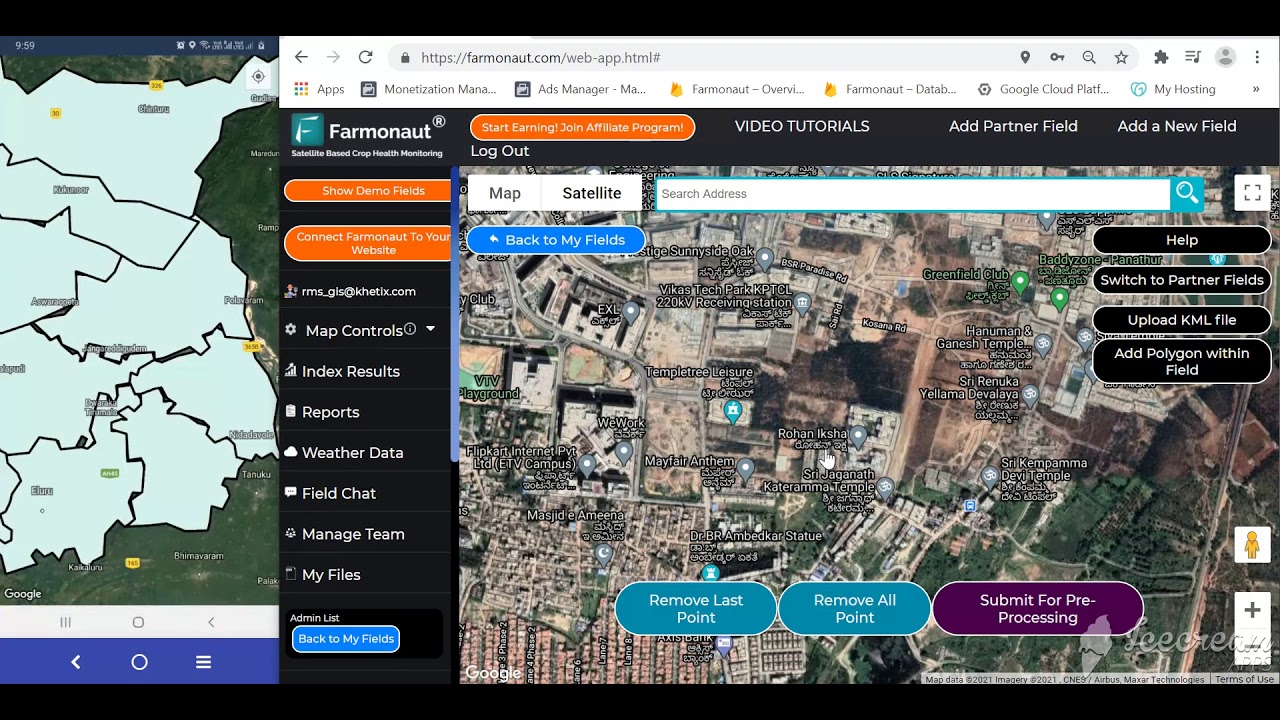
At Farmonaut, we leverage advanced satellite technology, AI, and blockchain to make precision agriculture accessible and affordable for farmers, businesses, and governments globally. Our solutions offer:
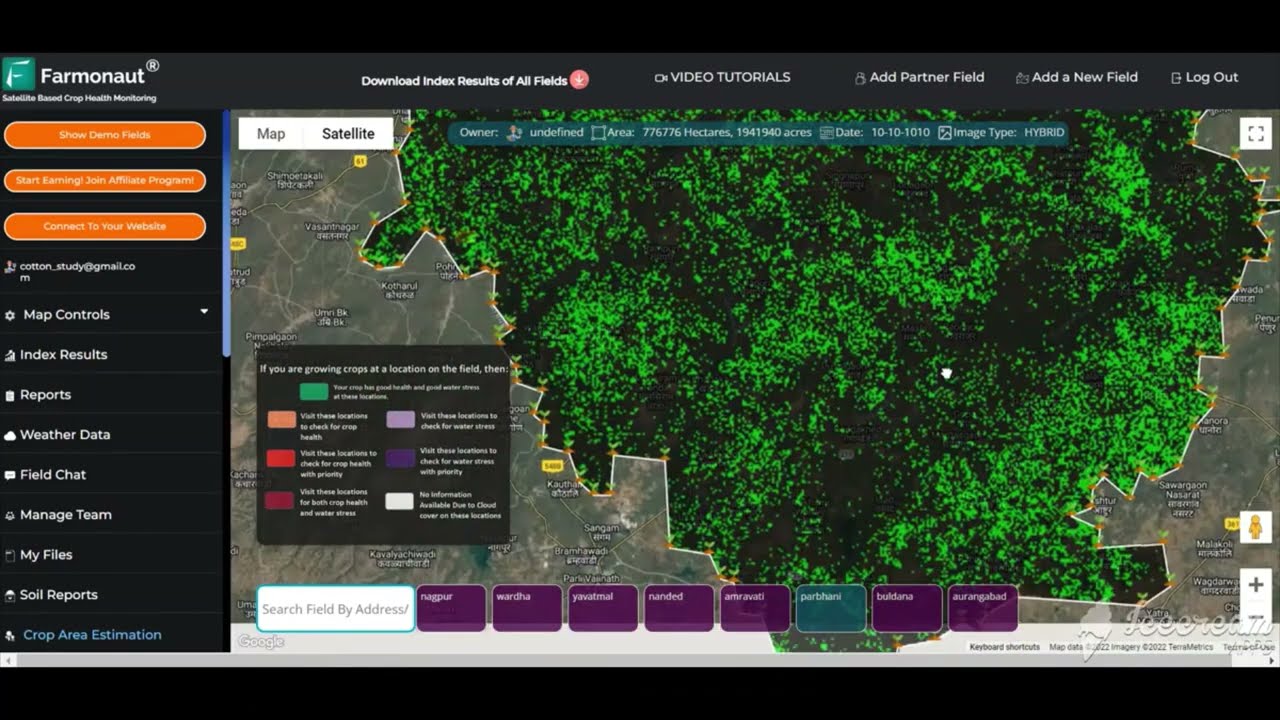
- 📡 Satellite-Based Monitoring: Gain real-time insights into crop health, soil moisture, and field conditions using multispectral imagery—helping you make data-driven decisions for ginger cultivation and more (large-scale farm management).
- 💡 Jeevn AI Advisory: Receive AI-driven, tailored farming advice and weather forecasts to optimize field operations and crop productivity.
- 🔗 Blockchain-Based Traceability: Ensure transparent supply chains in agriculture through traceability solutions, building trust with consumers and reducing fraud.
- 🚚 Fleet and Resource Management: Track vehicles and equipment across farms and mining plots to maximize operational efficiency (learn more here).
- 🌱 Environmental Impact Monitoring: Monitor your farm’s carbon output and environmental footprint with Farmonaut’s carbon footprinting module—supporting sustainability in all operations.
FAQs: Ginger & Auger Farming
Q1. What is the difference between manual and powered augers for ginger farming?
Manual augers are operated by hand and are ideal for smaller fields or raised beds, offering flexibility and precision in small plots. Powered augers can be engine- or tractor-driven, best suited for large-scale farming where efficiency and capacity are priorities. Both reduce labor, but powered augers dramatically boost speed and scale.
Q2. How do I decide auger size and attachment for my ginger plot?
Choose the auger diameter that matches your bed width and field requirements. For ginger, furrow or hole size should allow for easy placement of rhizome pieces at the required depth. For wet or clay-heavy soils, select self-cleaning or heavy-duty bits. Always consult with equipment suppliers for optimal pairing with your soil and crop needs.
Q3. Can auger farming be integrated into organic ginger production?
Absolutely. Auger farming assists in organic matter incorporation, precise compost application, and reduces reliance on manual tillage. These benefits fit perfectly with organic certification and sustainable ginger farming practices.
Q4. What steps should I follow to maintain soil health while using augers?
Monitor soil structure regularly. Avoid over-tilling or high-speed auger operation in wet soil to prevent compaction. Integrate organic amendments, rotate crops, and periodically deep-aerate to preserve long-term soil health and maximize ginger yield.
Q5. How does Farmonaut help ginger and auger farmers?
We provide real-time field monitoring and advisory solutions—helping ginger growers track crop health, optimize field preparation, and measure carbon/environmental impacts. Our API and mobile app tools adapt seamlessly to all scale of ginger and auger farming operations.
🔎 5 Key Auger Farming & Ginger Cultivation Bullet Points
- ✔ Uniform Planting: Augers guarantee precise bed structure and maximize crop potential.
- 📊 Labor Savings: Mechanization lowers cultivation labor requirements by up to 50% per acre.
- 🌱 Healthier Soil: Reduced soil disturbance preserves organic matter and boosts rhizome health.
- 💧 Better Moisture Retention: Accurate compost and mulch application preserves soil water, critical for ginger’s shallow roots.
- ⚙️ Adaptability: Tools and methods scale from smallholder to industrial plots—versatile across all related sectors.
Visual List: 5 Core Advantages of Auger-Based Ginger Farming
- 🌍 Boosts yield and sustainability in ginger farming
- 🛠 Enables rapid and uniform field preparation
- 🔧 Reduces labor intensity and operational costs
- 🪴 Improves soil health and rhizome root development
- 🔄 Facilitates efficient post-harvest handling and marketability
Visual List: How Augers Transform the 3 Main Stages of Ginger Cultivation
- 🟢 Soil Bed Preparation: Aerate, blend, and shape beds—faster & more evenly
- 🌱 Planting: Create uniform furrows, drop and cover rhizome pieces with unmatched accuracy
- 🌾 Harvest Handling: Loosen, lift, and transport rhizomes with gentle care and speed
Ready to transform your ginger output? Auger farming, farming ginger. Experience the boost in yields, sustainability, and operational ease—one bed at a time.
Explore more: Farmonaut crop area estimation & forest advisory services.
In Summary: Auger Farming, Farming Ginger. Optimize Every Stage, Boost Every Yield
By integrating auger tools with careful soil management and crop-specific practices, ginger farmers achieve higher yields, reduced labor costs, better sustainability, and improved soil structure. From field preparation through planting and harvest handling—these innovative tools and practices are key to meeting the demands of today’s agriculture.
- ❗ Remember: The right auger tool, proper operator training, and best practices will minimize damage, reduce compaction, and streamline every phase of ginger cultivation.
- 🧠 Auger farming, farming ginger. The intersection of modern tools with traditional crop wisdom is where productivity, sustainability, and profitability meet.

 Insignito
 Croptimum
 Dalmia Bharat Sugar
 DnCubed
 Pistachio ST
 Field Capacity
 Indosistim Teknologi
 Liquify Digital
 CU Foods
 BeyondTech Global
 Rouge VC
 AgroGreen Dynamics
 AgroRisk
 Oath Inc
 Reddane Farming
 Esri North East Africa
 Cresol
 MDCV UK
 Etech Consulting Madagascar
