

Sheep Drenching & Management: The Complete US Guide
Reviewed September 2026 against USDA NASS, SARE, and Penn State Extension.
Try it: Run your own numbers →
Drenching is the practice of dosing a sheep with a liquid anthelmintic (dewormer) by mouth to kill internal parasites, mainly gastrointestinal roundworms like Haemonchus contortus. It matters because internal parasites are one of the costliest ongoing health problems in US sheep flocks, and getting the dose, timing, and product rotation wrong is the single biggest driver of drench resistance. This guide covers what drenching sheep is, how to drench a sheep correctly, and how drenching fits into a broader sheep and livestock management system — with current USDA flock numbers, a dosage calculator, and links to source data you can check yourself.
Table of Contents
- What Is Drenching Sheep?
- The US Sheep Flock, in Numbers
- How to Drench a Sheep, Step by Step
- Sheep Drench Solutions and Product Classes
- Drench Resistance: Why It Happens and How to Slow It
- Sheep Management Beyond the Drench Gun
- Sustainable Livestock Management Practices
- Livestock Management Software for Sheep
- Dosage Calculator
- FAQ
- Try it: Run your own numbers

What Is Drenching Sheep?
“Drenching” means administering an oral dose of anthelmintic (dewormer) medication using a drench gun placed over the back of the tongue, so the sheep swallows the full dose rather than spitting it out. In animal production terminology, “drench” specifically refers to the liquid oral route, as distinct from injectable or pour-on anthelmintics, which treat the same parasites through different delivery methods. The goal is the same across all three: reduce the burden of internal parasites — principally barber’s pole worm (Haemonchus contortus), brown stomach worm (Teladorsagia circumcincta), and black scour worm (Trichostrongylus species) — enough to protect growth, wool, and reproduction without pushing surviving worms toward drug resistance.
Internal parasites are documented by university extension and USDA-funded research programs as one of the most-costly recurring diseases in sheep production, because subclinical infection quietly reduces weight gain and wool yield even when no sheep visibly dies. That is the economic case for drenching at all — but it is also the case for not over-drenching, since resistant worm populations built up through unnecessary treatment cost more in the long run than the disease itself.
The US Sheep Flock, in Numbers
Before getting into technique, it helps to know the scale of the industry this advice applies to. USDA’s National Agricultural Statistics Service (NASS) publishes an annual January 1 sheep and lamb inventory. As of January 1, 2025, the total US sheep and lamb inventory stood at 5.05 million head, of which 3.68 million were breeding sheep and 2.88 million were breeding ewes one year or older, per USDA NASS. The 2024 lamb crop totaled 3.04 million head, with a lambing rate of 106 lambs per 100 ewes one year and older — the metric NASS uses to track flock reproductive performance year over year.
Wool production for 2024 came in at 22.5 million pounds, and 27% of the US flock as of January 2025 was hair sheep or wool-hair crosses rather than traditional wool breeds — relevant because hair sheep breeds (Katahdin, Dorper, St. Croix) are commonly selected in US parasite-management programs partly for documented differences in parasite tolerance compared with wool breeds. NASS refreshes this entire data set annually; the next release covering 2026 year-end counts is expected January 31, 2027 via NASS’s Sheep and Lambs data page — bookmark that page rather than this figure if you need the current count.
How to Drench a Sheep, Step by Step
The core technique for how to drench sheep correctly comes down to four steps, and skipping any one of them is how underdosing — and eventually resistance — happens:
- Weigh the heaviest animal in the group, not the average. Dosing to an eyeballed “typical” weight systematically underdoses the largest animals in the mob, and underdosing is the single most direct cause of surviving, resistant worms.
- Calculate dose from label instructions using that heaviest weight. Every product label specifies mL per unit of body weight (commonly per 10 lb or per 25 kg) — follow it exactly rather than a remembered rate, since concentrations differ between products and product reformulations.
- Calibrate the drench gun before each session. Draw a dose into a syringe and measure it against a marked container; guns drift out of calibration with use and age, delivering less than the dial indicates.
- Place the drench gun nozzle over the back of the tongue, not the front of the mouth, and dispense slowly enough that the sheep swallows rather than coughs the dose back out or aspirates it.
Quarantine Drenching for New Arrivals
Any sheep entering the property — purchased animals, returned show stock, borrowed rams — should be treated as a resistance-risk vector, not just a disease-risk one. The standard sequence: drench new arrivals with an effective combination product (multiple active ingredient classes), hold them in a yard or barren area for 24–48 hours so any surviving worm eggs are not shed onto clean pasture, then release onto a pasture that already carries some resident worm population rather than parasite-free ground. Turning newly drenched animals straight onto your cleanest paddock is the fastest way to seed that paddock with resistant worms exclusively, since only resistant survivors are in the animal at that point.
Using Worm Egg Counts to Decide If You Need to Drench at All
A fecal egg count (FEC or WEC) — a lab count of worm eggs per gram of dung — is the tool that turns drenching from a calendar habit into a data-driven decision. Collect fresh pellets from 10–15 animals per group, submit to a diagnostic lab or extension service, and use the result threshold your veterinarian sets (thresholds vary by region, season, and worm species mix, which is why a vet or extension parasitologist — not a blanket number — should set yours) to decide whether the group needs treatment now or can wait. Flocks that FEC-test before every scheduled drench routinely skip treatments that a fixed calendar would have triggered anyway, directly reducing the number of drenches, and drenches that don’t happen can’t select for resistance.
Sheep Drench Solutions and Product Classes
“Sheep drench solutions” fall into three chemical classes (plus combination products that blend two or more), and the practical management point is that no single class is safe to use indefinitely without rotation:
| Drench Class | Common Actives | Typical Use Case | Resistance Risk If Overused |
|---|---|---|---|
| Benzimidazoles (“white drenches”) | Albendazole, fenbendazole, oxfendazole | Broad-spectrum, historically first-line | High — widespread resistance already documented in many US regions |
| Macrocyclic lactones (“clear/mectin drenches”) | Ivermectin, moxidectin | Also treats some external parasites | High — resistance increasingly common where used as sole class |
| Imidazothiazoles/tetrahydropyrimidines | Levamisole, morantel | Often used in rotation or combination | Moderate — less resistance reported, but rising |
| Combination drenches | Two or more classes above, same product | Quarantine drenching, high-risk periods | Lower per-treatment — attacks worms via multiple mechanisms at once |
Your veterinarian or state extension parasitologist is the correct source for which classes still work in your specific county, since resistance patterns are local and change over time — a class that fails on a neighboring farm may still work on yours, and the only way to know is FEC testing before and after treatment (a “drench check”).
Drench Resistance: Why It Happens and How to Slow It
Resistance develops through simple selection: every drench kills susceptible worms and leaves resistant ones to breed. The practices most directly tied to slowing that process, per extension and sustainable-agriculture research programs, are:
- Maintain refugia — deliberately leave a portion of the worm population untreated (by not drenching the healthiest-looking animals, for example) so susceptible genes stay in circulation and dilute resistant ones.
- Practice targeted selective treatment (TST) — drench only the individual animals that need it (based on FAMACHA eye-color scoring for anemia, body condition, or FEC results) instead of the whole mob.
- Rotate drench classes on a schedule set by drench-check results, not by habit.
- Use combination products during high-risk periods (quarantine, late summer worm burden peaks) rather than single-active products.
The USDA Sustainable Agriculture Research and Education (SARE) program documents integrated parasite management built on exactly this combination — genetics, grazing management, and targeted treatment working together rather than chemical control alone — as the durable path for small ruminant producers, precisely because chemical-only control has a documented expiration date as resistance spreads.
Pre- and Post-Drenching Care
- Give sheep access to water the night before drenching; some product labels recommend a short feed withhold beforehand — check your specific label and confirm with your veterinarian, since recommendations differ by active ingredient.
- Handle animals calmly through the race to reduce stress-related rumen upset.
- Provide clean water immediately after treatment and reintroduce feed gradually.
- Watch treated animals for 24–48 hours for adverse reactions, particularly with a product or class used on that flock for the first time.

Sheep Management Beyond the Drench Gun
Effective sheep management treats drenching as one lever among several, not the whole program. The other levers that most directly reduce how often you need to reach for the drench gun:
Rotational Grazing
Rotational grazing — dividing pasture into smaller paddocks and moving sheep on a set schedule, allowing rest periods before worm larvae die off or are grazed by a non-host species — is one of the best-documented non-chemical parasite controls available to US producers. Penn State Extension’s sheep production guidance treats grazing management as a core pillar of a working parasite-control program alongside chemical treatment, not a supplement to it, per Penn State Extension. Integrating cattle grazing into the rotation (since most sheep parasites cannot complete their lifecycle in cattle) further breaks the parasite cycle on pasture between sheep grazing periods.
Nutrition
Adequate protein and energy intake supports a sheep’s own immune resistance to parasite establishment — undernourished animals carry heavier worm burdens at the same larval challenge level than well-fed ones. A balanced mineral and vitamin program, plus year-round access to clean water, is baseline infrastructure for this, not an optional extra.
Infrastructure for Low-Stress Handling
A well-designed race and handling system with a properly calibrated drench gun station, adequate water points across paddocks, a dedicated quarantine yard, and fencing that supports a rotational system are the physical prerequisites that make every practice above actually executable at scale rather than theoretical.
Sustainable Livestock Management Practices
Sustainable livestock management, in the sense the term is used by USDA-funded research and extension programs, means integrating chemical, genetic, grazing, and nutritional tools so that no single tool is relied on until it fails. Beyond drench-specific resistance management, this includes:
- Genetic selection for parasite resistance or tolerance traits, using hair sheep breeds or within-breed selection based on repeated FEC results.
- Soil and pasture conservation to sustain the grazing base the rotational system depends on.
- Efficient water resource management, since water infrastructure availability is often the practical constraint on how fine a rotational grazing system can actually be subdivided.
- Vaccination programs against clostridial diseases, footrot, and Ovine Johne’s disease, and external parasite control (flies, lice, ticks) and predator management (guardian animals, fencing) — all of which compound with parasite control to determine overall flock productivity, since a flock fighting multiple health pressures at once shows compounded, not additive, production losses.
Livestock Management Software for Sheep
Searches for “livestock management software for sheep” reflect real demand, but a sheep-specific software adoption figure is not published in USDA or extension data currently available — the research gathered for this guide found adoption estimates for large-scale ranching operations broadly and cattle-specific market data, but no sheep-segment-specific penetration number. If you need that figure for a business case, the closest available proxies are USDA NASS’s Census of Agriculture technology-adoption questions (published every five years, next full Census results following the 2027 Census of Agriculture) and university extension surveys conducted at the state level — check with your state’s sheep extension specialist for the most recent local survey.
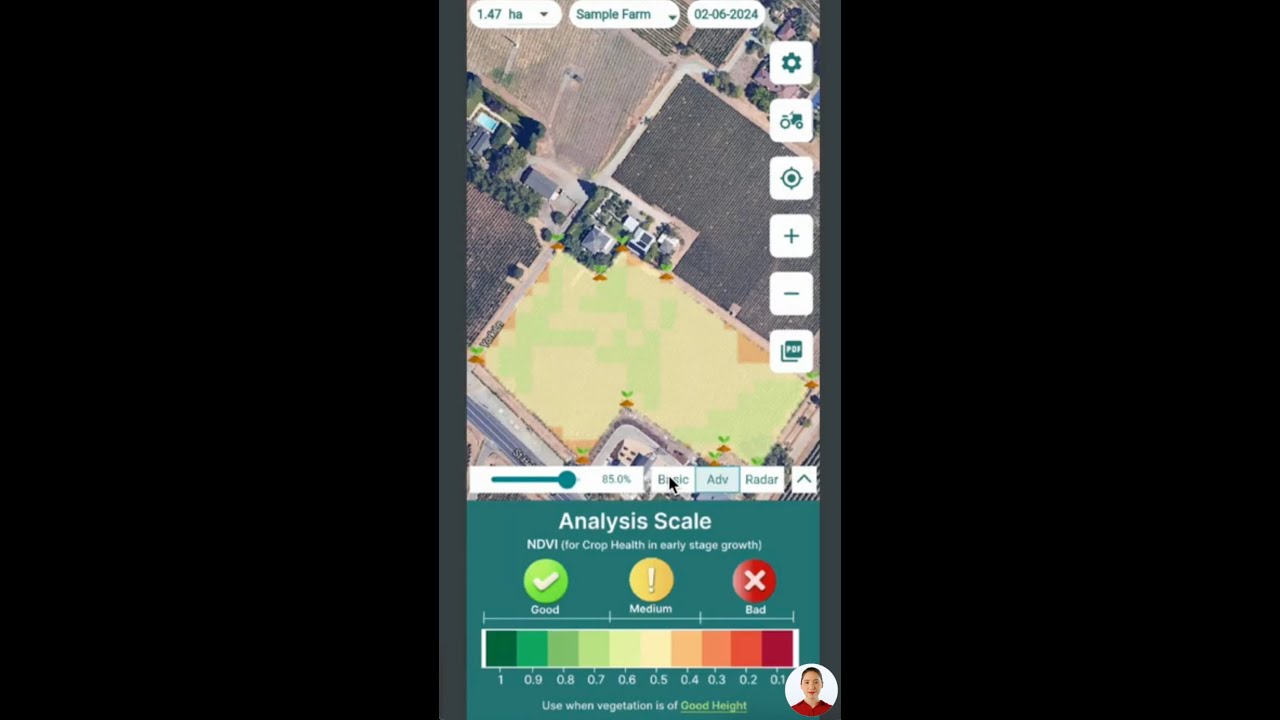
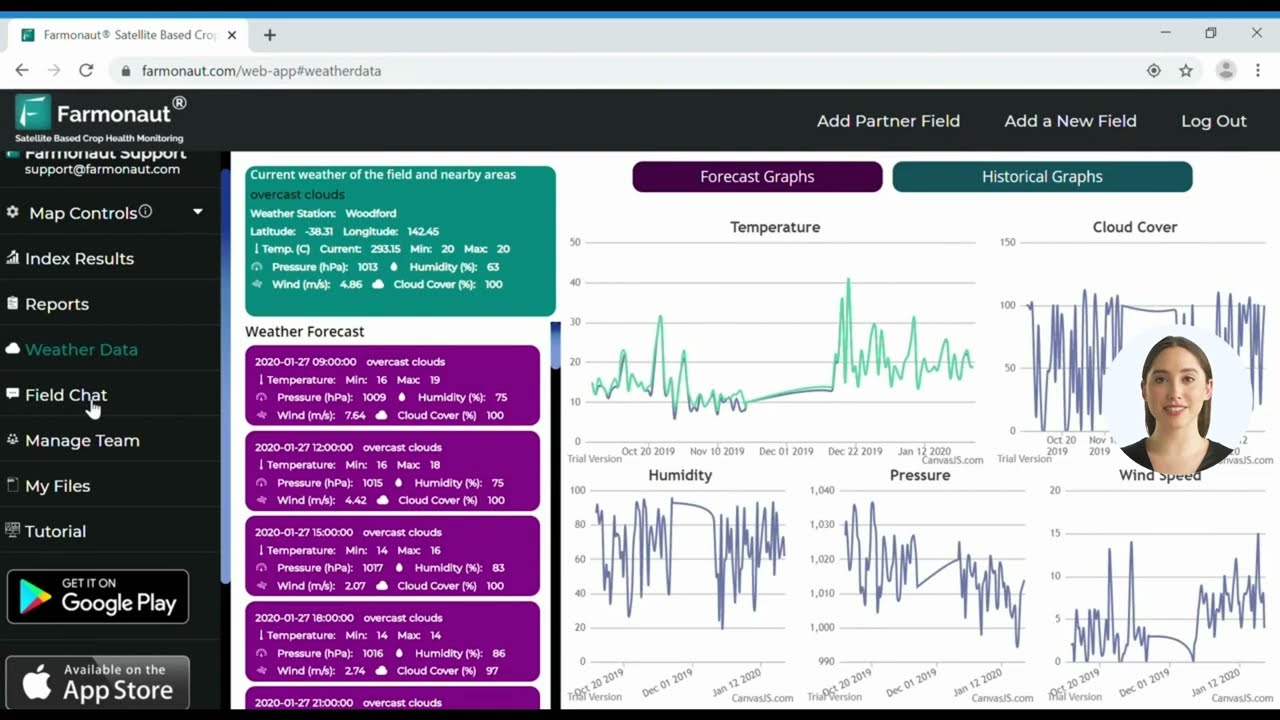
What software can concretely do for a sheep operation, regardless of adoption statistics, is turn the practices above into trackable records: individual animal treatment history (which class, which date, which dose) so rotation and withholding periods are enforced automatically; FEC result logging over time to spot a group whose resistance is building before it becomes a visible clinical problem; and pasture rest-period tracking so a rotational grazing schedule is followed on the calendar, not just on paper. Farmonaut’s satellite-based farm management tools extend this to the paddock itself — monitoring pasture biomass and health remotely to time both grazing moves and, indirectly, worm-larvae exposure windows, plus AI-driven farm decision-making support and weather forecasting for planning drench and grazing activity around conditions rather than a fixed date. Explore the tools directly:



Developers building custom tracking tools — for treatment records, pasture rotation logging, or integrating weather data into drench-timing decisions — can work directly with Farmonaut’s satellite and weather API or review the full developer documentation.
Getting Started With a Sheep Operation
If you’re building the management system from scratch rather than refining an existing flock’s program, start with the fundamentals covered in our guide for small sheep farms, which covers infrastructure and flock-size planning before you need a parasite program at all.
Sheep Drench Dosage Calculator
Enter your heaviest animal’s weight and your product’s labeled dose rate to get the volume to draw and dispense per animal — always confirm against your specific product label before treating.
Run your own numbers
Assumptions: dosing is based on your heaviest animal, per standard practice, not a group average — this calculator does not replace your product's label instructions, which govern actual dosing, withholding periods, and safety for pregnant or young animals. It does not account for combination products with two different actives at two different rates; check each active's rate separately in that case.
Frequently Asked Questions
What is drenching in animal production?
Drenching is oral administration of a liquid anthelmintic to control internal parasites, delivered via a drench gun placed over the back of the tongue so the full dose is swallowed. It is one of three delivery routes for anthelmintics, alongside injectable and pour-on formulations.
How often should I drench my sheep?
There is no single published national figure for annual drenching frequency — it depends on regional climate, pasture worm burden, and season, which is exactly why fecal egg counts, not a fixed calendar, are the recommended basis for the decision. Ask your state extension sheep specialist or vet for typical regional timing, since burden patterns differ meaningfully between humid and arid states.
Can I use the same drench for every sheep in the flock?
You can use the same product across a group, but targeted selective treatment — skipping animals in good body condition with low FAMACHA scores — is the resistance-management best practice rather than blanket dosing every animal every time.
Is it safe to drench pregnant ewes?
Some anthelmintics are labeled safe for pregnant ewes and others are not; check the specific product label and confirm with your veterinarian before treating, since this varies by active ingredient and gestation stage.
What does drench resistance cost a flock?
A specific dollar figure for resistance-driven losses is not available in currently published USDA data; what is documented is that internal parasites are one of the most costly ongoing diseases in sheep production generally, and that resistance compounds that cost by making the same drench progressively less effective over time. Track resistance directly on your own flock with paired pre- and post-treatment FEC testing (a "drench check") rather than relying on a national estimate.
Conclusion
Drenching done right is a small number of disciplined steps — weigh the heaviest animal, dose to label, calibrate the gun, dose over the tongue — combined with FEC testing to decide if you need to drench at all, and class rotation to keep the tools working. Layer that onto rotational grazing, nutrition, and genetic selection, and the flock needs the drench gun less often over time rather than more. The US flock behind these decisions numbered 5.05 million head as of January 2025 per USDA NASS, and the tools to manage it — from a dosage calculator to satellite pasture monitoring — are only as good as the data feeding them.


 Exurbia Geospatial
 MWS Research Centre
 FieldZero
 Indico Company
 Kubota
 FFBS
FFBS Jontra
 Kalustyan
 Tucor
Tucor Geno
Geno Hayleys Agriculture
 Linx Agritech
 Adinet
 Save Your Soils
