

Decision Making in Farm Management: Top 2025 Trends
“By 2025, over 70% of farms are expected to use precision tools for real-time decision making.”
“Data-driven strategies can increase farm yield efficiency by up to 25% compared to traditional methods.”
Summary: Navigating the Future of Agriculture in 2025
Decision making in farm management is the organized application of available resources—land, labor, capital, technology, and data insights—to maximize agricultural productivity and sustainability. At its core, farm management involves a series of decisions that power farm operations, influence profits, and shape environmental impacts.
As agriculture enters an era marked by rapid technological advancements, increased environmental challenges, and shifting market demands, effective decision making in farm management is more critical than ever. The future of agriculture in 2025 is data-driven, sustainable, and defined by precision—requiring an in-depth understanding of farm management principles and a willingness to adopt innovative tools. In this guide, we dive deep into the types of farm management decisions, explore advanced precision tools, and highlight actionable, data-driven strategies for progressive and profitable farming.
What is Farm Management? Foundations for 2025
What is farm management? Simply put, farm management is the comprehensive process of planning, organizing, monitoring, and controlling farm activities to optimize production output and profits while ensuring the sustainability of resources. This field not only integrates agronomic and economic knowledge but also adapts to social and environmental factors, especially as demands for sustainable agriculture soar worldwide.
Historically, farm management decisions leaned heavily on intuition and experience. However, the modern era—and especially 2025—demands a shift toward structured, data-driven strategies. In farm management today, technology, precision, and evidence-based planning are the cornerstones of success.
- Organized approach: Applying available land, labor, capital, and knowledge efficiently through strategic planning and continuous monitoring.
- Sustainable use of resources: Effective decisions to enhance productivity without compromising future generations’ ability to farm successfully.
- Agile and adaptive: Responsive management that quickly adapts to changes in weather, market conditions, and technological advancements.
In summary, modern farm management in 2025 embodies:
- Efficient resource use and optimization
- Strategic and tactical decision making
- Integration of technologies—from AI and IoT to satellite data
- Commitment to sustainability and regulatory compliance
- Continuous monitoring and evidence-based adjustments



Looking to integrate satellite farm management decision support into your agri-business or digital platforms? Explore Farmonaut’s powerful API for real-time data feeds, or visit the API Developer Docs for detailed integration information.

Types of Farm Management Decisions—Strategic, Tactical & Operational
One of the core strengths of effective farm managers in 2025 lies in their deep understanding of the types of farm management decisions and their impact on daily operations, profitability, and sustainability. Farm management decisions are generally categorized into three groups:
-
Strategic Decisions
- Long-term, high-impact choices. These involve selecting the farm’s overall direction, such as investments in new irrigation systems, land acquisition, major infrastructure like advanced storage facilities, or switching to high-value cash crops. Strategic decisions include evaluating market opportunities and aligning them with environmental stewardship and financial goals.
- Examples: Choosing which crops to cultivate for the next 5-10 years, adopting agri-tech innovations (such as carbon footprinting tools for compliance and sustainability), buying large-scale equipment, or shifting to organic or regenerative farming models.
-
Tactical Decisions
- Medium-term planning and resource allocation. Tactical decisions help bridge strategic goals and day-to-day operations. These involve setting crop rotation schedules, determining fertilizer application rates based on soil conditions or weather predictions, pest management approaches, and labor planning over several months or a season.
- Examples: Adjusting sowing dates to address climate change projections, modifying fertilizer blends in response to new soil analysis data, or adapting pest control strategies based on predicted outbreaks.
-
Operational Decisions
- Short-term, day-to-day tasks. These are the routine choices that keep farm activities running smoothly and efficiently. They include the deployment of labor on specific tasks, machinery assignment, timing irrigation and fertilizer applications, and responding to immediate risks like a change in weather or a sudden pest infestation.
- Examples: Deciding when and how much to irrigate based on real-time monitoring and satellite data, selecting pesticides for imminent pest outbreaks, or scheduling machinery maintenance to prevent breakdowns during peak activity.
An effective farm management strategy expertly integrates strategic, tactical, and operational decisions by using technology, agronomic principles, and data analysis to optimize resource use, boost productivity, and ensure sustainability.

For large-scale operations and agribusinesses, consider using a robust solution like Farmonaut’s Large Scale Farm Management platform. This app empowers you to streamline operations—from planning crop cycles to monitoring field conditions and managing labor efficiently—by providing real-time satellite data, AI-driven insights, and easy task deployment.
Precision Farm Management and Decision Making: The 2025 Approach
Precision farm management represents the future of agriculture decision making. It’s the organized and data-driven approach that applies technology and analytics to monitor, understand, and optimize resource use—making every drop of water, gram of fertilizer, or hour of labor count in both an economic and environmental sense.
Key Precision Technologies for Effective Farm Management (2025)
- Satellite-Based Monitoring: High-resolution satellite imagery provides continuous insights into crop health, soil moisture, and field conditions. These solutions illuminate areas with nutrient deficiencies, pest infestation, and water stress—crucial for precision application and decision making in farm management.
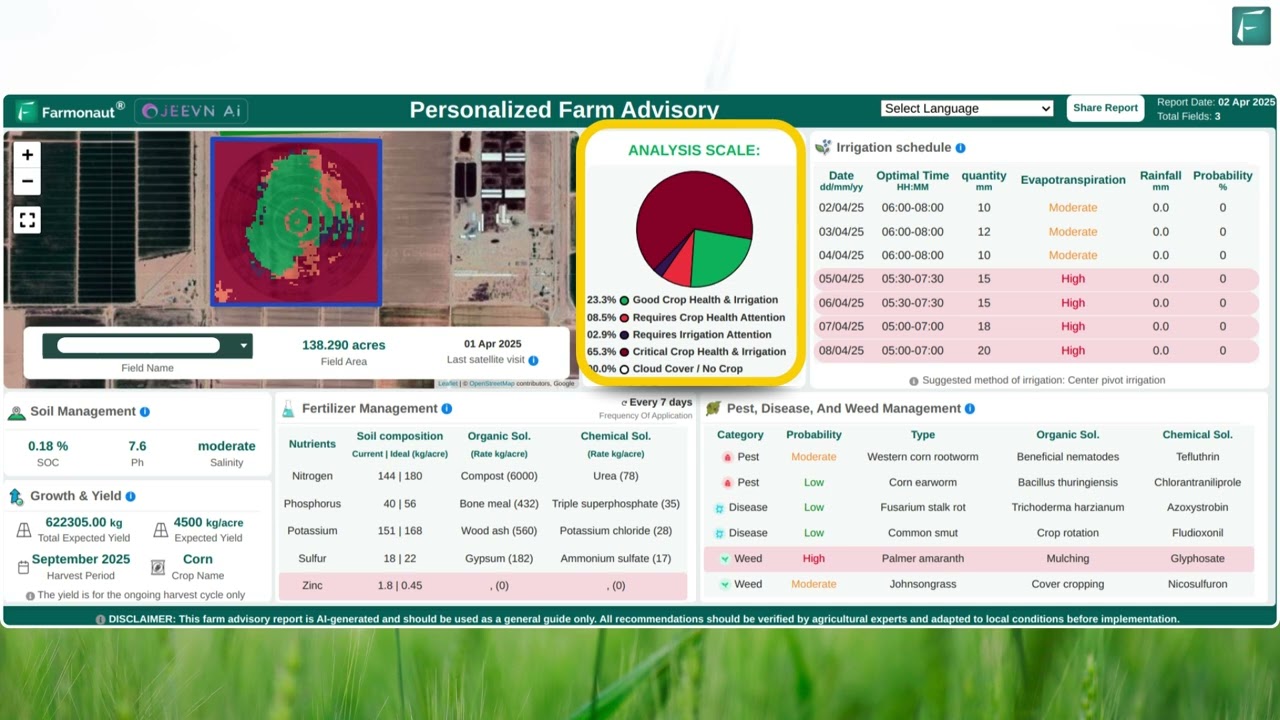
- AI-Driven Analytics: AI advisory systems such as Farmonaut’s Jeevn AI analyze data from multiple sensors and satellites to predict risks and suggest optimal interventions, enabling farmers to act fast in a rapidly changing environment.
- Drones & UAVs: Drones collect up-to-date field imagery, detect early disease outbreaks, and help calibrate input applications. Their role is growing as deployments become more cost-effective.
- IoT and Remote Sensors: In-field sensors for soil moisture, temperature, and weather patterns drive tactical and operational decisions on irrigating, spraying, or harvesting. Connected via wireless networks, these devices offer real-time, hyper-localized data.
- Decision Support Software: Tools that combine satellite, weather, and farm-specific data to simulate different management scenarios. These help optimize resource use and forecast the profitability or sustainability of choices.

Managing large equipment fleets across wide geographies? Farmonaut’s Fleet Management system can help you optimize machinery deployment, reduce operational costs, and enhance resource allocation for a profitable, sustainable farming enterprise in 2025.
Importance of Data-Driven Decision Making in 2025
Why is data-driven decision making pivotal for farm management in 2025? Because the agricultural world is increasingly defined by:
- Climate change and unpredictability: Weather extremes, shifting rainfall patterns, and evolving pest/disease threats make reactive, intuition-based methods risky and inadequate.
- Market pressures: Fluctuations in input costs and output prices demand agile and informed planning to stay profitable.
- Regulatory compliance and consumer scrutiny: Markets and governments require documentation of sustainable practices, traceability, and environmental impact reduction.
- Resource scarcity: Efficient use of water, fertilizers, labor, and capital is non-negotiable for sustainable operations.
By anchoring every farm management decision to accurate data—from satellite imagery and soil sensors to market forecasts—farmers can:
- Predict and mitigate risks (e.g., droughts, pest outbreaks, sudden weather changes).
- Optimize input application—ensuring fertilizers, irrigation, and pesticides are used precisely as needed, reducing waste and costs.
- Enhance yield and profitability by aligning operations with the most current field and market intelligence.
- Meet sustainability and traceability standards for regulatory and market access.
Farmonaut’s Role in Data-Driven Decision Making (2025)
We empower farmers, businesses, and institutions to harness satellite-based data and advanced analytics for decision making in farm management. Our platform offers:
- Real-time crop monitoring and soil health insights
- AI-based advisory for pest, irrigation, and fertilization strategies
- Blockchain-based traceability to ensure transparent, compliant supply chains for agriculture
- Resource optimization from equipment tracking to carbon footprint monitoring
Our mobile, web, and API platforms democratize access to these innovations—making advanced, sustainable farm management possible for all, regardless of scale or geography.
Comparison Table: Farm Management Decision-Making Tools and Trends for 2025
| Decision Type | Technology/Tool | Estimated Adoption Rate (2025) | Potential Yield Impact (%) | Sustainability Rating | Cost Range (USD/year) |
|---|---|---|---|---|---|
| Strategic | Satellite-Based Monitoring Platforms | 85% | +20-25% | High | $200-$1,200 |
| Tactical | AI-Based Crop Monitoring (e.g., Jeevn AI) | 70% | +18-22% | High | $350-$950 |
| Tactical/Operational | Remote Sensing Drones | 72% | +10-15% | Medium | $1,000-$4,500 |
| Operational | IoT Devices (Soil Sensors, Weather Stations) | 80% | +13-16% | High | $400-$2,500 |
| Strategic | Blockchain Product Traceability | 45% | N/A | High | $450-$1,600 |
| Tactical | Decision Support Software | 78% | +15-19% | High | $300-$950 |
| Strategic | Fleet Management Tools | 62% | +6-12% | Medium | $800-$3,000 |
| Tactical | Digital Weather Forecasting & Risk Analytics | 69% | +8-10% | High | $150-$550 |
| Strategic | Carbon Footprint Tracking & Sustainability Tools | 32% | N/A | High | $350-$1,050 |
| Operational | Crop Loan and Insurance Digital Verification | 58% | N/A | Medium | $200-$800 |
Note: Estimated adoption rates and impacts are based on current forecasts and may vary regionally.
“By 2025, over 70% of farms are expected to use precision tools for real-time decision making.”

Farmonaut: Leveraging Satellite Technology for Farm Management Decision Making in 2025
At Farmonaut, we believe the future of decision making in farm management lies in accessible, affordable, and real-time satellite data. Our mission is to empower every farmer, business, and institution with satellite-powered insights for efficient resource utilization, risk mitigation, and sustainable farming.
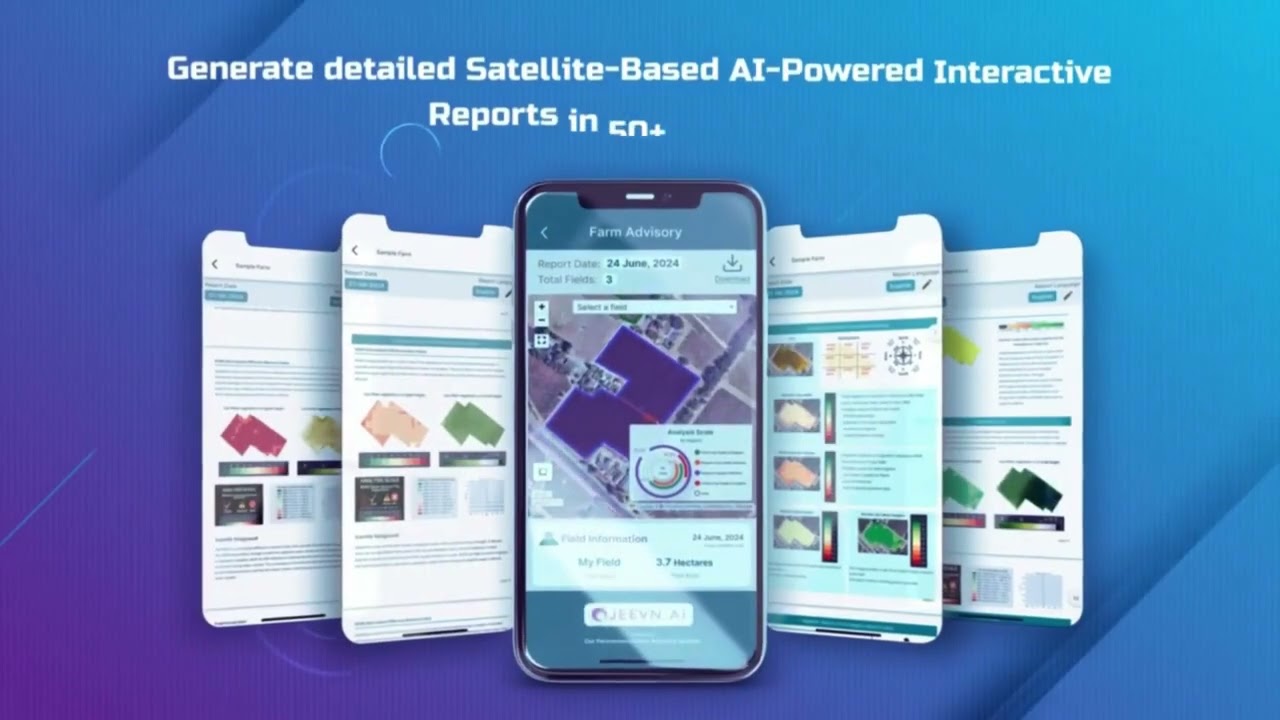
- Satellite-Based Monitoring: Gain field-level visibility into vegetation health, soil conditions, irrigation needs, and pest risks—all driven by multi-spectral satellite images. No need for expensive hardware.
- Jeevn AI Advisory: Our AI-driven tool provides specific strategies based on real-time weather, satellite data, and historic trends to optimize fertilizers, irrigation, pest management, and more.
- Blockchain Traceability: Enable transparent, secure product traceability from field to market—vital for compliance, sustainability certifications, and building consumer trust.
- Environmental Impact Analysis: Our tools help monitor and reduce your farm’s carbon footprint, supporting sustainability and opening doors to green financing.
- Fleet and Resource Management: Optimize machinery, labor, and logistics for lower costs and higher operational efficiency with real-time fleet management.
- Digital Crop Loan & Insurance Verification: Speed up your access to finance and insurance claims with satellite-verified documentation—reducing fraud, earning trust, and improving financial inclusion.
Top 2025 Trends in Decision Making for Farm Management
2025 is shaping up to be a defining year for farm management decision making. Here are the most critical trends driving agile, profitable, and sustainable agriculture worldwide:
- Widespread Adoption of Precision Tools: From AI-powered crop monitoring to satellite-based resource allocation, over 70% of commercial farms are projected to use some form of precision farm management tool.
- Integrated Platforms: Unified apps and platforms that combine weather, soil, crop, and market data are replacing fragmented tools—allowing farmers to make faster, more informed decisions.
- Regenerative and Sustainable Strategies: Farms are increasingly adopting regenerative practices, monitoring their environmental impact, and tracking inputs with carbon and biodiversity calculators to ensure both market access and compliance.
- Blockchain for Supply Chain Trust: Product traceability is evolving from a ‘nice-to-have’ to a market requirement—especially for exports, specialty crops, and contracts with large buyers. Blockchain solutions make this seamless.
- Remote & Automated Monitoring: Satellite and drone analytics allow continuous, hands-off field monitoring—even for farms in remote locations—driving efficiency and reducing labor dependence.
- Climate Risk Mitigation: Farms are leveraging predictive weather analytics and scenario modeling tools more than ever to anticipate and adapt to climate change impacts.
- Securing Access to Loans and Insurance: Satellite-based loan and insurance verification is fast becoming foundational for financial institutions to reduce risk and improve rural financial inclusion.


Practical Examples: Applying Decision Making in Farm Management
To bring the theory to life, let’s break down how strategic, tactical, and operational decisions are being transformed by technology and data in 2025:
-
Strategic Example:
A Midwest U.S. wheat grower uses satellite-based crop monitoring to assess long-term soil health, enabling them to decide when to invest in precision irrigation systems and switch to higher-value rotational crops for improved profitability and a reduced environmental footprint. -
Tactical Example:
An Indian rice producer utilizes AI-based advisories from their farm management app to adjust fertilizer application rates across different parts of their fields based on real-time soil moisture and satellite weather predictions, increasing yields while minimizing run-off pollution. -
Operational Example:
A Brazilian coffee farm deploys drones to identify disease outbreaks early and assigns labor for targeted treatment—using their dashboard to combine drone, weather, and labor inputs for optimized day-to-day field operations.
Each scenario shows how the integration of technology in farm management decision making enhances both economic returns and sustainability while minimizing risk in a volatile climate and market.
Interested in tailored crop, forest, or plantation advice for your land? Access Farmonaut’s advisory solutions for actionable, data-driven insights on what, when, and how to plant for maximum ROI and sustainability.
Conclusion: Embracing Effective Decision Making for 2025 and Beyond
As we navigate the future of agriculture in 2025, decision making in farm management is no longer just about intuition or experience. It is a sophisticated, dynamic process that integrates traditional knowledge with cutting-edge technologies for optimal planning, resource allocation, and sustainability.
- Understanding the types of farm management decisions—strategic, tactical, and operational—is essential for effective planning and execution.
- Precision farm management tools, satellite data, and AI-powered analytics are transforming every aspect of modern farming, enabling real-time response to environmental and market challenges.
- Farmers, agribusinesses, and institutions can now maximize yields, profits, and environmental stewardship by adopting a data-driven, technology-powered approach.
- Regulatory compliance, market access, and financial security are inseparable from transparent, traceable, and sustainable farm management practices.
The farms that thrive will be those who leverage the best of both worlds—traditional wisdom and innovative, evidence-based decision making. Embrace the tools, platforms, and data at your fingertips in 2025 to create a resilient, profitable, and future-proof farm enterprise.
FAQ: Decision Making in Farm Management 2025
1. What are the most important types of farm management decisions?
The three primary types are Strategic (long-term planning and investments), Tactical (medium-term resource allocation and operational planning), and Operational (day-to-day management and execution).
2. How does precision farm management change traditional agriculture?
Precision farm management uses real-time data from satellites, sensors, and AI tools to optimize resource use, reduce waste, and increase both yield and sustainability—replacing guesswork with actionable evidence.
3. What role does data play in effective decision making for 2025?
Data is the foundation—enabling forecasts, early risk detection, performance monitoring, and compliance documentation. Farms relying on data-driven decisions see up to 25% efficiency improvements versus traditional practices.
4. How can I access Farmonaut’s tools and solutions?
Farmonaut’s satellite-powered farm management solutions are available via web and mobile apps, with options for API integration into your existing systems. Choose the package that fits your farm’s scale and needs.
5. Why is traceability so critical in agriculture now?
Traceability ensures transparency in your supply chain, meets regulatory requirements, and builds trust with buyers—especially for exports or organic/specialty crops. Farmonaut’s blockchain tools automate and secure this process.
6. Can precision management help with climate change adaptation?
Absolutely. By using historical and real-time weather, crop, and soil data, you can proactively adapt to unpredictable climate impacts, reducing losses and maintaining profitability.
7. What is the cost range for modern farm management technologies?
Costs vary by scale and solution—see our comparison table above or contact Farmonaut for the plan that matches your operation.

 Dalmia Bharat Sugar
 DnCubed
 Pistachio ST
 Field Capacity
 Indosistim Teknologi
 Liquify Digital
 CU Foods
 BeyondTech Global
 Rouge VC
 AgroGreen Dynamics
 AgroRisk
 Oath Inc
 Reddane Farming
 Esri North East Africa
 Cresol
 MDCV UK
 Etech Consulting Madagascar
 Vestlandsforsking
