

Crop protection · Buyer guide
Best Insecticide for Thrips: 7 Options Ranked by Trials
Group 5 spinosyns lead US trials and extension advice for thrips. Here is how seven options compare, which systemic products work, and how to rotate them to slow resistance.
Key takeaways
- Entrust (spinosad) cut onion and flower thrips by 65.6% on average across weekly-spray trials, against 19.1% to 29.3% for neem and pyrethrin products (Insects, 2020).
- UC IPM says imidacloprid commonly fails on thrips, while dinotefuran can give good control on trees and shrubs.
- The University of Florida advises switching away from Group 5 after 2 applications for at least 2 sprays.
- California citrus thrips built resistance to several classes from the 1980s to the 2010s, including spinetoram (UC IPM).
- Check the label and local rules before any spray; registrations differ by country and crop.
In this article
- Best insecticide for thrips: the short list
- How we chose and ranked these options
- Why thrips are hard to kill
- 1. Spinosad: best overall and best organic option
- 2. Spinetoram: the conventional Group 5 choice
- 3. Cyantraniliprole: a strong rotation partner
- 4. Abamectin: translaminar and selective
- Systemic insecticide for thrips: what works and what does not
- 7. Oils, soaps, pyrethrins and neem for light pressure
- How to choose the right thrips insecticide
- Thrips control step by step
- Thrips resistance: why rotation matters
- Does a thrips spray program pay?
- Crop-specific thrips tips
The best insecticide for thrips on most farm crops is a Group 5 spinosyn, spinosad or spinetoram, used in a rotation with other modes of action. In 18 thrips field trials run by University of Maryland researchers, the organic spinosad product Entrust cut onion and flower thrips by an average of 65.6%, far ahead of neem, pyrethrin and their mix, according to the study published in Insects (2020).
No single spray solves thrips for long. They hide in buds and leaf folds, drop to the soil to pupate, and build resistance fast. This guide ranks seven insecticide options by trial results and extension advice from US universities, explains which systemic products work and which do not, and gives a calculator to test whether a spray program pays on your own field. Always check the product label and your local rules before you spray; labels, registrations and rates differ by country, state and crop, and a licensed adviser can confirm what is legal for your field.
Best insecticide for thrips: the short list
The table ranks the main options by how well they controlled thrips in trials or how extension services rate them. “Group” is the IRAC mode-of-action number printed on US labels. Rotate between groups to slow resistance.
| Option | Group | Type | Best for | Main caution |
|---|---|---|---|---|
| 1. Spinosad | 5 | Translaminar, some organic | Vegetables, onions, flowers, organic farms | Toxic to bees for about a day after spraying |
| 2. Spinetoram | 5 | Translaminar | Conventional vegetables, citrus, beans | Resistance found in some citrus thrips |
| 3. Cyantraniliprole | 28 | Systemic in leaves | Citrus, vegetables in rotation | Label limits per season |
| 4. Abamectin | 6 | Translaminar | Citrus (often mixed with Group 28) | Rotate; follow re-entry times |
| 5. Dinotefuran | 4A | Systemic neonicotinoid | Trees and shrubs (professional use) | Pollinator risk; wait until flowering ends |
| 6. Seed treatments | 4A | Systemic | Cotton seedlings | Early season only |
| 7. Oils, soaps, neem | Various | Contact | Gardens, greenhouses, light pressure | Short effect; needs direct contact |
How we chose and ranked these options
We ranked products by measured control in replicated field trials first, then by what US land-grant extension guides recommend for commercial crops. We used the University of California Statewide IPM Program, University of Florida IFAS, University of Maryland Extension, Texas A&M AgriLife, Colorado State and Clemson guides. We did not take money from any maker, and we name active ingredients first because brand names change between countries.
We left out products that extension guides say often fail on thrips. The main one is imidacloprid. The UC IPM thrips Pest Note says imidacloprid “commonly fails to provide satisfactory thrips control” and is generally not recommended for them. We also left out older broad-spectrum sprays as first picks, because they kill the predators that keep thrips down.
Why thrips are hard to kill
Thrips are tiny, slender insects of the order Thysanoptera. Most adults are less than 1/20 inch long and have fringed wings, according to UC IPM. They feed by puncturing the outer layer of leaves, flowers or fruit and sucking out the cell contents. This leaves silver flecks, scars, and black specks of excrement.
Their life cycle protects them from sprays. Eggs sit inside plant tissue. Larvae feed in buds and folds. The prepupa and pupa stages do not feed and usually drop to the soil or leaf litter. In warm weather, the cycle from egg to adult can take as little as 2 weeks, and there can be up to about eight generations a year, the UC IPM Pest Note says. The UC IPM citrus thrips guideline notes that citrus thrips can produce 8 to 12 generations a year when the weather suits them.
Thrips also spread viruses. Colorado State University Extension names tomato spotted wilt and impatiens necrotic spot as two serious thrips-borne diseases with wide host ranges. With a virus, a few thrips can do more harm than many thrips that only feed.
Main pest species include western flower thrips (Frankliniella occidentalis), onion thrips (Thrips tabaci), citrus thrips, tobacco thrips on seedlings, and chilli thrips. Identify the species first. UC IPM points out that some thrips found on a crop do not damage it, and some species are predators that eat pest thrips and mites.
Crops most at risk
Thrips attack a wide range of plants. Common hosts in our target markets include onions, garlic, tomatoes, peppers, lettuce, beans, cotton, strawberries, grapes, citrus, avocados, apples, nectarines, raspberries, blueberries and many cut flowers and greenhouse ornamentals. On citrus and avocado, damage is mostly scarring of the rind, which lowers fresh-market grade but not flavor. On blueberries, citrus thrips distort shoot tips and reduce yield, UC IPM reports. On beans, University of Georgia Extension says thrips matter most when they invade plants early in development.

▶ How thrips damage crops and the organic methods used to control them. · 13:24
1. Spinosad: best overall and best organic option
Spinosad comes from fermentation by a soil bacterium. Some formulations are approved for organic farms. It moves a short distance into sprayed leaves (translaminar action), so it reaches thrips feeding in folds where contact sprays miss. UC IPM says spinosad is generally more effective against thrips than oils, soaps or pyrethrins and lasts about 1 week or more. Adding horticultural oil to the tank can help it persist in plant tissue.
The University of Maryland trial summary measured weekly sprays on onion (8 trials) and zinnia grown for cut flowers (10 trials). Entrust cut thrips by 65.6% on average. In some trials, adding an adjuvant such as an oil or soap added another 10% to 15% control. The neem and pyrethrin products scored much lower.
Best for: organic and conventional vegetables, onions, cut flowers and berries. Pros: strong trial record, organic options, gentler on many predators than older sprays. Cons: toxic to bees and some predatory mites when wet and for about a day after, so do not spray open flowers; resistance builds if used alone.
Chart
Thrips control by organic insecticide
Average % control vs untreated, weekly sprays, onion (8 trials) and zinnia (10 trials)
2. Spinetoram: the conventional Group 5 choice
Spinetoram is a modified spinosyn sold for conventional farms, for example as Radiant or Delegate in the US. University of Maryland Extension’s bean guide lists spinosad (Blackhawk) and spinetoram (Radiant SC) for thrips on snap and lima beans, each with a 3-day pre-harvest interval and a 4-hour re-entry interval. The same guide notes resistance concerns with western flower thrips for pyrethroids and with tobacco thrips for some neonicotinoids.
Spinetoram and spinosad share one mode of action, so they count as one group in a rotation. The University of Florida tomato production guide says that after 2 applications of a Group 5 insecticide for thrips, growers should switch to a different effective class for at least 2 applications.
Best for: conventional beans, vegetables and citrus. Pros: short re-entry time, translaminar action. Cons: UC IPM records spinetoram resistance in some San Joaquin Valley citrus thrips since the 2010s.
Chart
Re-entry interval of thrips products on beans
Hours before workers may re-enter, products listed for thrips on snap and lima beans
3. Cyantraniliprole: a strong rotation partner
Cyantraniliprole (Group 28, sold for example as Exirel) moves within leaves and is a common partner for Group 5 products. UC IPM lists cyantraniliprole, and its mix with abamectin (Minecto Pro), among the selective materials for citrus thrips that are relatively nontoxic to beneficial insects and mites.
Best for: citrus and vegetables where you need a non-Group 5 spray. Pros: different mode of action, selective. Cons: season limits on the label; it also belongs to the same group as some caterpillar products, so count all Group 28 uses in your rotation.
4. Abamectin: translaminar and selective
Abamectin (Group 6, for example Agri-Mek) is a fermentation product that also controls mites. UC IPM places it with spinosad, spinetoram and cyantraniliprole as a selective choice for citrus thrips. UC IPM pairs it with a narrow-range oil, which improves translaminar movement and persistence.
Best for: citrus and some vegetables with both thrips and mites. Pros: selective, helps with mites too. Cons: rotate it; follow label limits on applications and re-entry times.
Systemic insecticide for thrips: what works and what does not
Many growers search for a systemic insecticide for thrips, hoping one soil drench will protect the whole plant. Systemic products are absorbed by one part of a plant, such as roots, and carried to other parts. The results for thrips are mixed, so this section covers the two systemic options that have a role.
5. Dinotefuran: the systemic that works on trees and shrubs
UC IPM says neonicotinoids vary in how well they control thrips. Dinotefuran (Safari), available to professional applicators, “can provide good control of thrips”, while imidacloprid often fails. A trunk spray or injection acts faster than a soil drench.
Neonicotinoids can move into flowers and harm bees and natural enemies that feed on nectar and pollen. UC IPM advises waiting until plants have finished flowering before a systemic application, unless the label says otherwise. Rules on neonicotinoids are strict in the EU and some other places, so check what is registered where you farm.
6. Seed treatments for seedling thrips
In cotton and beans, thrips damage seedlings before the first true leaves form. Texas A&M’s cotton production guide lists thiamethoxam (Cruiser) and acephate (Orthene) among chemicals that control thrips in cotton. It rates the impact of the neonicotinoid group on natural enemies as medium and of organophosphates as high. A seed treatment protects only the early weeks, so scout after emergence anyway.
Best for: seedling protection in row crops. Pros: no early foliar sprays. Cons: short window; resistance concerns in tobacco thrips noted by Maryland Extension.
7. Oils, soaps, pyrethrins and neem for light pressure
Contact products kill only the thrips they touch. UC IPM says horticultural oils, insecticidal soaps and pyrethrins give temporary control, especially of greenhouse thrips. Colorado State Extension adds that pyrethroids control some thrips, such as onion thrips, but not the most common types, and that soaps and oils control exposed stages.
In the Maryland trials, the pyrethrin product PyGanic averaged 20.7% control, neem (Neemix) 19.1%, and the pyrethrin-plus-azadirachtin mix Azera 29.3%. Doubling rates of Azera and PyGanic helped somewhat but stayed well below spinosad.
Best for: home gardens, greenhouses and spot treatments. Pros: low residue, many are organic. Cons: short effect, needs thorough coverage, repeat sprays.
How to choose the right thrips insecticide
Use these questions to narrow the list for your crop.
- Which thrips do you have? Western flower, onion, citrus and tobacco thrips respond differently. Send samples to your extension office if unsure.
- Is the crop flowering? Avoid spinosad and systemic neonicotinoids on open flowers to protect bees.
- Organic or conventional? Organic farms lean on spinosad formulations listed by OMRI, plus oils and soaps.
- What did you spray last? Pick a different IRAC group from your last two sprays.
- How close is harvest? Check the pre-harvest interval (PHI) and re-entry interval (REI) on the label.
- Are predators present? Choose selective products to keep minute pirate bugs, predatory mites and lacewings alive.
Thrips control step by step
Insecticides work better inside an integrated pest management (IPM) plan. UC IPM lists poor timing, missing the right plant parts and poor coverage as common reasons why sprays fail.
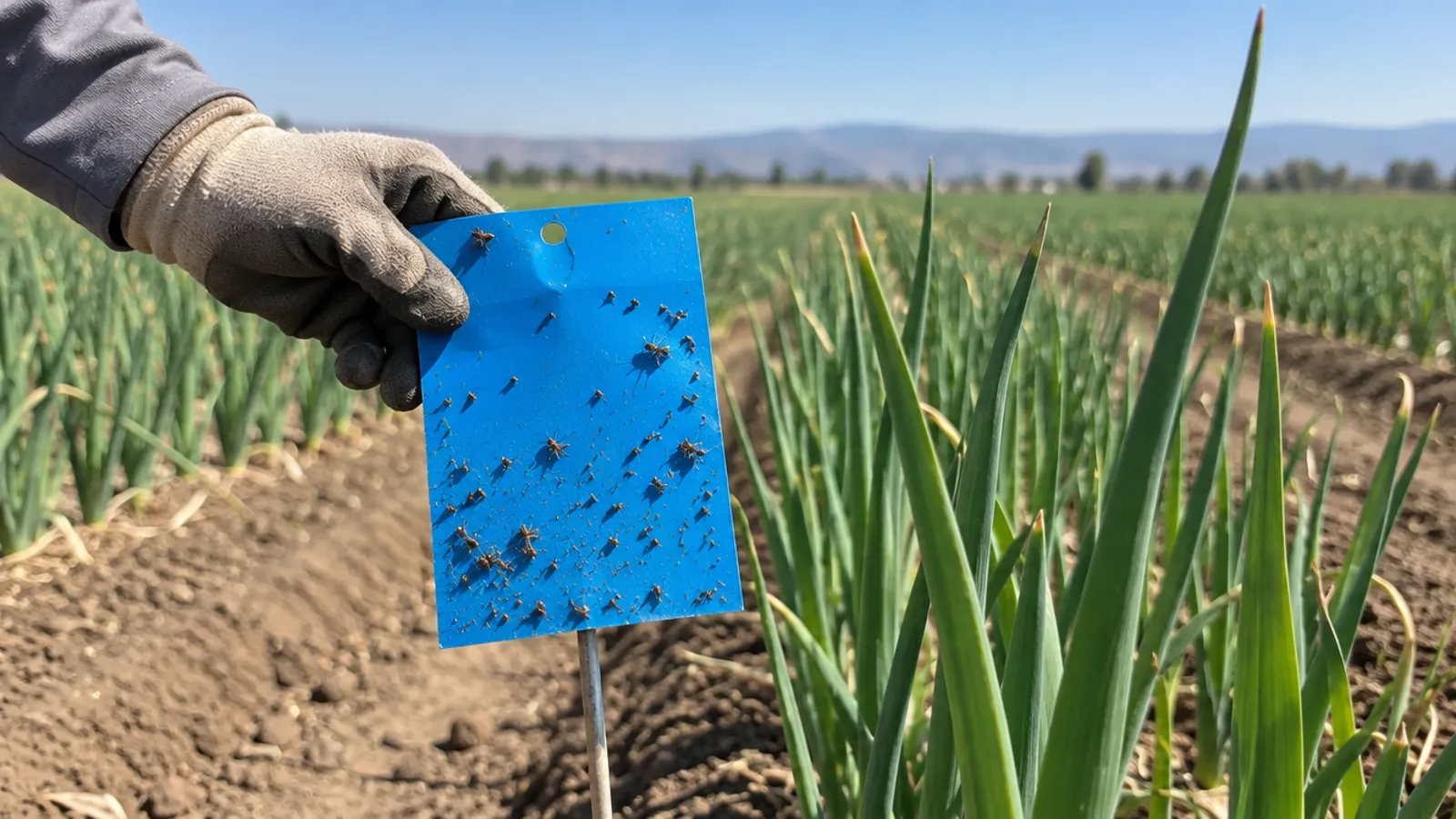
- Monitor. Hang blue or yellow sticky traps and tap flowers or shoots over white paper each week.
- Remove sources. Control weeds near the field; UC IPM notes thrips move in when weedy areas dry out in spring and summer.
- Avoid excess nitrogen. UC IPM says too much nitrogen fertilizer can promote higher thrips numbers.
- Protect natural enemies. Predatory thrips, minute pirate bugs, lacewings and predatory mites help keep thrips in check.
- Spray at the right stage. On citrus, protect young fruit just after petal fall; on beans, treat from cotyledon to first true leaves and at first bloom if thrips are present, per Maryland Extension.
- Cover well. Use enough water to reach buds and the undersides of leaves.
- Rotate. Switch IRAC groups after two applications.
- Check results. Re-sample 3 to 7 days after a spray.

▶ Western flower thrips damage on fruits and vegetables and how IPM manages it. · 15:42
Thrips resistance: why rotation matters
Citrus thrips show how quickly resistance builds. The UC IPM citrus guideline records resistance to dimethoate and formetanate in the 1980s, to beta-cyfluthrin in the 1990s and to spinetoram in the 2010s in parts of California. It also notes that thrips numbers tend to rise after sprays of organophosphates, carbamates, pyrethroids and foliar neonicotinoids, because these sprays kill natural enemies and can stimulate thrips reproduction.
Chart
Citrus thrips resistance in California, by decade
Cumulative number of active ingredients with documented resistance named by UC IPM (selected); no point plotted for the 2000s
The UC IPM table of insecticide selectivity for citrus lists the effect of each product on natural enemies and flags resistance in some citrus thrips populations. Use it to pick products that keep predators alive.
Does a thrips spray program pay?
A spray only makes sense if the crop value it saves is larger than its cost. Product prices vary by dealer and region, so the calculator below uses your own numbers. Ask your dealer for a current quote and include application costs.
Try the numbers for your own farm below.
Calculator
Does a thrips spray program pay on your field?
Enter your own costs, crop value and expected loss avoided.
- Program cost: 2,000 $
- Crop value protected: 2,000 $
- Break-even loss avoided: 2.0 %
Example values only, set near break-even; they are not benchmarks or price quotes. Every number is your input. Cost per application should include product, adjuvant, fuel and labor. Loss avoided is your own estimate of the yield or grade you would lose without control.
Crop-specific thrips tips
Onions and garlic: onion thrips hide between leaf blades. Use plenty of water and an adjuvant when the label allows. In the Maryland trials, control on onion averaged lower than on zinnia across all products.
Tomatoes and peppers: thrips spread tomato spotted wilt. Start clean transplants and follow the Florida guide’s Group 5 rotation rule. Clemson’s Home and Garden Information Center lists thrips among pepper pests and suggests soft insecticides such as spinosad for pests in larger gardens.
Citrus: focus on young fruit after petal fall. Navel oranges need more protection than Valencias, which often need no spray, according to UC IPM. Treating young, non-bearing trees is not recommended except in severe cases.
Beans and cotton: protect seedlings with a seed treatment or an early spray, then scout at bloom.
Greenhouses and flowers: screens, sticky traps and released predatory mites work well alongside spinosad. Thrips are small enough to pass through most screening, Colorado State Extension warns, so check doors and vents.
Organic vs conventional thrips control
Organic growers have fewer options. US organic standards let farmers use an allowed insecticide only when other practices fail, the Insects study notes. Spinosad is the strongest organic option in that research. Conventional growers can add spinetoram, cyantraniliprole, abamectin and, where legal, selected systemics. Both groups gain from scouting, weed control and protecting predators.
| Factor | Organic program | Conventional program |
|---|---|---|
| Main product | Spinosad (OMRI-listed forms) | Spinetoram or spinosad |
| Rotation partners | Oils, soaps, neem, pyrethrin | Cyantraniliprole, abamectin |
| Systemic options | None | Seed treatments; dinotefuran on trees |
| Biggest risk | Over-reliance on one group | Killing predators, resistance |
Using satellite crop monitoring to time scouting
Satellites cannot see a thrips. They can show where crop vigor drops across a field, which tells you where to walk first. A satellite vegetation map such as NDVI from Farmonaut can flag a stressed patch so you check it with traps and a hand lens. For developers, our satellite and weather API documentation and the Farmonaut API page explain how to pull the same data into farm software.
Related pages on our site: are thrips harmful to plants, organic thrips control, alternative pest control methods, biopesticide volatility studies, broad-spectrum insecticides, intercropping vs crop rotation, sustainable wetland management.
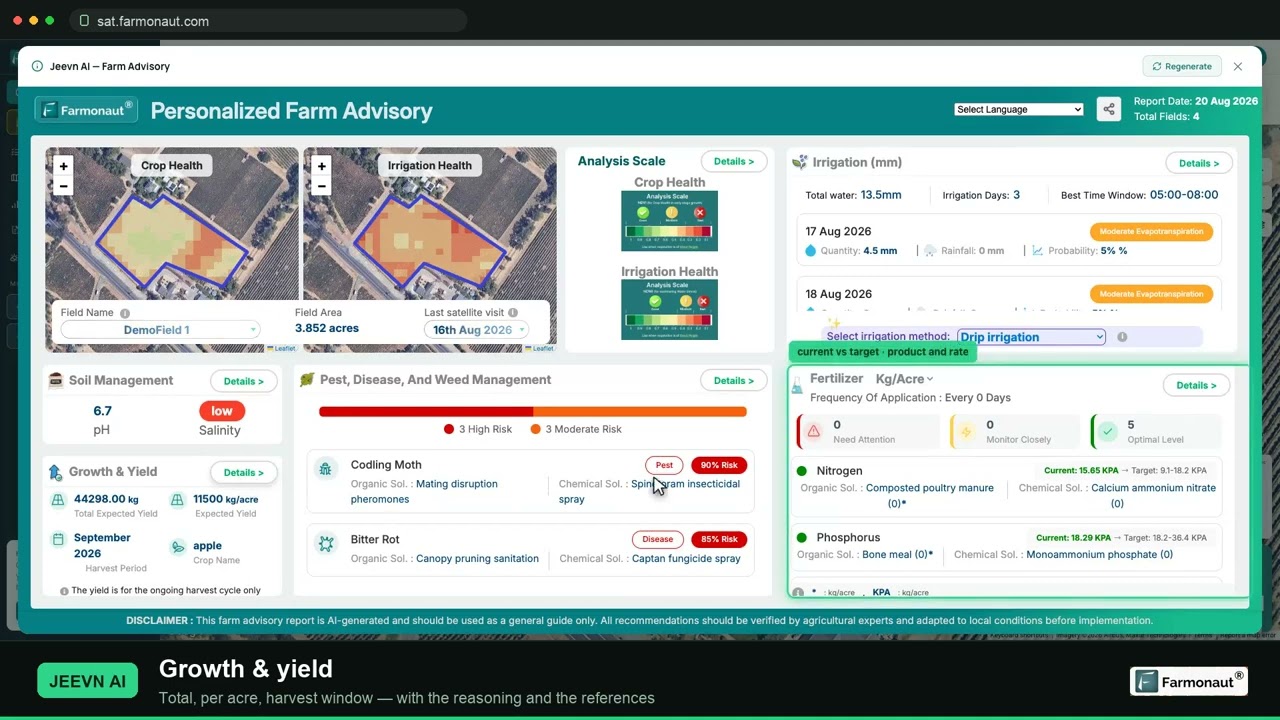
▶ A walkthrough of reading NDVI maps to spot crop stress early. · 19:36
If this topic matters to you, read Blisters on Grape Vine Leaves: 7 Proven Pest Solutions next.
FAQ
What is the best insecticide for thrips?
For most crops, a Group 5 spinosyn (spinosad or spinetoram) gives the best control, rotated with another group such as cyantraniliprole or abamectin. In US field trials, spinosad cut thrips by about two-thirds on average. Check the label for your crop and country.
What is the best systemic insecticide for thrips?
UC IPM says dinotefuran can give good control on trees and shrubs when applied by professionals, while imidacloprid often fails. In row crops, seed treatments such as thiamethoxam protect seedlings. Systemics can harm bees, so apply after flowering ends unless the label says otherwise.
Does neem oil kill thrips?
Neem gives weak control. In the Maryland trials it averaged about 19% control, against about 66% for spinosad. Use neem or oils for light pressure or as a rotation partner.
How often should I spray for thrips?
Follow the label interval and spray only when scouting shows a need. The University of Florida guide advises switching away from Group 5 after two applications for at least two sprays of another class.
Why do thrips come back after spraying?
Eggs inside tissue and pupae in the soil escape most sprays, and adults fly in from weeds. Broad-spectrum sprays can also kill predators and lead to more thrips, UC IPM reports.
Farmonaut crop monitoring
Know where to scout first
Draw your fields once and Farmonaut shows satellite crop-health maps through the season, on web, Android or iOS, so you can check stressed patches for pests sooner.




Sources
- Dively, Patton, Barranco and Kulhanek, Comparative Efficacy of Common Active Ingredients in Organic Insecticides Against Difficult to Control Insect Pests, Insects (2020): pmc.ncbi.nlm.nih.gov
- UC Statewide IPM Program, Pest Notes: Thrips: ipm.ucanr.edu
- UC Statewide IPM Program, Citrus Thrips Pest Management Guidelines: ipm.ucanr.edu
- UC Statewide IPM Program, Selectivity of Insecticides and Miticides (Citrus): ipm.ucanr.edu
- University of Florida IFAS, Vegetable Production Handbook, Chapter 18: Tomato Production: edis.ifas.ufl.edu
- University of Maryland Extension, Commercial Vegetable Production Recommendations: Beans, Snap and Lima (2026): extension.umd.edu
- Texas A&M AgriLife, Texas Cotton Production, Chapter 2: cotton.tamu.edu
- Colorado State University Extension, Managing Houseplant Pests: extension.colostate.edu
- Clemson Home and Garden Information Center, Pepper: hgic.clemson.edu
- University of Georgia Extension, Commercial Snap Bean Production in Georgia (B1369): fieldreport.caes.uga.edu
Discussion
Questions, corrections or field experience? Share them below. First-time comments are reviewed before they appear, and your email is never published.
No comments yet. Be the first to add a question or your experience.

 Dextrago
 Kubota
 FFBS
 Jontra
 Kalustyan
 Tucor
 Geno
 Hayleys Agriculture
 Linx Agritech
 Adinet
 Save Your Soils
 Grandstream Algérie
 XOS Realty
 Geospatial Lab Africa

 Licence holder · Niger · Gold










