

Embedded Systems in Agriculture: 7 Real Farm Uses
Reviewed September 2026 against USDA Economic Research Service and Frontiers in Agronomy data.
Try it: Run your own numbers →
An embedded system in agriculture is a purpose-built microcontroller-sensor-actuator combination wired into a specific farm task—an irrigation valve, a tractor’s steering column, a greenhouse vent. On the largest U.S. farms these are no longer optional add-ons: USDA’s Economic Research Service found 73% of the biggest corn operations and 82% of the biggest winter wheat operations already running automated guidance systems, a form of embedded control, as far back as 2016–2017. The rest of this article breaks down where that hardware sits, what it costs in water and nitrogen, and how to check whether the numbers have moved since this was written.
Table of Contents
- Embedded Systems in Agriculture: Who’s Actually Using Them
- What Are Embedded Systems in Modern Farming?
- Embedded IoT Systems for Agriculture: Market Size and Growth
- Comparison Table: 7 Applications, Ranked by What They Save
- 7 Modern Farming Uses for Embedded Systems
- 1. Precision Irrigation Systems
- 2. Embedded Firmware for Agricultural Hydraulics
- 3. Autonomous Tractors & Steering Systems
- 4. Crop Health Monitoring and Diagnostics
- 5. Greenhouse Climate Control and Resource Automation
- 6. Variable-Rate Fertilization & Fertigation Platforms
- 7. Agribusiness Supply Chain and Processing Systems
- Try it: Run your own numbers
- Calculator: Sensor-Based Nitrogen Savings for Corn
- How Farmonaut Fits Into an Embedded Systems Stack
- How to Verify These Numbers Yourself
- FAQ: Embedded Systems in Agriculture
- Conclusion
Embedded Systems in Agriculture: Who’s Actually Using Them
Adoption of embedded systems in agriculture is not evenly spread—it tracks farm size closely. USDA’s Economic Research Service Charts of Note, 2016–2018 data found automated guidance system adoption reached 73% on the largest corn farms (2016), 82% on the largest winter wheat farms (2017), and 68% on the largest soybean farms (2018)—versus just 10% on the smallest corn farms in 2016. By 2023, USDA reported more than half of all planted acreage across corn, cotton, rice, sorghum, soybean, and winter wheat used automated guidance, according to a policy summary from CID Inc.’s 2023 precision agriculture policy outlook, citing USDA figures.
That gap matters for anyone searching “embedded systems for agriculture” expecting a single adoption number: there isn’t one. A 2,000-acre corn operation and a 200-acre one are not buying the same hardware, and the smaller operation is roughly seven times less likely to have automated guidance installed at all, per the same ERS dataset. USDA’s National Agricultural Statistics Service runs a biennial Agricultural Practices Survey; the next full cycle after this review was expected in June 2025, and current adoption-by-state and adoption-by-commodity breakdowns should be checked directly at USDA NASS QuickStats rather than assumed static.
What Are Embedded Systems in Modern Farming?
Five hardware categories make up almost every embedded agriculture deployment:
- Embedded Controllers: Task-specific computing units for resource control (irrigation valves, greenhouse fans, fertilizer spreaders, hydraulic cylinders)
- Sensors & Sensor Networks: Measure soil moisture, nutrient levels, temperature, humidity, crop health indicators, and equipment status
- Actuators: Hardware that performs actions—adjusting water valves, releasing nutrients, regulating airflow, moving hydraulic rams on a sprayer boom
- Communication Interfaces: Real-time data transfer and remote monitoring over wireless, satellite, and IoT protocols
- Automation Platforms: Connect field operations to digital management systems for autonomous, scalable decision-making

Embedded IoT Systems for Agriculture: Market Size and Growth
Search demand for “embedded IoT systems for agriculture” points at a real capital shift. The U.S. IoT in Precision Agriculture market was valued at $2.36 billion in 2024, with a projected compound annual growth rate of 17.8% from 2024 to 2030, according to Market.us’s IoT in Precision Agriculture Market report. Separately, USDA’s Environmental Quality Incentives Program (EQIP) directed roughly $1.2 billion toward conservation and irrigation-efficiency technology between 2021 and 2023—federal cost-share money that farmers can apply directly against embedded sensor and controller purchases.
Those two figures—market value and CAGR—come from a single publisher (Market.us) and should be cross-checked against other market research firms (Grand View Research, IMARC, Mordor Intelligence) before being used in a purchasing decision, since forecasts of this kind are typically revised each Q4 as new farm-equipment sales data comes in.
Comparison Table: 7 Applications, Ranked by What They Save
| Modern Farming Application | Embedded System Example | Documented Savings | Source & Period |
|---|---|---|---|
| Precision Irrigation | Soil moisture sensors, microcontroller-driven valves | 30% water reduction vs. conventional practice | Frontiers in Agronomy, 2025 |
| Variable-Rate Fertilization | Nutrient sensors, calibrated spreaders | 40 kg/hectare average nitrogen reduction in corn | Frontiers in Agronomy, 2025 |
| Autonomous Guidance/Steering | GPS-IMU fusion controllers | 73–82% adoption on largest corn/wheat farms | USDA ERS, 2016–2017 |
| Embedded Hydraulic Control | Pressure/flow firmware on rams, valves, pumps | Not separately published — see gaps below | — |
| Crop Health Monitoring | Multispectral/thermal sensors, edge analytics | Feeds into the same nitrogen/water figures above | Frontiers in Agronomy, 2025 |
| Greenhouse Automation | Climate sensors, actuator-based environmental control | Not separately published — see gaps below | — |
| Supply Chain Automation | RFID & asset tracking, conveyor sensors | Not separately published — see gaps below | — |
Three rows in that table are marked “not separately published” on purpose. No dataset in USDA ERS, Frontiers in Agronomy, or Market.us breaks out yield or cost impact specifically for embedded hydraulic control, greenhouse automation, or supply-chain RFID at the field level as of this review—see How to Verify These Numbers Yourself for where to look next.
7 Modern Farming Uses for Embedded Systems in Agriculture
1. Precision Irrigation Systems
Precision irrigation is the single best-documented use of embedded systems in agriculture. A 2025 study in Frontiers in Agronomy measured a 30% reduction in water consumption from smart irrigation versus conventional practices. The embedded stack behind that number is straightforward: soil moisture and temperature sensors feed a microcontroller, which runs a scheduling algorithm and drives an actuated valve—no manual timer, no guessing at field capacity.
- Pair soil-moisture controllers with satellite-based field data so the schedule adjusts for rainfall and crop stage automatically, instead of relying on a single ground sensor per zone.
- Key Components: Soil moisture and temperature sensors, embedded controllers, smart irrigation actuators, IoT/cloud interfaces.
- Documented Benefit: 30% water consumption reduction versus conventional irrigation (Frontiers in Agronomy, 2025).
- Funding Path: USDA’s EQIP program put roughly $1.2 billion into conservation and irrigation-efficiency technology from 2021–2023—check current EQIP funding rounds with your local USDA Service Center before buying hardware outright.

2. Embedded Firmware for Agricultural Hydraulics
Hydraulic systems move most of the physical work on a modern farm—sprayer booms, planter down-pressure, loader arms, baler tension. Embedded firmware controls these hydraulics by reading pressure and flow sensors dozens of times per second and adjusting a proportional valve in response, replacing the mechanical linkages and manual levers that hydraulic systems used before onboard computing.
- Key Embedded Tech: Pressure transducers, flow meters, proportional valve controllers, CAN-bus communication linking the hydraulic controller to the tractor’s main computer.
- Functions:
- Maintaining constant down-pressure on a planter row unit across changing soil conditions
- Regulating boom-section flow on a sprayer to hold target application rate at variable ground speed
- Fault detection—flagging a pressure drop that indicates a hose leak or clogged filter before a breakdown
- What’s not published: Field-level retrofit cost (installation plus hardware plus firmware) and dollar ROI timeline for hydraulic automation are not broken out in any dataset in this review’s research brief. If you need those figures for a purchasing decision, request a quoted installed cost from an equipment dealer for your specific implement, and compare it against documented fuel and downtime savings from your own maintenance logs rather than a published industry average.
3. Autonomous Tractors & Steering Systems
Automated guidance—GPS-IMU-driven steering-by-wire—is the most heavily adopted embedded system in U.S. row-crop agriculture. USDA ERS put adoption at 73% of the largest corn farms, 82% of the largest winter wheat farms, and 68% of the largest soybean farms by 2016–2018, and USDA’s broader 2023 figures (via CID Inc.) show more than half of total planted acreage across six major commodities now under automated guidance.
- Key Embedded Tech: GPS receivers, IMUs (Inertial Measurement Units), wheel encoders, cameras, LIDAR, embedded steering controllers.
- Functions: Autonomous steering-by-wire control, obstacle avoidance, operator-assist to reduce fatigue on long field passes.
- Benefits: Reduced pass-to-pass overlap, lower soil compaction, extended operating hours including night passes.
4. Crop Health Monitoring and Diagnostics
- The 40 kg/hectare average nitrogen reduction reported for sensor-based corn management (Frontiers in Agronomy, 2025) comes directly from real-time crop and soil sensing—it is a monitoring result, not a fertilizer-hardware result.
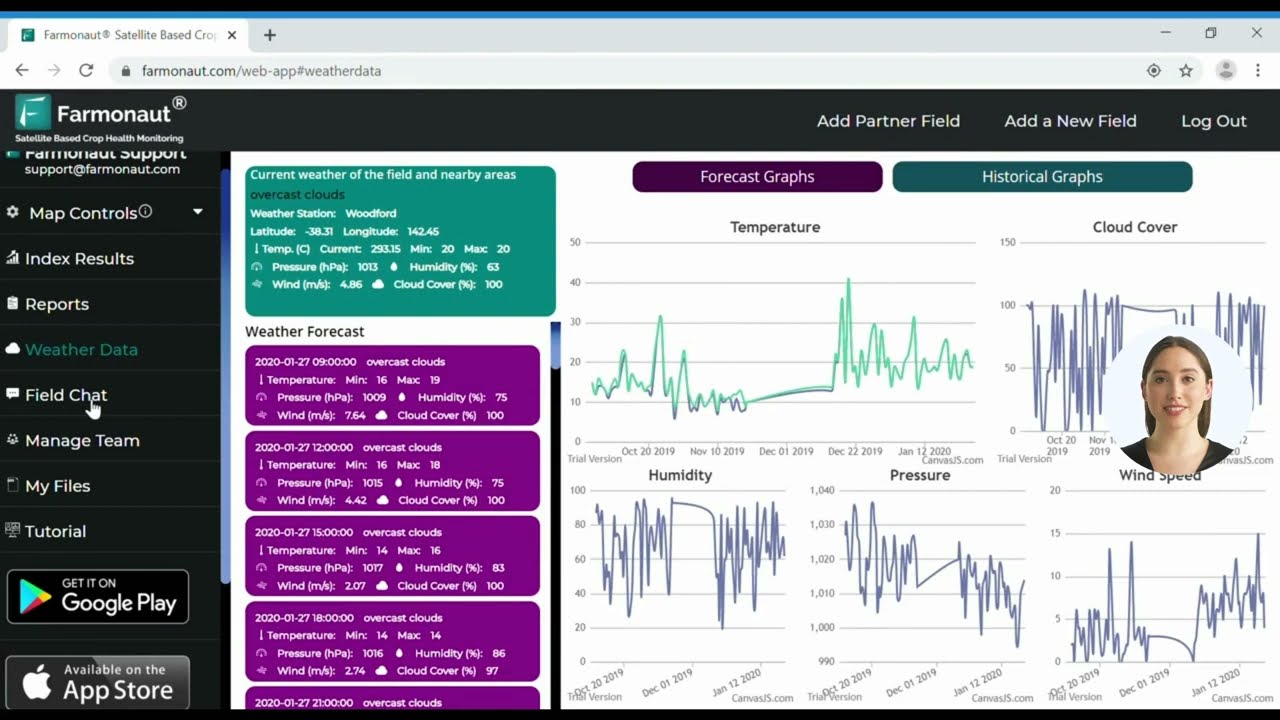
Ground-based embedded sensors combined with satellite imaging—NDVI, NDRE, thermal maps—support real-time monitoring of crop vigor, water stress, and nutrient status. The same Frontiers in Agronomy research that documented the 30% irrigation water savings also found sensor-based nitrogen management cut average nitrogen application in corn by 40 kg per hectare, without a corresponding yield penalty, in the studies reviewed.
- Key Technologies: Multispectral optical and thermal sensors, edge-processing hardware, satellite feed integration.
- Benefits: Targeted fertilizer and pesticide timing, reduced input cost, earlier stress detection than visual inspection alone.
5. Greenhouse Climate Control and Resource Automation
Greenhouses use embedded controllers to hold temperature, humidity, CO2, and light within a target band, connecting climate sensors to actuators that open vents, run fans, and cycle fertigation. No dataset in this review’s research brief reports a U.S.-specific yield or energy figure for greenhouse automation specifically; treat any such percentage you see elsewhere as unverified until you can trace it to a named study.
- Key Features: Real-time feedback loops for climate modulation, alarm systems for out-of-range conditions, targeted-use energy conservation.
- What to check locally: Your utility provider or state agricultural extension office (for example, a Land-Grant university extension service) is the right first stop for region-specific energy-savings data on greenhouse automation, since national datasets don’t break this out separately from field crops.

6. Variable-Rate Fertilization & Fertigation Platforms
Variable-rate systems deliver fertilizer and water in calibrated, zone-by-zone doses using sensor data and digital crop models. The clearest published number here is the same 40 kg/hectare average nitrogen reduction in corn from sensor-based management (Frontiers in Agronomy, 2025)—that figure is the fertilization-side counterpart to the 30% irrigation water savings above.
- Core Embedded Elements: Nutrient sensors and metering actuators, microprocessor-based rate controllers, connectivity to soil and weather databases.
- Benefits: Lower nitrogen loss to leaching, improved compliance documentation for input-use regulations.
For traceability across the input-application chain, platforms such as Farmonaut’s Blockchain Traceability log each fertilizer and water application for later audit.

7. Agribusiness Supply Chain and Processing Systems
Embedded systems extend from the field into processing lines that sort, grade, dry, and package produce, and into the digital infrastructure that tracks products from farm to market.
- Key Embedded Hardware/Software:
- Asset and inventory tracking with sensors and RFID
- Embedded controllers for conveyor belts, milling machines, and packaging lines
- Edge devices collecting field and equipment status
- Preventive-maintenance logic to reduce unplanned downtime
- What’s not published: No figure in this review’s brief quantifies spoilage or labor savings from supply-chain RFID at the farm level. USDA’s Agricultural Marketing Service publishes commodity-specific post-harvest loss studies periodically; check their current catalog for your crop before citing a savings percentage.
Calculator: Sensor-Based Nitrogen Savings for Corn
Use the documented 40 kg/hectare average reduction from sensor-based corn management to estimate what switching to embedded nutrient sensing could mean for your own acreage and nitrogen price.
Run your own numbers
Assumptions: uses the 40 kg/hectare average nitrogen reduction reported for sensor-based corn management in Frontiers in Agronomy (2025); acreage converts at 1 acre = 0.404686 hectares. Excludes hardware, installation, and calibration costs, and does not account for soil type, yield goal, or regional nitrogen recommendations—confirm actual rates with your state’s Land-Grant extension nutrient management guide before changing an application program.
How Farmonaut Fits Into an Embedded Systems Stack
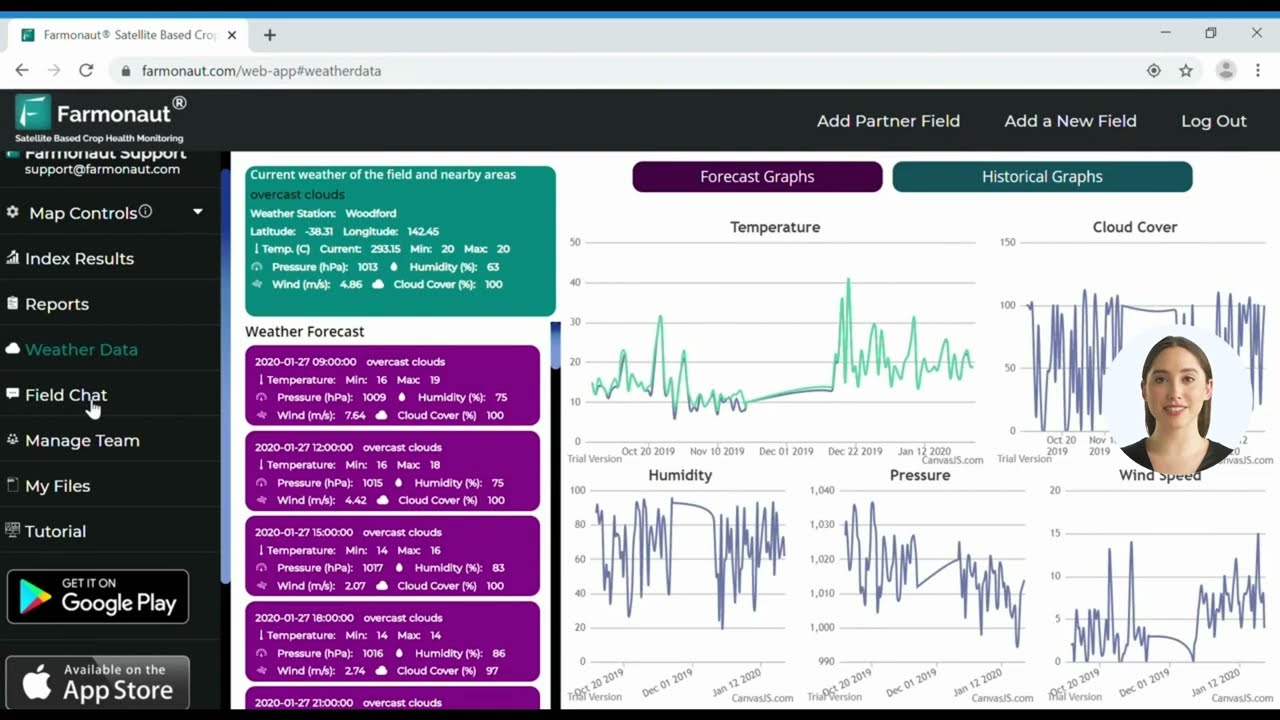
Field-level embedded controllers handle the moment-to-moment work—opening a valve, holding hydraulic pressure, steering a pass. Farmonaut’s role sits one layer up: satellite multispectral imaging and AI-based advisory feed the scheduling decisions that embedded controllers execute. In practice that means:
- Monitoring crop and soil health via satellite (NDVI, soil moisture, vegetation indices) to inform the irrigation and fertigation schedules that embedded controllers carry out
- Supplying AI-based advisory for irrigation, fertigation, and pest timing
- Logging input applications for supply chain traceability
- Supporting carbon footprint tracking and fleet management across multiple fields or sites
Developers building their own embedded/cloud integration can connect directly through the Farmonaut Satellite API and API Developer Docs. For coordinating multiple fields or a multi-site operation, Farmonaut’s Large-Scale Farm Management tools centralize monitoring across sites.



How to Verify These Numbers Yourself
Every figure in this article carries a source and a period because embedded-systems adoption data changes on a fixed schedule, not continuously. Here’s where each series gets refreshed:
- Farm-size adoption rates: USDA NASS runs the Agricultural Practices Survey on a roughly two-year cycle. Check current results at USDA NASS QuickStats, filtering for “precision agriculture” by state and commodity, rather than relying on the 2016–2018 ERS figures cited above once a newer survey has posted.
- Market size and CAGR: Market research publishers (Market.us, Grand View Research, IMARC, Mordor Intelligence) revise IoT-in-agriculture forecasts roughly annually, typically in Q4. Pull the current-year figure straight from the publisher’s dashboard rather than an article quoting last year’s number.
- Irrigation and nitrogen savings: The Frontiers in Agronomy figures cited here (30% water reduction, 40 kg/hectare nitrogen reduction) are from 2025 peer-reviewed studies. Search Frontiers in Agronomy directly for newer publications on sensor-based nitrogen and irrigation management before assuming these figures still hold for your region and crop.
- Hydraulic retrofit costs and greenhouse-specific savings: Not centrally published as of this review. Request an installed-cost quote from your equipment dealer, and consult your state’s Land-Grant extension service for region-specific greenhouse energy data.
FAQ: Embedded Systems in Agriculture
What is an embedded system in agriculture?
A purpose-built combination of a microcontroller, sensors, and actuators wired into one farm task—an irrigation valve, a hydraulic ram, a steering column—so it can measure conditions and act without constant manual input.
What are embedded IoT systems for agriculture, specifically?
Embedded IoT systems add wireless connectivity to the embedded controller, so sensor readings and control commands move over a network to a cloud dashboard or mobile app. The U.S. market for this category was valued at $2.36 billion in 2024, with a projected 17.8% CAGR through 2030 (Market.us).
How common are embedded systems in agriculture today?
It depends heavily on farm size and commodity. USDA ERS found 73% of the largest U.S. corn farms and 82% of the largest winter wheat farms used automated guidance systems by 2016–2017, versus 10% of the smallest corn farms in 2016. By 2023, USDA reported more than half of total planted acreage across six major commodities used automated guidance.
What is embedded firmware for agricultural hydraulics used for?
It controls pressure and flow in hydraulic systems—sprayer booms, planter down-pressure, loader arms—by reading sensors many times per second and adjusting a proportional valve, replacing manual mechanical control.
Do embedded systems actually reduce water and fertilizer use?
Yes, with published figures behind it: a 2025 Frontiers in Agronomy study found smart irrigation cut water consumption by 30% versus conventional practice, and sensor-based nitrogen management reduced average nitrogen application in corn by 40 kg per hectare.
How does Farmonaut fit into modern farming systems built on embedded hardware?
Farmonaut supplies the satellite monitoring and AI advisory layer that informs what embedded controllers execute—irrigation timing, fertigation scheduling, and traceability logging—via app, web, and API.




Conclusion
Embedded systems in agriculture are not a future promise—USDA ERS data already shows majority adoption of automated guidance on the largest U.S. corn and wheat farms, and a 2025 peer-reviewed study documents a 30% water-use reduction and a 40 kg/hectare nitrogen reduction from sensor-based management. What’s genuinely unresolved, and worth saying plainly, is the field-level economics of embedded hydraulic control, greenhouse automation, and supply-chain RFID: no dataset reviewed here breaks out installed cost or ROI timeline for those three categories. Get a dealer quote for hydraulics, check your state extension office for greenhouse energy data, and treat any published percentage for those three uses as unverified until you can trace it to a named source.
Start monitoring the field-level data that feeds these decisions:
Discussion
Questions, corrections or field experience? Share them below. First-time comments are reviewed before they appear, and your email is never published.
No comments yet. Be the first to add a question or your experience.

 Liquify Digital
 Ascentya
 CU Foods
 BeyondTech Global
 Rouge VC
 Yutz Automation
 AgroGreen Dynamics
 AgroRisk
 Oath Inc
 Reddane Farming
 Esri North East Africa
 Cresol
 Atur Kuliner
 MDCV UK
 Zerella Group
 Etech Consulting Madagascar
 Vestlandsforsking
 Delicio
 WB Dev
 Sama Premium
 Prochecker
 Tres Valles
 LACOS Geoinformation
 Magrifly
 Exploration consultancy · South Africa · Gold
 Licence holder · Niger · Gold










