

Hill farming · UK income guide
Upland Farming: What It Is, Incomes and Practices
Upland farming is hill and mountain livestock farming on land where altitude, climate and thin soils limit what grows. In England, average income on hill (LFA) grazing farms was £40,300 in 2024/25 (Defra); the LFA covers 86% of Scotland’s agricultural area and 79% of Wales.
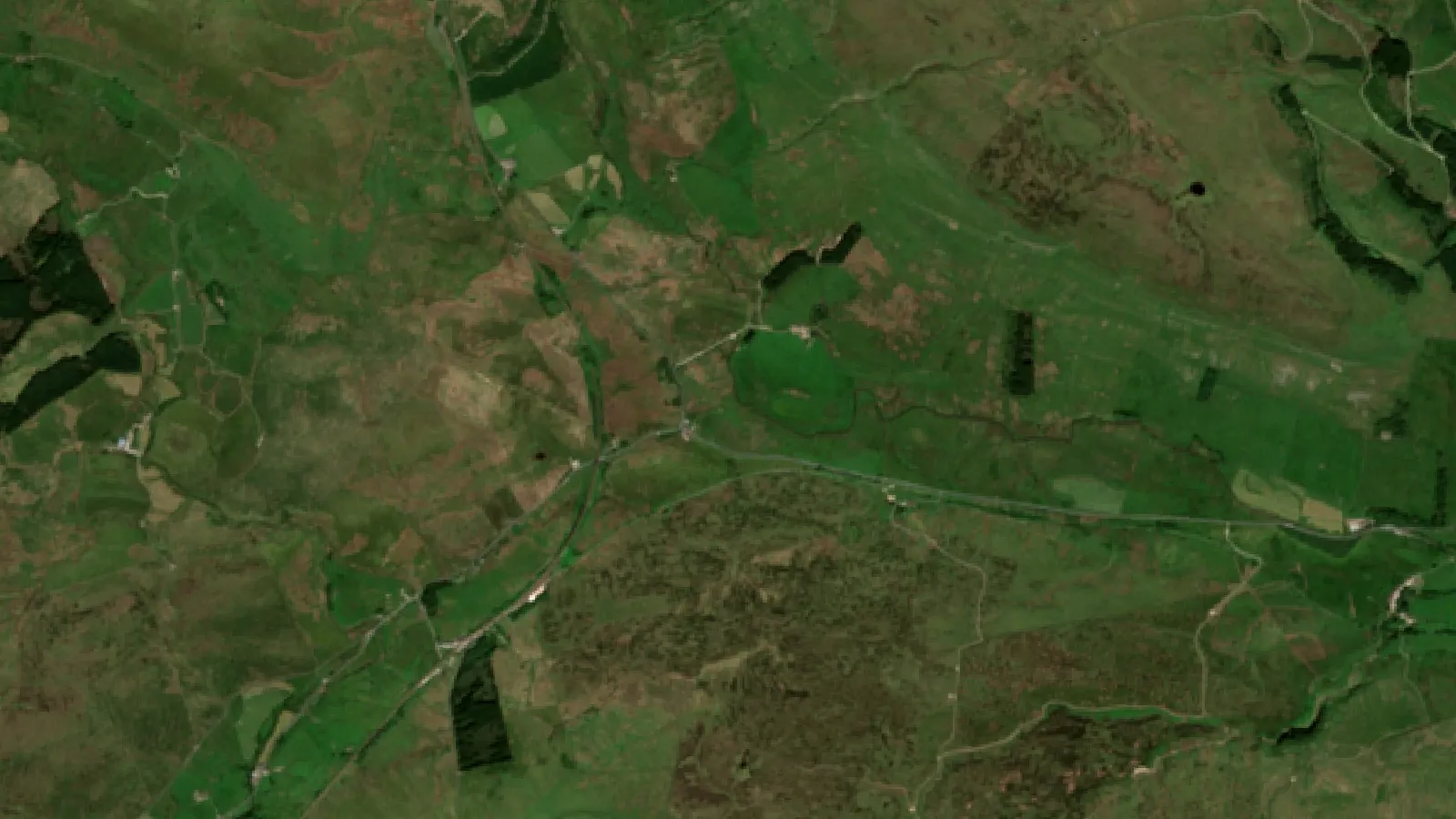
Key takeaways
- The Less Favoured Areas, set up in 1975 for hill and mountain farming, cover 86% of Scotland’s agricultural area (Scottish Government) and 79% of land in Wales (Senedd Research).
- Average Farm Business Income on English LFA grazing farms rose 61% to £40,300 in 2024/25; Defra forecasts £37,000 for 2025/26.
- Scotland’s average LFA livestock farm earned £28,600 in 2024-25, up from £15,700 (Scottish Government).
- LFA grazing farms paid the lowest average rent in England in 2024/25, £93 per hectare, against £285 on dairy farms (Defra).
In this article
- What is upland farming?
- Where upland farming happens in the UK
- What upland farms produce
- How much do upland farms earn?
- Challenges facing upland farmers
- Sustainable upland farming practices that pay
- Work out your upland flock margin
- How satellite data helps on hill farms
- How we checked the numbers
- FAQ
Upland farming is farming on high, steep or remote land where thin soils, wet weather and a short growing season limit what can be grown, so most of it is grazing for sheep and cattle. In the UK this land sits mostly inside the Less Favoured Areas (LFA), a classification set up in 1975 for hill and mountain farming. The LFA covers 86% of Scotland’s agricultural area and 79% of land in Wales.
This guide explains what upland farming means, what upland farms produce, what they earn in England, Scotland and Wales, and which sustainable practices pay their way. It includes official income charts and a flock margin calculator you can fill in with your own numbers.
What is upland farming?
In farming, “upland” simply means higher ground. The word is used in two ways. In the UK, Ireland and much of Europe, upland farming means hill and mountain livestock farming on rough grazing, moorland and enclosed hill pasture. In rice-growing regions, “upland” describes crops grown on dry, sloping fields that are not flooded, in contrast to lowland paddy fields. This guide covers the first meaning, the hill farming of Britain, with notes that also apply to hill country in Canada, New Zealand and the Appalachian and Rocky Mountain states.
The official definition in England comes from the LFA classification. Defra describes these as areas where “geology, altitude, climate, short growing season, low soil fertility, or remoteness” make it hard for farmers to compete (Defra, Farm Rents in England 2024/25). Inside the LFA are two bands:
- Severely Disadvantaged Areas (SDA): the harder ground, largely upland in character, including open moor and fell.
- Disadvantaged Areas (DA): the lower, better land around the hills, often where hill flocks are wintered or lambs are finished.
Defra notes that the split between LFA and non-LFA farms is generally applied to grazing livestock farms. That is a good clue to what upland farming is in practice: it is overwhelmingly a grass and livestock business.
Land quality maps tell the same story. The Agricultural Land Classification for England and Wales grades farmland from 1 (excellent) to 5, and its guidelines say very poor quality Grade 5 land mostly occurs in the uplands (Natural England, ALC guidelines, updated 2025).
Upland vs lowland farming at a glance
| Feature | Upland farms | Lowland farms |
|---|---|---|
| Main output | Store lambs, breeding ewes, suckled calves, wool | Finished lambs and cattle, cereals, milk, vegetables |
| Land | Rough grazing, moorland, small in-bye fields | Improved grassland and arable fields |
| Season | Short; grass growth starts late and ends early | Longer growing season |
| Income mix | Large share from agri-environment and support payments | More from crop and livestock sales |
| Rent | Lowest of any farm type in England | Higher; dairy land highest |
Where upland farming happens in the UK
Upland farming shapes the landscape of all three countries of Great Britain, but its weight differs.
- Scotland: about 5.6 million hectares are farmed, roughly 72% of the country’s land area (Scottish Parliament Information Centre, August 2026). The Scottish Government puts 86% of the agricultural area in the LFA. Hill sheep, suckler cows and crofting dominate the Highlands, Islands and Southern Uplands.
- Wales: the Senedd research service says mountainous terrain, steep slopes and high rainfall put 79% of land in the LFA. Welsh Government figures show that LFA grazing livestock farms make up 65% of Welsh farms and 71% of the land (Welsh Government, Farm incomes April 2024 to March 2025).
- England: the uplands run through the Pennines, the Lake District, the North York Moors, Exmoor, Dartmoor and the Welsh borders. Many hill farms there run a fell or moor flock with a smaller area of walled in-bye land.
Traditional systems grew up around these limits. Hill ewes such as the Welsh Mountain, Swaledale, Herdwick and Scottish Blackface are hefted to the open hill, meaning each flock learns its own patch of unfenced grazing. Older ewes are often sold down to lowland farms to be crossed with a terminal sire, which links upland and lowland flocks in a single chain.
Chart
Hill farm incomes in Scotland
Average farm business income, £ per farm, 2023-24 and 2024-25 (2024-25 prices)
What upland farms produce
Most upland land cannot grow arable crops well. A typical hill or upland farm produces:
- Store lambs sold in autumn to lowland farms for finishing.
- Breeding stock, such as draft ewes and crossbred gimmers.
- Suckled calves from hardy beef cows.
- Wool, now a small part of income on most farms.
- Forage: hay or silage from in-bye fields to feed stock through winter.
- Public goods that are now paid for: managed peat and moorland, wildflower hay meadows, woodland, clean water and stored carbon.
Hardy oats and barley still grow on some lower upland ground in Scotland, and a few farms grow fodder crops such as kale or swedes for winter feed. For a broader picture of how a season runs from soil to harvest, see our guide to the steps of farming.
How much do upland farms earn?
Official farm surveys in each country publish incomes for hill and upland farms. Farm Business Income (FBI) is the return to the farmer’s unpaid labour and capital, so it is not the same as a wage.
In England, average FBI on LFA grazing livestock farms rose 61% to £40,300 in 2024/25, close to lowland grazing farms at £41,300 (Defra, Farm Business Income by farm type in England 2024/25). Defra says higher agri-environment revenue was a key factor for both types. Across all farm types, agri-environment activities brought in an average of £21,100, around 30% of total FBI.
The forecast for the following year is lower for the hills. Defra expects LFA grazing farm income to fall 8% to £37,000 in 2025/26 because the delinked Basic Payment shrinks and agri-environment income drops, more than offsetting higher livestock output (Defra forecasts, 2025/26). In 2025, delinked payments up to £30,000 were cut by 76%.
In Scotland, the average LFA livestock farm earned £28,600 in 2024-25, up 82% from £15,700, while LFA cattle farms rose 88% to £40,800 (Scottish Government, farm business income 2024-25). The same release says LFA livestock incomes “remain low but stable” compared with other farm types.
Land is cheap to rent in the hills for the same reasons. In England, LFA grazing farms had the lowest average rent of any farm type in 2024/25 at £93 per hectare, against £285 per hectare on dairy farms (Defra farm rents). These are averages across agreement types; your own rent depends on tenancy type, region and grazing quality.
Chart
Farm Business Income by farm type, England
Average £ per farm, 2024/25 (final survey results)
Challenges facing upland farmers
Upland farmers face the same pressures as other farmers, plus a few that are sharper in the hills.
Chart
England farm income: 2024/25 vs 2025/26 forecast
Average Farm Business Income, £ per farm
- Thin margins on livestock: lamb and calf prices set most of the farm’s trading income, and costs such as feed, fuel and labour have risen.
- Changing support: England is phasing out the Basic Payment, Scotland is reshaping its support around conditions for climate and nature, and Wales is moving to its Sustainable Farming Scheme. Payments that once came with land now depend more on actions on the ground.
- Weather and climate: wet winters, late springs and summer droughts all hit grass growth. Steep land is also prone to erosion when it is overgrazed or poached.
- Remoteness: long distances to marts, abattoirs and suppliers add cost, and staff are hard to find.
- Succession: many hill farms depend on family labour, and younger family members often take other work.
Policy changes often, so check the current scheme pages for your country and take professional advice before you change your farm business or sign an agreement. Our overview of agricultural policy and its advantages explains how policy tools work in general.
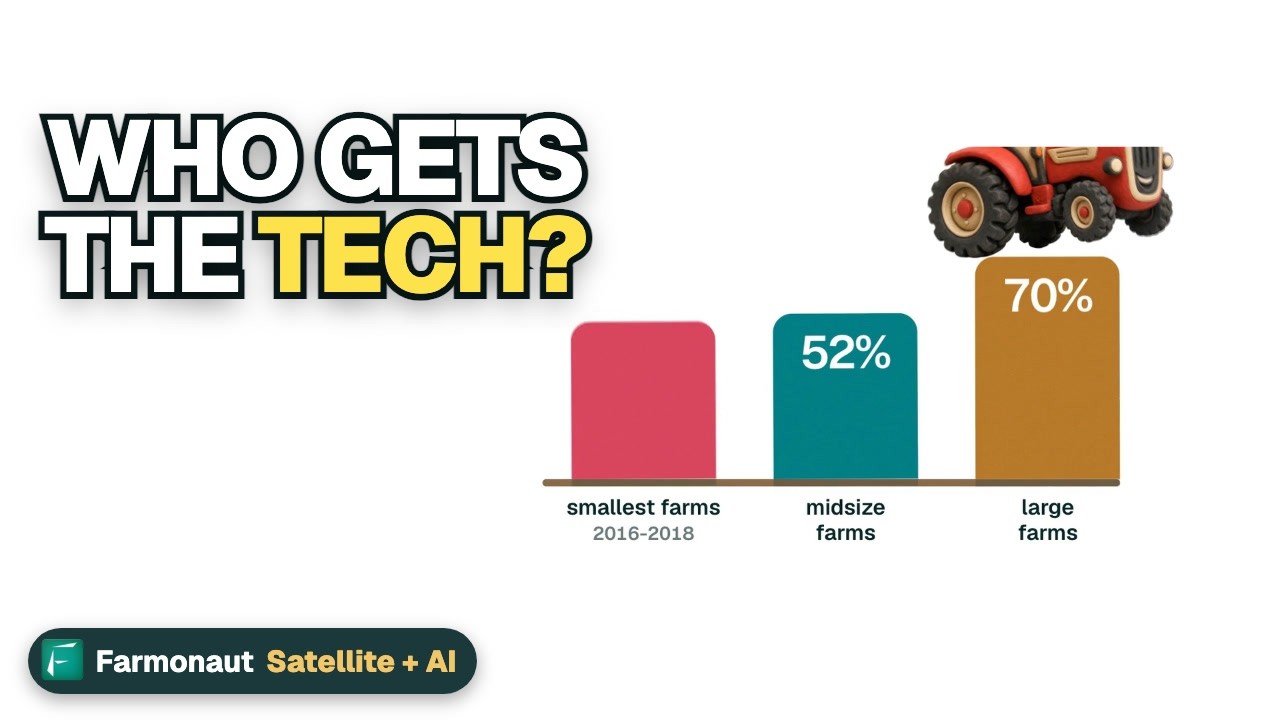
▶ What farm technology means for rural towns: money, jobs and internet access. · 3:50
Sustainable upland farming practices that pay
Sustainable upland farming keeps the land productive and the business viable while protecting soil, peat, water and wildlife. The practices below are common across the UK hills. Each has a cost, and each fits some farms better than others.
1. Rotational and conservation grazing
Moving stock between paddocks or areas of hill lets grass recover and cuts the risk of overgrazing. Native breeds of cattle on the hill graze coarse grasses that sheep leave, which helps keep heather and wildflowers in balance. Best for: farms with in-bye fields that can be split, or open hill under an agreement that sets stocking limits.
2. Peatland and moorland restoration
Much of the upland peat in Britain is drained or eroded. Restoration usually blocks drains, re-profiles hags and re-vegetates bare peat. The IUCN UK Peatland Programme reports that its Peatland Code, a standard for carbon credits from peat restoration, had 79 registered projects and 10,300 ha of expected restoration in an earlier update (IUCN UK Peatland Programme). The Royal Horticultural Society describes peatlands as the most efficient carbon store on land, with a key role in flood mitigation (RHS statement on peat). Best for: farms with degraded blanket bog where grazing value is low.
3. Soil care on steep ground
Keeping ground covered, avoiding poaching near gateways and feeders, and liming acidic in-bye fields based on a soil test all protect soil and grass yields. Our guide on ways to conserve soil covers practical methods. If you use lime, fertiliser or sprays, follow the product label and local rules.
4. Trees, hedges and shelter
Shelterbelts and hedges cut wind chill on lambing fields, give shade in heatwaves and create habitat. Woodland planting on the poorest ground can bring grant income, but it is a long-term land use change, so plan it with the whole farm in view. Research farms test how trees and sheep fit together. At Kirkton and Auchtertyre in the west-central Highlands, the Hill Sheep and Native Woodland project fenced part of a glen, planted trees in 1999 and moved ewes off that glen in winter, while year-round grazing continued in the next glen for comparison (University of Edinburgh thesis). Best for: exposed in-bye land and stream sides.
5. Better flock and herd performance
More lambs reared per ewe and fewer losses often lift income more than more stock. Condition scoring, scanning, targeted worming and good ewe nutrition before tupping all help. This is an old lesson: a study of Scottish flocks published by the British Society of Animal Production found hill lambing percentages were generally below potential and threatened the viability of hill units (Vipond and Gunn, BSAP). If you are starting out, our guide to starting a small sheep farm covers the basics.
6. Diversification
Holiday lets, farm shops, direct meat sales, contracting and renewable energy all spread risk. Defra figures show that diversification income rose on cereal, general cropping and lowland grazing farms in 2024/25. Some upland farms host wind or solar projects on suitable land; our article on solar panels on farmland sets out what to weigh up.

▶ Why soil organic carbon matters for soil structure and long-term farm resilience. · 12:28
Work out your upland flock margin
Use this calculator to see how lamb sales, costs and support payments combine on your farm. The example values are placeholders set near break-even, not a benchmark. Enter your own flock size, rearing rate, prices and costs.
Try the numbers for your own farm below.
Calculator
Upland flock margin calculator
Enter your own flock, prices, costs and payments.
- Lamb sales: 41,800 £
- Flock costs: 44,000 £
- Margin before payments: -2,200 £
- Lamb price needed to break even without payments: 100 £ per lamb
Example values only, set near break-even; they are not a benchmark or forecast. Lamb price is an example, use today’s price at your mart. Costs per ewe should include feed, vet, shearing, replacements and your share of fixed costs. Support payments depend on your scheme agreement; check the current scheme rules for your country.
How satellite data helps on hill farms
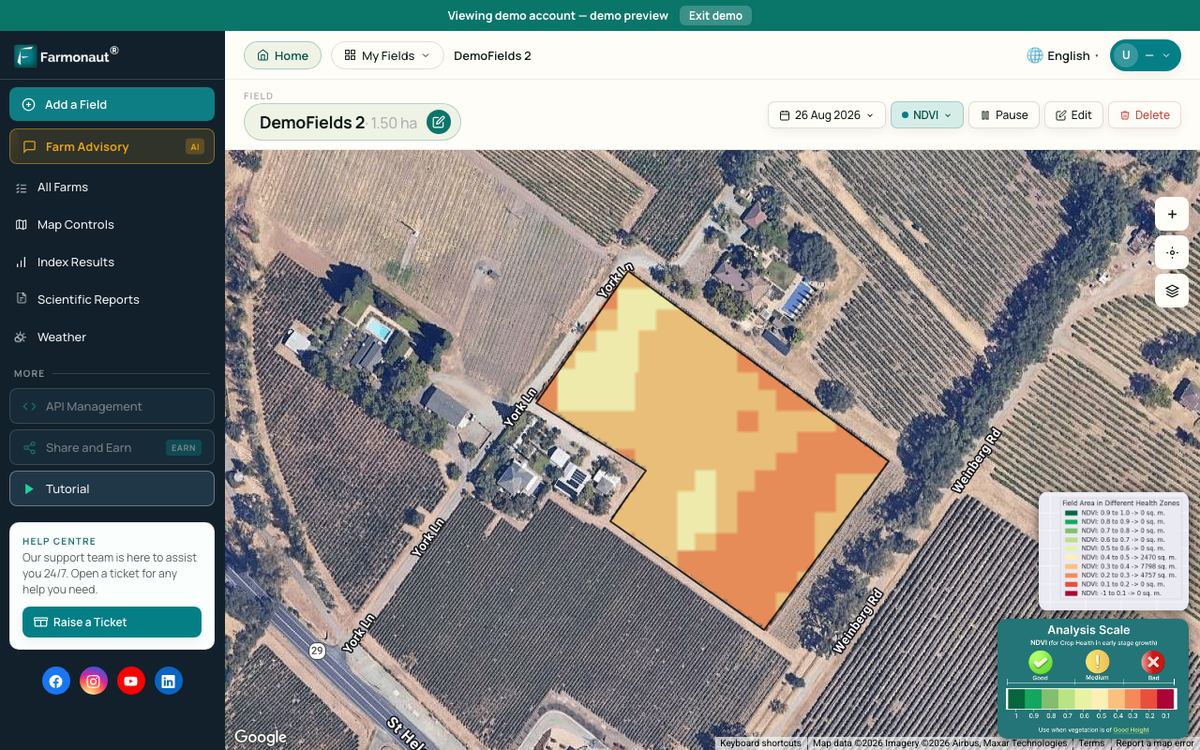
Upland farms are large and hard to walk, so satellite maps are useful for checking grass cover, spotting bare or eroding ground and comparing fields across seasons. Vegetation indices such as NDVI show where pasture is growing well and where it is thin. Weather data adds rainfall and temperature context; developers can use a satellite weather API to pull it into their own tools.
Farmonaut, a US-based company, offers satellite crop and pasture monitoring that maps vegetation, moisture and change over time for fields you draw once. The same methods used in precision farming on arable land can guide grazing plans and in-bye field care on hill farms. You can open the platform from the web or mobile app.
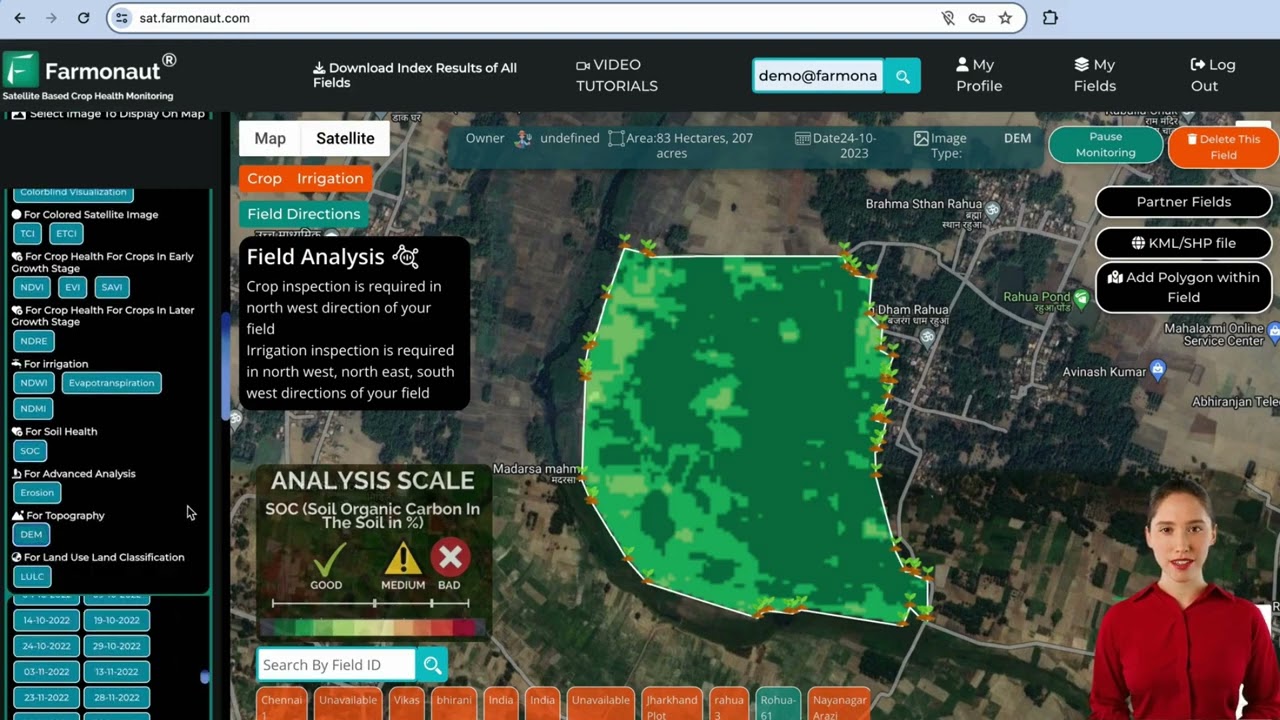
▶ A walk-through of a satellite monitoring web app for checking fields and pasture. · 8:02
How we checked the numbers
Income and rent figures come from the official farm surveys of each government: Defra’s Farm Business Survey for England, the Scottish Government’s farm business income estimates and the Welsh Government’s farm incomes release. Land shares come from the Scottish Government and Senedd research. Incomes are averages per farm and vary widely between farms, and forecasts can change when final figures arrive. Figures were checked on 12 November 2026.
FAQ
What is upland farming?
Upland farming is farming on high, steep or remote ground with thin soils, wet weather and short seasons. In the UK it is mostly sheep and beef cattle grazing on hill land inside the Less Favoured Areas.
What is the meaning of upland in agriculture?
In agriculture, upland means higher, drier or sloping land. In Britain it refers to hill and mountain grazing land. In rice farming it refers to rice grown on dry, unflooded fields rather than in lowland paddies.
What crops are grown on upland farms?
Few cash crops grow well in the hills. Upland farms mainly grow grass for grazing, hay and silage. Some lower upland ground grows oats, barley or fodder crops such as kale and swedes.
How much do upland farmers earn in the UK?
Average Farm Business Income on English LFA grazing farms was £40,300 in 2024/25, with £37,000 forecast for 2025/26 (Defra). In Scotland, the average LFA livestock farm earned £28,600 in 2024-25 (Scottish Government). Individual farms vary widely.
What is an upland farming system?
A typical UK upland system runs hardy ewes or suckler cows on open hill in summer, brings them to in-bye fields for lambing, calving and winter, and sells store lambs and calves to lowland farms for finishing.
Why is upland farming important?
Upland farms produce breeding stock and store animals for the wider livestock sector and manage land that stores carbon in peat, supplies drinking water and supports wildlife. Much of this land is also used for public access and tourism.
Related pages on our site: small sheep farm guide, soil conservation methods, agricultural policy basics.
Farmonaut pasture monitoring
See your hill fields from space
Draw your in-bye fields and grazing once and Farmonaut shows satellite vegetation maps for them through the season, on web, Android or iOS.



Sources
- Defra, Farm Business Income by farm type in England 2024/25: gov.uk
- Defra, Forecasts of Farm Business Income by type of farm, England, 2025/26: gov.uk
- Defra, Farm Business Income statistics collection: gov.uk
- Defra, Farm Rents in England 2024/25 statistics notice: gov.uk
- Scottish Government, Scottish farm business income: annual estimates 2024-2025: gov.scot
- Scottish Government, Rural Support Plan annex: Less Favoured Area Support Scheme: gov.scot
- Scottish Parliament Information Centre, Economics in Scottish agriculture (August 2026): parliament.scot
- Senedd Research, The farming sector in Wales (2022): senedd.wales
- Senedd Research, Welsh farming facts and figures: research.senedd.wales
- Welsh Government, Farm incomes: April 2024 to March 2025: gov.wales
- IUCN UK Peatland Programme, About peatlands and the Peatland Code: iucn-uk-peatlandprogramme.org
- Natural England, Agricultural Land Classification of England and Wales: guidelines (updated 2025): publications.naturalengland.org.uk
- Royal Horticultural Society, RHS statement on peat: rhs.org.uk
- Vipond and Gunn, The management and performance of sheep in the hills and uplands, BSAP Occasional Publication 10 (Cambridge University Press): cambridge.org
- University of Edinburgh thesis, Chapter 2: Main study site and the Hill Sheep and Native Woodland project: era.ed.ac.uk
Discussion
Questions, corrections or field experience? Share them below. First-time comments are reviewed before they appear, and your email is never published.
No comments yet. Be the first to add a question or your experience.

 Liquify Digital
 CU Foods
 BeyondTech Global
 Rouge VC
 Yutz Automation
 AgroGreen Dynamics
 AgroRisk
 Oath Inc
 Reddane Farming
 Esri North East Africa
 Cresol
 Atur Kuliner
 MDCV UK
 Zerella Group
 Etech Consulting Madagascar
 Vestlandsforsking
 Delicio
 WB Dev
 Sama Premium
 Prochecker
 Tres Valles
 LACOS Geoinformation
 Magrifly
 LatConnect 60
 Blickwinkel
 Agricultural Credit Policy Council
 eKGIS
 Mostas Tech
 Andex
 FCF India
 Unifrutti Gulf

 Licence holder · Niger · Gold
 Client · Tanzania · Gold
 Client · Somalia · Gold










