

Seed · US grower guide
Farming Seed Companies: Top US Vegetable Seed Suppliers
A small group of global breeders leads US vegetable hybrid breeding; independent companies sell organic, heirloom and open-pollinated seed direct to farms. How to compare them on germination, organic rules, licenses and support.
Key takeaways
- USDA names Bayer, BASF, Syngenta, Vilmorin/Limagrain, Rijk Zwaan, Takii, Sakata, Bejo, Enza Zaden and Ball as leading players in vegetable seed (AMS seeds report, March 2023).
- Federal minimum germination for vegetable seed in interstate commerce is 50% for okra, 55% for pepper and carrot, and 80% for cucumber, lettuce and pea (7 CFR 201.31).
- Certified organic farms must use organic seed when an equivalent organic variety is commercially available (7 CFR 205.204).
- US farms sold $1.9 billion of certified organic open-field vegetables in 2021 (USDA NASS Organic Survey).
- Compare seed lots by cost per established plant, not price per pack: germination changes how much seed you need.
In this article
- Farming seed companies at a glance
- Who breeds the vegetable seed sold in the US?
- Independent and organic seed companies in more detail
- What a seed label must tell you
- Organic seed: the rule and the market
- How to compare seed companies before you order
- Seed prices and what drives them
- Trends in the US seed industry
- Track how your seed performs after planting
- Frequently asked questions
The best farming seed companies for US vegetable growers fall into two groups. Large breeders such as Bayer (Seminis), BASF (Nunhems), Syngenta, Vilmorin/HM.CLAUSE, Sakata, Rijk Zwaan, Enza Zaden and Bejo are the leading breeders of commercial hybrids, and sell through distributors. Independent companies such as Johnny’s Selected Seeds, High Mowing Organic Seeds, Baker Creek Heirloom Seeds, Seed Savers Exchange, Adaptive Seeds and Sow True Seed sell straight to farms and gardens, often with organic or open-pollinated seed. The right partner is the one whose varieties win trials on your soil, whose labels show germination above the federal minimum, and whose staff answer the phone in planting season.
This guide names the main players with facts from their own pages and from USDA, shows the federal germination minimums for common crops, explains the organic seed rule, and gives a calculator that compares the real cost of two seed lots per established plant.
Farming seed companies at a glance
The table lists the companies most often named by US growers and by the USDA. Facts come from each company’s own website (checked November 2026) or from the USDA Agricultural Marketing Service. It is a starting list, not a ranking.
| Company | Base | Type of seller | What it says about its seed |
|---|---|---|---|
| Johnny’s Selected Seeds | Maine | Breeder and retailer, farms and gardens | Since 1973; 100% employee owned; signed the Safe Seed Pledge (no GMO seed) |
| High Mowing Organic Seeds | Vermont | Breeder and retailer | 100% certified organic seed; tested for germination, disease and GMO contamination |
| Baker Creek Heirloom Seeds | Missouri | Retailer and breeder of heirlooms | More than 1,300 heirloom and open-pollinated varieties; no patented varieties |
| Seed Savers Exchange | Iowa | Nonprofit seed bank and seller | Some 20,000 varieties kept at Heritage Farm, 890 acres in Winneshiek County |
| Adaptive Seeds | Oregon | Farm-based seed grower | All varieties offered are certified organic; no F1 hybrids, patented or PVP varieties |
| Sow True Seed | North Carolina | Retailer | Always open-pollinated; 100% employee owned |
| Sakata Seed America | California (Japanese parent) | Wholesale breeder | Hybrid vegetable breeder; sells through distributors in the US and Canada |
| Bayer, BASF, Syngenta, Vilmorin/Limagrain, Rijk Zwaan, Takii, Bejo, Enza Zaden | Global | Wholesale breeders | Named by USDA as leading companies in vegetables |
Who breeds the vegetable seed sold in the US?
Most farms buy seed from a dealer or catalog, but the variety itself usually comes from a much smaller group of breeders. The USDA report on competition in seeds (March 2023) says Bayer, BASF and Syngenta are leading companies in vegetables as well as in field crops. It names Vilmorin/Limagrain of France, Rijk Zwaan, Bejo and Enza Zaden of the Netherlands, Takii and Sakata of Japan and Ball of the US as other leading players. Most of them run breeding and trial programs inside the US.
The same report describes a second kind of business: the seed retailer. Retailers buy seed wholesale from several breeders, trial many varieties and choose what to offer. The USDA notes that this model is more common for vegetables than for corn or soybeans. So when you buy from a catalog company, you often get a curated mix of hybrids from global breeders plus that company’s own varieties.
Concentration is lower in vegetables than in corn, soybeans and cotton, but it is real in some crops. In its review of the Bayer and Monsanto merger in 2018, the Department of Justice found that the two companies controlled 94% of the carrot market and 90% of the cucumber seed market, as quoted in the USDA report.
Wholesale breeders
Wholesale breeders sell to large growers through distributors and field reps. Their strength is disease resistance packages, uniform hybrids for machine harvest and processing, and large seed lots with tight quality control. Sakata Seed America, for example, says its products are trialed by a team of experts and that it sells through commercial vegetable distributors across the US and Canada. For a field grower of broccoli, lettuce, onions or processing tomatoes, the local rep of a wholesale breeder is often the main source of variety advice.
Independent and catalog seed companies
Independent companies serve market gardens, diversified farms, organic growers and home gardeners. They sell smaller packs as well as bulk, publish growing guides and often breed for organic or low-input systems. Several are employee owned or nonprofit. The profiles below use each company’s own statements.
Independent and organic seed companies in more detail
Johnny’s Selected Seeds (Maine)
Johnny’s has supplied farms and gardens since 1973. Its home page says it is 100% employee owned, has signed the Safe Seed Pledge and offers a satisfaction guarantee. It sells cover crops, tools and seed for market farms. Its catalog is aimed at market farms as well as home gardens, so it suits growers who plant by the bed or row rather than by the field.
High Mowing Organic Seeds (Vermont)
High Mowing sells only certified organic seed. The company says its seed is bred to perform in organic conditions and is regularly tested for germination rates, disease and GMO contamination. It is a good fit for certified organic farms that must document their search for organic seed.
Baker Creek Heirloom Seeds (Missouri)
Baker Creek started with a 12-page catalog for the 1998 season. It now offers more than 1,300 heirloom and open-pollinated varieties and says it sells no patented varieties. Its Missouri gardens grow more than 2,000 varieties a year. Growers who sell unusual produce at farmers markets or to chefs often look here first.
Seed Savers Exchange (Iowa)
Seed Savers Exchange was founded in Missouri in 1975 by Diane Ott Whealy and Kent Whealy and is now based at Heritage Farm in Winneshiek County, Iowa. It says it holds the nation’s largest nongovernmental seed bank of its kind, with some 20,000 varieties. It is a nonprofit, so buying seed also funds the collection.
Adaptive Seeds (Oregon)
Adaptive Seeds was set up in 2009 near Sweet Home, Oregon. Seed grown on its farm has been certified organic since 2013, and it says none of its seeds are F1 hybrids, patented, PVP or genetically modified. Its varieties are chosen for the Pacific Northwest and other short-season northern areas.
Sow True Seed (North Carolina)
Sow True Seed sells only open-pollinated seed and is 100% employee owned. Its range leans toward the Southeast, with cover crop mixes and regional flower mixes. Open-pollinated seed lets a grower save seed from the crop for next year.
The earlier version of this page also listed Southern Exposure Seed Exchange (Virginia) and Seeds of Change (California). Both are well known, but check their current catalogs directly before you order, as product lines change.
What a seed label must tell you
The Federal Seed Act is a truth-in-labeling law for agricultural and vegetable seed shipped between states. The USDA Agricultural Marketing Service says the label must show purity, germination percentage, noxious weed seeds per pound, any chemical seed treatment, the kind and variety, and the name and address of the shipper. These label facts are the first test of any seed supplier.
Federal rules also set minimum germination standards for vegetable seed in interstate commerce. The chart shows the minimums for common crops, from the rule at 7 CFR 201.31.
A good supplier beats these floors by a clear margin and dates every germination test. Ask for the test date as well as the percentage. Germination falls with storage time, heat and humidity, so a high number from a test two years ago means less than a recent one. Soil temperature also matters at planting: Oregon State University Extension gives the soil temperature ranges at which each vegetable germinates well.
Chart
Federal minimum germination for vegetable seed
Percent germination required for seed in interstate commerce, selected crops
Organic seed: the rule and the market
Certified organic farms in the US must use organic seed when an equivalent organic variety is commercially available. The rule in the USDA organic regulations, the seeds and planting stock practice standard, allows untreated conventional seed only when no equivalent organic variety is commercially available, and requires organic seed for edible sprouts. Certifiers ask farms to show that they searched for organic seed, so a supplier with a deep organic catalog saves paperwork.
Demand for organic produce is large enough to support these companies. The 2021 Certified Organic Survey found US farms sold $11.2 billion of certified organic products in 2021, up 13% from 2019. Vegetables grown in the open made up $1.9 billion of that. The chart shows the top organic vegetable crops by sales.
The Organic Seed Alliance, a nonprofit founded in 2003, tracks how much organic seed is available in its State of Organic Seed reports; the latest was published in 2022. Its research program has trialed and bred varieties with over 200 farms across the US. If you grow organic, its reports and trial results are a useful check on which companies breed for organic systems rather than only reselling.
Why sustainable seed suppliers matter
Seed Savers Exchange says the world has lost 75 percent of its edible plant varieties in the last century or so. Companies that keep heirloom and open-pollinated lines alive help keep traits that may matter later, such as heat tolerance or resistance to a new disease. For a farm, the practical benefits of buying from sustainable seed suppliers are:
- Varieties bred or selected under organic or low-input conditions, which may hold up better without synthetic inputs.
- Seed you can save, if it is open-pollinated and not covered by a patent or license.
- Access to premium organic and specialty markets, with the records certifiers ask for.
- Regional adaptation, when seed is grown and trialed in a climate like yours.
Chart
Top US certified organic vegetable sales
US$ million, 2021, selected vegetables grown in the open
▶ Seven simple sustainable farming practices that protect soil and water. · 4:34
How to compare seed companies before you order
A wide catalog or a low price per pack is not enough. Use these checks when you choose between seed partners:
- Trial results on your farm or near it. Grow two or three candidate varieties side by side for a season. University extension variety trials and your neighbors’ results are the next best evidence.
- Germination and test date. Compare label germination with the federal minimum and ask how recent the test is.
- Disease resistance codes. Match the resistance package to the diseases you actually see, such as downy mildew in lettuce or Fusarium wilt in tomato.
- Seed origin and local adaptation. Favor suppliers that produce or trial seed in a similar climate and day length.
- Certification. If you sell organic, check that the seed is certified organic, or keep records showing no equivalent organic seed was available.
- Intellectual property terms. Read bag tags and licenses. The USDA notes that bag tags can limit how seed may be used, including saving it.
- Supply and timing. Ask how early you must order to secure large lots, and whether the company holds back-up stock.
- Agronomy support. A rep or help line who knows your crop is worth a lot when a planting fails.
Questions to ask a seed rep
Before you commit a large field to a new supplier, ask a few direct questions. Where was this seed lot grown, and when was it tested? Which diseases does the resistance package cover, and at what level? Has the variety been trialed in your region, and can the rep share those results? How much seed is held in stock if a planting has to be redone? Is the seed treated, and is the treatment allowed for your market? Clear, fast answers to these questions are a good sign of the support you will get later in the season.
Compare the real cost of two seed lots
The cheaper seed per thousand is not always cheaper per plant that comes up. Germination changes how many seeds you must sow to reach your target stand. Use the calculator to compare two offers with your own prices, germination figures and plant targets.
Try the numbers for your own farm below.
Calculator
Which seed lot costs less per plant that comes up?
Enter two offers with your own prices, germination and plant target.
- Lot A seed cost per acre: $47 US$
- Lot B seed cost per acre: $47 US$
- Lot A seeds to sow per acre: 23,529 seeds
- Lot B seeds to sow per acre: 21,277 seeds
Example values only, close to break-even; prices are examples, use today’s price and the germination on your labels. The calculator ignores field losses after emergence, which add to the seed you need for both lots.
Seed prices and what drives them
The USDA seeds report cites research showing that between 1990 and 2013 seed prices rose around 700% for genetically engineered crops and around 218% for other field crops. Those figures are for field crops, not vegetables, but they show the direction of travel. The same report quotes the American Seed Trade Association as saying its members spend on average 15% of revenue on research and development.
Chart
Rise in US field crop seed prices, 1990 to 2013
Price index, 1990 = 100, built from the percentage rises the USDA report cites
For vegetable growers, the price of hybrid seed reflects breeding costs, the cost of hand pollination for some crops, and royalties on patented traits. The USDA notes that self-pollinated vegetables such as green beans and lettuce often rely on utility patents, and that many F1 hybrids carry licensed traits such as specific disease resistances. Ask your supplier whether a variety is patented or licensed before you plan to save seed.
Prices in catalogs are list prices and change every season. Compare per thousand seeds or per pound, not per pack, and ask distributors for volume pricing.
Trends in the US seed industry
Several shifts matter to growers choosing a seed partner over the next few years:
- Faster breeding with data. Genomic tools and data analysis help breeders find traits such as drought tolerance or disease resistance sooner.
- Participatory breeding. Groups like the Organic Seed Alliance work with farms to breed varieties on real farms, under real conditions.
- Public breeding programs. University programs still release varieties, such as disease-resistant tomatoes adapted to New York from Cornell, but the USDA report notes that public breeding capacity has shrunk in some crops.
- Traceability. Buyers and export markets increasingly ask where seed and produce came from. Digital records of seed lots, planting dates and field history make audits easier.
- Controlled environment growing. Greenhouse and indoor growers need varieties bred for those systems, so ask suppliers which lines they have trialed under cover.

▶ Six plain steps to start precision farming, from field maps to satellite monitoring. · 4:18
Track how your seed performs after planting
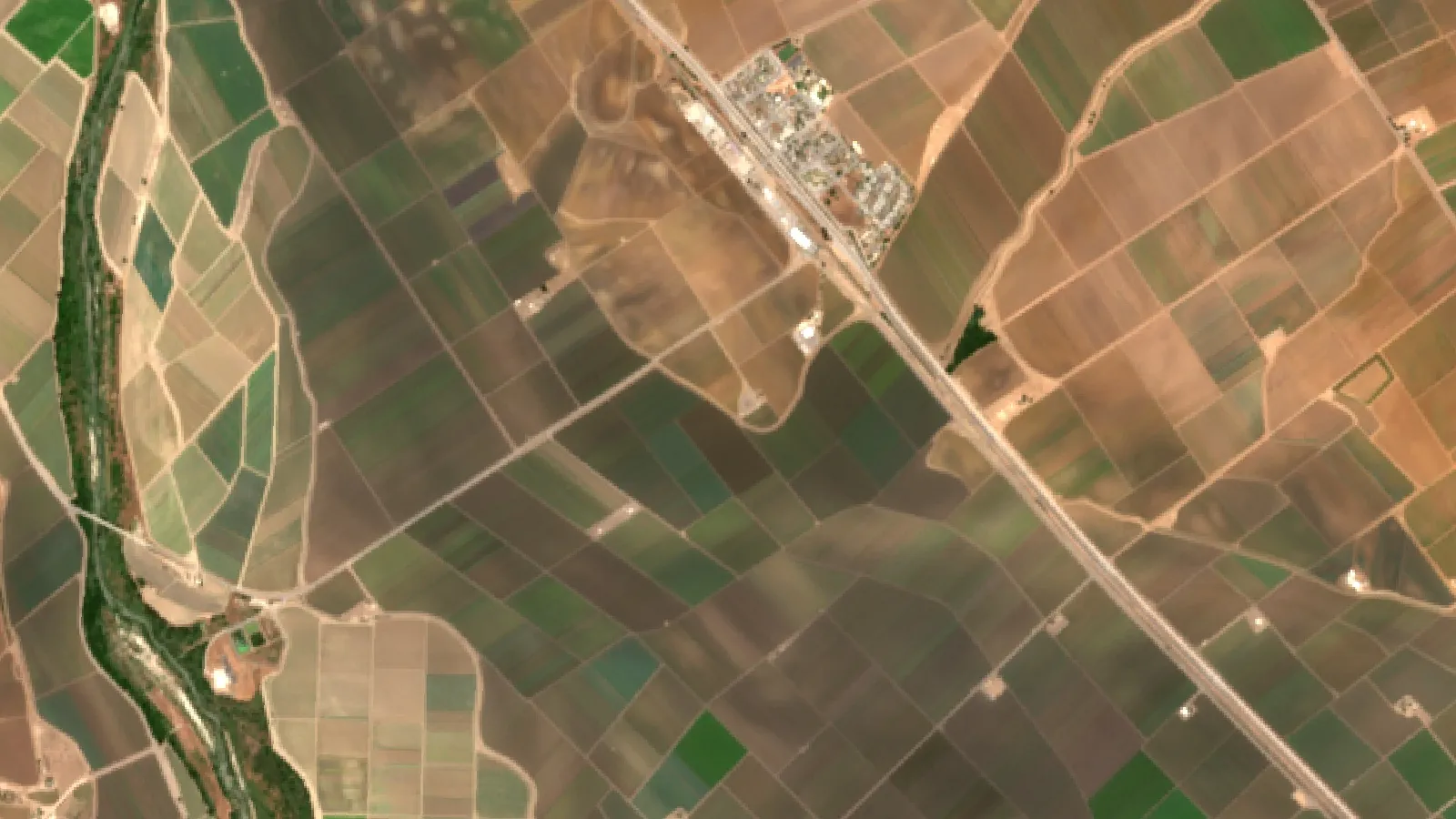
A seed company’s promises are tested in your field. Keeping records of variety, seed lot, planting date and field performance lets you judge suppliers on evidence. Satellite crop monitoring can help on larger fields: vegetation maps show uneven stands and stress across a block, so you can compare how two varieties or seed lots grew without walking every row.
Farmonaut offers satellite crop health maps for fields you draw on the web app, the Android app or the iOS app. Seed producers and large farms can also look at multi-farm management, product traceability, carbon footprint tracking and fleet management. Developers can add satellite and weather data to their own tools through the crop monitoring API (API documentation).
Key takeaways when selecting a seed partner
- Check label germination against the federal minimum, and ask for the test date.
- Trial before you switch a whole crop to a new variety or supplier.
- For organic production, use certified organic seed when an equivalent variety exists, and keep search records.
- Read bag tags and licenses before you save seed.
- Value agronomy support and reliable supply as much as price.
▶ How satellite NDVI maps show crop stress across a field before you can see it. · 4:09
Frequently asked questions
What are the leading vegetable seed companies in the US?
The USDA names Bayer, BASF, Syngenta, Vilmorin/Limagrain, Rijk Zwaan, Takii, Sakata, Bejo, Enza Zaden and Ball as leading players in vegetable seed. Independent companies that sell direct to US farms include Johnny’s Selected Seeds, High Mowing Organic Seeds, Baker Creek Heirloom Seeds, Seed Savers Exchange, Adaptive Seeds and Sow True Seed.
What makes a seed supplier sustainable?
Look for certified organic seed, open-pollinated or heirloom lines that keep genetic diversity, breeding for organic and low-input systems, and clear information about how and where seed is produced. Third-party certification, such as USDA organic, is the most reliable check.
Are heirloom seeds better than hybrids?
Neither is better for every farm. Heirloom and open-pollinated seed can be saved and often has unique flavor. F1 hybrids are bred for uniformity, yield and disease resistance, and are standard in large-scale field vegetables. Many growers use both.
What seed company should a US broccoli grower work with?
Large broccoli growers usually buy hybrids from wholesale breeders through a local distributor and pick varieties from local trials. Smaller and organic growers often buy from catalog companies such as Johnny’s or High Mowing. In both cases, trial a few varieties on your own farm first.
How can I check a seed company’s quality?
Read the label for germination, purity and test date, compare germination with the federal minimum, ask for disease resistance codes and organic certificates, and talk to other growers in your area about their results.
Related pages on our site: farm management for large operations.
Seed rules, organic certification and patent terms change. Check the seed label, your certifier and local rules, and get professional advice before major purchasing decisions.
Farmonaut crop monitoring
See how each variety grows from space
Draw your fields once and Farmonaut shows satellite vegetation maps for them through the season, on web, Android or iOS.




Sources
- USDA Agricultural Marketing Service, More and Better Choices for Farmers: Promoting Fair Competition and Innovation in Seeds (March 2023): ams.usda.gov
- USDA AMS, Federal Seed Act: ams.usda.gov
- 7 CFR 201.31, Minimum germination standards for vegetable seeds in interstate commerce (Cornell LII): law.cornell.edu
- 7 CFR 205.204, Seeds and planting stock practice standard (Cornell LII): law.cornell.edu
- USDA NASS, 2021 Certified Organic Survey Highlights (December 2022): nass.usda.gov
- Organic Seed Alliance, About OSA: seedalliance.org
- Oregon State University Extension, Soil temperature conditions for vegetable seed germination: extension.oregonstate.edu
- Cornell Vegetables, New York adapted tomatoes with resistance to multiple fungal and bacterial diseases: vegetables.cornell.edu
- Seed Savers Exchange, About: seedsavers.org
- Baker Creek Heirloom Seeds, Our Story: rareseeds.com
- Adaptive Seeds, About Us: adaptiveseeds.com
- Johnny’s Selected Seeds, home page: johnnyseeds.com
- High Mowing Organic Seeds, home page: highmowingseeds.com
- Sakata Seed America, home page: sakatavegetables.com
- Sow True Seed, About: sowtrueseed.com
- Android app: play.google.com
- iOS app: apps.apple.com
Discussion
Questions, corrections or field experience? Share them below. First-time comments are reviewed before they appear, and your email is never published.
No comments yet. Be the first to add a question or your experience.

 Agroes
 Etech Consulting Madagascar
 Vestlandsforsking
 Elders
 Agritein
 Delicio
 WB Dev
 Sama Premium
 Prochecker
 Tres Valles
 LACOS Geoinformation
 Magrifly
 LatConnect 60
 WebsEdge
 Blickwinkel
 Agricultural Credit Policy Council
 Marei Nursery
 eKGIS
 Mostas Tech
 Andex

 Exploration consultancy · South Africa · Gold
 Licence holder · Niger · Gold
 Licence holder · Nigeria · Gold + lithium
 Client · Tanzania · Gold
 Client · Somalia · Gold
 Client & affiliate partner · Ghana · Gold










