

Reviewed September 2026 against USDA Agricultural Marketing Service, USDA NASS, and Statistics Canada / Agriculture and Agri-Food Canada data.
Try it: Run your own numbers →
Holtville Carrot Festival: Carrot Capital’s Annual Event
Holtville, California, in the Imperial Valley, has held the Carrot Festival every February since 1947 — 79 consecutive years by the 2026 event — and it’s the reason Holtville calls itself the “Carrot Capital of the World.” The town earns that title on production numbers, not just marketing: Imperial County alone accounts for 25% of California’s carrot acreage (2022, Imperial County Agricultural Commissioner), and California grows 63% of the entire US carrot crop. This article covers the festival itself — parade, dates, coronation, food, history — and the production data behind the “Carrot Capital” claim, sourced to USDA and Statistics Canada rather than repeated folklore.
Table of Contents
- What the Holtville Carrot Festival Is and When It Happens
- Why Holtville Calls Itself “Carrot Capital of the World” — The Actual Numbers
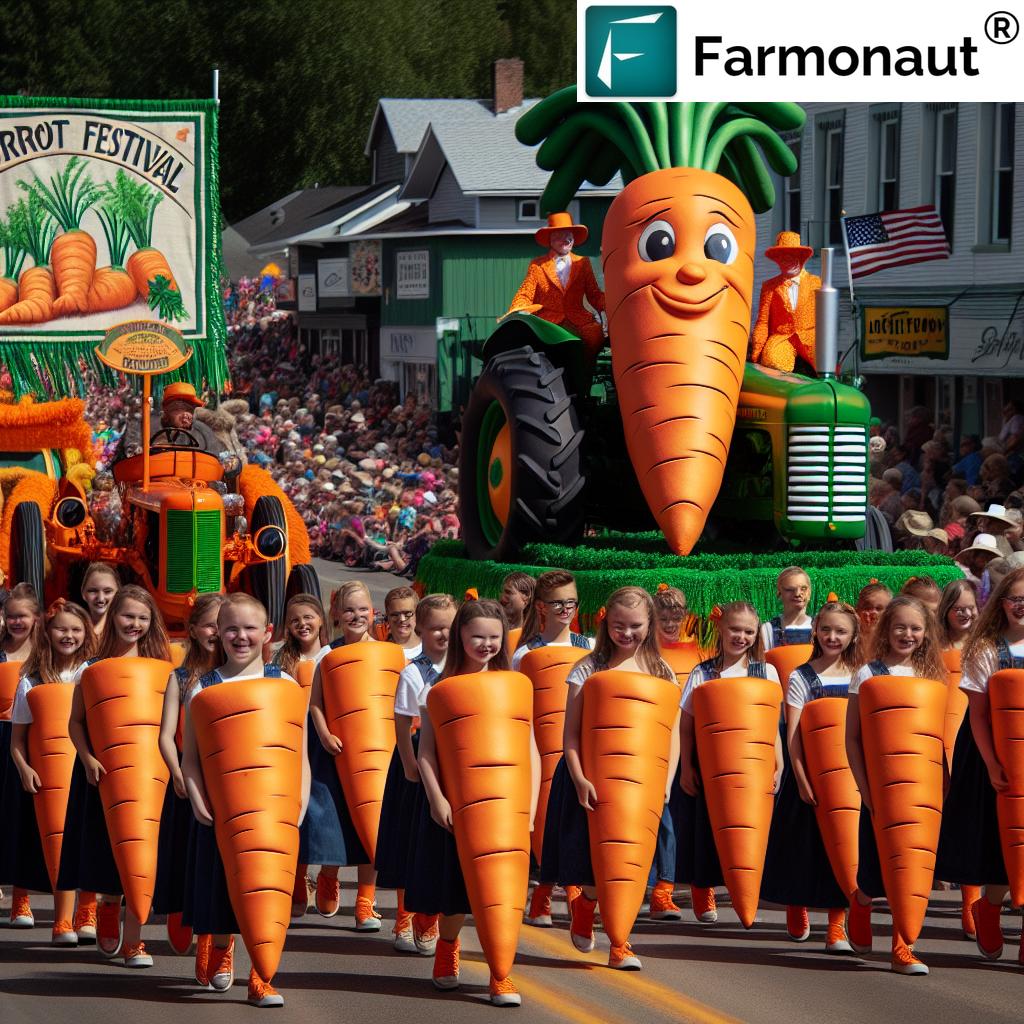
- The Grand Parade
- Carrot Royalty: A Time-Honored Tradition
- Festival Schedule: What to Expect Each Day
- The Economics Behind the Festival
- How US Carrot Production Compares to Canada
- Community, Music, and Food
- Planning Your Visit
- Calculator: Estimate Your Festival Weekend Cost
- FAQ
- Try it: Run your own numbers
What the Holtville Carrot Festival Is and When It Happens
The Holtville Carrot Festival is a multi-day community event held every February in Holtville, a town of roughly 6,000 people in California’s Imperial Valley, about 15 miles east of El Centro and 120 miles east of San Diego. The 2026 festival marks the event’s 79th year, run continuously since 1947 by the Holtville Chamber of Commerce (details and exact dates are published annually at the Chamber’s event page). Anyone searching “holtville carrot festival 2026” or “carrot festival 2026” should check that page directly each year, since exact dates shift with the calendar — the festival is not fixed to a specific weekend number.
If you’re searching simply for “holtville ca” — Holtville sits in Imperial County, adjacent to El Centro, in the low desert of Southern California near the Mexican border. The carrot festival is the town’s signature annual event and the main reason it draws visitors from outside the Imperial Valley.
Why Holtville Calls Itself “Carrot Capital of the World” — The Actual Numbers
“Carrot Capital of the World” isn’t just a festival slogan — it traces to real production share. Here’s what backs the claim, all figures for the 2024 crop year unless noted:
- California produced 1.8 billion pounds of carrots in 2024 (USDA AMS Specialty Crops).
- That crop was worth $1.1 billion at the farm level in 2024 (USDA AMS Market News).
- California supplies 63% of total US carrot production (2024, USDA NASS, via Stocking Blue).
- Imperial County — Holtville’s home county — holds 25% of California’s carrot acreage (2022, Imperial County Agricultural Commissioner).
- Kern County, further north in the Central Valley, accounted for about 60% of California carrot production as of a 2012 California Department of Food and Agriculture count — the single largest county-level share in the state, ahead of Imperial County.
That last point matters for anyone fact-checking the “Carrot Capital” claim: Kern County’s production share (60% as of 2012) is larger than Imperial County’s acreage share (25% as of 2022) by the most recent county-level figures available. Holtville’s claim to the title rests on history — it’s been the site of the festival since 1947 and sits in a major carrot-growing county — rather than on being the single largest producing county in the state today. The two data points use different metrics (production volume vs. acreage) and different years, which is a limitation of the publicly available county reports, not an inconsistency Farmonaut introduced.
For anyone who wants the current-year figures rather than the 2024 numbers cited here: USDA NASS typically finalizes county and state acreage data with a roughly 18-month lag, so 2026 season figures for Imperial County and California should appear in USDA NASS’s California Field Office reports and the Imperial County Agricultural Commissioner’s annual crop report around mid-to-late 2027. Check USDA AMS Fruits and Vegetables market news for wholesale and retail pricing in the meantime, which updates weekly.
Carrot Prices: What Wholesale and Retail Actually Cost
Price data moves faster than acreage data and is worth citing precisely. In July 2026, terminal market wholesale price for baby peeled carrots (cartons of 15 2-lb bags) ran $30.00–$33.00 per carton at the Boston terminal market, per USDA AMS. At retail, baby peeled carrots averaged $2.35 per 2-lb bag in August 2026, per USDA AMS’s weekly retail specialty crops report. Both figures are published weekly and monthly respectively, so a reader checking this in 2027 should pull the current week’s numbers from the same USDA AMS reporting series rather than relying on the 2026 figures above.
The Grand Parade
The festival’s centerpiece is its parade, historically routed along 5th Street on the west side of town, drawing floats, marching bands, antique cars and tractors, equestrian units, and the newly crowned Carrot Court. Community estimates have put festival attendance at more than 10,000 visitors over the multi-day event — a figure worth noting is not a USDA or Census statistic but a locally reported community estimate, since no government agency tracks festival attendance directly.
- School Children: Local schools participate with carrot-themed costumes and floats.
- Marching Bands: School and community bands perform along the route.
- Antique Cars and Tractors: Vintage vehicles reflect the region’s farming history.
- Equestrians: Riders and groomed horses join the procession.
- Festival Royalty: The Carrot Queen and her court ride in the parade.
The parade route offers ample viewing along 5th Street, with residents lining the sidewalks well before the start time each year.

Carrot Royalty: A Time-Honored Tradition
Crowning the Carrot Queen and her court is one of the festival’s oldest traditions, dating back through much of the event’s 79-year run. Recent courts have included young women pursuing paths in entrepreneurship, cosmetology, and education — the court functions less as a pageant and more as a civic role, with duties across the parade, coronation ceremony, and community appearances throughout festival week. Because court members change every year, check the Holtville Chamber of Commerce’s event page for the current year’s Carrot Queen and Court rather than relying on any prior year’s names.
Festival Schedule: What to Expect Each Day
The Carrot Festival runs as a multi-day event with a consistent format year to year, even as exact dates and start times shift. Based on the event’s typical structure:
| Event | Description | Typical Timing | Location |
|---|---|---|---|
| Opening Parade | Floats, bands, antique vehicles, Carrot Court | Late morning | 5th Street |
| Carrot Queen Coronation | Crowning ceremony for festival royalty | Evening | Holtville Civic Center |
| Carnival Rides | Rides and games for all ages | All day | Festival Grounds |
| Street Fair | Vendors, crafts, food stalls | Daytime through evening | Downtown Holtville |
| Carrot Cooking Contest | Community competition for best carrot dish | Afternoon | Community Center |
Exact hours and days change annually — confirm the current schedule at the Chamber’s event listing before planning travel, since the source above (business.holtvillechamber.org) is the Chamber’s own official page and the most current record of festival logistics.
The Economics Behind the Festival
The festival’s timing every February isn’t arbitrary — it lines up with the Imperial Valley’s carrot harvest window, which is why a harvest celebration makes sense here specifically rather than in a summer-harvest region. The county’s agricultural economy is what the festival is actually celebrating: Imperial County holds 25% of California’s carrot acreage (2022), inside a state that produces 63% of the US carrot supply (2024) worth $1.1 billion at the farm gate. Local hotels, restaurants, and retailers see a visible bump in business during festival week, though — as with attendance — no government agency publishes a festival-specific economic impact figure, so treat any specific dollar claim about festival-week spending as a local estimate rather than a cited statistic.
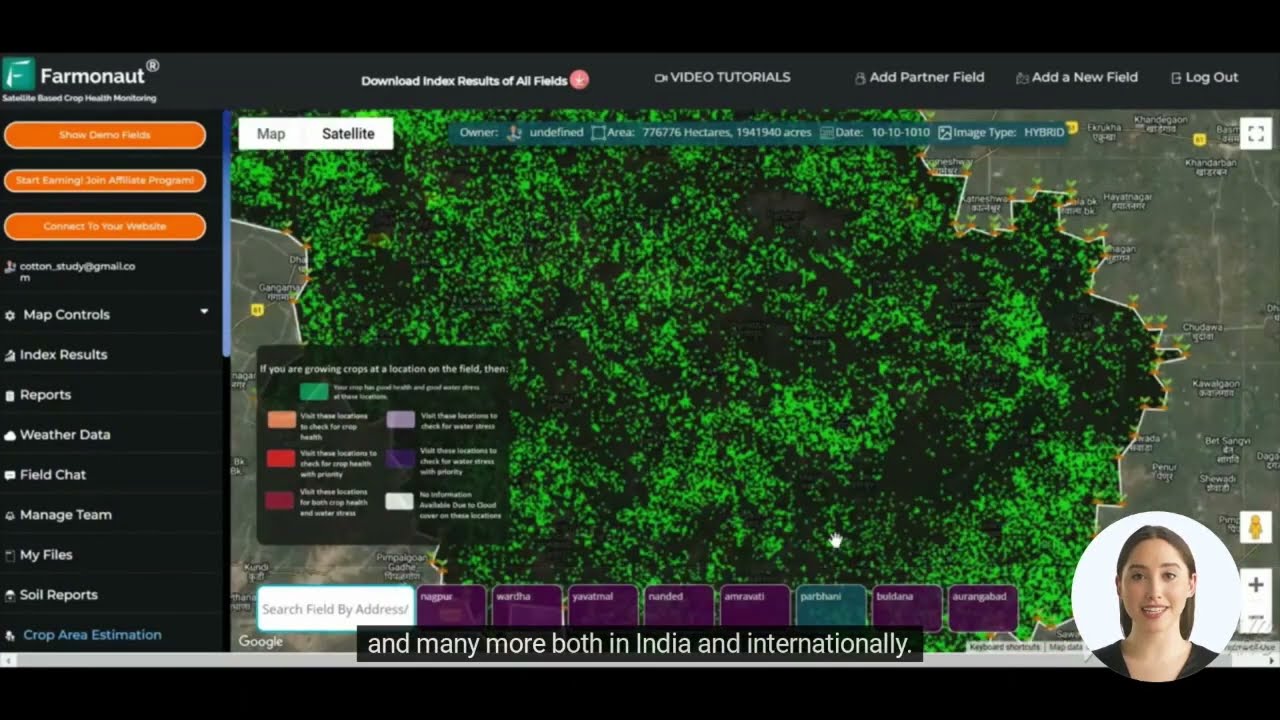
Farmers in carrot-growing regions like the Imperial Valley increasingly rely on satellite monitoring to manage the water and soil conditions carrot crops need. Farmonaut’s web app and mobile apps for Android and iOS provide satellite-based crop health tracking that growers use to time irrigation and spot stress before it shows up in yield.
How US Carrot Production Compares to Canada
For readers in Canada, or anyone comparing North American carrot production, Statistics Canada and Agriculture and Agri-Food Canada (AAFC) track the Canadian side of the crop separately from USDA. Canada produced 361,622 metric tonnes of carrots in 2021, grown across 9,470 hectares (2022 figures), with a farm-gate value of $149.4 million CAD (2022). Ontario alone accounted for 43% of Canadian carrot cultivation in the 2021–2022 period. Canadian production rose 15.5% year-over-year between the 2024 and 2025 seasons, per Statistics Canada’s Agriculture Division.
Converting for comparison: California’s 1.8 billion pounds in 2024 works out to roughly 816,000 metric tonnes — more than double Canada’s entire national output of 361,622 metric tonnes (2021), from a single US state. That gap reflects both climate (California’s Imperial and Central Valleys support winter carrot harvests that most of Canada’s growing regions cannot) and scale of cultivated area.
Full Canadian crop profile data, including provincial breakdowns and pricing methodology, is published by Agriculture and Agri-Food Canada, with the underlying production dataset maintained at the Open Government Portal. Note the gap in what’s publicly tracked: Statistics Canada reports production volumes but does not break out commodity-level export destinations for carrots specifically, so questions about where Canadian carrot exports go aren’t answerable from this dataset — a limitation worth knowing before searching further.
US vs. Canada Carrot Production at a Glance
| Metric | United States (California) | Canada |
|---|---|---|
| Production volume | 1.8 billion lbs (2024) | 361,622 metric tonnes (2021) |
| Farm-gate / crop value | $1.1 billion (2024) | $149.4 million CAD (2022) |
| Share of national production | California = 63% of US total (2024) | Ontario = 43% of Canadian total (2021–2022) |
| Cultivated area | Not published at state level in brief; Imperial County = 25% of CA acreage (2022) | 9,470 hectares nationally (2022) |
| Recent trend | Not available for a direct year-over-year US comparison in this dataset | +15.5% year-over-year, 2024–2025 season (Statistics Canada) |
Community, Music, and Food
Community participation is what sustains a 79-year-old local festival: school curricula tie into festival themes, local artisans and food vendors staff the street fair, and volunteers run logistics across the multi-day event. Musical programming has typically spanned country and rock bands, mariachi groups, school choirs, and DJ sets — reflecting the Imperial Valley’s mixed cultural base.

Food is central to the event, and not limited to carrot cake. The Carrot Cook-Off pits local chefs and home cooks against each other for the most inventive carrot-based dish, food stalls sell everything from carrot ice cream to savory carrot preparations, and juice stands serve fresh-pressed carrot juice — a fitting tie-in given that Imperial County’s carrot acreage (25% of California’s total) makes fresh carrots a genuinely local ingredient at the festival, not a novelty import.
The festival also carries an educational thread tied to sustainable agriculture practices, with exhibits and farm tours that connect visitors to how the crop they’re eating is actually grown — including water use in a desert farming region, where efficient irrigation is not optional but a structural requirement of Imperial Valley agriculture.
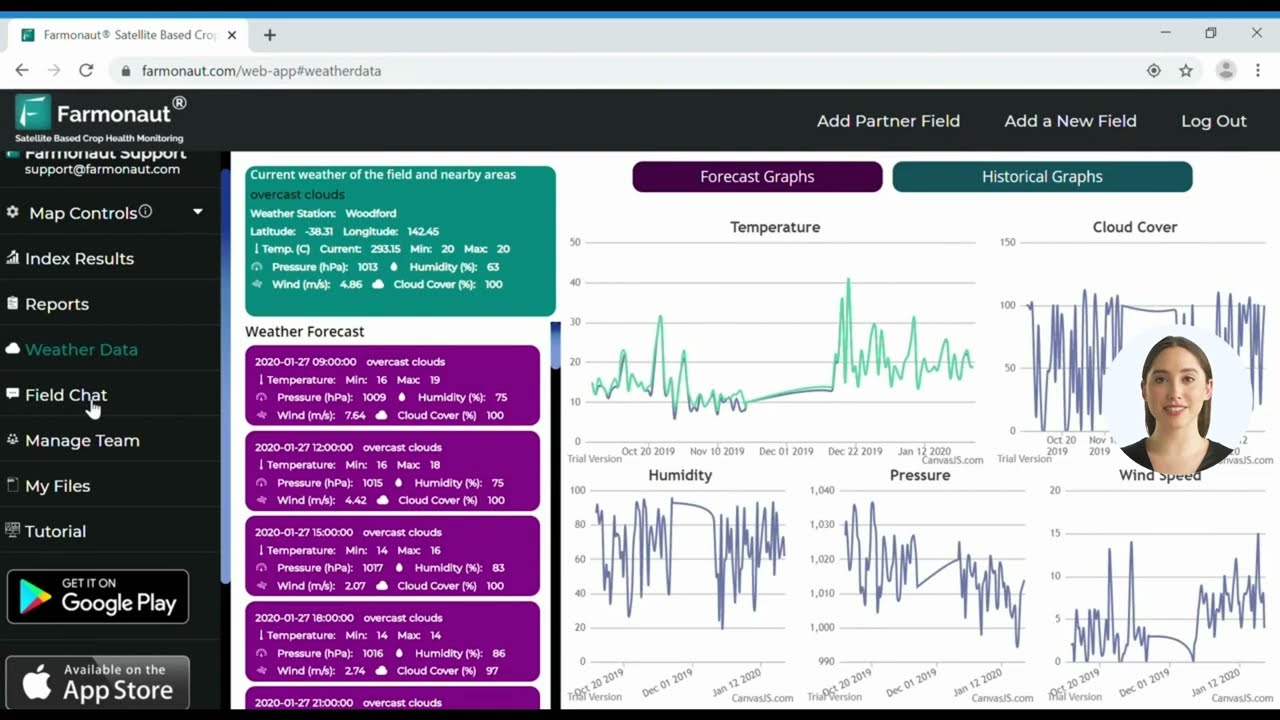
For growers who want to go beyond a festival exhibit and integrate satellite crop data directly into their own farm software, Farmonaut publishes a full satellite and weather API along with developer documentation for building custom monitoring tools — the same category of precision-agriculture technology increasingly discussed at the festival’s own agricultural exhibits.
Planning Your Visit
Practical notes for anyone attending in person:
- Timing: Held every February; confirm exact 2026 or future-year dates at the Chamber’s event page, since the specific weekend shifts annually.
- Location: Downtown Holtville and the Festival Grounds, with the parade route along 5th Street.
- Accommodation: Book Imperial Valley lodging early — Holtville itself has limited hotel inventory, and nearby El Centro fills up during festival week.
- Transportation: Parking in downtown Holtville is limited during the festival; carpooling is advisable.
- What to bring: Comfortable shoes and sun protection — February in the Imperial Valley desert is mild by day but the sun is direct.

Farmonaut’s satellite crop monitoring tools, available on Android and iOS, are built for the same Imperial Valley-style growing conditions that make the Carrot Festival possible in the first place — helping farmers track soil moisture and crop stress across large acreages.
Calculator: Estimate Your Festival Weekend Cost
Use the figures below to rough out what a visit to the Holtville Carrot Festival will cost your group, based on entry activities, food, and lodging nights — adjust every input to your own trip.
Run your own numbers
Assumptions: figures are self-reported estimates you enter, not published pricing — this tool doesn't pull live hotel rates or festival admission costs, and admission to the parade and street fair is typically free, with rides and food priced individually. Adjust every field to match actual local pricing for the year you're attending.
FAQ
Q: When is the Holtville Carrot Festival held?
A: Every February. The Holtville Chamber of Commerce publishes exact dates for each year's event on its official site — check there for current-year and upcoming dates rather than assuming a fixed weekend.
Q: How long has the Carrot Festival been running?
A: Since 1947 — 79 years as of the 2026 festival, per the Holtville Chamber of Commerce.
Q: Why is Holtville called the "Carrot Capital of the World"?
A: Holtville sits in Imperial County, which held 25% of California's carrot acreage as of 2022. California as a whole produces 63% of all US carrots (2024, USDA NASS) and grew 1.8 billion pounds worth $1.1 billion in 2024 (USDA AMS). The title reflects that regional production concentration and the festival's 79-year history, not a claim that Holtville itself is the single largest carrot-producing location in the state — Kern County's production share has historically been larger.
Q: What are the main attractions?
A: The grand parade along 5th Street, carnival rides, the street fair, the Carrot Queen coronation, and the Carrot Cook-Off.
Q: Is the festival family-friendly?
A: Yes — it's built around school participation, youth pageantry, and daytime family activities.
Q: How does US carrot production compare to Canada's?
A: California alone produced roughly 816,000 metric tonnes in 2024 (converted from 1.8 billion lbs), more than double Canada's entire national output of 361,622 metric tonnes in 2021 (Statistics Canada). Canadian production grew 15.5% year-over-year between the 2024 and 2025 seasons.
Q: Where can I verify these production figures myself?
A: US figures come from USDA AMS Fruits and Vegetables market news, which updates wholesale and retail prices weekly. Canadian figures come from Statistics Canada's open data portal and Agriculture and Agri-Food Canada's crop profile.
Earn With Farmonaut: Link https://farmonaut.com/affiliate-program, Youtube Video Url: https://www.youtube.com/watch?v=QydYrdtPBP0, Summary about this program: Earn 20% recurring commission with Farmonaut's affiliate program by sharing your promo code and helping farmers save 10%. Onboard 10 Elite farmers monthly to earn a minimum of $148,000 annually—start now and grow your income!

 Global Launch Base
 Elders
 Agritein
 Delicio
 WB Dev
 Sama Premium
 Prochecker
 Tres Valles
 LACOS Geoinformation
 Magrifly
 LatConnect 60
 WebsEdge
 Blickwinkel
 Agricultural Credit Policy Council
 Marei Nursery
 eKGIS
eKGIS Mostas Tech
 Andex
Andex FCF India
