

Farmland Rent Per Acre Per Month in Iowa: 2024 Rates & Expert Analysis
Introduction to Iowa Farmland Rent Rates
Iowa stands as a national benchmark in productive agricultural land. Boasting some of the world’s richest soil and a legacy of strong crop production, the state’s farmland rental market reflects dynamic value rooted in quality, demand, and evolving trends. In 2024, understanding how much farmland rents for per acre per month in Iowa is vital for farmers aiming to optimize budgets, and for landowners seeking to maximize income and minimize risk.
In this comprehensive guide, we’ll explore:
- How much does farmland rent for per acre per month in Iowa?
- Key factors influencing rents at the per acre and monthly levels
- Breakdown of rental rates by county, soil, and market trends
- How lease structure, input costs, and crop markets influence land value
- Technological advances—from satellite monitoring to blockchain traceability—that support smarter land management and rental negotiation
The monthly rent per acre in Iowa offers a precise budgeting figure, letting farmers, investors, and landowners more accurately manage cash flow, lease terms, and input decisions tailored to their land’s productivity.
How Much Does Farmland Rent for Per Acre Per Month in Iowa? (2024)
Before we dive deeper, let’s clarify the basic framework. Iowa farmland rents are traditionally quoted as an annual rate per acre. However, monthly figures are increasingly used for budgeting, especially as input costs and commodity prices fluctuate.
General Range for 2024:
- Prime farmland (high-quality soil, excellent access): $28 – $32 per acre per month ($330–$380/year approx.)
- Average productivity farmland: $22 – $27 per acre per month ($270–$325/year approx.)
- Marginal tracts (lower soil fertility, limited access): $10 – $18 per acre per month
These monthly equivalent rents are typically roughly a twelfth of the annual rate, but may shift higher or lower due to crop cycle timing, lease structure, and market anticipation.
How much does farmland rent for per acre—yearly, monthly, and by region?
- Yearly: Most Iowa leases are quoted $250 to over $400 per acre annually, depending on soil productivity, water access, and location.
- Monthly: The amount is divided by 12 for budgeting—bringing the average into the $20–$30 per acre per month range for most high- and medium-quality land.
- By Region: Counties like Grundy, Boone, and Black Hawk command the highest rates, while southern and western regions with more marginal land typically rent for less.
Key Factors Influencing Farmland Rental Rates in Iowa
Understanding how much does farmland rent for per acre per month in Iowa requires looking beyond simple location. Market dynamics, soil health, lease terms, and technology all shape the final rate farmers pay—and landowners receive.
Key factors include:
- 🧬 Soil Quality: High organic matter, good drainage, and rich nutrient profiles fetch higher rents.
- 💧 Water Access & Irrigation: Land with reliable water supply or advanced irrigation commands premium leases.
- 📍 Location: Proximity to grain elevators, processors, and strong markets boosts value. Regions near major agri-business hubs have higher densities of farmers, supporting upward pressure on rent.
- 🌱 Crop Demand: Rental rates are closely tied to dominant crops—corn and soybean fields with proven yields generally secure higher leases.
- 📈 Market Trends: Rising commodity prices, land use changes, and stewardship incentives often push rents higher in productive counties.
- 🤝 Lease Terms: Flexible vs. structured, annual vs. multi-year, share vs. cash rent—all impact pricing and stability.
- ⚖ Input Costs & Risk: Higher fertilizer, seed, and fuel costs, as well as weather variability, may lead to adjustment clauses or rental recalculation, managing risk for both parties.
Investors weighing entry into the Iowa agricultural market should factor not only the historical upward trend in rental rates, but also consider variables like soil health improvements and sustainability practices—these can fetch premium rents and offer long-term value.

Farmland Rental Rate Comparison Table: Iowa 2024
Comparing rental rates across different counties and contexts in Iowa provides insight into how soil, crops, and market trends shape per acre monthly rent.
| County / Region | Avg. Monthly Rent Per Acre (2024, USD) | Soil Quality | Primary Crop Grown | Market Trend (2024) |
|---|---|---|---|---|
| Grundy | $30–$34 | High | Corn, Soybeans | Rising |
| Boone | $27–$32 | High | Corn, Soybeans | Rising |
| Black Hawk | $24–$28 | Medium | Corn, Soybeans | Stable |
| Sioux (NW Region) | $22–$25 | Medium | Corn, Soybeans | Stable |
| Adams (SW Region) | $11–$16 | Low | Pasture, Mixed Row Crops | Stable |
| Decatur (South Central) | $10–$14 | Low | Pasture, Forage | Falling |
| Pocahontas | $20–$26 | Medium | Corn, Soybeans | Rising |
| Clayton (NE Region) | $16–$21 | Low-Medium | Dairy, Mixed Crops | Stable |
| Warren (Central Iowa) | $18–$27 | Medium | Soybeans, Corn | Rising |
The difference between the highest- and lowest-rent counties in Iowa for 2024 can exceed $20 per acre per month—a direct illustration of how soil quality and market access shape rental value.
Rental Structures, Lease Terms, and Arrangements: What to Expect
Iowa’s farmland rental market supports several lease structures, each with its own risk/reward profile for farmers and landowners:
- 💵 Cash Rent Leases: The most common form. Tenants pay a fixed per-acre rental rate, generally annual but sometimes structured as monthly payments for budgeting or cash flow management.
- 📉 Share Leases: Less common, but still used—landowners and tenants split costs and revenues, often tied to crop yield, input prices, and commodity market cycles.
- 🔀 Flexible Arrangements: These leases adjust the rent based on actual yields, input costs, or commodity prices, giving both parties a risk-sharing mechanism.
- 🔒 Multi-Year Leases: Offer stability, with terms set for 2+ years, often including provisions for soil health improvements and stewardship practices. Pro tip: Multi-year structures can smooth over sudden price swings and support longer-term conservation commitments, which may fetch a premium rate per acre.

Pro Tip for Farmers and Landowners
- ✔ Document stewardship commitments to justify premium rent
- ✔ Specify input costs borne by tenant vs. landlord
- ✔ Align lease duration with crop rotation and insurance cycles
Trends and Analysis: Iowa’s Farmland Rental Market in 2024
2024 marks another year of strong demand for Iowa’s farmland, driven by favorable commodity prices, technological advances, and changing regulatory pressures. Let’s examine these currents and see how they reshape the rental landscape:
Why Are Iowa Farmland Rental Rates Increasing?
- 📈 Commodity Prices: Corn and soybeans remain robust. High futures prices translate to upward rent pressure as tenants compete for the most productive land.
- 🌾 Productive Soil Conservation: A renewed focus on soil health and nutrient management makes land with ongoing conservation and stewardship fetch higher rents.
- 💻 Precision Agriculture & Monitoring: Landowners investing in tech (satellite, AI, remote monitoring) can offer tenants data-driven performance, sustaining lease values.
- 🛣 Infrastructure: Proximity to grain elevators, roads, and agri-business hubs supports liquidity and value in the rental market.
- 💧 Water Management: Plots with reliable irrigation and water rights stand resilient amid drought or climate variability — supporting higher rates.
Some farmers focus only on the lowest rent available, ignoring total costs (inputs, transport, soil health, water costs). The cheapest acre may be the least profitable over time if it fetches lower yields or incurs extra input costs due to poor soil management.

- 🌍 Soil Productivity: Rich, deep topsoil supports higher rents.
- 🚜 Crop Yields: Proven yield history attracts competitive bids.
- 🚰 Irrigation Capacity: Reliable water means less weather risk, more steady cash rent.
- 🗺 Location: Proximity to grain storage or transport increases value.
Useful Technologies: Farmonaut’s Satellite & AI Solutions for Land Management
Modern farmland rent negotiations and management increasingly rely on data-driven insights and real-time monitoring. At Farmonaut, we help transform the way farmers and landowners manage soil health, assess productivity, and optimize rental agreements with satellite technology:
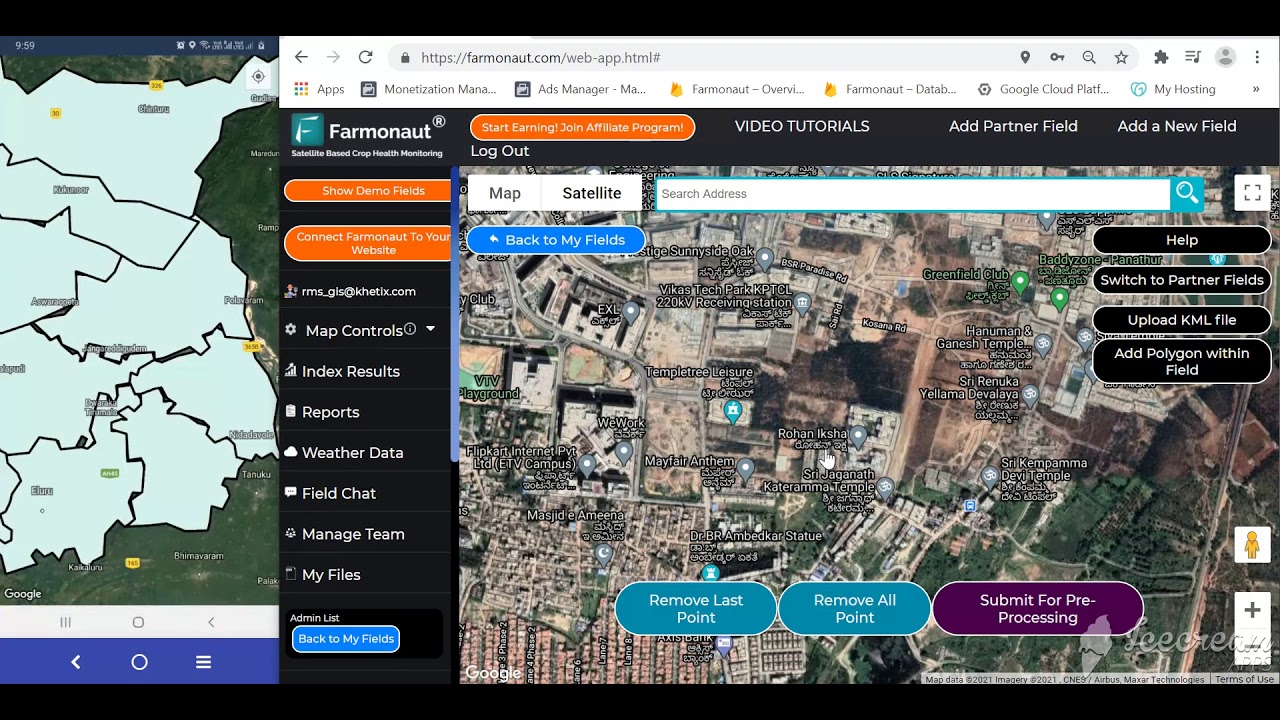
- 🛰️ Satellite Monitoring: Our multispectral imagery highlights vegetative health, soil condition, and nutrient status, offering unbiased appraisal of a field’s potential. Farmonaut Large-Scale Farm Management empowers agribusiness leaders and landowners to monitor multiple tracts remotely, supporting fair rental negotiations.
- 🤖 AI-Powered Diagnostics & Advisory: With Jeevn AI, our platform delivers field-specific advice—ranging from irrigation timing to crop selection—maximizing the productive value per acre and supporting rental justification. Farmonaut Traceability Tools empower supply chain visibility and stewardship documentation, critical for premium rental land.
- ⛓️ Blockchain for Traceability: Farmers and landowners using sustainable practices can demonstrate carbon savings and soil health, supporting higher lease rates and access to conservation-based rental arrangements.
- 🌦️ Resource Management Tools: Our platform supports irrigation tracking, input application mapping, and fleet monitoring, minimizing wastage—and therefore operating costs—per acre. Farmonaut Fleet Management streamlines logistics for larger operations with distributed tracts.
- 💡 Integrated Approach: Farmonaut enables farmers and landowners to align on improvements, ensuring rent per acre per month mirrors actual soil value and stewardship investments.

Before finalizing a rental agreement, both landlords and tenants should leverage real-time satellite data and AI-based analytics to assess the historic and prospective productivity of every tract. This transparency supports fair pricing, boosts trust, and often increases long-term net income for both parties.
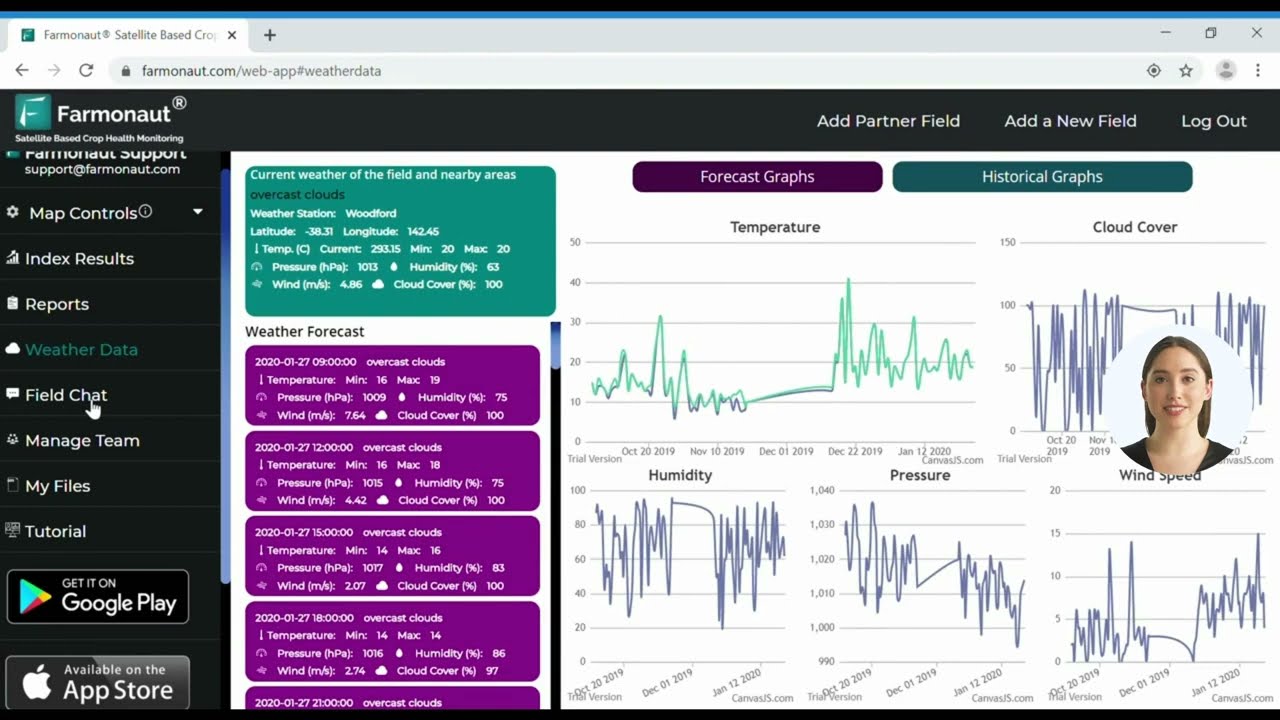
Tenants using Farmonaut’s analytics can better defend their rent offers, focusing on objective yield data and sustainability investmenst, while landowners can showcase improvements made, supporting a higher rental value per acre per month.




Callouts & Insights for Landowners and Farmers
- 📊 Benchmark local rates: Compare rental rates across counties with similar soil and commodity cycles.
- ✔ Document improvements: Stewardship, tile drainage, cover crops, and conservation practices all add value.
- 🔀 Select the right lease structure: Align payment schedules and flexibility with cashflow and risk profile.
- 🌱 Monitor soil health: Use satellite and remote sensing (like Farmonaut) to ensure long-term productivity is maintained.
- 🗂 Negotiate using data: Bring real, field-level data into lease negotiations for transparency and fair pricing.

- 💡 Quality rules: High soil fertility and infrastructure mean higher per acre per month rates.
- ⚖ Risk management: Lease terms and payment structure can help manage farm income volatility.
- 📑 Market context: Strong commodity prices and farmer demand continue to drive rents upward in much of Iowa.
- 🌍 Tech advantage: Using remote monitoring & management tools supports fair, transparent lease negotiations.
- 🔍 Keep it local: Rates vary widely by county, soil, and crop type—always benchmark by location.
Frequently Asked Questions (FAQ): How Much Does Farmland Rent for Per Acre Per Month in Iowa?
Q1: How much does farmland rent for per acre per month in Iowa in 2024?
A: In 2024, prime Iowa farmland rents for $28–$34 per acre per month in top counties, with state-wide averages typically between $22–$30. Marginal or lower-quality land may rent for $10–$18 per acre per month. These figures reflect variations by soil quality, water access, and proximity to markets.
Q2: What factors influence Iowa farmland rental rates most?
A: Soil fertility, access to water (especially irrigated tracts), crop yield potential, market proximity, and lease structure are the primary factors. Counties with more consistent rainfall, deep topsoil, and access to grain elevators generally command higher rates.
Q3: Are most leases annual, or can they be monthly?
A: The prevailing structure is annual payment by acre, but monthly rent per acre is used for budgeting or in some flexible, short-cycle arrangements.
Q4: How much of Iowa is farmland?
A: Roughly 85–90% of Iowa’s total land area—over 30 million acres—is dedicated to agriculture, making it one of the highest farmland-usage states in the U.S.
Q5: How can I maximize the value of my rented land in Iowa?
A: Focus on soil health improvements, document stewardship practices, invest in technology for monitoring and traceability, benchmark against local rates, and structure flexible leases suited to crop cycles and market conditions.
Conclusion: Navigating Iowa Farmland Rent in 2024
The question “How much does farmland rent for per acre per month in Iowa?” boils down to a mix of soil potential, location, lease structure, and market demand. In 2024, prime fields in the most productive counties reach $30 per acre per month, and even average tracts often command $22 to $28.
For farmers, renting is a strategic option to secure land for crop production without tying up capital in ownership. For landowners, regular rental income provides stability but also the opportunity to enhance value via soil conservation, water access, and documentation of management improvements.
As technology, stewardship, and sustainability move to the forefront, expect to see rental rates increasingly tied to transparency, productivity, and data-driven improvements on both sides of every deal. Satellite technology like Farmonaut’s solutions will empower both farmers and landowners to maximize field value, demonstrate stewardship, and ensure Iowa remains a national leader in productive, stable farmland rental markets.
Discover Farmonaut
With Farmonaut’s affordable subscriptions and advanced analytics, we support smarter land management, accurate productivity assessment, and transparent transactions—empowering the future of Iowa agriculture.
Ready to get started? Use our web platform, Android app, or iOS app to explore crop monitoring, field analytics, traceability, and resource management!

 Farmo
Farmo Kubota
 FFBS
FFBS Jontra
 Kalustyan
 Tucor
Tucor Geno
Geno Hayleys Agriculture
 Linx Agritech
 Adinet
 Save Your Soils
 Grandstream Algérie
 XOS Realty
 Geospatial Lab Africa
 Agro La Gándara
 HIPSAC
