

Innovations in Farm Machinery for Great Plains Productivity: 10 Transformative Advances for 2026 & Beyond
“Modern planters can seed over 500 acres per day, revolutionizing crop establishment across the Great Plains.”
“No-till drills have reduced soil erosion by up to 90% in Great Plains farming since their introduction.”
Table of Contents
- Introduction
- The Great Plains: A Powerhouse of Agricultural Productivity
- Key Innovations in Farm Machinery Boosting Agriculture
- Innovations in Farming Techniques That Drove Great Productivity
- Key Farm Machinery Innovations and Their Impact on Great Plains Agriculture
- The Modern Revolution: Digital, Automated, and Sustainable Farming Systems
- How Satellite Technology Platforms like Farmonaut Support Modern Farms
- Four Core Innovations Driving Productivity Across the Plains
- Key Insights & Highlights
- Frequently Asked Questions (FAQ)
- Conclusion
Introduction
The Great Plains—a vast stretch of North America encompassing states from North Dakota to Texas—have long served as the breadbasket of the United States. Nowhere else are the opportunities and challenges of large-scale agriculture more apparent. Innovations in farm machinery, technology, and techniques have dramatically improved yields, soil health, and sustainable productivity across the region. As we move into 2026 and beyond, these advances mean less labor, reduced losses, smarter management, and greater resilience in the face of climate variability.
In this comprehensive guide, we answer key questions like “what were some innovations in farm machinery that led to improved results in agriculture in the Great Plains?” and “what are some key innovations in agricultural machinery?” We’ll also examine what were some innovations in farming techniques that led to great productivity? By exploring influential developments and technologies, we illuminate how the synergy between machinery, digital tools, and resource-wise practices is shaping the future of agriculture across the Great Plains and beyond.

The Great Plains: A Powerhouse of Agricultural Productivity
The Great Plains’ vast open landscapes, deep fertile soils, and relatively dry climate support the growing of staple crops like wheat, corn, and soybeans. Yet, their scale and unique environmental pressures demand constant adaptation. Droughts, wind erosion, weather extremes, and periodic pest outbreaks pose serious risks. Enter innovation: from early tractorization to precision GPS-guided equipment and autonomous machines, each era has seen new technologies reshape what’s possible across these expansive fields.
- ✔ Key Benefit: Vast, uniform fields make the region ideal for implementing large, high-efficiency machinery and digital agriculture.
- 📊 Data Insight: Over 85% of U.S. wheat and 40% of corn are produced within the Great Plains.
- ⚠ Risk or Limitation: Semi-arid climate increases reliance on efficient irrigation and soil conservation.
- ⭐ Advantage: Modern innovations enable reduced input costs while improving yields and protecting soil health.
- 🔍 Focus: Farms must balance productivity with environmental impact reduction to sustain future growth.
Key Innovations in Farm Machinery Boosting Agriculture Across the Great Plains
1. Tractorization and Mechanization: Replacing Animal and Hand Power
The introduction of tractors—first steam-powered, then internal combustion—ushered in a new era of productivity. Moving away from animal and manual labor, tractors provided consistent horsepower for plowing, planting, and harvesting.
- ✔ Consistent power & speed: Reduced tillage time and enabled larger acreages to be farmed efficiently.
- 🔄 Versatile tools: Removable, interchangeable implements mean a single machine performs multiple field operations.
- ⭐ Game-changer: Enabled the mechanization of even the most expansive plains fields.
 Farmonaut Web App: Optimize monitoring and resource management of machinery across vast fields with satellite-powered insights.
2. Self-Propelled Harvesters & Combines: Streamlined Grain Production
Modern combines are high-capacity harvesters integrating reaping, threshing, and winnowing into one pass. In the Great Plains, this has made it feasible to harvest wheat, corn, and soybean across thousands of acres swiftly, reducing labor and time while increasing yield and revenue.
- ⏱ Time saver: Larger header widths cover wide swaths per pass, reducing number of harvest windows needed.
- 📉 Loss reduction: Rapid, efficient gathering means less post-harvest loss and improved grain quality.
- 💡 Continuous improvement: Annual upgrades continue to boost yield, grain quality, and profitability.

3. Precision Agriculture Tools: GPS Guidance, Sensors, and Variable-Rate Technology (VRT)
Precision agriculture uses GPS guidance, auto-steering, and VRT to optimize input placement (seeds, fertilizer, pesticides) at high resolution. Sensors and yield monitors enable real-time decisions to reduce costs, improve yields, and protect soils. These technologies reduce overlap, ensure the right inputs at the right rate and place, and decrease environmental impact.
- 🛰 Satellite Integration: Leverages remote sensing and satellite data for site-specific management.
- 💲 Cost control: VRT means no more wasting seed or fertilizer—inputs go where needed, saving money and protecting the environment.
- ⚡ Yield boost: Data-driven planting and fertilization deliver dramatic per-acre gains.
Farmonaut API: Integrate precision field and resource data directly into your management systems using Farmonaut’s robust API (for developers: API Developer Docs).

4. No-Till and Conservation Tillage Equipment: Soil Health, Moisture & Erosion Control
No-till and reduced-till equipment such as no-till seed drills, disc openers, and specialized coulters minimize soil disturbance at planting. These systems preserve soil structure, retain moisture, and such as no-till seed drills, disc openers, and specialized coulters minimize soil disturbance at planting. These systems preserve soil structure, retain moisture, and dramatically reduce wind and water erosion—an essential advance in the wind-swept Great Plains.
- 🌱 Improved soil health: Promotes earthworm activity, increases organic matter, and enhances nutrient cycling.
- 💧 Moisture retention: Reduces evaporation, makes drought cycles less damaging.
- 🌎 Environmental benefit: Significant erosion control, improved carbon sequestration.

Key Insight: No-till systems, adopted alongside GPS-guided precision tools, have enabled soil health restoration and long-term resilience for Great Plains agriculture. Download the Farmonaut Android App to remotely monitor field residue and soil moisture.
5. Advanced Planting Systems: Uniform Emergence for High Yields
Today’s planters and seeders use vacuum and finger meters for precise seed spacing and depth control. Bulk-fill hoppers and sectional shutoffs (enabled by GPS) boost planting speed and reduce input waste.
- 🎯 Uniform stands: Precise control of spacing and planting depth ensures optimal emergence and robust early crop growth—even across varying plains soils.
- 🔋 Faster operation: Triple planting rate versus older machines, better use of narrow planting windows.

6. Harvest-Age Conditioning and Storage Innovations
Modern dryers, aeration units, and climate-smart storage bins help to maintain grain quality and extend marketing windows. With the region’s unpredictable climate, post-harvest spoilage and mycotoxin risk can be significant without controlled storage.
- 🥇 Reduced losses: On-farm dryers and aeration reduce spoilage, even under wet conditions post-harvest.
- 🗓 Flexible sales: Enables producers to hold grain for higher market prices by extending safe storage.
- 🔒 Quality assurance: Careful moisture and temperature control means more market-ready, consistent product.
7. Green Manure and Cover-Crop Equipment: Improving Soil Resilience
Emerging cover-crop planters and roller-crimpers are now engineered to work at scale in plains fields. These units support the establishment and termination of legumes and other soil-improving crops.
- 🌾 Soil enrichment: Increased organic matter and microbial activity boosts long-term fertility, particularly through drought cycles.
- 🛡 Weed suppression: Rolling and crimping cover crops provides physical weed control without extra herbicides.
8. Sprayers and Integrated Pest Management (IPM) Platforms
Boom sprayers—both ground and aerial—now deploy precision nozzles and GPS maps to targeted application of inputs (including pesticides and herbicides). This reduces chemical drift, minimizes residues, and improves environmental protection.
- 🔎 Targeted impact: Nozzle-by-nozzle shutoff and weather-synced applications reduce waste and lower soil and water contamination.
- 😷 Operator safety: Automation and remote monitoring reduce operator exposure to harmful chemicals.


Pro Tip: Use satellite-powered pest monitoring (like with the Farmonaut iOS App: Try now on iOS) to time your applications and further reduce chemical costs and environmental impact.
9. Robotics and Automation: Toward Autonomous Farming
Autonomous tractors, weeding robots, and drone-based tools are beginning to replace manual labor and reduce reliance on chemical interventions. Machine vision and light-detection now enable machines to target weeds, harvest crops, and monitor crops 24/7—especially useful across large plains acreages where labor supply is a chronic challenge.
- 🤖 Labor savings: Autonomous machines can operate around the clock, tackling tasks from spraying to weeding to grain carting.
- 🌿 Lower chemical input: Robotics enable highly targeted efforts, reducing cumulative herbicide and pesticide use by up to 70%.
- ⚡ Constant productivity: Keeps large fields in peak management even as operator availability tightens in rural areas.
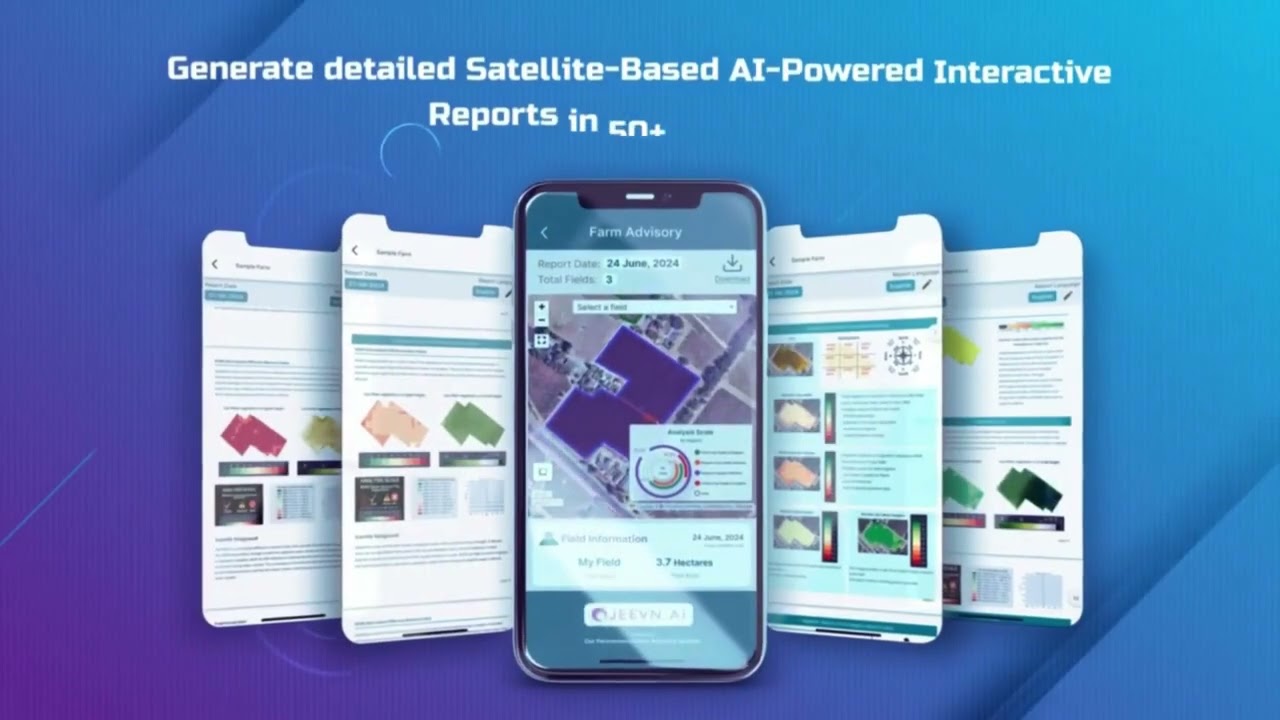
10. Digital Platforms: Field-Wide Resource and Fleet Management
Satellite-based monitoring and digital platforms now let farms track equipment utilization, grain movements, and environmental conditions from a central dashboard. This data-driven management extends from crop fields to logistical flows, supporting lower costs and improved field operator safety.
- 📲 Real-time oversight: Catch breakdowns, bottlenecks, or poor-performing zones before they cost you yield or money.
- 🛰 Resource optimization: Satellite insights streamline everything from labor assignments to crop harvest scheduling across miles of plains cropland.
- 💬 Decision support: Access AI-powered advice on machinery rotations, soil prep, and input timing (explore Farmonaut’s Large-Scale Farm Management Platform for detailed resource and admin tools).
Innovations in Farming Techniques That Led to Great Productivity
1. Crop Diversification & Rotation
Once dependent on monoculture (notably, wheat), Great Plains farms now integrate wheat, corn, soybeans, millets, and cover crops to improve both yields and soil health. Rotation patterns reduce disease incidence, impede weed cycles, and provide a broader economic base.
2. Conservation Agriculture
This practice marries reduced tillage, permanent cover, and diverse rotations. Combining the best machinery and ecological methods ensures yields are sustained during weather extremes and soil health improves season after season.
3. Precision Nutrient Management
Instead of blanket fertilizer applications, today’s producers use soil tests, remote sensing, and VRT to apply the right nutrients, at the right time, in the right amount. This ensures optimal crop uptake and reduces nutrient waste and runoff.
- 📊 Data insight: Nitrogen loss from over-application has declined by as much as 55% since precision methods were widely adopted.

4. Water Management & Irrigation Optimization
Center-pivot and linear-move irrigation systems, fine-tuned with soil-moisture and climate sensors, now stretch every drop of water for maximum productivity and lower environmental impact.
- 💧 Water use efficiency: Up to 40% less irrigation water applied with sensor-based scheduling, improving both crops and aquifer sustainability.
- 🌦 Climate adaptation: Real-time monitoring means pivots run only when needed, supporting healthy roots and yield resilience in dry stretches.
5. Integrated Pest & Disease Management (IPM)
Rather than blanket spraying, modern farms use trap networks, scouting data, and resistant varieties to reduce losses and avoid over-reliance on chemicals. Weather and satellite data further enable targeted responses when threats exceed economic thresholds.
- 🦠 Safety: IPM cuts cumulative pesticide use, protecting field-workers and surrounding environments.
Key Farm Machinery Innovations and Their Impact on Great Plains Agriculture
| Innovation/Technology | Main Function | Estimated Yield Increase (%) | Impact on Soil Health | Adoption Rate (Estimated % of Farms, 2024) |
|---|---|---|---|---|
| Precision Planting Systems | Uniform seed placement, depth, rate control | 8-15% | Promotes robust stands, improved residue coverage | 72% |
| Self-Propelled Combines | Efficient, large-scale grain harvesting | 12-20% | Minimal compaction with correct units/wheels | 90% |
| No-Till/Conservation Tillage | Minimal soil disturbance, moisture retention | 8-12% | Significantly improves soil structure and biology | 63% |
| Variable Rate Irrigation | Site-specific water application | 8-16% | Prevents over-watering, preserves structure | 37% |
| Autonomous Tractors/Robots | Automated tillage, planting, weeding, harvest | 2-8% | Reduced compaction, more targeted operations | 16% |
| Climate-Smart Grain Storage | On-farm drying, aeration, pest control | 2-9% (via reduced losses) | Protects grain, prevents soil nutrient runoff | 57% |
The Modern Revolution: Digital, Automated, and Sustainable Farming Systems
Emerging in 2026, a new generation of agricultural innovations is taking root, building on the machinery and practices outlined earlier. Digital field management platforms, autonomous fleets, and AI-driven decision support sustain productivity and drastically reduce inputs, labor costs, and environmental impact.
- 📡 Remote Monitoring: Farms leverage satellite platforms to track crop health, soil moisture, and machinery usage across all acres without travel.
- 🖥 AI Systems: Machine learning interprets sensor and satellite data to trigger precise interventions for fertilizer, irrigation, and pest management.
- 📊 Data-Driven Operations: Decision-makers access real-time dashboards showing field, weather, and market conditions at every scale—from plot to region.
- 🌍 Sustainability: Practices like carbon footprint monitoring promote environmental stewardship and comply with new regulations.
Advanced Technology: Satellite, AI, and Blockchain in AgriTech
Efficient management now depends not only on physical machinery, but on advanced data networks. For example, Farmonaut uses satellite imagery paired with AI advisory systems (Jeevn AI) to analyze soil health, crop vigor, carbon emissions, and operational efficiency. Blockchain enables product and input traceability to guarantee authenticity, safety, and financial risk reduction.
- 🔗 Transparency & financing: Satellite-verified crop loan & insurance products build business trust and facilitate producer access to operating capital.
- 🔍 Resource optimization: Know, in advance, which acres need attention with dashboard-based fleet and resource management.

How Satellite Technology Platforms like Farmonaut Support Modern Farms
Platforms such as Farmonaut make these digital transformations possible for both large and small operators. By leveraging real-time satellite imagery, advanced AI analytics, and blockchain verification, users benefit from:
- ✔️ Affordable, scalable monitoring for everything from crop growth to infrastructure assessment
- 📈 Actionable, AI-driven advice on field operations, weather, and input use
- 🔒 Blockchain-based traceability, enhancing product authenticity and trust
- 💡 Environmental impact monitoring (including carbon footprinting and resource usage)
- 💬 Remote access to farm insights via apps and APIs (Android, iOS, web, developer integrations)
Want to experience seamless crop and machinery monitoring?
Farmonaut’s modular platform brings next-generation satellite and AI technology to the hands of every farm manager, agronomist, and agribusiness—not just the largest operators. With low-cost subscription tiers and in-depth, actionable maps and insights, Farmonaut empowers stakeholders to manage more acres, with fewer on-the-ground resources, and a lighter environmental footprint.
Four Core Innovations in Modern Farming Techniques That Led to Great Productivity
- 🥇 Self-propelled combines & header technology: Efficiently harvests vast fields, reduces loss, boosts capacity.
- 🛰 Precision agriculture (GPS guidance, variable-rate inputs): Optimizes input efficiency and increases per-acre yields.
- 🍃 No-till/conservation tillage systems: Retains soil moisture, controls erosion, supports soil health long-term.
- 💧 Center-pivot & advanced irrigation systems + monitoring: Maximizes water use and ensures dependable yields in even the driest seasons.
These represent the answer to what are four innovations in farming techniques that led to great productivity—and why the Great Plains remain a global beacon of innovation in agriculture.
Additional Key Highlights
- ✔️ Labor reduction: Transitioning from animal/human to mechanized/robotic labor cuts field time by 80% across key operations.
- 📊 Input reduction: Smart VRT and digital management have reduced fertilizer and water over-application by more than 30% since 2019.
- 🌱 Climate advantages: Cover-crop and residue-based systems help Great Plains ag retain productivity even during unpredictable drought cycles.
- ⚠️ Risk: Rapid innovation often leaves smallholders behind. Affordable, modular solutions (Farmonaut Web & App) are key to closing this gap.
- 🔍 Proactive management: Field-wide, digital insights now power the platforms for insurance, traceability, and operational safety as well as yield.
Frequently Asked Questions (FAQ)
What were some innovations in farm machinery that led to improved results in agriculture in the Great Plains?
Machines such as tractors, self-propelled combines, no-till drills, precision planters, and GPS-guided variable-rate sprayers revolutionized Great Plains agriculture by enabling efficient, large-scale operations, improving yields, and reducing labor and input costs.
What are some key innovations in agricultural machinery now relevant for 2026?
Current key innovations include autonomous tractors and harvesters, AI-powered sensor networks, digital resource management platforms, advanced grain storage, and modern center-pivot irrigation with smart moisture monitoring. Additionally, satellite-based crop and soil monitoring (such as provided by Farmonaut) is now a must-have tool.
What were some innovations in farming techniques that led to great productivity?
Techniques such as crop rotation, cover cropping, reduced tillage, precision nutrient management, and IPM have proven essential for sustained productivity and environmental health.
How has digital technology reduced input costs and environmental impact?
Technologies like GPS-guided VRT, AI-powered advisories, and satellite monitoring help farms apply only exactly what is needed, where and when it’s needed, sharply reducing wasted seed, water, fertilizer, pesticides, and labor, while protecting ecosystems and reducing runoff and emissions.
How can I monitor my Great Plains farm efficiently in 2026 and beyond?
Use a satellite-powered, modular monitoring system like Farmonaut. The platform combines satellite images, AI guidance, blockchain traceability, and digital fleet/resource management for actionable, real-time insights. It is available for individual, business, and government users.
Conclusion
From steam tractors to autonomous robots, from single-pass tillage to fully-digital field management, the agricultural landscape of the Great Plains stands transformed by innovation. As the region faces the future, scaling up productivity means embracing all facets of advanced machinery, sustainable practices, and integrated digital technology.
“What are four innovations in farming techniques that led to great productivity?” In 2026 and beyond, the answer blends modern machinery—with self-propelled combines, precision tools, no-till, and intelligent irrigation—together with digital platforms powered by satellite and AI technology. These developments are not just raising yields and reducing costs; they are shaping a new legacy for generations of producers determined to overcome challenges, protect their ecosystems, and feed the world—season after season.
Want to explore next-generation field management, improve your carbon footprint, or integrate blockchain traceability for your farm, mining, or infrastructure operation? Visit our product pages for detailed solutions:
- Carbon Footprinting – Track, manage, and minimize agricultural carbon emissions with high-precision satellite insights.
- Product Traceability – Ensure authenticity, compliance, and safety along the agricultural supply chain with blockchain-based traceability.
- Crop Loan and Insurance – Use satellite-verifiable data to support applications and risk management for agricultural finance.
- Fleet Management – Optimize machinery and equipment use for large-scale agricultural operations.
- Large Scale Farm Management Platform – Everything you need for managing multiple fields, teams, and inputs remotely and efficiently.
Ready to transform your farm operations for the future?
Join us in building data-driven, sustainable, and technologically advanced agriculture—across the Great Plains and beyond.


