

Aquaponics Grants: US Funding Sources & School Programs
Reviewed August 2026 against USDA Farm to School program guidance and Purdue University’s federal grant announcement.
Try it: Aquaponics Classroom Project Estimator →
There is no single federal program called an “aquaponics grant.” Instead, aquaponics projects — for schools, veterans, and commercial growers — get funded through broader USDA channels: Farm to School grants ($14,500–$100,000 per award), university-administered workforce grants like Purdue’s five-year $10,000,000 aquaponics and seafood award, and state-level agriculture-in-the-classroom programs. This article maps out exactly which of those channels fits your situation, what each one actually pays, and how to track deadlines that change every cycle.
If you searched for “aquaponics grants for schools” or “aquaponics grants 2023,” the short answer is: those exact grants weren’t renamed or discontinued — aquaponics was never broken out as its own funding line in the first place. It has always been funded as a qualifying activity inside larger USDA programs. Below, we cover where the money actually sits, how much of it is realistic to expect, and what a working aquaponics classroom project costs to run once you have it.
Table of Contents
- USDA Farm to School Grants: The Core Funding Channel
- A Real Example: Purdue’s $10 Million Aquaponics Workforce Grant
- Aquaponics Grants for Schools: What to Apply For
- Grants for Veterans Starting a Farm
- What Aquaponics Actually Produces — And Why It Matters to Funders
- Aquaponics School Project Cost Calculator
- A Durable Checklist for Finding Current Grants
- FAQ
- Try it: Aquaponics Classroom Project Estimator
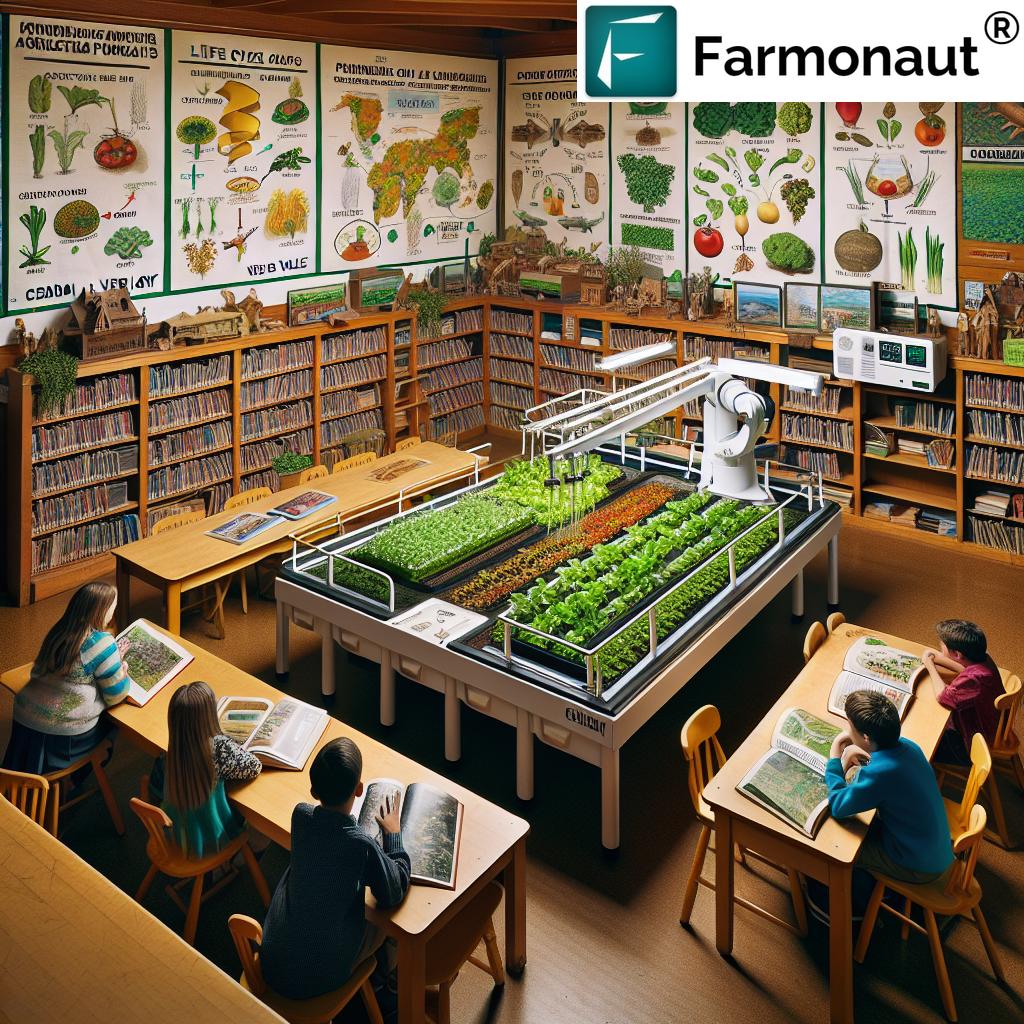
USDA Farm to School Grants: The Core Funding Channel
The USDA Farm to School Grant Program is the most consistent federal channel that aquaponics projects — including school-based ones — can draw from. Per the Washington State Department of Agriculture’s curated summary of USDA funding, awards run from $14,500 to $100,000 depending on whether the project is a planning grant, an implementation grant, or a training grant (Washington State Dept. of Agriculture, Farm to School Toolkit, 2025).
That range matters because it tells you two things at once: the floor ($14,500) is realistic for a single-school aquaponics system with tanks, grow beds, and a curriculum tie-in, while the ceiling ($100,000) is designed for district-wide or multi-site rollouts with training components. Aquaponics is not named as a separate category inside this program — it qualifies under “school gardens and farms” alongside greenhouses, orchards, and livestock projects, which is exactly why searching for a dedicated “aquaponics grant” line item on Grants.gov comes up empty.
Planning vs. Implementation vs. Training Grants
| Grant Type | Typical Use Case | Award Range | Best Fit For |
|---|---|---|---|
| Planning | Feasibility studies, curriculum design, site assessment | Lower end of $14,500–$100,000 band | Schools with no prior aquaponics infrastructure |
| Implementation | Purchasing tanks, pumps, grow beds, fish stock | Mid-to-upper end of $14,500–$100,000 band | Schools ready to build a working system |
| Training | Teacher professional development, extension partnerships | Varies within the same overall band | Districts scaling across multiple schools |
These figures come from USDA’s own program design as summarized by Washington State’s agriculture department, not from a third party’s estimate — so treat the $14,500–$100,000 band as the number to plan around, not a rough guide. Because USDA reopens Farm to School applications on an annual cycle through Grants.gov, the exact dates shift year to year. Check Grants.gov directly and cross-reference USDA’s press releases at usda.gov/news for the current application window before you build a timeline around it.
A Real Example: Purdue’s $10 Million Aquaponics Workforce Grant
To see what a large-scale USDA aquaponics investment looks like in practice, Purdue University was awarded a $10,000,000 USDA grant running from 2024 to 2029 — a five-year commitment aimed at expanding Midwestern aquaponics and seafood production and building the workforce pipeline behind it (Purdue University Newsroom, Q1 2024).
This is not a grant an individual school or teacher applies for directly — it’s a university-administered program, which typically means sub-grants, training pipelines, extension partnerships, and student research funding flow down from it over the five-year term. If you’re in Indiana or a neighboring Midwestern state and looking for an aquaponics partner institution rather than a direct grant application, Purdue’s Extension network and agricultural economics department are the entry point worth contacting directly, since sub-award opportunities under a program like this are announced by the university, not by USDA’s public grant portals.
The relevance for smaller programs: this grant is proof that USDA treats aquaponics and seafood workforce development as a funding priority through 2029, not a one-off. If you’re building a case for a school board or a state legislator on why aquaponics education deserves support, a $10 million, five-year federal commitment to the same subject area is a credible reference point.
Aquaponics Grants for Schools: What to Apply For
If you’re a teacher or district administrator searching specifically for “aquaponics grants for schools,” here’s the practical path, ranked by fit:
- USDA Farm to School Grants ($14,500–$100,000) — the primary federal option, covers planning through implementation.
- State agriculture-in-the-classroom foundations — many states run their own teacher supplement grants that fund aquaponics as one of several eligible project types alongside farm robotics, pollinator studies, and culinary education. These are typically smaller (often under $500 per classroom project) but have a faster, simpler application than federal grants.
- University extension partnerships — land-grant universities in aquaculture-active states (California, Florida, Texas per USDA NASS’s irregular aquaculture surveys) sometimes offer equipment loans or matching funds tied to 4-H or FFA chapters.
- Local agribusiness and utility co-op sponsorships — not a grant in the federal sense, but many school aquaponics systems are partly funded through in-kind equipment donations from regional aquaculture suppliers.
A school building its first system should budget for the Farm to School planning-grant tier ($14,500 range) rather than assuming a state teacher-supplement grant alone will cover tank and pump costs — those state programs are designed for supplemental classroom materials, not capital equipment.
Why “Aquaponics Grants 2023” and Similar Year-Specific Searches Come Up Empty
If you’re searching for a dated version of this funding — “aquaponics grants 2023,” for instance — the reason you’re not finding a dedicated program by that name is structural: USDA has never published an aquaponics-specific grant category with its own annual award cycle. Farm to School and similar programs reopen annually, but the aquaponics content within them isn’t tracked or announced separately by USDA. There is no annual “aquaponics grants” press release to search for, in any year. What changes year to year is the application window for the umbrella program (Farm to School) and which schools within it happen to propose aquaponics projects. Search Grants.gov for “Farm to School” directly rather than for “aquaponics grants” plus a year, and you’ll find the actual open cycle.
Grants for Veterans Starting a Farm
Veterans looking to start a farm — aquaponics-based or otherwise — have a genuinely separate funding path from the school-focused programs above, and it’s worth naming plainly rather than stretching this article to fit it: USDA’s Farm Service Agency offers direct and guaranteed farm ownership and operating loans with historically underserved and veteran-specific provisions, and USDA’s Beginning Farmer and Rancher Development Program funds training and technical assistance that veteran-owned operations can access. Neither of those is a Farm to School award, and neither is aquaponics-specific.
If aquaponics is the system you want to build as a veteran-owned operation, the practical route is the same as for any beginning commercial grower: contact your state’s USDA Farm Service Agency office to ask about current veteran farmer loan terms and the Beginning Farmer and Rancher Development Program’s open solicitation, since neither program’s aquaponics uptake is tracked separately in public USDA data. This article’s core evidence base — the Farm to School range and the Purdue workforce grant — is about education and workforce development, not start-up capital for a veteran-owned farm business, so treat this as a pointer to the right office rather than a funding figure we can quote.
What Aquaponics Actually Produces — And Why It Matters to Funders
Grant reviewers weighing an aquaponics proposal against a traditional greenhouse or garden proposal want to know the system produces something measurable. Two figures from market research synthesis are useful context here (note: these are industry market-research figures, not a USDA agricultural census — no dedicated aquaponics field exists yet in USDA statistics, as detailed below):
- Leafy greens grown in aquaponics systems yield 30–50 kg per square meter, according to a 2024 market research synthesis (Global Market Insights, aquaponics market analysis, 2024).
- Leafy greens make up 70% of total aquaponics crop production, per the same 2024 synthesis.
For a grant application, that 30–50 kg/m² range is the number to use when estimating a classroom system’s output for a proposal budget narrative — for example, a 4-square-meter grow bed could reasonably be projected to produce 120–200 kg of leafy greens across a growing cycle, before accounting for classroom-scale losses. The 70% leafy-greens figure also explains why nearly every school aquaponics proposal centers on lettuce, basil, and similar fast-turnover greens rather than fruiting crops — they’re what the market data shows actually gets grown at scale in these systems, and they match a school calendar’s shorter growing windows.
The Data Gap Worth Naming Directly
There is no current USDA NASS or Census of Agriculture data on aquaponics farm count, production volume, or yields broken out by state — the last comprehensive aquaculture census ran in 2018, and USDA has no dedicated aquaponics reporting field. If your grant proposal needs a farm-count or production-volume figure specific to your state, the honest answer is that it doesn’t exist in published federal statistics yet. Your best options: contact your state’s agricultural extension office directly (California, Florida, and Texas are the states most likely to have tracked aquaponics activity, per USDA NASS’s irregular aquaculture surveys), or cite the market-research figures above with their source clearly labeled as industry analysis rather than government data — reviewers respond better to an honestly-labeled estimate than to an uncited claim.
To see how satellite-based monitoring compares to ground-level systems like aquaponics for measuring crop performance at scale, Farmonaut’s work on innovative farming techniques covers precision agriculture methods that complement — though don’t replace — the closed-loop monitoring an aquaponics classroom system requires.
Aquaponics School Project Cost Calculator
Use the numbers below to estimate whether a Farm to School planning grant ($14,500 floor) or implementation-tier grant covers your project, based on system size and the 30–50 kg/m² yield range.
Aquaponics Classroom Project Estimator
A Durable Checklist for Finding Current Grants
Because grant cycles, deadlines, and award amounts shift annually while this article stays live for years, use this checklist rather than relying on any single date mentioned above:
- Check Grants.gov directly for "Farm to School" — search the program name, not "aquaponics," since aquaponics has never been a standalone category.
- Check USDA's press releases at usda.gov/news for the current fiscal year's Farm to School application window — USDA updates these annually, and the exact open/close dates are not fixed from year to year.
- Check for 2501 Program announcements in spring (typically May–June) if your project serves underserved or veteran farmers — USDA announces new fiscal year grantee awards on this cycle.
- Contact your state's agricultural extension office (particularly in California, Florida, or Texas) for state-specific aquaponics data or funding, since no federal census tracks this by state.
- Contact Purdue University's Extension office directly if you're in the Midwest and want to ask about sub-awards or partnerships under the 2024–2029 USDA aquaponics workforce grant, since sub-grant opportunities are announced by the university, not through Grants.gov.
- Re-run this cost calculator above with updated vendor quotes each time you plan a new system, since equipment costs are not fixed by any grant program.
This checklist is the part of the article that should stay accurate regardless of which year you're reading it — the specific dollar figures and grant cycles above will shift, but the channels (Grants.gov, USDA press releases, state extension offices, university partnerships) are stable long-term entry points.
How Aquaponics Grants Compare Across Applicant Types
| Applicant Type | Primary Funding Channel | Typical Award Size | Direct Application? |
|---|---|---|---|
| K-12 school or district | USDA Farm to School Grant | $14,500–$100,000 | Yes, via Grants.gov |
| University research/workforce program | USDA multi-year workforce development grant | $10,000,000 over 5 years (Purdue example) | Yes, competitive federal award |
| Individual teacher (classroom supplement) | State agriculture-in-the-classroom foundation | Typically under $500 per project | Yes, via state foundation |
| Veteran starting a farm business | USDA FSA veteran farmer loans / Beginning Farmer and Rancher Development Program | Not aquaponics-specific; loan terms vary by program | Yes, via local FSA office |
This comparison is the structural answer to why searches for "aquaponics grants" return such a wide range of confusing results: a school administrator, a university researcher, and a veteran farmer are all searching the same two words for three entirely different funding mechanisms, none of which is labeled "aquaponics" in USDA's own program names.
Building the Case for Aquaponics in a Grant Proposal
Whether you're writing a Farm to School application or a state teacher-supplement request, reviewers respond to specificity. Use the figures in this article directly in your narrative:
- Cite the $14,500–$100,000 Farm to School range to show you understand the funding tier you're requesting within, not asking for an arbitrary number.
- Cite the 30–50 kg/m² yield range (labeled as market research, not USDA data) to project realistic harvest volumes for your grow bed size.
- Cite the 70% leafy-greens composition figure to justify why your crop selection (likely lettuce or basil) matches how these systems are actually used at scale.
- Reference the Purdue $10 million, 2024–2029 USDA grant as evidence that federal funders treat aquaponics and seafood workforce development as a multi-year priority, not a novelty.
Avoid citing a farm count or state production volume you can't source — as covered above, that data doesn't exist yet in USDA's published statistics. A reviewer is far more likely to trust a proposal that says "state-level aquaponics production data is not yet tracked by USDA NASS; our projected yield is based on the 30–50 kg/m² range reported in 2024 market analysis" than one that states an invented local statistic as fact.
Precision Agriculture Context for Growing Programs
Schools and farms scaling beyond a single classroom aquaponics tank often start asking about crop monitoring more broadly — soil moisture, satellite-based health checks, and resource tracking for the traditional acreage attached to an FFA or agriculture program. Farmonaut's satellite-based farm management tools, covered in the context of agriculture companies and machinery investment, are built for exactly that adjacent use case — monitoring the field-scale operation that often surrounds a school's aquaponics classroom project, even though the aquaponics system itself is a closed-loop system that doesn't need satellite monitoring.
If your program is scaling from a single grow bed toward a working farm-to-school pipeline that includes field crops, Farmonaut's web and mobile tools are worth exploring alongside your grant planning:
FAQ
Q: Is there a grant specifically called "aquaponics grants" from USDA?
A: No. USDA has never published a standalone aquaponics grant category. Aquaponics projects are funded as qualifying activities within broader programs — primarily USDA Farm to School grants ($14,500–$100,000) and, at a larger scale, university-administered workforce development grants like Purdue's 2024–2029 $10 million award.
Q: Why can't I find "aquaponics grants 2023" or a similar year-specific program?
A: Because no year-specific aquaponics program exists to find. USDA's Farm to School grants reopen annually through Grants.gov, but the aquaponics content within them isn't tracked or announced by year. Search for "Farm to School" plus the current fiscal year instead.
Q: What's the realistic funding range for a school aquaponics grant?
A: Per USDA Farm to School program structure, $14,500 on the low end (planning grants) up to $100,000 (large implementation or training grants), according to the Washington State Department of Agriculture's summary of the program.
Q: Are there grants for veterans to start an aquaponics farm specifically?
A: Not as a dedicated aquaponics program. Veterans starting any farm business, aquaponics included, should contact their local USDA Farm Service Agency office about veteran farmer loan provisions and the Beginning Farmer and Rancher Development Program, neither of which is aquaponics-specific or covered by the Farm to School figures cited in this article.
Q: How much can an aquaponics system produce?
A: Leafy greens — which make up 70% of aquaponics crop production — yield 30–50 kg per square meter, per a 2024 market research synthesis. This is industry data, not a USDA figure, since no federal aquaponics production census currently exists.
Q: Where do I find the current Farm to School application deadline?
A: Check Grants.gov directly for the open Farm to School listing, and cross-reference USDA's press releases at usda.gov/news, since USDA updates application windows annually and the exact dates are not fixed year over year.
Earn With Farmonaut: Affiliate Program
Earn 20% recurring commission with Farmonaut's affiliate program by sharing your promo code and helping farmers save 10%. Onboard 10 Elite farmers monthly to earn a minimum of $148,000 annually—start now and grow your income!




 ITC
ITC Dirks Bros Farms
 Red August Group
 Farm Inc
 WeMe Global
 Agrotoken
 Blue BearX
 Insignito
 Croptimum
 DnCubed
 Field Capacity
 Indosistim Teknologi
 Liquify Digital
 CU Foods
 BeyondTech Global
 Rouge VC
 AgroGreen Dynamics
