

Nourish NY: 100M Meals, 4,472 Farms, Full Program Guide
Reviewed August 2026 against the New York State Department of Agriculture and Markets, the Office of the New York State Comptroller, and Market Research Future.
Try it: Run your own numbers →
Nourish New York is the state program that pays New York food banks to buy surplus produce, dairy, and meat directly from New York farms, then distributes it to families facing food insecurity. Since its May 2020 launch it has funded the distribution of more than 100 million meals through 4,472 farms and agribusinesses, backed by over $175 million in state appropriations. Locally Nourished, a separate farm-to-table access model built around the same farmers-market logic, illustrates the same principle at the community level — connecting nearby growers to nearby buyers rather than routing food through long supply chains.
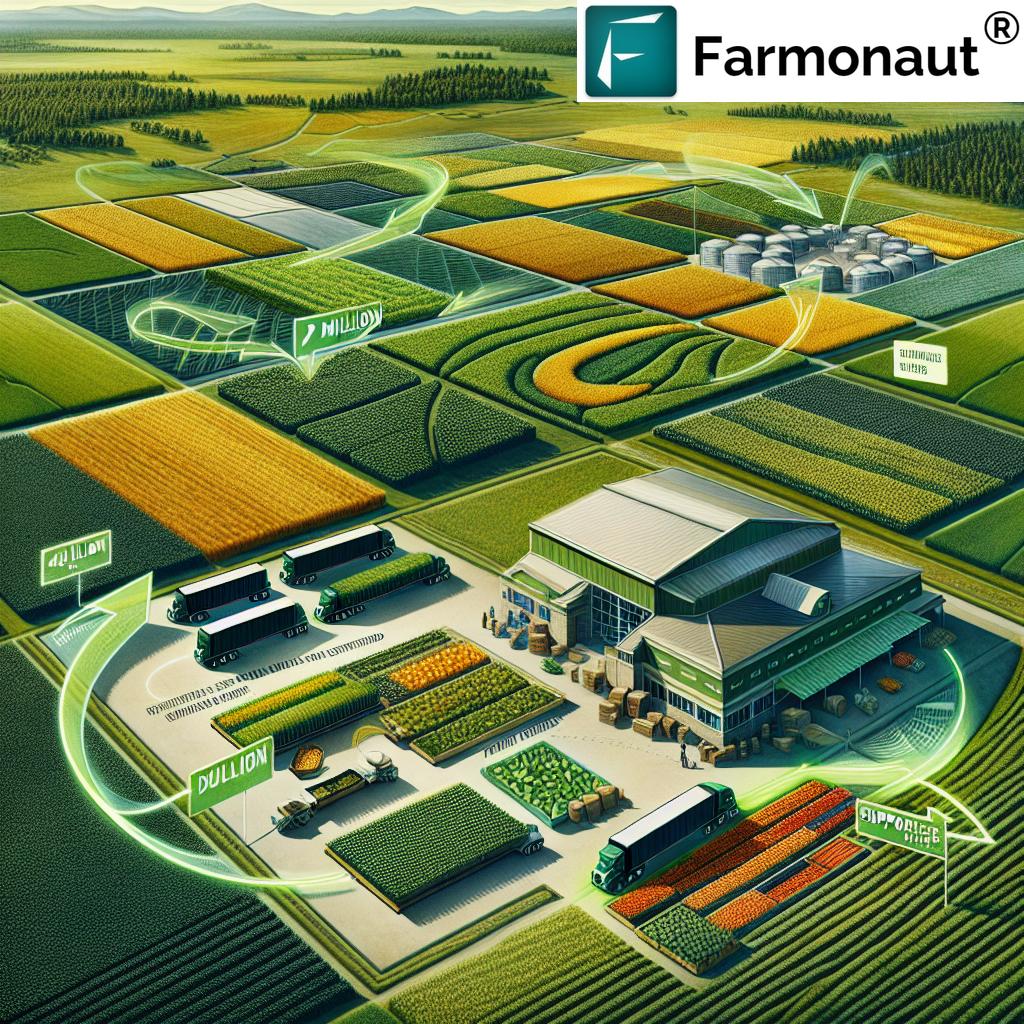
Table of Contents
- What Nourish NY Actually Is
- The Numbers: Meals, Farms, Funding
- The Farm-to-Food-Bank Pipeline
- Where Nourish NY Fits in the Food Security Technology Market
- Locally Nourished and Farmers Markets: The Local-Access Model
- Catalina Cruz and the Legislative Record
- Calculator: Estimate Your County’s Meal-Funding Reach
- How to Verify Current Figures Yourself
- FAQ
- Try it: Run your own numbers
What Nourish NY Actually Is
Nourish New York started in May 2020 as an emergency COVID-19 relief measure, built to solve two problems at once: farms with surplus product and no buyer, and families who suddenly could not afford groceries. The mechanism is straightforward — the state allocates funds to food banks, and food banks use that money to purchase directly from New York farms rather than from national wholesalers. Governor Kathy Hochul signed legislation in November 2021 making Nourish New York’s initiative a permanent, codified program rather than a temporary pandemic response.
That permanence matters for anyone searching “nourish ny” or “nourish new york” looking for current status: this is not a program that wound down after the pandemic. It is now a standing line item administered jointly by the New York State Department of Agriculture and Markets and the New York State Department of Health, with annual state appropriations of $50 million layered on top of the original allocation.
The Numbers: Meals, Farms, Funding
The headline figures, as reported by the state: over 100 million meals distributed since May 2020, 4,472 farms and agribusinesses engaged as suppliers, and more than $175 million allocated cumulatively. Assemblymember Catalina Cruz, who sponsored the codifying legislation, framed the milestone directly: “The milestone of 100 million meals reflects real families who are alleviated from the stress of deciding between paying rent or affording food.”
| Metric | Reported Figure | Source / Vintage |
|---|---|---|
| Meals distributed (cumulative since May 2020) | 100+ million | NY Dept. of Agriculture and Markets, program milestone announcement |
| Farms and agribusinesses engaged | 4,472 | NY Dept. of Agriculture and Markets |
| Cumulative funding allocated | $175+ million | State appropriation records, since program inception |
| Annual appropriation (current standing level) | $50 million/year | NY State budget, as codified November 2021 |
| Program made permanent | November 2021 | Signed into law by Gov. Kathy Hochul |
What is not published at this granularity: a per-household or per-family count. The state reports meals distributed and farms engaged, not a unique household tally, so any figure claiming “X families served” beyond meal counts is an estimate, not a state statistic. If you need a household-level number for a specific county or district, the New York State Department of Agriculture and Markets’ Nourish NY program page (agriculture.ny.gov/NourishNY) is updated with new figures at each funding-cycle announcement — check there directly rather than relying on a cached number from any article, including this one.
Similarly, the New York State Comptroller’s office publishes periodic household food security surveys for the state. The most recent baseline data available covers 2019–2021, and the next full update is expected in 2026. That gap matters if you’re trying to connect Nourish NY’s meal counts to an actual food-insecurity rate for Albany or any other county — the two data series are not published on the same schedule, and no source ties them together at the county level.
The Farm-to-Food-Bank Pipeline
The mechanics behind the meal count are a four-step pipeline:
- Surplus identification: A New York farm identifies produce, dairy, or protein that would otherwise go unsold — often product that doesn’t meet retail cosmetic standards or exceeds a buyer’s order.
- Food bank purchase: A regional food bank, funded through the Nourish NY appropriation, buys that surplus from the farm at a negotiated price rather than accepting it as a donation.
- Distribution: The food bank routes the product through its existing network of pantries, soup kitchens, and community distribution sites.
- Household access: Families access the food through those local distribution points, with eligibility determined by the individual food bank or pantry, not by a centralized state application.
The design difference from a conventional food-donation program is the word “purchase.” Farms are paid, not asked to donate, which is what makes the program function as agricultural support rather than pure charity — 4,472 farms have a buyer that didn’t exist in the same form before May 2020. New York State Health Commissioner Dr. James McDonald has pointed to the health stakes behind the mechanism: hunger is linked to malnutrition and depression, so getting fresh, nutrient-dense local product into food banks — rather than shelf-stable donated goods alone — is a stated program goal, not an incidental benefit.
One structural point worth naming plainly: no peer-reviewed study tracks Nourish NY’s downstream health or nutrition outcomes. What’s published is meals distributed and dollars allocated — an output and a spending figure, not an outcome metric. If you’re citing this program for a health-policy argument, that distinction matters; the state has not published the household nutrition data that would close that gap.
Where Nourish NY Fits in the Food Security Technology Market
Nourish NY itself is a distribution-and-funding program, not a technology platform. But it sits inside a much larger and faster-growing category: food security technologies — the software, sensing, and supply-chain tools used to reduce waste, track surplus, and route food more efficiently between growers and the people who need it.
According to Market Research Future, the global food security technologies market was valued at $65.24 billion in 2024 and is projected to reach $322.09 billion by 2035. That is roughly a five-fold increase over the projection window. The same research notes a 70% increase in precision farming tool adoption and a 15% annual growth rate in digital agriculture spending, both reported for 2024.
| Indicator | Figure | Period |
|---|---|---|
| Global food security technologies market size | $65.24 billion | 2024 |
| Projected market size | $322.09 billion | By 2035 |
| Increase in precision farming tool adoption | 70% | 2024 |
| Annual growth rate, digital ag spending | 15% | 2024 |
Where a program like Nourish NY intersects that market is at the farm level: the 4,472 participating farms still need to forecast their own surplus accurately to make the pipeline work, and that’s a precision-agriculture problem. Satellite crop monitoring, of the kind Farmonaut provides through its Farmonaut API and API developer documentation, gives a grower earlier visibility into expected yield and surplus volume than waiting until harvest to find out — which is the same forecasting gap the 15% digital-ag-spending growth figure above is measuring at a market level. A farm enrolled in Nourish NY that can predict a surplus two to three weeks out, rather than discovering it at packing, can coordinate with its food bank buyer before the product is at risk of spoiling.
The Farmonaut Web App is the same crop-health and advisory tool available directly to individual growers, and it’s downloadable on Google Play and the Apple App Store:


Locally Nourished and Farmers Markets: The Local-Access Model
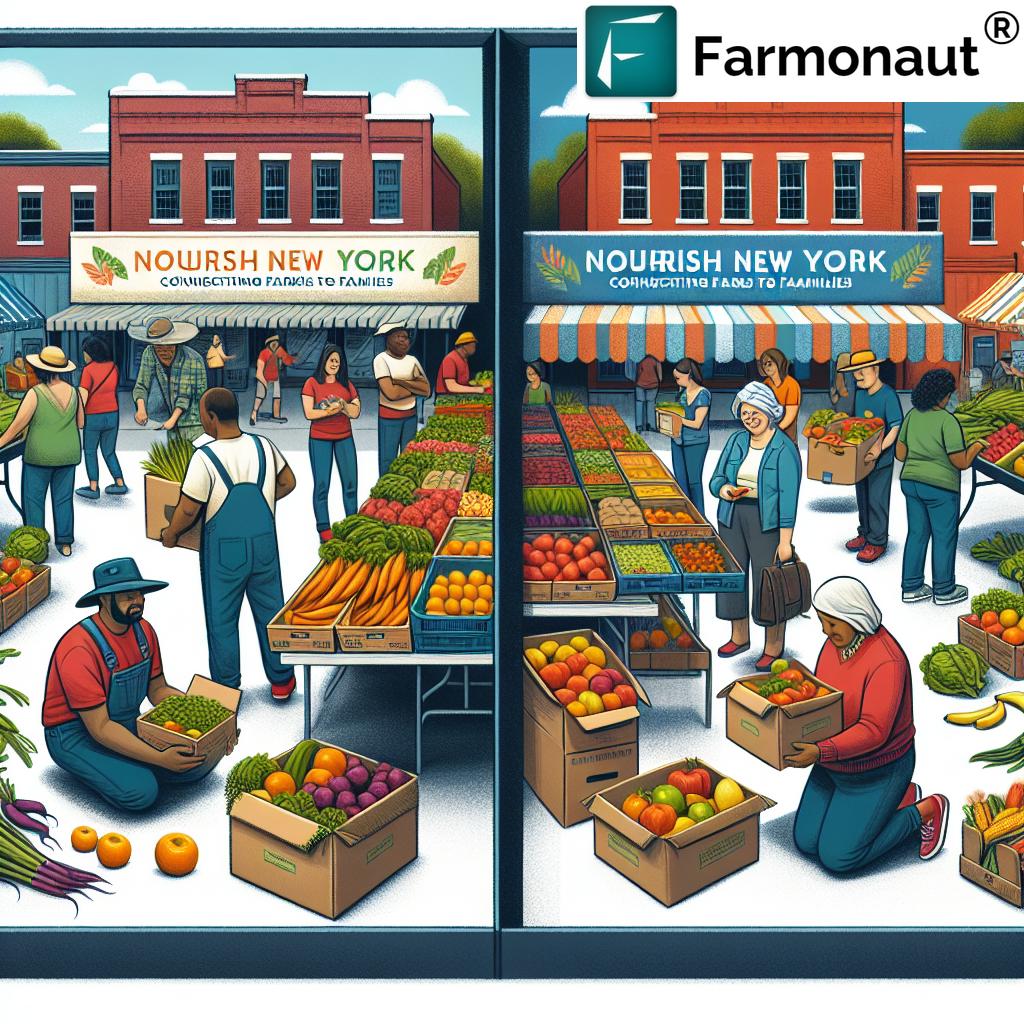
“Locally Nourished” is a separate concept from Nourish NY, and conflating them is a common search mistake worth clearing up directly. Nourish NY is a New York State-funded institutional pipeline routing surplus through food banks. A “locally nourished” model, by contrast, describes the direct farmer-to-consumer access point — the farmers market — where a shopper buys straight from the grower with no institutional intermediary.
The economic logic connecting the two is the same, though: shortening the distance between a farm and the people eating its product. A sustainable market built around direct local sales — whether that’s a Saturday farmers market in Albany or the Nourish NY food-bank channel — gives a grower a buyer close to home instead of a national distributor several states away. Both models cut transportation distance, which is also why Nourish NY’s design gets cited as a sustainability example: shorter supply chains mean fewer transportation emissions and less spoilage in transit, on top of the food-waste reduction from buying surplus that would otherwise go unsold.
One gap worth naming here rather than papering over: no Albany-specific attendance, sales-volume, or participation data exists for individual farmers markets. Neither USDA NASS nor the New York State Department of Agriculture publishes market-level statistics — their data stops at the county or state level. If you need a number for a specific market, the only reliable path is asking that market’s management directly or checking its own published vendor reports, if any exist.
Catalina Cruz and the Legislative Record
Assemblymember Catalina Cruz represents a Queens district in the New York State Assembly and sponsored the legislation that made Nourish NY permanent in November 2021. Her quote on the 100-million-meal milestone — tying the number back to families choosing between rent and groceries — is the most-cited public statement connecting the program’s statistics to its lived impact, and it’s the reason her name surfaces in searches connected to this program’s legislative history.
Her sponsorship is specifically of the codification bill, not of the original 2020 emergency program, which was established administratively under then-Governor Andrew Cuomo in response to the COVID-19 supply chain disruption. The distinction matters for anyone researching the program’s legislative timeline: the emergency response (2020) and the permanent statute (November 2021, under Gov. Hochul, sponsored in the Assembly by Cruz) are two separate legislative moments, three-plus years apart, not one.
Calculator: Estimate Your County’s Meal-Funding Reach
Nourish NY’s $50 million annual appropriation and 4,472 participating farms are statewide figures. Use this calculator to see what a proportional per-county share could look like if you’re estimating local reach for planning or advocacy purposes — it is a proportional estimate based on statewide totals, not an official county-level figure, since the state does not publish funding or farm-count breakdowns below the state level.
Run your own numbers
Assumptions and exclusions: this calculator divides statewide totals evenly across the county count you enter — it does not reflect the state’s actual funding formula, which is not published at county granularity and likely weights by population, food-bank capacity, and regional need rather than an even split. The default $1.75/meal figure is a placeholder for you to replace with your own sourced estimate; it is not a state-published meal-cost figure. Use this to sanity-check an order of magnitude, not to cite as an official number.
How to Verify Current Figures Yourself
Every figure in this article carries a vintage, and every one of them will move. Here is where to check for a fresher number before citing any of them:
- Meals distributed, farms engaged, funding allocated: New York State Department of Agriculture and Markets, agriculture.ny.gov/NourishNY. Statistics are updated with new funding-cycle announcements, which do not follow a fixed calendar — check directly rather than assuming a quarterly cadence.
- Household food-insecurity rate for New York State: Office of the New York State Comptroller's household food security surveys. The most recent baseline covers 2019–2021; the next update is expected in 2026.
- Global food security technology market size and growth rate: Market Research Future's food security technologies market report, with the next major industry report cycle expected in the first quarter of 2026.
- Farmers-market-level sales or attendance data: Not published by USDA NASS or the state at the individual-market level. Contact the specific market's management directly.
This verification habit is the durable part of this article — the exact dollar figures and meal counts will be superseded, but the three sources above and the mechanism they track (appropriation → farm purchase → food bank distribution) will still be the right places to look regardless of what the numbers say when you check.
FAQ
Q: What is Nourish NY?
A: A New York State program, permanent since November 2021, that funds food banks to purchase surplus food directly from New York farms for distribution to food-insecure families. It has funded over 100 million meals through 4,472 farms since its May 2020 launch.
Q: What is "locally nourished" and how is it different from Nourish NY?
A: "Locally nourished" describes the direct farmer-to-consumer model — buying at a farmers market with no institutional intermediary — while Nourish NY is a state-funded institutional pipeline through food banks. Both shorten the distance between farm and eater, but they are structurally different programs.
Q: Who is Catalina Cruz in connection with this program?
A: A New York State Assemblymember representing a Queens district, and the Assembly sponsor of the November 2021 legislation that made Nourish NY permanent.
Q: How big is the food security technologies market?
A: $65.24 billion globally in 2024, projected to reach $322.09 billion by 2035, per Market Research Future.
Q: How can farmers participate in Nourish NY?
A: By selling surplus product to a food bank or emergency food provider that receives Nourish NY funding. Contact the New York State Department of Agriculture and Markets or a regional food bank directly to start that relationship.
Q: Is Nourish NY a permanent program?
A: Yes. Governor Kathy Hochul signed it into state law in November 2021, following its May 2020 launch as an emergency measure.
Q: Can individuals donate to Nourish NY?
A: Nourish NY itself is state-funded, but individuals can support its goals by donating to local food banks and pantries that participate in the program.
Conclusion
Nourish NY's numbers are specific and checkable: 100 million-plus meals, 4,472 farms, $175 million-plus allocated since May 2020, made permanent by state law in November 2021. What it is not is a household-outcome study or a farmers-market attendance tracker — those are gaps in the public record, not gaps in this article, and the right response to a missing number is to say so and point to where it might eventually surface, not to invent one. The mechanism underneath the numbers — pay farms for surplus, route it through food banks, shorten the distance between grower and eater — is what "locally nourished" and Nourish NY share, even though one is a state program and the other is a farmers-market ethos. Check agriculture.ny.gov/NourishNY and the state comptroller's household survey directly before citing a figure from any source, including this one, more than a few months old.

 WICO
WICO Gen Chayat
 Chimera Innovation
 Hiteshi Infotech
 Clubhouse OS
 SkyHarvest
 Polaris Digitech
 Teledarbas
 Wild Oak Farm
 SFX
SFX BACF Africa
 Doodlakine
 Exurbia Geospatial
 FieldZero
 Indico Company
