

Farm finance · Oregon loan guide
Oregon Rural Land Loans: USDA Rates, Limits and Steps
To buy farm or ranch land in Oregon with USDA help, use a Farm Service Agency loan: 6.250% direct, 2.250% for the down payment program, from 1 October 2026 (FSA). Oregon farm real estate averaged $3,880 per acre in 2026 (USDA NASS).
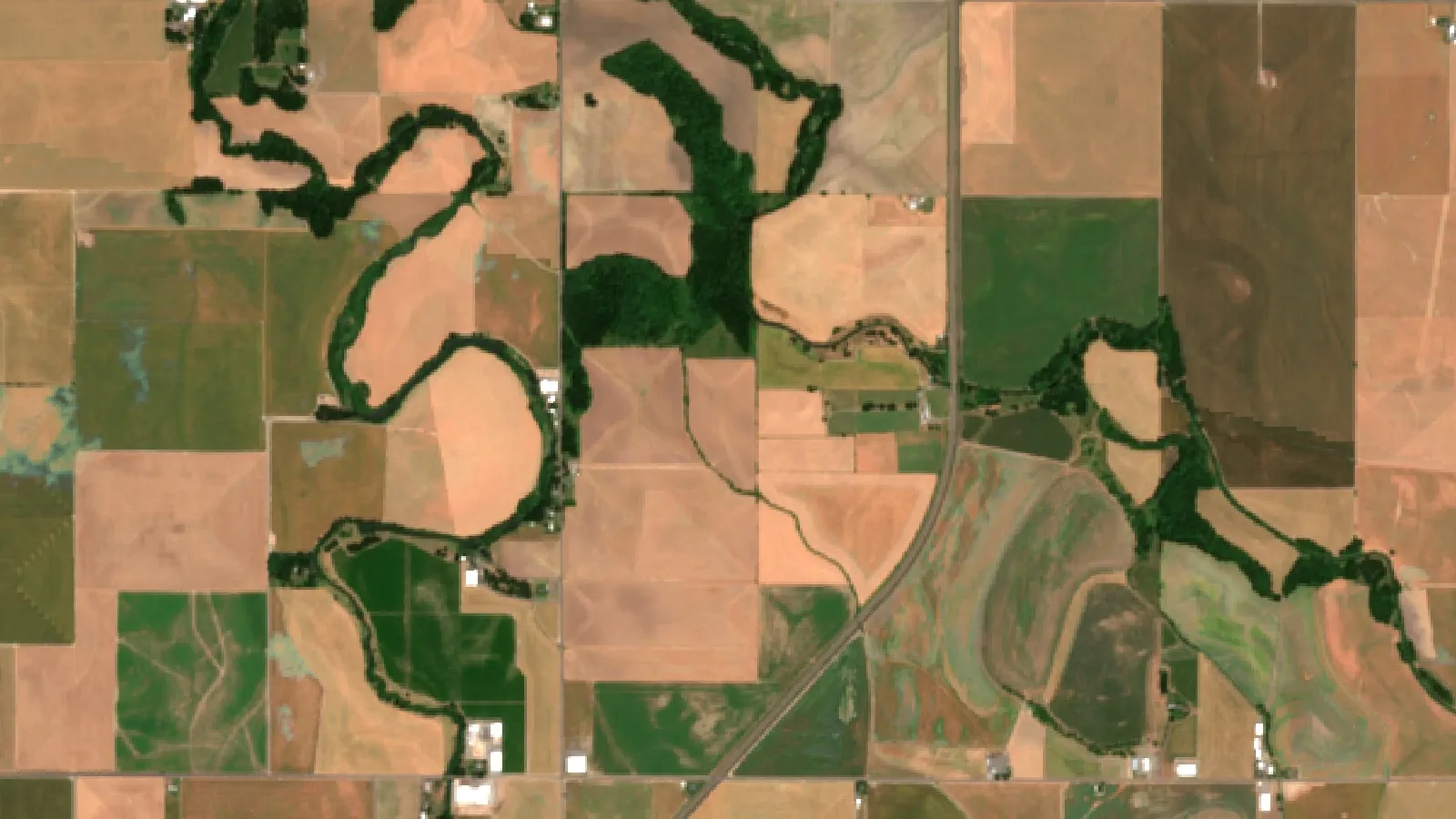
Key takeaways
- FSA direct farm ownership loans: 6.250% fixed, up to $600,000, terms up to 40 years (rate effective 1 Oct 2026).
- Beginning farmers can put 5% down and borrow 45% from FSA at 2.250% under the down payment program.
- FSA guarantees bank and Farm Credit farm loans up to $2,558,000; lenders set the rate under an FSA cap.
- Oregon farm real estate averaged $3,880 per acre in 2026; irrigated cropland $8,200 and pasture $1,120 (USDA NASS).
- USDA Section 502 loans buy a rural home, not a working farm.
In this article
- Oregon rural land loans at a glance
- Which USDA loan fits which kind of land
- USDA rural land loan rates
- FSA loan limits and down payments
- What Oregon farmland costs
- How to buy rural land with a USDA loan in Oregon
- Can the land pay for the loan?
- Seven ways to use a USDA loan for rural land in Oregon
- How we checked the numbers
- Common mistakes to avoid
- Farm tools that help after you buy
- FAQ
Oregon rural land loans for farms and ranches come from three main places: the USDA Farm Service Agency (FSA), commercial lenders backed by an FSA guarantee, and the Farm Credit System. FSA’s direct farm ownership rate is 6.250%, and its down payment loan rate is 2.250%, both effective 1 October 2026 (FSA current loan interest rates). A USDA home loan is a different product: it buys a house on a rural lot, not a working farm.
This guide explains which USDA program fits which kind of land, what the rates and loan limits are, what Oregon farmland costs per acre, and the steps to apply. A calculator lets you test whether a parcel’s income can carry the payment. Rates change every month, so check the date on every figure before you rely on it.
Oregon rural land loans at a glance
The table sums up the main routes. The rates are published USDA rates; commercial lenders set their own.
| Loan | What it buys | Rate (from 1 Oct 2026) | Limit |
|---|---|---|---|
| FSA direct ownership | Farm or ranch land, buildings, improvements | 6.250% fixed | $600,000 |
| FSA down payment | 45% of a farm purchase for beginning farmers | 2.250% | 45% of price or value |
| FSA joint financing | Up to 50% of the price, rest from another lender | 4.250% | Within direct limit |
| FSA guaranteed | Farm land from a bank or Farm Credit lender | Set by lender, under an FSA cap | $2,558,000 |
| USDA RD Section 502 | A home in an eligible rural area | 5.750% direct | County limit |
| Farm Credit or bank | Any rural land, including bare lots | Lender quote | Lender policy |
Sources: FSA rate table and FSA Farm Ownership Loans page; USDA Rural Development Section 502 direct home loan page (rate effective 1 October 2026). This is general information, not financial or legal advice. Talk to a loan officer, an accountant or a lawyer before you sign.
Which USDA loan fits which kind of land
The word “USDA loan” covers two agencies with different rules. Picking the wrong one wastes time.
Farm Service Agency: land you will farm or ranch
FSA farm ownership loans pay for farm or ranch land, buildings and long-term improvements such as fencing, wells and soil work. Applicants must be US citizens or permanent residents, have enough education, training or experience to run a farm, and show they can repay. Repayment terms run up to 40 years for real estate, according to the FSA Farm Ownership Loans page.
FSA lends in two ways. Direct loans are made and serviced by FSA itself. They serve farmers who cannot get enough commercial credit at reasonable rates and terms. Guaranteed loans come from a private lender, and FSA guarantees up to 90% of most loans and up to 95% in some cases, as the American Farm Bureau summary of FSA lending explains.
Rural Development: a home on a rural lot
USDA Rural Development runs the Section 502 home loans. They finance a house to live in, in an eligible rural area. They are not meant for land that will earn farm income. If your main goal is a farm or ranch, start with FSA. Our separate guide covers USDA Rural Development home loans in detail.
Bare land with no farm plan
A wooded lot or a recreation parcel with no farm business usually does not fit an FSA program. Buyers in that case often use a Farm Credit association or a local bank, which set their own rates, down payments and terms. Ask each lender for its written terms.
USDA rural land loan rates
FSA publishes its direct loan rates each month. The rates below took effect on 1 October 2026. They are fixed at closing for the life of the loan.
Chart
FSA direct loan rates
Interest rate, %, effective 1 October 2026
The down payment rate is set below the regular rate to help beginning farmers buy their first place. The joint financing rate applies when FSA lends up to half of the price and another lender covers the rest.
Guaranteed loans work differently. The lender sets the rate, but FSA caps it. For loans fixed for five years or more, the cap is the prior business day’s 5-year Treasury rate plus 5.5%. For variable loans or loans fixed for less than five years, it is SOFR plus 6.75%. Lenders do not have to price at the cap; it is only a ceiling (FSA rate page, read 15 October 2026).
For a market comparison, the Freddie Mac Primary Mortgage Market Survey put the 30-year fixed home mortgage average at 7.40% in its 15 October 2026 release. That is a home loan average, not a farmland rate, but it shows where general long-term borrowing sat that week.
FSA loan limits and down payments
Each FSA program has its own limit. The direct farm ownership limit is $600,000. FSA can guarantee ownership, operating and conservation loans up to $2,558,000, an amount it adjusts each fiscal year for inflation (FSA Guaranteed Farm Loans page). Land contract guarantees, used when a seller finances the sale, have a $500,000 limit.
The down payment program is built for beginning farmers and ranchers. The buyer puts down 5%, FSA lends up to 45% of the purchase price or appraised value, and a commercial lender or the seller finances the rest. Because FSA’s share carries the low down payment rate, the blended rate on the whole purchase can be well under a standard quote.
The 2026 farm bill proposals would raise several of these limits. The Farm Bureau summary lists House and Senate ranges such as $600,000 to $850,000 for direct ownership. Those are proposals; check the FSA page for the limits in force on your closing date.
How much FSA lends
FSA obligated $6.74 billion across 27,792 farm loans in fiscal year 2025, 25% more in dollars than in fiscal year 2024. Direct farm ownership loans came to $2.33 billion and guaranteed farm ownership loans to $2.09 billion. Beginning farmers received about 65% of direct farm ownership loans (Farm Bureau, from FSA data).
What Oregon farmland costs
Land price drives the size of the loan, so look at values before you look at rates. The USDA NASS Land Values 2026 Summary put Oregon farm real estate, land and buildings together, at $3,880 per acre in 2026. That was up 2.6% from 2025 and below the US average of $4,500.
Chart
Farm real estate value: Oregon vs US
Land and buildings, US dollars per acre, 2022 to 2026
Prices vary a lot by land type. Irrigated cropland in Oregon averaged $8,200 per acre in 2026, while non-irrigated cropland averaged $3,050 and pasture $1,120. Water rights make a large difference to a parcel’s price, so ask what rights come with the land and whether they have been used.
Nationally, the USDA Economic Research Service reports farmland averaged $4,500 per acre in 2026, up 3.4% from 2025, or 0.4% after inflation. In the Pacific region, average cropland was worth $10,080 per acre and pasture $2,550 in 2026.
These are survey averages for whole states. A county assessor, a recent sales list and an appraisal will tell you far more about one parcel than a state figure can.
Chart
Oregon land value by type
US dollars per acre, 2026
How to buy rural land with a USDA loan in Oregon
The steps below follow the order most FSA applicants move through. Your county office can tell you what to bring.
- Decide what the land is for. A farm business points to FSA. A home points to Rural Development or a mortgage lender. A bare lot points to Farm Credit or a bank.
- Write a simple farm business plan. List crops or livestock, expected yields, prices and costs. FSA asks for a plan with the application.
- Gather your records. Tax returns, a balance sheet, and proof of farm experience or training.
- Contact your local FSA office. The FSA Oregon state office page lists contacts, and county service centers take applications.
- Check the parcel. Order a title search, survey and appraisal. Confirm zoning, water rights, access and any farm or forest land use rules with the county.
- Compare offers. Get a direct loan decision and at least one guaranteed or Farm Credit quote, then compare total cost, not only the rate.
- Close and plan the first year. Keep cash for operating costs, taxes and insurance after closing.
Satellite field maps can help at the parcel-check step. With Farmonaut you can draw a field and view several seasons of vegetation maps before you buy, which shows how evenly the land has grown crops or grass. It does not replace a soil test, an appraisal or a water rights check.

▶ Six plain steps to start precision farming on new land, from field maps to satellite monitoring. · 4:18
Can the land pay for the loan?
A lender will ask whether the farm can carry the debt. The calculator below gives a first answer. Enter the price, your down payment, the rate and term you are quoted, and the net farm income you expect from the land each year. It returns the annual payment and what is left over.
Net income here means income after operating costs but before the land payment. Ask an accountant to help you estimate it, and to explain how the IRS treats land, interest and depreciation for farms; IRS Publication 225, the Farmer’s Tax Guide, is the reference.
Try the numbers for your own farm below.
Calculator
Can this parcel carry its loan payment?
Enter the price, your down payment, the quoted rate and term, and your expected net farm income.
- Loan amount: $360,000
- Annual loan payment: $24,526
- Payment as % of net income: 100.1%
Example values only, set near break-even; not a quote, benchmark or forecast. Uses level monthly payments; FSA and other lenders may use annual installments. Net income means income after operating costs, before the land payment. This is not financial advice; get a lender’s and an accountant’s figures.
Seven ways to use a USDA loan for rural land in Oregon
These are the uses the FSA program pages and the Farm Bureau summary describe. Each line says who it suits best.
1. Buy a whole farm or ranch with a direct loan
FSA lends up to $600,000 at a fixed rate for up to 40 years. Best for: farmers who cannot get enough commercial credit on fair terms.
2. Use the down payment program
Put 5% down and borrow 45% from FSA at the low down payment rate. Best for: beginning farmers and ranchers buying their first farm.
3. Split the purchase with joint financing
FSA covers up to half of the price at its joint financing rate, and a bank or Farm Credit lender covers the rest. Best for: buyers with a lender who will do part of the deal.
4. Borrow from a bank with an FSA guarantee
The lender writes the loan and FSA guarantees most of it, up to $2,558,000. Best for: larger purchases and buyers with a lender relationship.
5. Back a seller-financed sale
A land contract guarantee covers sales where the seller finances the buyer, up to $500,000. Best for: retiring owners who want to sell to a new farmer over time.
6. Improve land you already own
Ownership loans also pay for buildings, fencing, water systems and soil and water conservation work. Best for: owners who need to make land productive.
7. Build a home on an eligible rural lot
Section 502 loans from Rural Development finance a modest home in an eligible area. Best for: households buying a house in the country, not a farm.
How we checked the numbers
We used USDA’s own pages for every rate and limit: the FSA rate table effective 1 October 2026, the FSA farm ownership and guaranteed loan pages, and the Rural Development Section 502 page. Land values come from USDA NASS and the Economic Research Service. Lending totals come from the American Farm Bureau Federation’s summary of FSA data. We removed claims from the earlier version that we could not verify, such as a no-down-payment rule for land-only loans.
Common mistakes to avoid
- Using a home loan for a farm. Section 502 loans are for housing. Income-producing farm land belongs in an FSA or commercial farm loan.
- Ignoring water rights. In Oregon, irrigated cropland was worth more than twice non-irrigated cropland per acre in 2026 (NASS). Confirm the rights before you agree a price.
- Comparing rates only. Fees, term, prepayment rules and whether the rate is fixed all change the total cost.
- Skipping county rules. Zoning and farm or forest land rules can limit dwellings and uses. Ask the county planning office.
- No cash after closing. Keep money for seed, feed, fuel, taxes and insurance in the first year.
Farm tools that help after you buy
Once you own the land, records help with loan reviews and insurance. Lenders and insurers often ask for yield and field history; our page on crop loan and insurance support explains how satellite field data is used for that.
Related tools on our site include carbon footprinting, traceability, fleet management, the satellite data API and its developer docs, and the web app. The app is also listed for Android and iOS, alongside the browser version.
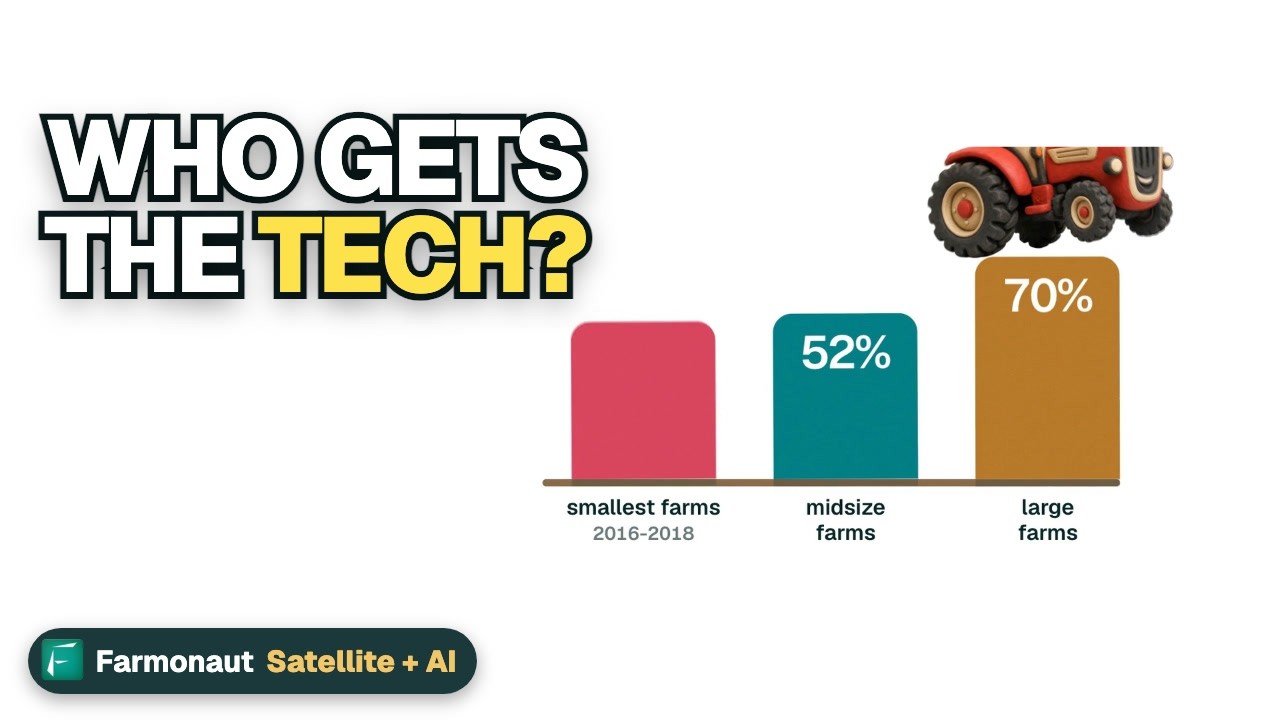
▶ What farm technology means for money, jobs and internet in rural towns. · 3:50
FAQ
Is there a USDA loan for land only in Oregon?
FSA farm ownership loans can buy farm or ranch land, but you need a farm plan and must show you can repay. A bare lot with no farm business usually needs a Farm Credit or bank loan instead.
What are rural land loan rates right now?
From 1 October 2026, FSA’s direct farm ownership rate is 6.250%, the down payment rate is 2.250% and the joint financing rate is 4.250%. Guaranteed and commercial rates are set by each lender.
Do USDA land loans need a down payment?
The FSA down payment program asks for 5% from the buyer. Other FSA and commercial loans have their own rules, so ask each lender. The no-money-down feature belongs to Section 502 home loans, not farm land loans.
How much can I borrow?
Up to $600,000 as a direct FSA ownership loan and up to $2,558,000 as a guaranteed loan. The guaranteed limit is adjusted each fiscal year.
How long does approval take?
It depends on the office workload and how complete your file is. Ask your county FSA office for its current timeline and start early, before you sign a purchase agreement.
Should I get professional advice?
Yes. This page is general information. A loan officer, an accountant and a real estate lawyer can check the terms, the tax effects and the title for your situation.
Farmonaut crop monitoring
See your own fields from space
Draw your fields once and Farmonaut shows satellite vegetation maps for them through the season, on web, Android or iOS.




Keep reading
 usaUSDA Rural Development Home Loans & Loan Rates
 Farm guideAverage USDA Loan Interest Rate: Current USDA RD Rates Explained
 Farm guideRanch Loans & Beginning Rancher Loans: Ranch System Tips
Sources
- USDA Farm Service Agency, Current FSA Loan Interest Rates (effective 1 Oct 2026): fsa.usda.gov
- USDA Farm Service Agency, Farm Ownership Loans: fsa.usda.gov
- USDA Farm Service Agency, Guaranteed Farm Loans: fsa.usda.gov
- USDA Farm Service Agency, Oregon state office: fsa.usda.gov
- USDA Rural Development, Single Family Housing Direct Home Loans (rate effective 1 Oct 2026): rd.usda.gov
- USDA NASS, Land Values 2026 Summary (July 2026): nass.usda.gov
- USDA Economic Research Service, Farmland Value (2026): ers.usda.gov
- American Farm Bureau Federation, Financing the Farm: A Look at USDA Farm Loan Programs (2026): fb.org
- Freddie Mac, Primary Mortgage Market Survey (15 Oct 2026): freddiemac.com
- IRS, Publication 225, Farmer’s Tax Guide: irs.gov
- American Farm Bureau Federation, Farmland Values Climb to New Highs as Cash Rents Hold Near Records (2026): fb.org
Discussion
Questions, corrections or field experience? Share them below. First-time comments are reviewed before they appear, and your email is never published.
No comments yet. Be the first to add a question or your experience.

 BeyondTech Global
 Consulthink Global
 Rouge VC
 Yutz Automation
 AgroGreen Dynamics
 AgroRisk
 Oath Inc
 Reddane Farming
 Esri North East Africa
 Cresol
 Atur Kuliner
 MDCV UK
 Zerella Group
 Etech Consulting Madagascar
 Vestlandsforsking
 Delicio
 WB Dev
 Sama Premium
 Prochecker
 Tres Valles
 LACOS Geoinformation
 Magrifly
 LatConnect 60

 Exploration consultancy · South Africa · Gold
 Licence holder · Niger · Gold










