

Yakima Drought Agriculture: 7 Water Solutions for 2026
“In 2023, Yakima Valley farmers used 30% less water per acre by adopting advanced irrigation and soil management techniques.”
“Yakima’s drought-resilient crop varieties increased yields by 18% during severe water shortages between 2020 and 2023.”



Understanding Yakima Drought Agriculture Impact (2025–2026)
The Yakima Basin, Washington’s premier farming region, is no stranger to the challenge of drought. In recent years, the yakima drought agriculture impact has become more acute, forcing shifts in water allocation, irrigation practices, and crop planning. The 2025 drought highlighted vulnerabilities: earlier snowmelt, warmer springs, and extended dry spells compressed irrigation demand into the peak growing season, intensifying the yakima drought water shortage agriculture dynamic.
Why is Yakima’s case so important? This region is critical for national food security, supplying the US with significant volumes of apples, cherries, hops, wine grapes, and diverse vegetables. But sustaining farming viability demands innovative, sustainable water management strategies that can withstand growing climate variability.
Key Insight
- ✔ Yakima drought water shortage agriculture is a model for resilience strategies.
- 📊 30% less water per acre usage (2023) reveals the impact of technology adoption.
- ⚠ Groundwater use is increasingly stressed, urging the adoption of surface water and efficiency solutions.
- ✔ Crop selection is shifting towards drought-tolerant varieties.
- 💡 Irrigation scheduling and monitoring enhance productivity despite water allocations.
Current Water Shortage Dynamics in Yakima Agriculture
Water scarcity is central to the Yakima drought agriculture impact. In 2025, competing demands among municipal users, endangered species protections, and senior irrigation rights further tightened the window for reservoir releases and river diversions.
A sequence of earlier snowmelt (caused by warmer winters), warmer springs, and prolonged dry spells concentrates demand in June and July, when both crops and urban users require the most water.
This new water availability pattern stresses the efficiency of pivot and drip irrigation systems, and highlights the vital need for real-time soil moisture monitoring, irrigation scheduling, and rapid adjustments based on weather forecasts.
Common Mistake
- ❄ Earlier snowmelt: Reduces reservoir recharge rates, advancing the water shortage window.
- 🔥 Prolonged dry spells: Amplify peak water demand.
- ⚡ Regulatory allocations: Water districts now often use incentive-based or curtailment allocations, prioritizing essential crops and regional food security.
- 💧 Groundwater stress: Farmers tapping aquifers must balance present use with long-term supply and prevent land subsidence.

Key Trivia
“In 2023, Yakima Valley farmers used 30% less water per acre by adopting advanced irrigation and soil management techniques.”
“Yakima’s drought-resilient crop varieties increased yields by 18% during severe water shortages between 2020 and 2023.”
- 💧 Competing Demands: Urban vs. agricultural users
- 🌲 Endangered Species Protections: Streamflow and habitat preservation
- 🔗 Senior Rights: Priority to legacy water holders
- 🌡️ Climate Variability: Accelerated drought spells
- 🏞️ River & Reservoir Dynamics: Earlier releases, reduced storage windows
7 Water Solutions for Yakima Drought Water Shortage Agriculture (2026)
Addressing the yakima drought agriculture impact requires a multi-pronged approach. Let’s explore the seven most impactful water solutions—each offering a unique blend of technological, agronomic, and stewardship benefits tailored for Yakima’s diverse agriculture sector.
1. Advanced Drip Irrigation Systems
Modern drip irrigation is now equipped with automation, variable flows, and in-line moisture sensing. These systems optimize water use, reduce evaporation, and deliver water with pinpoint precision, reducing waste and enhancing efficiency. Key for tree fruit orchards, vineyards, and high-value vegetable operations.
Pro Tip
2. Soil Health & Organic Amendments
Building soil organic matter using compost, cover crops, and reduced tillage enhances water infiltration and retention. Healthy soil acts as a “living sponge,” sustaining crops during dry spells.
Organic-rich soils also foster deeper, more resilient root systems.
3. Drought-Resilient Crop Selection
The rise of drought-tolerant varieties in Yakima is strategic. By choosing resilient fruit trees, pulse crops, grains, or specialty vegetables, farmers can maintain yields and economic viability while navigating unpredictable water allocations.
4. On-Farm Water Storage & Capture
On-farm ponds, capture basins, and smart storage tanks allow growers to collect excess water during availability peaks, reducing reliance on real-time river releases or aquifer extraction. Such systems are critical buffering tools during “zero-allocation” periods.
5. Real-Time Moisture Sensing and Digital Irrigation Scheduling
Satellite-derived and ground-based moisture sensors plus field weather stations inform precise irrigation scheduling. Real-time platforms (such as those offered by Farmonaut) allow for rapid, field-by-field water use adjustments that maximize efficiency and reduce runoff.

6. Deficit and Regulated Irrigation Strategies
Deficit irrigation is deliberately supplying less water than full crop evapotranspiration, timed to stages when crops are less sensitive (e.g., after fruit set in apples or during veraison in grapes). Regulated deficit irrigation (RDI) can maintain yields and even enhance fruit quality in certain crops, while conserving water. Needs strong monitoring.
- 🎯 Tree fruit adaptation: Carefully managed deficit irrigation saves water without compromising fruit size or composition.
- 🍇 Vineyard use: RDI can intensify grape flavors, granting wineries a premium edge in Yakima agriculture markets.
7. Crop Rotations & Mulching Techniques for Moisture Retention
Evolving rotations (e.g., integrating pulse crops, or adjusting alfalfa planting schedules) align crop water needs with expected supply.
Mulching and soil surface management reduce evaporation and stabilize soil moisture through the hot season.
Using organic and biodegradable mulches fosters both soil health and water retention.

Comparative Solutions Table: Yakima Drought Agriculture Water Management (2026)
Below is a side-by-side comparison of the seven leading water solutions available to Yakima farmers, highlighting the yakima drought water shortage agriculture challenge and providing actionable insight into sustainability trade-offs.
| Solution Name | Description | Estimated Water Savings (%) | Implementation Cost | Suitability for Crop Type | Projected Adoption by 2026 |
|---|---|---|---|---|---|
| Advanced Drip Irrigation | Automated, precise irrigation using inline sensors and variable flows for optimal water delivery | 20–35% | Medium–High | Tree fruits, vineyards, high-value vegetables | 58% |
| Soil Health & Organic Amendments | Use of compost, cover crops, and reduced till to enhance soil sponge effect and infiltration | 8–18% | Low–Medium | All crops; especially annuals & mixed vegetables | 66% |
| Drought-Resilient Crop Selection | Choosing cultivars bred for low-water conditions and flexible planting dates | 10–22% | Low–Medium | Grains, pulses, specialty fruits/veggies | 44% |
| On-Farm Water Storage | Ponds and tanks for capturing runoff or peak flows for later irrigation use | 14–28% | Medium–High | Mixed crops, larger scale farms | 27% |
| Real-Time Moisture Sensing & Scheduling | Combining soil probes or satellite data with digital irrigation platforms | 15–33% | Medium | All crops; especially critical for fruits & vegetables | 49% |
| Deficit & Regulated Irrigation | Strategic under-irrigation during less sensitive crop stages | 5–15% | Low | Orchards, vineyards | 38% |
| Crop Rotations & Mulching Techniques | Rotations to align crop water demand with supply and mulching to reduce soil evaporation | 7–21% | Low–Medium | Mixed vegetable, annual grains, pulses | 52% |
- ✔ Drip systems and moisture scheduling yield the highest per-acre water savings.
- 📊 Soil health practices offer higher adoption rates and broad applicability across crops in Yakima.
- ⚠ High implementation costs may delay large-scale storage or automation for small and mid-sized farms.
Farmonaut Tech for Drought Agriculture Monitoring & Planning
In the context of rapidly shifting yakima drought water shortage agriculture realities, leveraging satellite technology offers Yakima growers a strategic advantage in real-time monitoring, precise irrigation scheduling, and holistic resource management.
- ✔ Farmonaut delivers satellite-based monitoring for crops, soil moisture, and irrigation events across field and farm scales.
- 📊 Jeevn AI Advisory system provides customized weather forecasts, drought alerts, and irrigation advisories to reduce water waste and maximize productivity.
- 💡 The Carbon Footprinting tool helps growers track and reduce climate impacts while optimizing water use strategies.
- 🔎 Large Scale Farm Management tools (web & mobile) assist Yakima cooperatives and crop managers with field-level data, NDVI mapping, irrigation logbooks, and scheduling.
- 🔗 Traceability features (blockchain-based) further support authentic, sustainable crop production and documentation.
- 💻 Farmonaut API and Developer Docs enable seamless data integration for Yakima’s agtech ecosystem and water management tools.

Investor Note

Farmonaut Subscription Options
Soil and Crop Stewardship: Practices for Drought Resilience
Water efficiency in Yakima agriculture is inextricably linked to soil health, crop selection, and conscious stewardship.
Let’s break down practical pathways to enhance the resilience of Yakima’s farms and protect both short- and long-term food security.
Resilience Boosters: Visual Guide
- 🌱 Cover Crops: Reduce soil compaction and improve rainfall infiltration.
- 🟫 Mulching: Minimizes soil temperature swings and suppresses evaporation.
- 🦠 Organic Amendments: Elevate soil organic matter and build long-term water retention.
- 🔬 Crop Rotation: Breaks pest cycles and aligns water demands with available supply (especially critical for Yakima drought agriculture impact mitigation).
- 🌾 Drought-Tolerant Varieties: Ensure harvests during allocation curtailments.

Key Insight
Sustainability Practices for Yakima Farms
- 🔄 No-Till & Reduced-Till Farming: Protects soil structure and reduces evaporative loss.
- 🛡️ Living Mulch & Groundcovers: Create all-season protection, especially for perennial fruit crops and vineyards.
- 🚜 Extension Services: Stay updated through Washington State University’s extension bulletins and Farmonaut’s digital field insights.

Policy, Economics, and the Future of Yakima Agriculture
The intersection of agricultural production, water rights, environmental protections, and economic viability frames policy and planning conversations throughout the Yakima Basin.
- Water Rights Allocations
- With both senior and junior rights holders, curtailments during the 2025 drought forced tough decisions: prioritize high-value crops or foundational staples, and negotiate releases with downstream towns and wildlife agencies.
- Economic Impacts
- Higher pumping costs, increased labor for system upgrades, and revenue risk from yield reductions underline the urgency for efficiency. Commodity markets now offer premiums for “drought-tolerant certified” yields and traceable, water-efficient products.
- Regional Extension & Research
- Extension services guide adoption of new varieties, irrigation technologies, and stewardship programs. Tailored API-based advisory systems are increasingly common as farms digitize.
Regulatory Reality
- ✔ High adoption of digital water management is likely in farming operations near Yakima urban centers.
- 📊 Large-scale orchard and vineyard operations investing in on-farm storage and smart irrigation see faster ROI through drought cycles.
- ⚠ Small, diversified farms may need financial & technical support to upgrade infrastructure.
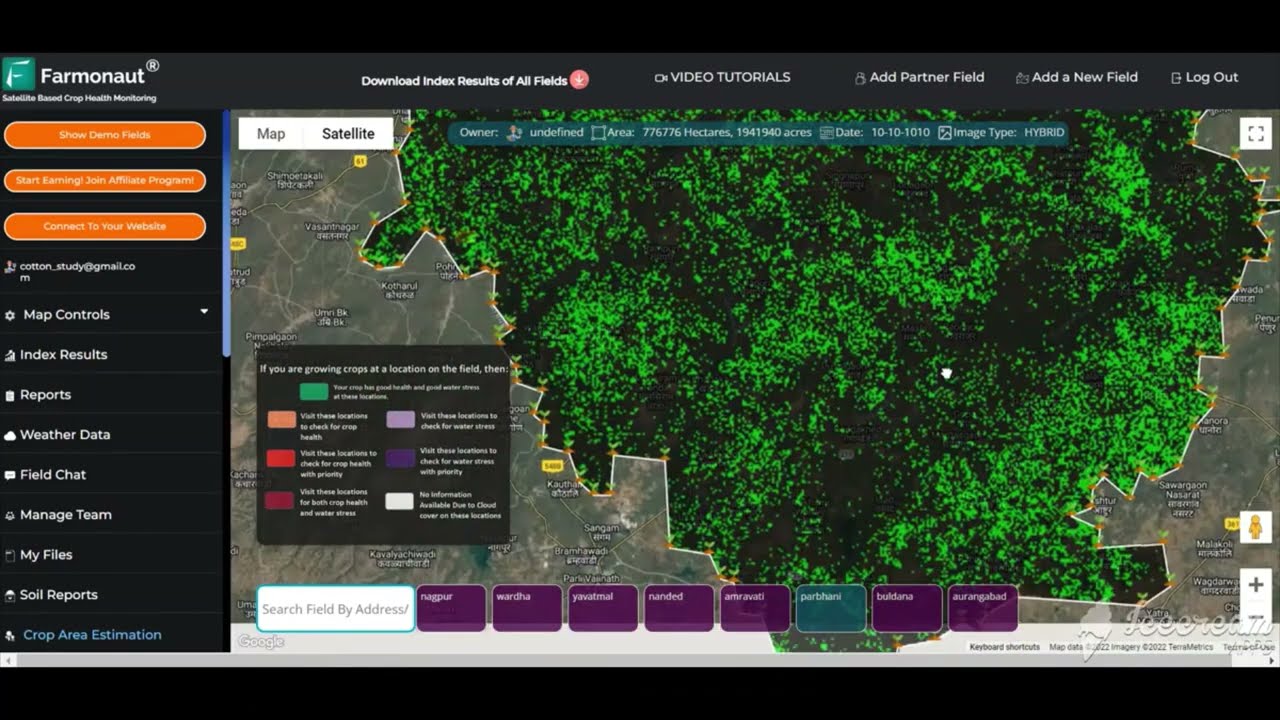
Farmonaut’s mission is to democratize satellite-powered insights for all scales of Yakima agriculture. Use the web and mobile app for field-level NDVI, moisture tracking, and resource management.
Need robust data integration? Farmonaut API delivers real-time maps and analytics. For planting schedule optimization and climate-smart planning, explore our advisory tool.
Extension Service Highlight
Frequently Asked Questions
What are the biggest climate threats to Yakima drought agriculture in 2026?
The main challenges include more frequent and severe drought spells, earlier snowmelt, increased competition for water, and regulatory uncertainty related to environmental protections. All these factors intensify yakima drought water shortage agriculture risks.
Which solution has the highest water savings for Yakima agriculture?
Advanced drip irrigation and real-time digital moisture scheduling (especially with satellite-aided tools) can save up to 35% water per acre, especially in orchards and vegetable operations.
How do soil health enhancements reduce drought risk in agriculture?
Building soil organic matter through mulching, amendments, and no/reduced-till practices increases water infiltration, root resilience, and drought-buffering capacity, sustaining productivity when water is scare.
Are on-farm water storage solutions viable for small farms?
While initial costs may be high, modular and shared storage systems or small catchment tanks can offer effective drought buffering, particularly when paired with efficient irrigation scheduling tools.
Can data-driven irrigation help meet regulatory requirements?
Yes. Digital irrigation logs, soil moisture records, and blockchain-backed traceability solutions, such as those provided through our Farmonaut platform, support documentation and compliance for water use and drought stewardship mandates in the Yakima Basin.
Data Insight
Conclusion: Building a Water-Secure Yakima
The Yakima drought agriculture impact is a signal for regions worldwide, as climate variability, water shortage, and regulatory complexity shape the future of farming. With a focus on sustainable water management, soil health, smart crop selection, and digital monitoring, Yakima Basin growers stand ready to sustain their role as a food powerhouse.
- ✔ Integrated water solutions protect yields, livelihoods, and regional food security.
- 💡 Farmonaut’s real-time data tools strengthen field-by-field drought response and planning for all scales of Yakima agriculture.
- 📊 Investment in soil health and irrigation upgrades enhances long-term resilience and compliance.
- 🚀 Wide-scale adoption of digital monitoring and stewardship practices can reduce water use, cut costs, and sustain future farm prosperity.
- 🌏 Yakima’s adaptation lessons provide a blueprint for water-stressed regions everywhere.
Get Started with Farmonaut
Ready to transform your water management—visit the Farmonaut app or explore our API to integrate satellite insights, moisture scheduling, and adaptive irrigation for your fields. For advanced soil health and traceability solutions, discover our latest technologies at carbon footprinting and traceability product pages.
Smart Farming Roadmap
Explore sustainable, data-powered farming—your fields and future generations will thank you.

 Godrej Agrovet
 Hayleys Agriculture
 Linx Agritech
 Adinet
 Save Your Soils
 GalaxEye Space
 Grandstream Algérie
 XOS Realty
 Geospatial Lab Africa
 Agro La Gándara
 HIPSAC
 ZOL Zimbabwe
 Juligerm
 AdBio
AdBio MISE Maroc
 NWNS
NWNS Red August Group
 Farm Inc
 WeMe Global
 Agrotoken
 Blue BearX
 Insignito
 DnCubed
 Indosistim Teknologi
 Liquify Digital
 CU Foods
 BeyondTech Global
 Rouge VC
 AgroRisk
 Oath Inc
 Esri North East Africa
 MDCV UK
 Etech Consulting Madagascar
 Vestlandsforsking
 WB Dev
 Sama Premium
 Tres Valles
 Blickwinkel
 Agricultural Credit Policy Council
 eKGIS
eKGIS Mostas Tech
 Andex
Andex Deluxe Conseil
 WICO
WICO Chimera Innovation
 SkyHarvest
 Teledarbas
 Exurbia Geospatial
 FieldZero
