

Reviewed August 2026 against NC State Extension and NCBI/PubMed Central-indexed plant pathology research.
Try it: Run your own numbers →
Xanthomonas campestris is a gram-negative, obligate aerobic bacterium, and its pathovar Xanthomonas campestris pv. campestris (Xcc) is the bacterium behind black rot, the most damaging bacterial disease of cabbage, broccoli, cauliflower, and kale in the United States. Documented crop losses run from a single 1976 seedbed incident that cost US growers an estimated $1,000,000 to a 2019 Georgia case study pegging losses at $35,400 — and published field data puts the ceiling at 90% yield loss in susceptible cultivars. This article covers seven controls with measured effectiveness, not general advice, so you can decide which combination fits your rotation and your budget.
What Xanthomonas Campestris Actually Is
Xanthomonas campestris is not a single, uniform threat — it is a species with distinct pathovars (pv.), each specialized to a different host. Researchers currently recognize 11 documented races of Xanthomonas campestris, according to plant pathology literature indexed on NCBI/PubMed Central. That race diversity is exactly why a single resistant cultivar or single bactericide rotation rarely holds up for more than a few seasons: a variety bred against one race can still be fully susceptible to another.
The pathovar that matters most for US brassica growers is Xanthomonas campestris pv. campestris (Xcc), the cause of black rot in cruciferous vegetables. Two other pathovars — X. campestris pv. vesicatoria (bacterial leaf spot in peppers and tomatoes) and X. campestris pv. citri (citrus canker) — are covered further below because they share the same bacterium and overlapping controls, even though they attack different crops.
Black Rot: Symptoms, Spread, and Documented Losses
Black rot begins as small chlorotic (yellow) lesions at the leaf margin. As the bacterium moves through the leaf’s vascular system, the lesions expand into a characteristic V-shape pointing toward the mid-vein, and the veins inside the V blacken. In advanced infections, the whole plant wilts, growth stalls, and severely infected heads are unmarketable.
The economic record for this disease in the United States is unusually well documented for a bacterial crop pathogen, which is why it is worth citing precisely rather than in generalities:
- A single 1976 US seedbed outbreak produced a 70% transplant infection rate and an estimated $1,000,000 in losses once systemic infection had spread — figures reported in plant pathology literature indexed on NCBI/PubMed Central.
- A 2019 Georgia case put field-level black rot losses at an estimated $35,400, per the same source.
- Published research studies cited in that review put the maximum yield loss ceiling at 90% in susceptible cultivars under favorable disease conditions.
Those three numbers span nearly 50 years and describe very different scales of operation — a seedbed versus a commercial field — which is the point: black rot’s damage potential has not gone away, it just shows up differently depending on where in the production chain the pathogen gets a foothold. Warm, humid weather with splashing rain or overhead irrigation is the common thread across every documented outbreak, because Xcc needs free water on the leaf surface to enter through wounds, stomata, or hydathodes.

Related Xanthomonas Pathovars Beyond Black Rot
Because search traffic for “xanthomonas” and “xanthomonas bacteria” covers the genus broadly, it’s worth being precise about which pathovars cause which diseases, since the control strategies below apply differently to each:
- Bacterial Leaf Spot (X. campestris pv. vesicatoria) — affects peppers and tomatoes with water-soaked, necrotic leaf lesions that cause premature leaf drop and fruit blemishing severe enough to make fruit unmarketable. Full treatment detail is in our dedicated guide: bacterial leaf spot control.
- Citrus Canker (X. campestris pv. citri) — produces raised corky lesions on leaves, stems, and fruit in citrus-growing regions, spread by wind-driven rain, contaminated equipment, and human movement between blocks. US regulatory response has historically included quarantine and grove destruction under USDA APHIS programs where canker is confirmed.
All of these are the same bacterium adapted to different hosts, which is why the seven controls in this article — rotation, resistant genetics, biocontrol, targeted chemistry, clean planting material, sanitation, and monitoring — repeat across every Xanthomonas-driven disease, even though the crop-specific tactics differ.
Seven Controls: What the Evidence Supports
No single tactic against Xanthomonas campestris holds up alone across an 11-race pathogen population. The seven strategies below are staged in the order a grower should evaluate them — starting with the cheapest, most durable practices and ending with the highest-cost interventions that should be reserved for confirmed outbreaks:
- Crop rotation and cultural practices — the foundation; NC State Extension’s standard is a minimum 3-year interval away from brassica hosts.
- Resistant cultivars — reduces the odds of the pathogen establishing at all, but no cultivar resists all 11 races.
- Bacteriophage and bacteriocin biocontrol — controlled trials show measurable, quantified disease reduction with minimal environmental footprint.
- Chemical bactericides — copper-based products, used judiciously to slow resistance development.
- Disease-free seed and transplants — blocks the pathogen’s most common entry point into a new field.
- Sanitation and debris destruction — removes the overwintering source between seasons.
- Satellite and AI-based monitoring — catches spread early enough that the other six strategies can be applied where they’re actually needed, not blanket-applied everywhere.




Comparison Table of Disease Control Strategies
| Strategy | Method | Measured Effect | Cost | Organic-Compliant | Frequency |
|---|---|---|---|---|---|
| Crop Rotation & Cultural Practices | Minimum 3-year non-host rotation, field hygiene, irrigation timing | 3-year interval is the published NC State Extension standard | Low | Yes | Continuous |
| Resistant Cultivars | Xcc-resistant cabbage/cauliflower hybrids | Reduces establishment risk; not effective against all 11 known races | Medium | Yes | Once at planting |
| Bacteriophage/Bacteriocin Biocontrol | Applied bacteriocins or phage suspensions targeting Xcc | 44% disease severity reduction, 36% incidence reduction in controlled trials | Medium | Yes | 2-3 applications |
| Chemical Bactericides | Copper-based sprays, rotated actives | Contributed to the $35,400 Georgia loss estimate being a “despite treatment” figure, not an untreated baseline | Medium-High | No | 3-5 applications |
| Disease-Free Seed & Transplants | Certified seed lots; hot water seed treatment (52°C/25 min) | Directly targets the entry route implicated in the 1976 outbreak’s 70% transplant infection rate | Low-Medium | Yes | Every planting |
| Sanitation & Debris Management | Removal/destruction of infected crop remains post-harvest | Removes overwintering inoculum source between seasons | Low | Yes | End of season |
| Satellite/AI Monitoring | NDVI stress detection, AI advisory alerts (e.g., Farmonaut) | Enables targeted rather than blanket intervention; effectiveness depends on scouting interval chosen | Medium | Yes | Weekly/biweekly |
The 7 Strategies in Detail
1. Crop Rotation and Cultural Practices
North Carolina State University Extension’s standard recommendation is a minimum 3-year rotation interval away from brassica hosts before replanting cole crops on the same ground, per its black rot diagnostic guide. That interval matters because Xcc survives in crop debris and on volunteer crucifers and weeds between seasons; shortening the rotation gives the surviving inoculum a shorter path back into a new planting.
- Rotate a minimum of 3 years away from cabbage, broccoli, cauliflower, kale, and other brassica hosts.
- Remove and destroy infected debris immediately after harvest rather than leaving it to overwinter.
- Time irrigation to avoid prolonged leaf wetness — overhead sprinklers held to early morning windows dry faster than evening irrigation.
- Widen plant spacing to improve airflow and reduce canopy humidity.
- Control volunteer crucifers and cruciferous weeds (wild mustard, shepherd’s purse) that harbor Xcc between crops.
- Sanitize tools, boots, and equipment moving between fields, especially when foliage is wet.
Why this is first on the list: it is the only strategy on this page with no material cost and no resistance-development risk, and it directly interrupts the pathogen’s between-season survival — the same mechanism implicated in the seedbed-to-field spread pattern documented in the 1976 outbreak.
2. Resistant Cultivars
Breeding for Xcc resistance gives growers a genetic head start, but the 11-race diversity of Xanthomonas campestris means no single cultivar is immune across every race present in a region. A cultivar bred against the races common in one growing area may show full susceptibility to a race more common elsewhere.
- Ask local seed suppliers and university extension variety trials which resistant cabbage or cauliflower hybrids have been tested against the races confirmed in your state.
- Pair resistant genetics with rotation and sanitation rather than relying on the cultivar alone — resistance slows establishment, it does not guarantee zero infection.
- Reassess variety choice periodically as new races are characterized; the taxonomic count of 11 documented races (per NCBI/PubMed Central) reflects ongoing classification work, not a fixed ceiling.
Background on Xcc taxonomy and pathovar classification is available here.
3. Bacteriophage and Bacteriocin Biocontrol
This is the strategy with the most specific controlled-trial numbers available. Applied bacteriocins — antimicrobial proteins produced by bacteria to suppress competitors — reduced disease severity by 44% and disease incidence by 36% in controlled trials, according to research indexed on NCBI/PubMed Central. Bacteriophage approaches — viruses that infect and lyse the target bacterium specifically — are being evaluated as a chemical-free alternative for the same reason.
- Bacteriocin or phage products are applied as foliar sprays, typically integrated into the same schedule as other IPM sprays rather than replacing them outright in a first season of use.
- Specificity to Xcc means these products spare beneficial and non-target bacteria, which is why environmental impact is rated low relative to broad-spectrum chemistry.
- Product availability and registration status vary by state — check with your state’s department of agriculture or extension office before planning a season around a specific biocontrol product.
Why the numbers matter here specifically: a 44% severity cut and 36% incidence cut are the only effect-size figures in this article backed by a controlled trial rather than a field case study, which makes bacteriocin treatment the most quantifiably proven biological option currently published for this pathogen.
4. Chemical Bactericides, Used Sparingly
Copper-based bactericides remain the primary chemical option against Xcc, but the 2019 Georgia case that produced the $35,400 loss estimate occurred in a field where treatment was already part of the program — meaning chemical control alone did not prevent meaningful economic loss. That is the clearest available evidence that chemistry needs to be one layer in a stack, not the whole program.
- Reserve applications for confirmed outbreaks or periods of high humidity/rainfall risk rather than applying on a fixed calendar.
- Rotate active ingredients between sprays to slow the development of copper-resistant Xcc populations — current US prevalence data on copper-resistant strains is not published in the sources reviewed for this article; check recent issues of the American Phytopathological Society’s Plant Disease journal for regional resistance survey results before planning a copper-dependent program.
- Favor spot treatment of confirmed infection zones over blanket field-wide spraying where scouting data supports it.
- Follow label rates and re-entry/harvest intervals exactly — copper accumulates in soil with repeated seasons of use.
Environmental impact: medium, and not organic-compliant under USDA National Organic Program standards for most synthetic bactericide formulations — check the current OMRI list for any copper formulation before applying on certified organic ground.
5. Disease-Free Seed and Transplants
The 1976 US seedbed outbreak that caused an estimated $1,000,000 in losses is the clearest evidence available for why this strategy exists: a 70% transplant infection rate in that single incident originated from contaminated seed or seedbed material, then propagated outward into the field once infected transplants were set. Blocking that single entry point remains one of the highest-leverage, lowest-cost interventions on this list.
- Source certified, pathogen-tested seed lots rather than saved seed of unknown health status.
- Use hot water seed treatment — 52°C (125.6°F) for 25 minutes — to eliminate seedborne Xcc before planting.
- If purchasing transplants rather than growing your own, confirm the nursery screens for bacterial pathogens before shipment.
6. Sanitation and Debris Management
Sanitation is unglamorous but it directly targets the same overwintering mechanism that the 3-year rotation standard is built around — remove the debris, and the rotation interval has less inoculum to outlast.
- Collect, compost at temperatures sufficient to kill bacterial pathogens, or destroy plant debris — including infected leaves and stems — after every harvest.
- Clean tools, vehicles, and packing-line surfaces after working infected fields, before moving to clean ground.
- Limit handling of wet foliage, since bacterial spread by hands and clothing accelerates in humid conditions.
7. Satellite and AI-Based Monitoring
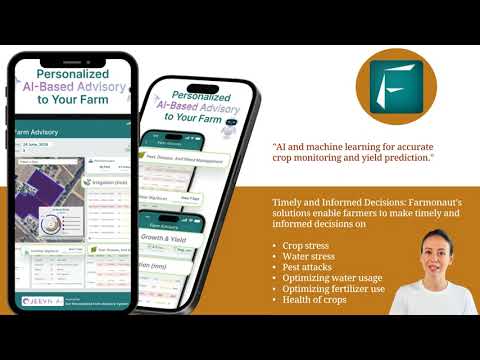
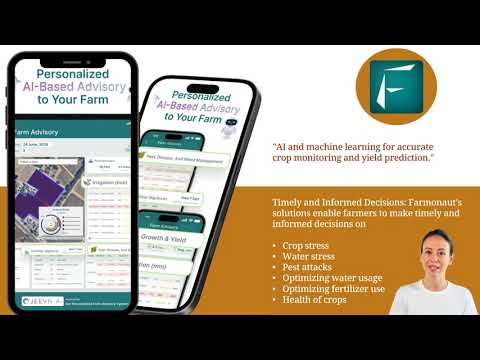
Every strategy above works better when it is targeted rather than applied blanket-wide, and that targeting depends on knowing where stress or infection is actually occurring in the field before it’s visible from the field edge. Tools such as Farmonaut combine satellite imagery, AI-driven alerts, and field-level resource tracking to close that gap.
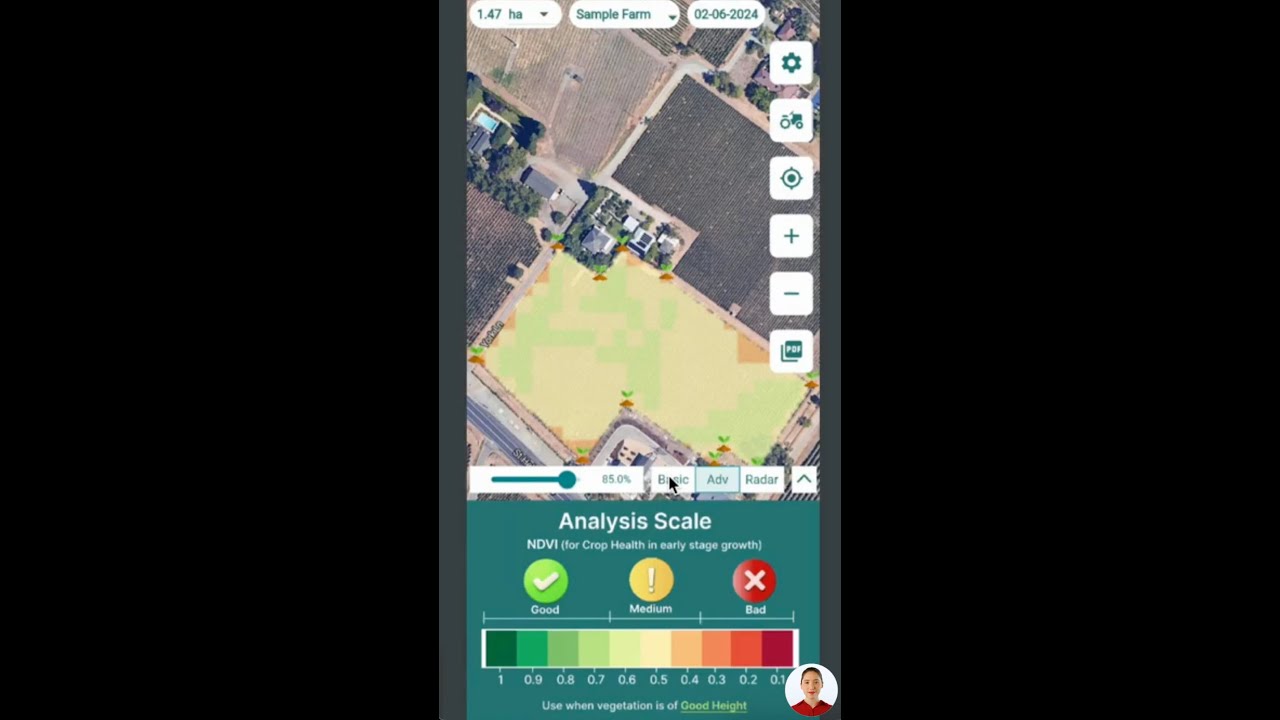
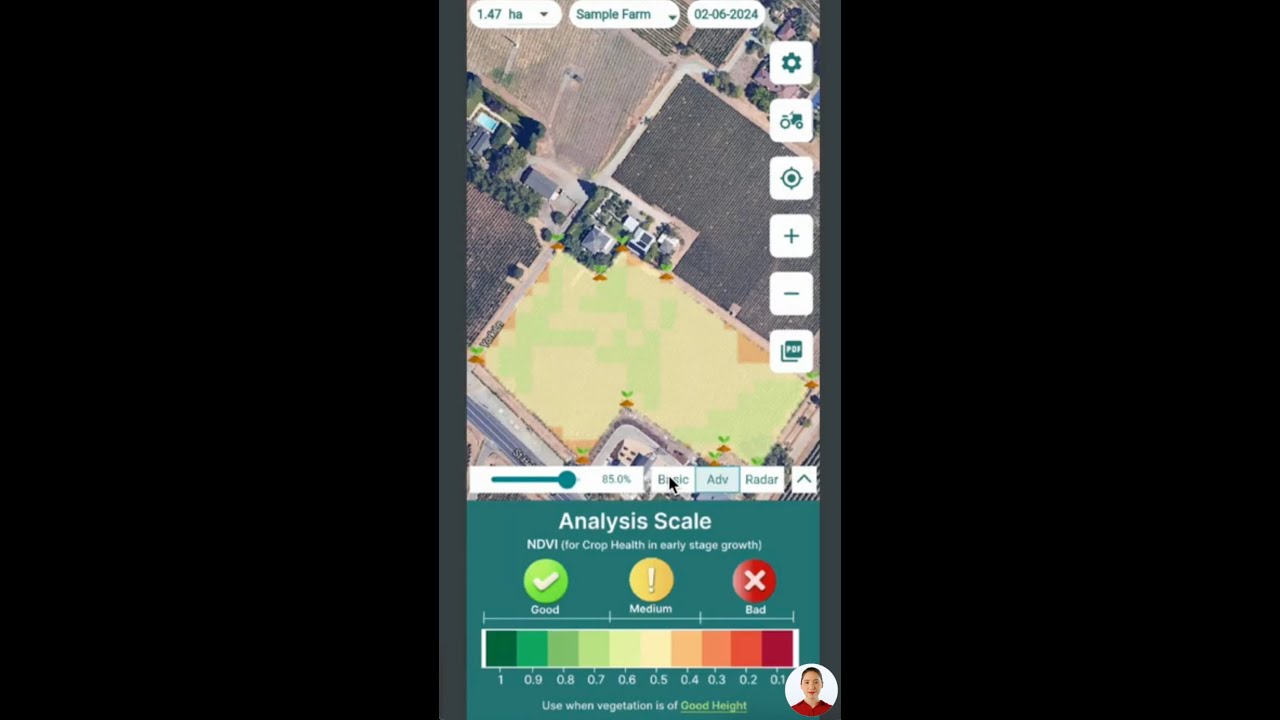
- NDVI and other vegetation indices can flag abnormal patches consistent with early bacterial stress before visual symptoms are obvious from ground scouting.
- Real-time crop health maps let a scouting team prioritize which zones to walk first, rather than treating an entire field uniformly.
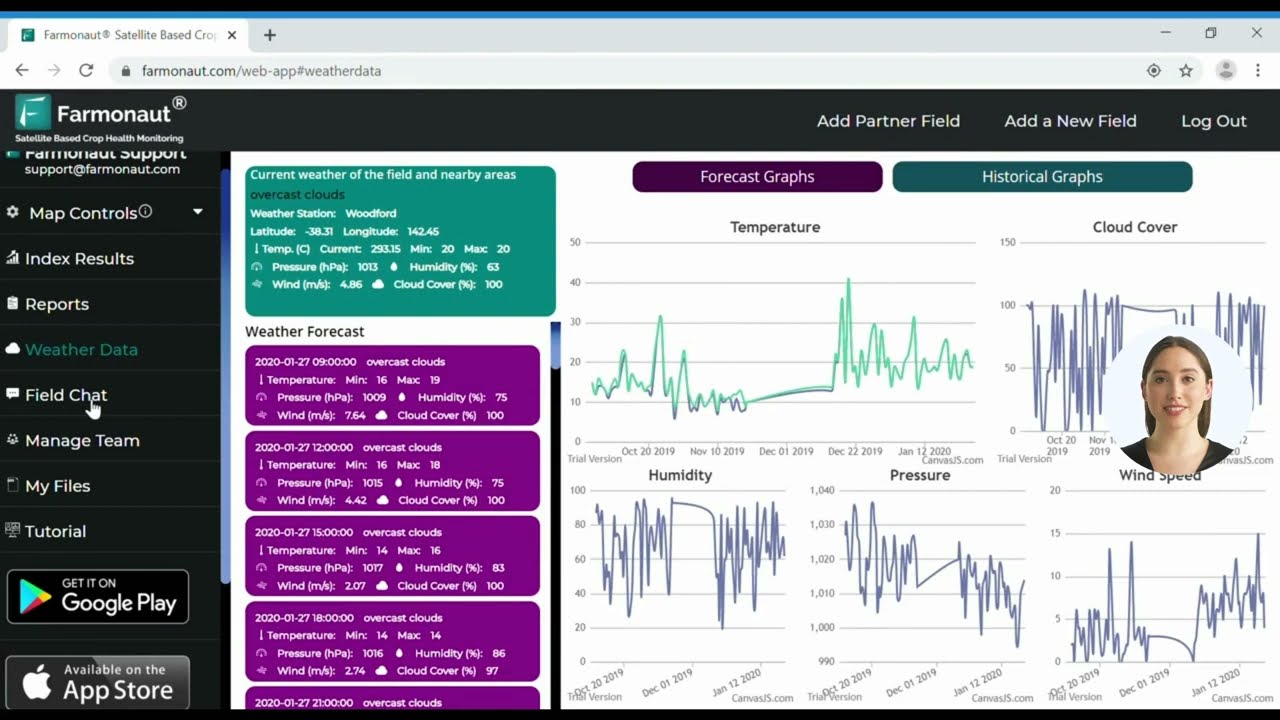
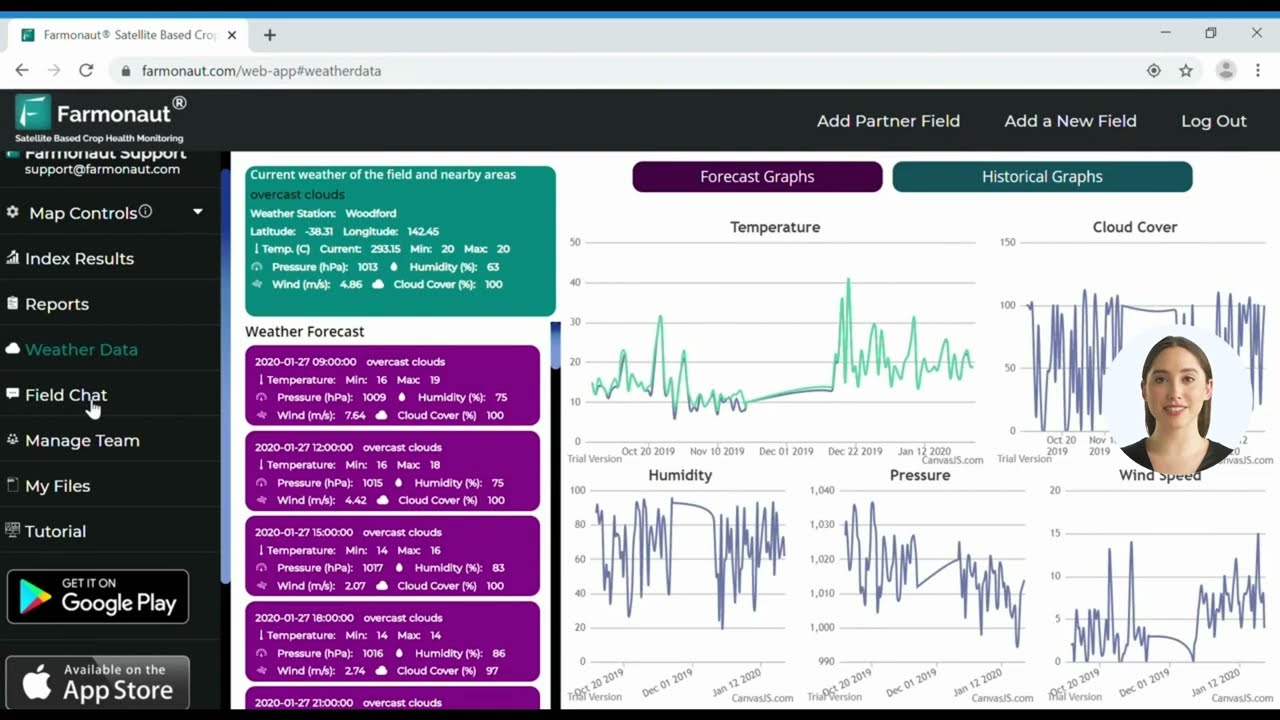
- AI-based advisory (Jeevn AI) layers weather-risk signals — humidity, rainfall accumulation — onto field data to flag periods when black rot spread risk is elevated.
- Historical field data helps identify recurring hot spots, which is useful input when deciding where the 3-year rotation matters most.
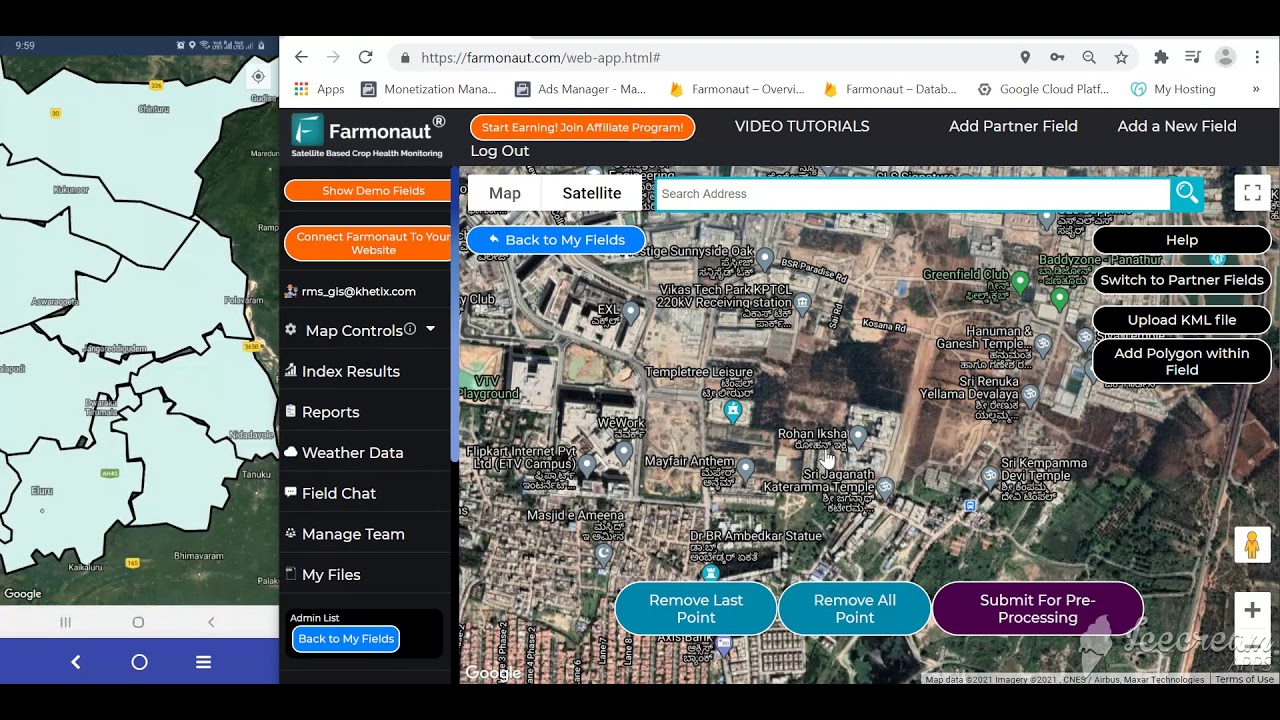
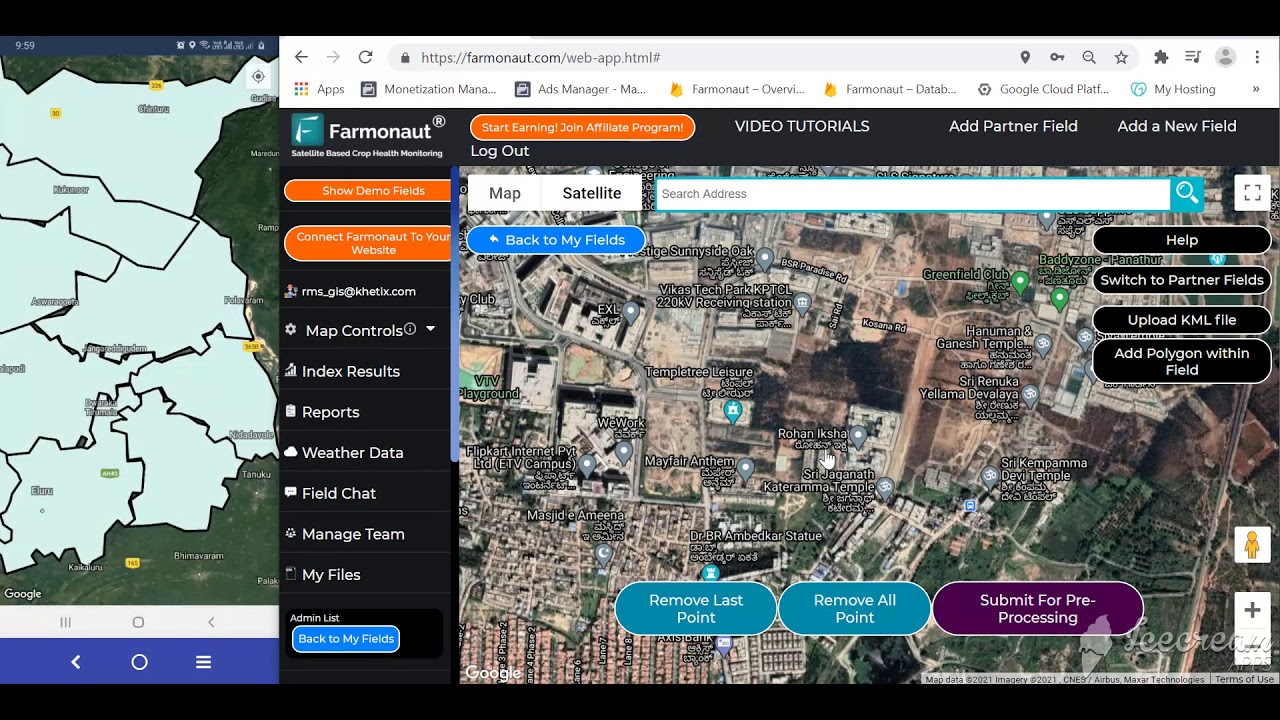
Access is through the Farmonaut Mobile App and Web Portal. Developers and agribusinesses integrating monitoring into existing workflows can use the Satellite & Weather API, documented at the API developer docs.
Spray Program Cost Calculator
Chemical bactericide programs and bacteriocin biocontrol programs differ in both cost per application and measured effectiveness — use the calculator below with your own field size and pricing to compare a copper-based spray schedule against a bacteriocin-based one over a season.
Run your own numbers
Assumptions: this calculator compares product spend only — it excludes labor, equipment, water carrier, and adjuvant costs, and it does not model yield outcomes. The 3-5 application range for copper and 2-3 range for bacteriocin/phage products reflect typical program sizing discussed in this article; enter your own planned application count and local product pricing for an accurate estimate.
Farmonaut: Precision Disease Management on Every Acre
Farmonaut's satellite-powered platform fits into an integrated program for black rot, bacterial leaf spot, and citrus canker in several concrete ways:
- Real-time Crop Health Monitoring: NDVI/vegetation indices, soil moisture, and color-infrared imagery flag stressed zones before symptoms are visible on foot.
- AI-Based Advisory (Jeevn AI): Weather-driven risk forecasts and field-specific management tips, delivered on mobile or web.
- Blockchain-Based Traceability: Documents that produce was grown and packed using disease-free, verifiable methods. More on Product Traceability.
- Sustainability Tracking: Quantifies disease-related losses against carbon and resource-use metrics. Carbon Footprinting features.
- Large-Scale Farm Management: Mapping, team coordination, and risk assessment for estates and cooperatives. Agro Admin App.
- Crop Loan and Insurance Support: Satellite-based field records to support financing or insurance claims in disease-affected seasons. Crop loan and insurance verification.
Frequently Asked Questions
What is Xanthomonas campestris and what disease does it cause?
Xanthomonas campestris is a gram-negative, obligate aerobic bacterium. Its pathovar Xanthomonas campestris pv. campestris (Xcc) causes black rot in cruciferous vegetables — cabbage, broccoli, cauliflower, and kale. Other pathovars of the same bacterium cause bacterial leaf spot in peppers and tomatoes, and citrus canker.
What are the first symptoms of black rot caused by Xanthomonas campestris?
Small chlorotic (yellow) spots at leaf margins that expand into V-shaped necrotic lesions pointing toward the mid-vein, with blackened veins visible inside the lesion. As infection progresses through the vascular system, wilting and stunted growth follow.
How much yield can black rot destroy?
Published research studies cite yield losses up to 90% in susceptible cultivars under favorable disease conditions, per sources reviewed on NCBI/PubMed Central. Documented US economic losses range from an estimated $35,400 in a 2019 Georgia field case to roughly $1,000,000 in a 1976 seedbed outbreak with a 70% transplant infection rate.
What is the recommended crop rotation interval for xanthomonas campestris treatment?
NC State Extension recommends a minimum 3-year interval away from brassica hosts before replanting cole crops on the same ground, to let overwintering inoculum in crop debris decline before the next susceptible crop is planted.
Can I rely on chemical bactericides alone to prevent yield losses?
No. The 2019 Georgia case that produced an estimated $35,400 in losses occurred in a treated field, indicating chemical control alone did not prevent significant economic damage. Rotating actives, combining with cultural and biological controls, and reserving sprays for confirmed risk periods is the better-supported approach.
How effective is bacteriocin or phage treatment against Xanthomonas campestris bacteria?
Controlled trials reported a 44% reduction in disease severity and a 36% reduction in disease incidence with bacteriocin treatment, according to research indexed on NCBI/PubMed Central. This is currently the most specifically quantified biological control option published for this pathogen.
How often should satellite-based crop monitoring run for disease risk?
Weekly during critical growth stages and at minimum biweekly during periods of elevated humidity or rainfall risk, so stress signals are caught while targeted intervention — rather than blanket treatment — is still possible.
Further reading:
Summary and Next Steps
Xanthomonas campestris — through pv. campestris, vesicatoria, and citri — remains one of the best-documented bacterial threats in US vegetable and citrus production, with a loss record spanning a $1,000,000 1976 seedbed outbreak to a $35,400 2019 Georgia field case and a published ceiling of 90% yield loss in susceptible cultivars. None of the seven strategies above is a standalone fix; the 3-year rotation standard, resistant genetics, quantified bacteriocin biocontrol (44% severity reduction, 36% incidence reduction), judicious chemistry, clean seed, sanitation, and satellite-based monitoring work as a stack, not a menu of alternatives.
For growers checking whether newer figures have been published since this review — current USDA NASS brassica disease survey data, updated copper-resistance prevalence in Plant Disease journal, or new bacteriocin/phage field trial results — those are the three sources worth checking first, since none of them had current US commercial-scale figures publicly available at the time this article was reviewed.
Ready to add field-level detection to this program? Explore Farmonaut's satellite crop health tools or download the app.
For enterprise integration, see the Farmonaut Satellite & Weather API or developer documentation.

 Innomick
 Juligerm
 AdBio
AdBio MISE Maroc
 Drift-Sense
 NWNS
NWNS Red August Group
 Farm Inc
 WeMe Global
 Agrotoken
 Blue BearX
 Insignito
 Croptimum
 DnCubed
 Field Capacity
 Indosistim Teknologi
 Liquify Digital
