

Reviewed September 2026 against USDA NASS, USDA Economic Research Service, and University of Illinois farmdoc daily.
Try it: Run your own numbers →
Equipment dealer digital marketing works best when it mirrors how buyers actually shop: they research online, but only 29% of US farms report using the internet to market their own agricultural activities (USDA, 2024), which tells you the audience is comfortable online but underserved by dealers who still lean on trade shows and print. The dealers who win are the ones matching digital channels to a hard market reality — new equipment sales are falling, and 67.5% of US dealers reported new equipment sales declines of 2% or more in 2025, according to farmdoc daily at the University of Illinois. That is the backdrop every agricultural equipment dealer marketing plan has to be built against right now.
This guide covers digital marketing for agriculture equipment dealers specifically — not general agribusiness marketing, not crop input marketing. If you sell, service, or lease tractors, combines, sprayers, or precision ag hardware, the strategies, data, and calculator below are built for your sales cycle.
Table of Contents
- The Market Reality Behind Equipment Dealer Marketing
- What “Digital Agriculture Equipment” Means for Your Buyers
- Agricultural Equipment Dealer Seasonal Marketing Campaigns
- 7 Strategies for Agriculture Equipment Digital Marketing
- Strategy Comparison: Complexity, Cost, and Fit
- Agricultural Equipment Company Case Study Marketing
- Marketing Budget Calculator for Equipment Dealers
- When to Bring In a Farm Equipment Marketing Agency
- Where Farmonaut Fits: Data Dealers Can Point To
- FAQ: Equipment Dealer Digital Marketing
- Conclusion
- Try it: Run your own numbers
The Market Reality Behind Equipment Dealer Marketing
Before picking channels, look at what’s actually happening on dealer lots. The US agricultural machinery market was valued at $30.2 billion in 2025 and is forecast to reach $43.84 billion by 2031, per Mordor Intelligence — long-run growth, but the near-term picture is rougher. US farm tractor sales totaled 195,857 units in 2025, while combine harvester sales fell to 3,579 units, down 35.58% year-over-year, according to farmdoc daily’s February 2026 analysis of USDA and dealer data. Looking ahead, 44.3% of dealers surveyed are forecasting a further 2026 sales decline of 2% or more.
That combination — a growing long-term machinery market alongside a rough near-term sales cycle — is exactly why agriculture equipment dealer marketing is shifting from “run ads until the lot clears” to sustained digital presence that holds share through a downturn and captures replacement-cycle demand when it returns. Dealers cutting marketing spend during a slow sales year usually lose the visibility they need for the recovery.
For the most current figures, USDA NASS runs its full Census of Agriculture every five years — the next covers 2027 (USDA NASS) — but publishes interim technology adoption data year-round through its Quick Stats database. farmdoc daily publishes updated dealer sentiment and monthly USDA equipment sales figures on the 15th of each month at farmdocdaily.illinois.edu, so check there before quoting these figures a year out.
What “Digital Agriculture Equipment” Means for Your Buyers
Before you can market to precision ag buyers, know what they’ve actually adopted. Per the USDA Economic Research Service’s analysis of the 2023 Census of Agriculture, 27% of US farms use some form of precision agriculture practice. Adoption is heavily skewed by farm size and technology type:
- Guidance/autosteering systems: 52% of US midsize farms, 70% of large-scale crop farms (2023, USDA ERS)
- Yield monitors, yield maps, and soil maps: 68% of US large-scale crop farms (2023, USDA ERS)
- Drones: 12% of US large-scale crop farms (2023, NASS Census of Agriculture)
Read that gap correctly: autosteer and yield mapping are near-mainstream on large operations, but drones remain a minority technology even among the biggest farms. If your dealership sells or services precision farming equipment, your content should speak differently to a midsize farm still deciding on autosteer than to a large operation weighing drone ROI — one is a mainstream-adoption sale, the other is still an early-adopter conversation. That distinction should shape your landing pages, not just your ad copy: a page built around “why autosteer pays for itself” converts a much broader audience than a generic “precision ag equipment” page.

Why This Data Matters More Than General SEO Advice
- It tells you which product pages to build first. Guidance systems and yield monitoring have the highest search intent because they have the highest adoption — build those product and comparison pages before niche precision hardware.
- It sizes your content opportunity for lower-adoption categories. At 12% drone adoption even among large farms, dealers who publish genuinely useful drone-ROI content face far less competing content than in the autosteer category — an underexploited niche, not a dead one.
- It grounds your case studies in real numbers instead of vague claims about “the future of farming.”
A large scale farm management solution can help dealers and agribusiness partners translate this kind of adoption data into farm-level engagement — monitoring thousands of acres digitally rather than relying on field visits alone.
Agricultural Equipment Dealer Seasonal Marketing Campaigns
Equipment purchasing follows the crop calendar, not the retail calendar, and campaigns that ignore that waste budget. The exact weeks shift by region and crop — Corn Belt planting timing differs from Southern row-crop timing, and USDA NASS regional planting-progress reports (updated weekly during the season via Quick Stats) are the most current source for your specific state — but the underlying structure holds everywhere:
- Pre-season (late winter): Buyers research and compare before committing capital. This is when SEO and content marketing on comparison-intent terms — “tractors for sale,” “precision farming equipment near me” — earn the most organic traffic, because buyers are still gathering information rather than transacting.
- Planting season: Urgency-driven searches spike — replacement parts, rental availability, service scheduling. PPC and geo-targeted social ads outperform organic content here because buyers need an answer this week, not a blog post.
- Harvest season: High-value combine and header purchases cluster here, alongside end-of-season service contracts. This is the highest-intent buying window for large equipment — align paid budget and sales staff availability accordingly.
- Post-harvest/winter: Financing, trade-in, and early-order programs dominate. Email and CRM re-engagement campaigns to the season’s leads perform best here, since these buyers already have relationship context with your dealership.
The one figure that should discipline every seasonal campaign this cycle: with 67.5% of dealers already reporting 2% or greater sales declines and 44.3% forecasting further declines into 2026 (farmdoc daily), pre-season and harvest-season campaigns are not optional line items to cut when budgets tighten — they are the two windows where a shrinking pool of buyers actually transacts, and losing visibility there compounds the downturn.
7 Strategies for Agriculture Equipment Digital Marketing
1. Website and SEO Optimization
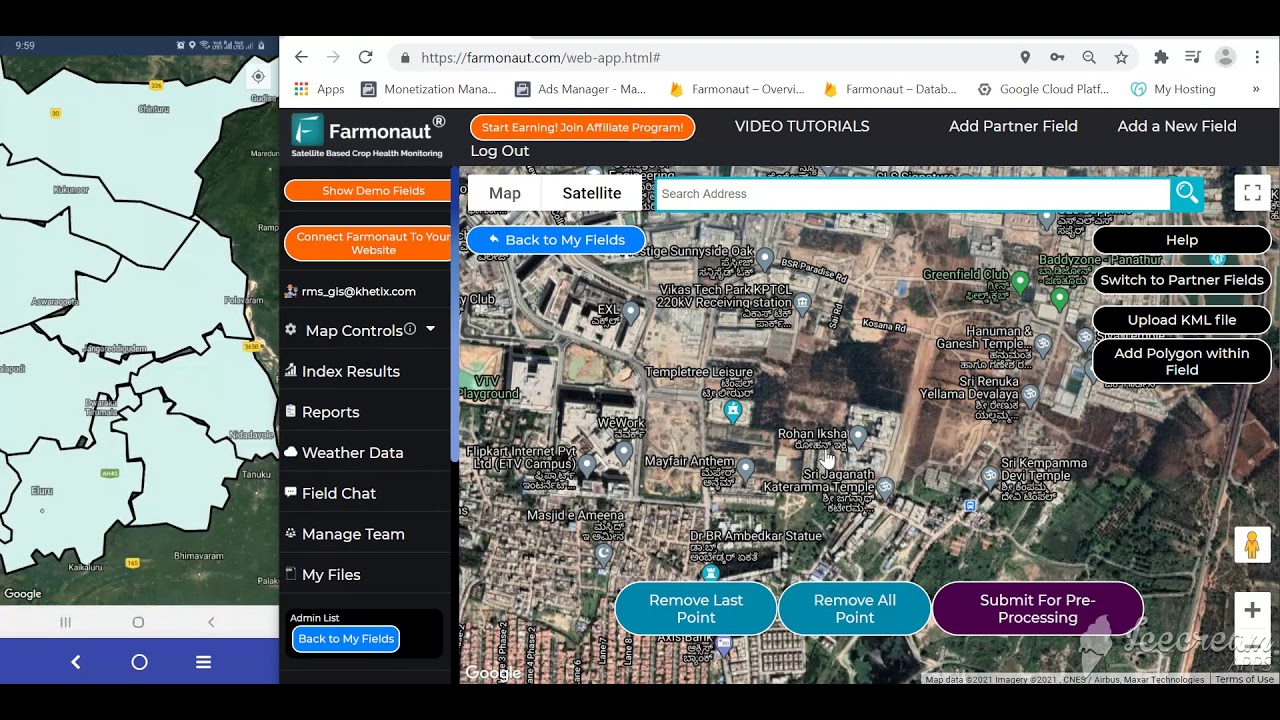
- A mobile-responsive website is the foundation for ranking on high-intent terms like “tractors for sale,” “precision farming equipment near me,” and “agriculture equipment dealer marketing.”
- Build detailed product pages with technical specifications, customer testimonials, maintenance guides, and comparison tools.
- Localize content by region and crop — a Corn Belt autosteer page and a Northern Plains autosteer page should not read identically.
2. Content Marketing Built on Real Adoption Data
- Publish maintenance how-to videos, buyer’s guides, and equipment comparison content anchored in the adoption figures above rather than generic “future of farming” language.
- Pair content with a deeper agriculture digital marketing framework covering SEO, content, and channel strategy for the broader agribusiness sector.
For dealers managing large operational footprints, explore agricultural resource management practices and Farmonaut’s Fleet Management to support content around operational efficiency and equipment uptime.

3. Social Media Marketing and Advertising
- Facebook, Instagram, and TikTok support product launches, service reminders, and customer success stories.
- Paid social campaigns targeted by farm size, region, or crop type make sense given how sharply precision-tech adoption varies by farm size (70% guidance adoption on large farms vs. 52% on midsize) — a single undifferentiated ad set will underperform against both segments.
4. Email Marketing and CRM
- Segment by crop type, farm size, and equipment ownership, then send maintenance reminders, in-season upgrade offers, and financing windows timed to the seasonal calendar above.
- Automated drip campaigns move pre-season researchers toward a harvest-season purchase decision.
5. Digital Advertising
- PPC on Google, Bing, and YouTube plus geo-targeted display reaches buyers in the specific counties your dealership actually serves.
- Given that 67.5% of dealers are already seeing sales declines, ad spend efficiency matters more than reach — geo-fencing and audience segmentation keep budget on buyers likely to transact this season, not just anyone in the state.
Discover more on carbon footprinting to highlight sustainability angles in equipment campaigns targeting conservation-program-eligible buyers.

6. Analytics and Data Management
- Track website traffic, lead quality by channel, and sales attribution against the seasonal calendar — a lead that converts in six weeks during harvest season is a different KPI than one that converts in six months during winter research.
- Monitor which product categories (autosteer vs. yield mapping vs. drones) generate the most qualified leads relative to their search competition.
7. Influencer and Community Marketing
- Partner with working farmers and agricultural YouTube creators to review or demonstrate equipment, particularly in lower-adoption categories like drones (12%) where third-party validation carries more weight with skeptical buyers.
- Support community Q&A forums and webinars around technical buying questions.

To build buyer trust around equipment and input sourcing, check Farmonaut Product Traceability for blockchain-based farm-to-fork tracking.
Developers and dealer networks can integrate satellite data, weather, and resource management directly into dealer platforms using Farmonaut’s API platform (API Developer Docs) to automate precision equipment monitoring at scale.

Strategy Comparison: Complexity, Cost, and Fit
There’s no published, audited dataset benchmarking exact ROI percentages by channel for equipment dealers specifically — that gap is real, and any article claiming precise reach or sales-lift percentages per channel without a named source is guessing. What follows instead is a complexity and cost comparison you can use to sequence your build-out, paired with which season and adoption segment each strategy fits best.
| Strategy | Implementation Complexity | Relative Cost | Best Season | Best-Fit Buyer Segment |
|---|---|---|---|---|
| SEO Optimization | Medium | $$ | Pre-season | Research-stage, all farm sizes |
| Content Marketing | Medium | $-$$ | Pre-season / year-round | Midsize farms evaluating autosteer |
| Social Media Advertising | Easy | $$ | Planting / harvest | Younger operators, all sizes |
| Email Marketing & CRM | Medium | $ | Post-harvest / winter | Existing customers, repeat buyers |
| PPC & Programmatic Ads | Hard | $$$ | Planting / harvest urgency | High-intent, ready-to-buy |
| Influencer & Community Marketing | Medium | $-$$ | Pre-season / year-round | Drone and low-adoption tech buyers |
| Analytics & Data Management | Medium | $$ | Year-round | All segments |



Digital marketing for agriculture: how the plan changes by business type
The seven strategies above apply across agriculture, but the weighting changes with what you sell and how long the buyer takes to decide. Use this as a starting point, then adjust with your own lead and sales data.
| Business type | Typical buying cycle | Channels to lead with | Content that earns trust |
|---|---|---|---|
| Machinery dealer or manufacturer | Months, tied to trade-in, financing and the crop calendar | Local SEO, Google Ads on model and “for sale” searches, email to past buyers | Walkaround videos, spec comparisons, total cost of ownership |
| Seed, fertilizer and crop protection | Once or twice a year, often through a retailer or agronomist | Retailer co-marketing, email, agronomy content | Local trial plots and yield data, product timing guides |
| Agtech software or services | Weeks, often with a trial | Search ads on the problem, webinars, free-trial or demo sign-ups | Case studies with named farms and measured results |
| Farm selling direct to consumers | Days, often seasonal | Instagram and Facebook, Google Business Profile, email list | Harvest updates, farm photos, pick-up and delivery details |
Two rules hold for all of them. Farm buyers trust other farmers, so real customer stories outperform brand claims. And the calendar decides timing: plan campaigns against planting and harvest in your buyers’ region, not against the retail calendar.
Agricultural Equipment Company Case Study Marketing
Case studies are the one content format an AI Overview cannot summarize away, because their value is specificity: a named farm, a named region, a named outcome. A generic “how digital marketing helps equipment dealers” summary can’t substitute for a page that says which dealership, which county, and which quarter.
Build equipment dealer case studies around three elements:
- The buyer’s starting adoption level. Was this a midsize farm moving into guidance/autosteer (52% adoption baseline) or a large operation adding drone capability (12% adoption baseline)? That framing tells the reader whether the story applies to them.
- The seasonal buying trigger. Was the purchase decision made pre-season during research, or during harvest under time pressure? Readers self-select based on where they are in their own cycle.
- A verifiable, source-backed number. If you cite equipment sales trends or market sizing in a case study, link the same sources used here — farmdoc daily for sales volumes, USDA ERS for adoption rates — rather than a number that can’t be checked.
Avoid the trap of publishing “case studies” that are really testimonials with no numbers attached. A case study needs a before/after metric — acres covered, service response time, financing terms — even if that metric comes from the dealership’s own records rather than a national dataset.
Marketing Budget Calculator for Equipment Dealers
Use this calculator to split a monthly digital marketing budget across the seasonal windows and channel priorities described above, based on which season you’re planning for.
Run your own numbers
Assumptions: splits are illustrative planning ratios based on the seasonal and adoption patterns discussed above, not an audited industry benchmark — no such per-channel ROI dataset is currently published for equipment dealers specifically. Excludes trade show, print, and offline sponsorship spend. Recalculate each season as your own conversion data comes in.
When to Bring In a Farm Equipment Marketing Agency
An ag dealer digital marketing agency or farm equipment marketing agency earns its fee when your team can’t cover both the seasonal urgency of PPC/social and the long-horizon work of SEO and content at the same time. Signs it’s time to bring one in:
- Your website hasn’t been updated with new adoption data or product comparisons in over a year, and organic rankings have stalled.
- You’re running paid ads without clear attribution back to actual equipment sales, not just leads.
- Seasonal campaign timing is reactive (built after planting season starts) rather than planned against the crop calendar in advance.
A good agency partner for this sector should be able to explain, specifically, how they’d handle the adoption gap between midsize and large-farm buyers, and how they’d sequence pre-season content against harvest-season paid spend — not just offer a generic SEO retainer.
Where Farmonaut Fits: Data Dealers Can Point To
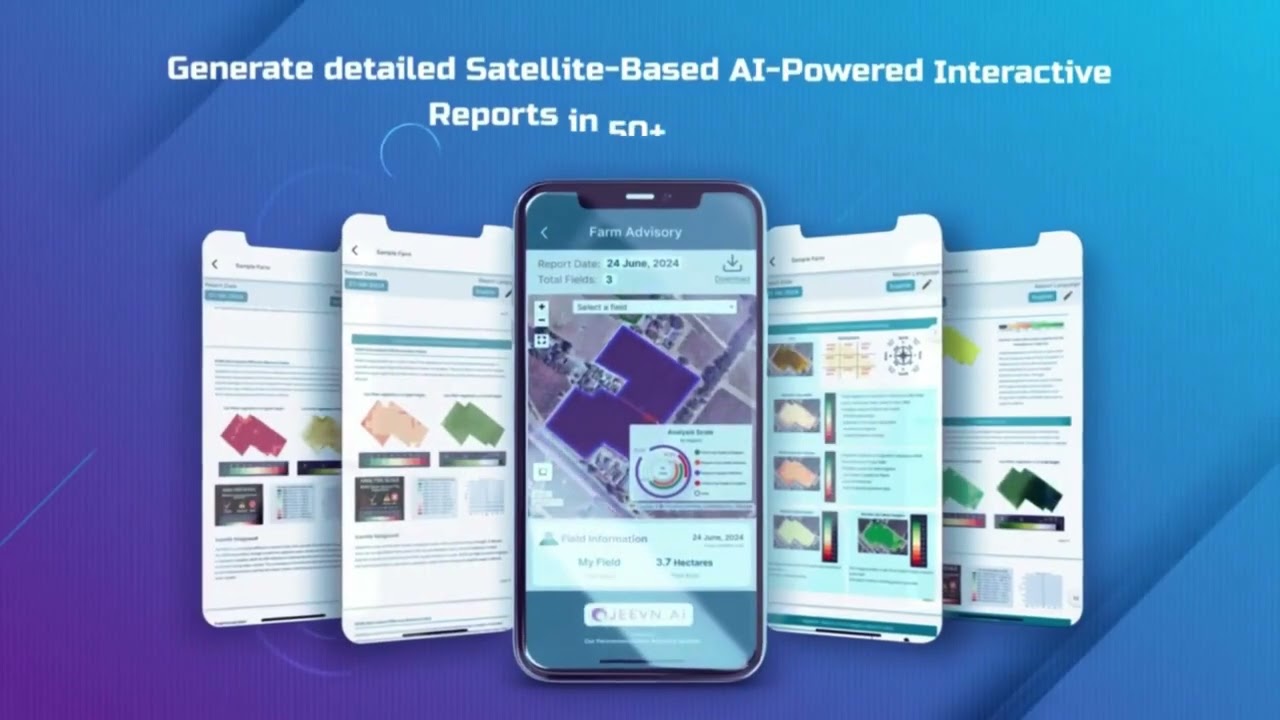
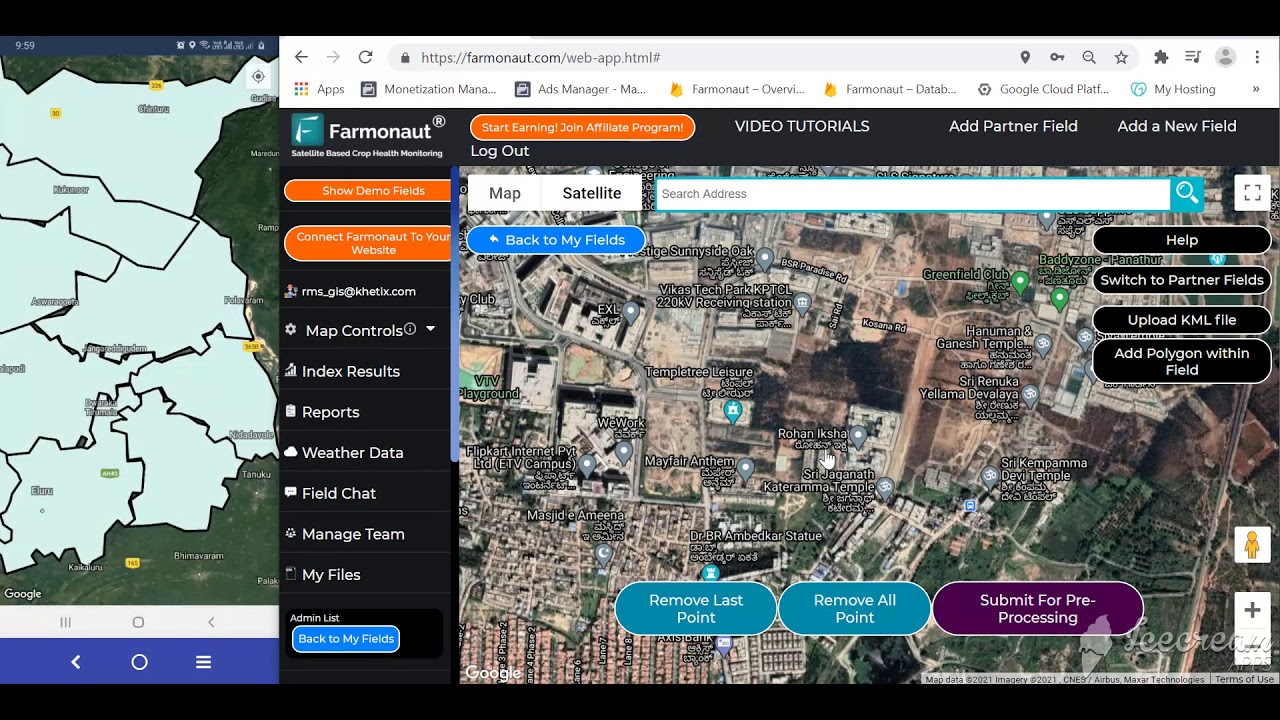
Farmonaut provides satellite-based farm management accessible via Android, iOS, Web/Browser App, and API, combining satellite imagery, AI-driven advisories, blockchain traceability, and fleet/resource management. For equipment dealers, these tools double as content and credibility assets:
- Satellite-Based Crop Health Monitoring: Real-time NDVI insights and historical farm data support content around precision irrigation and fertilizer equipment ROI.
- AI-Driven Farm Advisory (Jeevn): Personalized weather and crop management recommendations that dealers can reference when positioning precision equipment upgrades.
- Blockchain Traceability: Supply chain verification that builds buyer trust for high-value equipment and input purchases.
- Fleet & Resource Management: Centralized machinery tracking that dealers can point customers to for post-sale value, not just at the point of sale.
- Carbon Footprinting: Emissions tracking relevant to conservation-program-eligible equipment purchases.
With a subscription-based model and crop loan and insurance verification features, Farmonaut lowers the barrier for dealers and agribusiness partners building digital-first customer relationships.
Unlock Precision Agriculture with Farmonaut
Explore Farmonaut’s subscription-based tools — designed for everyone from smallholder farmers to large agribusinesses:
FAQ: Equipment Dealer Digital Marketing
-
What is equipment dealer digital marketing?
The use of online channels — SEO, content, social, email, paid ads, and analytics — to connect equipment dealers and manufacturers with farmers and agribusinesses researching or buying machinery. -
How many US farms actually use precision technology?
27% of US farms report using some precision agriculture practice, per USDA NASS’s 2023 Census of Agriculture. Adoption is much higher for specific technologies on larger farms — 70% of large-scale crop farms use guidance/autosteer systems, per USDA ERS. -
What are the best geospatial marketing strategies for equipment dealers?
Geo-targeted PPC, geo-fenced social ads, and localized SEO content matter most where farm-size and crop mix vary by county — matching landing pages and ad targeting to the specific equipment relevant to each region rather than running one national campaign. -
Is the equipment market growing or shrinking right now?
Both, on different timeframes. The US agricultural machinery market is forecast to grow from $30.2 billion (2025) to $43.84 billion by 2031 (Mordor Intelligence), but near-term unit sales are down — combine sales fell 35.58% year-over-year in 2025, and 67.5% of dealers reported sales declines of 2% or more (farmdoc daily). Check farmdocdaily.illinois.edu for the current month’s dealer sentiment data. -
When should dealers run seasonal marketing campaigns?
Pre-season for SEO/content (research phase), planting and harvest season for PPC/social (urgency-driven, high-intent buying), and post-harvest for email/CRM re-engagement (financing and trade-in offers). Exact regional timing should be checked against USDA NASS’s weekly planting-progress reports for your state. -
What belongs in an equipment case study?
A named buyer segment (adoption level), the seasonal trigger for the purchase, and a verifiable before/after metric — not just a testimonial quote with no numbers attached.




Conclusion
Agriculture equipment dealer marketing in this cycle has to hold two facts at once: the long-run US machinery market is growing toward $43.84 billion by 2031 (Mordor Intelligence), and the near-term sales environment is contracting, with 67.5% of dealers already reporting declines and 44.3% forecasting more into 2026 (farmdoc daily). SEO, content, seasonal PPC, and CRM aren’t separate tactics to pick from — they’re the toolkit for staying visible through the downturn so you’re positioned when replacement-cycle demand returns.
Farmonaut supports that work with satellite, AI, and blockchain tools dealers and agribusinesses can use directly or point customers toward.
Get started with Farmonaut’s digital solutions:
For product traceability, carbon footprinting, fleet optimization, and satellite-based farm management, see the links above or explore our API and developer docs for integration details.

 KJBN Labs
 SFX
SFX BACF Africa
 Doodlakine
 Exurbia Geospatial
 FieldZero
 Indico Company
 Kubota
 FFBS
FFBS Jontra
 Tucor
Tucor
