

Reviewed September 2026 against USDA Economic Research Service, USDA NASS Census of Agriculture, and the American Farm Bureau Federation.
Pioneer farming (also called pioneer agriculture) is the practice of converting uncultivated, degraded, or marginal land into productive cropland using soil-rebuilding, water-management, and precision-monitoring techniques. A pioneer farmer is someone doing that conversion work right now — on fallow ground, cutover timberland, eroded pasture, or abandoned cropland — rather than farming an established field. In the United States, the closest measurable proxies are conservation tillage adoption, certified organic transition acreage, and USDA-supported regenerative acreage, all of which are tracked annually and give a concrete sense of how much U.S. land is moving through this kind of transition today.
This isn’t a niche activity. USDA’s Economic Research Service reports that 76% of U.S. corn acreage used some form of conservation tillage in 2021, and 36% was under no-till — figures drawn directly from field-level tillage surveys, not estimates (USDA ERS). That scale of practice change is what pioneer agriculture looks like in a modern, data-tracked farm economy: not a single homestead clearing brush, but a measurable shift in how millions of acres are managed.

Table of Contents
- What Pioneer Farming Actually Means
- Comparative Table: 7 Sustainable Practices
- How Much of U.S. Farmland Is in Transition? The Numbers
- 1. Soil Reclamation and Restoration
- 2. Modern Agroforestry Systems
- 3. Cover Cropping and Green Manuring
- 4. Water Harvesting and Conservation
- 5. Climate-Friendly Land Management
- 6. Integration of Perennial Crops
- 7. Digital Tools and Precision Agriculture
- Reclamation Cover-Crop Cost Calculator
- How Farmonaut Supports Pioneer Farmers
- Farmonaut Subscription Options
- FAQ — Pioneer Farming & Pioneer Agriculture
- Conclusion
- Jump to the calculator
What Pioneer Farming Actually Means
The term pioneer agriculture historically described settlers clearing forest or prairie for the first crop. Today’s pioneer farmers face a different version of the same problem: land that has been degraded by erosion, salinization, monocropping, or abandonment, and needs to be brought back into production without repeating the mistakes that degraded it in the first place. The tools have changed — satellite monitoring, precision tillage equipment, USDA cost-share programs — but the underlying challenge is identical: build soil, secure water, and establish a resilient system on ground that currently can’t support it.
A useful way to separate pioneer farming from ordinary conservation farming is scope: conservation practices maintain the health of land already in production; pioneer practices are aimed at land that isn’t yet productive, or has stopped being productive, and needs active rebuilding before yields are viable. In practice the techniques overlap heavily, which is why the USDA conservation-tillage and organic-transition datasets below are the best available national proxy for pioneer-style land transition, even though USDA doesn’t publish a category called “pioneer agriculture” specifically.
Comparative Table: 7 Sustainable Pioneer Farming Practices
| Practice | What It Does | U.S. Adoption Data Point | Best Use Case |
|---|---|---|---|
| Soil Reclamation & Restoration | Rebuilds organic matter and nutrient cycling on degraded/abandoned land using cover crops, green manure, and microbial inoculants | 3.6 million acres of U.S. cropland certified organic in 2021, up 79% from 2011 (NASS) | Newly acquired or long-fallow ground |
| Modern Agroforestry | Integrates trees/shrubs with crops or livestock on the same land | Included within the 40 million acres of USDA-supported regenerative practices in FY2023 (USDA/AFBF) | Windbreak zones, riparian buffers, silvopasture |
| Cover Cropping & Green Manuring | Non-harvested crops protect and rebuild soil between cash-crop cycles | Core practice behind conservation tillage rates of 76% (corn) and 70% (soybeans) | First 1–3 seasons of land reclamation |
| Water Harvesting & Conservation | Captures rainfall/runoff via terracing, mulching, drip irrigation | No current national USDA percentage published — see calculator below for a field-level estimate | Semi-arid and drought-prone reclamation zones |
| Climate-Friendly Land Management | Low/no-till, residue retention, precision input application | 36% no-till on U.S. corn acreage (2021); 45% no-till on U.S. wheat acreage (2017) (USDA ERS) | Erosion-prone or carbon-depleted soils |
| Integration of Perennial Crops | Deep-rooted, long-lived species stabilize soil and recycle nutrients | Counted within USDA’s 70 million acres of supported conservation practices, FY2023 (USDA/AFBF) | Long-term fertility maintenance after initial reclamation |
| Digital & Precision Agriculture Tools | Satellite imagery, sensors, and AI advisory for input and stress management | Used to plan and verify all six practices above (see Farmonaut section) | Any pioneer operation needing to track progress and prove outcomes |
How Much of U.S. Farmland Is in Transition? The Numbers
Three USDA data series give the clearest national picture of land moving through pioneer-style transition: tillage practice surveys, the organic census, and USDA’s own conservation-program acreage reporting. None of these use the label “pioneer agriculture,” but together they measure the same underlying activity — land being actively converted to lower-disturbance, higher-resilience management.
On tillage: 76% of U.S. corn acreage and 70% of U.S. soybean acreage used conservation tillage as of the most recent USDA ERS survey, with 36% of corn acreage and 45% of wheat acreage (2017 survey) under full no-till (USDA ERS Chart of Note, USDA ERS EIB-197). These numbers are not static — ERS refreshes tillage figures through its Quick Stats database as new agricultural census rounds come in, so a reader checking this page in 2027 should pull the current percentage from quickstats.nass.usda.gov by searching “Tillage” filtered to crop and state.
On organic transition — one of the clearest markers of land actively being converted to a new management system — the 2022 NASS Census of Agriculture counted 3.6 million acres of certified organic cropland in the United States, spread across 17,048 certified organic farms. That acreage figure is up 79% from the 2011 count (NASS Census of Agriculture, 2024 Organic Highlights). Because organic certification requires a multi-year transition period during which land is farmed to organic standards but can’t yet be sold as certified organic, that acreage figure is effectively a running count of land in exactly the kind of active reclamation pioneer farming describes.
NASS runs a full Organic Survey roughly every five to six years; the next round mailed in December 2025 covering 2025 data, with results expected to publish in 2026. A reader wanting a more current organic-acreage figure than the 2021 number cited here should check data.nass.usda.gov once that release is out.
On USDA-supported conservation and regenerative work broadly: USDA-backed programs implemented conservation practices on 70 million acres in fiscal year 2023, and supported regenerative agriculture specifically on 40 million acres that year — a 360% increase in regenerative acreage over the prior decade (American Farm Bureau Federation). That 360% decade-over-decade jump is the single clearest quantitative signal that pioneer-style land transition is accelerating rather than shrinking in U.S. agriculture.
1. Soil Reclamation and Restoration: Building the Foundation for Productivity
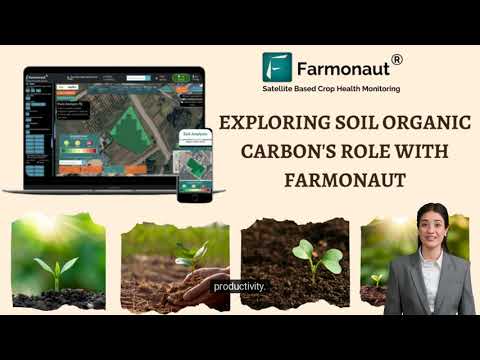
Soil reclamation is the entry point for nearly every pioneer farming project: converting degraded, uncultivated, or abandoned land into ground that can carry a crop. The core toolkit is well established and doesn’t require exotic inputs:
- Cover cropping: fast-growing, non-harvest plants that suppress weeds, cut erosion, and add biomass.
- Green manuring: legumes or other nitrogen-fixing crops plowed under to raise organic matter.
- Microbial soil inoculants: beneficial microbes that rebuild soil biology and break down residue.
- Organic amendments: compost, manure, or crop residue worked back into the soil profile.
The organic-transition data above is the most direct national measure of this process in action: 3.6 million acres certified organic in 2021, up 79% in a decade, across 17,048 farms (NASS). Every one of those acres passed through a multi-year reclamation period using exactly the four techniques listed above before certification.

Practical Example
- Pioneer farmers reclaiming eroded or marginal ground pair water-harvesting earthworks with organic mulches to jumpstart soil biology before the first cash crop.
- Contour plowing and micro-catchments reduce surface runoff and hold soil in place while organic matter rebuilds.
2. Modern Agroforestry Systems: Maximizing Ecological and Economic Resilience
Agroforestry integrates trees or shrubs with crops or livestock on the same acreage. For a pioneer operation, it’s one of the fastest ways to stabilize a difficult site while diversifying income:
- Improves soil structure through continuous leaf litter and root growth.
- Reduces reliance on synthetic fertilizer where nitrogen-fixing species are part of the mix.
- Moderates microclimate extremes — wind, frost, and heat stress — around adjacent row crops.
- Adds revenue streams through timber, fruit, nuts, or grazing.
USDA’s FY2023 regenerative-acreage figure of 40 million acres — a 360% increase over the prior decade — captures agroforestry alongside the other regenerative practices it supports (American Farm Bureau Federation). USDA does not break that figure down by individual practice type, so a farm-specific agroforestry adoption rate isn’t publicly available at the national level; the acreage total is the best current proxy.

Planning tree-crop-livestock layouts by hand is slow and error-prone on large or irregular parcels. Farmonaut’s Crop Plantation and Forest Advisory uses satellite imagery to map existing vegetation, soil moisture zones, and slope before a pioneer farmer commits to a planting layout.
3. Cover Cropping and Green Manuring: Natural Nutrient Cycling
Cover cropping and green manuring — planting legumes, clover, or rye between cash-crop cycles or in the first seasons on uncultivated land — are the mechanical backbone behind the conservation tillage numbers cited above. They:
- Suppress weeds without herbicide.
- Protect bare soil from wind and water erosion.
- Raise organic content and microbial diversity.
- Fix atmospheric nitrogen, cutting fertilizer need.
- Improve moisture retention and buffer temperature swings.
This is the practice most directly reflected in USDA’s tillage data: 76% of corn acreage and 70% of soybean acreage under conservation tillage nationally (USDA ERS), a scale that reflects widespread, not niche, adoption.
Farmonaut’s digital satellite tools, available via the Large Scale Farm Management Platform, let operators monitor crop residue, soil cover, and live vegetation to time cover-crop termination and cash-crop planting more precisely.




4. Water Harvesting and Conservation: Combatting Arid Degradation
Water scarcity is one of the biggest obstacles to reclaiming marginal or arid land. Core techniques:
- Rainwater harvesting: tanks, ponds, or subsurface cisterns store seasonal rainfall for later irrigation.
- Contour trenching and terracing: earthworks slow runoff and increase infiltration.
- Mulching: organic or inorganic cover reduces evaporation and moderates soil temperature.
- Drip and micro-irrigation: deliver water directly to the root zone, cutting losses to evaporation and runoff.
There is no current national USDA percentage for water savings attributable specifically to these practices — that figure hasn’t been published at the national level. What a pioneer farmer can measure directly is field-specific: irrigation system output, acreage, and crop water requirement. The calculator below builds that estimate from numbers you enter for your own operation rather than a borrowed national average.
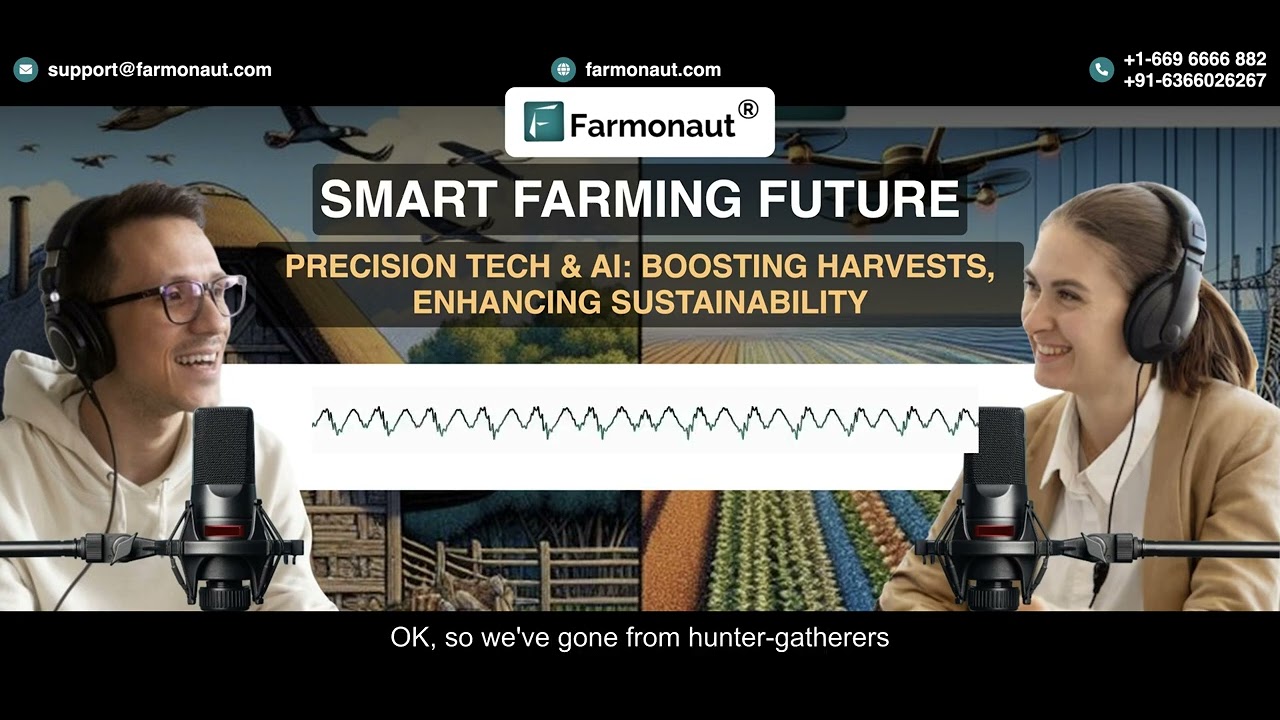
Satellite-based environmental monitoring, accessible through Farmonaut’s Carbon Footprinting Platform, helps farmers track field-level water and carbon cycles as part of managing a pioneer parcel’s resource budget.
Reclamation Cover-Crop & Water Budget Calculator
Enter your reclamation parcel’s size, cover-crop seeding rate, and irrigation output to estimate seasonal cover-crop cost and irrigation water applied per acre.
Assumptions: 1 acre-inch of water equals approximately 27,154 gallons. Field efficiency accounts for water lost to evaporation, runoff, or deep percolation before reaching the crop root zone. This tool excludes soil-type infiltration differences, rainfall offset, and regional water-rights or allocation limits — check with your local USDA NRCS office or state water agency for those constraints.
5. Climate-Friendly Land Management: Precision and Innovation
Climate variability is one of the biggest obstacles pioneer farmers face when establishing new production on marginal ground. Climate-friendly land management practices build resilience directly into the system:
- Low/no-till farming: reduces soil disturbance, preserves structure, and builds carbon in the soil profile.
- Residue retention and mulching: shields the soil surface, cuts evaporation, supports microbial activity.
- Precision input management: applies fertilizer and pesticide only where and when needed.
- Rotational grazing and integrated livestock: restores soil and plant cycles, prevents overuse.
No-till adoption is the clearest measurable piece of this: 36% of U.S. corn acreage in 2021 and 45% of U.S. wheat acreage in the 2017 survey (USDA ERS EIB-197). Because these figures come from periodic USDA surveys rather than a continuously updated dashboard, a pioneer farmer benchmarking their own no-till transition against the national rate should pull the latest release from USDA NASS Quick Stats rather than relying on a fixed number indefinitely.
One gap worth naming directly: national adoption data for Integrated Pest Management specifically hasn’t reached a comparable benchmark. USDA’s original 1993 policy target was 75% IPM adoption by 2000, and available research indicates that goal was not met and current national adoption isn’t tracked at the same granularity as tillage data. A pioneer farmer wanting an IPM adoption baseline for their crop and state should check with their state’s Cooperative Extension IPM program directly, since no single current national percentage is published.
6. Integration of Perennial Crops: Sustaining Soil Health
Perennial and long-lived species — certain grains, fruit and nut trees, perennial forage — bring stability that annual cropping can’t match on a site still recovering from degradation:
- Deep, permanent roots curb erosion and improve water infiltration.
- Continuous nutrient recycling from deeper soil profiles reduces surface nutrient loss.
- Year-round vegetative cover buffers climate extremes.
- Habitat for pollinators and beneficial organisms increases with permanent plantings.
Perennial integration is one of the practices folded into USDA’s broader 70 million acres of conservation-practice-supported land in FY2023 (USDA/American Farm Bureau Federation), though USDA does not report a perennial-specific acreage subtotal separately from that figure.
7. Digital Tools and Precision Agriculture: Smart, Data-Driven Decisions
Modern pioneer farmers use satellite imagery, AI advisory, IoT sensors, and blockchain traceability to manage land where the margin for error is thinner than on an established field. These tools enable:
- Real-time soil and crop health monitoring — NDVI, LAI, and moisture indices tracked remotely.
- Data-driven resource management — irrigation and fertilization timed to actual field conditions.
- Fraud reduction in crop insurance and loan verification via remote satellite verification (Farmonaut Crop Loan and Insurance Verification).
- Supply chain traceability through blockchain integration (Farmonaut Product Traceability).
- Automated reporting and advisory for large-scale reclamation projects (Farmonaut Fleet Management).
This is the layer that makes the other six practices measurable and repeatable — without remote monitoring, a pioneer farmer working hundreds or thousands of acres of newly reclaimed ground has no efficient way to know which sections are responding to treatment and which need a different approach.


How Farmonaut Supports Pioneer Farmers
Farmonaut’s role in pioneer farming is straightforward: give operators reclaiming difficult land the same monitoring resolution that large, well-capitalized farms already have.
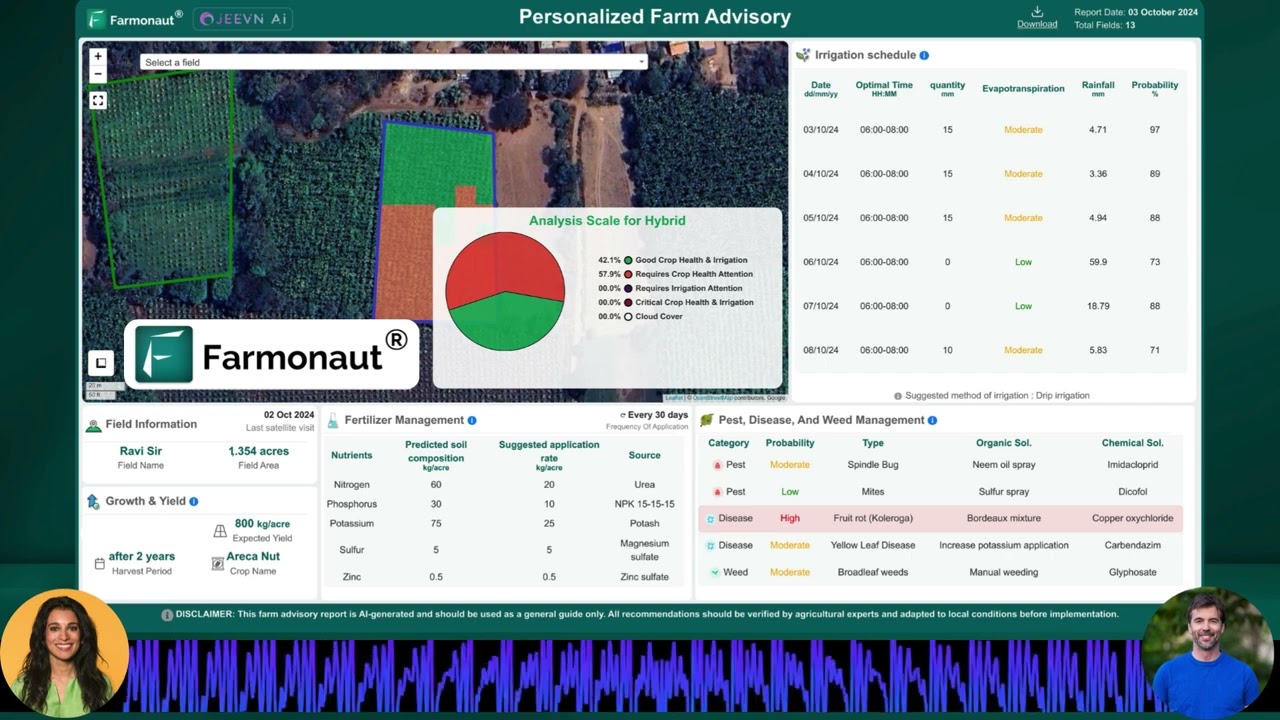
- Satellite-based monitoring for precise land and crop health assessment, especially on newly reclaimed or marginal zones.
- AI advisory that automates best-practice recommendations for soil reclamation, agroforestry, water management, and climate resilience.
- Blockchain-powered traceability to support supply chain trust as reclaimed land reaches market.
- Real-time environmental impact tracking, including carbon footprint, to guide long-term land management decisions.
- Farmonaut APIs — Satellite API and Developer Docs — for custom integration into agriculture, mining, or resource-management workflows.
Whichever U.S. region a pioneer farmer is working in — Great Plains land coming out of long fallow, arid Southwestern acreage needing water-efficient reclamation, or Southeastern cutover timberland being converted to cropland — the same monitoring stack applies: track soil and vegetation indices, verify progress against a baseline, and adjust inputs before a problem becomes a lost season.
Farmonaut Subscription Options
Farmonaut offers flexible subscription plans for individual pioneer farmers, agribusinesses, and public programs working to bring marginal or degraded land back into production. Full pricing and plan details:
FAQ — Pioneer Farming & Pioneer Agriculture
What is pioneer farming?
Pioneer farming, or pioneer agriculture, is the process of converting uncultivated, degraded, or abandoned land into productive cropland using soil reclamation, water management, and — in modern operations — satellite and AI-based monitoring to track progress.
What’s the difference between a pioneer farmer and a conventional farmer?
A pioneer farmer is actively converting land that isn’t yet productive — degraded, fallow, or newly acquired ground — into working farmland. A conventional farmer is managing land already in established production. The techniques overlap, but pioneer farming front-loads soil-building and water-securing work before yields are viable.
Is there national data on how much U.S. land is in pioneer-style transition?
No single dataset uses the term “pioneer agriculture,” but USDA tracks close proxies: conservation tillage adoption (76% of corn acreage, 70% of soybean acreage), certified organic transition acreage (3.6 million acres in 2021, up 79% from 2011), and USDA-supported regenerative acreage (40 million acres in FY2023, up 360% over the prior decade). Sources: USDA ERS and the American Farm Bureau Federation, linked throughout this article.
How does pioneer agriculture address soil degradation?
Through cover cropping, green manuring, microbial inoculants, and organic amendments that rebuild organic matter and nutrient cycling — the same four techniques behind USDA’s conservation tillage figures.
Is technology essential for pioneer farming today?
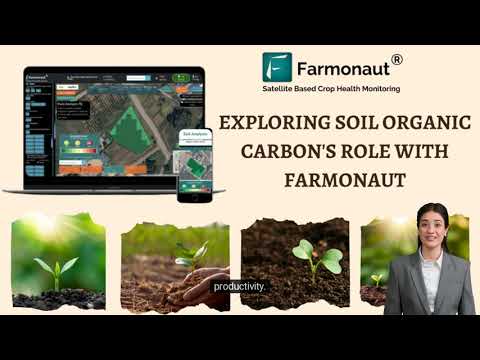
For any operation beyond a few acres, yes. Satellite imagery and AI advisory platforms like Farmonaut let a pioneer farmer track soil and vegetation indices across large or irregular reclaimed parcels without walking every acre by hand.
How does agroforestry benefit pioneer farming?
Integrating trees, crops, and livestock stabilizes soil, moderates microclimate extremes, and adds income diversity — all valuable on a site still recovering from degradation. Agroforestry acreage is included in USDA’s FY2023 regenerative-practice total of 40 million acres.
Where can I get real-time monitoring data for my reclamation project?
Farmonaut’s Android, iOS, and web apps provide real-time and historical crop and soil health monitoring, plus APIs for custom integration.




Conclusion: Pioneer Farming Runs on Evidence, Not Just Effort
Pioneer farming and pioneer agriculture are no longer just about the initial act of clearing land. The strongest evidence for that shift is in USDA’s own numbers: 76% conservation tillage on corn acreage, 3.6 million acres of certified organic cropland growing 79% in a decade, and 40 million acres of USDA-supported regenerative practices expanding 360% since 2013. Those figures are the closest thing to a national scoreboard for how much American land is being actively rebuilt right now.
The seven practices covered here — soil reclamation, agroforestry, cover cropping, water conservation, climate-friendly management, perennial integration, and digital monitoring — are the working method behind those numbers. None of them are static; USDA refreshes tillage data through Quick Stats and organic acreage through its periodic Organic Survey, so a pioneer farmer benchmarking their own progress should treat the figures in this article as a starting point, not a ceiling, and pull the current release when planning the next season.
Satellite-driven platforms like Farmonaut make that benchmarking practical at field scale. Everyone from a smallholder reclaiming a few fallow acres to a large operation converting thousands of acres of marginal ground can use the same toolkit to measure what’s working, adjust what isn’t, and move reclaimed land toward the kind of agricultural prosperity the underlying USDA data shows is achievable.
Ready to bring science-driven monitoring to your pioneer farm?
Try Farmonaut Today:

 Unifrutti Gulf
 Deluxe Conseil
 Krishify
 TVS Electronics
 BW Pipelines
 WICO
WICO Gen Chayat
 Chimera Innovation
 SkyHarvest
 Polaris Digitech
 Teledarbas
 Wild Oak Farm
 SFX
SFX Doodlakine
 Exurbia Geospatial
