

Biochar: What It Does for Mining Land and Soil
Reviewed September 2026 against Carbon Credits industry data, IMARC Group market research, and PMC/NIH global field-trial meta-analysis.
Biochar is charcoal made by heating biomass with little oxygen (pyrolysis). Spread on soil, it locks carbon for centuries, binds heavy metals, and can lift soil organic carbon by 12–102% across documented trials. On mining-affected land, that combination — carbon storage plus contaminant immobilization — makes it one of few remediation inputs that pays back on two fronts at once.
This piece covers what biochar is and does, what it costs, what the market looks like in the US and UK, and — narrowly — how New Caledonia’s nickel mining sector applies it across five methods for tailings and land rehabilitation.
Biochar: What It Is and What It Does
Biochar is carbon-rich solid produced by pyrolysis of biomass — wood chips, crop residue, forestry offcuts — under limited oxygen. Its porous structure adsorbs heavy metals and other contaminants, immobilizing them in place rather than letting them leach into groundwater. That property, plus its resistance to decomposition, is why it moved beyond agriculture into contaminated-land remediation.
A global meta-analysis covering 2,438 observations from 891 field experiments found biochar raises soil organic carbon by 12% to 102%, depending on soil type, application rate, and feedstock (PMC/NIH, see citation below). Crop yield response across the same dataset ranged 5% to 51% — wide, because yield gain depends on the starting soil’s nutrient and water-holding deficits, not on biochar alone. Where soil already holds enough water and nutrients, gains sit at the low end; on degraded or sandy soils, the high end applies.

Biochar Market Size and Pricing: US and UK
The US biochar industry produced more than 97,000 metric tonnes in 2025, against installed production capacity above 400,000 metric tonnes — meaning the sector runs well under a quarter of built capacity (Carbon Credits industry report, 2025). Over 130 biochar production facilities now operate in the US. IMARC Group values the US biochar market at $602.2 million for 2025, projecting 10.5–12% compound annual growth from 2026 through 2034.
No equivalent production-volume or installed-capacity figure is published for the UK biochar market as of this review — Defra and industry bodies track subsidy and trial activity, not a mature production series. If you need a current UK figure, check Defra’s soil and land-use publications directly rather than relying on a US-derived estimate.
Biochar’s other revenue stream is carbon credits. Average biochar carbon credit price sat at $164 per credit as of October 2025, per Carbon Credits market data — each tonne of biochar sequesters an estimated 2–3 tonnes CO₂e over a 100–1,000 year timeframe. Production cost runs $60–96 per tonne CO₂e from agricultural residue feedstocks, rising to $101–144 per tonne CO₂e from dedicated energy crops, according to a 2025 lifecycle assessment published in Biochar (Springer).
Prices and volumes move. Carbon Credits Magazine publishes updated biochar credit prices roughly every two weeks — check Carbon Credits’ biochar pricing page for the current spot price rather than the October 2025 figure above. US annual production-volume data comes from Woodwell Climate Research Center and the US Biochar Initiative; 2025 is the latest published figure at review time, with 2026 industry data expected in the first quarter of 2027 — see the Carbon Credits industry report for the update when it lands. US market-size and CAGR figures come from IMARC Group’s US biochar market report.
On the policy side, the Biochar Research Network Act 2025 proposes $50 million per year in USDA biochar research funding for 2026–2030, run through USDA ARS — track the 20-site research network’s launch and results via the ARS biochar programme page cited above as milestones publish.

How Biochar Is Made: Production Methods
Biochar production methods split broadly into slow pyrolysis, fast pyrolysis, and hydrothermal carbonization. Slow pyrolysis — biomass heated 300–700°C over hours, starved of oxygen — is the dominant commercial method and yields the most stable, highest-carbon product, which is why it’s preferred where the goal is long-term carbon storage or contaminant immobilization rather than fast throughput.
No US- or region-specific breakdown of production cost by method (pyrolysis vs. hydrothermal carbonization vs. slow-burn kiln) is published — only the global feedstock-based cost ranges above exist in current literature. For a method-by-method cost comparison specific to your feedstock and scale, a pyrolysis equipment supplier’s engineering quote is the practical route; published research doesn’t yet break this out by production method.
Farm- and smallholding-scale biochar-making machines (kiln-style pyrolysis units) exist commercially across the US and UK, sized from batch drums processing a few hundred kilograms per run up to continuous-feed units processing tonnes per day. Specification and output vary enough by supplier that a general figure would mislead — get a throughput-per-hour spec sheet from the manufacturer against your feedstock type before comparing units.
Biochar in New Caledonia’s Mining Landscape
New Caledonia’s economy runs heavily on nickel extraction, which produces large volumes of mine tailings and contaminated soil. That waste creates:
- Soil erosion and dust pollution
- Leaching of heavy metals into surrounding land and water
- Biodiversity loss in adjacent ecosystems
- Difficulty rehabilitating post-mining land
Conventional remediation is costly and resource-intensive. Biochar offers an alternative built on local biomass:
- Cost efficiency through local biomass valorization
- Reduced dependency on imported remediation materials
- Alignment with circular economy principles
Environmental Benefits of Biochar for Mining
1. Soil Remediation and Stabilization
- Biochar’s porous structure adsorbs heavy metals and toxic compounds, immobilizing contaminants in mining-affected land.
- Added to degraded soil, it improves structure and water retention and supports microorganisms that aid natural regeneration.
- Documented soil organic carbon gains from biochar application run 12–102% depending on soil and dose (PMC/NIH meta-analysis) — no separate mining-specific remediation-efficiency percentage is published, so treat this range as the applicable evidence base.
2. Carbon Sequestration
- Each tonne of biochar applied to soil sequesters an estimated 2–3 tonnes CO₂e over 100–1,000 years — a stable, long-duration carbon sink.
- This offsets extraction-related emissions and supports regional climate-mitigation commitments.
- Paired with Farmonaut’s Carbon Footprinting platform, operators can track and report carbon savings using satellite-driven data.
3. Erosion and Dust Suppression
- Exposed mine-site soil is prone to dust emission and erosion in wet-season conditions.
- Biochar’s binding capacity holds soil particles together, cutting dust generation and erosion risk.
- Result: cleaner local air, less contaminant spread, less topsoil loss.
4. Biodiversity and Land Restoration
- Biochar-enhanced soil supports a stable growing environment for native and rehabilitative plant species.
- Reclaimed land can transition to agroforestry or conservation use, generating ecosystem services for nearby communities.
- This restoration aligns with New Caledonia’s environmental stewardship commitments.
5. Economic and Social Benefits
- Local biochar production from forestry and agricultural residue creates jobs and new market activity for rural communities.
- It supports economic diversification near mining areas.
- Land previously affected by contamination can return to productive use.

Comparative Table: 5 Mining Application Methods
Relative comparison across the five methods covered below. Absolute figures are site-specific engineering estimates, not published third-party data — treat the columns as a ranking tool between methods, not as forecast numbers for your site.
| Method | Relative Carbon Sequestration Potential | Relative Soil Remediation Speed | Resource Circularity (1–5) | Relative Implementation Cost | Primary Benefit |
|---|---|---|---|---|---|
| Localized Biochar-Amendment of Tailings | Moderate | Fast | 4 | Low-Moderate | Heavy metal immobilization, dust reduction |
| Co-Composting with Local Biomass Residues | Moderate-High | Moderate | 5 | Moderate | Soil fertility, waste repurposing |
| Integrated Erosion & Dust Barrier Systems | Low-Moderate | Fast | 3 | Low | Airborne particulate reduction |
| Biochar-Enhanced Phytostabilization | Moderate-High | Slow (multi-season) | 4 | Moderate | Vegetation return, ecological restoration |
| Mine Waste Circular Valorization Loops | High | Slow (system build-out) | 5 | Moderate-High | Full waste-to-value integration |
5 Sustainable Biochar Methods for Mine Land
1. Localized Biochar-Amendment of Tailings
- Application: Direct incorporation of biochar into mine tailings and contaminated soil to adsorb heavy metals and immobilize toxic compounds.
- Benefits: Improves soil stability quickly, reduces dust, limits metal leaching into local water tables.
- Local impact: Uses locally produced biochar from forestry and agricultural residue, cutting waste and building local resource loops.
Effective for early-stage remediation, where physical stability and fast contaminant immobilization matter most to local communities and regulators.

2. Co-Composting with Local Biomass Residues
- Application: Combining biochar with local compost feedstock — forestry trimmings, coconut husks, agricultural by-products.
- Benefits: Raises soil organic matter, improves nutrient retention and water-holding capacity, adds carbon sequestration on top of the base biochar effect.
- Circular economy: Strengthens valorization of biomass waste streams and supports local jobs in waste processing.
Cuts dependency on imported fertilizer and gives a high-circularity route for mining-soil rehabilitation.
3. Integrated Erosion & Dust Barrier Systems
- Application: Layering biochar with mulch or geofabric along exposed, erosion-prone mine surfaces and tailings piles.
- Benefits: Cuts airborne dust, prevents soil loss, limits off-site contaminant spread from wind and rain.
- Environmental impact: Supports cleaner air for nearby communities, helps maintain site safety by reducing fugitive dust.
These barriers are a standard component of responsible mining practice and support compliance with environmental standards.
4. Biochar-Enhanced Phytostabilization
- Application: Using biochar-enriched soil to establish heavy metal-tolerant plants (phytostabilization species) on mining-impacted land.
- Benefits: Speeds up green cover return, rebuilds biodiversity, improves long-term stability of reclaimed land.
- Environmental restoration: Integrates with New Caledonia’s landscape and native flora for deeper ecological recovery.
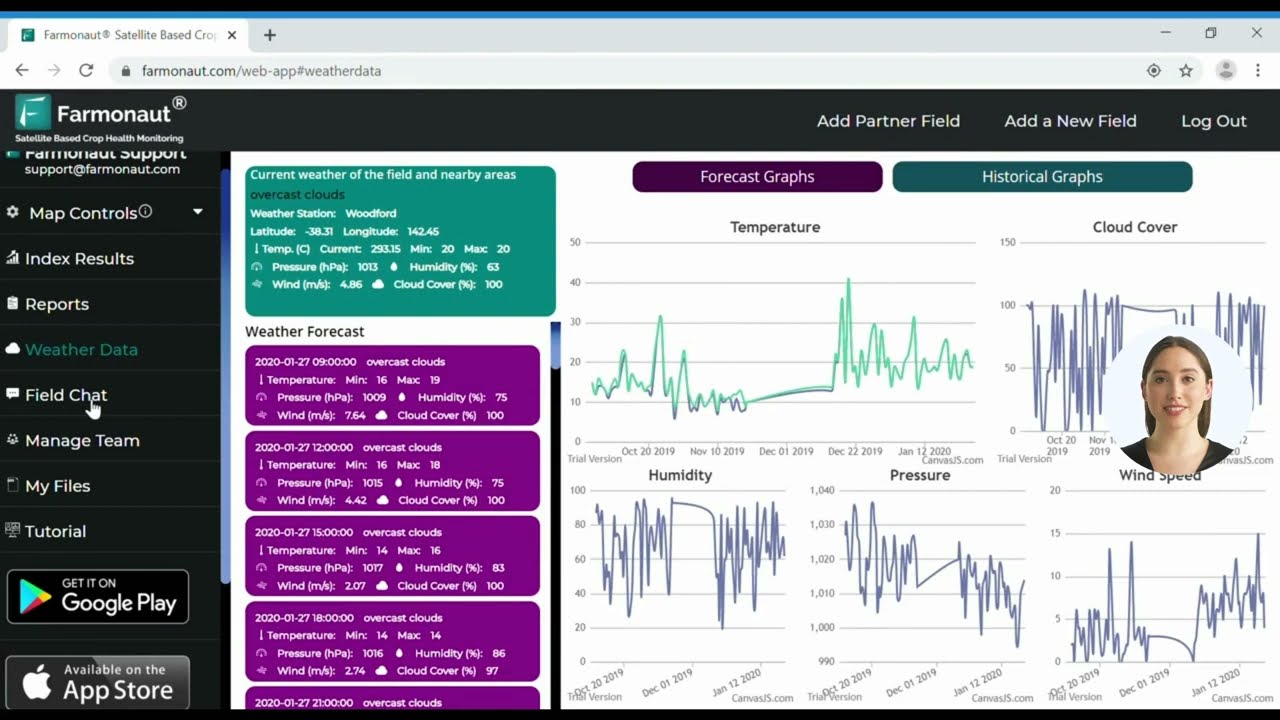
Paired with Farmonaut’s Large-Scale Farm Management app, land managers can:
- Monitor vegetation establishment and vitality via satellite imagery
- Track remediation progress and optimize planting schedules
5. Mine Waste Circular Valorization Loops
- Application: Closed-loop systems that transform tailings and secondary biomass into high-value biochar for local reuse.
- Benefits: Maximizes resource recovery, cuts waste stockpiles and outside remediation material needs, supports local circular economies, boosts carbon sequestration potential.
- Long-term fit: Positions the operation to meet ongoing climate and resource-management targets as they tighten.
This is the highest-integration method — closing the loop between mine waste, remediation, and usable end product.

Biochar Application Rate Calculator
Enter your site area and target soil organic carbon gain to estimate biochar tonnage needed and its carbon-credit value range, based on the sequestration and pricing figures cited above.
Estimated result:
Assumptions: uses the 2–3 tonnes CO2e per tonne biochar sequestration range and October 2025 average credit price of $164 (Carbon Credits market data) as defaults — both editable. Excludes production cost, transport, application labor, and credit verification fees. Not a substitute for a site-specific agronomic or carbon-registry assessment.
Challenges and What Changes Them
- Biomass supply chains: Consistent biochar production needs a steady agricultural and forestry residue supply.
- Product standardization: Quality and suitability for different remediation targets remains a technical hurdle — no universal mining-grade biochar standard exists yet.
- Regulatory and policy gap: Local certification schemes and standards would streamline adoption; the US Biochar Research Network Act 2025 ($50 million per year, 2026–2030 proposed) is the clearest near-term policy development to track.
- Economic scale-up: Initial production and application costs run above conventional remediation methods, at $60–144 per tonne CO2e depending on feedstock; long-term carbon-credit revenue and reduced import dependency offset this over time.
- Education and awareness: Stakeholders need training in application rates and monitoring to get consistent results.
What changes this picture: US installed production capacity already runs 4x actual 2025 output (400,000+ tonnes capacity vs. 97,000+ tonnes produced) — so supply-side bottleneck is underused capacity, not a hard ceiling. Watch the facility-count and utilization figures in the Carbon Credits industry report cited above for whether that gap closes.
Satellite Monitoring for Biochar Projects
Farmonaut applies satellite technology to biochar-based mining remediation in several ways:
- Satellite-based monitoring: Track soil health, vegetation cover, and mine-site change in near real time via Farmonaut’s platform (web, Android, iOS).
- AI advisory: Farmonaut’s Jeevn AI gives actionable insight on land restoration, remediation progress, and environmental risk reduction.
- Blockchain traceability: Use blockchain-powered traceability to map biochar’s lifecycle and verify remediation supply chains.
- Environmental impact tracking: Track carbon footprinting and verify carbon sequestration outcomes with Farmonaut’s data tools.
- Resource management: Use fleet management to optimize biomass and biochar transport, cutting fuel use and cost.
These tools bring satellite-based verification within reach for mining companies, local administrators, and environmental NGOs working on land rehabilitation. For related mining sustainability approaches, see what tailings are and 7 ways to reduce their impact and mineral exploration tech for sustainable mining.
Farmonaut Subscription Options
Farmonaut offers subscription plans for individuals, organizations, and governments monitoring biochar application, mining sites, soil restoration, or circular economy projects at any scale.
FAQ
What is biochar application, and how much does it cost?
Biochar application means incorporating pyrolyzed biomass into soil to sequester carbon and remediate contamination. Production cost runs $60–96 per tonne CO2e from agricultural residue feedstock, and $101–144 per tonne CO2e from dedicated energy crops (Biochar journal lifecycle assessment, 2025). Retail application-service pricing per tonne or per hectare isn’t published in current market data — get a quote from a local supplier for your feedstock and application method.
How big is the US biochar market?
IMARC Group values the US biochar market at $602.2 million for 2025, with 10.5–12% projected annual growth from 2026 to 2034. US production volume reached 97,000+ metric tonnes in 2025 across 130+ facilities, against 400,000+ tonnes of installed capacity (Carbon Credits industry report, 2025).
How does biochar help remediate mining soil?
Biochar’s porous structure adsorbs heavy metals and immobilizes toxic compounds, reducing leaching and improving soil structure — supporting biodiversity restoration on mining-impacted land.
Can biochar support a circular economy in mining?
Yes. Converting waste streams — mine tailings and agricultural residue — into remediation material embraces circular economy principles: less environmental impact, more local resource reuse.
How does satellite technology support biochar mining projects?
Tools like Farmonaut’s mining monitoring platform use satellite imagery and AI advisory to track soil health, monitor rehabilitation, optimize biochar application zones, and verify carbon sequestration.
What are the main adoption challenges?
Scaling sustainable biomass supply chains, ensuring consistent biochar quality for different remediation targets, and building policy frameworks for standardization and carbon-credit verification.





Conclusion
Biochar’s case rests on documented numbers: 12–102% soil organic carbon gains, 2–3 tonnes CO2e sequestered per tonne applied, and a US market already worth $602.2 million with capacity to more than quadruple current output. In New Caledonia’s mining sector, the same material solves two problems — carbon storage and heavy-metal immobilization — across tailings amendment, co-composting, dust barriers, phytostabilization, and full waste-valorization loops.
What’s durable here isn’t any single figure — those refresh on the schedules noted above — it’s the method: match application rate and technique to the soil deficit you’re solving (contamination, erosion, or carbon), verify with satellite and lab monitoring, and track carbon-credit value against current market price rather than a fixed number. Paired with satellite-driven monitoring and advisory tools, that combination lets mining operators, from major nickel producers to smaller sites, move remediation from a cost center to a documented, verifiable environmental asset.



Discussion
Questions, corrections or field experience? Share them below. First-time comments are reviewed before they appear, and your email is never published.
No comments yet. Be the first to add a question or your experience.

 CIMISCO SARL
 Mining SARL
 SenGold Invest SAS
 Sania Corporation
 Sean Mining Limited
 NTS Group (Pty) Ltd
 Mine4Africa
 Lithspo Minerals Limited
 Tintina Mining Group
 Dalgety Minerals Pty Ltd
 Vortex Minerals Pty Ltd
 Faith At Work (Pty) Ltd
 Geotech Mining Solutions plc
 Vulcan International Limited
 Kidepo Associates
 GKY Mining
 Alkimy SARL
 Double A Trading
 GemSprout Metals Limited
 Qader Group
 Ileys General Trading
 SG Gold Mining LLC
 VRV Global Pte Ltd
 Omsri International FZE
