

Crop protection · Insecticide guide
Pyrethroid Insecticides List: 42 Names and US Brands
IRAC’s Group 3A holds 42 pyrethroid and pyrethrin active ingredients. This list pairs the farm ones with US brand names, how long they last, EPA’s class-wide review status and what they mean for bees, water and resistance.
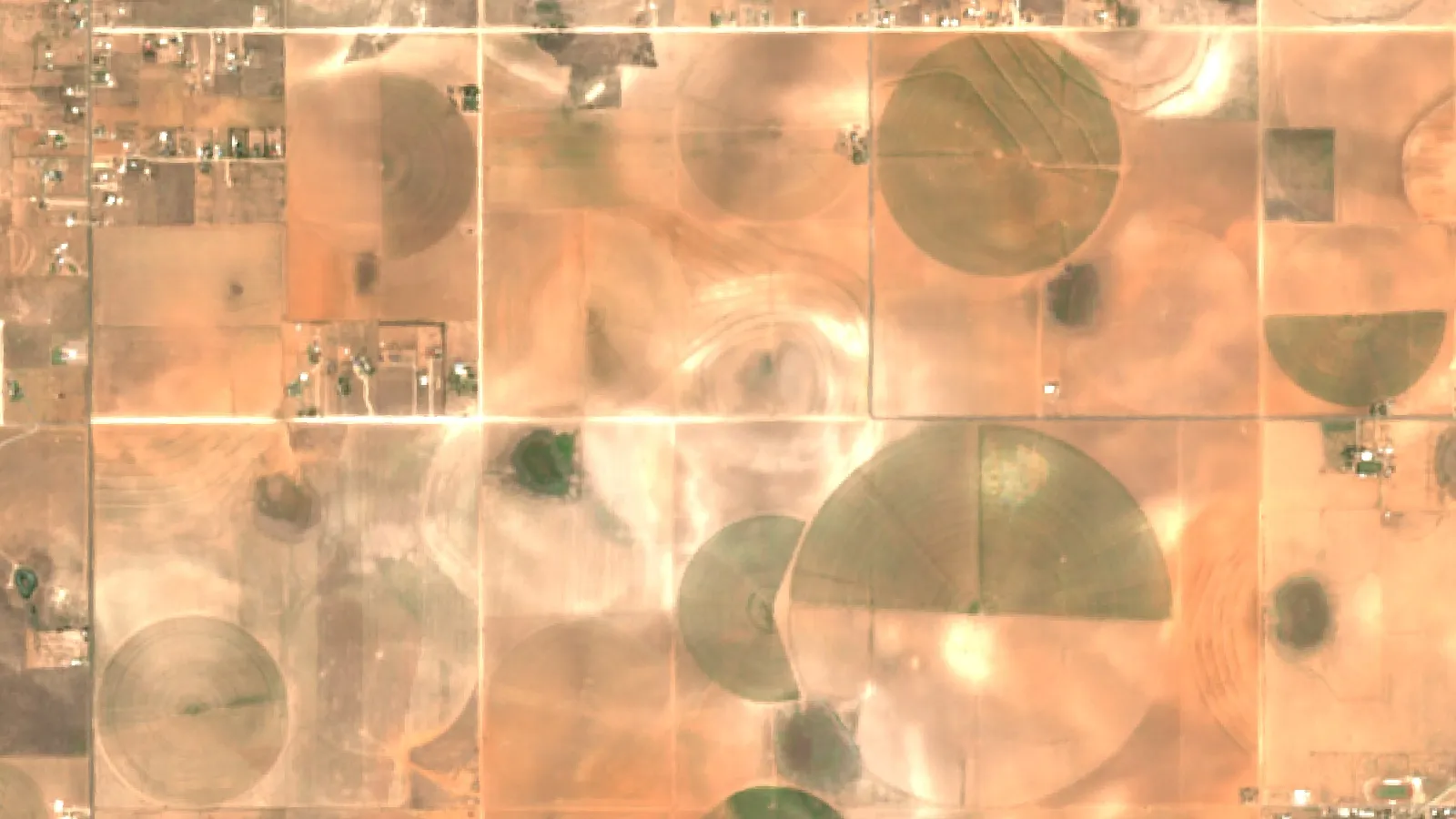
Key takeaways
- IRAC Group 3A lists 42 pyrethroid and pyrethrin active ingredients, all with one mode of action (sodium channel modulators).
- Common US farm brands include Brigade (bifenthrin), Warrior II (lambda-cyhalothrin), Mustang Maxx (zeta-cypermethrin), Asana XL (esfenvalerate) and Baythroid XL (beta-cyfluthrin).
- EPA lists 22 pyrethroid and pyrethrin cases in review: 16 with interim decisions, 4 proposed, 1 complete and 1 in draft (EPA, March 2026).
- NPIC rates bifenthrin very highly toxic to bees and highly toxic to fish; deltamethrin’s soil half-life ranges from 5.7 to 209 days.
- Switching from one pyrethroid to another is not a rotation; follow a 3A spray with a different IRAC group.
In this article
- Full pyrethroid insecticides list (IRAC Group 3A)
- Pyrethroid insecticide brand names in the US
- How pyrethroids work
- How long pyrethroids last in soil and on plants
- Uses in crops, livestock and forestry
- Benefits and drawbacks
- Safety: bees, fish and people
- EPA registration review of pyrethroids
- Resistance management
- Cost of a pyrethroid spray per acre
- Satellite monitoring to target sprays
- What to expect next for pyrethroids
- FAQ
Pyrethroid insecticides are synthetic copies of pyrethrins, the natural insect poisons in chrysanthemum flowers. The Insecticide Resistance Action Committee (IRAC) puts 42 active ingredients in its Group 3A, “pyrethroids, pyrethrins”, including bifenthrin, cypermethrin, deltamethrin, esfenvalerate, lambda-cyhalothrin and permethrin. This pyrethroid insecticides list gives every 3A name, the US brand names farmers see on the shelf, the EPA review status, and a cost calculator for one spray.
All of these products act on the same target in the insect nerve, so they count as one mode of action. That matters more than the brand name when you plan sprays, because swapping one pyrethroid for another does not rotate modes of action.
Full pyrethroid insecticides list (IRAC Group 3A)
The IRAC Mode of Action classification lists these 42 entries under Group 3A, sodium channel modulators. Isomer mixtures such as alpha-, beta-, theta- and zeta-cypermethrin are listed on their own lines because they are sold as separate active ingredients.
- A–C: acrinathrin, allethrin, d-cis-trans allethrin, d-trans allethrin, bifenthrin, bioallethrin, bioallethrin S-cyclopentenyl, bioresmethrin, cycloprothrin, cyfluthrin, beta-cyfluthrin, cyhalothrin, lambda-cyhalothrin, gamma-cyhalothrin, cypermethrin, alpha-cypermethrin, beta-cypermethrin, theta-cypermethrin, zeta-cypermethrin, cyphenothrin.
- D–K: deltamethrin, empenthrin, esfenvalerate, etofenprox, fenpropathrin, fenvalerate, flucythrinate, flumethrin, tau-fluvalinate, kadethrin, halfenprox.
- P–T: pyrethrins (pyrethrum), permethrin, phenothrin, prallethrin, resmethrin, silafluofen, tefluthrin, tetramethrin, tetramethrin (1R isomers), tralomethrin, transfluthrin.
Not every name is sold in every country. Many, such as transfluthrin, prallethrin and tetramethrin, are used mainly in household and public health products like mosquito coils and aerosols. The field crop names in the US are a shorter group (several, such as bifenthrin and permethrin, are no longer approved for crops in the EU): bifenthrin, cyfluthrin and beta-cyfluthrin, cypermethrin and its isomers, deltamethrin, esfenvalerate, fenpropathrin, lambda- and gamma-cyhalothrin, permethrin, tau-fluvalinate and tefluthrin (a soil insecticide used in corn).
Type I and Type II pyrethroids
Chemists split the group in two. Type I pyrethroids, such as permethrin and bifenthrin, have no alpha-cyano group. Type II pyrethroids, such as cypermethrin, deltamethrin, esfenvalerate and lambda-cyhalothrin, carry an alpha-cyano group. The two types cause somewhat different poisoning signs in lab animals. For a farmer, the split matters less than the shared Group 3A label: both types face the same resistance.
Pyrethroid insecticide brand names in the US
Brand names change with the market, so match the active ingredient on the label, not the trade name. The table below pairs common US farm brands with their active ingredient, using the UC IPM bee precaution database and the 2026 Mid-Atlantic snap and lima bean guide. Every brand in the table that UC IPM rates is in its highest bee precaution category (I), except Mavrik Aquaflow (II).
| Active ingredient | Example US brands | Notes |
|---|---|---|
| Bifenthrin | Brigade 2EC, Brigade eVo | Type I; also in Hero (with zeta-cypermethrin) and Brigadier (with imidacloprid) |
| Lambda-cyhalothrin | Warrior II, Lambda-Cy 1EC, Karate Z | Type II; also in Besiege (with chlorantraniliprole) |
| Gamma-cyhalothrin | Declare, Proaxis | Type II |
| Zeta-cypermethrin | Mustang, Mustang Maxx | Type II |
| Alpha-cypermethrin | Fastac CS | Type II |
| Cypermethrin | Cyper TC | Type II; Cyper TC is a structural (termite and building) product; farm cypermethrin is mostly sold as zeta- or alpha-cypermethrin |
| Beta-cyfluthrin | Baythroid XL | Type II; also in Use 360 (with imidacloprid) |
| Deltamethrin | DeltaGard | Type II; mainly turf, ornamental and nursery use in the US |
| Esfenvalerate | Asana XL | Type II |
| Fenpropathrin | Danitol 2.4 EC | Type II |
| Permethrin | Ambush 25W | Type I; also cutworm baits |
| Tau-fluvalinate | Mavrik Aquaflow | Type II; UC IPM rates it lower for bees (II) |
| Pyrethrins | PyGanic, Pyrenone | Natural; Pyrenone adds piperonyl butoxide |
Many of these products are restricted use pesticides in the US, which means only certified applicators can buy and apply them. The bean guide marks Asana XL, Brigade, Declare, Hero, Lambda-Cy, Mustang Maxx and Warrior II as restricted. Rules differ in Canada, the UK, the EU and Australia, so check your local registration before you plan a spray.
Our separate guide to lambda-cyhalothrin covers that one active ingredient in more depth.
Pyrethrin insecticide brand names
Pyrethrins are the natural extract, not a synthetic pyrethroid, but IRAC puts them in the same Group 3A. The National Pesticide Information Center (NPIC) says pyrethrins have been registered since the 1950s and are found in over 2,000 registered US products. On farms the best known are PyGanic (some formulations are allowed in organic production; check the certifier’s list) and Pyrenone, which mixes pyrethrins with the synergist piperonyl butoxide.
Chart
US registered products by active ingredient
Number of registered US pesticide products containing each ingredient (NPIC gives these as minimums: ‘over’ or ‘more than’)
How pyrethroids work
Pyrethroids bind to voltage-gated sodium channels in insect nerve cells and keep them open. The nerve fires again and again, the insect is paralysed within minutes (the “knockdown” effect) and then dies. They act by contact and by ingestion. NPIC’s bifenthrin fact sheet explains that pyrethroids are more toxic to insects than to people because insects have lower body temperatures and smaller bodies.
Pyrethroids were made to last longer than pyrethrins in sunlight. NPIC reports that pyrethrin 1 has a half-life of only 11.8 hours in water and 12.9 hours on soil surfaces when exposed to sunlight. Synthetic pyrethroids last days to months, which is why one spray can protect a crop for longer.
Formulations also matter. Capsule suspensions (CS) such as Fastac CS release the active ingredient slowly. Emulsifiable concentrates (EC) such as Brigade 2EC and Asana XL mix into water quickly. Pre-mixes pair a pyrethroid with a second mode of action, such as Hero (two pyrethroids), Use 360 and Brigadier (pyrethroid plus neonicotinoid) or Besiege (pyrethroid plus diamide).
How long pyrethroids last in soil and on plants
Persistence differs a lot between active ingredients and conditions. The NPIC fact sheets give these ranges:
- Deltamethrin: a soil half-life of 5.7 to 209 days, and 5.9 to 17 days on plant surfaces (NPIC deltamethrin fact sheet).
- Cypermethrin: a typical soil half-life of 30 days, with a range of two to eight weeks (NPIC cypermethrin fact sheet).
- Permethrin: stays on leaves for 1 to 3 weeks; in streams and lakes it sticks to sediment and can stay there for more than a year (NPIC permethrin fact sheet).
- Pyrethrin 1: 10.5 to 86 days in sediment, but less than a day in sunlit water.
- Bifenthrin: binds tightly to soil and is unlikely to reach groundwater, but soil-bound bifenthrin can reach surface water in runoff and it may build up in fish.
Longer persistence means longer protection and a longer risk window for bees and water life. It also explains why the EPA’s pyrethroid rules focus on drift and runoff.
Chart
Reported half-life ranges
Days, lowest and highest values in NPIC fact sheets; cypermethrin uses ‘two to eight weeks’
Uses in crops, livestock and forestry
Pyrethroids are broad-spectrum. They kill caterpillars, beetles, true bugs, leafhoppers and many flies, and some (bifenthrin, fenpropathrin) also suppress mites. Common farm uses include:
- Field crops: corn earworm and stink bugs in soybeans and corn, plant bugs in cotton, cereal leaf beetle and aphids in small grains.
- Rice: the University of Arkansas rice production handbook lists Declare, Karate Z, Mustang Max, Proaxis and Prolex as pyrethroids applied for rice water weevil adults, timed 5 to 9 days after permanent flood.
- Vegetables: beans, sweet corn, tomatoes and brassicas, for caterpillars, beetles and stink bugs. The University of Florida tomato production chapter lists pyrethroids among tomato insect options.
- Tree nuts and fruit: navel orangeworm and other moths in almonds, codling moth in some orchards.
- Soil insects: tefluthrin and bifenthrin for corn rootworm larvae, wireworms and cutworms at planting.
- Livestock and buildings: permethrin in cattle ear tags and pour-ons, and for fly control around barns. NPIC counts more than 1,400 registered US products containing permethrin.
- Forestry and nurseries: bark beetles and defoliating caterpillars on high-value trees, and nursery stock under quarantine rules.
Pyrethroids are a poor choice against some pests. Spider mites often flare after pyrethroid sprays because the sprays kill the mites’ predators. Resistance to pyrethroids has been reported in some pest populations, so local results vary. Check your state or provincial extension guide for the pest you are treating.
Armyworms and cutworms are a common pyrethroid target in corn, pasture and vegetables; the video below covers how to scout for them and when control pays.

▶ Armyworms and cutworms: how to spot the damage and the control options, including early detection from satellite imagery. · 24:35
Benefits and drawbacks
Pyrethroids stayed popular for four decades because they are cheap per acre, work at low rates and act fast. Their risks are mostly to bees, fish and water insects, and to their own future through resistance.
| Point | Benefit | Drawback |
|---|---|---|
| Rate per acre | Ounces, not pints, of product per acre | Easy to overdose in a small tank mix if you misread the label |
| Speed | Knockdown within minutes | Fast kill hides resistant survivors until numbers rebuild |
| Spectrum | One spray controls many pests | Also kills lady beetles, lacewings and parasitoid wasps |
| Mammals | Low skin toxicity for most active ingredients | Cats are more sensitive to permethrin than dogs or people (NPIC) |
| Bees | Some products repel bees for a few hours | Highly to very highly toxic to bees on contact |
| Water | Bind tightly to soil, so little leaching to groundwater | Highly toxic to fish and water insects; reach streams on eroded soil |
Safety: bees, fish and people
NPIC rates bifenthrin as very highly toxic to bees and highly toxic to fish, and permethrin as highly toxic to bees and fish. Deltamethrin is highly toxic to honey bees in the laboratory, but NPIC notes it did not harm bees in field studies and formulated products repelled bees for 2 to 3 hours. Most pyrethroids are low in toxicity to birds.
In people, skin contact can cause tingling, itching, burning or numbness at the spot; for bifenthrin NPIC says this usually goes away within 48 hours. Swallowing large amounts can cause nausea, vomiting and muscle twitches. EPA classifies bifenthrin and cypermethrin as possible human carcinogens based on studies in mice, according to NPIC. Wear the protective equipment the label lists, and respect the restricted-entry interval (REI) and pre-harvest interval (PHI).
Check the label and local rules: this page is general information, not a spray recommendation. Product registrations, rates, buffer zones and restricted-use status differ by country, state and crop. Always follow the product label and ask your extension office or a licensed crop adviser before you spray.
Pre-harvest intervals vary by product
The PHI is the number of days you must wait between the last spray and harvest. In snap beans, the 2026 Mid-Atlantic guide lists PHIs from 1 day for Mustang Maxx to 7 days for Warrior II and Declare. Check the PHI on your own crop’s label, because it can differ from crop to crop.
Chart
Pre-harvest interval in snap beans
Days between last spray and harvest, US products listed for snap beans
EPA registration review of pyrethroids
EPA reviews every pesticide at least every 15 years. It assessed pyrethroids and pyrethrins as one class for ecological risk. In late 2016 it released a draft ecological risk assessment, and it concluded that “ecological risk mitigation to reduce spray drift, reduce runoff, and promote soil conservation practices for the entire class” is necessary, according to the EPA registration review page for pyrethrins and pyrethroids (last updated March 2026).
Chart
EPA review status of pyrethroid cases
Number of chemical cases by latest step listed on EPA’s pyrethrins and pyrethroids page
On that page, EPA lists 22 chemical cases. Sixteen, including bifenthrin, deltamethrin, esfenvalerate, permethrin and tefluthrin, have an interim decision. Four (cypermethrin with its isomers, gamma-cyhalothrin, lambda-cyhalothrin and pyrethrins) have a proposed interim decision. Tralomethrin’s review is complete, and etofenprox, assessed with the group though it is not a pyrethroid, has draft assessments. Labels updated under these decisions carry spray drift, runoff and soil conservation language, so read the current label even for a product you have used for years.
Resistance management
Because every pyrethroid works the same way, a pest that survives one usually survives the others. IRAC says effective resistance management uses “alternations, sequences or rotations” of compounds from different mode of action groups. EPA’s guidance on slowing pest resistance also points to integrated pest management: crop rotation, fewer sprays and the mode of action group number on labels.
- Scout first. Spray only when counts pass your crop’s economic threshold.
- Rotate groups. Follow a Group 3A spray with a different group (for example 28 diamides or 5 spinosyns) in the next window, not another pyrethroid.
- Use full label rates. Low rates leave partly resistant insects alive to breed.
- Protect natural enemies. Use selective products where they work, and avoid early broad-spectrum sprays that flare mites and aphids.
- Record what you sprayed. Note the group number, rate and result so you can spot falling control.
Many growers move from routine sprays to integrated pest management that combines scouting, thresholds and targeted sprays; the video below walks through that shift.

▶ From routine chemical sprays to integrated pest management, and how GIS and remote sensing help target pest control. · 14:45
Cost of a pyrethroid spray per acre
Pyrethroids are among the cheapest insecticides per acre, but the spray still has to pay for itself. The calculator below compares product and application cost with the crop value you expect to save. Product prices vary by dealer and pack size, so the defaults are examples only; use today’s price from your supplier.
Try the numbers for your own farm below.
Calculator
Does one pyrethroid spray pay for itself?
Enter your product price, rate, application cost and crop value.
- Product cost: $3 US$/acre
- Total spray cost: $11 US$/acre
- Break-even yield saved: 2.5 bu/acre
- Value of yield saved: $11 US$/acre
Example values only, set near break-even; they are not dealer prices or recommendations. Product price: example, use today’s price from your supplier. Use the label rate for your crop and pest. Yield saved is your own estimate from scouting and thresholds. Check the label and local rules before any spray.
Satellite monitoring to target sprays
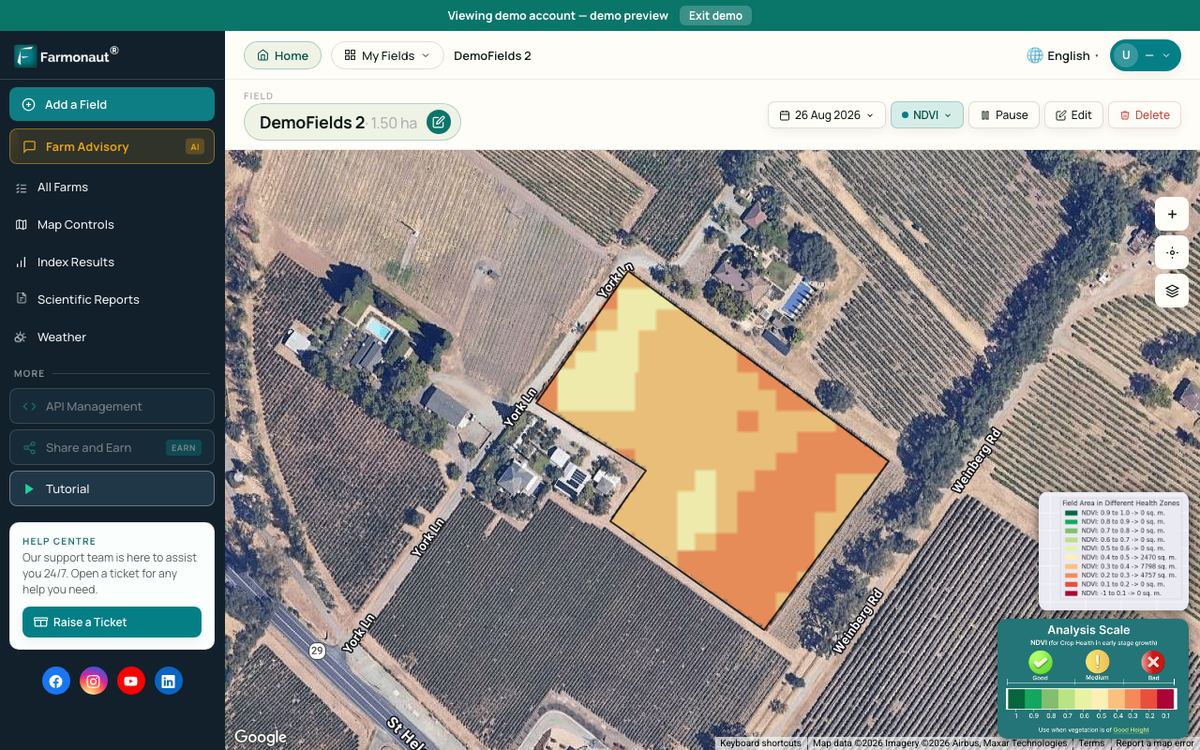
Whole-field sprays are often the default because scouting every acre takes time. Satellite crop-health maps show which parts of a field are under stress, so you can walk those zones first and spray only where counts pass the threshold. Farmonaut’s Satellite + AI Farm Monitoring System gives vegetation index maps for each field through the season. Larger growers and managers can see many farms in one dashboard in the Large Scale Farm Management page or the Crop Plantation, Forest, and Advisory portal, and developers can pull the same data through the API developer docs.
A stress map does not tell you which insect is present. It tells you where to look. Pair it with traps, sweep nets and plant counts before you decide to spray.
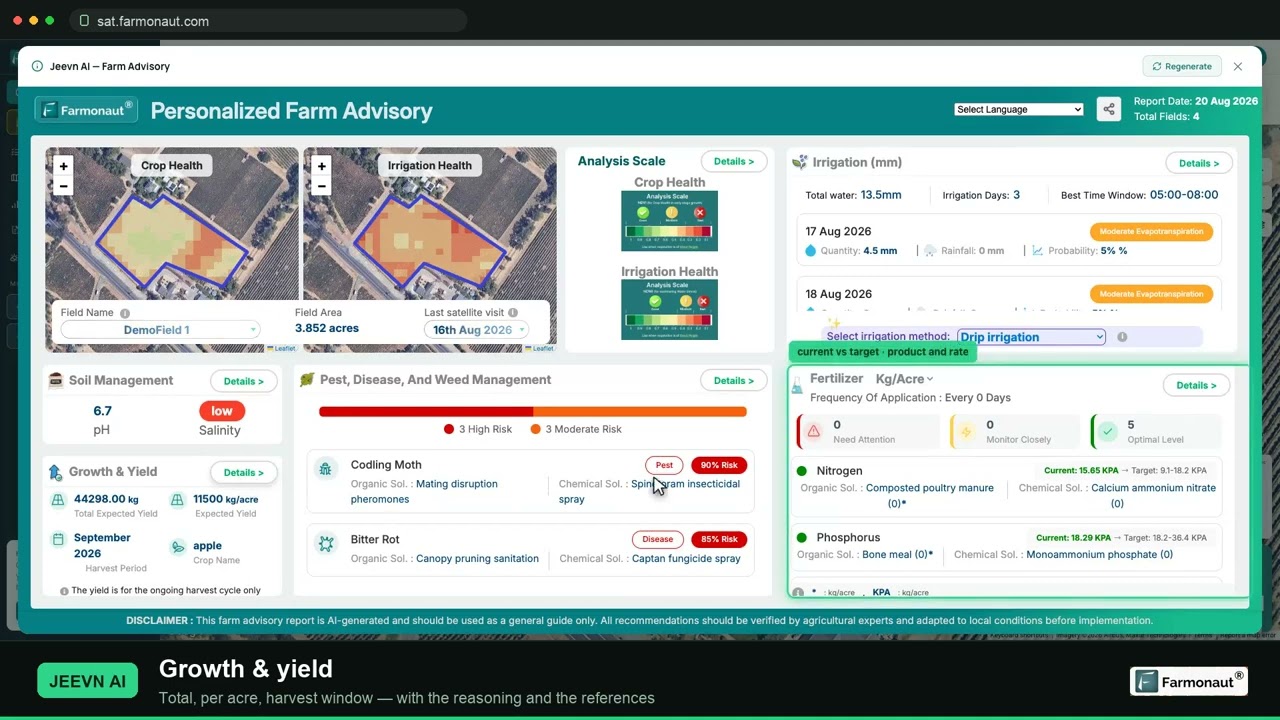
▶ A full walkthrough of satellite crop monitoring: reading NDVI to see crop stress about two weeks early. · 19:36
What to expect next for pyrethroids
Three trends shape pyrethroid use. First, label changes from EPA’s class-wide review bring more drift and runoff controls, and the four pending decisions (including lambda-cyhalothrin and cypermethrin) may add more. Second, resistance to Group 3A pushes growers toward pre-mixes and other groups. Third, buyers ask for proof of how crops were grown, which is why spray records, product traceability and carbon footprinting now sit beside agronomy. Lenders also use satellite verification tools for crop loans and insurance.
Related pages on our site: precision agriculture, drones · fleet management.
FAQ
What are the main pyrethroid insecticides?
The main farm pyrethroids are bifenthrin, lambda-cyhalothrin, gamma-cyhalothrin, cypermethrin (with alpha-, beta- and zeta-cypermethrin), deltamethrin, esfenvalerate, cyfluthrin, beta-cyfluthrin, fenpropathrin, permethrin, tau-fluvalinate and tefluthrin. IRAC’s full Group 3A list has 42 entries, including household and public health compounds.
Are pyrethrins and pyrethroids the same?
No. Pyrethrins are the natural extract from chrysanthemum flowers; pyrethroids are man-made copies built to last longer in sunlight. Both act on insect sodium channels, so IRAC puts both in Group 3A and they count as one mode of action for resistance.
Which pyrethroid is the strongest?
There is no single answer. Type II pyrethroids such as deltamethrin and lambda-cyhalothrin work at very low rates, while bifenthrin lasts longer in soil. The right choice depends on the pest, the crop label and local resistance, so check your extension guide.
Are pyrethroids safe for bees?
No. NPIC rates bifenthrin as very highly toxic and permethrin and cypermethrin as highly toxic to bees. Do not spray on blooming crops or weeds while bees are foraging, and follow every bee statement on the label.
Is permethrin the same in pet and farm products?
The active ingredient is the same, but the concentration and label uses differ. NPIC notes that cats break permethrin down slowly and are more sensitive to it than dogs or people. Use only the product labelled for your animal or crop.
Farmonaut crop monitoring
See which zones need scouting first
Draw your fields once and Farmonaut shows satellite crop-health maps through the season, on web, Android or iOS, so you know where to walk before you spray.



Sources
- IRAC, Mode of Action Classification Online (Group 3A list): irac-online.org
- US EPA, Registration Review of Pyrethrins and Pyrethroids (updated March 2026): epa.gov
- US EPA, Slowing and Combating Pest Resistance to Pesticides: epa.gov
- NPIC, Pyrethrins General Fact Sheet: npic.orst.edu
- NPIC, Bifenthrin Fact Sheet: npic.orst.edu
- NPIC, Permethrin General Fact Sheet: npic.orst.edu
- NPIC, Deltamethrin Fact Sheet: npic.orst.edu
- NPIC, Cypermethrin Fact Sheet: npic.orst.edu
- UC IPM, Bee Precaution Pesticide Ratings: ipm.ucanr.edu
- University of Maryland Extension, Mid-Atlantic Commercial Vegetable Production Recommendations: Beans, Snap and Lima (2026): extension.umd.edu
- University of Arkansas, Rice Production Handbook, Chapter 12: Insect Management: uaex.uada.edu
- UF/IFAS EDIS, Chapter 18. Tomato Production: edis.ifas.ufl.edu
Discussion
Questions, corrections or field experience? Share them below. First-time comments are reviewed before they appear, and your email is never published.
No comments yet. Be the first to add a question or your experience.

 Chimera Innovation
 Hiteshi Infotech
 Clubhouse OS
 Progenseed
 SkyHarvest
 Polaris Digitech
 Teledarbas
 Wild Oak Farm
 SFX
 BACF Africa
 Doodlakine
 Exurbia Geospatial
 FieldZero
 Indico Company

 Licence holder · Niger · Gold
 Client · Tanzania · Gold
 Client · Somalia · Gold
 Client & affiliate partner · Ghana · Gold










