

Gold processing · Equipment guide
Gold Concentrator Machine: 7 Models Ranked by Capacity
A gold concentrator machine uses density to move gold into a small, rich concentrate. Published capacity runs from about 0.18 t/h for a spiral wheel to 1,000 t/h for the largest Knelson, and recovery depends mainly on your ore.
Key takeaways
- Published capacity spans about 0.18 t/h (spiral wheel) to 1,000 t/h (Knelson QS70, FLS).
- Gravity recoverable gold ranged from 25% to 94% across 38 samples, average 63% (Laplante test work).
- In one reviewed test Knelson recovered 74.9% and Falcon 45.6%, but no brand wins on every ore (review, 2024).
- One seller listed the 2 to 3 t/h iCON i150 at US$11,900 on 5 November 2026; pumps, screens and power are extra.
- Most plants combine gravity with other steps, so a concentrator rarely finishes the job alone (review, 2024).
In this article
- Gold concentrator machine types at a glance
- How a gold concentrator works, step by step
- Top gold concentrators ranked by capacity
- Knelson vs Falcon: what the tests show
- Recovery rates: how much gold can a concentrator recover?
- Gold concentrator machine price: what published figures show
- How to choose a gold concentrator machine
- Mining concentrators, mercury and small-scale miners
- Where satellite screening fits before you buy equipment
- Frequently asked questions
A gold concentrator machine separates gold from crushed ore or river gravel by density, using water and either spinning force or shaking, and it leaves a small, gold-rich concentrate for final recovery. Published capacity runs from about 0.18 tonnes per hour for a bench spiral wheel to 1,000 tonnes of solids per hour for the largest Knelson unit. The right machine depends less on brand than on how much of your gold is liberated and how much material you must feed.
This guide ranks seven machines by the maximum capacity published by makers, sellers or a program handbook. It then explains what recovery figures mean, what the machines cost and how to test your ore before paying for one.
Gold concentrator machine types at a glance
Concentrators fall into two families. The 2023 heavy-minerals review in Heliyon calls spirals, jigs and shaking tables conventional gravity concentration, and machines such as Knelson and Falcon enhanced gravity concentration. Enhanced machines spin the slurry (crushed solids mixed with water), which multiplies the density difference between gold and waste rock.
| Type | How it separates | Typical job | Main limit |
|---|---|---|---|
| Centrifugal bowl | Spinning cone with riffles, often with water injected to keep the bed loose | Fine gold from placer feed or mill circuits | Needs tuning, clean water and steady power |
| Shaking table | Shaken, riffled deck under a water film | Upgrading a concentrate to high grade | Low feed rate, needs a skilled operator |
| Spiral wheel | Rotating pan with spiral grooves that carry heavy grains to the center | Final cleanup of small batches | Very low capacity |
| Sluice | Water flows over a riffled or carpeted slope | First pass on large gravel volumes | Concentrate is usually low grade and needs more work |
The US EPA guide to gold mining without mercury makes the practical trade-off clear. It says centrifuges can concentrate gold better than other gravity methods but generally cost more, and that shaking tables are effective but relatively expensive and need some experience.
How a gold concentrator works, step by step
Gold is heavy. ALS, a metallurgical testing company, gives its specific gravity as 19.3, against 2.8 to 4.0 for host rocks. Specific gravity means density compared with water. A centrifugal unit works on that gap in five stages:
Infographic
From feed to concentrate in 5 steps
- 1PrepareCrush or screen so gold is liberated and under the top size.
- 2FeedSlurry enters the spinning cone.
- 3FillSolids pack the riffles and water keeps the bed loose.
- 4SwapHeavy grains displace light ones, which leave as tailings.
- 5RinseFlush the concentrate to a table, smelting or a licensed circuit.
- Prepare the feed. Crush or grind hard rock, or screen gravel, until the gold is liberated and the feed is under the top size of the machine.
- Feed the slurry. Slurry enters the spinning cone through a central tube.
- Fill the riffles. Solids pack the grooves in the cone wall, and injected water keeps this bed loose in fluidized machines.
- Swap light grains for heavy ones. Heavy particles displace lighter ones in the bed, and the lighter material leaves with the water as tailings.
- Rinse out the concentrate. The operator or control system stops the feed and flushes the bed. The concentrate then goes to a table, smelting or a licensed leaching circuit.
A concentrator does not give you pure gold. The 2024 review of gravity concentration by Surimbayev and colleagues states that most plants use gravity, but almost never on its own. Other steps usually follow it, including flotation and cyanide leaching. The same review says gravity works when gold grains are well liberated and larger than about 10 microns (a micron is a thousandth of a millimeter).
▶ How gold moves from rock to refined metal, step by step · 5:27
Top gold concentrators ranked by capacity
Capacity is the fairest number to rank on, because makers and sellers publish it as solids per hour. It is not a measure of recovery or value. Each machine below is listed with its best use, as well as its strengths and weaknesses.
Chart
Maximum capacity of the smaller machines
Tonnes of solids per hour, as published. Knelson and Falcon SB plant units are off this scale.
1. Knelson QS70 (FLS): up to 1,000 t/h
Best for: large hard-rock plants that place gravity in the grinding circuit.
FLS, the current supplier, describes the QS70 as a batch concentrator rated at up to 1,000 tonnes per hour, with the Knelson range going down to laboratory scale. The KC-QS48 data sheet lists 400 t/h of solids, a 6 mm maximum feed size and a 45 to 75 kW motor, with an installation weight of 5,430 kg. Smaller units exist: the KC-XD30 is rated at 60 t/h.
Pros: widest size range, wide use in grinding circuits, and a continuous model for high mass pull. Cons: needs plant-scale power, water and support, and is out of scale for most small operators.
2. Falcon SB (Sepro): up to 400 t/h
Best for: fine gold in mill circuits, where a higher spin speed may help.
The Falcon SB brochure from Sepro lists recommended capacities from 0 to 0.25 t/h on the smallest unit up to 200 to 400 t/h on the largest, at 50 to 200 G. A G is one times the force of gravity. Sepro Mineral Systems of British Columbia formed when Falcon Concentrators acquired Sepro Mineral Processing International in 2008.
Pros: high G range and a wide model range. Cons: plant-scale units need the same support as a Knelson, and higher G did not win in every test (see the comparison below).
3. iCON i350: 10 to 15 t/h
Best for: placer plants and dredges that lose fine gold over a sluice.
This smaller Falcon-designed machine is sold for 10 to 15 tons per hour of solids. A reseller listing that repeats the brochure gives 2.5 mm maximum particle size, 100 to 150 G and a 5 HP motor.
Pros: one spinning machine can shorten the sluice run and cut the amount of concentrate. Cons: needs screened feed, so a screen and pump are extra costs.
4. iCON i150: 2 to 3 t/h
Best for: small hard-rock mills, exploration sampling and bulk test work.
The i150 specification gives a maximum of 2 tons of solids per hour in its table, although the same page also says up to 3. It lists 120 kg machine weight, a 1.5 kW motor, a 2 mm maximum particle size, 10 to 30 liters per minute of process water and a concentrate batch of half a kilogram to one kilogram. The seller says it reaches fine gold down to 37 microns.
Pros: light, serviced with hand tools, and has a short rinse cycle. Cons: single-phase power and pressurized water are still required, and a small batch means frequent rinses on rich feed.
5. Gold Kacha: 1 to 3 t/h
Best for: mill product and tailings in low-power small-scale settings.
A planetGOLD Kenya equipment handbook gives 1 to 3 t/h, a nominal 3 mm feed, a 0.75 kW motor, 2 to 4 cubic meters of water per hour, and about one hour between washes for 8 to 10 kg of concentrate.
Pros: low power and a polyurethane-lined rotating cone. Cons: a bigger concentrate than the i150 batch means more cleanup, and the Ambio review notes that local replicas of such equipment may be on sale, so confirm who built the machine.
6. Gemeni shaking table: up to 1 to 2 t/h
Best for: turning concentrate into a directly smeltable product.
The same handbook lists capacity of up to 1 to 2 t/h, but a nominal feed of 450 kg per hour, with 38 liters of wash water per minute and a packed weight of 540 kg. Treat the nominal figure as your planning number. The 2023 review in Ambio cites a UNEP finding that highly efficient tables recover gold as fine as 32 microns.
Pros: you can see the gold line and adjust it. Cons: it is a second-stage machine, not a primary one for bulk feed.
7. Spiral gold wheel: about 0.18 t/h
Best for: claim owners cleaning sluice concentrate.
The handbook lists a 12-volt pump and capacity of up to 400 lb per hour, which is about 0.18 tonnes. EPA says these units are easy to operate, but cost more than pans or sluices.
Pros: portable and simple. Cons: it only suits concentrate, not run-of-mine ore.
Knelson vs Falcon: what the tests show
Neither brand wins everywhere. The 2024 review gives one test of the same material in which Knelson recovered 74.9% of the gold, Falcon 45.6% and a Multi-Gravity Separator 36.2%. The authors note that Knelson won although it runs at lower overloads, and they put the result down to differences in bowl design. It is one set of tests on one ore, not a general ranking.
Chart
Published G-force operating ranges
Multiples of gravity. Higher G does not mean higher recovery.
Supplier comparisons point in different directions. Sepro publishes its own comparison favoring Falcon, while equipment seller 911 Metallurgist argues the two perform the same. Both sell equipment, so read them with that in mind. Laboratories use both: ALS lists a Knelson KC-MD3 and a Falcon L40 in its gravity test work.
For a consultant, the useful step is a side-by-side test on the client’s ore at the planned grind, using the same feed. Spin force alone does not settle it. The G-force chart here shows published operating ranges, not expected recovery.
Recovery rates: how much gold can a concentrator recover?
Be careful with a single percentage in a brochure. Recovery belongs to the ore as much as the machine. The standard measure is gravity recoverable gold (GRG), the share of gold in an ore that gravity can capture into a very small mass.
Chart
Gravity recoverable gold varies widely by ore
Share of gold in the sample captured in laboratory GRG tests, %
In Laplante’s standardized GRG test work at McGill University, 38 samples ranged from 25% to 94%, with an average of 63%. The lowest sample had most of its GRG below 25 microns, and the highest had most above 300 microns. So grain size drives much of the answer. A Falcon-based GRG study on ore from Mastra, Turkey measured 48.28%, and a three-stage test published by a seller reached up to 82% into about 1% of feed mass.
GRG is a laboratory ceiling and not a plant forecast, because a real circuit treats only part of the stream on each pass. The Ambio review also warns that gravity is limited by mineralogy, liberation and grain size. Refractory ore, where gold is locked inside other minerals, will not respond until that gold is liberated, and some never will by gravity. If your ore is oxidized or sulfide-rich, read our guide to oxidized gold ore and our overview of gold rock and deposit types.
Gold concentrator machine price: what published figures show
Large-plant prices are by quote only. These are the figures that can be traced to a source, all in US dollars:
| Item | Published price | Date and source |
|---|---|---|
| Prospector’s sluice, low end of technology range | US$40 | Ambio review, 2023 |
| Keene A52 hand sluice | US$174.95 | Keene price list, 9 February 2026 |
| Keene 175 powered sluice, 8-foot box with Honda engine | US$4,175 | Keene price list, 9 February 2026 |
| iCON i150 concentrator | US$11,900, with US$13,500 also shown on the page | 911 Metallurgist page, read 5 November 2026 |
| Integrated small-scale plant in Ghana | US$45,000 or more | Ambio review, 2023 |
| Proposed training plants without mercury in Kenya with gravity and micro-leaching lines, equipment and installation | About US$300,025 | planetGOLD Kenya handbook |
The machine is rarely the largest cost. Budget for a crusher or mill, a screen, a feed pump, a clean-water pump, power or a generator, tailings handling, security for the concentrate and a cleanup stage. The i150 seller’s installation notes call for a dedicated water line, with about a 3/4 HP pump when the source is close and 2 HP or more for long or high lifts. The Ambio review notes that few mercury-replacement technologies are affordable for artisanal miners, and that some are out of reach of poorly capitalized small operations.
How to choose a gold concentrator machine
Work through these checks in order. Each one can rule out a class of machine.
- Measure the gold. Have an independent laboratory run a size-by-assay and a GRG test. As a sense of scale, ALS typically runs about 5 kg of feed through a bench centrifugal concentrator.
- Size the feed rate. Divide your daily tonnes by real running hours. Do not count rinse stops as running time, and do not size to the brochure maximum.
- Match the top size. The i150 takes 2 mm, the i350 2.5 mm and the QS48 6 mm at most (2 mm recommended). Screen the feed to suit.
- Check water and power. EPA and Ambio both stress supply. Most gravity options need a clean and steady flow, and most need electricity.
- Plan the cleanup. A bowl produces a concentrate, not metal. Decide how you will upgrade it, often on a table, and who may handle it.
- Ask for evidence. Request test work on a similar ore, spare-part prices and the local service contact. Treat any recovery promise that does not name an ore and grain size as marketing.
- Check permits. Processing and water use usually need permission on top of the mining title. Confirm with the regulator.
For wider process options, including tailings and fine-gold circuits, compare our guides to fine gold recovery equipment and gold recovery methods.
Calculator
How much gold could a concentrator catch from your feed?
Enter your own feed, grade and tested recovery.
- Tonnes fed per month: 600
- Gross gold value per month (US$): $30,865
- Equipment cost as months of gross value: 1.6
Example values only, not a benchmark or forecast. Use a recovery figure from a test on your own ore. Prices are inputs: use today’s price; Kitco showed about US$4,120 per troy ounce on 5 November 2026. 31.1035 g = 1 troy ounce. Results exclude mining, processing, refining, tax and royalty costs.
Mining concentrators, mercury and small-scale miners
The term mining concentrator has two meanings. It can be one machine, or the whole plant that produces a metal concentrate at a mine. In gold, many plants place the gravity unit in the grinding circuit, on the cyclone underflow or the mill discharge, as ALS describes. This pulls coarse grains out before they cycle through leaching.
For small-scale miners, the wider case for concentrators is reducing mercury. The Ambio review cites an estimate of 2,059 tonnes of mercury used per year in artisanal and small-scale gold mining (2018 Global Mercury Assessment) and says the sector produces up to 20% of the world’s gold. Its survey of 48 alternative technologies found 19 gravity-based methods. It names Gold Kacha, iCON, Knelson, Falcon and Gemeni among them.
Two cautions matter. First, mechanical separation avoids mercury only if nobody adds it at cleanup. Second, that review cites a Colombian ore study in which cyanide leaching recovered about 84% and mercury amalgamation about 19%, so a concentrator is often one step in a route that still needs chemical treatment under a permit. Claims that a machine removes all chemicals from gold processing go too far.
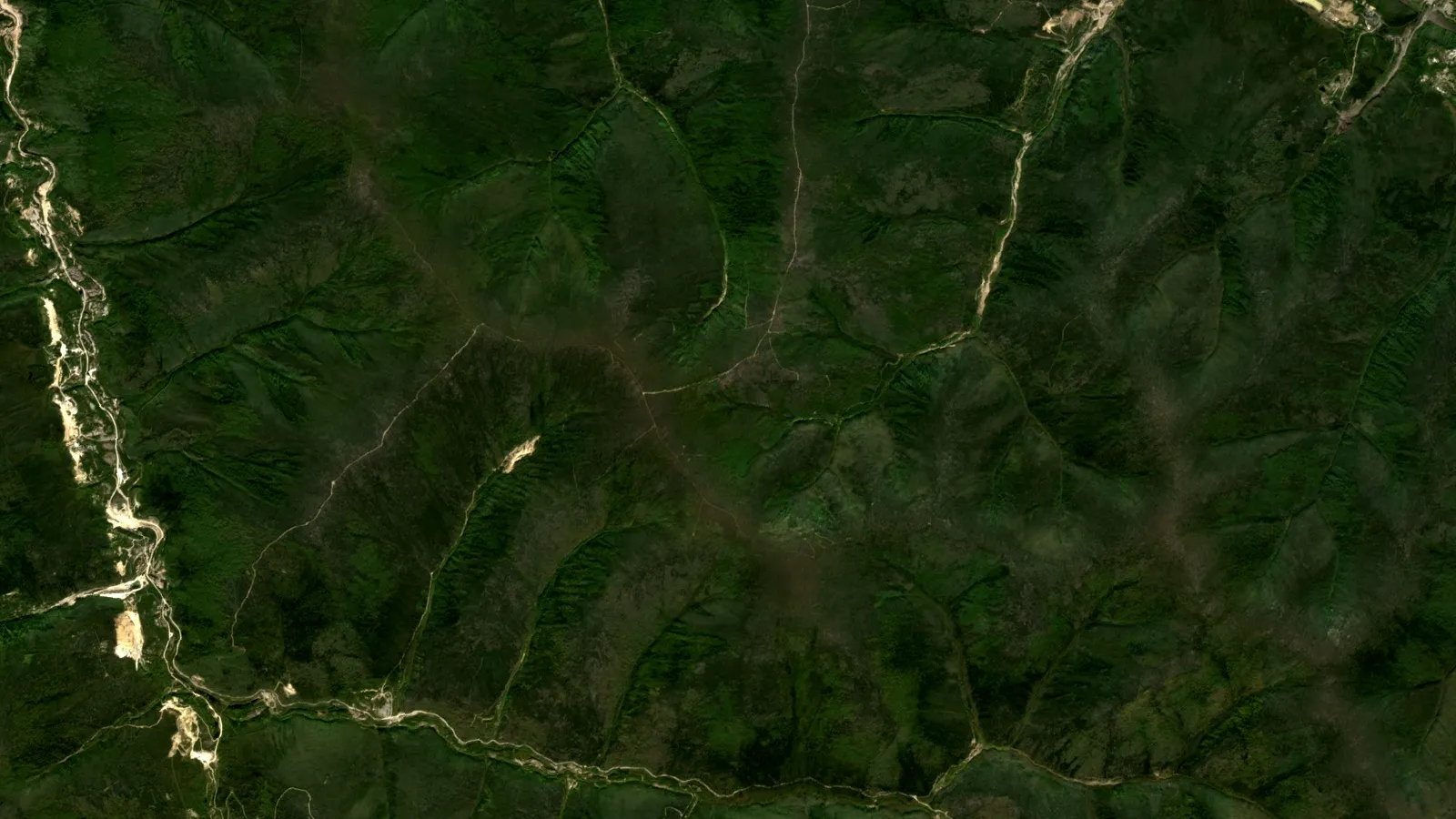
Concentrator use depends on the ground too. Placer districts such as the Klondike in Yukon, shown at the top of this page, are classic gravel ground. Alluvial gold is usually already liberated, which is why the Ambio review says most of these technologies work well on it.
▶ Seven environmental impacts of mining, explained in clay · 2:31
Where satellite screening fits before you buy equipment
A concentrator recovers gold only from material that contains it, so ground knowledge comes first. Consultants can use satellite-based mineral detection to screen a licence for exploration targets before sampling, and then send physical samples from those targets for a GRG test. Results are exploration targets that sit ahead of a resource estimate, and they do not predict plant recovery. Our guide to ore deposit types and mineral prospectivity mapping explain that earlier stage. To discuss a specific area, use the mining query form or contact us.

▶ How satellites help find gold by mapping the surrounding rock · 4:25
Frequently asked questions
What is a gold concentrator machine?
It is a machine that uses density differences to move gold into a small, richer product called a concentrate. It may spin slurry, shake it on a deck or wash it through riffles. It does not produce pure gold.
What does a concentrator do in mining?
It raises the metal content of the material before final recovery, so that less mass goes to the costly later steps. The word can also mean the whole processing plant at a mine.
Which gold concentrator has the highest capacity?
Among the machines on this page, it is the Knelson QS70, which FLS rates at up to 1,000 tonnes per hour. FLS itself describes it as the highest-capacity batch concentrator on the market, which is a maker’s claim.
Which concentrator technology maximizes metal recovery?
No single type does so for every ore. Centrifugal machines suit fine liberated gold and tables suit high-grade cleanup. Compare machines on a sample of your own ore at the planned grind.
Is a Knelson or a Falcon better for fine gold?
Results vary. A test cited in a 2024 review had Knelson at 74.9% and Falcon at 45.6%, while Sepro’s own material favors Falcon. Test both on your ore if the capital spend justifies it.
How fine a gold particle can a concentrator catch?
The 2024 review gives about 10 microns as a working lower limit for liberated gold grains. Sellers rate the iCON i150 to 37 microns, and a UNEP finding puts efficient tables at 32 microns. Flat gold can behave differently from round gold.
How much does a small gold concentrator cost?
The iCON i150, a 2 to 3 t/h machine, was listed at US$11,900 on 5 November 2026 by one seller. Add pumps, a screen, power and shipping.
Do I need chemicals with a gold concentrator?
The concentrator uses only water and motion. Later steps can differ: many routes need smelting or permitted leaching to finish the job. Never use mercury.
How much water does a gold concentrator use?
It varies by size. The i150 uses 10 to 30 liters per minute of process water, the Gold Kacha 2 to 4 cubic meters per hour, and the Knelson QS48 up to 55 cubic meters per hour of fluidization water with its GX10 cone.
Can a concentrator work on hard rock?
Yes, once crushing and grinding have liberated the gold and the feed is below the top size. Refractory ore, with gold locked in other minerals, responds poorly.
Is a concentrator better than a sluice?
They do different jobs. A sluice is cheap and handles volume but tends to lose fine gold and give a low-grade concentrate. A centrifugal unit catches finer gold at a higher cost. The two can also work together, with a screen sending fine material to the concentrator.
This page is for information only. It is not investment or legal advice. Get permission and the right licence, stay off other people’s claims, and never use mercury. Confirm the rules with the regulator.
Farmonaut mining
Map your mining site before you size a plant
Consultants can screen a licence area from satellite data for exploration targets ahead of sampling and a resource estimate.
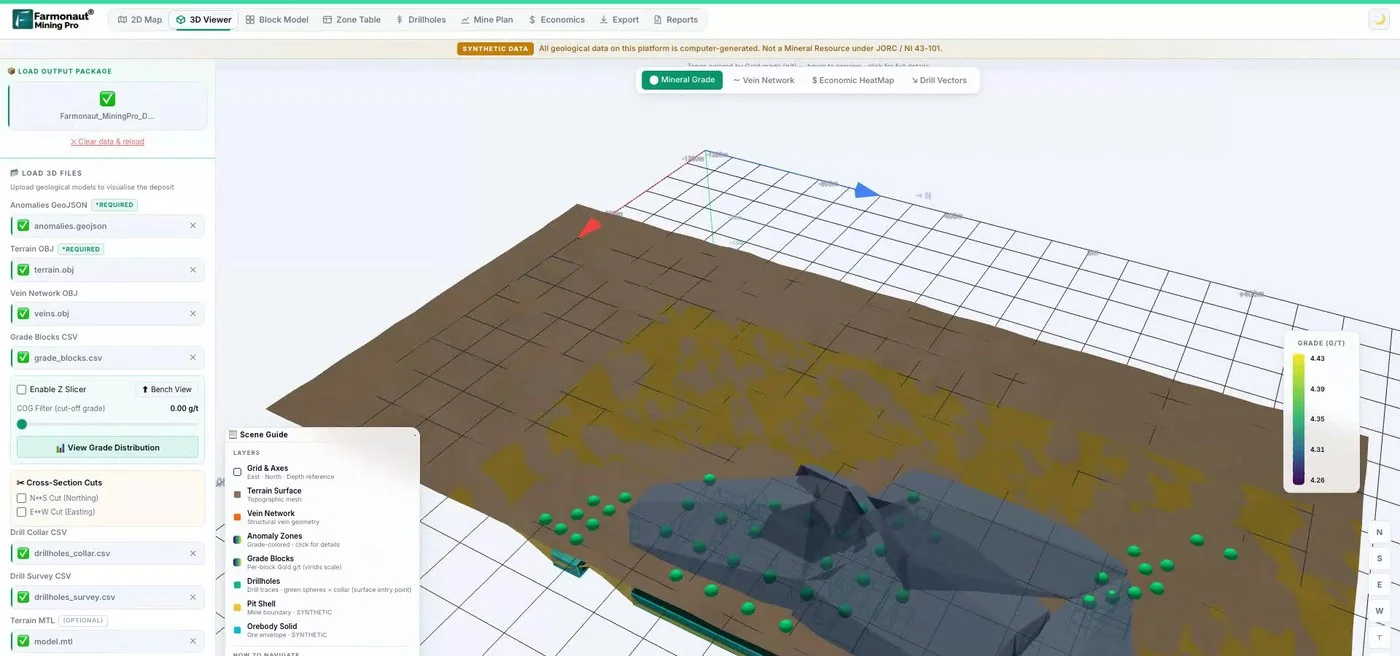
Mining Pro sample view, synthetic data
Keep reading
Sources
- FLS, Knelson gravity concentration range: fls.com
- Knelson KC-QS48 GX cone data sheet: consep.com.au
- Surimbayev et al., Gravity Concentration of Gold-Bearing Ores: A Review (2024): tandfonline.com
- Ambio, Mercury and artisanal and small-scale gold mining (2023): pmc.ncbi.nlm.nih.gov
- Heliyon, Physical beneficiation of heavy minerals, Part 1 (2023): pmc.ncbi.nlm.nih.gov
- US EPA, Artisanal and Small-Scale Gold Mining Without Mercury: epa.gov
- planetGOLD Kenya, technologies and equipment handbook: planetgold.org
- Laplante, A Standardized Test to Determine Gravity Recoverable Gold: 911metallurgist.com
- METU, Falcon concentrator GRG study on Mastra ore: open.metu.edu.tr
- ALS, Gravity gold recovery: alsglobal.com
- Sepro, Falcon SB concentrator brochure: seprosystems.com
- Sepro, Knelson vs Falcon comparison: seprosystems.com
- Wikipedia, Sepro Mineral Systems: en.wikipedia.org
- 911 Metallurgist, iCON i150 specification and price: 911metallurgist.com
- 911 Metallurgist, iCON i350: 911metallurgist.com
- 911 Metallurgist, Knelson Concentrator: 911metallurgist.com
- 911 Metallurgist, Falcon and Knelson compared: 911metallurgist.com
- 911 Metallurgist, iCON GRG test: 911metallurgist.com
- Nelson Machinery, iCON i350 listing: nelsonmachinery.com
- Keene Engineering, master price list (9 February 2026): keeneeng.com
- Kitco, gold price (5 November 2026): kitco.com
Discussion
Questions, corrections or field experience? Share them below. First-time comments are reviewed before they appear, and your email is never published.
No comments yet. Be the first to add a question or your experience.

 Huckleberry Garnet LLC
 Dalgety Minerals Pty Ltd
 Vortex Minerals Pty Ltd
 Faith At Work (Pty) Ltd
 Geotech Mining Solutions plc
 Vulcan International Limited
 Kidepo Associates
 GKY Mining
 Alkimy SARL
 Double A Trading
 GemSprout Metals Limited
 Qader Group
 Ileys General Trading
 SG Gold Mining LLC
 VRV Global Pte Ltd
 Omsri International FZE
 G.I.T.T.
 Jaunita Erss Ltd
 Almosi SARL
 SRK Consulting
 Berks Gold Limited
 Mwerezi Minerals Company Limited

 Exploration consultancy · South Africa · Gold










