

Gold processing · Equipment buyer guide
Fine Gold Recovery Equipment: What Fits Your Ore
Which machine fits depends on the gold, not the brochure. Gravity-recoverable gold tests on four samples ran from 30% to 82.3%, and a tailings plant can run on 0.185 g/t.
Key takeaways
- Gravity-recoverable gold (GRG) was about 30% to 40% at three zones of Orezone’s Bomboré project in Burkina Faso, when ground to a P80 of 75 microns (Bomboré technical report, 2023).
- A GRG test passes 50 to 100 kg of ore through a Knelson concentrator at three grind sizes; bench results run higher than plants (ALS Metallurgy).
- At Bomboré, grinding to 106 microns instead of 75 would cut fresh-ore gold recovery by about 5%; CIL recovery is expected at 91.8% for oxide ore (Orezone, 2023).
- DRDGOLD recovered 0.185 g/t at Ergo from 18.97 million tonnes of tailings in the year to 30 June 2026, at a cash operating cost near R209 per tonne (DRDGOLD, 2026).
- Kitco showed spot gold at about US$4,170 per troy ounce at the close on 15 October 2026; use the two calculators with today’s price.
In this article
- How to choose fine gold recovery equipment: start with the gold
- Machine types compared by job and grain size
- Test data: how much gold gravity can catch
- Fine gold flowsheet: five steps from ore to doré
- Tailings recovery equipment: what a retreatment plant looks like
- Why the gold price changes what is worth recovering
- What drives the cost of a gold recovery plant
- Mercury, cyanide and permit rules before you start
- Where satellite data helps before you spend on a plant
- Frequently asked questions
The right gold recovery equipment depends on the size of the gold grains, how much of the gold is already loose from the rock, and what the rest of the ore does in a leach. Test the ore before you buy: in one set of feasibility-study tests, between about 30% and 40% of the gold at three zones of one Burkina Faso project could be caught by gravity when ground to 75 microns (Orezone, Bomboré Phase II technical report, 2023), while a sample from Arizona gave 82.3% (Kingman Minerals news release, 2 September 2026). One machine does not fit all of those ores.
This guide is written for mine owners and plant managers who must pick equipment for fine gold or for old tailings (the finely ground waste left after a plant has taken out the first gold). It compares the main machine types by the job they do, shows what test data looks like for ores from three projects, looks at one large tailings retreatment operation in South Africa, and ends with two calculators and 10 buyer questions. Machine prices are not listed here because they change with size, maker and freight; our wash plant and trommel price pages carry those.
How to choose fine gold recovery equipment: start with the gold
Gold is very dense. Its specific gravity (density compared with water) is 19.3, against 2.8 to 4.0 for the rock around it, which is why gravity machines work so well on liberated gold, according to ALS Metallurgy. In industrial plants, ALS notes, the gravity step usually sits inside the grinding circuit and treats the hydrocyclone underflow (the coarse stream that falls out of a cyclone) or the mill discharge.
Before you shortlist machines, answer four questions with assay and test data:
- How fine is the gold? A size-by-assay on the ore shows how much gold sits in each size fraction. Fine and ultra-fine grains need different tools than nuggets.
- How much is liberated? Gold locked inside sulphide grains cannot be caught by gravity until it is ground finer or the sulphide is floated or oxidised.
- How much water and power do you have? Sluices need a consistent water supply (US EPA), and every other machine has its own water and power demand to check with the maker.
- What is the final product? Gravity gives a concentrate. Something still has to turn that into doré (the unrefined gold-silver bar), either by smelting or by leaching.
The gold recovery methods guide on our site covers the chemistry in more depth, and the ultra-fine gold recovery page covers the smallest grains.
Machine types compared by job and grain size
The US Environmental Protection Agency lists panning, sluicing, shaking tables, spiral concentrators, vortex concentrators and centrifuges as the main gravity methods for small operators, and says they work best when the feed is a consistent grain size, which screens or sieves can supply (US EPA). A review of gravity techniques groups jigs, spirals and tables as conventional gravity concentrators, and Falcon, Knelson, Kelsey jig and Mozley units as enhanced gravity concentrators, which spin the feed to multiply the pull of gravity (Physical beneficiation of heavy minerals, Part 1, a literature review).
| Equipment | Best for | Watch out for | Basis |
|---|---|---|---|
| Sluice box | Large volumes of alluvial gravel or crushed ore; coarse gold | Concentrate is low grade and needs a second step; needs a steady water supply; angle is usually 5 to 15 degrees | US EPA |
| Shaking table | Cleaning a concentrate into a high-grade product | More expensive and needs an experienced operator | US EPA |
| Spiral concentrator | Steady, easy-to-run pre-concentration | Larger capital cost than a pan or sluice | US EPA |
| Centrifugal concentrator (Knelson, Falcon types) | Fine liberated gold in a mill circuit; also used for gravity-recoverable gold tests | Captures a small mass, so the concentrate must be treated further; ask the maker for water and feed-size needs | ALS; literature review |
| Jig | Gravity pre-concentration of a sized feed | Grouped with tables and spirals as conventional gravity units; check the working size range with the maker | Literature review |
| Intensive cyanidation unit | Treating a gravity concentrate without mercury | Needs cyanide permits and trained staff | ALS |
For the concentrate that gravity produces, ALS names two treatment routes: mercury amalgamation and intensive cyanidation. It adds that intensive cyanidation also dissolves fine or partly liberated gold, which is why bench tests that use it can overstate what a plant will catch. A more recent small-scale route is direct smelting of a clean concentrate, which the EPA describes as a way to recover gold without mercury.
Test data: how much gold gravity can catch
The industry test for this is the gravity-recoverable gold (GRG) test. ALS describes it as the accepted method: a 50 to 100 kg sample passes through a Knelson concentrator (a spinning-bowl gravity unit) at three successive grind sizes, from a P80 of 850 microns down to 75 microns, and each concentrate and the final tailings are assayed by size (P80 means 80% of the material is finer than that size). The result is the share of gold that gravity could catch in principle, and it sets how big a gravity circuit should be.
Chart
Gold that gravity could catch in four ore tests
Gravity-recoverable gold (GRG), % of gold; Bomboré at P80 of 75 microns; Rosebud conditions per company
Bench results run high. ALS explains that a laboratory unit holds 60 to 100 g of mass and so may take 3% to 6% of a 1 to 2 kg feed, while an industrial unit takes 1 to 20 kg from hundreds or thousands of tonnes, a mass yield of a fraction of 1%. Engineers therefore apply scale-up factors to bench numbers, and you should ask any vendor which factor was used.
The chart shows how much the answer varies. At Bomboré in Burkina Faso, scoping GRG tests at a P80 of 75 microns recovered about 40% of the gold from one pit, about 30% from another and 32% from a composite from a third area, and the study team recommended full gravity test work later. A sample from the Rosebud property in Arizona, tested at Sepro Laboratories, gave 82.3% GRG at a head grade of 12.52 g/t (the company’s own release; treat it as an early result).
The same data also tells you what comes after gravity. In test work reported by Sitka Gold for the RC Gold project in Yukon, four composites went through a Knelson step and panning, then the gravity tailings were leached with cyanide in a bottle-roll test (crushed ore and cyanide solution rolled in a sealed bottle) and, separately, floated (a froth step that lifts sulphide grains into a concentrate). Grinding was to a K80 of about 106 microns (K80 is the same idea as P80). Results are in the table.
| Composite | Head grade (g/t Au) | Gold to pan concentrate | Cyanide extraction of gravity tails | Rougher flotation of gravity tails | Gravity plus cyanide |
|---|---|---|---|---|---|
| 1 | 0.44 | 44.3% | 87.5% | 78.7% | 93.0% |
| 2 | 0.50 | 20.9% | 84.9% | 62.7% | 88.1% |
| 3 | 1.05 | 17.5% | 72.8% | 56.1% | 77.6% |
| 4 | 1.89 | 18.8% | 76.4% | 63.5% | 80.8% |
Source: Sitka Gold, RC Gold Project NI 43-101 technical report (2026), 2024 test work, Table 13-4. The sample was small and the work was early stage. Notice that the highest-grade composite did not recover best: recovery depended on the ore, not the grade.
Calculator
How much gold could a gravity step take out?
Enter your own grade and test results. Results update as you type.
- Contained gold in the ore: 64.3
- Grade of gravity tails (g/t): 1.44
- Total gold recovered (oz): 57.4
- Value of recovered gold: $229,428
Example values only, not benchmarks. The GRG share comes from your own GRG test; the plant catch is a share of that and is usually lower than bench results (ALS Metallurgy). Gold price is an input: use today’s price. Money in US$.
Fine gold flowsheet: five steps from ore to doré
Most plants that treat hard rock combine several steps in this order. Each step catches gold the one before it missed.
- Crush and grind the ore to the size the test work picked. At Bomboré, the hard-rock plant design uses a P80 of 75 microns, and the feasibility study reports that grinding to 106 microns would cut fresh-ore recovery by about 5% (Orezone, 2023).
- Take out liberated gold by gravity from the cyclone underflow or mill discharge, using a centrifugal concentrator, then clean the concentrate on a table.
- Treat the gravity concentrate by smelting if it is clean, or by intensive cyanidation if it holds fine or part-locked gold.
- Leach the gravity tailings. In carbon-in-pulp (CIP) plants, ground ore is mixed with cyanide solution in tanks and the dissolved gold sticks to activated carbon; carbon-in-leach (CIL) does leaching and adsorption in one set of tanks. An EPA technical document states that tank methods recover 92% to 98% of the gold in suitable ore (US EPA, 1994); real results are lower for harder ores. The Bomboré study expects 91.8% for oxide ore, 89% for upper transition ore and 81.7% for most fresh ore.
- Elute, recover and smelt: the loaded carbon is stripped, the gold is plated or precipitated from the solution, and the product is smelted to doré.
Where the gold sits inside sulphide minerals and cyanide alone leaves too much behind, a flotation step is added to make a sulphide concentrate that is treated separately. The RC Gold work above floated 56% to 79% of the gold left after gravity into a rougher concentrate.
▶ Follows a gold nugget from rock through drilling, crushing, dissolving, carbon and refining. · 5:27
Tailings recovery equipment: what a retreatment plant looks like
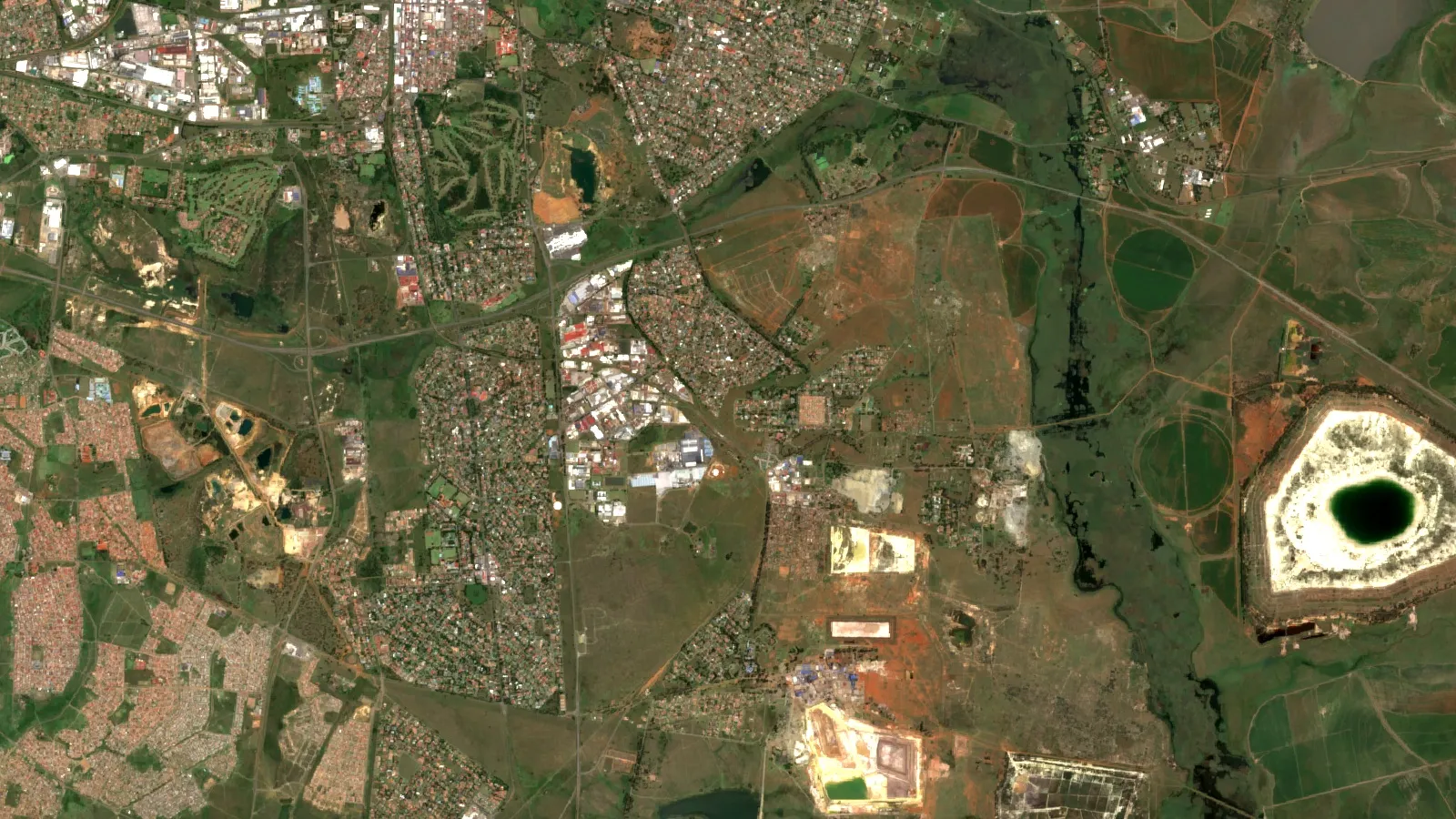
Tailings retreatment is a different job from hard-rock mining. There is no drilling or blasting, the material is already fine, and the gold is at very low grade, so cost per tonne decides everything. The clearest public example is DRDGOLD (JSE and NYSE: DRD), which reclaims old gold tailings on South Africa’s Witwatersrand. For the year to 30 June 2026 it produced 4,839 kg of gold at an average yield of 0.193 g/t from 25.07 million tonnes of material (DRDGOLD, financial results for the year ended 30 June 2026). Its Ergo operation made 3,511 kg at 0.185 g/t from 18.97 million tonnes, and Far West Gold Recoveries made 1,328 kg at 0.218 g/t from 6.10 million tonnes.
Chart
Gold yield from tailings, year to 30 June 2026
Grams of gold per tonne treated
The company’s cash operating cost at Ergo was R3,968.8 million for the year. Divided by the tonnage, that is about R209 per tonne treated (our calculation from the same table). The release lists reclamation sites, a pump station, pipeline networks, tailings storage facilities and plants with elution circuits and smelt houses, so most of the equipment is for moving and pumping material. DRDGOLD describes a programme of about R10 billion called Vision 2028 to raise throughput and lift production towards six tonnes a year by 2028, with a new tailings storage facility at Daggafontein that received its first tailings in July 2026 (DRDGOLD media release, 19 August 2026).
Two further points from the same results are useful for anyone planning a tailings project. The company links part of its cost rise to a sodium cyanide shortage in South Africa, so reagent supply belongs in the plan. And the Kloof 2 tailings storage facility, with 67.36 million tonnes at 0.24 g/t, was added to the company’s mineral reserves after ownership moved from Sibanye Gold.

▶ Explains the seven environmental impacts of mining, including waste and tailings. · 2:31
Why the gold price changes what is worth recovering
Low-grade tailings only pay when the price per ounce is high enough to cover cost per tonne. The US Geological Survey puts the average gold price at US$1,801 per troy ounce in 2021 and US$3,300 in 2025, an estimate (USGS, Mineral Commodity Summaries 2026). Kitco showed a spot bid of about US$4,170 per troy ounce at the close of trading on 15 October 2026 (Kitco gold chart). At that spot price, one tonne of tailings that yields 0.185 g/t (the Ergo figure) is worth about US$24.80 in gold, before any royalty or cost. Spot prices move daily, so run the calculator below with today’s price.
Chart
Gold price, 2021 to 2025
US dollars per troy ounce; 2025 is an estimate
A tonne of tailings at 0.2 g/t holds roughly 0.0064 troy ounce. A plant treating one million tonnes a month therefore handles about 6,400 ounces of gold in the feed each month at that grade, which shows why throughput and low unit cost are the whole business.
Calculator
Does your tailings project cover its cost per tonne?
Enter your own yield, price and cost. Results update as you type.
- Gold revenue per tonne: $26
- Margin per month: $12,948,961
- Gold recovered per month (oz): 6,430
- Break-even yield (g/t): 0.10
Example values only, not a forecast. Yield is the gold actually recovered per tonne of material treated (DRDGOLD reports yield this way). Gold price is an input: use today’s price. Royalty is a percentage of revenue and differs by jurisdiction. Money in US$.
What drives the cost of a gold recovery plant
We do not list machine prices on this page because a quote depends on size, build, motor, spare parts and freight to site. These are the cost drivers to ask each supplier about, in the order they usually matter:
- Throughput. A sluice or wash plant is rated in tonnes per hour of feed. Check whether the rating is for dry feed or for slurry.
- Water. Ask every supplier for the water demand per tonne of feed and whether it can be recycled.
- Feed preparation. Screens, trommels and cyclones keep the feed to a narrow size range. The EPA notes that concentration works best when grain size is consistent.
- Concentrate handling. Tables, intensive leach units, secure rooms and a smelting furnace add cost beyond the main machine.
- Power and spares. Remote sites should price a generator, wear parts and a technician visit.
For quoted price ranges on small plants, see our gold wash plant buyer guide and the gold trommel price list.
Mercury, cyanide and permit rules before you start
Do not use mercury. The World Health Organization calls mercury use in artisanal and small-scale gold mining particularly hazardous, with significant health effects on vulnerable people (WHO, Mercury and health). The EPA states that gold can be recovered safely and economically without it, and that concentration done well can eliminate or greatly reduce the need for mercury. Gravity concentration followed by direct smelting is the usual route.
Get written permission from the landholder and the right licence from the regulator before you set up any plant. Wash water, tailings and any cyanide need discharge and storage permits in most jurisdictions. Cyanide handling needs trained staff and a plan for spills. Treat the points above as a checklist, not legal advice, and confirm local rules with the regulator.
Where satellite data helps before you spend on a plant
Equipment is only worth buying if the ground has gold to feed it. Farmonaut screens a licence area from satellite images and returns mineral targets in 5 to 20 business days, so crews know where to sample before a plant order goes in. Satellite results are exploration targets, not a resource estimate. See our satellite mineral detection page for what is covered, or send a request for a quote with your boundary file.

▶ Shows how satellites map the rock around gold, such as iron stains, clay and faults. · 4:25
We cover a connected topic in Alumina Powder Grades, Uses and Red Mud Solutions.
Frequently asked questions
What is the best equipment for recovering fine gold?
There is no single best machine. For liberated fine gold in a mill circuit, a centrifugal concentrator is the usual first choice, followed by a shaking table to clean the concentrate. For gold locked in sulphides, add flotation or oxidation and a leach. A GRG test on your ore tells you how much gravity can catch before you buy.
What size of gold can gravity machines catch?
Size limits depend on the machine and the feed. The GRG test grinds a sample to as fine as a P80 of 75 microns because the finest fractions are the hardest to catch. Always size-assay your ore and ask the maker for recovery curves by size on similar ore.
How much gold can gravity recover?
It varies from ore to ore. Published tests range from about 30% at one Burkina Faso pit to 82.3% for an Arizona sample, and 17.5% to 44.3% of the gold went to the gravity concentrate in four Yukon composites. Bench results usually look better than a full plant.
What is tailings recovery equipment?
It is the set of machines that reclaim old plant waste and extract the remaining gold. At large scale that means reclamation sites or trucking, pumps and pipelines, tailings storage and a leach and carbon plant. At small scale it can be a pump, a trommel or screen and a sluice or spiral.
Is it worth reprocessing gold tailings?
It depends on yield, unit cost and the gold price. DRDGOLD recovered 0.185 g/t at Ergo in the year to 30 June 2026 at a cash operating cost near R209 per tonne. Use the calculator on this page with your own grade, cost and price.
Can I recover gold without mercury?
Yes. The EPA points to concentration with panning, sluices, tables, spirals or centrifuges, and then direct smelting, as the route to take instead of mercury. The WHO says non-mercury extraction techniques need to be promoted.
Do I need cyanide to recover fine gold?
Not always. Coarse and well-liberated gold can come out by gravity and smelting alone. Fine or locked gold usually needs a leach, and tank leaching with carbon can reach recoveries in the 80s and 90s of a percent on suitable ore, as shown in the tests above.
How much does a gold wash plant or trommel cost?
Prices depend on capacity and make. We keep dated price ranges on our wash plant and trommel pages, so you can compare before asking suppliers for a quote.
How does grind size affect recovery?
Finer grinding frees more gold but costs power. At Bomboré, a grind of 106 microns instead of 75 would drop fresh-ore recovery by about 5%, so the design chose 75 microns for the hard-rock plant.
What should I test before buying a gold recovery plant?
Run a size-by-assay, a GRG test, a bottle-roll cyanide leach on the gravity tails and, if there are sulphides, a flotation test. Ask for the report from an accredited laboratory before you sign a purchase order.
This page is for information only. It is not investment advice and not engineering advice. Test your own ore and confirm permits with the regulator. Get permission from the landholder, hold the right licence and do not use mercury.
Farmonaut mining
Get a quote to screen your licence area from space
Send a KML, KMZ or polygon and Farmonaut screens the area from satellite images before you commit to a plant.

Mining Pro sample view, synthetic data
Keep reading
Sources
- ALS Metallurgy, Gravity gold recovery: alsglobal.com
- US EPA, Artisanal and Small-Scale Gold Mining Without Mercury: epa.gov
- US EPA, Technical Resource Document: Extraction and Beneficiation of Ores and Minerals, Volume 2, Gold (August 1994): archive.epa.gov
- Physical beneficiation of heavy minerals, Part 1: gravity concentration literature review (PMC): pmc.ncbi.nlm.nih.gov
- Orezone Gold, Bomboré Phase II Expansion Definitive Feasibility Study, NI 43-101 technical report (effective 28 March 2023, signed 24 November 2023): minedocs.com
- Sitka Gold, RC Gold Project NI 43-101 technical report (2026): wp-sitkagold-2024.s3.ca-central-1.amazonaws.com
- Kingman Minerals news release via Newsfile and Webull, Rosebud metallurgical results (2 September 2026): webull.com
- DRDGOLD, financial results for the year ended 30 June 2026: drdgold.com
- DRDGOLD, FY2026 results media release (19 August 2026): drdgold.com
- USGS, Mineral Commodity Summaries 2026: Gold: pubs.usgs.gov
- Kitco, gold spot price chart (15 October 2026): kitco.com
- World Health Organization, Mercury and health fact sheet: who.int
Discussion
Questions, corrections or field experience? Share them below. First-time comments are reviewed before they appear, and your email is never published.
No comments yet. Be the first to add a question or your experience.

 WSP Investment Company
 Dalgety Minerals Pty Ltd
 Vortex Minerals Pty Ltd
 Faith At Work (Pty) Ltd
 Geotech Mining Solutions plc
 Vulcan International Limited
 Kidepo Associates
 GKY Mining
 Alkimy SARL
 Double A Trading
 GemSprout Metals Limited
 Qader Group
 Ileys General Trading
 SG Gold Mining LLC
 VRV Global Pte Ltd
 Omsri International FZE
 G.I.T.T.
 Jaunita Erss Ltd
 Almosi SARL
 SRK Consulting
 Berks Gold Limited
 Mwerezi Minerals Company Limited
 Mining SARL

 Exploration consultancy · South Africa · Gold










