

Phosphate processing · Process guide
Phosphate Beneficiation Process: 6 Steps and Innovations
Phosphate beneficiation upgrades mined ore to a saleable concentrate through washing, desliming, flotation and sometimes calcining. The wet-acid guide is over 30% P2O5, CaO/P2O5 under 1.6 and MgO under 1%.
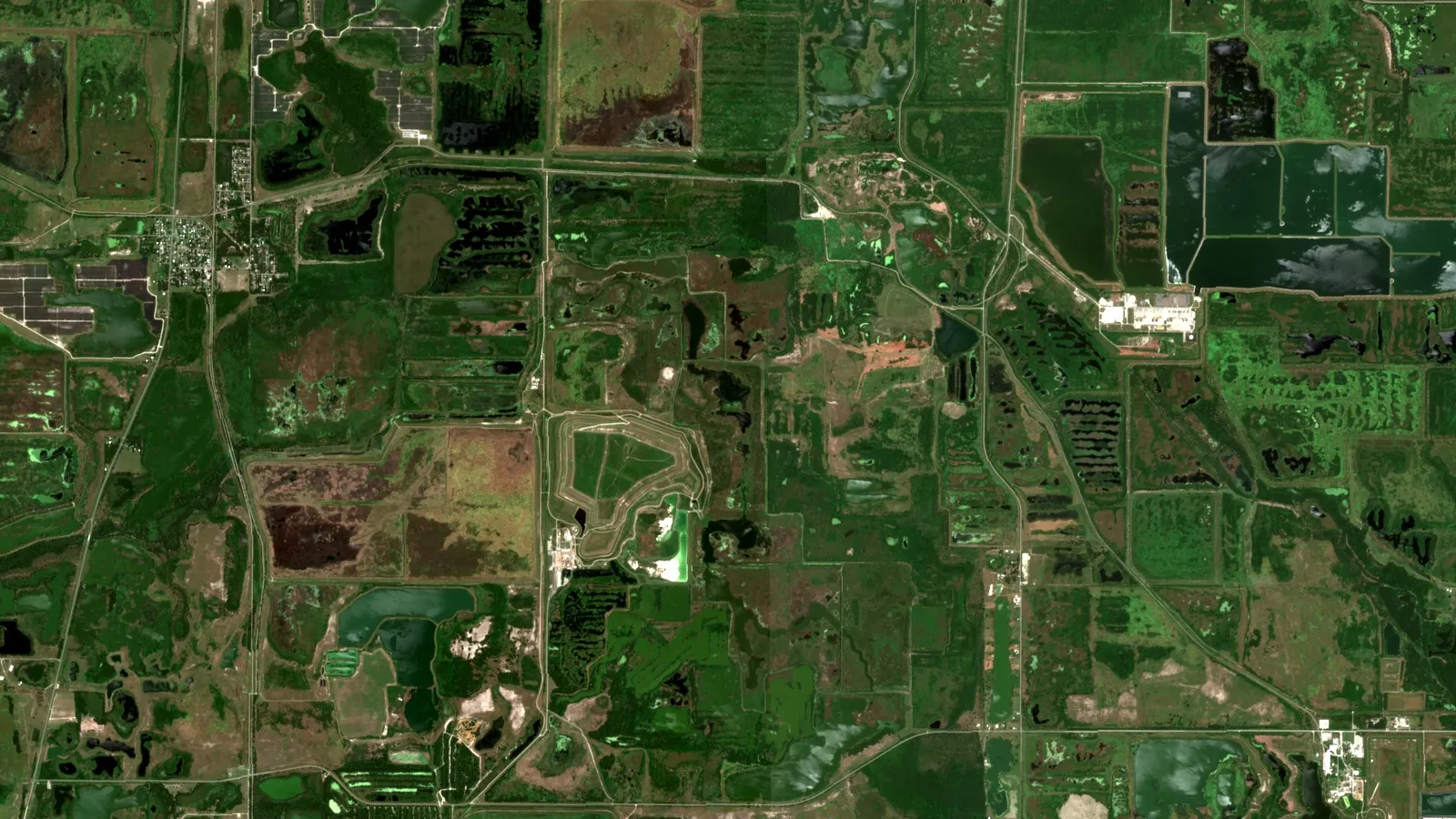
Key takeaways
- Flotation is the most widely applied method; a 2003 review credits it with more than half of world marketable phosphate.
- A common wet-acid target is over 30% P2O5, CaO/P2O5 under 1.6 and MgO under 1% (Ruan and colleagues, 2019).
- Araxá in Brazil reported 36% P2O5 concentrate from 13% to 14% ore (1999); a low-grade Brazilian test only reached 21.58%.
- US marketable rock averaged about US$100 per ton at the mine in 2025 (USGS, 2026).
- Column flotation is plant-proven, while nanobubble results remain test work.
In this article
- What phosphate beneficiation has to achieve
- The phosphate beneficiation process in 6 steps
- Sedimentary vs igneous phosphate ore
- Phosphate concentrate grade and recovery: published results
- Calculate concentrate tonnes from ore grade and recovery
- Phosphate rock prices and what beneficiation is worth
- Top innovations in phosphate beneficiation, by readiness
- Water, tailings and radioactivity in phosphate processing
- What to check before you build a phosphate plant
- Where phosphate rock is mined and held in reserve
- Frequently asked questions
Phosphate beneficiation is the set of steps that turns mined phosphate ore into a saleable concentrate, usually by screening and washing, desliming, flotation and sometimes calcining. For the wet phosphoric acid route, a widely quoted target is more than 30% P2O5, a CaO/P2O5 ratio below 1.6 and under 1% MgO (Ruan, He and Chi, Minerals, 2019). P2O5 (phosphorus pentoxide) is the standard way of reporting phosphate grade.
The right flowsheet depends on the ore, not on the newest equipment. This guide walks through the six main steps, shows how real circuits differ in Florida, Idaho, Morocco and Brazil, and separates what is proven in plants from what has only been shown in a laboratory. The calculator lets you test your own grades and recovery.
It is written for licence owners, mine investors and consultants who need to judge whether a phosphate deposit can make a product someone will buy.
What phosphate beneficiation has to achieve
Three things decide whether a circuit works: the grade it reaches, the share of phosphate it keeps, and the impurities it leaves behind. A plant can usually improve one of these only by giving up some of another.
- Concentrate grade: the percentage of P2O5 in the final product. The wet-acid guide above starts at 30%.
- Recovery: the share of the P2O5 in the feed that reaches the concentrate. The rest goes to waste.
- Impurities: carbonates raise the CaO/P2O5 ratio and so the acid demand; MgO is held under about 1% in the same specification.
- Mass yield: the tonnes of concentrate per 100 tonnes of ore. It drives how much waste the site must store.
Traders often quote grade as BPL (bone phosphate of lime). BPL is P2O5 multiplied by about 2.185, the ratio of the molecular weights of tricalcium phosphate and P2O5. So 70 BPL rock holds about 32% P2O5.
The phosphate minerals themselves are mostly forms of apatite, such as fluorapatite in igneous rock and francolite in sedimentary rock. Everything else in the ore (quartz, clay, calcite, dolomite and so on) is called gangue, meaning unwanted mineral.
The phosphate beneficiation process in 6 steps
No plant uses every step below. The US Environmental Protection Agency puts it plainly: the steps used in beneficiation depend on the type of rock (EPA AP-42, Section 11.21).
Infographic
From mined ore to concentrate in 6 steps
- 1Crush and grindFree phosphate grains from gangue.
- 2Screen and washSeparate sizes and carry off clay.
- 3Scrub and deslimeRemove coatings and ultrafine slimes.
- 4FloatSeparate phosphate from silica or carbonate.
- 5Magnetic or gravityRemove problem minerals where needed.
- 6Dewater, dry or calcineMatch the buyer’s product needs.
1. Crushing and grinding
Hard rock must be broken until the phosphate grains are freed from the gangue, a stage called liberation. Soft sedimentary ores may need little of this. Idaho ores generally need crushing, grinding and classification, while the harder, lower-grade Utah ores need extensive crushing and grinding (EPA AP-42). Grinding too coarse leaves phosphate locked in rock. Grinding too fine costs energy and creates slimes that hurt the next stages.
2. Wet screening and washing
Screening separates sizes, and water carries away the clay. In a typical Florida unit described by the EPA, wet screens pull out pebble rock between 1.43 mm and 6.35 mm, which ships directly as pebble product. North Carolina rock has no pebble, so it uses 10-mesh screens, and the oversize goes to secondary road building (EPA AP-42).
3. Scrubbing and desliming
Scrubbers rub clay coatings off the grains, and hydrocyclones (cone-shaped units that separate by spin) remove the ultra-fine slimes. This stage matters most for weathered, clay-rich ore. Slimes matter because ultrafine particles can coat phosphate grains and hinder bubble attachment in flotation. The same step creates the phosphatic clay waste covered later.
4. Flotation
Flotation is the most widely applied method, because it balances P2O5 recovery against cost (Ruan and colleagues, 2019). A critical review of reagents credits froth flotation with producing more than half of the world’s marketable phosphate (Minerals Engineering, 2003). Reagents make selected minerals water-repellent, so they attach to air bubbles and rise as froth.
- Direct flotation floats the phosphate. Fatty acid collectors, with fuel oil and an alkali, are the classic choice.
- Reverse flotation floats the gangue and leaves phosphate behind. Amine collectors float silica; fatty acids in acid conditions float carbonates.
- Two-stage flotation combines them. In Florida and North Carolina, the fine fraction goes through 2-stage flotation (EPA AP-42).
5. Magnetic and gravity separation
These steps remove particular problem minerals. Magnetic separators pull out magnetite and other iron minerals, which is common in igneous ore. At Araxá in Brazil, the sequence included low and high intensity magnetic separation after flotation (CIM paper on Araxá, 1999). Gravity methods work only where density differs enough between phosphate and gangue.
6. Dewatering, drying or calcining
The last step depends on what the customer needs. Most Florida rock is no longer dried. It is kept at about 10% moisture and wet-ground at the chemical plant. Rock from other reserves that contains organic matter must be heated to 760 to 870°C to remove it. In North Carolina, part of the rock is calcined at about 800 to 825°C for “green” phosphoric acid (EPA AP-42). Calcining costs fuel and creates the main air emissions, alongside dryers and grinders; wet beneficiation itself has no significant emission potential, according to the same EPA section, which dates from the 1990s.
Sedimentary vs igneous phosphate ore
Most world resources are sedimentary marine phosphorites, with the largest in northern Africa, the Middle East, China and the United States. Significant igneous occurrences lie in Brazil, Canada, Finland, Russia and South Africa (USGS Mineral Commodity Summaries, 2026). The two families behave differently in a plant.
| Ore type | Common problem | Usual circuit | Published example |
|---|---|---|---|
| Sedimentary, siliceous and clayey | Clay coatings, quartz sand | Screen, wash, deslime, two-stage flotation | Florida (EPA AP-42) |
| Sedimentary, carbonate-rich | Calcite and dolomite, similar in surface behaviour to phosphate | Reverse flotation or calcining | EPA AP-42 calcining at 760 to 870°C targets organics, not carbonate; test carbonate ore separately |
| Hard western US rock | Hard, fine-grained, lower grade | Crush, grind, classify, multiple flotation steps | Utah (EPA AP-42) |
| Igneous, weathered | Iron minerals, slimes, barite | Grind, deslime, flotation, magnetic separation | Araxá: 13% to 14% P2O5 ore to 36% concentrate |
| Igneous, low weathering | Carbonates, phlogopite mica, low feed grade | Staged flotation; often still leaves impurities | Brazil test: 5.28% to 21.58% P2O5 |
Calcite and dolomite can behave much like phosphate at the surface, so carbonate-rich sedimentary ore is harder to float. That is why carbonate is the first thing to test. Igneous ores bring a different challenge. Work on the Kovdor deposit in Russia, on samples with 3.9% to 13.7% P2O5, describes silicate gangue, varied phosphate minerals and calcareous minerals as complicating flotation (Filippova and colleagues, Beneficiation of Phosphates VIII).
Phosphate concentrate grade and recovery: published results
Published results vary widely, so a single “typical recovery” would mislead. Compare like with like: plant against plant, and ore type against ore type.
Chart
P2O5 grade: feed to concentrate
Selected published cases, % P2O5; Araxá feed is the midpoint of 13% to 14%
Araxá is the plant-scale case here, with a capacity of about 800,000 tonnes of rock a year at 36% P2O5, reported in 1999. The Brazilian carbonate-silicate test is a study result. It raised grade from 5.28% to 21.58% P2O5, at 61.8% overall recovery and only 12% mass yield, and still held significant impurities (REM journal study). That concentrate is below the 30% wet-acid guide, which shows why a good upgrade ratio does not always make a saleable product.
When you read a metallurgical report, check four things: whether it is laboratory, pilot or plant scale; how representative the sample is; whether recovery is for one stage or the whole circuit; and whether impurities are reported along with the grade. To see where a deposit type fits, our guide to types of ore deposits gives the wider background, and core samples explains where test material comes from.
Calculate concentrate tonnes from ore grade and recovery
This is mass balance arithmetic: contained P2O5 in the ore, multiplied by recovery, divided by concentrate grade. It shows quickly how sensitive a project is to recovery and how much waste it must store. Use your own test results and today’s price.
Calculator
How much concentrate will your ore make?
Enter your own test results, costs and price.
- Mass yield, % of ore: 32.8
- Tailings and slimes (tonnes): 671,875
- P2O5 lost to waste (tonnes): 45,000
- Concentrate value at your price (US$): $32,812,500
- Value less cost (US$), before freight and tax: $22,812,500
Example values only, not a benchmark or forecast. Results are simple mass balance before losses in handling. Price: example, use today’s price. All money in US$.
Phosphate rock prices and what beneficiation is worth
Prices depend on grade, region and contract terms, so always compare the same basis. USGS puts the average US marketable rock value at about US$100 per metric ton f.o.b. mine in 2025, and the total 2025 US output of about 20 million tons at US$1.9 billion (USGS, 2026). F.o.b. mine means the value at the mine gate, before freight.
Chart
US phosphate rock value at the mine
Average value, US$ per metric ton, f.o.b. mine; some years are USGS estimates
Fitch Ratings expected phosphate rock near US$150 per ton on FOB Morocco terms for 2026, as reported in 2026 (Milling MEA). That is a forecast at a port for export rock, so it is not comparable with a US mine-gate value. Monthly series are published in the World Bank commodity price data; check the latest month before you use a figure.
Demand for concentrate comes mostly from acid plants. More than 95% of US phosphate rock went to wet-process and superphosphoric acid in 2025 (USGS, 2026). The Mosaic Company reports that one tonne of MAP (monoammonium phosphate fertilizer) needs 1.6 to 1.7 tonnes of rock (Mosaic Form 10-K, 2024). So the buyer’s acid plant is the real customer for most concentrate, and its specification should guide the circuit from the start.
Why concentrate quality changes fertilizer costs
Single superphosphate is made with sulfuric acid, while triple superphosphate is made by reacting rock with phosphoric acid (USDA technical report). Rock with excess carbonate consumes extra acid without adding phosphate. Higher grade also means fewer tonnes to ship per tonne of P2O5, which matters most for remote deposits.
Top innovations in phosphate beneficiation, by readiness
We sorted these by how far the evidence reaches, using the published sources named on each item. We do not give the percentage gains often quoted for these methods as general figures, since results depend heavily on ore and test scale.
- Column flotation (proven in plants). Tall columns replace banks of mechanical cells. At Araxá, 6 columns replaced 66 mechanical cells in 1993 and 1994, with reported gains in selectivity and P2O5 recovery and lower reagent, power and maintenance use. Best for: plants treating fine or hard-to-clean feed. Limit: results depend on good control and pilot testing.
- Slurry pipelines and water recycling (proven in plants). OCP in Morocco has reported reclaiming more than 80% of washing sludge water, and saving nearly 3 million cubic metres of water a year with its Khouribga to Jorf Lasfar slurry pipeline (The Source magazine, company-reported). Best for: large, arid operations. Limit: high capital cost and it needs large steady tonnage.
- New reagent blends (pilot scale). The Kovdor work tested new blends and flowsheets at laboratory and pilot scale on low-grade ore and on old tailings. Best for: complex igneous ore. Limit: reagents must be matched to each ore.
- Reprocessing tailings and waste rock (pilot and study scale). The Kovdor tests included old tailings at 9% P2O5. Separately, a 2025 paper sets out an integrated flowsheet for recovering value from phosphate mine waste rock (Separation and Purification Technology). Best for: old sites with stored material. Limit: fine fractions still need grinding and flotation.
- Bio-based collectors (research). Plant-derived collectors are under active study, and a 2025 review reports enhanced performance and selectivity for biobased collectors (Advances in Colloid and Interface Science). Best for: operators seeking a lower-toxicity reagent. Limit: research results, not long-run plant data.
- Nanobubble flotation (laboratory scale). A 2024 rheology study on fine, high-grade phosphate ore reported 72.2% recovery with nanobubbles against 34.8% without, at about the same concentrate grade, in a laboratory cell. Best for: fine fractions now lost to waste. Limit: test work, not long-run plant data, so ask for pilot evidence before relying on it.

▶ What AI does and does not do in mineral exploration, and how to check a claim · 4:37
Water, tailings and radioactivity in phosphate processing
Waste planning can decide a project as much as metallurgy can. A low mass yield means that most of the ore tonnage ends up as tailings: the Brazilian test above left about 88 tonnes of waste per 100 tonnes of feed.
- Phosphatic clays: Slimes settle slowly. In Florida, clay settling areas cover over 100,000 acres, and the state’s research institute works on shortening their crusting time and making the reclaimed land more usable (FIPR Institute).
- Radionuclides: Uranium in US phosphate ores ranges from 20 to 300 ppm. Processing to acid concentrates naturally occurring radioactive material in waste products (US EPA). Check this early, along with cadmium if your buyers set limits on it.
- Phosphogypsum: This acid-plant by-product is stored in stacks under EPA rules, according to FIPR. It sits downstream of beneficiation, but acid buyers will weigh it when they assess rock.
- Water: Washing and flotation are wet processes. Secure the water source and recycling plan before you fix the circuit, especially in dry regions.
▶ The environmental impacts of mining, explained in plain words · 2:31
What to check before you build a phosphate plant
For a licence owner or investor, this order keeps test costs low and catches fatal flaws early.
- Map the ore body and its variation. Grade and carbonate content can change across a deposit. Our note on how bulk deposits are found and tested covers this stage. Satellite screening of the wider geology, such as our satellite-based mineral detection, can help plan fieldwork, but it does not measure beneficiation response.
- Take representative samples. Test each ore type, not one good pit sample.
- Run mineralogy first. Find out which phosphate mineral is present, its grain size, and what it is locked with.
- Find the buyer’s specification. Ask for limits on P2O5, CaO/P2O5, MgO, iron, aluminium and other elements.
- Do bench tests, then a pilot plant. Use a laboratory that reports grade, recovery and impurities together.
- Price the whole chain. Include power, reagents, water, tailings storage, and freight to the buyer.
- Plan the waste and the closure. Size clay and tailings storage from the mass yield, then check local permits.
Selling rather than building? Our guide on how to sell a mine shows what buyers ask for. For questions about your own project, contact us or send the boundary through our mining query form.
▶ What satellite exploration cannot do, and why it matters in due diligence · 2:08
Where phosphate rock is mined and held in reserve
USGS estimates world mine production at about 250 million tonnes in 2025, with China the largest producer at about 110 million. Morocco leads reserves by a wide margin at 50 billion of the 73 billion tonnes world total. In the US, five companies ran 10 mines in Florida, Idaho, North Carolina and Utah in 2025 (USGS, 2026). See the wider picture on our US mining map.
Chart
Largest phosphate rock producers
Estimated mine production, 2025, million metric tons
USGS also records that about 1,900 people worked in US mines and beneficiation plants in 2025, and that US net import reliance was 16% of apparent consumption. The US mine value has held near US$100 a ton since 2022.
Frequently asked questions
What is phosphate beneficiation?
It is the upgrading of mined phosphate ore into a concentrate by removing clay, sand, carbonate and other gangue. USGS calls the result marketable product, meaning rock with P2O5 content suitable for phosphoric acid or elemental phosphorus production.
What is the most common phosphate beneficiation method?
Flotation is the most widely applied, usually after washing and desliming. A 2003 review credited it with more than half of world marketable phosphate.
What is the difference between direct and reverse flotation of phosphate?
Direct flotation lifts the phosphate into the froth. Reverse flotation lifts the gangue, such as silica or carbonate, and leaves phosphate in the slurry. Many circuits use both.
What grade should phosphate concentrate reach?
For wet phosphoric acid, a widely quoted guide is over 30% P2O5, CaO/P2O5 under 1.6 and MgO under 1%. Buyers set their own limits, so ask yours.
What is BPL in phosphate rock?
BPL means bone phosphate of lime, an older way of stating grade. Multiply P2O5 by about 2.185 to get BPL: 30% P2O5 is about 66 BPL.
How is carbonate removed from phosphate rock?
Options include reverse flotation with fatty acids in acid conditions and calcining at high temperature. Carbonate-rich sedimentary ore responds poorly to ordinary flotation, so test it early.
Why is desliming needed before flotation?
Ultrafine clay can coat phosphate grains and hinder bubble attachment. Removing it first improves separation, although it also creates a clay waste stream and takes some phosphate with it.
What is the recovery rate of phosphate beneficiation?
There is no single figure. One Brazilian test on difficult igneous ore reached 61.8% overall, and reported results for easier ores or single stages can be much higher. Ask whether a figure covers one stage or the whole circuit.
How does phosphate processing differ between igneous and sedimentary ore?
Sedimentary ore usually needs washing and desliming, then flotation. Igneous ore is harder and often lower in grade, so it needs more grinding and may add magnetic separation.
Does phosphate beneficiation use a lot of water?
Yes, most of the steps are wet. Recycling is the main answer: OCP has reported reclaiming more than 80% of its washing sludge water.
Is phosphate rock radioactive?
It can hold elevated uranium and its decay products. The EPA reports 20 to 300 ppm uranium in US ores, and acid processing concentrates radioactive material in wastes.
More from Farmonaut: phosphate beneficiation process top innovations 2026.
This page is for information only. It is not investment, engineering or legal advice. Confirm circuit design through testing and permits with the regulator.
Farmonaut mining
Screen your licence area before you sample
Send your licence boundary for a quote on a satellite screen that helps plan where to sample first.

Mining Pro sample view, synthetic data
Keep reading
Sources
- Ruan, He and Chi, Review on beneficiation techniques and reagents used for phosphate ores, Minerals (2019): mdpi.com
- US EPA, AP-42 Section 11.21, Phosphate Rock Processing: epa.gov
- USGS, Mineral Commodity Summaries 2026: Phosphate Rock: pubs.usgs.gov
- US EPA, TENORM: Fertilizer and fertilizer production wastes: epa.gov
- FIPR Institute, Florida Polytechnic University: fipr.floridapoly.edu
- Reagents used in the flotation of phosphate ores: a critical review, Minerals Engineering (2003): sciencedirect.com
- A rheological study on nano-bubble assisted flotation of phosphate fine particles, Separation Science and Technology (2024): tandfonline.com
- Column Flotation Applied to the Production of Phosphate Rock in Araxá, CIM (1999): onemine.org
- Characterization of a complex carbonate-silicate apatite ore, REM journal: scielo.br
- Filippova and colleagues, New approach to phosphate ore beneficiation, Beneficiation of Phosphates VIII: dc.engconfintl.org
- Reclaiming value from phosphate mine waste rock, Separation and Purification Technology (2025): sciencedirect.com
- Biobased collectors for sustainable phosphate ore flotation, Advances in Colloid and Interface Science (2025): sciencedirect.com
- The Source, Preservation of water resources at OCP Group: thesourcemagazine.org
- The Mosaic Company, Form 10-K for 2024: s1.q4cdn.com
- USDA AMS, Triple Superphosphate technical report: ams.usda.gov
- Milling MEA, Morocco’s phosphate supply and Fitch projections (2026): millingmea.com
- World Bank, Commodity Markets: worldbank.org
Discussion
Questions, corrections or field experience? Share them below. First-time comments are reviewed before they appear, and your email is never published.
No comments yet. Be the first to add a question or your experience.

 Omsri International FZE
 G.I.T.T.
 Jaunita Erss Ltd
 Almosi SARL
 SRK Consulting
 Berks Gold Limited
 Mwerezi Minerals Company Limited
 Mining SARL
 SenGold Invest SAS
 Sean Mining Limited
 NTS Group (Pty) Ltd
 Mine4Africa
 Lithspo Minerals Limited
 Tintina Mining Group
 Dalgety Minerals Pty Ltd

 Licence holder · Nigeria · Gold + lithium
 Client · Somalia · Gold










