

Reviewed September 2026 against USDA NASS and USDA ERS data.
Try it: Run your own numbers →
Sustainable agriculture has three core goals: keep farms economically viable, protect the natural resource base (soil, water, biodiversity) that production depends on, and support the social wellbeing of farm families and rural communities. Every objective underneath those goals — cutting fertilizer waste, adopting cover crops, cutting irrigation losses — exists to serve one of the three. This article defines the goals, breaks each into measurable objectives, and shows what US farms are actually doing right now, with sourced USDA figures instead of generic advice.
- The 3 Main Goals of Sustainable Agriculture
- Objectives of Agriculture: The Broader Frame
- Objectives of Farm Management: Vision to Action
- Sustainable Agriculture Objectives, With US Data
- Objectives of a Farming System: Where Agronomy Meets Goals
- Cover Crop & Irrigation Savings Calculator
- Farming Goals and Objectives Compared
- How Farmonaut Supports These Objectives
- Turning Goals Into a Farm Plan
- Farmonaut Products & Subscription
- FAQ: Farming Goals & Sustainable Agriculture
- Conclusion
- Try it: Run your own numbers

Farmonaut Web System Tutorial: Monitor Crops via Satellite & AI
The 3 Main Goals of Sustainable Agriculture
Ask “what are the goals of sustainable agriculture” and most sources give you a paragraph of adjectives. The actual framework, used by USDA and land-grant extension programs alike, rests on three pillars:
- Economic viability — the farm has to make money this year and stay solvent long enough to make money next year. A practice that protects soil but bankrupts the operation in three seasons is not sustainable; it is a donation.
- Environmental stewardship — soil, water, air, and biodiversity are treated as capital, not inventory. You draw down natural capital at a rate the system can rebuild, not faster.
- Social equity — the people working the land (owners, hired labor, and the surrounding community) have to be able to stay there. A model that hollows out rural labor or degrades neighboring water supplies fails this pillar even if it is profitable and low-till.
These three pillars are sometimes called the “3-legged stool” of sustainable agriculture, and they map directly onto the “3 main goals of sustainable agriculture” search: profit, planet, people — in that order of what farmers can control day-to-day, but none of the three can be dropped without the system failing over time.
Why Three, Not One
The reason “goals of sustainable agriculture” so often gets a vague answer is that most write-ups collapse all three pillars into “be environmentally friendly.” That framing is incomplete: a farm that goes fully organic but loses money every year does not survive to protect anything. The USDA Economic Research Service tracks certified organic land specifically because acreage that stays certified — rather than reverting to conventional practices — is the signal that the economics and the stewardship goal are both holding up at once (USDA ERS, Organic Agriculture).
Sustainable agriculture goals are always three-part: profit, resource stewardship, and community/labor wellbeing. If an initiative only addresses one pillar, it is a tactic, not a goal.
Objectives of Agriculture: The Broader Frame
Before narrowing to sustainability specifically, it helps to separate “objectives of agriculture” in general from “objectives of sustainable agriculture.” Agriculture as a sector has always had a simple core objective: produce enough food, fiber, and feed to meet demand at a price growers and buyers can both live with. Sustainable agriculture doesn’t replace that objective — it adds constraints on how you get there.
- Production objective: meet yield and quality targets for the crop or livestock enterprise in question.
- Market objective: deliver a product that clears at a price covering the cost of production plus a margin.
- Resource objective (the sustainability layer): hit the production and market objectives without drawing down soil, water, or biodiversity faster than they regenerate.
- Continuity objective: keep the operation transferable — financially and ecologically — to the next generation or the next buyer.
This is also the answer to “objectives of farming system”: a farming system’s objective is to combine crop choice, rotation, inputs, and labor into a repeatable process that hits all four of the above simultaneously, not just the production number.
JEEVN AI: Smart Farming with Satellite & AI Insights



Objectives of Farm Management: Vision to Action
“Farming goals and objectives” only matter if they change what happens on the farm this week. The objectives of farm management are the operational layer that turns the three sustainability pillars into a plan: budgets, land assignments, labor schedules, and capital spending.
- Planning & Budgeting: set crop/livestock rotations and input purchases against a cash flow forecast, not just a yield target.
- Land Use Optimization: assign fields based on soil tests and crop suitability; use cover crops where soil organic matter is the constraint.
- Labor Organization: build training and safety programs — this is the social-equity pillar showing up in a daily schedule.
- Capital Investment: direct spending toward irrigation upgrades, monitoring tools, and equipment with a payback period the operation can actually absorb.
- Performance Monitoring: track results against the plan and adjust — this is where objective agronomy (below) plugs in.
Objectives of farm management should be SMART: Specific, Measurable, Achievable, Relevant, and Time-bound. A goal like “improve soil health” is not an objective; “raise soil organic matter by X% on Field 7 within 5 years, verified by lab test” is.
Essential Management Components
- 🔹 Site-Specific Nutrient Management: tailor fertilization to soil test results, not a blanket rate per acre.
- 🔹 Rotations & Cover Crops: as of 2022, only 4.7% of US cropland carried a cover crop, per USDA ERS — meaning most operations still have headroom here before hitting diminishing returns (USDA ERS, Soil Tillage and Crop Rotation).
- 🔹 Record-Keeping: document input costs, yields, and water use per field, not just per farm.
- 🔹 Risk & Contingency: crop insurance and diversification protect the economic-viability pillar specifically.
- 🔹 Community Relations: stable, trained labor is a management objective, not a side effect.

Regenerative Agriculture 2025 🌱 Carbon Farming, Soil Health & Climate-Smart Solutions | Farmonaut
Sustainable Agriculture Objectives, With US Data
“Sustainable agriculture objectives” and “sustainable farming targets” are really asking the same question from two directions: what are farms doing, measurably, to hit the three goals above? Here is what current USDA data shows, with the honest caveat that some numbers this topic naturally wants — soil organic matter gain rates, pesticide reduction percentages, biodiversity counts — are not published at a national level and should not be invented.
Organic Certification: the Clearest National Proxy
As of 2025, the United States had 7.2 million certified organic acres across 17,181 certified organic operations, according to USDA figures reported via NASS and ERS (USDA ERS, Organic Agriculture). USDA NASS updates organic acreage and operation counts annually — search “Organic Production” in the Surveys section at nass.usda.gov for the current release before quoting this figure in a grant application or report.
Irrigation Efficiency: the Water-Stewardship Objective in Numbers
In 2023, 212,714 US farms irrigated a combined 53.1 million acres, applying 81 million acre-feet of water in total — an average of 1.5 acre-feet per irrigated acre for the year (USDA NASS, 2023 Irrigation and Water Management Survey). Of that water, 54% came from on-farm groundwater wells rather than surface diversions — a detail that matters for any farm objective tied to aquifer drawdown rather than surface-water allocation. USDA NASS runs this survey on a multi-year cycle and posts the newest edition via its Newsroom page; check the October–November announcements for the current release before citing acre-foot figures in a water-rights or conservation plan.
Cover Crops and Grazing: Objectives Still Early in Adoption
Cover crop adoption sat at 4.7% of US cropland in 2022 (USDA ERS) — low enough that this remains one of the highest-leverage objectives an individual farm can still pursue relative to the national baseline. Separately, a USDA conservation initiative targeted 4 million acres of improved grazing management by 2025 (USDA FSA Climate-Smart Fact Sheet) — note this is a program enrollment target, not a measured outcome, so treat it as a goal set by USDA rather than a result already achieved.

Ontario Farmers 2025 | 2.2 M kg Farm Plastic Recycling | Circular Economy & Sustainable Agriculture
What the National Data Does Not Cover
Readers looking for pesticide-reduction percentages, soil organic matter gain rates under specific rotations, or biodiversity/pollinator counts tied to sustainable practices will not find a single current national figure for any of these — they are not published in a form that supports a citable number today. The reliable path is field-level: pull your own soil test history (organic matter % is a standard line item on any commercial soil test) and compare it year over year, and use your state land-grant extension office for regional pesticide-use reporting, which several states publish independently of USDA.
Curious about your farm’s environmental impact specifically? Explore Farmonaut Carbon Footprinting for tracking of emissions alongside these sustainability objectives.
Investing in sustainable agriculture technology is increasingly tied to documented resource-use data — the same irrigation and organic-certification metrics above are what lenders and buyers now ask to see.
Objectives of a Farming System: Where Agronomy Meets Goals
A farming system’s objective is to make the production, market, resource, and continuity objectives above work together on a specific piece of ground, under specific weather and market conditions — not in the abstract. This is “objective agronomy”: using field data instead of a blanket recommendation.
Core Elements
- Site-Specific Management: soil and tissue tests set nutrient rates per field, not per farm.
- Precision Irrigation: given that irrigated farms in 2023 averaged 1.5 acre-feet per acre nationally, a farm irrigating above that average has a concrete, checkable efficiency target — not a vague “reduce water use” goal.
- Targeted Pest & Disease Control: apply based on scouting thresholds, not a calendar.
- Standardized Indices: track yield, soil organic matter %, and water applied per acre as the three numbers that tie back to the three sustainability pillars.
- Feedback Loops: compare this season’s numbers to last season’s and to the regional USDA baseline.
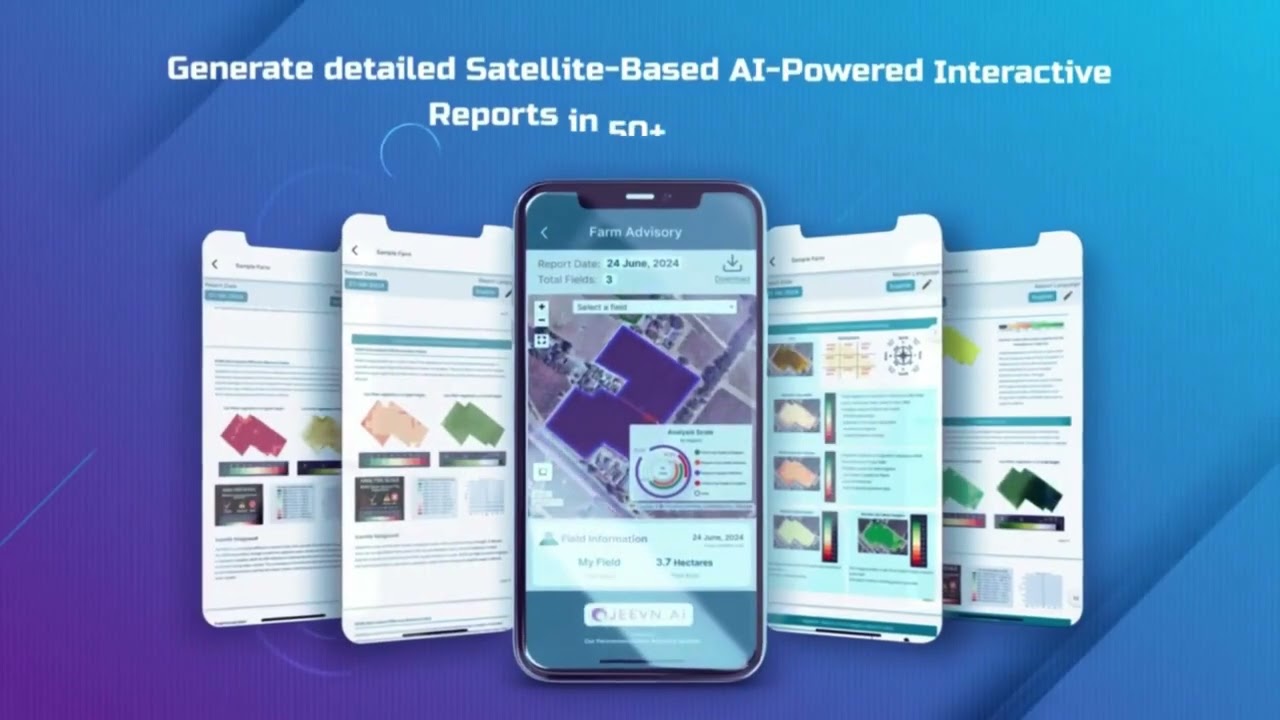
Farmonaut – Revolutionizing Farming with Satellite-Based Crop Health Monitoring
Smart Farming Future : Precision Tech & AI: Boosting Harvests, Enhancing Sustainability
Data-Driven Agronomy in Practice
- ➡ Map yields against soil type and irrigation records field by field.
- ➡ Choose crop varieties suited to your actual water budget rather than the regional average.
- ➡ Track soil organic matter % annually via lab test — this is the one metric in this whole framework you can measure directly on your own ground.
- ➡ Use digital tools, such as Farmonaut Apps, for real-time, satellite-based field monitoring.

The Vital Importance of Soil in Agriculture: Nurturing Earth’s Foundation for Sustainable Farming
Setting a farm-wide water or nutrient target instead of a field-level one. The 1.5 acre-foot national average masks huge regional variation — an Arizona field and an Iowa field have nothing in common on water budget, so benchmark against your own irrigation district, not the national number alone.
Cover Crop & Irrigation Savings Calculator
Use your own acreage and current practice to see where you stand against the national 2023 irrigation baseline (1.5 acre-feet/acre) and the 2022 cover crop adoption rate (4.7% of US cropland).
Run your own numbers
Assumes the USDA NASS 2023 national average of 1.5 acre-feet/acre and the USDA ERS 2022 cover crop rate of 4.7% as reference points only — it does not account for crop type, regional climate, soil texture, or irrigation method, all of which shift the efficient water rate for your specific fields.
Farming Goals and Objectives Compared
This table ties the three sustainability goals to the objectives that serve them and the US data point that lets you benchmark your own farm against a national baseline.
| Goal | Supporting Objective | US Benchmark | Source |
|---|---|---|---|
| Environmental Stewardship | Certify or transition toward organic production | 7.2M acres / 17,181 operations (2025) | USDA ERS |
| Environmental Stewardship | Reduce irrigation water applied per acre | 1.5 acre-ft/acre national average (2023) | USDA NASS |
| Environmental Stewardship | Adopt cover crops to build soil organic matter | 4.7% of US cropland (2022) | USDA ERS |
| Economic Viability | Shift groundwater-dependent irrigation toward efficiency gains | 54% of irrigation water from on-farm wells (2023) | USDA NASS |
| Social Equity | Enroll in conservation/grazing improvement programs | 4M acres targeted by 2025 | USDA FSA |
How Farmonaut Supports These Objectives
Farmonaut provides satellite-driven tools that support the objectives above directly — particularly the resource-monitoring layer that most farms lack the staff time to run manually.
- 📊 Real-time Monitoring: early-warning signals for pest, disease, and irrigation issues. (See Farmonaut Web System.)
- 🌱 AI-Based Advisories: weather and management advice aimed at reducing input waste. (Jeevn AI, inside the app.)
- 🔗 Supply Chain Traceability: blockchain-based tracking for transparency across the value chain. (Learn more)
- 🌏 Carbon and Environmental Tracking: ongoing insight into footprint alongside the objectives above.
- 🛰️ Accessible by All: tools scaled from smallholders to large operations.
Integrate Farmonaut’s satellite-powered insights with your systems:
Farmonaut API | API Developer Docs
For large farms managing multiple crops and fields against these objectives at once, the Agro-Admin Large Scale Farm Management Solution provides tracking and decision support across the operation.
Satellite monitoring turns “reduce water use” from an aspiration into a number you can check weekly against your own field data and the USDA irrigation baseline above.
Turning Goals Into a Farm Plan
Here is the durable checklist for converting the goals and objectives above into a working farm plan, regardless of what the current-year USDA figures say — the method holds even as the numbers get revised.
Five Steps
- ✔ Test your soil first. Organic matter %, at minimum, before setting any nutrient or cover-crop target.
- ✔ Benchmark your water use against your irrigation district’s average, then against the national NASS figure — the district number matters more for your actual decision.
- ✔ Pick one objective per pillar (economic, environmental, social) rather than a long unranked list — three well-tracked objectives beat ten vague ones.
- ✔ Recheck USDA NASS and ERS releases annually — irrigation survey data updates each October via the NASS Newsroom, and organic acreage updates annually via NASS’s Surveys section.
- ✔ Record results in the same units every year (acre-feet/acre, % cover crop, % organic matter) so year-over-year comparison is possible without unit conversion errors.
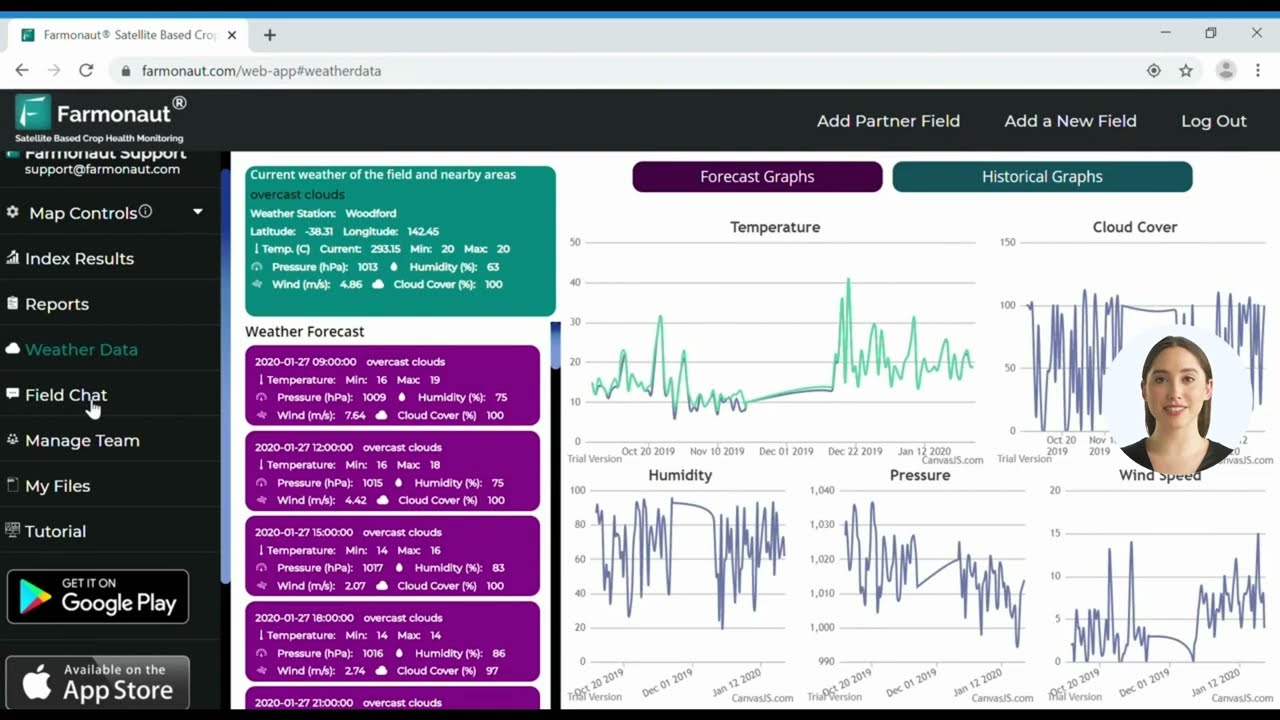
Farmonaut Web app | Satellite Based Crop monitoring
Farmonaut Products & Subscription
We make satellite technology accessible for everyone: businesses, users, and governments. Whether you need real-time monitoring, AI-driven advisories, blockchain traceability, or resource management—our modular, affordable solutions adapt to your sustainable and productive farm management needs.
- 🔹 For integrated traceability across your agri-supply chain: Farmonaut Product Traceability
- 🔹 For crop loan and insurance verification through satellite data: Crop Loan and Insurance Solutions
FAQ: Farming Goals & Sustainable Agriculture
What are the goals of sustainable agriculture?
Three: economic viability (the farm stays profitable), environmental stewardship (soil, water, and biodiversity are not depleted faster than they regenerate), and social equity (labor and rural communities can sustain themselves). All three have to hold at once — dropping any one makes the system unsustainable by definition.
What are the 3 main goals of sustainable agriculture?
Profit, planet, and people — formally: economic viability, environmental stewardship, and social equity. This is sometimes called the “3-legged stool” of sustainability.
What are farming goals and objectives, in general?
A goal is the destination (e.g., “improve soil health”); an objective is the measurable step that gets you there (e.g., “raise soil organic matter by a defined amount within 5 years, verified by soil test”). Objectives should be SMART: specific, measurable, achievable, relevant, and time-bound.
What are the objectives of farm management?
Planning and budgeting, land use optimization, labor organization, capital investment, and performance monitoring — the operational tasks that convert farm goals into weekly and seasonal decisions.
What are the objectives of a farming system?
To combine crop choice, rotation, inputs, and labor into a process that meets production, market, resource, and continuity objectives together on a specific piece of ground — not a generic recommendation applied everywhere.
How many US acres and farms are certified organic?
7.2 million acres across 17,181 certified organic operations in 2025, per USDA figures reported via NASS and ERS. USDA NASS updates this annually — search “Organic Production” in the Surveys section at nass.usda.gov for the current count.
How does Farmonaut help meet these objectives?
Farmonaut delivers real-time satellite monitoring, AI advisories, resource tracking, and traceability solutions via web, Android, and iOS apps as well as API integrations, giving farms the field-level data needed to track objectives against national benchmarks.
Conclusion: A Coherent Path to Resilient, Profitable, and Sustainable Farming
The goals of sustainable agriculture do not change year to year — economic viability, environmental stewardship, and social equity remain the three pillars regardless of which USDA survey cycle is current. What changes is the data you use to measure progress against them: irrigation efficiency, cover crop adoption, and organic certification acreage are all published annually or on a multi-year cycle by USDA NASS and ERS, and each number above carries its source and its vintage so you can pull the current figure rather than rely on this page a year from now.
Modern tools, including Farmonaut, make the field-level side of this tracking — water applied, crop health, soil trends — practical for farms that do not have a dedicated agronomist on staff. That closes the gap between having a goal and having an objective you can actually verify.
Ready to take your farm management to the next level?
Explore Farmonaut Apps, use Farmonaut API, or see Product Traceability for the most comprehensive, sustainable farm solutions!

 Godrej Agrovet
 Hayleys Agriculture
 Linx Agritech
 Adinet
 Save Your Soils
 GalaxEye Space
 Grandstream Algérie
 XOS Realty
 Geospatial Lab Africa
 Agro La Gándara
 HIPSAC
 ZOL Zimbabwe
 Juligerm
 AdBio
AdBio MISE Maroc
 NWNS
NWNS Red August Group
 Farm Inc
 WeMe Global
 Agrotoken
 Blue BearX
 Insignito
 DnCubed
 Indosistim Teknologi
 Liquify Digital
 CU Foods
 BeyondTech Global
 Rouge VC
 AgroRisk
 Oath Inc
 Esri North East Africa
 MDCV UK
 Etech Consulting Madagascar
 Vestlandsforsking
 WB Dev
 Sama Premium
 Tres Valles
 Blickwinkel
 Agricultural Credit Policy Council
 eKGIS
eKGIS Mostas Tech
 Andex
Andex Deluxe Conseil
 WICO
WICO Chimera Innovation
 SkyHarvest
 Teledarbas
 Exurbia Geospatial
 FieldZero
