

Reviewed August 2026 against Eurostat and USDA Economic Research Service data.
Farming in Europe runs behind the United States on precision-technology adoption: 18% of EU farms used precision farming technology or practices in 2023, covering 44% of the bloc’s utilized agricultural area, according to Eurostat. In the same reference period, 70% of large-scale US crop farms used autosteering guidance and 68% used yield monitors and soil maps, per the USDA Economic Research Service. This article breaks down what “europe farming” actually looks like today, how it compares with US adoption, and the five operating principles that separate farms getting a return on precision tools from farms that bought sensors and stopped there.
Where Farming in Europe Stands on Precision Adoption
Farming in Europe is not one system — it is 27 national markets under a shared regulatory umbrella, with adoption that varies sharply by country, farm size, and crop. What Eurostat’s 2023 survey shows at the EU level is a starting point, not the whole picture: 18% of farms reported using at least one precision farming technology or practice, but that 18% controls 44% of the EU’s utilized agricultural area (UAA), because adoption concentrates on larger holdings. Only 11% of EU farms use a farm management information system, and just 7% use robotics for plant protection product application — the two categories showing precision farming is still an early-majority technology in Europe, not a mainstream one.
Two structural facts explain the gap with the US. First, EU farms are smaller on average, so the per-hectare cost of variable-rate equipment and satellite subscriptions is harder to absorb. Second, connectivity still lags in the areas that would benefit most: only 43% of EU farms reported having internet access in the 2023 survey, which caps how many farms can even receive cloud-delivered field maps or connect telematics-enabled machinery. A farm without reliable connectivity cannot use a cloud-based prescription map regardless of how good the underlying data is.
Europe Farming vs. US Farming: The Adoption Gap
Set the two continents side by side and the gap is not subtle. In the US, guidance autosteering — GPS-driven tractor steering that keeps passes from overlapping — was in use on 70% of large-scale crop farms in 2023, and 52% of mid-size farms, per USDA ERS. Yield monitors and soil maps, which generate the field-variability data that everything else in this article depends on, were used on 68% of large-scale US farms in the same year. Compare that with the EU’s 18% farm-level adoption of precision technology generally (any category, any intensity) and the picture is clear: US adoption is both higher and more concentrated in specific, high-value technology categories, while EU adoption is broader in definition but shallower in intensity.
That gap is exactly why “europe precision farming market” queries return market-sizing content rather than adoption-rate content — the market research is more mature than the government adoption survey data. For a farm or agribusiness benchmarking itself, the USDA figures above are the most granular technology-adoption numbers publicly available for the US; the Eurostat release is the equivalent for the EU. Neither currently breaks out UK-specific technology adoption rates by category (see the gap noted below), so a UK farm benchmarking itself against these numbers should treat the EU-27 figure as a rough proxy, not a UK number.
A note on what is not yet published: Defra’s Farm Practices Survey tracks some precision-technology uptake in England, but as of this review it does not break out UK adoption rates by individual technology (GPS guidance, variable-rate spreading, soil mapping) in a form comparable to the USDA or Eurostat tables above. If you need a current UK figure, check Defra’s Farm Practices Survey release directly rather than relying on an EU-27 average, since UK farm structure differs from the EU-27 mix now that the UK sits outside Eurostat’s collection.
Precision Farming Concept and Core Principles
The precision farming concept is simple: instead of treating a field as a uniform block, farmers respond to variability in soil, water, nutrient availability, and crop stress at the zone level — sometimes at a resolution of a few meters, sometimes at the sub-hectare level. This site-specific approach depends on real-time data collection, sensor and satellite networks, remote sensing, Variable Rate Technology (VRT), and GIS (Geographic Information Systems) layered together.

Farmonaut Web System Tutorial: Monitor Crops via Satellite & AI
Key concepts in precision farming include:
- Data-driven decision making to size inputs against measured field conditions rather than a flat per-hectare average
- Real-time monitoring using sensors for soil moisture, temperature, and nutrient levels
- Remote sensing for field-scale crop health assessment via satellite or aerial imagery
- Zone models that flag differing input needs within a single field
- Variable-rate machinery capable of applying inputs unevenly across those zones
- Season-to-season feedback loops that turn last year’s yield map into this year’s prescription
Precision farming converts raw data streams into zone-specific field decisions. The EU and US differ less in the concept than in how far each has pushed it into daily practice — 18% farm-level adoption in the EU (2023, Eurostat) against 70% autosteering adoption among large US crop farms (2023, USDA ERS).
The Five Principles of Precision Farming Reshaping Farming in Europe
These five principles apply everywhere precision farming is practiced, but the level of adoption behind each one differs sharply between US and European farms, as the sections above show. Here is how each works and where it fits into the US precision farming market and Europe’s, respectively.
- Accurate Data Collection
- Spatial Analysis & Mapping
- Variable-Rate Application of Inputs
- Continuous Monitoring, Feedback, and Learning
- Integration for Optimized Decisions
1. Accurate Data Collection: The Bedrock of Smart Agriculture
The first principle is systematic, calibrated field data collection — soil moisture probes, weather stations, and NDVI (Normalized Difference Vegetation Index) sensors placed to track temperature, moisture, and crop health changes through the season. This is the layer that both the USDA and Eurostat surveys are actually measuring when they report “yield monitors and soil maps” or “precision farming technology” adoption: without this data layer, none of the following four principles have anything to act on.
- ✔ Enables site-specific input decisions
- ✔ Improves resource allocation
- ✔ Supports continuous learning and adaptation over each season
Technologies involved: IoT sensors, satellite imagery, georeferenced sampling.

Satellite Soil Moisture Monitoring 2025 – AI Remote‑Sensing for Precision Agriculture
2. Spatial Analysis and Mapping: Understanding Variability within Fields
Next, data is used for spatial analysis — mapping the variability of soil properties, water availability, crop vigor, and pest pressure across every zone in the field. GIS and modeling identify and map these conditions, letting farmers target decisions to specific locations rather than treating the whole field as one unit.
- ✔ Enables focused interventions where needs are greatest
- ✔ Facilitates targeted fertility management and pest-risk mitigation
Technologies utilized: high-resolution satellite and aerial imagery, GIS mapping tools, soil sampling systems.
Smart Farming Future : Precision Tech & AI: Boosting Harvests, Enhancing Sustainability
3. Variable-Rate Application: Tailoring Inputs to Each Zone
With spatial data in hand, farmers apply the third principle: variable-rate application (VRT). Inputs — water, fertilizer, seed, and crop-protection products — are deployed in site-specific volumes, with modern machinery adjusting rates on the go so each zone gets what it actually needs.
- ✔ Higher rates where fertility is low; reduced or skipped applications where soil is already sufficient
- ✔ Moisture and nutrient management tailored to stress and growth phase
Technologies: variable-rate equipment, prescription mapping, real-time onboard controls.
Relying on non-calibrated machinery or ignoring in-season data undercuts variable-rate application’s value. Recalibrate against current soil test results each season rather than reusing an old prescription map.

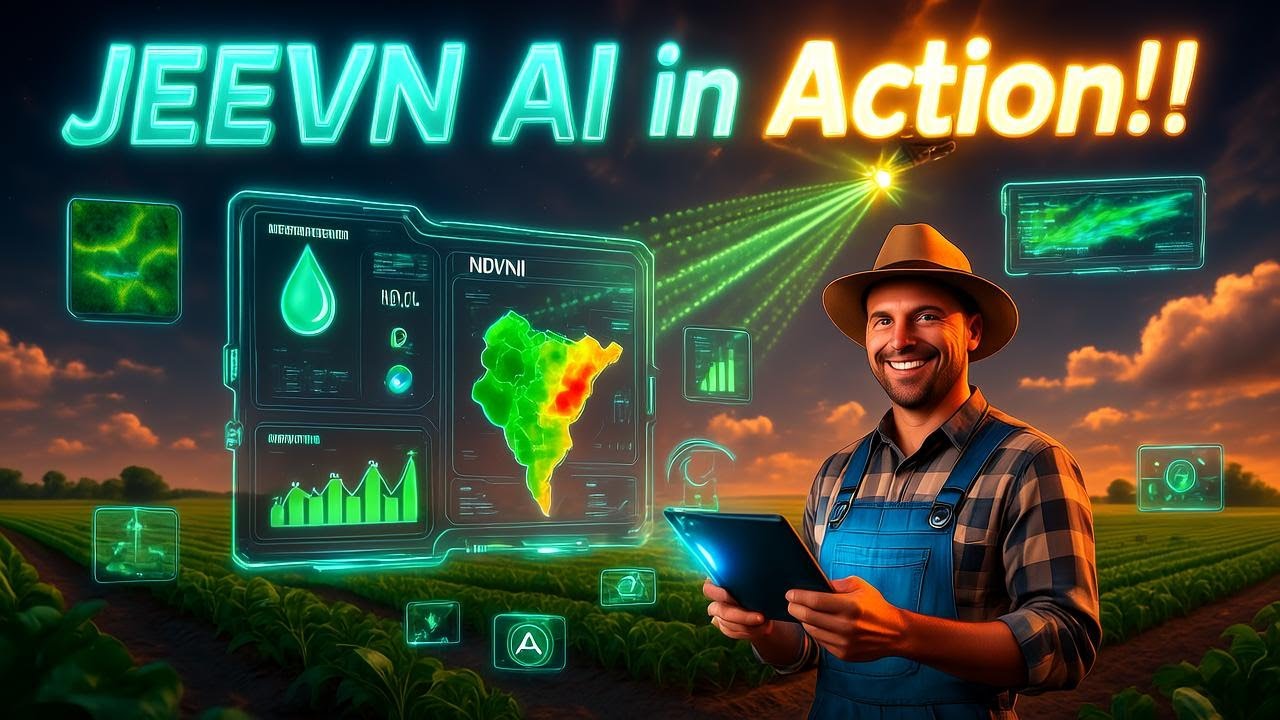
JEEVN AI: Smart Farming with Satellite & AI Insights
4. Continuous Monitoring, Feedback, and Adaptation Over Seasons
The fourth principle closes the loop: continuous monitoring of yields, soil health, moisture, and nutrient levels, using every season to learn and adjust. By integrating sensor, satellite, and operational data across time, farmers identify which interventions worked and where to correct course.
- ✔ Enhances resilience to shifting conditions and climate extremes
- ✔ Promotes long-term soil health and resource efficiency
- ✔ Drives season-to-season productivity gains
Technologies: integrated farm management systems, cloud-based data platforms, machine learning analytics.

Farmonaut – Revolutionizing Farming with Satellite-Based Crop Health Monitoring
5. Integration for Optimized Decisions: Bridging Data, Agronomy, and Business
The fifth principle is integration: blending agronomic knowledge with weather forecasts, market conditions, resource availability, and crop growth models into one set of choices. This is what turns field-level precision into a farm-level or business-level outcome — lower input cost per unit of output, not just a prettier map.
- ✔ Better scheduling and risk mitigation
- ✔ Improved farm resource allocation
- ✔ Seamless connection between data streams, equipment, and operational planning
Technologies: cloud-based management platforms, decision-support software, advanced analytics, and APIs.

Regenerative Agriculture 2025 🌱 Carbon Farming, Soil Health & Climate-Smart Solutions | Farmonaut
Comparative Benefits Table of Precision Farming Principles
The ranges below are illustrative estimates commonly cited for well-executed implementations of each principle, not measured outcomes from a single trial — treat them as planning ranges to validate against your own field records, not guaranteed results.
| Principle | Technology Used | Illustrative Productivity Range (%) | Illustrative Resource Savings (%) | Example Application |
|---|---|---|---|---|
| Accurate Data Collection | IoT sensors, satellite imagery | 8–12 | 10–15 | Soil moisture sensors, vineyards in France |
| Spatial Analysis & Mapping | GIS, aerial & satellite imagery | 10–15 | 7–12 | Yield-zone mapping, wheat in Germany |
| Variable-Rate Application | Variable-rate equipment, sensors | 12–18 | 13–20 | Fertilizer application by zone, Netherlands |
| Continuous Monitoring & Feedback | Cloud-based data, machine learning | 6–9 | 10–16 | Adaptive irrigation, Spain’s olive groves |
| Integration for Optimized Decisions | APIs, management platforms | 11–14 | 9–13 | Farm management software, Denmark |
Europe Precision Farming Market: Size, Forces, and Adoption
The market-size data is more current and more granular than the adoption-rate data, and the two tell complementary stories. On the US side, the precision farming market was valued at $4.37 billion in 2025, with Precedence Research projecting the broader US precision farming market to reach $15.23 billion by 2035. On the UK side specifically, IMARC Group valued the UK precision agriculture market at $307.37 million in 2024, with a projected rise to $710.07 million by 2033.
Set against Eurostat’s 18% EU farm-level adoption figure, the market-size numbers make sense: a market can grow fast in dollar terms while adoption in farm-count terms stays low, because growth is concentrated in the minority of farms — the 44% of UAA Eurostat attributes to precision-adopting farms — that are large enough to spread equipment and subscription costs over enough hectares to see a return. For a mid-size or smaller farm reading this, that is the real signal: the market’s dollar growth trajectory is being driven disproportionately by large operations, not by universal uptake.
- Regulatory push: EU nutrient and emissions regulation encourages precision farming adoption to cut nitrogen runoff and reduce carbon emissions.
- Infrastructure gap: With only 43% of EU farms reporting internet access in 2023 (Eurostat), rural connectivity remains the binding constraint on cloud-based tools for a majority of farms.
- Public-private advisory support: Farm advisory networks across Europe share practice on using spatially explicit data and connected machinery.
- Market dynamics: Both the US and UK precision agriculture markets are projected to more than triple in value over the next decade, per the Precedence Research and IMARC figures above — a signal of continuing capital flow into the sector even where farm-count adoption remains modest.
Precision agtech adoption in the US, UK, and EU is being driven by regulatory compliance, resource savings, and long-run ROI on large holdings — a durable thesis even as the farm-count adoption rate moves slowly.
For the current-year figure, market-sizing reports from firms including IMARC and Precedence Research are updated annually — check their published editions for the latest available year before citing a number in a proposal or grant application, since these are commercial forecasts revised on their own schedules rather than fixed government statistics.
Precision Fertigation and Equipment: Where They Fit
Precision fertigation — delivering dissolved fertilizer through an irrigation system so nutrient dosing can be adjusted zone by zone, in step with soil moisture data — is a natural extension of the variable-rate principle above, most relevant to irrigated row crops, orchards, and vineyards rather than dryland cereal production. Benchmarked against traditional broadcast fertilizer application, fertigation delivers up to 90% nutrient-use efficiency, according to industry market research compiled by 360 Research Reports. That efficiency gain comes from matching nutrient timing to the crop’s actual uptake curve instead of a single seasonal broadcast application, and it pairs directly with the soil-moisture and satellite-vigor data streams described in Principle 1 above.
On the equipment side, “jd precision ag” searches typically point to John Deere’s precision agriculture product line — guidance systems, See & Spray targeted application, and the Operations Center farm management software — which functions as one implementation of the variable-rate and integration principles covered above rather than a separate category. Farmonaut’s platform is designed to complement rather than replace this kind of equipment: satellite-derived zone maps and advisory outputs can feed into a farm’s existing management software and machinery displays via API, so switching to satellite monitoring does not require replacing hardware already on the farm.
Smart Technologies Turning Fields into Smart Systems
- 🌐 Satellite imagery platforms deliver crop health updates, identifying zones with stress or declining vigor for early intervention.
- 🚜 IoT sensors placed in the field track soil moisture, temperature, and local nutrient levels — improving efficiency for both irrigated and dryland fields.
- 💧 Remote sensing and AI-driven irrigation optimize water and energy use, most valuable in drought-exposed regions of Southern Europe and the western US.
- 📦 Blockchain-based traceability platforms support food safety and reduce fraud risk in crop supply chains.
Choose farm management software that integrates satellite data, VRT, and advisory features in one place — stitching together separate point solutions is the most common reason farms under-realize the productivity ranges in the benefits table above.
How AI Drones Are Saving Farms & Millions in 2025 🌾 | Game-Changing AgriTech You Must See!
- ✔ API access means technology can be added modularly as farms grow or diversify.
- ✔ Continuous learning systems adapt to changing weather patterns and new pest pressure each season.
Precision Farming Across the Season: End-to-End Innovation
Before satellite-driven precision tools existed, farmers assessed land with basic soil, water, and terrain checks — the kind of first-pass evaluation done any time humans clear land for farming. Today, digital soil mapping, topographic assessment, and AI create a zone-by-zone blueprint of a field before a single seed is sown.
- 📍 Field selection using digital soil maps to match crop to fertility levels
- 🌱 Initial input planning based on the nutrient requirements of the specific crop being planted
- 🦠 Integration of biological indicators — microbial activity, organic matter — into the decision layer
With these foundations in place, real-time monitoring continues through the growing season:
- 💦 Adaptive irrigation based on daily moisture mapping
- 🤖 Seasonal pest-pressure alerts and protective interventions only where warranted
- 🥕 Harvest timing optimized against live health and vigor readings

California Wine 2025 🍇 Sustainable Viticulture, Organic & Biodynamic, Precision AgTech
GPS-guided precision agriculture in Europe traces back to the 1990s, when French and German growers began applying GPS and early satellite imagery to wheat and potato production. Three decades on, Eurostat’s 2023 survey puts farm-level uptake of precision technology at 18% EU-wide — a reminder that early adoption does not automatically translate into broad adoption.
Calculator: Variable-Rate Input Savings Estimator
Principle 3 above claims variable-rate application typically saves 13–20% on input volume compared with flat-rate application. Enter your own field size, input cost, and flat-rate usage below to see what that range means in your own currency and acreage — not a generic percentage, your number.
Assumptions: uses the 13–20% variable-rate savings range from the benefits table above, applied to your own flat-rate cost per acre or hectare. Excludes equipment purchase or lease cost, subscription fees for mapping software, and any yield-side gains — it estimates input-cost savings only, not full ROI.
How Farmonaut Supports Precision Farming
Farmonaut's mission is to make satellite-driven insights and resource management tools affordable and accessible for farmers, businesses, and governments across markets at every stage of precision-technology adoption — including EU and UK farms where adoption still lags the US, per the Eurostat and USDA figures above.
- 🌐 Satellite-Based Monitoring: multispectral satellite solutions for monitoring crop health, soil conditions, and field variability in real time, feeding the data layer that Principle 1 depends on.
- 🧠 Jeevn AI Advisory System: analyzes satellite and field sensor data to deliver personalized recommendations and weather forecasts, reducing input waste and supporting Principle 5's integration layer.
- 🔗 Blockchain Traceability: supply-chain transparency is a growing regulatory expectation across EU and UK markets. Read more on product traceability.
- 🚗 Fleet & Resource Management: optimizes machinery and vehicle use, reducing operational costs and improving safety. Read about our fleet management solution.
- 🌱 Environmental Impact Monitoring: continuous emissions tracking to support regulation-compliant farming in the EU and UK. See our carbon footprinting page.
- 🖥 API & Developer Platform: our API lets developers build on the platform; see the developer docs.
- 🧑🌾 For large-scale farm management: simplify agro-administrative tasks across web, Android, and iOS. Try our large-scale management solution.
- 💼 For field operations, including forests and plantations: see Farmonaut Crop, Plantation, and Forest Advisory.



Our subscription-based model allows flexible scaling for individuals, businesses, and governments. Explore options below.
Key Insights, Pro Tips & More
Variable-rate equipment falls in the 13–20% resource-savings range for wheat and similar row crops, per the benefits table above.
Pairing satellite imagery with IoT sensors delivers a fuller view of changing crop health than either data source alone.
Skipping in-field sensor calibration leads to inaccurate recommendations. Verify device accuracy each season, not just at initial install.
Integrate management software with carbon footprinting tools for compliance reporting: Track Carbon Here.
Data interoperability across mapping, machinery, and management software is the standard the precision farming market is converging on in the EU, UK, and US alike.
Visual List: Benefits of Precision Farming
- ✔ Higher Crop Yields – zone-specific management raises productivity within the 6–18% ranges shown in the benefits table above.
- 💧 Resource Conservation – reduce fertilizer and water waste by matching application to the zones that need it.
- 📊 Improved Productivity – automated and AI-driven systems streamline field operations.
- 🌍 Lower Environmental Impact – cut emissions, runoff, and chemical use through targeted intervention.
- 🔗 Enhanced Traceability – blockchain solutions support supply-chain transparency.
Visual List: Key Technologies Powering Precision Farming
- 🛰 Satellite Imagery – field-wide crop health and spatial variability assessment
- 🌐 IoT Sensors – live soil and environment monitoring
- 🤖 AI & Machine Learning – predictive models for inputs and yield forecasts
- 🛠 Variable-Rate Machinery – equipment capable of targeted inputs
- 💻 Cloud-Based GIS & APIs – integrated farm management and custom solutions
5 Core Components Every Precision Farming Operation Should Have
- ✔ Calibrated IoT sensors for soil and crop stress.
- ✔ High-resolution satellite imagery platforms for multi-field vigor analysis.
- ✔ GIS mapping tools to identify in-field variability.
- ✔ Variable-rate equipment for deploying uneven input volumes across zones.
- ✔ Integrated digital farm management systems for actionable decisions and year-over-year learning.
FAQ: Farming in Europe
How does farming in Europe compare with US farming on precision technology?
On adoption rate, US farms lead: 70% of large-scale US crop farms used autosteering guidance and 68% used yield monitors and soil maps in 2023 (USDA ERS), against 18% of EU farms using any precision farming technology or practice in the same year, covering 44% of EU utilized agricultural area (Eurostat). Both figures are 2023 reference-year data; check the USDA and Eurostat links in this article for newer releases as they publish.
What is precision farming?
Precision farming is an approach to agriculture that uses data, sensor networks, spatial analysis, satellite imagery, and smart equipment to manage variability within fields. It lets farmers tailor inputs — water, fertilizer, seed — to specific site needs rather than applying a flat rate across the whole field.
How big is the precision farming market in the US, UK, and Europe?
The US precision farming market was valued at $4.37 billion in 2025, projected to reach $15.23 billion by 2035 (Precedence Research). The UK precision agriculture market was valued at $307.37 million in 2024, projected to reach $710.07 million by 2033 (IMARC Group). No single EU-wide dollar figure was in the research base for this article; Eurostat instead reports adoption in farm-count and land-area terms, at 18% of farms and 44% of UAA for 2023.
Does precision fertigation fit into precision farming?
Yes, as an application of the variable-rate principle for irrigated crops. Precision fertigation delivers dissolved nutrients through an irrigation system, adjustable by zone, and benchmarks at up to 90% nutrient-use efficiency against traditional broadcast fertilizing, per 360 Research Reports' market analysis. It is most relevant to irrigated row crops, orchards, and vineyards rather than dryland cereal systems.
How does variable-rate application improve efficiency?
Variable-rate application (VRT) applies different input amounts across a field based on zone-level data, so high-need areas get more and adequately supplied zones get less or none. In the benefits table above, this principle carries the widest resource-savings range of the five, at 13–20%.
Can small and medium farms afford precision farming?
Cost is the leading barrier behind the EU's 18% farm-level adoption rate, since equipment and subscription costs are easier to justify per hectare on larger holdings — which is why Eurostat's adopting farms control 44% of UAA despite being a minority of farm count. Subscription-based platforms with modular deployment, rather than large upfront equipment purchases, are the main route smaller farms use to adopt gradually.





Get Started: Farmonaut Solutions for Precision Farming
Ready to close the gap between where your farm sits today and the adoption levels described above? Farmonaut offers satellite-based and AI-driven solutions for farmers, agribusinesses, and policymakers across the US, UK, and EU. From real-time monitoring to resource allocation, crop health, and environmental compliance, the tools in this article are available through the links below.
For API integration, see our API documentation here.
Farming in Europe, the UK, and the US is converging on the same five principles at different speeds — use the benchmarks and calculator above to see where your own operation sits, and revisit the USDA and Eurostat links periodically as they publish newer reference-year data.

 Godrej Agrovet
 Hayleys Agriculture
 Linx Agritech
 Adinet
 Save Your Soils
 GalaxEye Space
 Grandstream Algérie
 XOS Realty
 Geospatial Lab Africa
 Agro La Gándara
 HIPSAC
 ZOL Zimbabwe
 Juligerm
 AdBio
AdBio MISE Maroc
 NWNS
NWNS Red August Group
 Farm Inc
 WeMe Global
 Agrotoken
 Blue BearX
 Insignito
 DnCubed
 Indosistim Teknologi
 Liquify Digital
 CU Foods
 BeyondTech Global
 Rouge VC
 AgroRisk
 Oath Inc
 Esri North East Africa
 MDCV UK
 Etech Consulting Madagascar
 Vestlandsforsking
 WB Dev
 Sama Premium
 Tres Valles
 Blickwinkel
 Agricultural Credit Policy Council
 eKGIS
eKGIS Mostas Tech
 Andex
Andex Deluxe Conseil
 WICO
WICO Chimera Innovation
 SkyHarvest
 Teledarbas
 Exurbia Geospatial
 FieldZero
